Free tools Windows power users keep installed
One-click scans. No signup required.
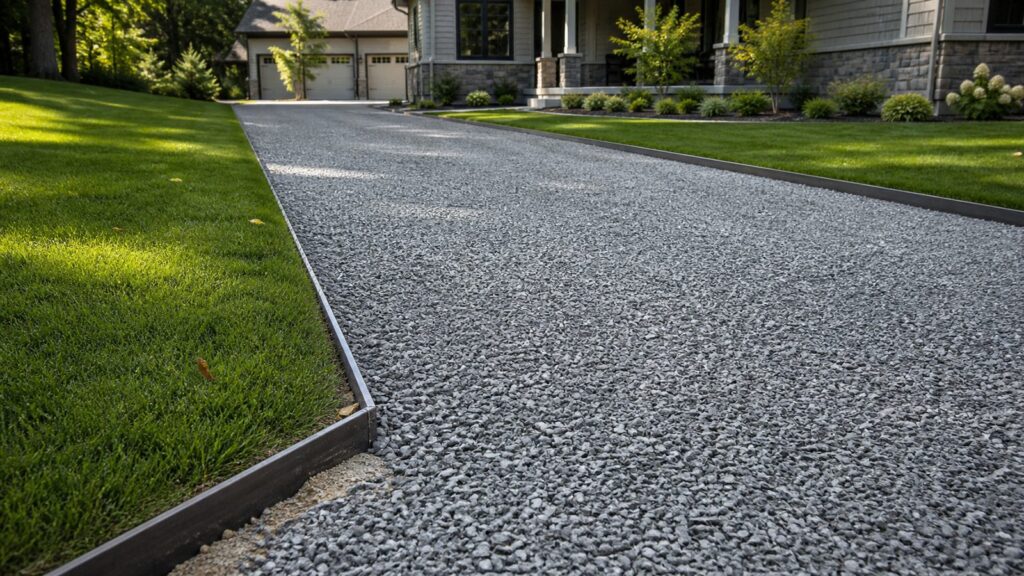
The best gravel driveway edging depends on whether it only needs to contain gravel or must resist tires pushing against the edge. For ordinary residential containment, commercial-grade steel landscape edging with matched stakes can work when wheels stay inside the driveway; where tires regularly touch, turn on, or push the edge, use a supported concrete curb or engineered masonry restraint. In every case, drainage and a stable base matter more than the border alone.
Containment Edging Versus Structural Restraint
These are different jobs. Containment edging keeps loose stone from migrating into a lawn or planting bed. Structural edge restraint resists lateral forces from tires braking, turning, or climbing near the driveway perimeter. A product suited to the first job should not automatically be treated as a curb for the second.
The driveway structure also matters: subgrade, aggregate, compaction, drainage, and runoff determine whether the surface stays stable. An expensive border cannot fix a soft or wet base. The EPA’s gravel-road guidance explains that when crown is lost, water collects, softens the surface, and traffic can create ruts and potholes. University of Minnesota guidance likewise describes the shoulder as support for the road edge and a route for water, and warns against a high shoulder that blocks drainage.
Choose Edging for the Site Conditions
| Site condition | Suitable direction | Important limitation |
|---|---|---|
| Ordinary residential drive; wheels stay inside the intended track | Commercial-grade steel landscape edging with matched stakes | Containment, not a published heavy-vehicle impact rating |
| Tires regularly touch the edge, tight turns, or frequent heavy vehicles | Supported concrete curb or beam, or engineered masonry restraint | Requires a stable base and drainage plan; not maintenance-free |
| Open-graded or permeable base | Concrete or modified concrete restraint, or a system specifically compatible with that base | Generic plastic edging may shift if spikes cannot hold effectively |
| Soft or wet subgrade, slopes, or recurring rutting | Correct drainage and base problems; consider engineered geocell stabilization | Perimeter edging alone does not repair the driveway structure |
| Decorative stone or cobble appearance | Bedded, supported, restrained masonry edge | Loose decorative rocks beside loose gravel are not structural restraint |
Steel Landscape Edging for Ordinary Containment
Commercial-grade steel landscape edging is a reasonable low-profile option when its job is to contain gravel and vehicle wheels remain inside the intended track. A commercial edging brochure lists steel edging for asphalt and gravel applications. That supports this use as a containment border; it does not establish a universal rating for tire impacts.
Crashes, No Sound, or Screen Glitches?
Random freezes, missing sound and display glitches usually trace back to one bad driver. Find and replace yours safely.Free scan · under a minutePC Slower Than It Used to Be?
A free scan shows the junk files, broken settings and background clutter dragging Windows down - then fixes them in one click.Free scan · Windows 10 & 11#1 Best Overall

- 𝐅𝐥𝐞𝐱𝐢𝐛𝐥𝐞 & 𝐄𝐚𝐬𝐲 𝐭𝐨 𝐈𝐧𝐬𝐭𝐚𝐥𝐥: Each panel measures 40" (L) × 5" (H), including 3" underground stakes for strong anchoring, leaving 2" visible above ground for a clean, low-profile border. The hammer-in design makes installation fast and effortless—perfect for creating neat, professional-looking edges without digging.
- 𝐃𝐮𝐫𝐚𝐛𝐥𝐞 𝐆𝐚𝐥𝐯𝐚𝐧𝐢𝐳𝐞𝐝 𝐒𝐭𝐞𝐞𝐥 𝐂𝐨𝐧𝐬𝐭𝐫𝐮𝐜𝐭𝐢𝐨𝐧: Made from high-quality galvanized steel, this 33ft landscape edging (10-pack) is built to withstand outdoor conditions, providing long-lasting durability and rust resistance for your garden, yard, or flower beds.
- 𝐒𝐞𝐜𝐮𝐫𝐞 & 𝐒𝐭𝐚𝐛𝐥𝐞 𝐃𝐞𝐬𝐢𝐠𝐧: Comes with 11 stakes, ensuring strong anchoring in soil and stability against shifting over time. Ideal for maintaining defined garden edges and pathways.
- 𝐒𝐥𝐞𝐞𝐤 𝐁𝐥𝐚𝐜𝐤 𝐅𝐢𝐧𝐢𝐬𝐡 𝐟𝐨𝐫 𝐌𝐨𝐝𝐞𝐫𝐧 𝐀𝐩𝐩𝐞𝐚𝐥: The powder-coated black steel adds a stylish, modern touch to your outdoor landscaping while blending seamlessly with various garden styles.
- 𝐕𝐞𝐫𝐬𝐚𝐭𝐢𝐥𝐞 𝐆𝐚𝐫𝐝𝐞𝐧 𝐁𝐨𝐫𝐝𝐞𝐫 𝐒𝐨𝐥𝐮𝐭𝐢𝐨𝐧: Perfect for creating crisp, clean separations between lawns, flower beds, pathways, and patios. Easily cut or bend to fit curves, corners, and custom garden designs.
Before buying, check the exact product’s section dimensions, material thickness or gauge, coating, connector method, and compatible stake length and count. Use matched stakes and connectors, and install the system according to its manufacturer’s directions. Permaloc’s comparable commercial aluminum system uses 12-inch interlocking stakes and is described for residential and light-commercial edging; that illustrates the importance of anchoring and application class, not a gravel-driveway load rating.
Keep the edging from becoming an exposed target for wheels or blades. If tires regularly scuff or climb the perimeter, choose a structural curb or masonry restraint instead of relying on a thin border.
Concrete Curbs and Engineered Masonry for Tire Loads
Where tires regularly run on, brake against, or turn at the edge, a supported concrete curb or beam, or a comparable engineered masonry restraint, is the more defensible direction. Unilock’s hardscape guidance identifies concrete curbs as stronger than other listed edge restraints. Its heavy-vehicular paver detail uses a concrete beam to resist horizontal creep from braking and turning tires. That is evidence for the type of restraint appropriate to lateral vehicle loads, not a universal construction detail for every loose-gravel driveway.
Rank #2

- 𝐀𝐛𝐨𝐮𝐭 𝐭𝐡𝐞 𝐄𝐝𝐠𝐢𝐧𝐠: Enhance your garden with our 6-pack landscape edging set, providing 20 ft of total coverage when connected. Each panel measures 40" L x 8" H, creating clean, defined borders while helping keep grass and weeds out for a neat, well-maintained look.
- 𝐃𝐮𝐫𝐚𝐛𝐥𝐞 𝐆𝐚𝐥𝐯𝐚𝐧𝐢𝐳𝐞𝐝 𝐒𝐭𝐞𝐞𝐥 𝐌𝐚𝐭𝐞𝐫𝐢𝐚𝐥: Crafted from rust-resistant galvanized steel, this lawn edging is built to withstand harsh weather conditions. Its durable construction ensures long-lasting performance and maintains its aesthetic appeal, making it an ideal choice for outdoor use and low-maintenance landscaping
- 𝐅𝐥𝐞𝐱𝐢𝐛𝐥𝐞 & 𝐁𝐞𝐧𝐝𝐚𝐛𝐥𝐞 𝐃𝐞𝐬𝐢𝐠𝐧: Our steel garden edging is highly flexible, allowing you to easily shape it to follow the curves of your lawn, flower beds, or landscaping features. Its sturdy build ensures it retains its form over time, providing a reliable solution for your garden design needs.
- 𝐐𝐮𝐢𝐜𝐤 & 𝐄𝐚𝐬𝐲 𝐈𝐧𝐬𝐭𝐚𝐥𝐥𝐚𝐭𝐢𝐨𝐧: Featuring a front-and-back interlocking system, this edging offers hassle-free assembly. The 4-inch sharp teeth easily penetrate the soil for a secure fit, creating a stable garden border. Simply position the edging and tap it into place—no need for complicated tools or steps.
- 𝐕𝐞𝐫𝐬𝐚𝐭𝐢𝐥𝐞 𝐋𝐚𝐧𝐝𝐬𝐜𝐚𝐩𝐢𝐧𝐠 𝐔𝐬𝐞: Perfect for more than just garden borders, this 8-inch landscape edging kit is versatile enough for outlining pathways, separating zones, or building raised garden beds. Elevate your garden design effortlessly with this adaptable garden border kit.
Stone, cobble, or brick can also be suitable when built as real masonry restraint: excavated, bedded, supported, and secured. Unilock includes precast concrete and cut stone among restraint options in residential-driveway paver guidance, but that guidance does not provide a recipe for loose-stone driveways. Choose stone for its appearance only if the edge will be properly built and supported.
Concrete and masonry still depend on site conditions. Settlement, freeze-thaw exposure, poor drainage, or an inadequate base can cause problems. Do not treat a permanent-looking border as a substitute for drainage and base work.
Plastic Edging: Protected, Light-Duty Use
Do not assume all plastic edging fails, but do not treat generic spike-in plastic edging as an automatic driveway solution. Manufacturer instructions for plastic restraints in paver systems specify placement on the base rather than loose bedding and frequent spikes for vehicular paver work. A separate guide for open-graded bases warns that standard plastic edging may shift when the base lacks fines that help hold spikes, and recommends a modified concrete restraint instead.
Rank #3

- Long-Lasting Galvanized Steel: Made from high-quality galvanized steel with a rust-resistant coating, this metal landscape edging built to resist fading, cracking, and rusting. It withstands all weather conditions, providing long-term durability for any outdoor environment.
- Flexible & Bendable: This yard edging is both flexible and durable. It can be easily bent to suit any shape—whether your garden is square, round, or irregular—without causing any damage, offering a tailored fit for your landscape design.
- Easy Installation: Installing this metal is a breeze! Simply interlock the pieces at the edges for a quick and easy setup that saves you time and effort. (Note: We recommend wearing gloves during installation.
- Versatile for Multiple Applications: Ideal for creating garden fences, defining borders along roadsides, or separating various outdoor zones. This galvanized steel garden edging not only adds a neat structure to your outdoor space but also serves as a decorative element to enhance your landscape’s aesthetic appeal.
- What You’ll Receive: Each set includes 5 metal flowerbed edging borders, 1 pair of installation glove, and 1 instruction manual. The extended spiked design ensures easy installation by helping the barrier penetrate the ground with less effort. Spend more time enjoying your garden and less time maintaining it!
Those sources concern paver systems, not loose gravel, so they do not prove that a particular plastic product will hold a gravel driveway under vehicle strikes. Check the product’s intended application, base compatibility, and anchoring requirements. Use plastic only for protected, light-duty containment when the product and site conditions are appropriate.
Gravel Grids and Geocell Stabilization
Gravel grids and geocells stabilize aggregate; they are not perimeter edging in the usual sense. A geocell manufacturer describes its cells as confining infill, reducing lateral movement, and reducing pressure on the sub-base. These systems may be relevant where soft soil, wet ground, slopes, recurring rutting, or higher loads make surface stabilization a concern. They are not necessary simply because a reader wants a neater lawn edge, and a grid still needs an appropriate perimeter restraint.
Installation Principles That Make Edging Hold Up
Plan Drainage First
Give water a deliberate route off the travel surface. Use an appropriate crown or cross-slope for the site, and plan the runoff outlet before adding a curb-like edge. Do not build a berm that traps water against the gravel. Ditches, culverts, and discharge points can raise drainage and local approval issues.
Rank #4

- Rust-Resistant Galvanized Steel: Crafted from durable galvanized steel, our lawn edging is built to withstand various weather conditions and resist rust, ensuring long-lasting performance. This material maintains its aesthetic appeal over time, offering a reliable and low-maintenance solution for outdoor spaces.
- Seamless Connection Design: Our steel edging features a seamless connection that eliminates gaps, resulting in uniform lines and a polished look. Perfect for enhancing the visual appeal of flowerbeds, pathways, and paver edges, it adds a sophisticated touch to any garden.
- Easy Installation: Installing our 6-pack metal landscape edging kit is simple and straightforward. Use a rubber mallet to secure the connectors, creating a sturdy and stable border. No special tools or advanced skills are needed, making it ideal for DIY enthusiasts and professionals alike.
- Versatile Landscaping Applications: This 6-inch landscape edging kit is versatile enough for various landscaping tasks. Ideal for outlining pathways, defining different garden zones, or constructing raised beds, it easily adapts to your outdoor design needs.
- Flexible & Bendable: Our steel garden edging is flexible and bendable, allowing you to effortlessly shape it to fit the curves of your lawn, flower beds, or other landscaping features. Its robust construction ensures it maintains its form over time, providing a dependable solution for all your garden design projects.
Requirements vary by location. New York’s driveway regulation, for example, addresses drainage and subgrade stability where a driveway crosses a ditch and requires a culvert suited to anticipated flow and traffic. It is an example of a site issue that may be regulated, not a rule for every jurisdiction. Ask the relevant local authority about your property.
Support the Edge with a Stable Base
The edging needs supported, compacted material beneath and beside it; a narrow trench cut into soft lawn soil is not a dependable foundation. A hardscape driveway guide extends excavation beyond the finished edge and compacts gravel in lifts for its paver-driveway system. Those details illustrate the principle of supporting the edge, not universal dimensions for every gravel driveway. University of Minnesota Extension’s guidance for high-traffic aggregate pads also supports using permeable geotextile where appropriate and compacted stone layers.
Match anchoring to the exact edging system and soil. Spike spacing, stake length, and installation position are product-dependent. Western Interlock gives a dense spike schedule for a vehicular paver context; do not copy it as a universal schedule for gravel-driveway edging. Locate underground utilities before excavation or driving stakes.
Recommended Free Tools
Best Value

- Do it once, do it Right! Edge Right is the ultimate hammer-in edging. Instead of cheap plastics it's comprised of heavy duty 16-gauge COR-TEN steel.
- Worried about damage from your weed eater? Don't be! Edge Right can take unlimited abuse.
- Edge Right develops a rust patina over time to give a handsome modern look. (It can be sealed too!)
- Uses COR-TEN steel in order to be more malleable for use on curves in your landscape.
- The COR-TEN weathering steel can last well over 100 years.
Buying Checklist
- Decide whether the edge needs to contain gravel or resist tire loads. If tires regularly touch, turn on, or push the edge, select structural restraint rather than a decorative border.
- Identify the base condition, soil, slope, and any recurring rutting or water problems. Address drainage and base deficiencies before choosing edging.
- Check the product’s specifications, intended application, anchoring hardware, and compatibility with the base. Do not infer a vehicle-load rating from the material name alone.
- Plan where runoff will go and how the edging will meet transitions, ditches, or culverts. Check local rules before changing drainage or work near public infrastructure.
- If the driveway is soft, wet, steep, heavily trafficked, or crosses a ditch, consult a qualified local contractor before buying a border product.
Frequently Asked Questions
What edging holds up best when vehicles touch the driveway edge?
A supported concrete curb or beam, or an engineered masonry restraint, is the more defensible choice for regular tire contact and lateral vehicle forces. Unilock’s heavy-vehicular paver guidance uses a concrete beam to resist creep caused by braking and turning tires; it is relevant evidence about restraint type, not a universal gravel-driveway detail.
Is steel edging suitable for a gravel driveway?
Commercial-grade steel edging can be suitable for ordinary gravel containment when wheels stay inside the intended track. Check the exact product’s specifications and anchoring system. Do not assume that any steel profile has a published rating for repeated vehicle impacts.
Can plastic landscape edging hold gravel in place?
It may suit protected, light-duty containment if the product, base, and anchoring are compatible. Paver-system guidance warns that plastic edging can shift on some open-graded bases, but that context does not establish how every product will perform with loose gravel. Follow the manufacturer’s application and installation instructions.
Will a gravel grid replace driveway edging?
No. Grids and geocells confine aggregate across the surface and can help address movement or pressure on the sub-base in suitable conditions. They are stabilization systems, not perimeter edging, so the boundary still needs appropriate restraint.
Do these 3 things before closing this tab:
1Repair Windows errors before they cause bigger problems2Scan for outdated or missing drivers - takes under a minute3Clear out junk files and repair common Windows errorsWhat should I fix before installing driveway edging?
Check drainage, subgrade, aggregate support, and compaction first. A border cannot repair a soft or wet base, and an edge that traps runoff can contribute to surface problems. If the driveway has recurring rutting, washouts, or a drainage crossing, address those conditions before treating edging as the solution.
Do I need approval to add edging near a ditch or street?
Rules vary by jurisdiction, especially where work affects a public curb, driveway apron, right-of-way, drainage ditch, or culvert. Check with your local authority before changing drainage or installing hard material in a regulated area.
Quick Recap
Product prices and availability are accurate as of the date/time indicated and are subject to change. Any price and availability information displayed on Amazon at the time of purchase will apply.