Some links on this page are affiliate links: if you buy through them we may earn a commission, at no extra cost to you.
An 18,000 BTU wall air conditioner is not a small appliance you casually slide into a hole in the wall. It is a high-capacity room cooling system that usually serves about 700 to 1,000 square feet in typical U.S. conditions. In a tight, shaded room with 8-foot ceilings, that may be plenty. In a west-facing kitchen, sunroom, bonus room, or open living area with poor insulation, that same unit can feel undersized.
For homeowners comparing the best 18,000 BTU wall air conditioners, the right answer is not just a brand or a sale price. The right answer is the unit type, electrical service, wall sleeve, flashing, support, drainage, and controls that match the room and the wall assembly. On our job sites, most problems with wall AC units are not caused by the compressor. They come from bad sizing, the wrong chassis type, blocked ventilation, poor air sealing, or a wall opening treated like a rough carpentry shortcut instead of a weatherproof building detail.
As an Amazon Associate I earn from qualifying purchases.
Quick wins for a faster PC:
Clear out junk files and repair common Windows errorsFree Scan →Fix the driver behind crashes, sound loss and screen glitchesFind Drivers →If you want the short version: choose an ENERGY STAR or inverter model when comfort and operating cost matter, verify whether it needs 230V power before ordering, avoid forcing a window-only unit into a wall, and budget realistically. A straightforward replacement in an existing sleeve may land around $900 to $2,500 installed. Cutting a new opening, adding a sleeve, repairing siding or masonry, and running a new 230V circuit can push the project to $1,800 to $4,500 or more.
What an 18,000 BTU Wall Air Conditioner Is Best For
ENERGY STAR sizing guidance places 18,000 BTU room air conditioners in the 700 to 1,000 square foot range. That makes this capacity a good candidate for large primary bedrooms, open living rooms, detached offices, finished garages, additions, apartments, dining rooms, sunrooms, and kitchen-adjacent spaces where central ductwork is missing or weak.
#1 Best Overall
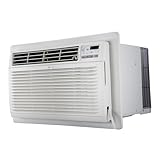
- Energy Efficient R-32 Refrigerant: With an energy efficiency ratio (EER) of 10.7, this wall unit employs the most efficient refrigerant currently used in the industry
- Wall AC Installation: This 9,800 BTU wall mounted ac unit is suited for a through the wall installation; It is not properly vented for a standard window installation
- Confident Cooling: This ac wall unit features 3 cooling speeds and 3 pre-programmed modes meant to cool rooms up to 440 square feet using a turbo fan; Energy Saver mode keeps the fan running to circulate air but turns off the compressor when your desired room temperature is reached; Dry mode removes up to 2.9 pints of moisture per hour; 4-way air deflection gives you ultimate flexibility
- Easy Wall Air Conditioner Installation: A plastic, snap-together trim kit finishes the indoor installation, while a plastic mesh grille protects the unit
- Wall Unit Air Conditioner Features: A washable, reusable filter, insulation foam, and a remote control are included
Square footage is only the starting point. A 900-square-foot insulated family room with limited glass is a different load than a 900-square-foot kitchen and dining area with a range, dishwasher, refrigerator, skylights, and afternoon sun. We adjust expectations for ceiling height, insulation, window quality, orientation, appliance heat, exterior wall exposure, occupancy, and whether the room opens into halls or adjacent rooms.
As a practical field rule, an 18,000 BTU wall AC is often right when the space is too large for a standard 8,000 to 12,000 BTU room unit, but the homeowner does not want the cost or disruption of central air. It is also useful in older homes where one room runs hotter than the rest of the house, especially upstairs rooms, converted porches, and rooms over garages.
The Tool Desk
Outbyte PC Repair FREERepair Windows errors before they cause bigger problemsFix Now →Outbyte Driver Updater FREEFix the driver behind crashes, sound loss and screen glitchesFind Drivers →It is not always the best answer. If you need quiet operation, heating, better humidity control, or year-round efficiency, a single-zone ductless mini-split deserves a serious look. A wall AC is usually less expensive upfront, but a mini-split is often the more refined long-term system.
Know the Four Product Categories Before You Shop
Retail listings can be confusing because “wall air conditioner” is used loosely. Before comparing prices, make sure you know which type you are actually buying.
True Through-the-Wall Room Air Conditioners
A true through-the-wall unit is designed to sit in a wall sleeve. The sleeve supports the chassis, protects the wall opening, manages drainage, and gives the unit the clearance it needs for airflow. These are common in apartments, additions, older homes, motels, and rooms where a window unit is not acceptable.
For replacement work, the big question is sleeve compatibility. A “universal fit” label does not guarantee a clean install. We still measure sleeve width, height, depth, rear grille style, interior trim coverage, and exterior slope. Even a half-inch mismatch can create air gaps, rattling, water problems, or an ugly interior patch.
Window/Wall Slide-Out Chassis Units
Some 18,000 BTU units are approved by the manufacturer for either window or wall installation. These typically have a slide-out chassis and specific instructions for wall thickness, support, and ventilation. If the manufacturer allows wall installation, follow that manual exactly.
Do not assume every window unit can be installed through a wall. Many window-only units need side ventilation that gets blocked inside a deep wall. That can overheat the compressor, reduce efficiency, cause short cycling, and shorten the life of the equipment.
PTAC-Style Units
Packaged terminal air conditioners, or PTACs, are the larger sleeve-style units often seen in hotels, multifamily buildings, and commercial rooms. Some are used in residential additions or accessory spaces. They usually require a dedicated sleeve, exterior grille, and careful electrical planning.
PTACs can be practical for large rooms, but they have a more commercial appearance. For a kitchen, bath-adjacent suite, or finished living area, we usually compare them against a ductless mini-split before committing.
Recommended Free Tools
Ductless Mini-Splits
A ductless mini-split is not the same as a through-the-wall AC. It uses an indoor wall-mounted air handler connected to an outdoor condenser through a small line-set penetration. Many 18,000 BTU mini-split listings claim coverage up to about 1,250 square feet, but actual performance still depends on load calculation and layout.
Installed cost is higher, commonly around $2,000 to $5,000 for a single-zone 12,000 to 18,000 BTU system in 2026. The tradeoff is better efficiency, quieter operation, heating capability when configured as a heat pump, and no large grille through the wall.
Best 18,000 BTU Wall AC Features to Prioritize
The best unit for a construction-minded homeowner is the one that cools the room, fits the wall correctly, can be serviced, and does not create hidden moisture or electrical problems.
Correct Capacity for the Actual Load
Start with 700 to 1,000 square feet as the normal range for 18,000 BTU. Then adjust. Add concern for high ceilings, lots of glass, poor attic insulation, west or south exposure, open stairways, and kitchen heat. Reduce expectations if the room is chopped into several areas with narrow doorways because room ACs do not distribute air like ducted systems.
Oversizing has its own problem. A unit that cools too fast may shut off before removing enough humidity. In kitchens, bathrooms, laundry areas, and bath-adjacent bedrooms, that can leave the room cold but clammy.
ENERGY STAR and CEER Ratings
ENERGY STAR certified room air conditioners are built to meet stronger efficiency standards, and many newer certified models use variable-speed technology. For a large 18,000 BTU unit that may run for hours at a time, efficiency matters. A cheaper fixed-speed unit can cost more over several summers if it cycles hard, runs loudly, and struggles with humidity.
Look for the CEER rating, not just the BTU number. CEER gives a better comparison of cooling output against energy use. If two units are close in price and capacity, the more efficient model is usually the better buy for a room used daily.
Inverter Compressor
An inverter unit can vary compressor speed instead of running only on full blast or off. In practice, that usually means quieter operation, fewer temperature swings, longer steady runtimes, and better humidity control. Premium 18,000 BTU smart inverter window/wall units often cost more than basic through-wall units, but the comfort difference is noticeable in bedrooms, offices, and family rooms.
Outdated Drivers Are Slowing You Down
One free scan finds every outdated or missing driver and matches the right update for your exact hardware.Free scan · exact hardware matchPC Slower Than It Used to Be?
A free scan shows the junk files, broken settings and background clutter dragging Windows down - then fixes them in one click.Free scan · Windows 10 & 11Voltage and Plug Type
Many 18,000 BTU room air conditioners are 208/230V or 230V appliances. That means a standard 115V outlet will not work. Before you buy, confirm the voltage, amperage, plug configuration, breaker size, and whether the manufacturer calls for a dedicated circuit.
Never use a plug adapter to make an air conditioner fit an outlet. If the unit requires 230V, plan for a properly installed receptacle and breaker. Depending on panel capacity, wall access, distance, permit requirements, and local labor, that electrical work can add several hundred dollars to $1,500 or more.
Sleeve, Chassis, and Grille Compatibility
The sleeve is not an accessory to ignore. It is the structural and weatherproof transition between your room and the exterior. Check whether the unit includes a sleeve, requires a separate sleeve, or fits an existing sleeve. Confirm dimensions before purchase: width, height, depth, rear grille clearance, trim kit, and drainage slope.
On replacements, we inspect the old sleeve for rust, sagging, failed sealant, missing insulation, and staining below the unit. Water marks under a sleeve are a warning that the wall assembly may already be compromised.
2026 Cost Guide: Unit, Installation, Electrical, and Alternatives
In 2026, most homeowners should think in installed project cost, not just unit price. A bargain 18,000 BTU unit can become expensive if it needs a new circuit, masonry cutting, siding repair, or a sleeve that does not match.
| Project Type | Typical 2026 Cost | What Is Usually Included |
|---|---|---|
| Unit only | $580 to $1,000+ | Many 14,000 to 18,000 BTU through-wall or window/wall units from major retailers |
| Premium smart inverter unit | $900 to $1,400+ | Higher-efficiency compressor, Wi-Fi controls, quieter operation, often 230V |
| Basic room AC installation | $682 to $1,137 | National estimate for standard room AC installation before unusual wall or electrical complications |
| Replacement in existing sleeve | $900 to $2,500 installed | Compatible sleeve, minor sealing, trim, setup, and testing |
| New through-wall installation | $1,800 to $4,500+ | Wall opening, sleeve, framing, flashing, interior/exterior patching, and possible electrical work |
| Dedicated 230V circuit | Several hundred to $1,500+ | Breaker, receptacle, wiring, permit, and finished-wall fishing where needed |
| Single-zone ductless mini-split | $2,000 to $5,000 installed | Indoor head, outdoor condenser, line set, electrical connection, condensate routing |
| Central AC or HVAC comparison | $3,884 to $28,000 | Ranges vary widely from AC installation to complete HVAC replacement |
The main price drivers are capacity, inverter versus fixed-speed compressor, heat pump or electric heat option, ENERGY STAR rating, sleeve requirements, wall type, siding or brick restoration, condensate management, electrical panel capacity, permit fees, and labor rates.
If you are already remodeling a kitchen, bath, or addition, the best time to plan a wall AC is before drywall, siding, tile, or cabinetry are complete. Once finishes are installed, fishing wire, cutting openings, and integrating flashing all cost more.
Installation Details That Separate a Good Wall AC From a Leaky One
A through-the-wall air conditioner should be treated like a small window installation. It penetrates the weather barrier, interrupts insulation, carries equipment weight, and has to shed water for years.
Framing and Support
For a new opening in a framed wall, the installer needs to identify studs, utilities, exterior conditions, and load path. Depending on wall layout and local code, the opening may need a proper header, jack studs, blocking, and a level bearing surface. The sleeve must support the chassis without sagging.
Rank #2

- Multiple Fan Speeds: 3 cooling and fan speeds with Auto Cool allow you to customize your cooling; Effortlessly adjust the wall unit air flow to suit your needs
- Maximum Usability: The wall mounted ac unit includes an easy to use digital control panel and remote control; 4-way air deflection gives you ultimate flexibility; Filter light reminder, trim kit, and a removable, washable filter are included for your convenience
- Auto Restart: After a power failure, Auto Restart will automatically turn the ac wall unit back on when power is restored
- Functional Wall Air Conditioner: The thermostat can be set between 60°F and 86°F (16°C and 30°C); This wall unit ac requires a special 230/208V LCDI Plug (NEMA 6 - 20); Create a cooling schedule to save on energy expenditures s with the 24 hour on/off timer
- Cools Rooms up to 700 Square Feet: LT1430CNR is ideal for cooling medium rooms (30' X 25'); With the 700 square feet cooling coverage, keep your kitchen, living room, bedroom, or office comfortably cool
In masonry, the work is different. Cutting brick, block, or stucco requires dust control, proper lintel or support assessment, and exterior patching that matches the building. This is rarely a casual DIY project.
Sleeve Pitch and Drainage
Most wall sleeves need a slight outward pitch so condensate drains outside instead of back into the room or wall cavity. Follow the manufacturer’s instructions. We check slope during installation, not after trim is installed, because a sleeve that drains the wrong way can damage drywall, flooring, framing, and exterior sheathing.
Flashing and Weather Barrier Integration
The sleeve should be flashed like a wall penetration. That means sill or pan flashing at the bottom, side flashing, head flashing, integration with the housewrap or weather-resistive barrier, exterior trim, and a sealant joint that can be maintained. Caulk alone is not a flashing system.
Free tools Windows power users keep installed
One-click scans. No signup required.
We also insulate and air seal the gap between sleeve and framing. Open gaps leak hot air, pull humid outdoor air into the wall, and make the unit work harder. Low-expansion foam, backer rod, compatible sealant, and trim are typical parts of a clean installation.
Service Access
Leave room to remove the filter, pull the chassis where applicable, access the plug, and clean the coils. A wall AC buried behind built-ins, tall cabinets, or tight trim will be harder to maintain and more expensive to replace later.
Independent reader supportYour contribution helps us test, update, and keep practical guides available for everyone.Kitchen, Bath, and Humidity Considerations
Because this topic sits close to kitchen and bath remodeling, moisture control deserves special attention. Cooling a humid room without controlling moisture can create comfort and finish problems.
In kitchens, the range, oven, dishwasher, refrigerator, and people all add heat. A wall AC that works fine in a bedroom may struggle during dinner prep. If the kitchen has a powerful range hood, the exhaust can also pull conditioned air out of the room and draw hot outdoor air in through leaks. Good make-up air planning matters in tighter homes.
What’s actually slowing this PC down?
Pick the symptom - the matching free tool is one click away.
In bath-adjacent rooms, humidity can spike from showers and tubs. The AC should not be used as a substitute for a properly ducted bath fan. We want the fan exhausting outdoors, the wall AC draining correctly, and the room finishes protected from condensation. Washable filter access also matters because kitchen grease and bath humidity can load filters faster than a normal bedroom.
Electrical safety is another issue. Depending on location and current code adoption, AFCI and GFCI requirements may apply to air-conditioning circuits or nearby receptacles. A licensed electrician should confirm the correct breaker, receptacle, disconnecting means if required, and local permit requirements.
Through-the-Wall AC vs Mini-Split vs Central Air
Each cooling option has a place. A through-the-wall 18,000 BTU unit is usually the economical choice for one large room when you can install or reuse a sleeve cleanly. It is visible inside and outside, and it puts a large grille through the exterior wall, but it can solve a room-specific cooling problem without ductwork.
A ductless mini-split costs more upfront but usually wins on comfort, sound, efficiency, and heating capability. It also needs only a small wall penetration for refrigerant lines, condensate, and wiring. For finished spaces where appearance and quiet operation matter, we often recommend pricing a mini-split before committing to a large wall unit.
Do these 3 things before closing this tab:
1Repair Windows errors before they cause bigger problems2Fix the driver behind crashes, sound loss and screen glitches3Clear out junk files and repair common Windows errorsCentral AC is a whole-house comfort solution, not a direct replacement for a single-room wall AC. In 2026, AC installation commonly runs from about $3,884 to $8,068 in some national estimates, while broader AC installation ranges are often cited around $5,000 to $12,000. Complete HVAC systems can run from $5,000 to $28,000 depending on equipment, ductwork, home size, and scope. If the entire house has comfort problems, central or ductless zoning may be smarter than stacking several wall units.
When to DIY vs When to Hire a Pro
A homeowner with basic tools may be able to replace a same-size slide-out chassis in a sound existing sleeve if the electrical circuit already matches, the sleeve drains correctly, and the manufacturer’s instructions are clear. Even then, the unit is heavy. Many 18,000 BTU units require two people to lift safely.
DIY is more reasonable when the project is a like-for-like replacement, the sleeve is not rusted or leaking, the plug matches the existing receptacle, the exterior grille is compatible, and no siding, framing, masonry, or electrical work is needed.
Hire a pro when cutting a new wall opening, working in brick or stucco, changing structural framing, adding a 230V circuit, seeing water damage, installing near kitchens or bathrooms, or replacing a unit that never drained properly. This work touches HVAC selection, carpentry, weatherproofing, electrical, and finish repair. A mistake can cost more than the original installation.
Permits vary by city and county, but electrical changes commonly require one. Exterior wall penetrations, structural modifications, multifamily buildings, condos, and historic districts may also trigger review. Before work starts, confirm local rules and association requirements if applicable.
Our Practical Buying Checklist
Before ordering an 18,000 BTU wall air conditioner, verify these items in writing or in the manufacturer’s installation manual:
- Cooling capacity: 18,000 BTU matched to a realistic room load, not square footage alone.
- Voltage: usually 208/230V or 230V at this capacity; confirm plug and breaker requirements.
- Installation type: true through-wall, approved window/wall chassis, PTAC, or ductless mini-split.
- Sleeve size: width, height, depth, rear grille, trim kit, support, and pitch.
- Efficiency: ENERGY STAR certification, CEER rating, and inverter operation if comfort matters.
- Noise rating: compare indoor sound levels if the room is a bedroom, office, or media room.
- Drainage: outward pitch and manufacturer-approved condensate path.
- Controls: remote, thermostat accuracy, Wi-Fi, scheduling, and serviceable filter access.
- Warranty: parts coverage, labor terms, and whether DIY installation affects coverage.
For most homes, our preferred specification is an ENERGY STAR 18,000 BTU unit with inverter operation, manufacturer-approved wall installation, a properly sized sleeve, washable filter access, and a dedicated matching circuit. If the budget allows and the room is used every day, we also price a single-zone mini-split as a comparison.
Bottom Line
The best 18,000 BTU wall air conditioner is the one that fits both the load and the wall. A good unit installed badly can leak, rattle, short cycle, or fail early. A slightly more expensive unit installed with proper sleeve support, flashing, insulation, drainage, and electrical service will usually be quieter, drier, safer, and cheaper to live with.
What’s actually slowing this PC down?
Pick the symptom - the matching free tool is one click away.
If you are cooling a large room, addition, kitchen-adjacent space, or finished suite, start with the building conditions. Measure the room, inspect the wall, confirm power, and decide whether you want cooling only or year-round heating and cooling. That sequence prevents the most common mistake we see: buying a high-BTU appliance first and discovering later that the house was not ready for it.
Frequently Asked Questions
What size room will an 18,000 BTU wall air conditioner cool?
ENERGY STAR guidance places 18,000 BTU room air conditioners at roughly 700 to 1,000 square feet. Reduce that expectation for high ceilings, poor insulation, west-facing glass, kitchens, sunrooms, heavy occupancy, or open layouts.
Does an 18,000 BTU wall AC need a 230V outlet?
Most 18,000 BTU room air conditioners require 208/230V or 230V power, not a standard 115V outlet. Always check the nameplate and installation manual before purchase, and use a properly installed matching receptacle and circuit.
Can I install a window air conditioner through a wall?
Only if the manufacturer specifically approves wall installation. Many window-only units rely on side ventilation that can be blocked by a deep wall sleeve, which may overheat the unit and shorten its service life.
Quick wins for a faster PC:
Scan for outdated or missing drivers - takes under a minuteDriver Scan →Clear out junk files and repair common Windows errorsFree Scan →Fix the driver behind crashes, sound loss and screen glitchesFind Drivers →How much does it cost to install a through-the-wall air conditioner in 2026?
A compatible replacement in an existing sleeve commonly costs about $900 to $2,500 installed. A new wall opening with framing, sleeve, flashing, finish repair, and possible 230V electrical work can run $1,800 to $4,500 or more.
Is a through-the-wall AC better than a mini-split?
A through-the-wall AC is usually cheaper upfront for one room. A mini-split often performs better for quiet operation, efficiency, heating, and appearance, but commonly costs about $2,000 to $5,000 installed for a single-zone system.
How should a wall AC sleeve be flashed and drained?
The sleeve should be supported, pitched slightly outward per the manufacturer’s instructions, air sealed, insulated around the frame, and integrated with pan, side, and head flashing so water drains outside instead of into the wall.
Quick Recap
Product prices and availability are accurate as of the date/time indicated and are subject to change. Any price and availability information displayed on Amazon at the time of purchase will apply.
Recommended Free Tools

