What’s actually slowing this PC down?
Pick the symptom - the matching free tool is one click away.
Some links on this page are affiliate links: if you buy through them we may earn a commission, at no extra cost to you.
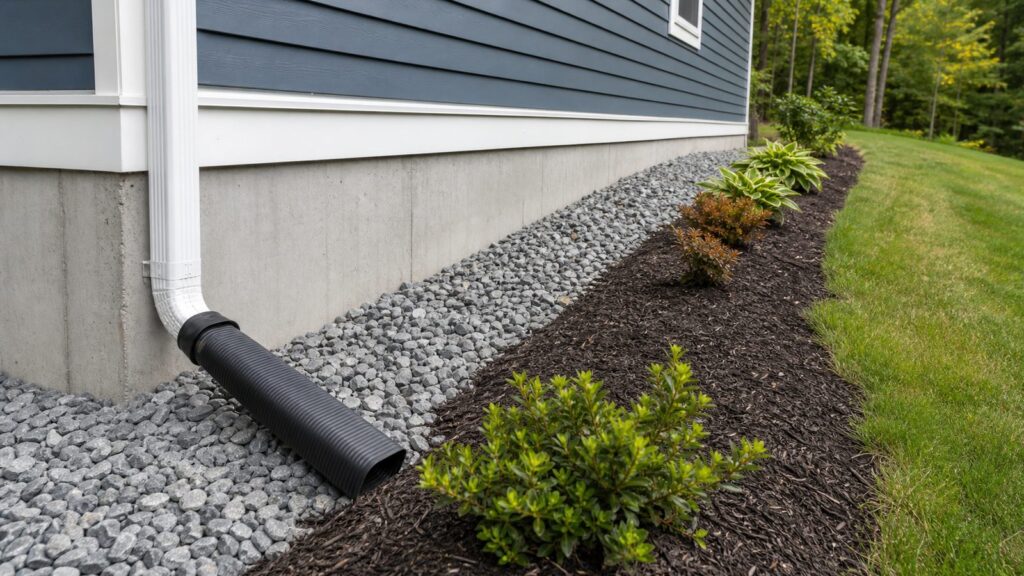
The best landscaping material around a foundation is not always the prettiest material on the shelf. It is the material that helps maintain slope, keeps moisture from sitting against the wall, leaves the foundation visible for inspection, and does not bury siding, vents, brick weep holes, or sill plates.
Our rule on construction and repair jobs is simple: grade first, drainage second, finish material last. If the soil under the bed slopes toward the house, river rock will not fix it. If mulch is piled high against siding, a clean planting design can still create rot, pest, and moisture problems. If edging traps water like a shallow bowl, even expensive stone can work against you.
For most homes, the four best materials around a foundation are compactable fill and topsoil for correcting grade, washed gravel or crushed stone for a durable drainage buffer, river rock for finished curb appeal where drainage is already correct, and limited organic mulch or pine straw for planted beds kept away from the wall.
Recommended Free Tools
As an Amazon Associate I earn from qualifying purchases.
Start With the Foundation Rule: Water Must Move Away
The International Residential Code gives a useful benchmark for residential sites: grade should fall at least 6 inches within the first 10 feet away from foundation walls where that is physically possible. Impervious surfaces within that same zone, such as patios and walkways, generally need to slope away from the building at about 2%, which is roughly 1/4 inch per foot.
That rule matters more than whether the top layer is mulch, pea gravel, river rock, or bark. Surface material changes how the bed looks, how splashback behaves, how weeds are managed, and how quickly the surface dries. It does not erase the direction of the soil grade underneath.
When our crews evaluate a foundation bed, we check four things before talking about finish materials:
#1 Best Overall

- This gravel has a variety of uses including landscape and garden decoration, drainage, and building walkways.
- Gravel can be used to surround flower beds, trees, and shrubs.
- Gravel can also be used to create pathways, driveways, and other outdoor flooring surfaces.
- Gravel can also be used to create pathways, driveways, and other outdoor flooring surfaces.
- Slope: Does the soil fall away from the house, or has it settled into a low strip along the foundation?
- Clearance: Is there at least about 6 inches of visible foundation for inspection, especially in termite-prone areas?
- Openings: Are brick weep holes, crawlspace vents, siding edges, stucco terminations, and sill plates clear?
- Discharge: Do downspouts, sump outlets, and hardscape surfaces send water away from the house?
If there is not enough room to create 6 inches of fall in 10 feet because of a property line, sidewalk, retaining wall, driveway, or other obstruction, the answer is not to hide the problem under rock. In that situation, you usually need a swale, area drain, downspout extension, French drain, or an engineered drainage plan that moves water to an approved collection point.
Quick Comparison: Best Materials Around a Foundation
Each material has a place. The mistake is asking one material to do every job. Fill dirt corrects slope. Gravel creates a durable inorganic buffer. River rock improves appearance and controls splashback. Mulch supports plants but must be kept thin and pulled back near the wall.
| Material | Best Use Around a Foundation | Typical Depth | 2026 Cost Range | Main Caution |
|---|---|---|---|---|
| Compactable fill dirt plus topsoil | Restoring slope before any finish material | As needed to rebuild grade, then cap with topsoil where planting | Fill dirt about $5-$30 per cubic yard; topsoil about $12-$55 per cubic yard | Do not raise soil above foundation clearance or bury exterior wall materials |
| Washed gravel or crushed stone | 12-24 inch inorganic buffer beside the house | 2-4 inches over corrected grade | Common landscape rock often about $50-$125 per ton; crushed limestone about $30-$200 per ton | Stone does not fix bad grading underneath |
| River rock or decorative stone | Finished beds where appearance and splashback control matter | 2-4 inches depending on stone size | River rock commonly about $45-$130 per ton or $50-$160 per cubic yard | Harder to weed and refresh once leaves and soil collect between stones |
| Cedar, hardwood, pine bark, or pine straw mulch | Planted beds set back from the foundation | 2-3 inches generally; less than 2 inches within 12 inches of the wall | Mulch about $25-$100 per cubic yard material only; $50-$150 per cubic yard installed | Can hold moisture and hide termite shelter tubes if piled against the house |
For coverage, one cubic yard covers about 162 square feet at 2 inches deep, 108 square feet at 3 inches, or 81 square feet at 4 inches. One ton of river rock may cover about 55-135 square feet, depending on rock size and depth.
Material 1: Compactable Fill Dirt and Topsoil
Fill dirt is not decorative, but it is often the most important landscaping material around a foundation. Many older homes have a settled strip beside the wall where backfill has compacted over time. Water runs down the siding, hits the ground, and collects in that low area. Homeowners often cover that strip with mulch or rock, but the low grade remains underneath.
The Tool Desk
Outbyte Driver Updater FREEScan for outdated or missing drivers - takes under a minuteDriver Scan →Outbyte PC Repair FREERepair Windows errors before they cause bigger problemsFix Now →On our job sites, we treat settled foundation beds as a grading problem first. The goal is to rebuild the soil plane so water leaves the wall. That may mean removing existing mulch or stone, adding compactable fill in lifts, shaping it away from the house, and then adding topsoil only where plants or turf need to grow.
Where Fill Dirt Works Best
Use compactable fill when the ground beside the house has dropped, when downspouts have washed channels into the bed, when water ponds along the foundation after a normal rain, or when a walkway or lawn edge is higher than the soil beside the house.
Fill dirt is different from topsoil. Fill dirt is usually used for structure and shape. Topsoil contains more organic matter and supports plants, but it settles more and is not the right material for building a stable drainage slope by itself. A common approach is compactable fill below, then a few inches of topsoil in planted areas.
Installation Targets
A practical target is to create as much of the code benchmark as the site allows: 6 inches of fall in the first 10 feet. On tight urban lots, side yards, or homes close to driveways, that may not be possible. Then the plan needs drainage features, not just more soil.
Do these 3 things before closing this tab:
1Scan for outdated or missing drivers - takes under a minute2Clear out junk files and repair common Windows errors3Fix the driver behind crashes, sound loss and screen glitchesDo not solve one problem by creating another. Keep at least about 6 inches of visible foundation where possible. Do not pack soil against wood siding. Do not cover brick weep holes. Do not reduce crawlspace vent clearance. Around stucco, keep the bottom termination exposed according to the wall assembly and local requirements.
Cost
For 2026, fill dirt commonly runs about $5-$30 per cubic yard, while topsoil is commonly about $12-$55 per cubic yard. Full yard grading is often priced around $0.08-$2.00 per square foot, depending on access, equipment, slope, hauling, drainage work, and whether the project needs retaining walls, swales, or drains.
A small DIY correction along one side of a house might only require a few cubic yards of material. A larger regrade involving equipment, hauling, downspout rerouting, or drain installation is a professional project.
Material 2: Washed Gravel or Crushed Stone
Washed gravel and crushed stone are strong choices for the first 12-24 inches beside a foundation, especially in wet climates, termite-prone regions, shaded side yards, and low-clearance areas where organic mulch would stay damp against the house.
This is the foundation buffer we often prefer when function matters more than planting right up to the wall. A stone strip keeps the area open, reduces splashback, discourages constant dampness at the surface, and makes it easier to see termite shelter tubes, cracking, staining, weep holes, and wall penetrations.
Crushed Stone vs Rounded Gravel
Angular crushed stone locks together better. It is usually the better choice where stability matters, such as along narrow side yards, downspout discharge paths, service walkways, and utility areas. Because the pieces interlock, they shift less under foot traffic and are less likely to migrate.
Rounded gravel is easier on the eye and can look more finished, but it rolls underfoot and moves more easily. If the bed will be walked on regularly, angular stone is usually the more practical material.
Rank #2

- Natural Aquarium Gravel: No fading natural stones are non-toxic no additional fillers, dyes, or oils, these beautiful outdoor decorative rocks are perfect for fish tank, turtle tank, aquarium, garden, and any landscaping project
- Safe to Fish Tank: Create a captivating focal point in your aquarium with these rocks for turtle tank. The aquariums fish tank turtle rocks are carefully selected and polished to provide a safe and comfortable environment for your aquatic pets
- Effects on Plants: Improve drainage for your potted plants with YISZM 5lbs rive rocks. The drainage rocks for potted plants will allow excess water to flow through the soil and prevent root rot in your precious houseplants
- Home Decor: Decorate your home with these polished pebbes for plants. Ideal for a variety of DIY crafts and home decor projects, the decorative polished pebbles can be used as accents in vases, candle holders, and more
- Outdoor Use: Transform your garden into a stunning oasis with these garden rocks. The attractive colors and textures of the 1/4" natural river rocks will add a touch of elegance to your flower beds, paths, and other areas of your garden
How Deep Should the Stone Be?
Most foundation stone beds perform well at 2-4 inches deep. Smaller gravel can be closer to 2 inches. Larger stone usually needs closer to 3-4 inches for full coverage. Going too deep is not automatically better. A deep rock bed can collect organic debris, become difficult to clean, and raise the surface too close to siding or masonry openings.
For rock-only beds, use a nonwoven geotextile fabric under the stone to separate rock from soil while still allowing water to pass through. We avoid plastic sheeting around foundations because it can redirect water unpredictably and trap moisture. The soil below the fabric still needs to slope away from the house.
Cost
In 2026, common landscape rock averages often fall around $50-$125 per ton. Crushed limestone can range from about $30-$200 per ton, and larger riprap can run about $35-$250 per ton. Labor can add about $25-$100 per ton, and delivery is often another $200-$400 depending on distance, volume, and access.
The cheapest installed stone is not always the cheapest long-term choice. Washed stone costs more than dirty aggregate, but it leaves less sediment in the bed and looks cleaner. Good edging also matters, but edging must not trap water against the house.
Material 3: River Rock and Decorative Stone
River rock is a good choice when the foundation area is already draining correctly and the homeowner wants a more finished look than common gravel. It is especially useful below roof drip lines, near porches, and along highly visible front elevations where splashback stains siding or masonry.
Quick wins for a faster PC:
Scan for outdated or missing drivers - takes under a minuteDriver Scan →Repair Windows errors before they cause bigger problemsFix Now →Fix the driver behind crashes, sound loss and screen glitchesFind Drivers →River rock is rounded, available in several sizes and colors, and visually softer than crushed stone. It can make a foundation bed look complete without using organic mulch against the wall. It is not, however, a repair for poor grade or failing drainage.
Where River Rock Works Best
Use river rock where roof runoff is controlled, downspouts are extended, and the soil already slopes away from the foundation. It works well in a 12-24 inch strip next to the house, with planted mulch beds outside that strip. That layout gives you a clean inspection zone at the wall and healthier soil farther out where shrubs and perennials actually grow.
River rock is also useful where mulch repeatedly washes out. On slopes, choose larger stone and use low-profile edging or stone checks that slow movement without creating a dam.
Maintenance Reality
Decorative rock is often sold as low-maintenance, but it is not no-maintenance. Leaves, pollen, grass clippings, and soil settle into the gaps. Over time, weeds germinate in that debris above the fabric. Once that happens, pulling weeds can be harder than in mulch because roots wrap into the stone layer.
Plan on periodic blowing, hand weeding, and occasional top-dressing. Avoid using river rock under trees that drop heavy leaves unless you are prepared to clean it regularly.
Cost
For 2026, river rock commonly ranges from about $45-$130 per ton or $50-$160 per cubic yard. Broader decorative stone categories can range from about $40-$800 per ton depending on stone type, color, size, finish, and local availability. Typical landscaping rock projects often land around $250-$1,500.
The biggest cost drivers are delivery, wheelbarrow distance, bed preparation, fabric, edging, and whether old material has to be removed or worked around. A front foundation bed with easy driveway access costs less than a narrow side yard that requires hand hauling every load.
Material 4: Thin Organic Mulch or Pine Straw
Organic mulch still has a place around a house, but it should be used with discipline near the foundation. Cedar, hardwood, pine bark, and pine straw help moderate soil temperature, reduce evaporation, and improve planted beds over time. They are good for shrubs and perennials. They are not good when piled against siding like a wet blanket.
Crashes, No Sound, or Screen Glitches?
Random freezes, missing sound and display glitches usually trace back to one bad driver. Find and replace yours safely.Free scan · under a minutePC Slower Than It Used to Be?
A free scan shows the junk files, broken settings and background clutter dragging Windows down - then fixes them in one click.Free scan · Windows 10 & 11Extension guidance commonly recommends keeping mulch thin near foundations and maintaining an inspection gap. A practical standard is less than 2 inches of mulch within 12 inches of the foundation, with about 6 inches of visible foundation left exposed where possible. Farther away from the wall, a typical mulch depth is 2-3 inches.
Termites, Moisture, and Inspection
Mulch does not automatically cause a termite infestation. The real problem is moisture and concealment. Thick mulch holds water, keeps soil cooler and damp longer, and can hide termite shelter tubes until they have reached wood or foam insulation. That is why we keep mulch pulled back and shallow near the house.
Rank #3

- 【10 lbs Pebbles】The size is about 3/8 inch. Total weight of a bag: 10 pounds. The mixed color gravels contains 5 colors: white, red, yellow, gray and apple green. Perfect size for succulent and cactus, as well as any vase or fish tank
- 【Pea Gravels】FANTIAN pea gravels are natural with no polish or coating and no added fillers, dyes, oils, or substances. The color won't fade away through time and it is completely safe to use around succulent plant, fish tank and outdoor.
- 【Decorative Rocks】Perfect for home decor projects, such as floral arrangements, vases, bowls, glass hurricane candle holders, cactus, bamboo plants and DIY for crafts. You can also use rocks for outdoor landscaping, bird fountain, outdoor patio pavers and soil toppers for plants in flower beds
- 【Top Dressing & Bottom Drainage】Pea gravels can be used on top of plants to decorate succulents and to keep soil from flying everywhere when watering. Used at the bottom, they provide good drainage and prevent root rot and overwatering
- 【Precautions】Gravels are crushed and polished with large pieces of stone and the stone some powder on surface. Before you use it, please make sure to wash it with water 2-3 times
Avoid irrigation that sprays the wall or keeps the first foot of soil constantly wet. Do not let mulch touch wood trim, door thresholds, porch posts, siding, or sill plates. Around brick veneer, keep weep holes open. Around crawlspaces, keep vents unobstructed.
Plant Spacing Near the Foundation
Shrubs should not be planted tight to the house. A minimum baseline is to keep shrub centers more than 2.5 feet from the foundation, and many shrubs need more room based on mature width. If a plant grows 6 feet wide, planting it 18 inches from the wall guarantees pruning problems, poor airflow, and maintenance headaches.
Leave enough space for someone to inspect, paint, repair siding, clean windows, and service utilities. A good planting plan looks slightly open on day one because it is designed for mature size, not the nursery pot.
Cost
For 2026, mulch materials commonly run about $25-$100 per cubic yard. Installed mulch often runs about $50-$150 per cubic yard, with some common installed ranges around $72-$87 per cubic yard. Bagged mulch is often about $2-$13 per bag, and one typical bag covers about 10 square feet at 2 inches deep.
Cost varies by mulch type, dyed versus natural product, cedar or cypress premium pricing, delivery distance, local labor, bed cleanup, edging, and minimum service charges. Mulch is cheaper to refresh than stone, but it needs replenishment more often.
What About Landscape Fabric?
Landscape fabric is useful in the right place and frustrating in the wrong one. Under rock-only beds, a good nonwoven geotextile helps keep stone from sinking into soil and keeps soil from pumping up through the rock. That is a legitimate use.
Free tools Windows power users keep installed
One-click scans. No signup required.
Under organic mulch and actively planted beds, fabric often creates long-term problems. It clogs with fine particles, blocks soil improvement, interferes with planting, and still grows weeds once seeds germinate in decomposed mulch above the fabric. When weeds root through the fabric, removal becomes harder than it needed to be.
Our practical recommendation is straightforward: use nonwoven geotextile under gravel, crushed stone, or river rock where the bed is mostly permanent and not heavily planted. Skip permanent fabric under organic mulch beds unless there is a specific site reason. Cardboard can be useful as a temporary weed-suppression layer under mulch, but it should not be used to block drainage or bury the foundation line.
Edging Can Help or Hurt
Edging keeps stone and mulch from spreading into turf, but it can also create a basin if it is installed too high or without drainage breaks. Around a foundation, edging should define the bed without trapping water on the house side.
Metal, plastic, stone, concrete, and paver edging can all work. The right choice depends on traffic, appearance, curves, budget, and whether the bed needs to shed water across the edge. In low areas, use breaks or outlets so water can escape.
Recommended Free Tools
Basic edging materials can range from about $0.50-$18 per linear foot. Installed landscape curbing commonly runs around $2-$11.50 per linear foot in many cost guides, while concrete or hardscape curbing is often about $15-$20 per linear foot installed. Premium stone or custom work can approach $50 per linear foot.
Independent reader supportYour contribution helps us test, update, and keep practical guides available for everyone.Best Foundation Bed Layouts We Use
For many homes, the strongest layout is a hybrid: corrected grade, then a narrow inorganic buffer at the wall, then planting beds farther out. This keeps the foundation dry and visible while still giving the home curb appeal.
Wet or Termite-Prone Areas
Use a 12-24 inch crushed stone or river rock buffer directly beside the foundation. Keep organic mulch outside that strip. Maintain about 6 inches of visible foundation and keep irrigation heads from spraying the wall.
Front Elevation With Shrubs
Correct the grade first. Install a stone strip along the foundation. Plant shrubs with centers at least 2.5 feet from the wall, and more if mature size requires it. Use mulch around the plantings at 2-3 inches deep, tapering thinner as it approaches the stone buffer.
The Tool Desk
Outbyte Driver Updater FREEScan for outdated or missing drivers - takes under a minuteDriver Scan →Outbyte PC Repair FREEClear out junk files and repair common Windows errorsFree Scan →Rank #4

- Natural lightly polished for smooth effect,contains a wide variety of natural colors and shapes,include a variety of different shades of browns, Gray, whites, Yellowand black rocks.With a size of approximately 0.32-0.48 inches.
- They are long lasting and will not deteriorate like mulch does.
- Use for flower arrangements, vase fillers, walkways, water features, ponds,exposed aggregate flooring or walls, swimming pool areas and many other areas.
- Ideal for home decor and a creative interior and exterior design.
- Helps soil retain moisture helps you keep clean and nice all of your decoration places.
Narrow Side Yard
Use angular crushed stone over geotextile after grading the soil away from the house. Avoid bulky shrubs. Extend downspouts through or beyond the side yard so roof water does not dump into the bed. If the side yard cannot be graded properly, add a swale or drain rather than relying on stone alone.
Brick Veneer Foundation Area
Keep weep holes open and visible. Do not bury the lower brick course with mulch or stone. Use shallow stone or a carefully maintained bed that preserves drainage and ventilation.
When to DIY vs When to Hire a Pro
A homeowner can often handle a small foundation bed refresh if the site already drains well. Pull old mulch back from the wall, expose the foundation, add a 12-24 inch stone buffer, place mulch farther out, and verify that downspouts discharge away from the house.
DIY is reasonable when you are working on a short bed, moving less than a few cubic yards of material, maintaining existing positive slope, and not changing where water leaves the property. A typical weekend project might include removing excess mulch, installing fabric under a rock strip, placing 2-4 inches of washed stone, and refreshing mulch around plants.
Do these 3 things before closing this tab:
1Repair Windows errors before they cause bigger problems2Fix the driver behind crashes, sound loss and screen glitches3Clear out junk files and repair common Windows errorsHire a professional when water is entering a basement or crawlspace, soil slopes toward the house, the project changes drainage onto a neighbor or public right-of-way, you need drains or swales, the site requires equipment near utilities, or a retaining wall is involved. Also bring in help if you have recurring settlement, foundation cracking, negative grade at multiple elevations, or hardscape that pitches toward the home.
Some drainage changes may require permits or approval, especially where stormwater is directed to a street, easement, storm drain, or neighboring property. Local rules vary, but the principle is consistent: do not solve your water problem by sending it somewhere it is not allowed to go.
Installation Checklist
Use this checklist before you place the final material:
- Confirm the soil slopes away from the foundation, aiming for 6 inches of fall in 10 feet where possible.
- Extend downspouts so roof water does not discharge into the foundation bed.
- Keep about 6 inches of visible foundation for inspection where practical.
- Keep mulch less than 2 inches deep within 12 inches of the wall.
- Install stone at 2-4 inches deep, not so deep that it buries wall openings or siding.
- Use nonwoven geotextile under rock-only beds.
- Keep shrub centers more than 2.5 feet from the foundation, then adjust outward for mature plant size.
- Set edging low enough, or with breaks, so it does not hold water against the house.
- After installation, run a hose test. Water should move away from the wall and should not pond behind edging.
The Bottom Line
The best foundation landscaping is built from the ground up. Correct the grade first with compactable fill where needed. Use gravel, crushed stone, or river rock as an inorganic buffer where moisture, inspection, and splashback matter. Use organic mulch for plants, but keep it thin near the house and pulled back from the wall.
Free tools Windows power users keep installed
One-click scans. No signup required.
If you remember one thing, remember this: the finish material is only the top layer. The slope underneath decides where the water goes. Get that right, keep the foundation visible, and the landscaping will protect the house instead of working against it.
Frequently Asked Questions
Is rock or mulch better around a house foundation?
Rock is usually better directly beside the foundation because it does not hold moisture like organic mulch and keeps the wall easier to inspect. Mulch is better farther out in planted beds where shrubs and perennials need soil moisture and organic matter.
How far should mulch be kept from the foundation?
Keep mulch thin near the house: less than 2 inches deep within 12 inches of the foundation. Also maintain about 6 inches of visible foundation where possible so termite activity, weep holes, vents, and wall conditions can be inspected.
How deep should gravel or river rock be around a foundation?
Most gravel or river rock beds around a foundation should be 2-4 inches deep. Smaller stone can be closer to 2 inches, while larger decorative rock usually needs 3-4 inches for coverage. Do not install it so deep that it buries siding, vents, or brick weep holes.
Can landscaping cause basement leaks or foundation damage?
Yes. Landscaping can contribute to leaks when soil slopes toward the house, edging traps water, downspouts discharge into beds, mulch is piled against the wall, or hardscape pitches toward the foundation. Material choice helps, but proper grading and drainage matter most.
What slope is required away from a house foundation?
The standard residential benchmark is at least 6 inches of fall within the first 10 feet away from the foundation where physically possible. Impervious surfaces near the house generally need to slope away at about 2%, or roughly 1/4 inch per foot.
Do I need landscape fabric under rocks around my house?
Use nonwoven geotextile fabric under rock-only foundation beds to separate stone from soil while allowing water to pass. Avoid permanent fabric under organic mulch or actively planted beds unless there is a specific reason, because it can clog and complicate weeding and planting.
Quick Recap
Product prices and availability are accurate as of the date/time indicated and are subject to change. Any price and availability information displayed on Amazon at the time of purchase will apply.

