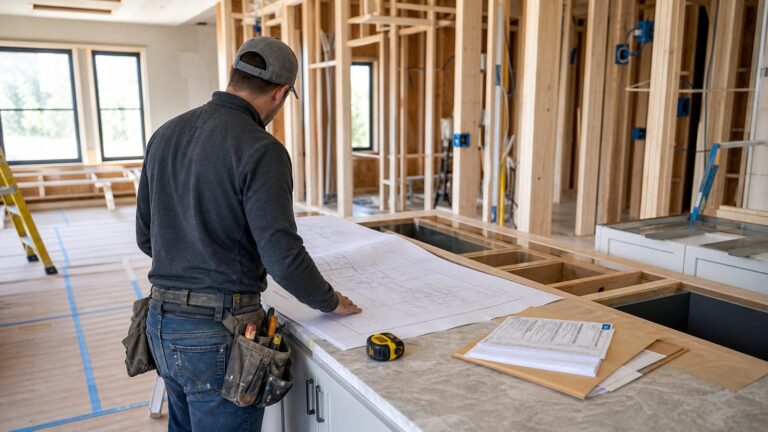
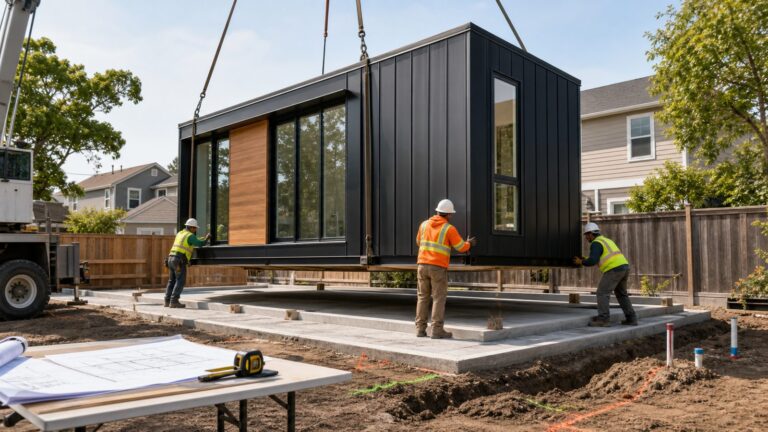
In the United States, there is no single nationwide “historic-home permit.” The approvals for a renovation depend on the work, local building and zoning codes, and whether the property is covered by a local landmark or historic-district ordinance. Start with the local building department to identify construction permits, then ask the local preservation authority whether design review or a Certificate of Appropriateness (COA) is also required. Do both before ordering materials or starting work: preservation rules may affect the design or materials that can be approved.
Which approvals might apply?
Renovating a house that is old, listed on the National Register of Historic Places, or locally designated can involve different legal and administrative questions. Age alone does not establish that a property is legally protected. Nor does one designation automatically answer which permits a particular project needs.
As an Amazon Associate I earn from qualifying purchases.
Think of the process as separate approval tracks. The local building department determines permits and inspections for the proposed construction and related work. A local preservation authority may review whether the work is appropriate for a designated property or district. Federal review can enter the picture when a project involves federal funding, a federal license, or a federal permit. A federal rehabilitation tax-credit application, if relevant, is another distinct process—not a substitute for ordinary permits.
Free tools Windows power users keep installed
One-click scans. No signup required.
| Approval path | What can trigger it | What to ask |
|---|---|---|
| Building, trade, zoning, or demolition approval | The proposed work and the applicable city or county codes | Which permits, plans, inspections, and sequencing apply to this exact scope? |
| Local preservation review | A local landmark or historic-district designation and the ordinance’s definition of reviewable work | Does the address qualify, is the proposed work reviewable, and is a COA or another approval required? |
| Federal agency review | Federal funding, a federal license, or a federal permit connected to the project | Which agency is responsible for historic-preservation review, and what must happen before work proceeds? |
| Federal rehabilitation tax-credit certification | An eligible rehabilitation project seeking the federal tax credit | Does the property and project qualify, and what application steps must be completed? |
The responsible offices, requirements, exemptions, fees, and timelines vary by jurisdiction and project. The National Park Service (NPS) guidance describes common practice; it cannot determine the approvals for a particular address.
#1 Best Overall

- Valued Carpenter Pencil Set: You will get 2 pcs solid carpenter pencils with 26 piece 2.8 mm refills, 1 replaceable sharpener, 1 plastic storage box.The complete carpenter pencils combination allows you to finish your work faster and more easily
- Deep Hole Marker Pencil: The deep-hole construction pencils adopts 45mm elongated tip design, which is more convenient to mark in the small hole or in other tight areas that other carpenter markers cannot reach
- Carpenter Pencils with Sharpener: The sharpener is screwed into the top of the work pencil, which won't get lost either. Built-in pencil sharpener that keep the lead with pointed and smooth to Improves line of sight in fine work
- Stronger Solid Lead: This work pencil is matched with a 2.8 mm thick lead , which is much thicker and stronger during the drawing process of construction work, it will not break or damage easily
- Marks on Various Surfaces: 3 colors solid construction pencil can marks on various surfaces,such as metal, plastic, wood, paper etc. Ideals for woodworkers, contractors, craftsmen, builders, merchants and masons
Start by checking the property’s actual designation
Ask the city or county preservation office whether the home is individually designated locally or lies within a locally designated historic district. These are local status questions. If relevant, ask the State Historic Preservation Office (SHPO) about state-level designation or a project involving a state or federal program. Keep in mind that local, state, and National Register status are not interchangeable.
National Register listing by itself does not restrict a private owner’s changes under federal law. It does not automatically place a home under local landmark rules, either. State or local protections can apply independently, and a federal project connection can change the analysis. The NPS explains the distinction in its National Register FAQs.
- Not sure whether the house is designated? Give the local preservation office the street address and ask it to check the official designation and district boundaries.
- The property appears on the National Register? Ask separately whether local or state rules apply and whether the project has a federal connection.
- The house is old but has no known designation? Do not assume that age either triggers or exempts review. Confirm the status and applicable local requirements with the relevant offices.
Ask the building department about permits for the actual scope
Send or bring a clear description of the work to the municipal or county building department. A broad question such as “Do I need a permit to renovate?” is harder to answer than a scope that identifies what will change. List interior layout changes, window work, roof work, an addition, mechanical upgrades, or demolition if those are part of the project. These are examples to ask about, not a universal list of work that always requires a permit.
Quick wins for a faster PC:
Repair Windows errors before they cause bigger problemsFix Now →Fix the driver behind crashes, sound loss and screen glitchesFind Drivers →Ask whether the scope triggers building, electrical, plumbing, mechanical, zoning, demolition, or other approvals; whether any applications are separate; which drawings or specifications are required; and what inspections will take place. Also confirm the order of approvals. A permit may depend on another decision, or separate permits may have their own application and inspection requirements. Only the relevant jurisdiction can provide the applicable code requirements, thresholds, fees, and schedule.
Rank #2

- Ergonomically Designed: Work in tight areas with a compact design that gets into tough spots
- Compact and Lightweight: Both tools are designed to fit into difficult to reach spaces. The 1/4" impact driver has a length of 5.55 in. and weighs just 2.8 lbs, while the 1/2" drill/driver measures only 7.5 in. and weighs 3.6 lbs
- Both the DEWALT impact driver and electric drill driver feature integrated LED work lights with a convenient 20-second delay, ensuring enhanced visibility in dimly lit or challenging work areas
- One-Handed Loading - Keep one hand free with a 1/4 in. hex chuck that accepts 1 in. bit tips
- Power drill cordless with 1/2" single sleeve ratcheting chuck provides tight bit gripping strength, making bit changes faster and more secure
Do not treat a contractor’s general experience in another city as confirmation for this address. Local codes and procedures differ, and a permit requirement can turn on the details of the work. Get the department’s answer in writing where possible, especially if officials say that a proposed item does not need a permit.
Check preservation review before exterior work
Contact the local preservation officer or commission before changing the exterior of a locally designated home or a property in a historic district. NPS describes Certificates of Appropriateness as commonly required before most exterior work in local historic districts, and notes that a COA can sometimes be required before a building permit is issued. The local ordinance—not a general national rule—determines whether the property and proposed work are covered.
Ask the preservation office specific questions rather than assuming that every project needs a COA or that routine work is automatically exempt:
Windows Errors? Fix Them Before They Spread
Repair common Windows errors and clear accumulated junk for a smoother, more stable PC - no reinstall needed.Free scan · no reinstallOutdated Drivers Are Slowing You Down
One free scan finds every outdated or missing driver and matches the right update for your exact hardware.Free scan · exact hardware match- Is the address individually landmarked or inside a locally regulated district?
- Which kinds of work require review, and are routine maintenance or repair activities exempt?
- Is the approval called a COA, or does the jurisdiction use another form of preservation approval?
- Does preservation approval need to come before a building permit application or issuance?
- What drawings, photographs, dimensions, product information, or material samples must accompany an application?
- Can staff approve the work, or must a preservation commission consider it?
- What are the submission deadlines and meeting schedule for this jurisdiction?
NPS’s overview, “In Answer to Your Questions: Working on the Past in Local Historic Districts,” Section E, describes common COA practice. It is useful context, not a replacement for the local ordinance or a determination by the local office.
Rank #3

- 【Great Compatibility】This Katerk 1/4 inch hex shank bit holder is specifically designed for 1/4 inch hex shank drill bits. It's compatible with most 1/4 fast hex handles, hex sockets, various electric screwdrivers, and handheld screwdrivers. The bit holder makes it a valuable addition for any handyman.
- 【Secure and Safe】Built with a secure backup nut design, each drill bit holder securely locks onto your bits, ensuring they stay firmly in place. Additionally, our bit holder incorporates a high-quality steel ball rolling design that holds up to several kilograms of weight, ensuring your various drill bits don't fall off.
- 【Easy One-Handed Operation】The bit holder for impact driver allows you to change bits single-handedly, simplifying your workflow. Its multi-color design further allows for quick identification of the drill bit you need.
- 【Compact and Convenient】Thanks to its compact size, this 1/4 inch bit holder is easy to carry around. The bit holder allows for easy attachment to various tools, making this a convenient addition to your construction accessories. The Katerk bit holder is cast from high-quality alloy material, promising a long product lifespan. Despite its rugged strength, the bit holder remains lightweight, making it portable.
- 【Cool Christmas Gift For Men Stocking Stuffers】 This screwdriver bit holder, driver bit holder, impact bit holder, can be given as a gift to your loved one, especially for anyone involved in construction or electrical work. It's a must-have for stocking stuffers for men and women, tools gifts for dad, tech gadgets for men, gifts for dad, gifts for him, gifts for husband, gifts for boyfriend, cool gadgets for men, and cool gifts for dad.
Why the order matters
Preservation review may affect acceptable design choices, materials, or other project details. If a proposed window, roof treatment, addition, or exterior alteration needs review, ordering materials or beginning work before getting the required decision can leave the owner with a design that cannot be approved as submitted. Ask about review and permit sequencing before finalizing purchases or construction dates.
Unapproved work can have local legal consequences. The exact consequences and available correction process depend on the ordinance and the facts; ask the preservation authority how it handles work started without approval. Do not infer that a building permit, if issued, also serves as preservation approval.
Determine whether federal review or tax-credit certification is relevant
Federal project connection
A private owner’s National Register listing alone does not trigger federal restrictions on renovation. The situation can differ when a project uses federal funds or requires a federal license or permit. If either may apply, contact the responsible federal agency and the SHPO to ask how historic-preservation review affects the project and when it must occur. The answer depends on the specific project and agency involvement; National Register status alone is not a substitute for that inquiry.
Federal rehabilitation tax credit
Tax-credit certification is optional and separate from construction permitting. The federal rehabilitation tax credit is for qualifying projects under the program’s rules; owner-occupied residences do not qualify under the NPS eligibility guidance. If you are considering the credit, consult the SHPO and the NPS application instructions before construction, rather than treating certification as an approval that can be assumed after the work is complete.
Rank #4

- Long Nib and Deep Hole Marker: Our mechanical carpenter pencil with 45mm nib is designed for easy marking of deep holes or narrow areas. These construction pencils are the great choice for woodworking tools, construction tools, carpenter tools, contractor tools, wood carpentry tools and architect tools
- Extra Refills in 2 Colors for Versatile Marking: The construction mechanical pencil comes with 12 extra 2.8mm refills, including 6 red and 6 black refills. The black refill is suitable for light surfaces, while the red wax is perfect for dark surfaces. Our carpenter mechanical pencil makes sure that you'll have an ample supply for extended use
- Built-in Sharpener: Our construction pencil comes with a built-in sharpener to ensure the mechanical pencil tip is always sharp and ready for use. Never buy an extra pencil sharpener again. A great tool for any woodworker pencil, contractor pencils. The refill can easily be extended or retracted with a simple click of the pencils mechanical, allowing you to work more efficiently and accurately
- Portable Clip Design: Our deep hole construction pencil features a portable clip design, easy to carry and attach to your pocket or tool box, so that you can keep the carpenter pencils mechanical close at hand, making it a convenient tool to have on the go. Great gifts choice for carpenters
- Stronger Pencil Lead: The black refills are made of lead, sturdy and smooth. The red refills are made of wax, clear and light. These marking pencils are much thicker and stronger than normal pencils during the marking process of construction work, suitable for various surfaces, such as glasses, metal, boards, floors, walls, furniture, etc. The written marks can be easily wiped with a wet paper towel when needed
The NPS describes the process in its Historic Preservation Certification Application and sets out program conditions in its eligibility requirements. Completed, adequately documented applications are generally reviewed within 60 days of receipt, with the NPS describing a typical 30-day state-level and 30-day federal-level review. That is a stated general estimate for tax-incentive certification, not a building-permit or local COA timeline; confirm current processing information with the program and SHPO.
NPS reports that its historic-preservation tax-incentive program has supported $127.12 billion in private investment and preservation of more than 50,000 historic properties since 1976, as presented on its 2026 program page. Those are cumulative program figures, not a forecast of an individual homeowner’s benefit or a measure of permit activity. See the NPS Historic Preservation Tax Incentives page.
Independent reader supportYour contribution helps us test, update, and keep practical guides available for everyone.Use preservation standards as guidance, not as a permit
The Secretary of the Interior’s Standards cover four treatments: preservation, rehabilitation, restoration, and reconstruction. For an owner adapting a property for continued or new use, rehabilitation is often the relevant framework because it allows compatible changes while retaining historic character. The appropriate treatment depends on the property’s significance and condition, available documentation, intended use, and any governing program.
NPS says the Standards are widely used and adopted at federal, state, and local levels; some standards are regulatory within defined federal programs. The related Guidelines are advisory unless a governing program or local requirement incorporates them. Neither the Standards nor the Guidelines should be mistaken for a universal permit or a substitute for building-code compliance. Read the NPS pages on the Secretary of the Interior’s Standards and Guidelines for Applying the Standards, and consult a preservation professional early if the project involves significant exterior, structural, or complex rehabilitation work.
Best Value

- Milwaukee Ink all Fine Point Marker, Black, 4 Per Pack
- 4 per pack Features Clog Resistant Marker Tip Writes through Dusty, Wet and Oily Surfaces Durable Marker Tip for Writing on Concrete, OSB and Rough Surfaces
- Clog resistant tip writes on dusty, wet and oily surfaces and is optimized for rough surfaces such as OSB, cinderblock and concrete
- Hard hat clip- attaches for easy access
- Quick dry time with reduced smearing and marking
A practical approval sequence
- Define the project. Write down the property address, any known designations, and a room-by-room or element-by-element scope. Identify whether the project includes interior changes, exterior work, structural alterations, additions, or demolition.
- Contact the building department. Ask which permits and inspections apply to that exact scope, what plans and supporting materials it needs, and whether approvals must be obtained in a particular order.
- Contact the local preservation authority. Confirm local designation and district status, review triggers, maintenance exemptions, the required approval type, application materials, decision-maker, and timing.
- Check for federal involvement. If federal funding, a federal license, or a federal permit is connected to the project, contact the responsible agency and SHPO about historic-preservation review.
- Address tax-credit certification separately, if applicable. Consult the SHPO and current NPS application process before construction if pursuing the federal rehabilitation tax credit.
- Wait for required approvals before starting affected work. Do not order materials or begin exterior work that may be subject to preservation review until the relevant office confirms the requirements and the necessary decisions are in hand.
- Keep the approved record accessible. Retain written determinations, permits, approved plans, and conditions, and ensure contractors work to the approved scope. Follow any inspection or notice requirements given by the relevant offices.
Written records make it easier for the owner and contractor to distinguish approved plans from later changes. If the scope changes—for example, a different material or an added exterior alteration—ask the relevant office whether the change requires amended approval before proceeding.
What cannot be answered without your location and scope
No nationwide checklist establishes every permit, exemption, fee, or processing time for a historic-home renovation. A city may regulate work differently from a neighboring county, and a local preservation ordinance may cover only designated properties and specified types of work. The building department and preservation authority can give the answer for the address and proposed work; if there is a federal project connection, the responsible agency and SHPO can clarify that separate track.
Before hiring a contractor to begin work, aim to have a clear written understanding of which approvals apply, which office issues each one, whether approvals must come in sequence, and what version of the plans each approval covers. This avoids treating National Register listing, a building permit, preservation review, and tax-credit certification as if they were interchangeable.
Quick Recap
Product prices and availability are accurate as of the date/time indicated and are subject to change. Any price and availability information displayed on Amazon at the time of purchase will apply.