What’s actually slowing this PC down?
Pick the symptom - the matching free tool is one click away.
Green building materials can cost more upfront, but there is no standard premium and no guaranteed payback. Their value depends on the whole assembly: material performance, climate, installation, moisture control, maintenance, energy use and replacement timing. For homeowners, the useful comparison is not “green” versus “conventional” in the abstract; it is the installed cost and expected performance of specific options in a specific home.
Air sealing, correctly installed insulation and climate-appropriate windows can work together to improve comfort and durability while reducing utility and maintenance costs. Low-emission paints and finishes address a different concern: product emissions. They should not be treated as proof of a health benefit. The best choices are those that fit the building, are detailed and installed well, and make sense over the period you expect to own the home.
As an Amazon Associate I earn from qualifying purchases.
Are green building materials more expensive?
Sometimes, but the label alone does not determine the price. A material with a higher purchase price may reduce energy use, maintenance or replacement costs; a lower-cost option may require more upkeep or perform poorly when installed in the wrong assembly. The result depends on local labor and material prices, project design, climate, energy costs, and the scope and quality of installation.
Recommended Free Tools
Compare lifecycle cost: the initial material and installation cost plus expected energy, maintenance, repair and replacement costs over a stated period. Ask what is included in each bid. “Material cost” can leave out preparation, flashing, air or water control layers, installation labor, disposal, and finish work that materially affect both price and performance.
#1 Best Overall

- Use for a variety of indoor and outdoor project surfaces including wood, metal, plaster, masonry or unglazed ceramic
- Water-based acrylic formula is low odor, resist chips and provides long-lasting protection
- Covers up to 120 sq ft and dries to touch in 30 minutes for quick project completion
- Semi-gloss finish minimizes surface imperfections, goes on smoothly and provides excellent hide
- Prior to application sand surfaces with 180/200 grit sandpaper, then wash with a degreaser, allow the surface to dry and apply paint
Integrated design can change costs beyond the material package. A well-insulated, carefully air-sealed home may require different heating or cooling equipment sizing than a less efficient design. Evaluate the enclosure and mechanical system together rather than assuming every upgrade is an isolated add-on. The U.S. Department of Energy’s Building America Solution Center guidance on residential efficiency and ENERGY STAR’s building-science education both emphasize the coordinated role of air sealing, insulation and windows.
What published cost figures do—and do not—show
Several published figures illustrate possible outcomes, but they are not interchangeable estimates for a new project. Their assumptions and contexts matter:
| Figure | What it describes | How to use it |
|---|---|---|
| 2%–8% resale-price premiums | ENERGY STAR Building Science Education reports this range from studies in many markets. It also cites a large national study by Freddie Mac economists that found a 2.7% average sales-price premium for rated energy-efficient single-family homes, and a 3%–5% premium for more efficient homes compared with less efficient rated homes over 2013–2017. | These are reported study findings, not a forecast of what a particular home will sell for. Local market, home condition, ratings and buyer preferences matter. |
| About 4% added cost | The builder-reported figure for energy upgrades in the DOE Weiss Building & Development case study. | This describes that project, not a typical green-building surcharge. The case study’s mortgage-and-utility comparison assumed a 30-year mortgage at 4.75%; it is not a current financing calculation. |
| $2/ft² and up to $4/ft² | A DOE Federal Energy Management Program (FEMP) window-purchase analysis, in 2020 dollars, calculated that required ENERGY STAR-qualified windows save money if priced no more than $2/ft² above less-efficient models; its best-available models save up to $4/ft². The associated table gives lifetime savings of $2/ft² and $4/ft², respectively, against the less-efficient comparison. | This is a federal purchasing calculation under the page’s assumptions, not a current residential quote or a prediction for every window replacement. |
| $550 annually and $23,800 over 30 years | The DOE Greenlake Cottage record’s reported energy-cost savings with PV for that particular home. | These are case data for the home and its photovoltaic system, not typical savings from cork insulation or windows alone. |
None of these figures replaces local bids or a project-specific energy estimate. For an apples-to-apples comparison, ask contractors to state the material and labor scope, installation details, warranty, expected maintenance, analysis period and assumptions behind any projected savings.
Quick wins for a faster PC:
Fix the driver behind crashes, sound loss and screen glitchesFind Drivers →Repair Windows errors before they cause bigger problemsFix Now →Rank #2
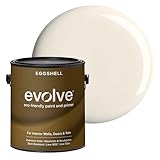
- PAINT + PRIMER IN ONE: Evolve’s paint-and-primer formula helps you get great coverage from the start, sealing your surface and reducing the extra work of multiple coats.
- AVAILABLE IN MULTIPLE SHEENS, COLORS & SIZES: Choose from a curated palette of designer colors in Flat, Eggshell, Satin, and Semi-Gloss sheens to match any style, room, or project. Available in 1-Gallons & 5-Gallons.
- EGGSHELL SHEEN – Soft, Velvety Glow: Offers a gentle sheen that balances elegance with durability. Ideal for moderate-traffic areas like dining rooms, hallways, and family rooms. Easy to clean without compromising the finish.
- STAIN & SCRUB RESISTANT: Built to last in real spaces, Evolve helps resist marks, scuffs, and water spotting, so your home continues to look polished and well-maintained.
- DESIGNED FOR MOISTURE-PRONE AREAS: Formulated to perform well in bathrooms, kitchens, entryways, laundry rooms, and other high-humidity spaces.
How do green materials affect comfort?
Comfort is a system outcome, not a feature guaranteed by any single product. ENERGY STAR’s Building Science Education page explains that “Comprehensive air sealing, correctly installed insulation, and high-performance windows work together to increase comfort, improve durability, reduce maintenance costs, and lower monthly utility bills.” The practical implication is that an upgrade in one part of the enclosure may underperform if air leaks, weak installation or poorly managed moisture elsewhere remain unaddressed.
Air sealing and insulation
Insulation slows heat transfer through a wall, roof or floor; air sealing limits uncontrolled movement of air through gaps and joints. They solve related but different problems. Insulation needs to be installed as designed, with gaps and compression avoided, while air-control details need to connect across the enclosure. The assembly must also manage water and allow appropriate drying for the climate and materials.
A DOE Greenlake Cottage project used three inches of cork insulation, reported as R-12, in its walls and roof deck, alongside air- and water-management details. It is a documented example of one material within one designed assembly—not a universal recommendation, cost benchmark or guarantee that the same thickness will suit another home.
Rank #3
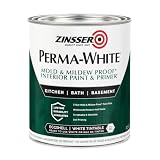
- Self-Priming formula - requires no sanding
- Mold & Mildew-Proof paint film - guaranteed for 5 years
- Resists dirt and moisture on film coating
- Finish is washable and scrubbable with soap and water
- Product contains a mildewcide to prevent the growth of mold and mildew on the paint film only
Windows and solar exposure
Windows influence heat loss, solar gain, glare, fading, sound, ventilation and the feeling of cold or hot surfaces near the glass. DOE residential window guidance recommends considering local climate and orientation. In cold climates, a low U-factor can help limit heat loss; a higher solar heat-gain coefficient may be useful where winter sun is beneficial. In warm climates, limiting unwanted solar heat gain is generally important. The right balance depends on exposure and the home’s design, not simply whether a product is called high-performance.
Free tools Windows power users keep installed
One-click scans. No signup required.
Comfort gains also depend on installation: a high-rated window cannot compensate for poor perimeter sealing or water-management detailing. Include installation scope and rated performance in the bid, and compare options for the room’s orientation and shading rather than selecting one specification for every opening by default.
Which materials can reduce maintenance, and what tradeoffs matter?
“Low maintenance” is not a universal material category. Durability depends on exposure, detailing, compatibility with adjoining materials, workmanship and the maintenance schedule. A product may resist one kind of wear while requiring careful installation or periodic inspection elsewhere. Compare maintenance and repair expectations beside energy performance, not as an afterthought.
Rank #4

- PAINT + PRIMER IN ONE: Evolve’s paint-and-primer formula helps you get great coverage from the start, sealing your surface and reducing the extra work of multiple coats.
- AVAILABLE IN MULTIPLE SHEENS, COLORS & SIZES: Choose from a curated palette of designer colors in Flat, Eggshell, Satin, and Semi-Gloss sheens to match any style, room, or project. Available in 1-Gallons & 5-Gallons.
- EGGSHELL SHEEN – Soft, Velvety Glow: Offers a gentle sheen that balances elegance with durability. Ideal for moderate-traffic areas like dining rooms, hallways, and family rooms. Easy to clean without compromising the finish.
- STAIN & SCRUB RESISTANT: Built to last in real spaces, Evolve helps resist marks, scuffs, and water spotting, so your home continues to look polished and well-maintained.
- DESIGNED FOR MOISTURE-PRONE AREAS: Formulated to perform well in bathrooms, kitchens, entryways, laundry rooms, and other high-humidity spaces.
Windows
DOE’s window guidance identifies more than thermal efficiency as relevant. Compare cost, appearance, structural capability, water resistance, durability, maintenance, sound control, ventilation, thermal comfort, fading and glare. Check the ratings that apply, including U-factor, solar heat-gain coefficient, air leakage and condensation resistance, and consider water resistance and installation details for the local conditions. A window’s performance rating does not by itself establish that the whole opening will be durable if flashing, drainage or installation is inadequate.
Siding and moisture-managed assemblies
The Greenlake Cottage example pairs cork insulation with fiber-cement lap siding attached to battens, creating a ventilating air gap. That detail illustrates a broader construction principle: material durability and moisture control are properties of the assembly and its detailing, not just of an individual product’s environmental credentials. When evaluating a wall or roof option, ask how bulk water is shed, how the assembly controls air and water, and whether it can dry as intended.
Windows Errors? Fix Them Before They Spread
Repair common Windows errors and clear accumulated junk for a smoother, more stable PC - no reinstall needed.Free scan · no reinstallCrashes, No Sound, or Screen Glitches?
Random freezes, missing sound and display glitches usually trace back to one bad driver. Find and replace yours safely.Free scan · under a minuteDo not infer from one project that a specific siding, insulation type or air gap will be appropriate for every wall. Local climate, existing construction, code requirements and installation design all affect the answer. A contractor should explain how the proposed layers work together and where transitions, penetrations and openings are managed.
Best Value

- HIGH-TRAFFIC DURABILITY: Engineered to withstand heavy foot traffic, daily use, and repeated cleaning. This heavy-duty formula is ideal for porches, patios, basements, steps, and walkways where long-term wear resistance is required.
- SCUFF & SCRATCH RESISTANT: Our advanced coating creates a hard, resilient finish that resists marks, abrasions, and scuffing from shoes and furniture. Keep your floors looking clean and polished with a surface built to stay well-maintained longer.
- INTERIOR & EXTERIOR VERSATILITY: Provides reliable protection for both indoor and outdoor projects. This multi-surface paint offers excellent adhesion on wood, concrete, masonry, and previously painted surfaces, ensuring a consistent look across your home.
- WEATHER & MOISTURE BARRIER: Formulated to resist rain, humidity, and UV exposure. The moisture-resistant film helps prevent cracking, peeling, and fading, extending the life of your exterior porches and decks through variable weather conditions.
- SMOOTH, HIGH-HIDE COVERAGE: Achieve a professional, uniform finish with ease. Our high-hide formula effectively masks surface imperfections and provides even color distribution, reducing the need for multiple coats on properly prepped surfaces.
Paints, adhesives, flooring and finishes
Low- or no-VOC paints, stains, adhesives, flooring and cabinetry finishes appear in DOE home examples. One System Home description reports UL GREENGUARD Gold certification for finishes and adhesives; another DOE example describes low/no-VOC stains and finishes used in a home designed to meet EPA Indoor airPLUS guidelines. These examples document emissions-aware material selection, not a guarantee of a health outcome or proof that all products with similar marketing language have equal emissions, durability or performance.
For a finish, verify the actual product and finish being specified, rather than relying on a broad “eco” claim or assuming a category-wide result. Ask which certification or emissions criteria apply to the particular product and whether the installed product matches what was reviewed. Low-emission selection is a separate consideration from insulation, window performance or moisture durability.
Independent reader supportYour contribution helps us test, update, and keep practical guides available for everyone.How to compare materials for your home
Use a common scope and time period so that bids and options can be meaningfully compared. A product that looks inexpensive before installation may require additional layers or labor; a savings projection is only useful when the assumptions are visible.
- Define the problem and conditions. Identify whether the priority is drafts, uneven temperatures, high energy use, frequent repainting, moisture exposure, glare or another concrete concern. Note climate, orientation, shading and existing assembly conditions that shape the specification.
- Compare installed first cost. Request material and labor as well as associated preparation, flashing, air and water-control layers, finish work, disposal and any changes to adjacent construction. Ask bidders to use the same scope.
- Compare likely costs over a stated period. Include expected energy, inspection, maintenance, repair and replacement costs. Ask what assumptions drive modeled energy savings, including occupancy and energy prices, and do not treat a case-study figure as a forecast for your address.
- Check performance and installation together. For windows, compare U-factor, solar heat-gain coefficient, air leakage and condensation resistance alongside water resistance, durability and maintenance. For insulation and cladding, ask how the whole assembly controls air and water and supports drying.
- Verify finish claims at product level. If low emissions matter to the project, identify the certification or guideline cited and verify the specified product and finish. Do not read an emissions credential as a guarantee of health effects or durability.
- Review warranties and care requirements. Ask what routine maintenance is required, what conditions can void coverage, who is responsible for repairs, and how the materials meet at transitions and openings.
- Choose on comparable evidence. Weigh the complete bid, design fit, comfort objectives, maintenance demands and uncertainty in savings. Where two options are close, the better-detailed assembly or clearer scope may be more valuable than a vague environmental label.
Common mistakes that lead to disappointing results
- Choosing by purchase price alone. A low first cost says little about energy, repair or replacement costs. Compare over a defined ownership period and include installation.
- Choosing by a “green” label alone. A label does not show whether the product fits the climate, exposure, wall assembly or maintenance capacity. Match performance to the actual project.
- Upgrading one component while ignoring interfaces. Windows, insulation, air sealing and water management interact. Confirm that the design handles joints, openings and transitions rather than evaluating products only on their own.
- Applying a case study as a universal estimate. The Weiss and Greenlake examples describe specific homes and assumptions. They do not establish typical cost premiums or savings for another location.
- Assuming low VOC means “healthy.” Emissions-aware product selection is a useful specification consideration, but the cited project examples do not establish health outcomes or equal performance across products.
- Accepting a savings estimate without its assumptions. Ask for the analysis period and inputs, then compare the projected performance with the actual scope, climate and home characteristics.
What the evidence can establish—and what it cannot
Official DOE and ENERGY STAR guidance supports treating the enclosure as a coordinated system and comparing windows on climate-relevant performance and durability criteria. DOE project descriptions show examples of cork insulation, ventilated siding details and low-emission finishes in particular homes. Those sources can help frame questions and specifications, but they do not provide a current, geographically representative database of installed prices or controlled, material-by-material maintenance comparisons.
Case-study costs and performance can reflect older codes, energy prices, incentives or financing assumptions. For a real project, use current local bids, applicable product ratings, current program requirements and rebates, and estimates tied to the house and proposed scope. The EPA Indoor airPLUS FAQ referenced in project materials is archived, so check current program requirements directly when compliance matters.
Quick Recap
Product prices and availability are accurate as of the date/time indicated and are subject to change. Any price and availability information displayed on Amazon at the time of purchase will apply.