Some links on this page are affiliate links: if you buy through them we may earn a commission, at no extra cost to you.
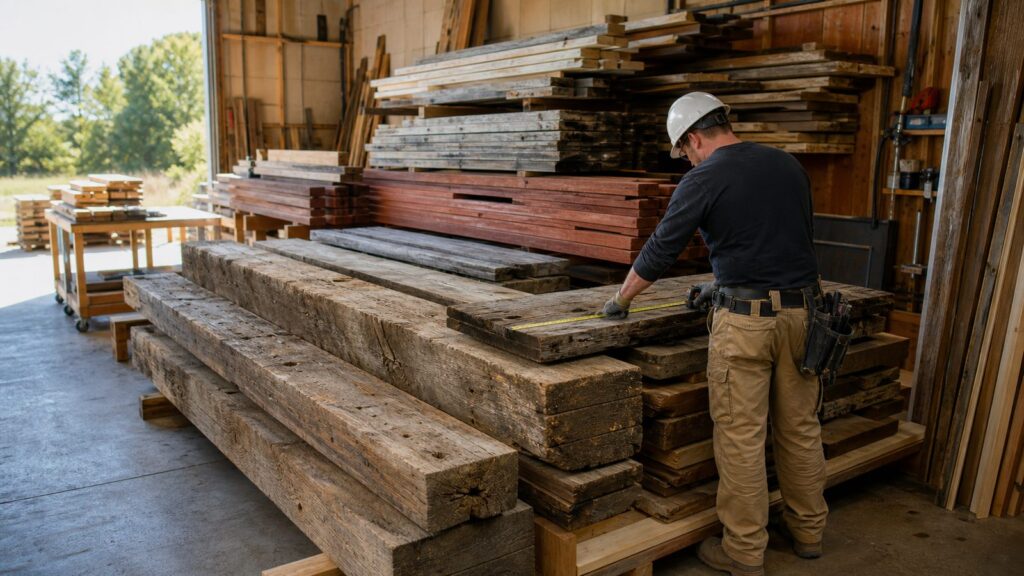
Salvageable lumber is easiest to find when you stop thinking of it as one product and start thinking of it as several different supply streams. The best sources are Habitat for Humanity ReStores, architectural salvage yards, deconstruction contractors, municipal reuse programs, barn-removal specialists, commercial remodelers, cabinet shops, local sawmills, and online marketplaces. Each source is good for a different kind of wood.
On our job sites, we treat reclaimed lumber in two categories from the start: finish material and structural material. Finish material includes accent walls, shelving, mantels, trim, ceiling cladding, built-ins, furniture, blocking, and other non-load-bearing work. Structural material is different. If a board or timber is expected to carry load, it usually needs a grade stamp, review by an engineer, acceptance by the building official, or inspection by an accredited grader. That distinction saves money, avoids permit trouble, and keeps questionable boards out of critical assemblies.
As an Amazon Associate I earn from qualifying purchases.
Quick wins for a faster PC:
Fix the driver behind crashes, sound loss and screen glitchesFind Drivers →Repair Windows errors before they cause bigger problemsFix Now →Scan for outdated or missing drivers - takes under a minuteDriver Scan →In 2026, salvageable lumber is not automatically cheaper than new lumber. Commodity lumber was around $615 per 1,000 board feet on July 31, 2026, but retail reclaimed hardwood commonly lists around $4.35 to $6.05 per board foot in quantity. Premium species such as white oak, large slabs, and imported hardwoods can run much higher. The real cost depends on denailing, hauling, waste, milling, storage, moisture control, and whether the wood arrives ready to install or still needs several hours of labor.
Best Places to Find Salvageable Lumber
The strongest sources are the ones that handle building materials every week, not the occasional one-off listing. Good reclaimed wood sells fast. A stack of clean floor joists, old-growth beams, hardwood flooring, or straight barn siding may be gone within a day or two if local builders and woodworkers know the supplier.
#1 Best Overall
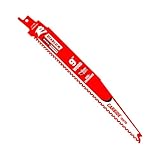
- The Diablo 9" 5/7 TPI Demo Demon Carbide Teeth Reciprocating Saw Blades for Nail-Embedded Wood for Nail-Embedded Wood with new Variable Tooth Design are specifically designed for maximum performance and superior results. This high performance TiCo Hi-Density carbide-tipped blade delivers up to 50X longer cutting life in nail-embedded wood compared to standard bi-metal blades. These radical blades also feature Perma-SHIELD non-stick coating to prevent gumming and friction for fast, effortless cuts in some of the toughest wood cutting scenarios. An oversized blade body helps create straighter cuts with less vibration while a unique plunge tip design enables faster starts.
Habitat for Humanity ReStores
Habitat ReStores are a practical first stop for homeowners because they commonly sell donated building materials such as unused lumber, flooring, doors, windows, fencing, cabinets, bricks, blocks, millwork, and tools. Inventory is local and changes constantly, so the right approach is to call before you drive, ask what came in that week, and visit with measurements in hand.
ReStores are best for small and medium projects: shelves, garage storage, chicken coops, garden structures, utility blocking, cabinet parts, and trim repairs. You may find unused dimensional lumber, leftover deck boards, plywood, hardwood flooring bundles, or old interior doors that can be broken down for panels. You should not assume ReStore lumber is approved for framing just because it looks clean. Check for grade stamps, treatment marks, moisture, straightness, and damage.
Architectural Salvage Yards
Architectural salvage stores are where we look for character material: old flooring, barn siding, beadboard, stair parts, mantels, timbers, factory decking, corbels, and trim. These yards usually cost more than a casual marketplace listing, but the better ones save labor because the material has already been sorted, bundled, denailed, kiln dried, or surfaced.
Ask specific questions: Is it oak, pine, fir, chestnut, maple, or mixed species? Has it been kiln dried? What is the moisture content? Is paint present? Are there embedded nails or broken fasteners? What is the average thickness after surfacing? Can they provide enough matching material for your wall, ceiling, or floor in one lot?
For visible work, buy the full quantity at once. Reclaimed boards vary in color, patina, saw marks, nail holes, and thickness. If you buy 200 square feet for a feature wall and come back later needing 40 more, the second batch may not match.
Build Reuse, ReuseWood, and Local Reuse Directories
Build Reuse maintains a national directory of used building material organizations, deconstruction contractors, and reuse-related businesses across all 50 states and Washington, D.C. ReuseWood.org is another North American directory created to help locate reuse and recycling options for wood products. These directories are useful when you are not sure which local businesses handle reclaimed wood in your region.
Recommended Free Tools
Municipal lists can be just as helpful. Some cities maintain salvage retailer lists, deconstruction contractor lists, and waste-diversion resources. These are worth checking before a remodel because the right contractor may be able to remove cabinets, flooring, beams, and framing lumber carefully instead of sending everything through a fast demolition process.
Deconstruction Contractors
Deconstruction contractors are one of the best sources for larger quantities. Unlike demolition crews, they are set up to remove material carefully. That means less splitting, fewer broken tongues on flooring, fewer cut joists, and better yield from sheathing and trim.
If you are remodeling, ask for a salvage plan before demolition starts. Once a crew begins tearing out walls with speed as the only goal, the value of the lumber drops quickly. A basic salvage plan should identify what will be removed intact, where it will be stacked, how nails will be handled, what will be protected from rain, and which pieces need photographs before removal for documentation.
On a typical remodel, the difference between planned salvage and afterthought salvage can be 30% to 60% more usable material. Flooring, stair treads, and trim are especially sensitive. Pull them with the wrong tools and you get short, split pieces. Pull them carefully and you may get long, usable runs.
Barn Removals, Farm Auctions, and Estate Sales
Barns, sheds, corn cribs, and old farm outbuildings can produce excellent siding, beams, roof boards, and wide planks. They can also produce a lot of waste. Weathered wood looks appealing, but exposure can hide rot, insect damage, powder-post beetle activity, heavy checking, and chemical contamination from machinery, fuel, pesticides, or animal waste.
For barn wood, expect a high waste factor unless the seller has already sorted it. For rough material that needs denailing, ripping, planing, and defect removal, 30% to 50% waste is common. If you need 300 square feet of finished wall coverage, buying only 300 square feet of rough barn siding is usually a mistake. We would budget closer to 390 to 450 square feet depending on condition, board width, and the final layout.
Commercial Remodelers and Warehouse Tear-Outs
Commercial remodels can produce strong salvage candidates: roof decking, factory flooring, old joists, heavy timbers, shelving, pallets, crate lumber, and hardwood fixtures. The advantage is quantity. The challenge is speed. Commercial crews often have tight schedules, limited storage, and strict site access rules.
If you want material from this stream, build relationships with remodelers, building owners, and deconstruction firms before you need lumber. Repeat buyers often get the first call when good beams, flooring, and offcuts become available.
Crashes, No Sound, or Screen Glitches?
Random freezes, missing sound and display glitches usually trace back to one bad driver. Find and replace yours safely.Free scan · under a minuteWindows Errors? Fix Them Before They Spread
Repair common Windows errors and clear accumulated junk for a smoother, more stable PC - no reinstall needed.Free scan · no reinstallRank #2

- Unmatched Cutting Life - TiCo Hi-Density carbide Teeth offer up to 50X longer life than bi-metal blades, maximizing durability in nail-embedded wood.
- Effortless, Fast Cuts - Variable Tooth Design provides faster cuts with reduced Vibration, ensuring efficient performance in demolition and remodeling tasks.
- Superior Impact Resistance - Enhanced carbide tip - to - blade connection withstands heavy impacts, making it ideal for tough materials and high-powered saws.
- Easy Plunge Starts - Unique Plunge tip enables faster, controlled starts and easier entry into all types of wood, enhancing cutting precision.
- Optimized 3-Pack Value - This 3 - pack offers up to 10% savings and features a 1" oversized blade body for straighter cuts and stability, compatible with all reciprocating saws.
Cabinet Shops, Millwork Shops, and Local Sawmills
Not all salvageable lumber comes from demolition. Cabinet and millwork shops often have hardwood offcuts that are too small for their production runs but excellent for shelving, cutting boards, drawer parts, trim patches, and furniture details. Local sawmills that handle urban trees may also sell slabs, live-edge boards, short runs of oak, maple, walnut, ash, elm, or storm-damaged tree lumber.
This source is better for finished projects than framing. Ask whether the lumber is air dried or kiln dried, what the current moisture content is, and whether it has been surfaced. For interior work, lumber often needs to acclimate in the house for 1 to 3 weeks before final milling or installation, depending on thickness, moisture, and indoor conditions.
Online Marketplaces
Craigslist, Facebook Marketplace, local contractor groups, farm pages, and neighborhood boards can produce excellent deals. They can also waste a full Saturday. The best listings are specific: species, dimensions, quantity, condition, whether nails are present, whether the lumber has been stored dry, and whether loading help is available.
Bring a tape measure, moisture meter, gloves, magnet or metal detector, flashlight, and a few contractor bags for loose fasteners. Do not buy a pile just because it is cheap. If half the boards are twisted, wet, split, contaminated, or full of broken nails, free lumber can become expensive lumber by the time it reaches your shop.
What Salvaged Lumber Usually Costs in 2026
New commodity lumber and reclaimed lumber are priced differently. Commodity framing lumber is tied to species, grade, market conditions, and local yard pricing. Reclaimed lumber is priced on appearance, species, age, labor, scarcity, and preparation. A dirty beam in a field is not the same product as a kiln-dried, metal-detected, surfaced reclaimed oak board.
| Source or Material | Typical 2026 Cost Context | Best Use | Watch For |
|---|---|---|---|
| Commodity new lumber | About $615 per 1,000 board feet as a July 31, 2026 benchmark | Framing, code-regulated work, predictable dimensions | Retail price varies by yard, region, species, and grade |
| Reclaimed mixed hardwood | About $5.35/BF for 500-999 BF and $4.35/BF for 1,000+ BF from one national seller | Paneling, furniture, trim, built-ins | Thickness, nail holes, color variation, milling needs |
| Weathered reclaimed hardwood | About $6.05/BF for 500-999 BF and $5.05/BF for 1,000+ BF | Accent walls, ceilings, rustic finish work | Lead paint, checking, dirt, inconsistent patina |
| Premium white oak | Often cited around $5.75-$9.35/BF in 2026 | Flooring, stair parts, cabinetry, furniture | Higher price, limited matching stock |
| Slabs and specialty pieces | Commonly $750-$3,250+ depending on size and species | Tables, counters, mantels | Drying, cracking, flattening, hardware support |
| Marketplace or jobsite leftovers | Free to a few dollars per board if buyer handles pickup | Utility projects, blocking, shop use, small builds | High labor, unknown history, fasteners, waste |
The hidden costs are where reclaimed lumber budgets go wrong. Denailing takes time. Metal detection protects planer knives and saw blades. Transport may require a trailer or flatbed. Wet wood needs storage and acclimation. Painted pre-1978 material may require lead-safe handling. Structural reuse may require an engineer, building official review, or grading documentation.
For clean, sorted reclaimed boards, assume 15% to 30% waste for DIY projects. For rough barnwood or demolition lumber, assume 30% to 50% waste. If the project has a visible pattern, such as a ceiling, feature wall, or floor, buy extra from the same lot. Matching reclaimed material later is often difficult.
How to Judge Whether Lumber Is Worth Salvaging
We sort reclaimed lumber immediately into three piles: structural candidate, finish or decorative, and waste or utility. That prevents questionable boards from drifting into the wrong part of the project. It also makes the budget clearer because the labor needed for each pile is different.
What’s actually slowing this PC down?
Pick the symptom - the matching free tool is one click away.
Good Candidates
Good salvage candidates include straight, dry, solid boards or timbers; old-growth beams; barn siding with sound backs; factory decking; roof or floor sheathing; hardwood flooring; joists with minimal notching; cabinet-grade offcuts; and dimensional lumber removed without splitting.
Look for boards that stay reasonably flat when set on edge, have no active insect activity, and have enough thickness left after milling. A nominal 1-inch board may finish at 5/8 inch or thinner after cupping, paint, grime, and saw marks are removed. That can be fine for wall cladding but not for flooring or stair work.
Material to Avoid or Segregate
Avoid or quarantine rotten wood, fire-damaged wood, insect-infested material, lumber with heavy checking through the section, unknown treated lumber, painted pre-1978 components, oil-stained boards, chemical-contaminated boards, and pieces packed with embedded fasteners.
Painted old trim and siding deserve extra caution. Homes built before 1978 may contain lead-based paint. Some old flooring adhesives, mastics, and surrounding materials may involve asbestos concerns. If there is any question, test before cutting, sanding, planing, or installing indoors. Do not run painted mystery boards through a planer in a closed shop.
Free tools Windows power users keep installed
One-click scans. No signup required.
Moisture and Storage
A moisture meter is one of the cheapest tools in the process. For interior finish work, the target is usually close to the moisture level of the house, often roughly 6% to 10% in conditioned spaces depending on climate and season. Exterior material can tolerate a different range, but it still needs to be dry enough for the intended coating and assembly.
Stack boards off the ground with stickers between layers so air can move. Keep them covered from direct rain but not sealed in plastic where moisture gets trapped. If boards came from a damp barn or outdoor pile, give them time. Rushing wet reclaimed lumber into a wall or built-in can lead to cupping, gaps, mold, and finish failure.
Rank #3

- CARBIDE TEETH: AIKENSAI sawzall blade with carbide teeth delivers 50 times longer cutting life than bi-metal reciprocating saw blade.
- WIDE APPLICATION: 6TPI cabide sawzall blades are specifically designed for cutting all hard woods, metal materials, even high alloy steels, and have maximum performance in nail-embedded wood.
- HIGH PERFORMANCE: Each carbide tooth on the saw blade is precision ground and individually welded, so as to provide greater durability and cutting performance.
- UNIVERSAL SHANK: AIKENSAI carbide reciprocating saw blades for nailed wood can fit all brands of reciprocating saw tools such as BOSCH, DeWalt, Milwaukee, Makita, Ryobi, Black & Decker, Skil etc.
- CONVINIENT STORAGE: The saw saw blades set includes 3 pieces of carbide sawzall blades for wood & metal and a plastic storage box.
Can Salvaged Lumber Be Used Structurally?
Sometimes, but it should never be assumed. Decorative reclaimed wood and structural reused lumber are different decisions. Most homeowners can safely use salvaged boards for paneling, shelving, mantels, trim, furniture, blocking, built-ins, and noncritical landscape projects. Load-bearing use is where code, grading, and liability enter the conversation.
Older Forest Products Laboratory research has noted that reclaimed lumber has not historically been explicitly acknowledged in national lumber grading rules, engineering design standards, or national building codes. That is why local code interpretation matters. The authority having jurisdiction, usually the local building department, has the final say on permitted work.
For framing, beams, joists, rafters, decks, stairs, and anything carrying load, expect one of three paths: use new grade-stamped lumber for the structural work and reclaimed lumber as finish cladding; have an engineer specify how the reclaimed member can be used; or have the material inspected and accepted through an approved grading or evaluation process. The first option is often the most practical for homeowners.
On our projects, when the client wants a reclaimed beam look but the beam is questionable, we commonly build the structure with new engineered or grade-stamped lumber and wrap it with reclaimed boards. The finished room gets the old wood character, while the load path remains predictable and inspectable.
What to Ask Before You Buy
Good salvage buying is mostly about asking better questions before the boards are loaded. A seller who knows the answers will usually save you time. A seller who cannot answer may still have good material, but you need to price in more risk and sorting labor.
Ask where the lumber came from, whether it was indoors or outdoors, whether it was exposed to water, whether it has paint or finish, whether it has been denailed, whether it has been kiln dried, whether metal detection was performed, and whether dimensions are rough or surfaced. Ask for actual measurements, not nominal dimensions. A board described as 2×10 may be anything from a full old-dimension timber to a modern piece that has been ripped, planed, or damaged.
Do these 3 things before closing this tab:
1Repair Windows errors before they cause bigger problems2Fix the driver behind crashes, sound loss and screen glitches3Clear out junk files and repair common Windows errorsFor finish work, specify acceptance criteria in writing when buying in quantity: moisture range, minimum thickness after milling, allowable nail holes, allowable checking, whether live edge is acceptable, whether paint is acceptable, and whether boards must be surfaced on one face, two faces, or straight-lined on one edge.
For a visible wall, ceiling, or floor, ask whether the supplier has enough matching stock from the same lot. Color and patina differences can be attractive when designed intentionally. They look sloppy when the last 15% of a room obviously came from a different source.
Tools for Cleaning and Preparing Reclaimed Boards
A basic homeowner setup includes leather gloves, eye protection, hearing protection, a respirator, pry bars, end-cut pliers, a cat’s paw, hammer, nail punch, stiff brush, shop vacuum with good filtration, moisture meter, square, chalk, and a circular saw or miter saw with a blade you are willing to sacrifice. A handheld metal detector is worth having if you plan to mill the boards.
For more serious preparation, use a planer, jointer, table saw, track saw, random-orbit sander, and dust collection. Keep in mind that reclaimed lumber is hard on tooling. Hidden nails, grit, old finishes, and mineral deposits can damage blades. That is part of the cost of the material.
The Tool Desk
Outbyte PC Repair FREEClear out junk files and repair common Windows errorsFree Scan →Outbyte Driver Updater FREEFix the driver behind crashes, sound loss and screen glitchesFind Drivers →The usual workflow is simple but time-consuming: inspect, photograph if provenance matters, pull nails, scan for metal, cut off badly damaged ends, brush or vacuum, check moisture, stack to acclimate, rough mill, let boards rest, then final mill and finish. For flooring or tight paneling, do not skip the rest period after rough milling. Old boards often move after tension is released.
When Salvaged Lumber Is Worth It
Salvaged lumber makes the most sense when its character, dimensions, species, or history matter. Old-growth pine, longleaf pine, oak beams, antique heart pine flooring, weathered barn siding, and factory decking can deliver a look that new lumber does not easily match. It also reduces waste. EPA’s latest national construction and demolition debris figures still cite 2018 data: about 600 million tons of C&D debris were generated in the U.S.; demolition accounted for more than 90%; just over 455 million tons went to next use and just under 145 million tons went to landfills.
That does not mean reclaimed lumber is always the lower-cost choice. If you need predictable framing lumber for a permitted wall, new grade-stamped material is usually faster and cleaner. If you need 40 square feet of rustic shelving, salvaged lumber may be ideal. If you need 1,200 square feet of consistent flooring, reclaimed material can be beautiful, but the supplier, waste factor, milling, acclimation, and installation details need to be planned like a real construction package.
Independent reader supportYour contribution helps us test, update, and keep practical guides available for everyone.When to DIY vs When to Hire a Pro
DIY is reasonable for small, non-load-bearing projects where the consequences are limited: shelves, accent walls, garden boxes, garage storage, furniture, simple trim, and decorative ceiling boards. A careful homeowner can sort, denail, clean, cut, and install this material with common tools, patience, and appropriate safety gear.
What’s actually slowing this PC down?
Pick the symptom - the matching free tool is one click away.
Rank #4

- [Carbide Technology] Up to 50x longer life than bi-metal reciprocating saw blades
- [Wood and Metal Demolition] 6 teeth per inch teeth design is ideal for cutting through all tough wood and metal materials, outstanding lifetime even when cutting high-alloy steels.
- [Ultimate Cutting Performance] Easy to cut advanced materials where bi-metal blades fail quickly, such as stainless steels, high-alloy bolts or hardened screws.
- [Design for Toughest Materials] Each carbide tooth is precision ground and individually welded, provides ultimate flexibility and impact strength needed for heavy duty demolition work
- [Blade Dimension] 9-inch 6 TPI nail-embedded wood demolition, 1/2-inch universal shank fits all major sawzall saws such as Bosch, Milwaukee, Black&Decker, Hitachi, Makita, Metabo, Dewalt, Porter Cable, Skil, Rockwell etc.
Hire a professional when the lumber affects structure, stairs, decks, guardrails, fire separation, egress, exterior water management, or permitted work. Also hire help when the material has lead paint risk, suspected asbestos in adjacent materials, pest contamination, heavy timbers, or complicated milling requirements. A 12-foot beam is not just a design feature; it is a handling, fastening, support, and inspection issue.
A good contractor will help decide where reclaimed wood belongs and where new material is the better choice. Many successful projects use both: new code-compliant framing behind the wall, reclaimed boards on the face; new structural posts inside, reclaimed wraps outside; new stair structure below, salvaged treads only if thickness, attachment, and code conditions are satisfied.
Permit and Safety Notes
For cosmetic work, a permit may not be required, but rules vary by city and scope. For structural framing, decks, stairs, additions, bearing walls, and substantial remodels, assume the building department will care what material is being used. Ask early. Do not buy and cut a pile of reclaimed joists and then ask the inspector to approve them after installation.
Lead paint is one of the biggest indoor safety concerns. If painted lumber may predate 1978, test it before sanding, scraping, planing, or cutting. Use lead-safe work practices where required. For unknown treated lumber, avoid indoor use and avoid cutting it for projects where people will have frequent skin contact. If the wood smells like fuel, oil, chemicals, smoke, or mildew, do not talk yourself into using it indoors.
Do these 3 things before closing this tab:
1Repair Windows errors before they cause bigger problems2Fix the driver behind crashes, sound loss and screen glitches3Clear out junk files and repair common Windows errorsMetal is another safety issue. Old boards may contain broken nails, screws, staples, fencing wire, concrete pins, and bullet fragments. Scan before cutting. Mark hazards clearly. We keep questionable pieces out of the finish pile until they have been checked.
A Practical Buying Checklist
Before you leave for a salvage yard, ReStore, or marketplace pickup, write down the finished quantity you need, actual thickness needed, minimum board length, acceptable color range, whether nail holes are acceptable, and whether the material must be dry enough for immediate indoor installation. Bring a tape measure and moisture meter. Bring straps and a vehicle that can carry the longest pieces safely.
At the pile, inspect 10 to 20 representative boards, not just the top three. Check for twist, cup, rot, insect holes with fresh powder, deep checks, stains, paint, and broken fasteners. Measure actual thickness and width. If the boards need to finish at 3/4 inch and many are already 11/16 inch before planing, they are not suitable for that purpose.
After purchase, sort the lumber the same day if possible. Label piles by use: finish, utility, possible structural review, and waste. Store the finish pile dry and flat. Photograph unique material before cutting if the story matters to the client or homeowner. A beam from a local warehouse or siding from a family barn has value beyond its board footage when the provenance is documented.
Quick wins for a faster PC:
Clear out junk files and repair common Windows errorsFree Scan →Fix the driver behind crashes, sound loss and screen glitchesFind Drivers →Bottom Line
The best places to find salvageable lumber are the sources that handle reusable building materials regularly: ReStores, architectural salvage yards, Build Reuse and ReuseWood directory members, deconstruction contractors, city salvage programs, barn-removal specialists, remodelers, cabinet shops, millwork shops, local sawmills, and well-described local marketplace listings.
The best results come from matching the source to the use. Use salvaged boards where they perform well: accent walls, ceiling cladding, shelving, mantels, furniture, trim, blocking, built-ins, and noncritical landscape projects. For structural work, involve the building official or engineer early. When the reclaimed look is the goal but code risk is high, build the structure with new graded lumber and use reclaimed wood as the finish layer. That approach gives you the character without gambling on the load path.
Frequently Asked Questions
Where can I find salvageable lumber near me?
Start with Habitat for Humanity ReStores, local architectural salvage yards, Build Reuse’s directory, ReuseWood.org, municipal salvage lists, deconstruction contractors, barn-removal specialists, cabinet shops, millwork shops, local sawmills, and online marketplaces. Call before visiting because good lumber often sells before it is fully listed online.
Is salvaged lumber cheaper than new lumber in 2026?
Sometimes, but not always. Commodity lumber was around $615 per 1,000 board feet on July 31, 2026, while retail reclaimed mixed hardwood commonly listed around $4.35 to $6.05 per board foot in quantity. Free or cheap local boards can still become expensive after hauling, denailing, milling, waste, storage, and testing.
Can reclaimed lumber be used for framing or structural work?
Only with the right approval. Structural use usually needs grade-stamped lumber, engineer review, approval from the building official, or inspection by an accredited grader. For most homes, the practical approach is to use new graded lumber for structure and reclaimed lumber as decorative cladding.
How do I know if old lumber is safe to reuse indoors?
Check for rot, insects, moisture, chemical smells, oil stains, mold, embedded metal, and old paint. Painted material that may predate 1978 should be tested for lead before sanding, cutting, or planing. Avoid unknown treated lumber indoors.
How much extra reclaimed lumber should I buy?
For clean, sorted reclaimed boards, plan on 15% to 30% waste. For rough barnwood or demolition lumber that needs denailing, ripping, planing, and defect removal, 30% to 50% waste is common.
Do I need a permit to use salvaged lumber?
Cosmetic projects may not require a permit, but structural work, decks, stairs, additions, bearing walls, and major remodels often do. Ask the local building department before buying or cutting reclaimed lumber for any load-bearing use.
Recommended Free Tools
Quick Recap
Product prices and availability are accurate as of the date/time indicated and are subject to change. Any price and availability information displayed on Amazon at the time of purchase will apply.

