Do these 3 things before closing this tab:
1Fix the driver behind crashes, sound loss and screen glitches2Clear out junk files and repair common Windows errors3Scan for outdated or missing drivers - takes under a minuteSome links on this page are affiliate links: if you buy through them we may earn a commission, at no extra cost to you.
A bare fence line is one of the easiest places to improve a yard, but it is also one of the easiest places to create long-term maintenance problems. The best fence line landscaping does more than hide boards. It controls weeds, protects posts, handles drainage, gives you access for staining or repairs, and uses plants that fit the space at mature size.
On our job sites, we start with the fence before we start with the flowers. If the fence is leaning, the bottom rail is rotting, posts are loose, or the grade is holding water against wood, fix that first. A new planting bed can easily cost thousands of dollars, and you do not want to tear it out six months later to replace a failed fence section.
As an Amazon Associate I earn from qualifying purchases.
For 2026 budgeting, small fence line upgrades can start around a few hundred dollars for mulch, edging, and young plants. A professionally installed mixed border, privacy screen, lighting, or drainage solution can run from $1,400 to $6,000+ depending on length, access, soil, plant size, irrigation, and hardscape. General professional landscaping commonly ranges from about $4.50 to $17.00 per square foot, while installed landscape edging often falls around $3.61 to $9.38 per linear foot nationally.
Before You Landscape Along a Fence
Before digging, planting, or installing edging, confirm three things: ownership, utilities, and local rules. If the fence is on a shared property line, know whether it is yours, your neighbor’s, or jointly maintained. That affects whether you can attach trellises, change grade, or plant vines that cross the line.
#1 Best Overall

- No Digging: These landscape edgings are simple to install. Just hammer these spikes into the ground to reinforce the shape to prevent warping. It's easy to create a beautiful garden by yourself without hiring a professional.
- Flexible and Durable: This plastic landscape edging border made of polyethylene (PE) is very strong and flexible. It bends easily into curves without breaking. Each bundle is tied with straps for easy transportation and portability.
- Easy to Trim & Long Life: This plastic lawn edging is easier to trim to any length to separate garden flower bed areas than metal garden edging! It won't rust and will keep the garden looking good for a long time.
- Suitable for: This garden edging border is suitable for loose ground and provides a good separation between grass and garden. It can be used to improve the appearance of landscape edges and create clean gardens and pathways. Ideal for landscape edging, patio gardens and lawns.
- More Spikes: Ours kit includes 2 pack 33 ft edging for landscape and 100 pcs landscape stakes (We provide 5 stakes per 1 meter and others provide 3 stakes per meter). You can buy as many as you need depending on the size of your garden.
Call 811 a few business days before digging for shrubs, trees, trellis posts, lighting, drainage, edging stakes, or irrigation. Public utilities are marked through the 811 process, but private lines such as pool wiring, landscape lighting, gas grill lines, well lines, septic components, and irrigation may need a separate private locator.
Also check HOA rules and local fence codes before building raised planters, screens, retaining edges, or new fence sections. Many jurisdictions allow typical residential fences without a full permit under certain height limits, but rules vary by city, front yard location, corner visibility, retaining wall height, and pool barrier requirements.
The Tool Desk
Outbyte PC Repair FREEClear out junk files and repair common Windows errorsFree Scan →Outbyte Driver Updater FREEFix the driver behind crashes, sound loss and screen glitchesFind Drivers →Measure the available planting depth from the fence to the lawn, patio, walkway, or property use zone. A 2-foot strip needs a completely different plan than an 8-foot border. As a working rule, leave at least 12 to 18 inches of service space near a wood fence if you will need future staining, board replacement, or post access. For plants, design around mature size, not the nursery pot size. A shrub listed at 4 feet wide needs roughly 2 feet from its center to the fence, plus any service clearance.
1. Build a Layered Native Border
A layered border is the most complete-looking solution for a long backyard fence. Instead of lining up one species like a wall, use three layers: taller shrubs or small columnar trees near the back, medium flowering shrubs and perennials in the middle, and low groundcovers or edging plants in front.
For a 4- to 6-foot-deep bed, a practical layout is one anchor shrub every 6 to 10 feet, flowering perennials in groups of 3 to 7, and a low front edge planted 12 to 18 inches apart depending on species. Repeating 3 to 5 dependable plants creates rhythm without making the fence line look commercial or stiff.
Native and climate-adapted plants are usually the best value because they reduce replacement losses and support pollinators. Use the USDA Plant Hardiness Zone Map as the starting point. The current official map is the 2023 update, based on 30-year average annual extreme minimum temperatures. Then confirm local realities such as heat, drought, deer, clay soil, salt exposure, and shade with your local extension office or a qualified landscape designer.
Recommended Free Tools
For pollinator value, plant in clumps rather than isolated singles and choose bloom windows from early spring through late fall. That gives bees, butterflies, and beneficial insects a longer food source and gives the fence line seasonal interest beyond one short bloom period.
Best for
Backyards with 4 to 12 feet of available depth, privacy fences, long property lines, and homeowners who want a planted border that looks designed instead of patched together.
Typical cost
DIY materials for a 40-foot border can run from $600 to $2,500 depending on plant size, mulch, edging, soil amendments, and irrigation. Professional installation commonly lands higher because labor can represent 40% to 65% of total landscaping cost, especially when sod removal, hauling, grading, and drip irrigation are included.
2. Add a Narrow Evergreen Privacy Screen
If the goal is privacy, choose plants by mature height and width first. Many privacy trees look harmless in a 5-gallon pot but become a maintenance fight when planted too close to a fence, driveway, or neighbor’s yard.
Free tools Windows power users keep installed
One-click scans. No signup required.
In narrow areas, use columnar evergreens, upright shrubs, or espaliered plants rather than broad trees. For many privacy trees, 10 to 15 feet from a fence is a safer spacing range. Smaller or narrow trees may work at about 5 feet, but large trees often need 20 feet or more. Avoid aggressive-root species near fences, retaining walls, patios, sewer lines, and foundations.
A good privacy screen does not have to be solid from day one. A staggered layout with mixed evergreens and flowering shrubs often performs better than a single-species row. It is more resilient if one plant fails, and it looks more natural over time.
Rank #2

- Extra Tall Design: Outdoor edge measured 4 inches in height, this landscape edging provides a sturdy and prominent border for your garden beds and walkways.
- Heavy-Duty Construction: Garden edging mades from durable plastic, the edging is built to withstand harsh weather conditions and retain its shape over time.
- Easy Installation: Garden border edging comes with 45 spikes for a secure, no-dig installation process, allowing you to create clean lines without excessive digging.
- Flexible Length: With a total length of 50 feet, this edging for landscaping can be easily customized to fit your desired layout or combined with additional sections for larger areas.
- Versatile Application: Landscape edging border suitable for various landscaping projects, including flower beds, vegetable gardens, pathways, and tree surrounds.
Spacing example
For a 60-foot fence, use 6 upright evergreen anchors spaced 8 to 10 feet apart, then fill between them with medium shrubs or ornamental grasses. Keep the plant centers far enough from the fence that mature growth does not press into boards, trap moisture, or block repair access.
Typical cost
Small shrubs may be affordable for DIY installation, but larger privacy plants, augering, soil work, and delivery add up quickly. A professionally installed privacy screen along a typical backyard fence can range from a few thousand dollars to well above $10,000 when mature trees, irrigation, and difficult access are involved.
3. Use an Ornamental Grass Ribbon
Ornamental grasses are a strong choice when you want movement, texture, and lower maintenance along a fence. They work especially well against plain wood, vinyl, metal, or composite fencing because the vertical blades soften the flat surface without needing the same pruning schedule as hedges.
For a clean result, plant grasses in repeated groups rather than alternating too many varieties. In a 2- to 4-foot strip, choose compact grasses that mature at 18 to 36 inches wide. In wider beds, taller grasses can sit behind lower perennials or groundcovers. Keep them off the fence enough that wet foliage does not stay pressed against boards.
Most grasses need a yearly cutback before new growth starts. Plan access so you can reach every clump without stepping through the whole bed. On long runs, we like stepping stones or small gravel pockets every 20 to 30 feet for pruning, lighting adjustments, and fence inspections.
Best for
Modern fences, pool yards, side yards, windy sites, and homeowners who want a simple repeated planting pattern with strong visual payoff.
Crashes, No Sound, or Screen Glitches?
Random freezes, missing sound and display glitches usually trace back to one bad driver. Find and replace yours safely.Free scan · under a minutePC Slower Than It Used to Be?
A free scan shows the junk files, broken settings and background clutter dragging Windows down - then fixes them in one click.Free scan · Windows 10 & 11Typical cost
A simple grass ribbon can be one of the more economical options. For a 50-foot run, DIY costs might fall around $400 to $1,500 for young plants, mulch, and edging. Professional installation varies with prep, plant size, and irrigation, but still tends to be simpler than a mixed shrub border.
4. Install Raised Planter Boxes Along Tight Fence Lines
Raised planters are useful where the soil is poor, roots are dense, drainage is unpredictable, or the planting strip is too narrow for permanent shrubs. They are especially effective along patios, side yards, townhome yards, and fences next to hardscape.
Keep planters freestanding where possible instead of fastening them to a wood fence. A planter full of wet soil is heavy, and moisture trapped against boards shortens fence life. Use rot-resistant wood, metal, masonry, or composite planter materials, and leave an air gap between the planter and the fence.
A practical planter depth is 18 to 24 inches for herbs, annuals, compact perennials, and many ornamental grasses. For larger shrubs, plan on deeper soil volume and confirm root needs before building. Include drainage holes, filter fabric where appropriate, and a gravel or paver base that does not direct water toward fence posts.
Best for
Narrow side yards, rental-friendly upgrades, patios, urban yards, and homeowners who want seasonal color without excavating a full bed.
Typical cost
Basic DIY planter boxes can start around $150 to $500 per section depending on size and material. Custom carpentry, masonry planters, irrigation, and built-in seating can push a fence line planter project into the $2,000 to $8,000+ range.
Rank #3
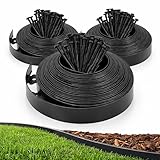
- Dimension - Each landscape edging height is 1.5 inch and 33 ft length. Comes with 3 pack. The spiral spike is 6 inches height. Great for flower beds, pathways, tree rings and garden.
- Sturdy and Flexible - The landscape border kit is made of plastic material, sturdy enough to keep pebbles, mulch or other stuff in place and flexible enough to make a desired design arond your landscape yard.
- Easy to Install - The garden border is easy to install, no need to dig or bury, just stake in ground every 2-3 holes to secure edging to the ground and keep the contours of your design.
- Easy to Trim - The paver edging is durable but easy to trim off and nail in place when you need. It's easy to manipulate and well built borders, giving your landscape yard a new look.
- What You Get - The garden edging border kit contains 3 pack 1.5 inches * 33 ft lawn border and 120 pcs spiral staples, enough to hold border secure in place, especially when doing curves.
5. Use Freestanding Trellises for Vines
Vines can make a fence line beautiful, but they need the right support. On wood fences, we prefer freestanding trellis panels set slightly forward of the fence rather than vines attached directly to boards. That preserves airflow, reduces moisture problems, and keeps the fence accessible for staining and repairs.
Set trellis posts securely and call 811 before digging. For many residential trellis panels, posts are commonly set 24 to 36 inches deep depending on height, soil, wind exposure, and local frost conditions. In windy areas, tall trellises act like sails, so post sizing and embedment matter.
Quick wins for a faster PC:
Clear out junk files and repair common Windows errorsFree Scan →Fix the driver behind crashes, sound loss and screen glitchesFind Drivers →Choose vines carefully. Some are lightweight and manageable with annual pruning; others become woody, heavy, invasive, or damaging. Avoid aggressive vines near weak fences, gutters, siding, and shared property lines. If the vine needs irrigation, use drip rather than overhead spray so the fence is not repeatedly soaked.
Best for
Blank fence sections, cottage gardens, narrow strips, and places where you want vertical interest without planting a wide shrub bed.
Typical cost
A simple DIY trellis section with young vines may cost $200 to $800. Professionally built trellis runs with posts, panels, concrete, planting, and irrigation can run several thousand dollars depending on length and material.
6. Create a Gravel or Mulch Maintenance Strip With Steel Edging
Not every fence line needs heavy planting. In some yards, the best upgrade is a clean maintenance strip that stops weeds, protects posts from string trimmers, and gives the mower a defined edge.
A 12- to 24-inch gravel strip works well along utility fences, side yards, and narrow corridors. Use steel, aluminum, paver, or concrete edging to separate gravel from turf. Under gravel, use a quality landscape fabric where appropriate, but do not rely on fabric alone as a permanent weed solution. Organic debris will still collect on top over time.
Mulch is better where you plan to plant. Keep mulch flat: typically 2 to 3 inches deep on heavy soils and 3 to 4 inches on well-drained sites. Do not pile mulch against trunks, stems, fence boards, or posts. Mulch volcanoes and buried bottom rails are common causes of rot and plant decline.
For edging costs, national 2026 installed averages often fall around $3.61 to $9.38 per linear foot. Materials-only edging can range widely, from about $0.50 to $18.00 per foot depending on plastic, metal, brick, concrete, or stone. Concrete curbing projects commonly average around $1,170 nationally, with many projects between about $630 and $1,710.
Best for
Low-maintenance yards, rental properties, side yards, dog runs, service areas, and fence lines where plants would be damaged or neglected.
What’s actually slowing this PC down?
Pick the symptom - the matching free tool is one click away.
7. Add Low-Voltage Lighting Along the Fence
Lighting turns a fence line into a finished outdoor room. It also improves nighttime visibility around gates, steps, patios, and paths. The most useful systems are usually low-voltage LED fixtures with a transformer, buried cable, and a timer or smart control.
Use lighting sparingly. A fixture every 8 to 12 feet can be too much for a small yard if every light is bright. For a more professional look, highlight key points: a specimen tree, a gate, a seating area, a trellis, or alternating sections of a textured fence. Warm white light, often around 2700K to 3000K, usually looks better in residential landscapes than harsh cool white.
Rank #4

- No‑Dig Installation – Create clean garden borders quickly without trenching or heavy tools; ideal for DIY landscaping projects.
- Heavy‑Duty Construction – Made from commercial‑grade recycled plastic designed for long‑term ground contact and seasonal weather exposure.
- Flexible 100 ft Design – Forms straight lines, curves, tree rings, and flower beds with ease for custom landscape layouts.
- Works in All Soil Types – Suitable for soft soil, compacted ground, and mixed soil conditions common in residential landscapes.
- Complete Edging Kit – Includes (1) 100 ft coil of 1.7 in. tall landscape edging and (40) 8 in. anchoring spikes for secure installation.
Do not mount fixtures where they will glare into a neighbor’s windows or shine directly into the street. Keep cable routing clear of future digging zones where you may plant shrubs, repair posts, or install edging.
Best for
Patios, entertaining yards, pool areas, front entries, gates, and fence lines with strong planting or architectural detail.
Typical cost
DIY low-voltage kits can start around a few hundred dollars. Professionally installed systems commonly range from $1,500 to $5,000+ depending on fixture count, transformer size, trenching, controls, and access.
8. Build a Drainage-Friendly Rain Garden or Dry Creek Bed
If water collects along the fence, do not hide the problem with mulch. Fix the drainage. Wet soil against wood posts and bottom rails speeds rot, attracts pests, and can destabilize hardscape. A rain garden, shallow swale, or dry creek bed can turn a problem area into a designed feature, but it must move water safely.
The key is direction. Grade soil and stone so water moves away from fence posts and structures. Do not redirect runoff onto a neighbor’s property. In tight areas, a narrow dry creek with river stone and planted edges may work better than a full rain garden. In larger yards, a rain garden can collect runoff from a downspout, patio, or slope and let it soak in gradually.
Plant selection depends on how long the area stays wet. Some plants tolerate brief flooding but not constant saturation. Others need dry crowns. Test the area after rain and match plants to the actual conditions, not just the design drawing.
PC Slower Than It Used to Be?
A free scan shows the junk files, broken settings and background clutter dragging Windows down - then fixes them in one click.Free scan · Windows 10 & 11Crashes, No Sound, or Screen Glitches?
Random freezes, missing sound and display glitches usually trace back to one bad driver. Find and replace yours safely.Free scan · under a minuteBest for
Low spots, downspout discharge areas, clay soils, sloped yards, and fence lines where mulch washes out or turf stays muddy.
Typical cost
Small DIY dry creek features may cost $500 to $2,000 for stone, fabric, edging, plants, and delivery. Larger professionally graded drainage and planting projects can run $3,000 to $10,000+ depending on excavation, hauling, access, and whether underground drainage is needed.
Fence Line Landscaping Cost Comparison
Costs vary by region, site access, plant size, soil conditions, demolition, hauling, irrigation, and the amount of hardscape involved. The table below gives practical 2026 planning ranges for a typical residential fence line.
| Fence line idea | Typical width needed | DIY material range | Professional installed range | Maintenance level |
|---|---|---|---|---|
| Layered native border | 4 to 12 ft. | $600 to $2,500 per 40 ft. | $2,500 to $8,000+ | Moderate |
| Evergreen privacy screen | 5 to 15+ ft. | $1,000 to $4,000+ | $4,000 to $12,000+ | Moderate |
| Ornamental grass ribbon | 2 to 4 ft. | $400 to $1,500 per 50 ft. | $1,500 to $4,500 | Low to moderate |
| Raised planter boxes | 1.5 to 3 ft. | $150 to $500 per section | $2,000 to $8,000+ | Moderate |
| Freestanding vine trellis | 1.5 to 4 ft. | $200 to $800 per section | $2,000 to $7,000+ | Moderate to high |
| Gravel or mulch strip | 1 to 2 ft. | $250 to $1,200 per 50 ft. | $1,000 to $3,500 | Low |
| Low-voltage lighting | Flexible | $300 to $1,500 | $1,500 to $5,000+ | Low |
| Rain garden or dry creek | 3 to 10+ ft. | $500 to $2,000 | $3,000 to $10,000+ | Moderate |
Sample Layouts by Fence Line Width
2-foot narrow strip
Use a gravel or mulch maintenance strip, compact grasses, columnar shrubs, specimen containers, espalier, or freestanding trellis panels. Avoid broad shrubs that will constantly spill into the lawn or walkway. A 12-inch mower edge plus a single row of compact plants often performs better than an overcrowded bed.
4-foot mixed border
Use one row of medium shrubs set far enough from the fence for mature width, then add low perennials or groundcovers in front. This is the minimum width where a layered design starts to look intentional. Include stepping stones every 20 to 30 feet if the bed is long.
8-foot privacy border
Use staggered evergreens, flowering shrubs, ornamental grasses, and a narrow access path or stepping pockets. This width gives you enough room to create screening without forcing trees directly against the fence.
Best Value

- Perfect 2-Inch Tall Garden Edging Kit: This complete lawn edging kit provides the ideal standard height for most yards. It includes 20FT of flexible plastic edging and 20 sturdy stakes. Durable yet flexible, it’s perfect for creating clean, crisp lines around flower beds, lawns, paver pathways, or walkways—a simple and effective landscaping solution.
- Effortless Installation & Cutting: Achieve a professional landscape edge in just minutes, with no experience or special tools required. Simply unroll the edging, bend it to follow your desired border line, and secure it firmly with the included stakes. The material is easily cut to any length or shaped around curves using ordinary household scissors.
- Flexible Yet Durable for Any Shape: Our garden edging border is designed to bend and hold smooth curves or sharp corners with ease, making it the ideal edging for landscaping creative designs. Despite its flexibility, it remains robust to keep soil, mulch, and grass neatly separated.
- All-Weather, Long-Lasting Resilience: Crafted from high-quality, weather-resistant plastic, this landscape border is built to endure. It stays strong without becoming brittle in winter cold and resists warping or fading under intense sun exposure. The dependable barrier keeps its shape and deep color season after season, for a lasting solution that cuts down on upkeep.
- Pro Tips for Best Results: For a perfectly straight installation, we recommend unrolling and letting the edging relax in the sun for a few hours to ease the shipping coil memory. In very hard or rocky soil, creating a pilot hole with a screwdriver makes staking much easier. For most applications, securing a stake every 4-5 holes provides ample hold. Following these simple steps ensures a smooth, professional-looking finish.
When to DIY and When to Hire a Pro
DIY is reasonable for planting small perennials, spreading mulch, installing simple steel edging, setting containers, and refreshing a clean fence line. A homeowner with basic tools can often improve 30 to 50 linear feet over a weekend if the soil is workable and no grading is needed.
Hire a pro when the project includes drainage correction, retaining edges, electrical work, large trees, heavy stone, irrigation, grading, poor access, or fence repair. Also bring in help if the fence line is near utilities, slopes, pool barriers, easements, or a neighbor dispute. Professional labor costs more, but it also reduces the risk of burying fence components, trapping water, planting oversized material, or creating a layout that has to be rebuilt later.
What’s actually slowing this PC down?
Pick the symptom - the matching free tool is one click away.
If the fence itself is failing, price that first. Current fence installation costs vary widely. National figures show many projects around $1,435 to $4,985, with some homeowners near $2,717, while full fence replacement can range from about $500 to over $10,000 depending on material, height, gates, terrain, and add-ons. Many professionally installed residential fences land around $20 to $60 per linear foot, with custom wood, vinyl, steel, and ornamental options higher.
Final Builder Notes
The best fence line landscaping is not the most complicated design. It is the design that fits the fence material, leaves maintenance access, drains away from posts, and uses plants sized for the space five years from now.
Start with a clean edge, corrected grade, and a simple planting rhythm. Add privacy, lighting, trellises, or drainage features only where they solve a real problem. That approach gives you a fence line that looks finished in the first season and still makes sense when the plants mature.
Frequently Asked Questions
How far should plants be from a fence?
Use the mature width of the plant as your guide. As a practical rule, place the plant center at least half its mature width from the fence, then add 12 to 18 inches where future fence maintenance is needed.
Recommended Free Tools
What is the lowest-maintenance fence line landscaping?
A gravel or mulch maintenance strip with steel, paver, or concrete edging is usually the lowest-maintenance option. Add compact ornamental grasses or a few specimen shrubs only where you can maintain proper spacing.
Can vines damage a fence?
Yes, especially heavy or aggressive vines on wood fences. A better approach is a freestanding trellis set slightly in front of the fence so the vine has support while the fence still gets airflow and repair access.
Should I use mulch or rock along a fence?
Use mulch for planted beds because it improves soil conditions and helps retain moisture. Use gravel or decorative rock for narrow service strips, side yards, and areas where you want weed control and mower separation.
Do I need to call 811 for fence line landscaping?
Yes, call 811 before digging for shrubs, trees, trellis posts, lighting, drainage, irrigation, or edging stakes. Public utilities are marked through 811, while private lines may require a separate locator.
How much does fence line landscaping cost?
Small DIY upgrades may cost a few hundred dollars. Professionally installed fence line landscaping often ranges from $1,500 to $8,000+, while complex privacy, lighting, drainage, or hardscape work can exceed $10,000.
Quick Recap
Product prices and availability are accurate as of the date/time indicated and are subject to change. Any price and availability information displayed on Amazon at the time of purchase will apply.

