Before placing a bulk order, lock down the exact product specification, verify its technical and regulatory fit, and compare the full delivered cost—not just the unit price. Then confirm the site can receive, inspect, and safely store the load when it arrives. These checks reduce the risk of mismatched materials, surprise charges, and deliveries that cannot be installed or protected on schedule.
The safest sequence is to define the product first, collect evidence that it matches the project, compare suppliers on the same basis, and only then settle quantity, price, and delivery. Bulk purchasing can make an order more consequential: a mismatch affects more material, while an early or poorly coordinated delivery can leave the site responsible for storage and handling. The right checks depend on the product, project documents, supplier terms, and jurisdiction; there is no single certificate, contract clause, or storage rule that applies to every building material.
As an Amazon Associate I earn from qualifying purchases.
1. Define the material before requesting prices
A broad description such as “roofing,” “insulation,” or “lumber” does not give suppliers enough information to quote comparable products. Start with the project drawing, material schedule, or bill of quantities, and identify the exact line item you need. If the requirement appears in more than one project document, use the project’s approval process to resolve differences before requesting a quote rather than asking suppliers to interpret competing descriptions.
Do these 3 things before closing this tab:
1Fix the driver behind crashes, sound loss and screen glitches2Clear out junk files and repair common Windows errors3Scan for outdated or missing drivers - takes under a minuteRecord the attributes that determine whether a product is suitable for the project. Depending on the material, these may include:
#1 Best Overall

- ADVANCED CONSTRUCTION MATH SOLUTIONS: Solve all your dimensional math quickly and accurately with the award-winning CM Pro construction calculator's powerful built-in solutions for completing layouts, plans, bids, estimates and more, directly in the building units you prefer
- EFFORTLESS UNIT CONVERSION: Work in and convert between all common building dimension formats including feet-inch-fractions, decimal feet-inches, yards and metric, with area and volume calculations, plus weight-per-volume and D:M:S to decimal degree conversions
- TIME-SAVING RIGHT ANGLE FUNCTIONS: Built-in functions for right angles provide instant solutions for square-ups, rafters (common, hip, valley, jacks), rake-walls, slopes, angles and more, plus complete stair layout and advanced solutions for arcs, arches, circles, and columns
- PREVENTS COSTLY MATERIAL WASTE: Built-in solutions for roofing, drywall, studs, blocks, concrete footings and board-feet lumber estimating, plus compound miter functions help you avoid errors when working with crown molding and other pricey millwork
- COMES COMPLETE: Comes with a rugged Armadillo Gear protective case, pocket reference guide, two long-life batteries and a full one-year limited warranty for daily professional use
- Product and grade: name the material type and grade rather than relying on a generic category.
- Dimensions and quantity basis: specify sizes and how the quantity is measured or sold, such as by piece, length, area, weight, or volume.
- Finish and performance: include any required finish and relevant performance characteristics, such as strength, thermal performance, or exposure suitability.
- Applicable standard or code: cite the requirement relevant to the product and project jurisdiction.
- Project reference: identify the drawing, schedule, or bill-of-quantities item the product must satisfy.
- Substitutions: state whether alternatives are acceptable and who must approve them before ordering.
These details do more than make a request for quotation (RFQ) look complete. They establish what a supplier is being asked to price and what the project team will later compare against the technical data and delivered goods. For example, two quotes described only as “insulation” may refer to different product types or performance characteristics. A lower price is not a meaningful saving if the quoted product does not meet the requirement. Ask each supplier to respond to the same written specification, quantity, and unit basis.
Be precise about quantity units as well. A quote priced by piece cannot be compared directly with one priced by length, area, weight, or volume unless the quoted quantities are translated to the same requirement. Confirm whether the stated quantity is the amount requested, the supplier’s minimum order, or a proposed quantity that includes a tolerance. Do not silently accept a change in quantity basis: write down what the project needs and ask the supplier to show how its quote corresponds to that need.
If the specification is unclear, resolve it with the project designer or responsible trade before negotiating price. Do not rely on a supplier’s product suggestion as approval of a design change. The National Association of Home Builders (NAHB) advises builders evaluating unfamiliar materials to gather information from manufacturers and distributors. Its June 15, 2021 article notes: “Carefully reviewing building material choices in advance may help eliminate non-conforming building materials, returns and possibly disputes.” NAHB’s material-selection guidance explains the value of reviewing choices in advance.
The Tool Desk
Outbyte Driver Updater FREEScan for outdated or missing drivers - takes under a minuteDriver Scan →Outbyte PC Repair FREEClear out junk files and repair common Windows errorsFree Scan →2. Verify that the quoted product fits the project
Ask the manufacturer or distributor for technical information that corresponds to the product actually being quoted. A product description or verbal assurance alone may not establish that it meets the project specification. The name and grade on a quote, the data supplied with it, and the product named on the eventual order should all refer to the same item.
- Request the product data and documentation for applicable codes or standards.
- Check that the quoted name, grade, size, finish, and performance information match your request.
- Where relevant, ask for batch, test, labeling, or certification documents and have them checked by the project professional responsible for approval.
- Confirm in writing that any proposed substitute is acceptable before authorizing the order.
Use the data to check the actual points in the specification, not just whether the document looks official. If a required grade, dimension, finish, performance value, or standard is not shown, ask the supplier what evidence supports that point. If a document describes a product family but the quote identifies a particular product, ask the supplier to clarify that the data applies to the quoted item. Where the project calls for technical review, send the material to the responsible professional and wait for approval before placing the order.
Keep the technical documents linked to the quote and order confirmation. That creates a straightforward record of what was requested, what the supplier offered, and what was approved. If the supplier later proposes a different product, request revised product data and written approval rather than assuming the original approval carries over. The same applies to a changed grade, size, finish, or other specified feature.
Procurement guidance from the U.S. Environmental Protection Agency (EPA) links construction-product purchasing to specifications and relevant standards. The particular documents needed depend on the product and project; there is no single certification rule that applies to every building material. For public procurement in the United States, the EPA’s construction-products guidance covers designated products and recommendations, not a universal approval scheme for all buyers. Treat the guidance as a starting point where relevant, not a replacement for the project specification or the approval process.
Rank #2

- LCD DISPLAY WITH FRACTIONS & DECIMALS: The LCD screen displays numbers in fractions or decimals, for clearly viewing the results of the construction-related equations.
- BATTERY POWERED: Operates on a battery-powered system requiring 2 LR44 batteries, keeping the calculator ready to use on the job site.
- MATERIALS & COST ESTIMATOR: Solves construction equations to find costs and estimate items needed to complete a project, including bricks/blocks, concrete, gravel, boards, fencing, lumber, flooring, studs, drywall, tiles, and paint.
- UNIT CONVERSIONS & PROTECTIVE CASE: for working with imperial or metric units to save time and convert between units of measurement like feet, inches, yards, and meters, all while housed in a shock-resistant and spill-proof protective case.
- CONSTRUCTION SOLUTIONS: With a plastic/rubber enclosure, this yellow calculator includes an online manual PDF, video series, and a pocket user guide that stores in a back pocket.
3. Check the rules for the product and project location
Standards, labeling, certification, and environmental purchasing requirements vary by material and jurisdiction. Establish which rules apply to your project rather than assuming a requirement used elsewhere applies to your site. A request for “certification” without identifying the relevant product requirement may not establish that the documentation is useful; ask the project professional or relevant authority which evidence is needed for the material and location.
For example, UK government guidance on national regulation of construction products describes the UK framework. It was published September 2, 2024, and updated July 22, 2026. It is relevant to UK construction products, not a substitute for checking requirements in another country or for a different product category. The date and scope matter: construction-product requirements should be checked against the current rules for the project jurisdiction, not inferred from an example drawn from another system.
In the United States, the EPA’s Comprehensive Procurement Guideline program concerns designated products and procuring agencies. Its construction-product recommendations can inform eligible procurement, but they should not be treated as mandatory specifications for every private project or as proof that a particular product meets your design requirements. Ask whether an environmental purchasing criterion applies to this buyer and product before building it into an order requirement.
Separate three questions when checking compliance: what the project documents specify, what the local rules require, and what additional purchasing or environmental criteria the buyer has adopted. They may overlap, but one does not automatically answer the others. A product can have environmental attributes and still need to meet the project’s grade, dimensions, performance, and other requirements. Conversely, a general code reference does not necessarily document every project-specific property. Keep each applicable requirement visible in the RFQ and approval record.
4. Compare quotes on the same basis
A bulk discount is meaningful only when the quotes cover the same product and quantity basis. Request a written quote that makes the charges and commercial terms clear, then compare what it will cost to get an acceptable order to the site.
| What to compare | What to confirm |
|---|---|
| Product and quantity | Exact specification, unit of sale, quoted quantity, minimum order, and any quantity tolerance. |
| Price and fees | Unit price, freight, unloading charges, taxes where applicable, and other fees. |
| Timing | Lead time, delivery window, quote validity, and any conditions that could affect the date. |
| Delivery responsibility | Who arranges and pays for transport and unloading, and what access or equipment is required at the site. |
| Problems and changes | Written terms for shortages, visible damage, returns, restocking fees, cancellations, and warranty coverage. |
| Technical and handling fit | Whether the documentation supports the requirement and whether handling or storage needs can be met. |
Use the delivered cost for the required quantity as the comparison, not a headline unit price that excludes freight or unloading. A useful comparison records the quoted product, quantity, unit, item price, additional charges, and any differences in responsibility or timing side by side. If a supplier has not yet specified freight, unloading, taxes, or another fee, mark that amount as unconfirmed rather than treating it as zero. Ask for the missing information in writing before choosing a quote.
Also check whether each price is tied to the same order conditions. Minimum order quantities, quantity tolerances, quote validity, delivery windows, and cancellation or return terms can change the practical value of an offer. A quote that expires before the project can approve it may require reconfirmation; a quoted quantity that differs from the requested quantity may affect both total cost and the amount the site must receive and store. Ask suppliers to identify these conditions instead of comparing only the unit prices.
Rank #3

- Construction Calculator with Writing Tablet:Equipped with a flip-page writing pad for quick note-taking, it requires no paper or pen, making it both eco-friendly and convenient. The thick, phone-like material provides strong, phone-level protection, keeping your calculator safe from drops and harsh construction environments
- 200+ Engineer Functions: For Mixed Dimension Calculations and Conversions,Area & Volume,Brick and Block,Concrete, Boards, Flooring, and Wall Stud,Drywall Sheet Count,Circle Area, Circumference, and Arc Properties,Compound Miter,Polygon Tiling,Roofing Material,Foundation Correction,Right Angle and Rafter,Roof Pitch and Angle Conversions,Common Rafter Length,Common/Hip/Jack Rafter and Spacing,Stair Layout,Rake Wall Calculations
- Precision for Every Construction Mind: More than 200 functions, designed specifically for engineering professionals, has 45 fast rebound hard PC buttons are reasonably distributed, more than other engineering calculator.It supports custom parameters.and has 3 storage registers for more convenient and smooth use
- Big Screen & Energy-Saving:With a 3" 12 digits large screen,Higher clarity and lager than other calculators.Clearer reading, fewer errors,8-12 minutes of no operation automatically shut down without worrying about energy consumption
- All-in-One Fit: Suitable for most people including builders, carpenters, concrete workers, contractors and DIY home renovators, roofers, architects, interior decorators, construction estimators, engineering students, etc
Compare supplier offers on more than price: documented compliance and technical fit; unit and delivered price; lead time and delivery reliability; unloading and site constraints; return, damage, and shortage terms; and handling or storage requirements. Current supplier rankings and prices are not established here. No market-wide bulk-discount rate or typical freight cost is established here; both depend on the order, supplier, route, and material. NAHB’s advice to review choices in advance supports avoiding non-conforming orders and potential returns or disputes, but it does not establish universal contract terms. Get the terms that apply to your order in writing before payment.
Pay particular attention to responsibility when something goes wrong. Ask who must notify whom about a short or visibly damaged delivery, what records the supplier requires, and what the contract says about returns, replacement, cancellation, or warranty coverage. Do not assume a standard remedy or claim period: the applicable process depends on the supplier’s contract and the material. Getting clear written terms in advance gives the receiving team a reference if a discrepancy appears.
5. Schedule the order around the site
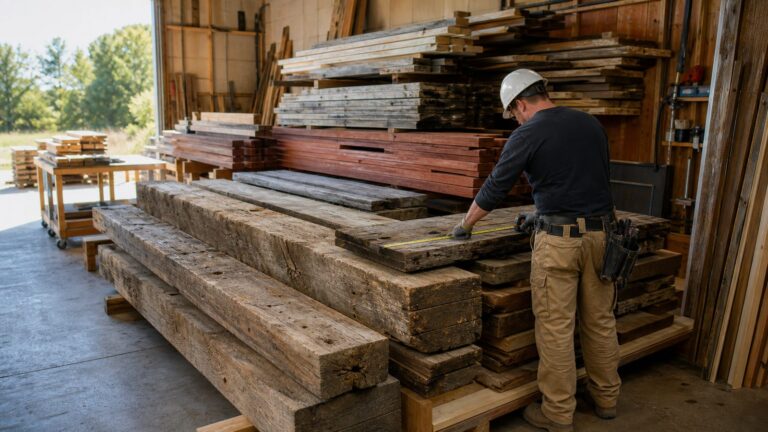
Coordinate the delivery date with the construction schedule and the site’s ability to receive the load. A delivery that arrives too early may need secure storage for longer; one that arrives when the site is unstaffed or inaccessible can create delay or additional handling. The relevant question is not only “When can the supplier deliver?” but also “When can the site accept, unload, inspect, and protect this particular material?”
Before confirming the delivery, check:
- Whether the truck can reach and maneuver at the delivery point.
- Whether suitable unloading equipment and trained site staff will be available.
- Whether the agreed delivery window fits site operations and the installation schedule.
- Where the material will be placed and whether that location is secure and suitable.
- How the material must be protected from weather, moisture, contamination, or other relevant site conditions.
Confirm the delivery arrangement with both the supplier and the person coordinating the site. Establish who is arranging and paying for transport and unloading, what equipment or access the delivery requires, and who will be present to receive it. If site access, staffing, or unloading is not confirmed, do not treat a delivery date as fully coordinated. Resolve the constraint or request a different delivery window before the order is committed.
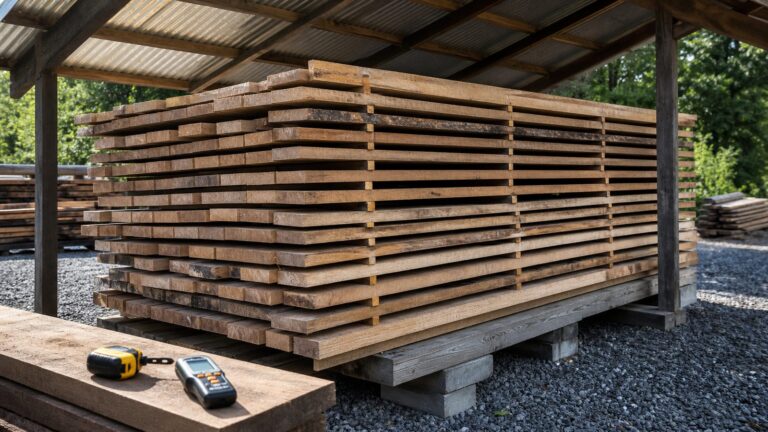
Ask the supplier for handling and storage requirements specific to the product. Do not assume one storage method works for cement, timber, insulation, roofing, and other materials. A universal method or set of storage conditions is not established here; obtain product-specific instructions and check that the intended location can meet them. If the delivery cannot be protected as required, adjust the delivery date or arrange suitable storage before ordering.
What’s actually slowing this PC down?
Pick the symptom - the matching free tool is one click away.
Consider the whole interval between arrival and installation. A product expected to be used soon may still need protection and a designated placement area; a delivery scheduled well ahead of installation may need longer-term secure storage. If the site cannot accommodate the quantity at once, discuss the delivery plan and quantity with the supplier before authorizing the order. Do not assume split deliveries are available or included: confirm any arrangement and its cost in the quote or order terms.
6. Plan the receiving inspection and keep records
Decide who will check the load and what they will compare it against before it arrives. On delivery, reconcile the product identity and quantity with the order, inspect for visible damage, and record discrepancies promptly. Photograph issues and keep the delivery ticket and related paperwork together. Note problems before signing acceptance where the contract permits; the applicable acceptance and claims process depends on your supplier’s terms and the material.
Rank #4

- PERFECT FOR ON-SITE USE: Built-in diagonal, rafter and roofing equations are perfect when solving slope, rafter, and roof dimensions, irregular pitch, irregular jacks, and rake-wall.
- LOADED WITH USEFUL FUNCTIONS: Stairway construction functions such as risers, treads, stringer, incline angle, and stairwell openings. Including circular calculations such as arc length, area, circumference, angle, column and cone dimensions, and more.
- EASILY WORK IN AND CONVERT BETWEEN UNITS: Calculate equations using US Imperial Units such as yards, feet, inches, fractions, pounds, or by using the Metric System. Also includes area, volume, perimeter, and weight functions.
- AVOID MATERIAL WASTE: The C6000 accurately estimates building materials such as blocks, drywall, footing, concrete, and margin of waste to ensure none of these costly materials are wasted.
- HEAVY-DUTY & RELIABLE: Each unit includes a shock-resistant and spill-proof hard-cover protective case, an English and Spanish pocket reference guide, a full instruction manual with examples available as a PDF online, and a series of instructional videos. Batteries included.
A receiving check should be tied to the paperwork rather than memory. Have the order confirmation and specification available so the person receiving the goods can check the product identity and count against the agreed basis. If the order is measured in a unit different from the way it is delivered, use the quantity basis stated in the quote and order documents. Record what was observed, when it was observed, and which documents or photographs relate to it. No universal inspection form or acceptance procedure is established here, so follow the contract and the project’s process.
Visible condition and product identity are distinct checks: an apparently undamaged delivery may still need to be reconciled against the specification, while the correct product can arrive with visible damage or a shortage. Do not treat a delivery ticket as evidence that every technical approval has been satisfied. The technical documentation, order, delivery record, and any inspection notes each support a different part of the procurement trail.
Keep the procurement trail in one place so an issue can be traced back to the approved requirement and order:
- Request for quotation and supplier quote.
- Approved product data or submittals.
- Order confirmation and written commercial terms.
- Delivery tickets, inspection notes, and photographs.
- Correspondence about any shortage, damage, return, or claim.
If there is a discrepancy, preserve the relevant records and follow the supplier’s written claim process. Avoid assuming that a particular photo, note, or signature is sufficient under every contract; check what the supplier’s terms require and make the record as promptly and clearly as possible. Keeping the quotation, approval, order, and receiving records together makes it easier to explain whether the issue concerns the specification, the quantity, the delivery condition, or the agreed commercial terms.
Independent reader supportYour contribution helps us test, update, and keep practical guides available for everyone.7. Consider environmental purchasing claims in context
If a project calls for recovered-material content or an environmental purchasing criterion, check that the requirement applies to the product, purchaser, and jurisdiction. The EPA publishes procurement recommendations for certain designated products. These are recommendations for specified procurement contexts, not universal product requirements, guarantees about every item on the market, or current market averages.
| EPA example | Recommendation and qualification |
|---|---|
| Fiberglass insulation made with glass cullet | 20–25% total recovered materials. EPA states that insulation percentages are based on the weight of the insulating core, not volume. |
| Cellulose loose-fill and spray-on insulation made with postconsumer paper | 75% total recovered materials. The percentage is based on the weight of the insulating core, not volume. |
| Rock wool made with slag | 75% total recovered materials. The percentage is based on the weight of the insulating core, not volume. |
These figures are EPA procurement recommendations reproduced on its construction-products guidance page; the underlying recommendations are older. They do not establish the contents of a particular product or make the percentages mandatory for every project. If an exact percentage matters to your purchase, confirm the applicable EPA recommendation and request documentation for the product being supplied.
Free tools Windows power users keep installed
One-click scans. No signup required.
Be careful when comparing a stated percentage with a project requirement. For these insulation examples, the basis is the weight of the insulating core, not volume. A percentage without its measurement basis may not answer the buyer’s question. Confirm what the supplier’s claim measures and whether the project or procurement program uses the same basis. These examples do not establish that every product in those categories contains the stated amount; the product being purchased still needs supporting documentation.
Best Value
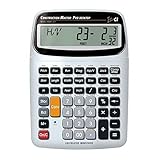
- SOLVE ALL YOUR DIMENSIONAL MATH: Quickly and accurately with the award-winning CM Pro-Desktop construction calculator's powerful built-in solutions for building; and full trig functions with sine, cosine, tangent, arcsine, arccosine and arctangent
- EFFORTLESS CONVERSION BETWEEN BUILDING FORMATS: Work in and convert between all common building dimension formats: feet-inch-fractions, decimal feet-inches, yards and metric -- including area and volume. Plus weight-per-volume and D: M: S to decimal degree conversions too
- TIME-SAVING BUILT-IN FUNCTIONS: Right angles give you instant solutions for square-ups, rafters (hip, valley, jacks), rake-walls, slopes, angles and more. Plus complete stair layout, advanced solutions for arcs, arches, circles, columns and more
- PREVENT COSTLY MATERIAL WASTE: Built-in solutions for roofing, drywall, studs, blocks, concrete footings and board-feet lumber estimating. Plus compound miter functions help avoid errors when working with crown molding and other millwork
- PROFESSIONAL CONSTRUCTION TOOL: Reduces headaches, saves time and prevents expensive material errors on your projects, from the office to the field. Comes with a large digits on easy-to-see multi-position tilt display LCD, easy-to-follow user's guide, plus a pocket reference guide in Spanish, full-size keys, long-life battery
Pre-order checklist
- Match each requested line item to the relevant project drawing, schedule, or bill of quantities.
- State the required grade, dimensions, finish, performance, applicable standard, and permitted substitutions in the request for quotation.
- Check that the quoted product matches its technical data and obtain any relevant batch, test, or certification documents for project review.
- Confirm the quote’s unit basis, minimum order, quantity tolerance, lead time, validity, freight, unloading responsibility, and taxes or fees.
- Get written terms for shortages, damage, returns, restocking, cancellation, and warranty before paying.
- Verify truck access, unloading equipment, delivery timing, site staffing, and product-appropriate storage and protection.
- Assign someone to inspect the delivery, record discrepancies promptly, and preserve the paperwork and photos.
- Store quotes, approvals, order confirmations, delivery records, and claim correspondence together.
This checklist is a general procurement aid, not a universal contract or inspection procedure. Tailor it to the material, project documents, local requirements, supplier terms, and the people responsible for approving and receiving the product.
Frequently Asked Questions
What should I ask a supplier before ordering building materials in bulk?
Send the same written specification and quantity basis to each supplier. Ask them to identify the quoted product and provide relevant technical data, applicable code or standard documentation, unit price, minimum order, quantity tolerance, lead time, quote validity, freight, unloading responsibility, and applicable taxes or fees. Get written terms for shortages, damage, returns, restocking, cancellation, and warranty before paying.
How do I compare bulk building-material quotes?
First confirm that the products and quantities meet the same specification and are quoted in comparable units. Then compare delivered cost, including freight, unloading, and applicable taxes or fees, alongside technical fit, documented compliance, lead time, delivery arrangements, return and damage terms, and handling or storage needs. A low unit price alone does not establish that an offer is cheaper overall.
Recommended Free Tools
Is there a standard bulk discount or freight cost for building materials?
No market-wide bulk-discount rate or typical freight cost is established here. Costs depend on the order, supplier, route, and material. Request written figures for the specific order and compare delivered costs rather than assuming a discount offsets transport or handling.
Do all building materials need the same certification?
No. Applicable standards, labeling, certification, and environmental purchasing requirements depend on the product and project jurisdiction. Ask the project professional or relevant authority which evidence applies, then obtain documentation for the product actually quoted. EPA procurement recommendations and UK construction-product guidance are examples with specific scopes, not universal rules.
What should I do if a bulk delivery is short, damaged, or different from the order?
Reconcile the delivered product and quantity against the order, note visible damage or other discrepancies promptly, and keep delivery paperwork and photographs. Record issues before signing acceptance where the contract permits, then follow the supplier’s written claims process. The exact acceptance and remedy requirements depend on the contract and material.
Can I use EPA recovered-material percentages as requirements for any project?
Not automatically. EPA’s examples are procurement recommendations for designated products and contexts, not universal product requirements or guarantees about a particular item. For insulation examples, percentages are based on the weight of the insulating core, not volume. Check applicability and request product-specific documentation if recovered content matters to your order.
Outdated Drivers Are Slowing You Down
One free scan finds every outdated or missing driver and matches the right update for your exact hardware.Free scan · exact hardware matchPC Slower Than It Used to Be?
A free scan shows the junk files, broken settings and background clutter dragging Windows down - then fixes them in one click.Free scan · Windows 10 & 11The Bottom Line
Before committing to a bulk order, define the product and quantity in the project’s terms, verify the quoted item with relevant technical evidence, and check rules for the product and jurisdiction. Compare complete delivered costs and written supplier terms, then coordinate delivery, unloading, inspection, and product-specific storage with the site schedule. Keep the specification, approvals, quote, order, and receiving records together. This sequence helps prevent a low unit price or early delivery from turning into a costly mismatch or avoidable site problem.
Quick Recap
Product prices and availability are accurate as of the date/time indicated and are subject to change. Any price and availability information displayed on Amazon at the time of purchase will apply.