For most woodworkers, the right choice depends on how you work: choose the JessEm Doweling Jig Master Kit for premium versatility, the Task Premium Doweling Jig for simple self-centering, the Rockler single-size jig for inexpensive repeatability, or the current Milescraft 1333 DowelJigKit for a complete starter package. The Kreg Dowel Jig Kit, Woodpeckers Cam-A-Line, and Dowelmax add worthwhile options for adjustable layouts and precision work.
Doweling jigs can produce strong, concealed joints with an ordinary drill, but no jig can compensate for twisted stock, inconsistent reference faces, a badly set depth stop, or a joint that was not dry-fitted first. This guide preserves WOOD Magazine’s original category awards, updates the Milescraft model numbers and current pricing, and adds newer alternatives.
Our Favorite Doweling Jigs
Updated August 10, 2026. Prices and availability below are for the US market and can change. Product specifications are drawn from manufacturer or retailer listings unless an independent review is identified.
As an Amazon Associate I earn from qualifying purchases.
Quick recommendations
- Best overall premium manual jig: JessEm Doweling Jig Master Kit, the original WOOD Magazine winner for its machining, range of guide sizes, indexing, and repeatability.
- Best self-centering jig: Task Premium Doweling Jig, provided its capacity suits the work and you can confirm current availability.
- Best single-size jig: Rockler Doweling Jig Kit with Bit and Stop Collar. Buy the 1/4-inch, 3/8-inch, or 1/2-inch version that matches your normal work.
- Best value complete kit: Milescraft DowelJigKit 1333, the current imperial replacement for the 1309 model named in the 2023 roundup.
- Best current flexible mid-priced alternative: Kreg Dowel Jig Kit, with removable guide blocks, reference features, and a 1/2-inch upgrade option.
- Best premium adjustable-spacing alternative: Woodpeckers Cam-A-Line Dowel Guide, with four guide sizes and adjustable center-to-center spacing.
- Best high-end specialist system: Dowelmax Classic 3/8 Joining System, for users who value precision and repeatability more than low cost or quick setup.
The first four recommendations are category awards attributed to WOOD Magazine: JessEm as best overall, Task as best self-centering, Rockler as best single-size, and Milescraft as best value. The newer Kreg and Woodpeckers tools have useful feature sets, but they should be viewed as current alternatives rather than proven replacements for those awards without a new independent comparison.
Comparison of the best doweling jigs
| Best for | Jig | Dowel sizes | Positioning style | Included equipment | US price checked August 10, 2026 | Main limitation |
|---|---|---|---|---|---|---|
| Premium all-around work | JessEm Master Kit | 1/4, 3/8, 1/2 in. | Reference-based, indexed | Guide mounts, drill bits, indexing pins | $249.99 direct; availability unclear | More setup and reference-face discipline than a self-centering jig |
| Simple edge-to-edge work | Task Premium | 1/4, 5/16, 3/8 in. | Automatic self-centering | Two bushings for each listed size | $74.99; estimated ship date August 14, 2026 | Access, varying thickness, and listed capacity can limit its usefulness |
| One repeated dowel size | Rockler single-size kit | Choose 1/4, 3/8, or 1/2 in. | Fixed geometry with edge stops | Matching bit, stop collar, hex key | $17.99 sale; $24.99 regular price per size | You need a different jig for another diameter or layout |
| Low-cost complete setup | Milescraft 1333 | 1/4, 5/16, 3/8 in. | Preset/reference-based | Bits, collars, centers, 62 dowels, glue, wrench, case | $26.99 direct | ABS body is less rigid than premium metal systems |
| Flexible mid-priced setup | Kreg KHJD345 | 1/4, 3/8 in.; 1/2-in. upgrade available | Preset/reference-based | Removable guides, bits, collars, pins, scale | $49.99; listed in stock when checked | It is not automatically self-centering |
| Adjustable hole spacing | Woodpeckers Cam-A-Line | 1/4, 5/16, 3/8, 1/2 in. | Sliding cam and stops | Deluxe kit adds collars, stops, extensions, rack | $249.99; listed in stock when checked | Manufacturer specifications, not independent comparative test results |
| High-end precision | Dowelmax Classic 3/8 | 3/8 in. standard; optional 1/4, 5/16, 1/2 in. | Precision reference system | Configuration-dependent | $225–$295 | More expensive and involved than a basic jig |
Prices are snapshots, not guarantees. The Rockler product page showed the sale price for the individual 3/8-inch version when checked. JessEm’s official page displayed a $249.99 price and an add-to-cart control while also showing a sold-out message, so availability should be verified before ordering. Woodcraft listed the Task jig at $74.99 with an estimated future ship date rather than immediate availability.
#1 Best Overall

- EXTRA-LARGE CLAMPING OPENING - Tackle any woodworking project with ease! Our self-centering dowel jig features an extra-large opening for clamping onto various-sized pieces of wood. No more struggling with limited clamping options – get the job done efficiently.
- UNIQUE ELONGATED JAWS - Experience unparalleled precision and grip with our innovative clamping jaws. While most competitors offer narrow side clamping jaws, ours are elongated for increased accuracy. The wider contact with the wood, coupled with a special grip pattern, ensures a secure hold, making your woodworking tasks more accurate than ever with our doweling jig.
- RULER MARKINGS FOR QUICK MEASUREMENTS - Say goodbye to guesswork! Our self centering dowel jig is equipped with ruler markings, enabling you to make quick and precise measurements between each dowel. Save time and increase accuracy on your projects with this convenient feature.
- INCLUDED DOWELS FOR INSTANT PROJECT KICKOFF - We believe in getting you started right away. That's why our pocket-hole jig comes with dowels. No need to search for additional materials – dive into your woodworking projects immediately and enjoy the efficiency our premium jig brings to your workshop.
- DURABLE ALUMINIUM ALLOY CONSTRUCTION - Crafted with excellence in mind, ELEON's drill guide is made from high-quality aluminium alloy metal. Built to withstand the demands of full-time woodworking professionals, DIY enthusiasts, contractors, and hobbyists, this tool ensures longevity and reliability in every use.
What a doweling jig does
A doweling jig holds or guides a drill bit so matching holes can be drilled squarely and repeatedly in two mating pieces of wood. You insert fluted hardwood dowels into those holes with glue, creating a concealed mechanical connection that also helps keep the parts aligned while the glue cures.
The jig guides the drilling; it does not create the whole joint. The final result still depends on:
Quick wins for a faster PC:
Clear out junk files and repair common Windows errorsFree Scan →Fix the driver behind crashes, sound loss and screen glitchesFind Drivers →- Flat, square joining surfaces
- Consistent reference faces
- The correct dowel diameter
- Accurate hole depth
- Clean, properly sized holes
- Fluted dowels with room for glue and air
- A complete dry fit before glue is applied
- Controlled clamping pressure
Typical uses include edge-to-edge panel glue-ups, end-to-edge frame joints, end-to-face cabinet and shelf joints, T-joints, mitered joints, face frames, furniture repairs, tabletop alignment, cabinet carcasses, and shelving.
Dowels are strong, inexpensive, and invisible after assembly, but they are not automatically stronger than every alternative. In WOOD’s cited joint testing, traditional mortise-and-tenon joints tested stronger than dowel, biscuit, and screw joints in the samples examined. A doweling jig is therefore a practical joinery method, not a universal replacement for a properly designed mortise-and-tenon joint.
The most important choice: self-centering or reference-based?
Many buying guides focus first on price or the number of bushings. For most users, the more consequential decision is whether the jig centers itself on the workpiece or lets you choose a specific reference face and offset.
Self-centering jigs
A self-centering jig uses opposing jaws, fences, or guides that move inward evenly. When the jig is correctly positioned, the drill guide lands at the center of the material thickness. This makes the Task Premium particularly convenient for flat, accessible boards of equal thickness.
Free tools Windows power users keep installed
One-click scans. No signup required.
Choose self-centering when you primarily make:
- Edge-to-edge panel joints
- Simple frames from equal-thickness stock
- Tabletop or cabinet panels
- Projects where the dowel can be centered without regard to a particular visible face
- Repeated joints where avoiding offset calculations matters
Self-centering is often the easiest approach for beginners, but it is not universally easier. The jig needs access to both sides of the workpiece, and it assumes the stock is reasonably consistent in thickness. It can be awkward on narrow rails, face frames, cabinet interiors, right-angle assemblies, and workpieces that are already partly assembled. If stock thickness varies, the jig centers from each piece’s current thickness; that may leave the visible faces uneven or place the dowels in different locations relative to the faces.
These trade-offs are also described in Kreg’s comparison of self-centering and preset doweling jigs.
Preset and reference-based jigs
A preset or reference-based jig registers from a selected face, edge, centerline, stop, index pin, or alignment groove. It may require more measuring at the start, but it gives you control over where the holes land.
This type is preferable when:
- Stock thickness varies
- The visible faces must remain flush
- You are building cabinets, shelves, T-joints, or face frames
- You need a repeatable row of holes
- The workpieces are narrow or awkward to access
- You need a deliberate offset rather than automatic centering
- You expect to reuse the same layout across multiple parts
JessEm, Kreg, Woodpeckers, and Dowelmax all offer forms of repeatable reference control, although their indexing and adjustment mechanisms differ. Reference-based tools reward careful layout. Always mark the face that must meet the finished surface and use that same face as the reference on both mating parts.
Recommended Free Tools
| Question | Self-centering answer | Reference-based answer |
|---|---|---|
| What determines hole position? | The center of the current stock thickness | A chosen face, edge, line, stop, or index |
| Best for | Equal-thickness accessible boards | Cabinets, shelves, narrow parts, varied thicknesses, and repeatable rows |
| Main advantage | Fast setup with little offset calculation | Control over the finished-face relationship |
| Main risk | Limited access and unwanted centering when thickness varies | Incorrect setup or inconsistent referencing |
Fixed single-size jig or multi-size system?
A fixed single-size jig is often the smartest purchase when you know exactly what you need. Rockler sells separate 1/4-inch, 3/8-inch, and 1/2-inch versions. Each has fixed geometry, but it includes a matched bit and stop collar, so there is little ambiguity about the basic setup.
Choose a single-size jig if you:
- Use one dowel diameter repeatedly
- Want the lowest purchase price
- Are making a tabletop, frame, or similar straightforward project
- Prefer a small, simple tool over a kit with interchangeable parts
Choose a multi-size jig if you work on both furniture and cabinetry, use several stock thicknesses, need edge-, face-, end-grain, or mitered joints, or want one system that can grow with future projects. The additional guides cost more and introduce more setup decisions, but they are usually less expensive than buying several specialty jigs later.
Choosing dowel diameter for your stock
A useful starting rule is to choose a dowel whose diameter is roughly one-third to one-half of the stock thickness. It is only a starting point: edge distance, hole spacing, grain direction, joint loads, and the particular jig all matter.
| Stock thickness | Practical starting point | Important qualification |
|---|---|---|
| 1/2 inch | Usually 1/4-inch dowels | Check edge distance and the jig’s minimum workpiece size |
| 3/4 inch | Usually 1/4- or 5/16-inch dowels | A 3/8-inch dowel may leave walls too thin in some layouts |
| 1 inch | 3/8-inch dowels become practical | Hole spacing and remaining wood still determine suitability |
| Thick legs and rails | 3/8- or 1/2-inch dowels may be appropriate | Use enough surrounding wood and sufficient embedment |
Kreg’s guidance gives the one-third-to-one-half range, while Rockler specifically points to 1/4- or 5/16-inch dowels for typical 3/4-inch stock. A larger dowel is not automatically a stronger dowel joint. Dowel count, embedment, wood species, grain direction, glue coverage, and edge distance also determine joint performance.
Spacing and depth: the measurements that make or break a joint
Dowel spacing
For a starting layout, WOOD recommends placing dowels approximately 1 inch from each end and 4 to 6 inches apart on boards 1 to 2 feet long. On longer boards, spacing may increase to approximately 10 inches. Kreg suggests roughly 5 to 8 inches for 1/2-inch stock, 5 to 10 inches for 3/4-inch stock, and 8 to 10 inches for stock 1 inch or thicker.
These are practical guidelines, not universal engineering specifications. Use closer spacing to help control minor cupping during a panel glue-up, but keep enough wood between holes and away from edges and ends. Short pieces may need only two dowels; long joints need additional support and alignment.
Hole depth
As a general formula:
Depth in each workpiece ≈ half the dowel length + a small allowance for glue and trapped air.
WOOD specifies approximately 1/16 inch of additional depth. For a 1-1/2-inch dowel, a reasonable starting point is a hole about 13/16 inch deep in each workpiece. Confirm this on scrap because the guide bushing length, bit geometry, and stop-collar position vary by jig.
Rank #2

- FLEXIBLE ADJUSTMENT: Our wood dowel jig can clamp a wide range of wood blocks from 0.4 to 2 inches, either round or square. Takes the hassle out of limited jig options and gives you more room for diy woodworking creations
- WELL MADE: This doweling jig is made of aircraft-grade aluminium alloy and heat-treated 45 steel, with excellent characteristics of ultra-high hardness and resistance to deformation, ensuring that it will serve you for a long time
- HIGH PRECISION: This upgraded dowel jig features accurate drill positioning and clear auxiliary ruler markings to make your woodworking easier and more precise
- WIDE APPLICATION: This dowel jig kit can be used for mortise and tenon joints, building wooden furniture, installing railings, and is a must-have tool for diy enthusiasts and professional woodworkers
- PACKAGE INCLUDES: You will get a professional self centering dowel jig, 6 rust-resistant steel bushings (2x 1/4”, 2x 3/8”, 2x 5/16”), an instruction manual
When setting a stop collar, remember that the drill travels through the jig’s guide bushing before entering the wood. Set the collar using the actual jig and bit, not just by measuring the exposed bit from its tip.
Use the right dowel
Use fluted or spiral-grooved hardwood dowels rather than smooth dowel rod for ordinary glued joints. The grooves provide channels for excess glue and air, and compressed hardwood dowels generally swell slightly when exposed to moisture from the glue. Chamfered ends make insertion easier. Use dowels of the correct nominal diameter, and reject pieces that are damaged, swollen, badly sanded, or bent.
Individual doweling jig reviews
JessEm Doweling Jig Master Kit: best overall premium manual jig
Best for: Experienced DIY woodworkers, cabinetmakers, furniture makers, and anyone who wants one highly adjustable manual system.
WOOD Magazine named the JessEm Doweling Jig Master Kit its best overall doweling jig. Its CNC-machined aluminum body accepts 1/4-, 3/8-, and 1/2-inch guide mounts and supports face- and end-grain joinery. A built-in alignment slot, 1/8-inch preset indexing increments, and stainless indexing pins make it possible to repeat a layout rather than measure every hole independently.
Do these 3 things before closing this tab:
1Clear out junk files and repair common Windows errors2Fix the driver behind crashes, sound loss and screen glitches3Repair Windows errors before they cause bigger problemsThe kit includes drill bits and indexing pins, which matters at this price because a bare jig would still require compatible bits and depth stops. It is a reference-based system, not an automatic self-centering tool. That means you can place holes deliberately relative to a chosen face, but you must establish and maintain that reference throughout the project.
Strengths: Premium machining, three common dowel diameters, indexing, alignment options, and a rigid body. Fine Woodworking’s 2024 independent review praised its machining, drill bits, alignment options, and repeatability.
Weaknesses: It takes more setup than a basic self-centering jig and rewards careful reference-face discipline. Its price is difficult to justify for occasional repairs or one-off edge-to-edge panels.
Current price and availability: JessEm lists the kit at $249.99. The official product page showed conflicting sold-out and add-to-cart signals when checked, so verify availability directly before purchase. See the official product page and Fine Woodworking review.
Task Premium Doweling Jig: best self-centering option
Best for: Straightforward edge-to-edge joints and equal-thickness boards where automatic centering is more valuable than adjustable offsets.
The Task Premium uses an automatic self-centering action and has aircraft-grade aluminum sides with hardened guide centers. It includes two bushings each for 1/4-, 5/16-, and 3/8-inch dowels. For a flat board edge that is accessible from both sides, this can be much faster than calculating an offset from a selected face.
Strengths: Simple centering, three useful dowel sizes, and a metal construction aimed at repeated use. It is a sensible choice for panel glue-ups and uncomplicated frames.
Weaknesses: Self-centering is less helpful on narrow rails, cabinet interiors, T-joints, varying stock thicknesses, and assemblies where the jig cannot grip both sides. The product’s capacity needs confirmation: WOOD’s 2023 article reported up to 2-3/16 inches, while the current Woodcraft listing says 2-3/8 inches. Do not plan around the larger number without checking the current manual or packaging.
Crashes, No Sound, or Screen Glitches?
Random freezes, missing sound and display glitches usually trace back to one bad driver. Find and replace yours safely.Free scan · under a minutePC Slower Than It Used to Be?
A free scan shows the junk files, broken settings and background clutter dragging Windows down - then fixes them in one click.Free scan · Windows 10 & 11Current price and availability: Woodcraft listed it at $74.99 with an estimated ship date of August 14, 2026, rather than immediate shipment. Check the current retailer listing before ordering.
Rockler single-size doweling jig: best inexpensive repeatable option
Best for: A woodworker who uses one dowel size and wants a compact, inexpensive jig with its bit and stop collar included.
Rockler sells separate versions for 1/4-, 3/8-, and 1/2-inch dowels. Each has dual edge stops, a molded depth scale, a reference-line window, a glass-reinforced nylon body, and hardened steel bushings. The matching bit, stop collar, and hex key are included.
The trade-off is fixed geometry. You cannot freely move the hole location as you can with a more adjustable system. On the 3/8-inch version, the stop engaged on 3/4-inch stock centers the hole in that stock and places it 5/8 inch from the edge. The 1/4- and 1/2-inch versions use different fixed dimensions, so check the specific size rather than assuming all three behave identically.
What’s actually slowing this PC down?
Pick the symptom - the matching free tool is one click away.
Strengths: Very low entry price, hardened bushings, clear reference features, and a correctly matched bit and collar.
Weaknesses: One jig does one dowel diameter and one basic geometry. It is less suitable for varied stock thicknesses, unusual offsets, or complex cabinet and face-frame layouts.
Rank #3
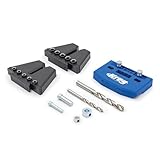
- Precise Joint Alignment: The Kreg Dowel Jig Kit provides accurate cabinet and woodworking joint alignment, with removable drill guides and built-in centering for strong, professional results
- Consistent Precision: Create repeatable dowel holes using hardened steel drill guides and an alignment pin for dowel jig to ensure straight and consistent results
- Ideal for Home & Professional Use: Whether as a home workshop tool or a commercial applications carpentry tool, this portable joinery jig offers added versatility and easy use
- Versatile Workshop Tool: Ideal for cabinets, furniture, and repairs, the durable jig works with trigger clamps and is perfect for benchtop or workshop projects
- Premium Kreg Tools: We offer products that help woodworkers close the gap between idea and outcome
Current price: The Rockler US product page showed a temporary sale price of $17.99 per size against a listed regular price of $24.99 when checked August 10, 2026. Prices are dynamic. See the current Rockler listing.
Milescraft DowelJigKit 1333: best complete starter kit
Best for: Beginners, repair users, and DIY woodworkers who want nearly everything needed to begin doweling at the lowest practical cost.
The Tool Desk
Outbyte Driver Updater FREEFix the driver behind crashes, sound loss and screen glitchesFind Drivers →Outbyte PC Repair FREERepair Windows errors before they cause bigger problemsFix Now →The current imperial model is the Milescraft 1333. It replaces the 1309/1359 DowelJigKit models named in WOOD’s original roundup. The newer kit retains the same basic concept but uses updated molded bushings, a revised fence, and a hard-shell case. The metric counterpart is model 1383.
The 1333 includes 1/4-, 5/16-, and 3/8-inch bushings, drill bits, stop collars, dowel centers, 62 dowel pins, glue, an Allen wrench, and a hard-shell case—82 pieces in total. It is specified for stock from 1/2 to 1-1/2 inches thick. Milescraft also lists minimum board widths of 2 inches for the 1/4- and 5/16-inch guides and 3-1/4 inches for the 3/8-inch guide.
Strengths: Outstanding contents for the price, three common sizes, dowel centers for transferring holes, consumable dowels and glue, and a storage case. There is no need to separately purchase the basic bit, collars, guides, or dowels.
Weaknesses: Its ABS body is less rigid than the aluminum bodies on premium systems. A careful user can get good results, but clamping, square stock, and a test piece matter more than they do with a heavier precision jig.
Quick wins for a faster PC:
Fix the driver behind crashes, sound loss and screen glitchesFind Drivers →Clear out junk files and repair common Windows errorsFree Scan →Scan for outdated or missing drivers - takes under a minuteDriver Scan →Current price: Milescraft listed the 1333 at $26.99 direct. If shopping for the older 1309, look for the current 1333 instead and confirm whether you need imperial model 1333 or metric model 1383. See the 1333 product page, 1383 metric page, and Milescraft’s model-transition document.
Kreg Dowel Jig Kit KHJD345: best newer flexible mid-priced alternative
Best for: Users who want more control than a fixed single-size jig without paying for a premium all-metal system.
The Kreg kit includes removable 1/4- and 3/8-inch guide blocks, matching bits and stop collars, alignment pins, reference lines, an alignment groove, an onboard measuring scale, and a clamp-ready body. A 1/2-inch upgrade kit is available. Kreg also lists a three-year limited warranty.
Its design is preset and reference-based rather than automatically self-centering. That requires more deliberate setup, but it can be an advantage when you need to control the hole position relative to a visible face or work with different stock thicknesses. The reference lines and alignment features also help with repeated layouts.
The Tool Desk
Outbyte Driver Updater FREEScan for outdated or missing drivers - takes under a minuteDriver Scan →Outbyte PC Repair FREEClear out junk files and repair common Windows errorsFree Scan →Strengths: Removable guides, useful alignment features, a clamp-ready design, an upgrade path to 1/2-inch dowels, and a mid-range price.
Weaknesses: It is not the fastest choice if all you want is centered holes in accessible boards. Kreg’s feature claims are manufacturer specifications, not an independent comparative accuracy test, so it is more accurate to call this a promising current alternative than a replacement for WOOD’s original winners.
Current price and availability: Kreg listed the kit at $49.99 and in stock on its US store when checked. Consult the Kreg product page and its self-centering comparison for the intended operating method.
Woodpeckers Cam-A-Line Dowel Guide: best premium adjustable-spacing alternative
Best for: Woodworkers who need multiple dowel diameters and adjustable spacing without moving to a powered loose-tenon machine.
Windows Errors? Fix Them Before They Spread
Repair common Windows errors and clear accumulated junk for a smoother, more stable PC - no reinstall needed.Free scan · no reinstallCrashes, No Sound, or Screen Glitches?
Random freezes, missing sound and display glitches usually trace back to one bad driver. Find and replace yours safely.Free scan · under a minuteThe Cam-A-Line has four guide sizes—1/4, 5/16, 3/8, and 1/2 inch—and a sliding cam system that adjusts spacing from 3/4 to 1-3/4 inches center-to-center. Engraved centerlines and a stop system help establish repeatable layouts. The deluxe kit adds stop collars, stop blocks, extensions, and a wall rack.
Strengths: Broad diameter coverage, substantially adjustable spacing, and a feature set aimed at repeatable cabinet and furniture work.
Weaknesses: At $249.99 it costs as much as the JessEm kit. Its broad versatility comes from manufacturer-listed specifications rather than an independent comparative test, so buyers should assess whether they will actually use the extra adjustment.
Current price: Woodpeckers listed the Cam-A-Line at $249.99 and in stock when checked. See the manufacturer’s current product page.
What’s actually slowing this PC down?
Pick the symptom - the matching free tool is one click away.
Rank #4

- Quickly and accurately dowel corner, edge, and surface joints
- Durable hardened steel bushings create straight, precise holes
- Versatile- use on boards from 1/2 in. to 1-1/2 in. thick (12 mm to 38 mm)
- Steel depth stops for each bit ensure proper drilling depth and reduces errors
- Steel dowel centers accurately mark the center of your drilling location when manually aligning dowel holes
Dowelmax Classic 3/8 Joining System: high-end precision alternative
Best for: Experienced woodworkers willing to pay for a precision-oriented system and learn a more involved workflow.
The current Dowelmax Classic 3/8 system is listed at $225–$295 depending on configuration. The standard system is built around 3/8-inch dowels, with optional 1/4-, 5/16-, and 1/2-inch guide packages. Dowelmax says its updated version improves parts, materials, tolerances, stability, and accuracy.
Independent coverage from Bob Vila found Dowelmax exceptionally well made and precise, but slower and more complex than simpler jigs. That makes it a credible high-end alternative for demanding work, not an automatic recommendation for a beginner doing a single shelf repair.
Strengths: Precision-oriented construction, repeatability, and optional guide sizes.
Recommended Free Tools
Weaknesses: High cost, more involved setup, and a slower workflow than simpler jigs. See the Dowelmax product page, purchasing guide, and Bob Vila’s test coverage.
How to use a doweling jig correctly
The following process applies to most edge-to-edge and edge-to-face joints. Individual jigs differ in how they index, clamp, and transfer the hole pattern.
- Prepare the stock. Joint or plane the mating faces and make sure the edges are square. Bring the parts to final thickness first. A jig cannot correct twisted boards or badly milled edges.
- Mark the reference faces. Use cabinetmaker’s triangles, numbered marks, or another registration system. The marks should show which faces meet and prevent you from accidentally flipping one part.
- Choose the dowel size. Match the diameter to the stock thickness and leave adequate wood around every hole. For common 3/4-inch stock, begin with 1/4- or 5/16-inch dowels.
- Lay out the holes. Use a square and mark the joint positions. Keep the first and last holes far enough from ends and edges to avoid breakout or splitting. Use closer spacing where the joint needs help resisting cupping.
- Install the matching guide and bit. The bushing and bit must match the dowel diameter. Do not assume a nearly matching metric and imperial bit are interchangeable.
- Set the depth stop. Drill a test hole in scrap. Set the collar for approximately half the dowel length plus about 1/16 inch, adjusting for the actual guide and bit.
- Position and secure the jig. Make the correct fence, face, centerline, or stop contact the intended reference surface. Clamp the jig whenever possible. Hand pressure can be insufficient, particularly in hardwood or during repeated drilling.
- Drill the first piece. Keep the drill aligned with the guide, use a sharp bit, and clear chips periodically. Do not force the bit.
- Transfer the pattern. Use the jig’s indexing pin, alignment groove, slot, or an existing dowel. If the jig cannot reach the mating surface, use metal dowel centers to prick the matching locations.
- Drill the second piece from the same reference face. Consistent referencing is safer than measuring the same offsets twice.
- Clean and dry-fit. Clear chips, insert the dowels without glue, and assemble the joint. The parts should close fully and the faces should align before glue is introduced.
- Glue and clamp. Apply glue in the holes and on the mating surfaces, insert the dowels, assemble the joint, and clamp with even pressure. Follow the adhesive manufacturer’s cure instructions.
For a complete general procedure, see Rockler’s dowel-joint guide and Kreg’s step-by-step instructions.
Independent reader supportYour contribution helps us test, update, and keep practical guides available for everyone.When the standard transfer method does not work
Fixed shelf or T-joint
A shelf meeting a cabinet side is not handled exactly like two loose boards. Mark the shelf centerline, secure the parts, and use the jig’s indexing feature or dowel centers to transfer the locations. The Kreg manual treats fixed-shelf positioning separately because the fence may not work on the second workpiece.
Different stock thicknesses
Use a reference-based jig or deliberately shim from the chosen reference face. Do not rely on a self-centering jig when the finished faces must align but the two boards are different thicknesses.
Inaccessible mating face
Use dowel centers, a drill press, or a shop-made transfer fixture when the jig cannot reach the second surface. Do not guess at the hole locations.
Mitered joint
Use a jig with dedicated miter capability or a reliable auxiliary fixture. A jig that works well on a broad square edge may not register securely on a narrow miter.
Narrow workpiece
Check the jig’s minimum width before buying. For example, Milescraft lists minimum widths of 2 inches for its 1/4- and 5/16-inch guides and 3-1/4 inches for its 3/8-inch guide. A jig may contain the correct bushing yet still be unusable on a narrow face-frame rail.
Common doweling failures and how to recover
The holes do not line up
First suspect a flipped workpiece, different reference faces, a jig that shifted, an inconsistent fence or stop setting, varying stock thickness, or a pattern transferred by measurement instead of indexing. A bent bit or excessive runout can also cause trouble.
Do not force the joint. Test the jig on scrap to determine whether the error is systematic. If the error is minor and the design permits it, clean the holes and lightly ease the dowel. If the holes are materially misplaced, plug and redrill or redesign the joint. Redrilling for a larger dowel can sometimes correct a mistake, but reassess the remaining wall thickness first; it is not a universal repair.
The joint will not close
Likely causes include holes that are too shallow, chips or glue trapped at the bottom, smooth or oversized dowels, crooked dowels, an out-of-square hole, or different stop-collar settings on the two pieces.
Dry-fit before gluing, clear the holes, verify the depth on scrap, and use fluted dowels. Lightly ease a dowel only after identifying the cause. Do not immediately enlarge every hole, since that can turn a depth or debris problem into a loose joint.
Free tools Windows power users keep installed
One-click scans. No signup required.
The joint is loose
A loose joint may result from an oversized or worn bit, a bent bit, a worn bushing, the wrong dowel diameter, poor dowel quality, excessive sanding, or a guide that flexed during drilling. Glue can swell a compressed fluted dowel slightly, but a visibly loose joint should not automatically be considered sound. Replace the dowel, repair the hole, or redesign the joint when strength matters.
Tear-out or breakout
Use a sharp brad-point bit, support thin stock with scrap, reduce feed pressure as the bit approaches breakthrough, and use a backer board where appropriate. A light chamfer at the hole edge can also help prevent swelling or damaged fibers from stopping the joint from closing.
Best Value

- 【Accurate and Fast】GOINGMAKE dowel jig for woodworking provides a center line pointer for align the marks on workpieces easily and the holes will line up perfectly and creat a perfect joint and is perfect for drilling 3 accurate straight dowel holes at one time. Make dowel holes and strong joints creating fast and easily with hand drill. Includes 9 replacment hardened stell drill bushings for 1/4, 3/8, 1/2 inch multi size dowels and offer a long term use.(3x1/4" bushings,3x3/8" bushings,3x1/2" bushings,1x1/4" drill bit, 1x3/8" drill bit, 1x1/2" drill bit.) Accurate drill guide can make your wood joints perfect match all the time.
- 【Easy to Use and Setup】GOINGMAKE doweling jig kit including a smart positive edge stops in 1/8" increments for precision locate and position setup security for any thickness workpieces. GOINGMAKE dowel jig kit woodworking also provides clear laser scales for easily setup in 1/16" increments. GOINGMAKE dowel jig kit is a must have wood joinery jigs and it will provides you the stronger and beautiful wood joints than others.
- 【Repeat Position Stop System and Extension Rod】GOINGMAKE doweling jig for woodworking including the smart edge stop system speeds things up and easily repeat the same dowel position. Once the stop is set, lets you position doweling jig on your material the same edge position time after time. The extension rod and position pins of drill guide provides any spacing position between dowel pins wherever you want it.
- 【With Quick Clamp System】GOINGMAKE drill guide for straight holes and dowels including a quick clamping system for workpiece clamping fast. You can also remove it quickly and use your own woodworking clamps. Fits for any thickness wood workpices clamping.
- 【Multi Purpose Use】GOINGMAKE dowel guide is the most complete and fast dowelling jig kit on the market. GOINGMAKE dowel jig is perfect for DIY, professional woodworking, cabinet and furniture. GOINGMAKE dowell jig kit fits for all kinds common dowel joints types including Butt Joint, Miter Joint, Edge Joint, T Joint/Cross Joint, Multi Row Joint, Center Joint and so on.
The wood splits
The dowel may be too large, too close to an edge or another hole, or forced into a shallow or obstructed hole. Excessive clamping or assembly pressure can also split the workpiece. In 3/4-inch stock, a 3/8-inch dowel can leave too little surrounding wood in some layouts, so do not equate a larger dowel with a stronger joint.
What to look for before buying
Accuracy and repeatability
Prioritize hardened steel bushings, a rigid body that does not flex, positive stops or index pins, clear centerlines, a reliable hole-transfer method, and a way to clamp the jig. A lower-cost jig can work well, but its accuracy depends more heavily on careful layout, secure clamping, and bit quality.
Do these 3 things before closing this tab:
1Clear out junk files and repair common Windows errors2Fix the driver behind crashes, sound loss and screen glitches3Repair Windows errors before they cause bigger problemsRockler combines a glass-reinforced nylon body with hardened steel bushings. Milescraft’s current kit uses an ABS body with hardened steel guide bushings. The hardened bushing is important because a soft guide can wear or enlarge with repeated drilling.
Setup speed
- Fastest for simple centered holes: a self-centering jig such as Task.
- Most complete for a beginner: Milescraft 1333.
- Fastest fixed-size workflow: the matching Rockler single-size jig.
- Best for repeated varied layouts: JessEm, Kreg, Woodpeckers, or Dowelmax, depending on the required precision and budget.
Flexibility
Check more than the number of bushings. Confirm whether the jig handles face, edge, end-grain, T-joint, and miter work; its minimum and maximum stock thickness; minimum workpiece width; access around assembled cabinets; adjustable offsets; and metric or imperial dowels.
Clamping
A small movement while drilling can produce holes that are correctly measured but impossible to assemble. Hand pressure may be adequate for a small repair, but a clamp-ready or self-clamping design is preferable for repeated work, hard material, and long joints.
What is included?
Compare the complete setup cost, not only the jig price. You may need drill bits, stop collars, dowel centers, dowels, glue, clamps, a storage case, extra guide bushings, or metric and imperial replacement parts. Milescraft is unusually complete because the 1333 includes the basic bits, collars, centers, dowels, glue, and case. Rockler includes a matched bit and collar with each single-size jig. JessEm includes bits and indexing pins, while accessory requirements vary for the other systems.
Doweling jig alternatives
Biscuit joiner
Choose a biscuit joiner when your main goal is quick alignment during a panel glue-up and you already own the tool. Biscuits are less useful for narrow or end-grain joints, and their slots can be harder to hide in some assemblies. WOOD’s cited testing placed biscuit joints below mortise-and-tenon joints and among the weaker alternatives in the samples tested.
Pocket-hole jig
Choose pocket holes when speed, hidden screws, and mechanical clamping matter more than an all-wood concealed joint. They work especially well when screws can remain inside a cabinet or on the underside of a project. They are less suitable when a screw pocket could be seen or when the joint geometry does not provide a good screw angle.
Loose-tenon or Domino-style joiner
Choose a loose-tenon or Domino-style tool if you build frequently and need fast, repeatable mortise-and-tenon-style joinery across many joint types. The cost of the machine and consumables is much higher. A manual doweling jig can create strong concealed joints with a standard drill, but it is generally slower and demands more attention to layout and hole depth.
Shop-made doweling jig
A shop-made jig can be worthwhile for one stock width and one dowel diameter. Install a replaceable bronze or steel bushing rather than drilling directly through a wooden guide. A bare hole will enlarge with use and quickly lose accuracy. Rockler’s shop-made doweling jig guidance provides a useful starting point.
Which doweling jig should you buy?
- Buy the JessEm if you want the most capable premium manual system among WOOD’s original picks and are comfortable with deliberate setup.
- Buy the Task if your work is mainly accessible, equal-thickness boards and automatic centering will save time. Confirm the capacity discrepancy and shipping status first.
- Buy Rockler if you need one dowel size, one basic layout, and the lowest-cost tool that includes a matched bit and stop collar.
- Buy the Milescraft 1333 if you are starting out and want bits, collars, centers, dowels, glue, and a case in one inexpensive package. Do not confuse it with the discontinued or superseded 1309 model.
- Buy the Kreg if you want a current, reference-based system with removable guides and a possible 1/2-inch upgrade at a mid-range price.
- Buy the Woodpeckers Cam-A-Line if adjustable spacing and four dowel diameters justify a premium price, while recognizing that its case for superiority is based on its current specifications rather than independent comparative testing.
- Buy Dowelmax if precision and repeatability are priorities and you accept a more involved, expensive workflow.
For occasional repairs, a complete entry kit or fixed single-size jig is usually enough. For cabinet and furniture production, choose the system that gives you the right reference control—not merely the highest number of bushings.
Frequently Asked Questions
Are doweling jigs difficult to use?
They are straightforward once the reference faces and hole depth are controlled. A self-centering jig is easiest for accessible, equal-thickness boards. Reference-based jigs take more setup but are better for cabinets, shelves, narrow parts, and varying stock thicknesses. Always test the depth on scrap and dry-fit before gluing.
What size dowel should I use in 3/4-inch wood?
A 1/4- or 5/16-inch dowel is a common starting point for 3/4-inch stock. The correct choice also depends on edge distance, hole spacing, grain direction, and the joint load. A larger dowel is not automatically stronger if it leaves thin walls around the hole.
Is the Milescraft 1309 still the current doweling jig kit?
No. The current imperial replacement is the Milescraft 1333 DowelJigKit; the metric version is 1383. The newer kit retains the basic concept but has updated molded bushings, a revised fence, and a hard-shell case.
Are dowel joints stronger than biscuit or mortise-and-tenon joints?
Not as a universal rule. Dowels provide strong, concealed reinforcement for many furniture, cabinet, repair, and panel applications. However, the WOOD testing cited in this guide found mortise-and-tenon joints stronger than dowel, biscuit, and screw joints in the tested samples. Joint design and execution matter as much as the connector.
Can I use a doweling jig for a T-joint or fixed shelf?
Yes, but the operation differs from joining two loose board edges. Establish the shelf centerline, clamp the work securely, and use the jig’s indexing feature or dowel centers to transfer the locations. A self-centering fence may not be able to register correctly on the second workpiece.
The Bottom Line
Bottom line: The JessEm remains the strongest premium all-around recommendation from WOOD Magazine’s original roundup, while Task is the most convenient choice for straightforward self-centering work. Rockler is the economical answer when one fixed dowel size is enough, and the current Milescraft 1333 is the best value for a complete beginner’s kit. Choose Kreg, Woodpeckers, or Dowelmax when your projects demand more reference control, spacing adjustment, or precision than the basic options provide. Whatever jig you buy, consistent reference faces, a properly set depth stop, secure clamping, fluted dowels, and a dry fit will matter more than the label on the box.
Quick Recap
Product prices and availability are accurate as of the date/time indicated and are subject to change. Any price and availability information displayed on Amazon at the time of purchase will apply.