Recommended Free Tools
Design a whole-shop dust-collection system from the machine hoods back to the collector—not from an advertised CFM number forward. A successful installation captures dust where it is created, keeps chips moving through correctly sized ductwork, delivers the required airflow at the system’s actual static pressure, filters fine particles, and controls fire, explosion, static-electricity, and make-up-air hazards.
For many one-person home shops, the practical answer is a two-stage cyclone, smooth conductive metal ductwork, accessible blast gates, short flexible connections, machine-specific hoods, and a separate HEPA dust extractor for handheld tools. Commercial shops, school shops, CNC operations, wide-belt sanders, and any installation intended to run multiple machines simultaneously require a more formal engineering review and applicable code evaluation.
As an Amazon Associate I earn from qualifying purchases.
First decide what whole-shop means
A whole-shop system does not necessarily mean one enormous collector with every machine permanently connected. It means that dust control has been planned across the shop rather than improvised one machine at a time. There are three practical approaches:
| System type | Best suited to | Advantages | Limitations |
|---|---|---|---|
| Central fixed system | A fixed home shop, professional shop, or several stationary machines | Convenient, expandable, and capable of serving planers, jointers, saws, bandsaws, routers, and sanders through permanent ductwork | Requires layout planning, adequate electrical service, space, and a correctly sized collector and duct system |
| Zoned system | Small garages, changing layouts, mobile equipment, or shops built in phases | Shorter duct runs, easier expansion, and less overhead ductwork | May require manual switching, several drops, or separate collectors |
| Distributed or point-of-use collection | Long or awkward shops, limited electrical capacity, or shops dominated by handheld tools | Places a collector close to each machine or zone and avoids a long, high-resistance trunk | More equipment to maintain and less convenient for a large number of stationary machines |
For a one-person garage shop, a central collector with blast gates can usually serve one machine at a time. A zoned system may be better if the shop must still accommodate vehicles or if its layout changes frequently. A set of unrelated shop vacuums is better described as a distributed system, not a central whole-shop system.
#1 Best Overall
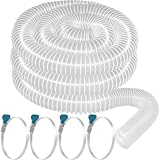
- CLEAR PVC DUST COLLECTION HOSE; This 2.5 inch dust collection hose features a clear PVC wall that allows you to see not only dust and debris moving through the hose, but also if any buildup or clogging has occurred, dealing with unexpected situations in a timely manner.
- THICKENED PVC PUNCTURE RESISTANT; The PVC fume collection hose is made of reinforced PVC material making itself super puncture resistant, so it can withstand all kinds of dust and debris generated from cutting, milling or sanding wood during use without being punctured, and it can also handle the smallest sawdust without leaking.
- PREMIUM CARBON STEEL WIRE COIL; The heavy-duty steel wire coil reinforces the PVC dust collection hose, helping it resist kinking, collapsing and deformation. When properly grounded at both ends, the wire coil also helps dissipate built-up static. This flexible 2.5 inch dust hose can be cut to the desired length and routed around workbenches, woodworking machines and tight corners, making it easier to customize dust collection setups for compact or complex workshops.
- EASY TO INSTALL; Package includes 1 x 2 1/2" x 20' Heavy Duty PVC Dust Collection Hose (Compression ratio is 3:1) , 4 x tube stainless clamps with turn keys for easy loosening or tightening. The hose reaches 20 ft when fully extended and fits standard 2.5-inch ports. Please confirm hose and port size before ordering.
- BUILT FOR WOODWORKING DUST COLLECTION; Designed for woodworkers, DIYers and workshop users, this 2.5 inch dust collection hose works with matching-size dust collectors, shop vac setups, table saws, planers, jointers, sanders, router tables, shop vacuums, industrial vacuum systems and PVC dust collection systems for woodworking applications and machines.
WOOD’s more recent discussion of zoning is useful when a ceiling-mounted trunk is impractical: see its zone-based dust-collection approach.
When a home-shop plan is not enough
Do not use this article as a substitute for engineering on a commercial or institutional installation. A production shop, shared school shop, CNC operation, wide-belt sander, shop collecting multiple materials, or system with simultaneous machine operation may need a formal dust-hazard analysis, listed protection equipment, fire-code review, explosion relief or suppression, and a qualified designer. Check the authority having jurisdiction, insurer, equipment manufacturer, and applicable standards before purchasing equipment.
1. Identify the dust, chips, and materials first
Dust collection is not only an airflow problem. The material entering the system determines the collector, filtration, fire protection, housekeeping, and sometimes the entire system design.
Outdated Drivers Are Slowing You Down
One free scan finds every outdated or missing driver and matches the right update for your exact hardware.Free scan · exact hardware matchPC Slower Than It Used to Be?
A free scan shows the junk files, broken settings and background clutter dragging Windows down - then fixes them in one click.Free scan · Windows 10 & 11- Planers and jointers produce large, heavy chips that can overload a small separator or settle in an undersized duct.
- Saws, routers, shapers, and CNC machines produce a mixture of chips and fine dust, often with substantial dust escaping if the hood is open.
- Drum and wide-belt sanders produce a high proportion of fine dust and may require much more airflow than their port size suggests.
- Handheld sanders need high static pressure at a small port, which is a different duty from moving chips through a large duct.
- MDF, plywood, composites, treated lumber, plastics, and exotic woods may introduce different health, fire, or equipment concerns than clean solid wood.
- Abrasive work may introduce hot particles or sparks that a wood collector is not designed to receive.
Wood dust is combustible. OSHA lists wood dust among combustible dusts and warns that a dispersed dust cloud, an ignition source, and confinement can create a fire or deflagration hazard. Read OSHA’s combustible-dust guidance and its woodworking fire and explosion guidance.
Never use a wood collector as a general-purpose debris vacuum
Do not send bench-grinder sparks, hot metal, aluminum or magnesium dust, welding debris, ashes, smoldering material, solvent vapors, flammable fumes, or unknown mixed waste into a wood-dust collector. Oneida’s safety documentation specifically warns against sparks, flames, metal inclusions, ferrous sanding, and collecting materials other than approved wood products. Use separate, purpose-designed collection equipment for other materials.
2. Make a machine inventory and airflow worksheet
Do this before drawing pipe or comparing collectors. The machine manual is the first source for required airflow. If no airflow specification is available, the dust-port diameter can provide a preliminary estimate—but it is not a guarantee that the machine will perform correctly at that flow.
| Machine | Model | Port diameter and number | Required CFM | Estimated CFM | Location and drop | Simultaneous use? | Hood type and dust type |
|---|---|---|---|---|---|---|---|
Record every port. If a machine has two ports that must be open together, add their airflow requirements. Nordfab’s duct-design guide explicitly recommends using manufacturer airflow requirements and treating multiple-port requirements as additive.
Do these 3 things before closing this tab:
1Fix the driver behind crashes, sound loss and screen glitches2Repair Windows errors before they cause bigger problems3Scan for outdated or missing drivers - takes under a minuteUseful preliminary airflow values
The following values are planning ranges for a typical small woodworking shop, not universal specifications. Verify them against the machine manual, hood design, and collector performance at pressure.
| Machine | Approximate starting airflow | Typical branch |
|---|---|---|
| 10-inch table saw | 450–600 CFM | 5 inches |
| 6–8-inch jointer | 350–500 CFM | 4–5 inches |
| 10–13-inch planer | 500–600 CFM | 5 inches |
| 18–20-inch planer | 700–800 CFM | 6 inches |
| 12–14-inch bandsaw | 400–500 CFM | 4–5 inches |
| 14–20-inch bandsaw | 400–700 CFM | 5–6 inches |
| Miter or radial-arm saw | 400–600 CFM | 5 inches |
| Router table | About 200 CFM | 2–4 inches |
| Large lathe | 650–800 CFM | 6 inches |
| Floor sweep | About 350 CFM | 6 inches |
These ranges are compiled from the planning information in Woodcraft’s small-shop guide and Oneida’s duct guide. The figures can vary significantly by machine enclosure, hood, manufacturer, port geometry, and intended operating condition.
Port-based estimates
Nordfab provides a useful preliminary estimate based on approximately 4,500 feet per minute:
| Port or duct diameter | Approximate airflow at 4,500 FPM |
|---|---|
| 3 inches | 221 CFM |
| 4 inches | 393 CFM |
| 5 inches | 614 CFM |
| 6 inches | 884 CFM |
| 7 inches | 1,203 CFM |
| 8 inches | 1,571 CFM |
Use Nordfab’s sizing chart as a starting point only. A 4-inch port does not automatically mean that exactly 393 or 400 CFM is correct for the machine. A poorly enclosed hood may need more airflow, while an efficient enclosed hood may capture well with less.
3. Draw the layout to scale
Make a scaled floor plan before installing anything. Mark the walls, doors, ceiling or joist height, electrical panels, windows, heating equipment, columns, storage, and the operator and feed clearances for every machine. Show the direction in which stock enters and exits each machine; a pipe route that blocks a planer’s outfeed is not a workable design.
Your drawing should identify:
- The collector, cyclone or separator, collection bin, filter, and service clearances.
- Every machine and every dust port.
- Main trunks, branches, reductions, blast gates, and clean-outs.
- Every flexible-hose connection and its approximate length.
- Support points, ceiling obstructions, doors, and access panels.
- Future machine locations and capped future drops.
In general, place the collector near the center of the system when that produces reasonably short runs. Put high-airflow machines such as planers and large sanders close to the collector where possible. Keep the mains straight, use one or two sensible trunks rather than a maze of small branches, and choose the shortest safe route rather than routing everything overhead for appearance alone.
Rank #2

- Sili Flex Fit Fittings: Stretchable silicone ends easily adapt to different dust ports—no more searching for the perfect fitting.
- Enhanced Dust Control: 10‑foot flexible hose helps maintain a cleaner, safer workspace by connecting directly to tools and vacuums.
- Versatile Adaptability: Includes 8 threaded fittings compatible with popular tools like orbital sanders and biscuit joiners.
- Rugged Design: Puncture‑resistant construction withstands heavy shop use for long‑lasting reliability.
- Complete Kit: Includes 1 flexible hose (10 ft, 1‑3/16" O.D.), 2 small rubber thread‑on fittings, 2 ribbed rubber adaptors, 1 plug‑in shop vacuum adaptor, and 3 Sili Flex Fittings.
WOOD’s whole-shop layout guidance recommends short runs, minimal turns, limited flex hose, central placement where practical, and large duct near the machine. For a smaller or frequently changing shop, zoning may produce a better layout than a single ceiling trunk.
4. Calculate airflow, velocity, and duct diameter
Three terms must be kept separate:
- CFM is the volume of air moved per minute.
- FPM is the air velocity inside the duct.
- Static pressure is the resistance the blower must overcome, including duct, fittings, hose, hood, separator, and filter losses.
The basic relationship is:
CFM = velocity in FPM × duct area in square feetFor a round duct:
duct area = π × diameter² ÷ 4Solving for diameter:
diameter = √[4 × CFM ÷ (π × velocity)]Transport velocity is a design reference, not a magic number
The velocity needed to keep dust moving depends on the material, particle size, moisture, duct configuration, and the applicable design standard. OSHA woodworking guidance gives approximately 2,500–4,000 FPM for moving light sawdust, heavy chips, and green shavings. Air Handling Systems describes approximately 4,000 FPM in branches and 3,500 FPM in mains for woodworking dust, while Nordfab uses approximately 4,500 FPM in a wood-chip sizing example.
The Tool Desk
Outbyte Driver Updater FREEFix the driver behind crashes, sound loss and screen glitchesFind Drivers →Outbyte PC Repair FREEClear out junk files and repair common Windows errorsFree Scan →Those values are references rather than a universal requirement. Use the collector and duct manufacturer’s design method for the actual system. The relevant guidance is available from OSHA, Air Handling Systems, and Nordfab.
Example duct capacities
At approximately 4,500 FPM, the estimated capacities are:
| Duct diameter | Approximate capacity |
|---|---|
| 4 inches | 393 CFM |
| 5 inches | 614 CFM |
| 6 inches | 884 CFM |
| 7 inches | 1,203 CFM |
| 8 inches | 1,571 CFM |
A smaller duct increases resistance and can starve the machine. An oversized duct can reduce velocity enough for chips to settle if the collector cannot move proportionally more air. As Donaldson explains, duct diameter must be considered together with airflow and conveying velocity.
Size each main section for the airflow it carries
Do not size the entire main from the collector inlet or simply match the largest machine port. Instead:
- Define the maximum simultaneous-use scenario.
- Assign the required airflow to every open branch in that scenario.
- Add the airflow for branches sharing each section of main.
- Size the section for that combined flow.
- Reduce the main only after a branch leaves it and the remaining calculated airflow permits the reduction.
- Calculate pressure loss along the longest and most restrictive path.
- Confirm that the collector fan curve supplies the required CFM at that pressure.
Worked example: suppose a table saw needs approximately 614 CFM and a jointer needs approximately 395 CFM. If both are intentionally operated together, the common section must carry about 1,009 CFM before accounting for leakage or design margin. A 6-inch duct rated at approximately 884 CFM at 4,500 FPM is not adequate for that simplified case; a 7-inch duct at approximately 1,203 CFM is the next chart size. Fittings, hose, hood losses, filter loading, and the actual fan curve still have to be included.
For a one-person shop where only one gate is open at a time, the collector and main may be sized around the largest intended active branch plus future expansion. Do not leave extra branches open as uncontrolled leaks and then expect the farthest machine to capture properly.
5. Choose the collector from its fan curve
A collector’s advertised maximum CFM is often measured in free air or under very low resistance. It is not the airflow available at the farthest machine after adding duct, elbows, hose, hood, cyclone, and filter.
Look for a performance curve or table showing airflow at static pressure. The correct selection point is where the collector’s fan curve intersects the resistance of your actual system. Also check:
- Airflow at the required static pressure, not only maximum or free-air CFM.
- Collector inlet size and whether adapters reduce it.
- Impeller diameter and design, without treating horsepower as a substitute for performance data.
- Filter area, filter efficiency, pressure drop, and cleaning method.
- Collection-bin capacity, sealing, and safe removal.
- Motor voltage, phase, amperage, circuit, and starting requirements.
- Noise, service access, replacement-filter availability, and filter cost.
- Whether the blower handles dirty air or separated, relatively clean air.
- Approved materials and any spark, explosion-relief, or suppression equipment.
As a reality check, WOOD reported a collector advertised at 1,800 CFM delivering only 736 CFM in a ducted installation with stock filters. See its ducted dust-control testing and measurement discussion. Product pages that distinguish maximum static pressure from airflow at a stated pressure, such as this Grizzly example, provide more useful information than a single headline CFM number.
How much capacity is enough?
Older consumer-shop guidance from WOOD suggests at least a 2-horsepower collector with a 12-inch-or-larger impeller and at least 1,300 advertised CFM for a fixed whole-shop system, with more capacity for runs longer than 20 feet, substantial flex hose, or simultaneous operation. Treat that as a practical rule of thumb—not an engineering requirement. See the source’s collector-selection guidance.
For a better decision, select the collector for the largest machine, the longest and most restrictive branch, the intended simultaneous-use case, future expansion, filter loading, and the actual duct diameter. Horsepower alone cannot tell you whether the system will work.
Rank #3

- Click-Connect System: Our Flexible fittings conform to most handheld power tool dust ports and the Click-Connect feature of the dust collection hose lets you click the expandable hose in and out with speed and ease; this provides a secure fit and quick transition between tools
- Flexible Compatibility: Equipped with four FlexiPorts in varying sizes, this dust collector system adapts to a wide range of power tool dust outlets; three of the vacuum dust port feature adjustable clamps for a tight, secure fit, providing compatibility and preventing disconnects during use
- Lightweight Expandable Hose: The improved blue long vacuum hose is designed for ease of use, expanding from 3' to 12' for a wide working radius; the reduced weight of the wood dust collector minimizes strain on tools, while its compact storage design allows for efficient organization
- Adjustable Suction Control: The click-connect hose dust collection adapter features a vent ring, letting you easily control suction levels; this adjustability helps prevent swirl marks when sanding and provides optimal dust collection performance for various tasks
- What’s Included: The set includes (1) Blue 3' to 12' flexible vacuum hose 1-1/2'' ID, (1) 2-1/4'' OD Swiveling Port for Shop Vacuum, (1) Click-Connect Hose Adapter With Suction Control Ring, (1) Click-Connect FlexiPort, 3/4'' ID x 1-1/4'' OD, (1) Click-Connect FlexiPort, 1'' ID, with locking clasp, (1) Click-Connect FlexiPort, 1-1/4'' ID and 1-1/2'' ID, with locking clasp.
6. Choose single-stage or cyclone collection
| Collector type | Strengths | Weaknesses | Best use |
|---|---|---|---|
| Single-stage | Lower cost, simple construction, compact footprint | More coarse material reaches the impeller and final filter; filter loading can reduce airflow; impeller damage is more likely if unsuitable material enters | Small shops with short runs and modest chip volume, when the collector is approved for the duty |
| Two-stage cyclone | Separates most chips before the blower and final filter; keeps the filter cleaner and airflow more stable | Higher cost, greater height or footprint, some separator pressure loss, and a need for safe bin handling | Whole-shop systems, planers, jointers, frequent use, and mixed chip-and-dust loads |
A cyclone is usually the strongest practical choice for a fixed home shop that handles significant planer and jointer waste. It does not eliminate the need for a final filter or make an unsafe material safe. WOOD describes the cyclone separation process in its whole-shop system guide; Air Handling Systems also discusses the benefits of two-stage collection in its dust-collection FAQ.
What’s actually slowing this PC down?
Pick the symptom - the matching free tool is one click away.
7. Design the ductwork
Use smooth, conductive duct for a new permanent system
Purpose-built spiral or quick-clamp metal duct is the preferred choice for a permanent whole-shop system. It has a smooth interior, durable fittings, and predictable support and sealing requirements. Heavy-gauge HVAC-style metal duct can be suitable when its collapse resistance and fittings are appropriate. Thin, improvised duct can deform under negative pressure or leak at its joints.
Use flexible hose only for short machine connections. Fully extend it, support it, and avoid corrugated or highly convoluted hose where a smoother connection is available. WOOD offers a simplified planning rule that one foot of flexible hose may be treated as roughly three feet of rigid duct for pressure-loss estimates; use manufacturer loss tables for a real design.
Arrange branches for low resistance
- Use wyes rather than abrupt straight tees.
- Have branch entries point in the direction of airflow.
- Use long-radius elbows.
- Where practical, replace a tight 90-degree turn with two 45-degree elbows and a straight section.
- Use gradual reducers rather than sudden contractions.
- Keep blast gates downstream of the wye and place them where they are easy to reach.
- Provide clean-outs at low points, long runs, and locations where chips might settle.
- Cap unused future branches; a permanently open unused drop wastes the collector’s available airflow.
- Support the duct independently so its weight is not carried by machine ports, blast gates, or flexible hose.
A blast gate is a performance component, not merely a convenience. Closing inactive branches lets the collector concentrate airflow at the machine in use. Gates do not have to be directly at the machine if an accessible location provides a shorter, cleaner installation.
The PVC question
Consumer woodworking coverage has sometimes recommended PVC because it is inexpensive and easy to install. However, Oneida advises against sewer-and-drain PVC because it is insulating and can accumulate static charge. Material in the wood provisions of the current NFPA 660 process states that nonconductive ducts such as PVC are not permitted and that a ground wire does not make PVC conductive. Research also shows that wood-dust electrostatic charging varies with air velocity, humidity, wood species, particle characteristics, and contact material.
Free tools Windows power users keep installed
One-click scans. No signup required.
For a new permanent whole-shop installation—especially in a commercial, school, production, or code-regulated shop—use conductive metal ductwork. Do not claim that running a wire inside or alongside PVC makes it equivalent to metal duct. If an existing hobby-shop PVC system is retained, consult local code officials, the collector manufacturer, and your insurer; do not rely on an internet grounding modification as a universal safety solution. Relevant references include Oneida’s PVC guidance, the NFPA 660 wood-duct committee material, and the 2024 wood-dust electrostatic-charging study.
8. Put the hood before the collector
The collector cannot compensate for a hood that lets dust escape into the room. Capture is most effective when the source is enclosed or the hood is positioned close to the point where dust leaves the tool. OSHA recommends locating hoods as close as possible to the emission source.
Machine-specific capture improvements
- Table saw: Use cabinet or under-blade extraction and, where practical, a connected upper blade-guard hood. A well-designed upper hood can make a major difference: NIOSH testing found that an auxiliary upper hood on a typical table saw reduced wood-dust emissions by more than 90 percent. Read the NIOSH table-saw capture assessment.
- Planer: Give the chip ejection path an unobstructed, appropriately sized connection. A long 4-inch hose, loaded filter, leaking cyclone lid, or inadequate collector can cause the planer to fill with chips.
- Jointer: Connect to the manufacturer’s chip-ejection port and avoid restricting the lower housing. Check both the cut-side capture and the outfeed discharge.
- Bandsaw: Collect below the table and as near the blade as the design permits. A small lower port alone may not capture dust released above the table.
- Router table and shaper: Use a hood close to the bit or cutter and provide cabinet collection where openings permit. An open table may need more airflow than a well-enclosed one.
- Miter or radial-arm saw: These tools throw dust into open space. Use a rear hood, hooded saw station, or broad shroud behind and below the blade that does not interfere with stock movement.
- Lathe: Position a large movable hood behind or below the cutting area. Do not expect a small factory port to capture dust from an open turning operation.
- Drum or wide-belt sander: Follow the manufacturer’s airflow requirement. These machines can demand high airflow and formal dust-hazard review, especially in production use.
- CNC router: Use a properly enclosed shoe or shroud, account for multiple ports if present, and treat the machine as a potentially high-airflow or continuous-duty application.
A larger collector does not fix cross-drafts, a missing upper table-saw hood, an open miter-saw station, or a poorly positioned router hood. Improve capture at the source first.
9. Keep handheld tools on a high-static-pressure extractor
Do not connect every small-port tool to a high-volume central duct simply because an adapter exists. Random-orbit sanders, track saws, handheld routers, trim saws, and detail sanders generally work better with a sealed HEPA dust extractor or suitable shop vacuum designed for small ports.
Quick wins for a faster PC:
Clear out junk files and repair common Windows errorsFree Scan →Fix the driver behind crashes, sound loss and screen glitchesFind Drivers →A HEPA filter is defined by filtration performance—at least 99.97% efficiency at 0.3 microns under the relevant test definition. It does not prove that the entire vacuum is leak-free, that all air passes through the filter, or that the equipment has combustible-dust or explosion protection. EPA explains both the HEPA efficiency definition and the sealing and testing caveat for HEPA vacuums.
10. Separate chip separation, final filtration, and ambient cleaning
Primary separator
A cyclone or other separator removes most coarse chips before they reach the blower and final filter. It reduces filter loading but does not remove every fine particle.
Collector final filter
Evaluate the final filter by tested efficiency, surface area, pressure drop, cleaning method, and sealing. A nominal micron rating without an efficiency test tells you little. Inspect the filter gasket, housing, collection-bin seal, cyclone lid, and blast gates because bypass leaks can return fine dust to the shop.
Ambient air cleaner
An ambient cleaner captures residual airborne fines after source capture. It cannot reliably compensate for an ineffective hood, leaking collector, or a sander that is not connected. As a consumer planning rule, WOOD suggests exchanging the shop’s air approximately every 10 minutes:
Rank #4

- 1-1/4" diameter x 16-foot commercial grade vacuum hose to connect from all major brands of home shop vacuums to a wide range of power tools with ¾”, 1”, 1-1/4”, 1-½” internal and external connections for dust collection
- The highly flexible commercial grade vacuum hose has a smooth interior to resist clogging with large profile debris while supplying superior airflow. Airflow to the tool can be modified as necessary for suction control using a swivel air relief feature built into bayonet fitting
- Comes with quick click system for connecting to the exhaust port on all major brands of hand held and stationary power tools. A collar with clip ring, and bayonet fittings with ¾”, 1”, 1-1/4”, 1-½” soft TPE fitting are designed to accept and hold exhaust ports designed to fit the hose internally or externally as demanded by the power tools design. Changing from one end fitting to the other takes a few seconds and offers a smooth 360 degree swivel connection to prevent the hose from kinking or restricting movement of the power tool
- Designed to fit most major brands of power tools and work shrouds including Skill Bosch, Ryobi, Makita, Dewalt, Festool. Fein, Cobalt, Porter Cable, Hitachi and Milwaukee Electric
- The tank end is designed to fit all major brands of home shop vacuums including Shop Vac, Vacmaster, Ridgid, Craftsman, Dewalt, John Deere, as well as many private brands typical of the 2 ½" vacuum connection
Required ambient-cleaner CFM ≈ shop length × width × height ÷ 10Label this as a rule of thumb, not a universal occupational-exposure standard. Keep the cleaner running after machining stops, because fine dust can remain suspended after visible chips have settled.
Health protection
Fine wood dust may be invisible and still contribute to exposure. NIOSH lists a recommended exposure level of 1 mg/m³, while OSHA’s general-industry limits for particulate-not-otherwise-regulated wood dust are 15 mg/m³ total dust and 5 mg/m³ respirable fraction as an 8-hour time-weighted average. These are occupational limits, not a target indoor-air-quality level for a home shop. See OSHA’s wood-dust exposure information and NIOSH’s wood-dust information.
Use source capture, sealed filtration, housekeeping, and a properly fitted NIOSH-approved respirator when exposure remains possible. A respirator supplements engineering controls; it does not make a defective collection system acceptable.
11. Locate the collector and solve the air-return problem
Evaluate the collector location for duct length, proximity to high-airflow machines, electrical service, noise, weather, fire separation, service access, filter cleaning, and collection-bin removal.
Free tools Windows power users keep installed
One-click scans. No signup required.
For industrial and many commercial woodworking installations, OSHA guidance places dust collectors outside unless applicable exceptions and protection measures are met. The current consolidated combustible-dust standard is NFPA 660, 2025 edition, which replaced several earlier commodity-specific standards, including NFPA 664 for woodworking. Applicability depends on the installation, local adoption, equipment listing, and authority having jurisdiction. Start with OSHA’s fire and explosion guidance, collector-installation bulletin, and the current NFPA publication information.
If the collector is outdoors
- Provide a weatherproof enclosure without blocking cooling or service access.
- Keep the collection bin accessible and restrained against tipping or leakage.
- Return filtered air to the shop through a sealed, adequately sized path, or provide deliberate make-up air.
- Separate the discharge from building air intakes so exhaust cannot be drawn back inside.
- Protect the return-air path from water, pests, and unfiltered bypass.
Exhausting shop air outdoors without replacement air can depressurize the building. That can reduce collector performance, make doors difficult to open, and backdraft a furnace, boiler, fireplace, or water heater. WOOD discusses this outdoor-collector and return-air problem; OSHA explains the effect of inadequate make-up air in its ventilation guidance.
If combustion appliances are present, stop and obtain competent HVAC or combustion-safety advice before operating an exhaust or return-air system.
Independent reader supportYour contribution helps us test, update, and keep practical guides available for everyone.12. Install the system in a controlled sequence
- Confirm requirements. Check local building, fire, electrical, and insurance requirements. Confirm the collector manufacturer’s approved materials and installation instructions.
- Finalize the scaled drawing. Resolve machine clearances, collector access, future drops, and the longest pressure-loss path before buying duct.
- Mark the installation. Transfer the collector, separator, trunk, branches, gates, supports, clean-outs, and flex connections to the shop.
- Install the collector and separator. Provide a stable base, safe collection-bin restraint, motor clearance, and filter access.
- Install the main trunk. Use the shortest practical route with few changes of direction and independently supported joints.
- Add branches. Use wyes, airflow-direction entries, long-radius elbows, and gradual reducers. Size each section for its calculated flow.
- Install blast gates. Put them downstream of branch wyes, label them, and keep them accessible.
- Install short flexible connections. Fully extend the hose, avoid kinks, and keep it off the floor where it can be crushed.
- Seal and support. Seal joints with the method appropriate to the duct system. Do not use sealant as a substitute for mechanical support.
- Bond and ground where required. Follow the equipment manufacturer, electrical requirements, applicable code, and qualified advice for conductive duct and equipment.
- Build the machine hoods. Improve source capture instead of relying on adapters alone.
- Install filtration and air handling. Add the final filter, ambient cleaner, make-up-air system, or filtered return-air path.
- Test before closing the installation. Operate the collector and each branch temporarily before sealing inaccessible joints or closing ceilings and walls.
- Document the work. Label gates, photograph concealed runs, record duct sizes, and keep manuals, filter specifications, and measurements with the shop records.
Oneida’s installation guide provides a useful sequence covering preparation, the main line, drops, and troubleshooting. If you are not comfortable with electrical work, structural support, code compliance, or dust-hazard controls, use a qualified installer. Oneida also provides a design service that identifies the information needed for a system plan.
Recommended Free Tools
13. Commission the system instead of trusting the nameplate
Test every machine individually
- Start the collector before the machine, using the approved switch or interlock.
- Open only the correct blast gate.
- Confirm the hose does not collapse and that gates open fully.
- Run the machine and observe whether chips enter the hood rather than escaping.
- Check the cutterhead, blade, sanding head, or router area for visible plumes.
- Inspect the duct after initial use for settled chips.
- Test the farthest and most restrictive machine, not just the nearest drop.
Test every intended simultaneous-use combination
Open the gates for the combinations you actually plan to use. Check whether a nearby branch steals flow from a far branch, whether every hood still captures dust, and whether the common main carries enough airflow without becoming a settling zone. If the system was designed for one machine at a time, do not assume two open gates are acceptable.
Find leaks
Inspect the filter gasket, collection-bin seal, cyclone lid, blast gates, flex cuffs, reducers, wyes, collector inlet, and clean-out doors. Leaks reduce capture and can return fine dust to the room. Use a suitable visual or smoke-based inspection method that does not introduce an ignition hazard.
Measure where possible
Useful commissioning measurements include airflow at machine connections, static pressure at the collector inlet, motor amperage, filter differential pressure, and particle readings before and after corrective work. A pitot tube can measure duct airflow and static pressure; an ammeter can reveal whether the motor is operating under an expected load. Measurement is especially important when the collector’s published performance data is incomplete.
Record the results for each machine. A system is not commissioned merely because the collector starts and chips disappear from one nearby tool.
The Tool Desk
Outbyte Driver Updater FREEFix the driver behind crashes, sound loss and screen glitchesFind Drivers →Outbyte PC Repair FREEClear out junk files and repair common Windows errorsFree Scan →14. Maintain the system on a schedule
Before each use
- Confirm that the correct gate is open and unused branches are closed.
- Check the collection bag or drum level and its seal.
- Inspect hose cuffs, gates, and visible duct joints.
- Confirm the collector starts before the machine and that the interlock works.
- Listen for unusual motor, impeller, belt, or vibration noise.
Weekly or according to use
- Clean the filter according to its instructions.
- Inspect flexible hose for splits, collapse, and embedded chips.
- Check low points and clean-outs for settled material.
- Verify that blast gates travel fully and seal adequately.
- Inspect cyclone seals, drum lids, and bin restraints.
- Remove dust from rafters, ledges, motors, light fixtures, and other concealed or elevated surfaces.
Periodically
- Inspect belts, impellers, bearings, motor cooling, and electrical connections.
- Check motor amperage and investigate changes.
- Inspect duct supports and conductive continuity where applicable.
- Replace damaged or loaded filters.
- Inspect outdoor enclosures for water and pest intrusion.
- Review the design whenever a machine, material, collector, or duct route changes.
OSHA emphasizes regular inspection and cleaning of ducts and collectors and maintaining adequate duct velocity to prevent plugging. Do not use compressed air to blow settled dust around the shop: it can create the airborne dust cloud needed for an explosion. Use appropriate vacuuming or controlled cleaning methods; see OSHA’s fire and explosion guidance.
Best Value
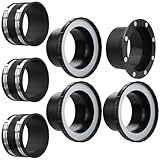
- Save Time & Effort: The wood shop magnetic dust collection fittings saves dust collection setup time without screwing hose clamps,fast connect dust hose to machinery port,makes connecting and switching machines tools to one shop dust collector much easier.
- One-to-Multi 4”Port Magnetic Dust Collector System: 1PCS magnetic dust collector machinery port switches between equipment tools of wood workshop such as joiner/table saw/planer/drum sander,quick&efficient solution for moving 4" dust collection hose from one machine to another.
- Keep woodworking shop clean: Using the wood shop magnetic dust collection fittings for vacuum to easy move the dust collection hose, no need to dedicated dust collection for each machine, no more complex dust collection pipes/vacuum pipes running all over, keep the small shop clean.
- Fits for Standard 4”dust collection hose: Our magnetic dust collection connector for 4” dust port is designed for woodworking shop dust collection/ vacuums, fits for 4” dust collection hose/4”vacuums hose and 4” dust collection ports.
- High Quality Magnetic Dust Separator Fittings: Our magnetic dust collector adapter for dust collection is made of high quality material, the powerful magnetic of the magnetic dust collection starter kit provides a secure connection, but is also easy to release.
Troubleshooting by symptom
The collector is rated at 1,500 CFM, but suction is weak
Check, in order:
- Whether the rating is free-air CFM rather than ducted airflow at pressure.
- A loaded filter, full bin, leaking bag, or unsealed cyclone lid.
- A closed or partly closed blast gate.
- Excessive flexible hose, undersized duct, sharp elbows, or a restrictive adapter.
- Leaks at joints, filter gaskets, clean-outs, or machine ports.
- Incorrect motor voltage or fan rotation.
- Insufficient make-up air.
- A hood that does not enclose or approach the source.
OSHA’s ventilation troubleshooting guidance also identifies reversed fan rotation, slipping belts, clogged ducts, closed dampers, clogged collectors, poor elbows, undersized duct, and inadequate make-up air as possible causes.
Dust settles in the main
Likely causes include an oversized main for the actual airflow, multiple open branches dividing flow, partly closed gates, low points, sticky or wet material, poor branch entries, or a collector that cannot maintain the intended velocity. Measure airflow, close unused gates, recalculate the main for actual simultaneous use, improve fittings, and add clean-outs. Inspect accumulated dust promptly because settled combustible dust is a fire hazard.
The planer fills with chips
Check whether the collector maintains airflow at the planer rather than only at the inlet. Inspect long 4-inch hose, filter loading, cyclone or drum leaks, a blocked machine hood, and the planer’s actual airflow requirement. A larger collector is not the only answer; reducing resistance and improving the chip path may produce a greater improvement.
The table saw leaves a fine plume
Under-table collection alone may not capture dust thrown above the table. Connect an upper blade-guard hood, close unnecessary cabinet openings, inspect the guard and riving-knife geometry, and check for cross-drafts. NIOSH’s upper-hood testing supports improving the local hood rather than simply increasing collector size.
The miter saw remains dusty
Use a rear hood, hooded saw station, or broad shroud behind and below the blade. Open saws throw dust into the room, so a small factory port may not provide adequate capture. The hood must capture without interfering with stock movement or creating an unsafe obstruction.
An open blast gate does not improve airflow
Verify that the gate is not installed backward or obstructed and that it actually opens. Then check for leaks elsewhere, an oversized main, a loaded filter, wrong motor rotation or voltage, and a restrictive machine port. If opening the gate does not change measured flow, measure rather than infer the cause from suction by hand.
The shop becomes cold or combustion appliances backdraft
Stop using the system until the problem is evaluated. An outdoor exhaust or poorly sized return path may be depressurizing the shop. A sealed filtered return-air path or dedicated, tempered make-up-air system may be required. Never assume that opening a door is a safe permanent solution around combustion appliances.
Chips are collected but fine dust remains
This indicates a fine-dust or capture problem, not necessarily a chip-flow problem. Check hood design, filter efficiency and sealing, collector bypass leaks, sanding-tool extraction, ambient cleaner size, and housekeeping practices. Use a sealed HEPA extractor for handheld tools and do not sweep or blow settled dust back into the air.
Static shocks occur
Static behavior depends on material, humidity, airflow, and contact surfaces. Use conductive metal duct for new permanent systems and follow qualified bonding and grounding requirements. Do not assume that a wire attached to PVC makes the pipe conductive or resolves every hazard. Investigate shocks, unusual arcing, and ignition sources rather than treating them as harmless annoyances.
Whole-shop design checklist
- Define whether the system is central, zoned, or distributed.
- List every machine, model, port, hood, material, and intended simultaneous-use condition.
- Use manufacturer airflow requirements whenever available.
- Draw a scaled layout with feed clearances, collector access, future drops, clean-outs, and flex sections.
- Calculate airflow in every main section after each branch.
- Choose transport velocity appropriate to the material and design method.
- Calculate static-pressure loss through the longest and most restrictive path.
- Compare the system requirement with the collector’s fan curve at operating pressure.
- Do not select solely by horsepower or free-air CFM.
- Prefer a cyclone for substantial chip volume and frequent fixed-shop use.
- Use smooth conductive metal duct for a new permanent whole-shop installation.
- Use wyes, long-radius elbows, gradual reducers, supports, seals, blast gates, and clean-outs.
- Keep flexible hose short, smooth, fully extended, and protected from crushing.
- Improve machine hoods before increasing collector size.
- Use a separate sealed HEPA extractor for handheld sanders and small-port tools.
- Treat the collector’s final filter, ambient cleaner, and source hood as separate controls.
- Resolve outdoor placement, filtered return air, make-up air, and combustion-appliance safety.
- Keep sparks, hot metal, solvents, ashes, and unapproved materials out of the wood collector.
- Review NFPA 660, local code, manufacturer instructions, and insurer requirements where applicable.
- Commission every branch, inspect for leaks, test simultaneous use, and record measurements.
- Maintain filters, bins, ducts, gates, supports, and housekeeping on a recurring schedule.
Frequently Asked Questions
Can one dust collector serve every machine in a small woodworking shop?
Usually, yes, if one machine operates at a time, inactive branches are closed with blast gates, the collector can deliver the required airflow at the system’s static pressure, and each machine has an effective hood. A single collector should not be assumed adequate for simultaneous machine operation without adding the active branch requirements and checking the fan curve.
Is a 1,500-CFM dust collector really delivering 1,500 CFM?
Not necessarily. Maximum or free-air CFM is usually measured with little system resistance. Duct, fittings, hose, hoods, separators, filters, and filter loading reduce airflow. Select a collector using its airflow at the static pressure required by the actual system.
Is PVC safe for woodworking dust collection?
Guidance differs between consumer woodworking sources and industrial combustible-dust guidance. PVC is nonconductive, and a grounding wire does not turn it into conductive metal duct. For a new permanent system—particularly in a commercial, school, production, or code-regulated shop—use conductive metal duct and confirm requirements with the authority having jurisdiction, manufacturer, and insurer.
Does a cyclone eliminate the need for a fine filter or air cleaner?
No. A cyclone removes most coarse chips before the blower, but fine dust still requires an effective, well-sealed final filter. An ambient air cleaner can capture residual airborne fines, but it cannot replace source capture or a properly sealed collector.
Should a dust collector be installed outside?
Outdoor placement is strongly favored in OSHA guidance for industrial and many commercial woodworking installations unless applicable protected alternatives are met. Home-shop requirements vary by local code, equipment listing, and installation. An outdoor collector also requires weather protection, safe bin access, filtered return air or deliberate make-up air, and discharge placement that prevents re-entrainment.
Why does a large dust collector fail to capture dust at a far machine?
Common causes are an undersized or excessively long duct, too much flexible hose, sharp fittings, leaks, a loaded filter, an open unused branch, inadequate make-up air, wrong fan rotation, or a poor machine hood. Test the farthest branch and measure airflow and static pressure instead of judging the collector by its nameplate.
The Bottom Line
A dependable whole-shop dust-collection system is a coordinated air-handling and safety installation. Inventory the machines, draw the duct layout, calculate each branch and common trunk for the intended operating scenario, select a collector from its fan curve, use effective source hoods and conductive ductwork, provide filtered return or make-up air, and commission the finished system at the machines. For commercial, institutional, CNC, wide-belt, mixed-material, or simultaneous-use installations, involve a qualified designer and the authority having jurisdiction before construction.
Quick Recap
Product prices and availability are accurate as of the date/time indicated and are subject to change. Any price and availability information displayed on Amazon at the time of purchase will apply.