The Tool Desk
Outbyte PC Repair FREERepair Windows errors before they cause bigger problemsFix Now →Outbyte Driver Updater FREEFix the driver behind crashes, sound loss and screen glitchesFind Drivers →Concrete can be painted, but the coating will only last if the slab is prepared and the product matches the way the surface is used. Clean and degrease it, repair damage, check for moisture and existing sealer, profile smooth concrete when required, and respect the coating’s primer, temperature, recoat, and cure instructions. A patio paint may work well on a porch or walkway; it is not automatically suitable for a vehicle garage.
Yes, you can paint concrete—but successful results depend more on preparation and choosing the right coating than on the color. Concrete must be clean, sound, dry, and capable of accepting the coating. Remove oil, grease, dust, efflorescence, loose paint, and incompatible sealers; repair cracks and spalling; profile smooth bare concrete when the product requires it; then apply a compatible primer and concrete coating under the label’s temperature and curing conditions.
As an Amazon Associate I earn from qualifying purchases.
The correct product depends on where the concrete is located. Acrylic porch-and-patio paint can suit a properly prepared patio, porch, walkway, basement floor, or decorative slab. It is not automatically suitable for a garage floor exposed to vehicle tires, hot tires, chemicals, or heavy abrasion. Those areas generally need a garage-floor or heavy-duty concrete coating system.
Choose the coating by exposure, not just by color
| Concrete surface | Usually suitable | Important limitation |
|---|---|---|
| Patio, porch, walkway, steps | Exterior-rated acrylic porch-and-patio paint or textured concrete coating | Use a slip-resistant system or compatible additive where the surface becomes wet. |
| Basement floor | Interior-rated concrete floor paint or coating | Test for moisture first. Paint will not solve water intrusion or vapor problems. |
| Driveway | A product specifically rated for driveways and exterior traffic | Confirm its resistance to weather, tires, chemicals, and freeze-thaw exposure. |
| Garage or workshop | Garage-floor epoxy or another heavy-duty floor coating system | Preparation, profiling, temperature, moisture, and cure requirements are usually stricter. |
| Industrial or heavily trafficked floor | A professionally specified coating system rated for the service | Ordinary porch paint is unlikely to withstand the traffic, chemicals, or abrasion. |
For a typical patio or walkway, shopping for concrete floor paint is more appropriate than buying ordinary interior wall paint. Compare the label’s permitted substrates, interior or exterior rating, traffic limits, coverage, temperature range, recoat time, and cure time. A coating described as “floor paint” is not necessarily suitable for every floor, so check whether automotive tires, standing water, chemicals, or intense sunlight are within its stated use.
#1 Best Overall

- WHAT'S IN THIS 10 PIECE PAINT KIT FOR WALLS: includes one plastic paint tray; one 9 inch roller frame; one 4 inch mini roller frame; two 9 inch microfiber roller covers (1/2 inch nap); two 4 inch microfiber roller covers (1/2 inch nap); one 1 inch flat brush; one 1.5 inch angle sash brush; one 2 inch angle sash brush
- Versatile Application: Perfect for any project, this set includes paint rollers 9 inch for large surfaces and smaller brushes for detail work
- All-in-One Kit: This paint brush set and paint tray combo ensures you have all the paint supplies needed for any home improvement task
- Professional Grade: Get a smooth, even finish with our high-quality paint roller set; ideal for applying interior paint gallon or smaller quantities
- Cost-Effective: This paint brush and roller set provides unbeatable value; includes paint pan and paint trays for easy cleanup and reuse
Before painting: inspect the concrete
Painting over a defective slab only hides the problem temporarily. Inspect the entire area and address these issues before buying coating.
- Cracks and holes: Fill and repair them with a compatible concrete repair material. Moving or structural cracks may need a different repair approach rather than a rigid surface patch.
- Spalling and loose concrete: Remove unsound, flaking, or powdery material and repair the damaged areas.
- Ponding water: Correct drainage or low spots where possible. A coating is not a substitute for proper slope and drainage.
- Existing paint: Test whether it is firmly bonded. Peeling, blistered, or weak paint must be removed back to a sound surface.
- Sealer: A sealed surface may prevent adhesion. Sprinkle a few drops of water on bare-looking concrete. If the water beads instead of soaking in, the surface may still be sealed and require removal or additional preparation.
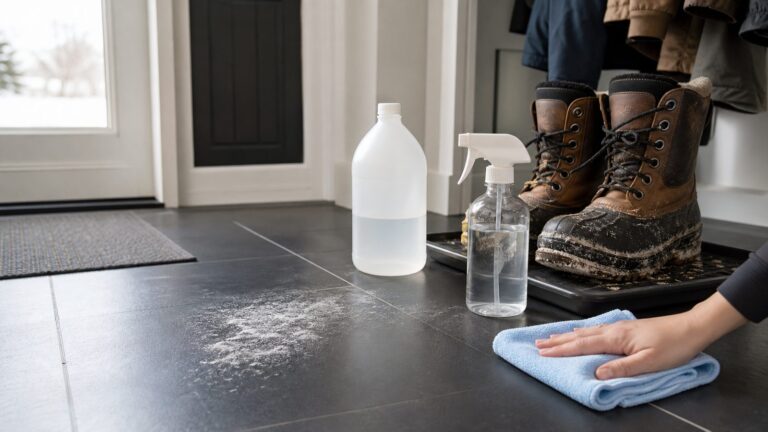
- Efflorescence: White, powdery mineral deposits indicate moisture movement through the concrete. Remove the deposits and investigate the moisture source before coating.
Test the slab for moisture
Moisture is one of the most common reasons a concrete coating blisters, bubbles, peels, or delaminates. Do not proceed simply because the surface looks dry.
- Cut a piece of clear plastic and tape all four edges tightly to the concrete.
- Leave it in place for 24 hours.
- Check for condensation beneath the plastic or a visibly dampened area of concrete.
Condensation indicates that the slab is too damp for the planned coating or that moisture is moving through it. Stop and diagnose drainage, leaks, groundwater, or vapor transmission. Repainting without correcting the source usually repeats the failure.
Wait for new concrete to cure
Do not paint fresh concrete immediately unless the selected product expressly allows it. The cited product instructions require approximately 28 days for new concrete or repairs before applying a textured acrylic concrete coating, while another concrete-sealer system specifies approximately 30 days. The current label and technical data sheet for your exact product take priority when requirements differ.
How to prepare concrete for paint
Preparation should leave a clean, dry, sound, and appropriately textured surface. Work through the following sequence.
1. Remove loose material
Sweep or vacuum dust, grit, flaking paint, and loose concrete. Scrape failing coatings and remove anything that can detach under the new coating.
Rank #2

- 【All IN ONE 】Great painting tool kit with 4 Inch paint roller cover *6 , 9 Inch paint roller cover*6,4 Inch paint roller frame, 9 Inch paint roller frame,Handle Extension Roller *1 , 9 inch paint tray*3, 9 inch paint tray liner,1Inch paint brush , 2 Inch paint brush and stirring rod, 2.5 inch angel paint brush*1, 2 inch angel paint brush*1, 1.5 inch angel paint brush*1, 1inch paint brush*1, scraper,can openner.
- 【ADJUSTABLE EXTENSION POLE】The paint roller adjustable extension pole is made of aluminum alloy.It's lightweight and sturdy, and can be extended or retracted in length.It can be stretched from 23 in to 47 in to reach higher without a ladder.Whether you're painting floors, walls or higher walls, stretch our adjustable extension pole with ease.
- 【HIGH EFFICIENCY AND ADAPTABILITY】You'll get beautiful finishes and save valuable time and money.9" paint rollers help you get a smooth finish, 4" mini rollers are great for tight spaces.The angle paintbrush is perfect for cutting in walls and flat paint brushe is perfect for trim. The stirring rod helps paint to be more silky smooth and even. The scraper cleans old paint with ease. Can opener opens paint cans without much effort.
- 【SUPERIOR HIGH QUALITY】The steel paint roller frame is not easy to bend and deform. It supports the roller rolls firmly and efficiently. The paint roller is made of microfiber and leaves no lint. It absorbs a large amount of paint and applies it evenly. The paint roller brush is made of 100% synthetic bristles with a smooth surface. It is abrasion and corrosion resistant. The bristles are not easy to shed. The tray is quite sturdy and easy to clean.
- 【COST-EFFECTIVE】 This high quality set is for perfectionists and money savers. An all-in-one set meets all your painting needs.The paint kit is durable with water and oil based paints, glosses, stains, emulsions, and varnishes, and won't deform easily. This paint tray set is more than affordable and perfect for small or large projects
2. Degrease and wash
Clean oil, grease, dirt, mildew, and other contamination with a compatible concrete cleaner or degreaser. Scrub as directed, rinse thoroughly, and allow the slab to dry completely. A cleaner that also etches may be appropriate for some bare-concrete systems, but do not assume every cleaner is compatible with every coating.
Free tools Windows power users keep installed
One-click scans. No signup required.
Oil contamination is particularly important in garages and driveways. If oil remains in the pores, the coating may fail even though the surface appears clean. Repeat cleaning where necessary rather than covering the stain with primer.
3. Remove efflorescence
Brush or clean away white mineral deposits, then identify why moisture is reaching the surface. Efflorescence can interfere with adhesion and may return if the moisture movement continues.
4. Remove or soundly prepare old paint
If an old coating is peeling or fails a tape-adhesion check, remove it down to sound concrete. Depending on the product and substrate, this may involve scraping, sanding, stripping, or mechanical abrasion. If the existing coating is firmly bonded, some systems permit thorough cleaning and scuffing instead of complete removal; follow the new coating’s instructions.
5. Profile bare concrete when required
Smooth concrete may not provide enough tooth for a coating. Product instructions may call for chemical etching, mechanical abrasion, or both. Some heavy-duty epoxy systems specify a texture comparable to 60–80 grit sandpaper or an ICRI CSP #5 profile. That is not a universal requirement for every concrete paint, so use the preparation standard specified for the selected system.
Quick wins for a faster PC:
Fix the driver behind crashes, sound loss and screen glitchesFind Drivers →Repair Windows errors before they cause bigger problemsFix Now →Mechanical sanding and grinding create hazardous dust. Use eye protection, gloves, ventilation, and appropriate dust control. Vacuum thoroughly and remove sanding residue before priming or painting.
Rank #3

- COMPLETE 5-PIECE BRUSH SET FOR EVERY PAINTING TASK — Includes 1 Inch Flat, 1.5 Inch Angle, 2 Inch Flat, 2 Inch Angle Stubby, and 2.5 Inch Angle brush giving you every size professional painters use daily. Get all 5 for less than the price of a single brush from hardware store brands — professional grade performance at a fraction of the cost. Perfect for walls, trim, cabinets, doors, furniture, and detailed cutting-in work on any project.
- ZERO BRISTLE LOSS — GUARANTEED BY PRECISION ADHESIVE BONDING — Every bristle is locked in place with precision-set adhesive that keeps them in the brush — not in your paint job. The coated steel ferrule provides structural support while the adhesive bond ensures clean performance on every stroke. Premium SRT synthetic filaments load more paint and release it evenly for a smooth streak-free finish on walls, ceilings, and trim. Works with latex, oil-based paint, primer, sealer, and wood stain.
- INCLUDES THE ANGLE STUBBY MOST SETS LEAVE OUT — Professional painters know the 2 Inch Angle Stubby is the go-to brush for tight cabinet interiors, window sashes, inside corners, and detailed trim where standard angle brushes are too long. Combined with the 1.5 and 2.5 inch angle sash brushes you have precision cutting-in covered at every scale — baseboards, crown molding, door casings, and ceiling lines.
- FLAT BRUSHES FOR BROAD SMOOTH COVERAGE ON ANY SURFACE — The 1 and 2 inch flat brushes deliver even coverage on walls, furniture, shelving, doors, fences, decks, and wood surfaces. Ideal for applying primers, stains, varnishes, polyurethane, and specialty coatings. Solid wood handles provide all-day comfort and control for both professional contractors and weekend DIY homeowners tackling interior or exterior painting projects.
- TRUSTED BY PROFESSIONAL PAINTERS AND CONTRACTORS NATIONWIDE — Pro Grade delivers professional-grade results at a price that makes sense for crews who go through brushes on every job. Ideal for property managers, remodeling contractors, apartment turnover crews, maintenance teams, and commercial painting operations. Backed by thousands of verified reviews from working painters. Washable and reusable for multiple projects.
Do you need primer?
Primer is part of some concrete coating systems, not a universal substitute for preparation. A concrete-and-masonry bonding primer can help create a more uniform, bondable surface on porous, uneven, uncoated, or previously coated concrete. Some porch-and-patio paint systems specifically require their compatible bonding primer before the topcoat.
Use a primer approved for both the concrete and the chosen topcoat. Do not substitute interior wall primer, an unrelated sealer, or leftover masonry paint without confirming chemical compatibility. Check the label or technical data sheet for whether primer is required, the permitted substrate, drying and recoat window, temperature range, and coverage.
Concrete paint and coating options
Acrylic porch-and-patio paint
A 100% acrylic porch-and-patio floor paint is a practical choice for many properly prepared patios, porches, walkways, basement floors, and decorative slabs. One manufacturer specifies approximately 200–300 square feet per gallon on rough surfaces and 300–400 square feet per gallon on smooth surfaces. Rough and porous concrete consumes substantially more material, so do not estimate from the smooth-surface figure.
These products can offer resistance to cracking, peeling, scuffing, and fading, but an exterior rating does not make them suitable for automotive tires or every form of heavy traffic. Check the restrictions before using porch paint in a garage.
Textured acrylic concrete coating
Textured acrylic coating can provide additional hiding and a textured finish on suitable driveways, patios, sidewalks, steps, and ramps. One cited product lists coverage of up to approximately 100–150 square feet per gallon, depending on porosity and texture. The lower coverage reflects the amount of material needed for a more textured or porous surface.
Rank #4

- The “Goldilocks” Paint Brush Set - Professional-quality performance without luxury pricing. This paint brush set outperforms cheap sets while avoiding the cost and complexity of premium tools. A versatile painting set suitable for beginners and professionals.
- No Shedding, Long-Lasting Nylon Bristles - High-grade nylon bristles keep their shape, don’t shed, and hold paint evenly, making these painting brushes reliable as acrylic paint brushes, oil paint brushes, and brushes for watercolor painting. With proper care, customers report many years of regular use.
- Right Variety - No Wasted Brushes - This 12 piece paint brush set includes essential shapes (flat, round, fan, filbert) for backgrounds, blending, textures, and fine details. A practical acrylic watercolor oil paint set that supports multiple techniques.
- Comfortable Control for Long Sessions - Ergonomic wooden handles reduce fatigue and improve precision. Ideal painting brushes for canvas and reliable on fabric, wood, and board, perfect for classes, practice, and daily painting.
- Trusted Family Brand - A dependable artist paint brush set from a family-owned brand that stands behind its products. Suitable for acrylic, watercolor, and mixed-media painting, backed by a hassle-free money warranty.
Epoxy or heavy-duty floor coating
Epoxy and other purpose-designed floor systems can be better suited to some garages, workshops, and high-traffic floors. They are not automatically better for every concrete surface. Heavy-duty systems commonly demand removal of previous coatings and contaminants, a properly profiled slab, a visibly dry surface, and controlled temperature conditions.
For patios and sun-exposed slabs, also evaluate exterior suitability, ultraviolet performance, slip resistance, moisture tolerance, and traffic rating. The word “epoxy” alone does not answer those questions.
How to paint concrete
- Confirm the surface is ready. It should be repaired, clean, dry, free of loose material, and profiled if the product requires it.
- Prime if specified. Apply the compatible concrete-and-masonry bonding primer according to its label. Observe its drying and recoat window.
- Plan the work. Start at the farthest point from the exit and divide large areas into manageable sections. Check the weather and make sure rain, dew, condensation, freezing temperatures, or excessive humidity will not interrupt curing.
- Apply a thin, even coat. A typical porch-and-patio product may be applied with a high-quality 3/8- to 1/2-inch nap roller, a nylon/polyester brush, or an airless sprayer. Use the method and tip or thinning instructions specified by the product. Do not thin a product by roller or brush unless its instructions permit it.
- Maintain a wet edge. Work in sections and blend into the previous section while it is still wet to reduce lap marks. Avoid puddles and heavy ridges.
- Apply the required second coat. Many concrete floor paints specify two coats for best coverage, hiding, performance, and durability. Wait for the stated recoat time, not merely until the coating feels dry.
- Protect the finish while it cures. Keep people, pets, furniture, vehicles, and standing water off the surface for the full cure period.
Temperature, weather, and cure time
Use the exact conditions on the selected product’s label. For example, one porch-and-patio paint specifies air and surface temperatures of 50–90°F. A cited floor-sealer system specifies 50–100°F and requires the surface to be above the dew point. Those ranges are examples, not interchangeable rules.
A surface can feel dry while remaining too soft for normal use. One porch-and-patio product may be dry to the touch in about one hour, may require 4–6 hours before assessing or applying a second coat, and may need approximately 72 hours before normal use. Follow the coating’s current label, particularly in cool, damp, or humid conditions.
Make painted concrete safer when wet
Painted concrete can become slippery when wet, especially on pool decks, exterior steps, ramps, and walkways exposed to rain. Choose a coating with suitable slip resistance or add a compatible anti-slip floor additive. Mix and apply the additive exactly as directed; an incompatible additive can affect color, texture, adhesion, or cure.
What’s actually slowing this PC down?
Pick the symptom - the matching free tool is one click away.
Common problems and how to correct them
| Problem | Likely cause | What to do |
|---|---|---|
| Peeling soon after painting | Oil, dirt, dust, moisture, insufficient profile, or a weak previous coating | Do not simply add another coat. Remove the failed material, correct the preparation or moisture issue, and recoat only when the surface is sound. |
| Blistering or bubbling | Moisture or vapor moving through the slab, trapped contamination, or unsuitable application conditions | Remove loose coating and diagnose the moisture source before repainting. |
| Poor coverage | Porous, rough, or textured concrete absorbing more material than expected | Use the rough-surface coverage rate, allow for additional material, and apply the specified coats. |
| Slippery when wet | Smooth coating and water on the surface | Use a compatible anti-slip additive or a textured slip-resistant system. |
| Tire pickup or rapid wear | Porch paint used where automotive tires or heavy abrasion are present | Remove the unsuitable coating and select a garage-floor system rated for tires and the expected traffic. |
| Dust or grit trapped in the finish | Incomplete vacuuming or sanding residue left before primer or paint | Allow the coating to cure as directed, remove loose contamination if possible, and improve cleaning before the next coat or repair. |
Practical shopping list
The exact list depends on the slab and coating system, but a typical project may need:
Best Value

- Elevate your painting precision with the Bates trim brush set, featuring three brushes in distinct sizes tailored for a diverse range of detailing and trim work needs.
- Every brush in the set boasts finely bristled ends, ensuring a consistently smooth application and masterful attention to every detail.
- With an ergonomic design, each brush offers a comfortable grip handle, allowing for extended painting sessions without the slightest hint of hand fatigue.
- Built for durability and excellence, these trim brushes are resistant to shedding, promising a flawless stroke every time without the worry of stray bristles.
- Suitable for both professionals and passionate DIY enthusiasts, this set ensures versatility and precision in painting, catering to a variety of tasks and finishes.
- Concrete cleaner or degreaser
- Concrete etcher or profiling product, if specified
- Compatible crack filler, patch, or repair material
- Concrete-and-masonry bonding primer, if required
- Concrete floor paint, porch-and-patio paint, textured acrylic coating, or garage-floor system
- Roller frame and the nap recommended by the coating manufacturer
- Nylon/polyester brush, extension pole, and paint tray
- Stiff-bristle scrub brush, masking materials, and clean rags
- Gloves, eye protection, ventilation, and dust-control equipment
- HEPA vacuum or suitable lead-safe equipment where old paint may be disturbed
- Compatible anti-slip additive where the area will become wet
Final checklist
- Have you identified whether the surface is a patio, walkway, basement, driveway, garage, or industrial floor?
- Is the concrete old enough to meet the coating’s cure requirement?
- Is the slab free of active leaks, ponding, excessive moisture, and efflorescence?
- Have cracks, holes, spalling, and loose material been repaired?
- Have oil, grease, dust, mildew, old failing paint, and incompatible sealer been removed?
- Has bare concrete been profiled if the product requires it?
- Is the primer compatible and applied within its specified recoat window?
- Is the coating rated for the expected tires, traffic, chemicals, weather, and sunlight?
- Will the temperature, dew point, humidity, and forecast support proper curing?
- Have you planned slip resistance and lead-safe procedures where needed?
Frequently Asked Questions
Can you paint concrete?
Yes. Concrete patios, porches, walkways, steps, basement floors, driveways, and some garage floors can be coated when they are sound, clean, dry, and properly prepared. The coating must also be rated for the area’s traffic, moisture, weather, tire, and chemical exposure.
What kind of paint should be used on a concrete garage floor?
Ordinary porch-and-patio acrylic paint may be suitable for some properly prepared concrete surfaces, but it is generally not the right choice where automotive tires or heavy abrasion are present. Use a garage-floor or heavy-duty coating system rated for that exposure.
How do you test concrete for moisture before painting?
Tape clear plastic tightly to the concrete for 24 hours. Condensation beneath the plastic or a visibly damp area indicates moisture that may cause blistering, peeling, or delamination. Resolve the moisture problem or use a system specifically approved for the measured conditions.
Is primer necessary before painting concrete?
Primer is needed when the selected coating system requires it or when the concrete is porous, uneven, uncoated, or difficult to bond to. Use a compatible concrete-and-masonry bonding primer—not an unrelated interior wall primer—and follow the specified recoat window.
How long should new concrete cure before painting?
New concrete commonly needs about 28 to 30 days to cure, depending on the product. Always follow the current label or technical data sheet for the exact coating, especially for repaired areas.
The Bottom Line
Bottom line: Concrete can be painted successfully when the slab is repaired, clean, dry, properly profiled, and matched with a coating designed for its exposure. Use acrylic porch-and-patio paint for suitable light-duty areas, and choose a garage-floor or heavy-duty system for automotive and abrasive service. Moisture testing and label-specific cure instructions are not optional.
Quick Recap
Product prices and availability are accurate as of the date/time indicated and are subject to change. Any price and availability information displayed on Amazon at the time of purchase will apply.