Recommended Free Tools
Choose renovation materials by looking at the whole home and the whole life of the work—not by searching for a product labeled “low-energy.” First keep sound materials where they can still do the job. For anything new, compare options that provide the same function, check their lifecycle data, and make sure the finished assembly meets your home’s thermal, moisture, durability, safety, and installation requirements. A material with lower embodied energy can still be the wrong choice if it increases heating or cooling demand or needs replacing sooner.
What “low-energy” means in a renovation
There are two energy questions to keep in view. Embodied energy is the energy used to obtain, make, transport, install, maintain, and eventually dispose of or recover materials. Operational energy is what the home uses while it is occupied, including energy for heating, cooling, lighting, and appliances. A renovation can affect both: new materials bring embodied impacts, while changes to insulation, windows, shading, or thermal mass can change the home’s operating needs.
As an Amazon Associate I earn from qualifying purchases.
Materials can also create recurrent embodied energy when they need repair or replacement during the life of the building. A product that is initially less energy-intensive may not be the better choice if it fails early or requires frequent replacement. Consider expected service life, maintenance, repairability, and end-of-life options alongside the initial material choice.
Energy is only one environmental measure. YourHome’s Australian guidance on embodied energy also identifies greenhouse gases, water, land, resource depletion, pollution, and biodiversity as relevant impacts. The European Commission describes a building’s global warming potential as its contribution to greenhouse-gas emissions over its whole life cycle; that measure includes both operational and embodied emissions. It is useful to distinguish the specific measure being compared from the broader question of environmental impact.
#1 Best Overall

- Use For Insulating, Cushioning, And Noise Dampening
- Safe Alternative - No Gloves, Face Mask, Or Goggles Needed
- Cut Or Rip To Fit Pipes And Ducts, Walls, And Much More
- Brand Name: Frost King
Start with what you can keep
Before choosing replacement materials, ask whether removal is necessary. Keeping a sound, suitable floor, frame, finish, or other building element avoids demand for new material. Repair or reuse can be preferable to replacement when the existing element is safe, performs adequately, and will not cause a larger problem with moisture, durability, health, or building performance.
Retention is not an automatic virtue. Check the element’s condition, the work needed to make it serviceable, its performance in the renovated assembly, and applicable safety and code requirements. If a component is failing or unsuitable, keeping it may lead to damage, poor comfort, or another replacement later. For material removed during renovation, consider whether it can be reused or separated for recycling rather than treated as mixed waste.
In its U.S. guidance on reducing emissions in construction materials, the Environmental Protection Agency points readers to reuse guidance as well as environmental product declaration resources and lifecycle tools. The U.S. Department of Energy’s building lifecycle overview likewise discusses using less, reusing, and comparing alternatives with lifecycle assessment. The European Commission’s BUILD UP renovation checklist recommends retaining existing structure and using environmental product declarations where useful. Together, these principles support a practical order: keep what works, repair where appropriate, and buy new material only for the work that remains.
The Tool Desk
Outbyte PC Repair FREEClear out junk files and repair common Windows errorsFree Scan →Outbyte Driver Updater FREEFix the driver behind crashes, sound loss and screen glitchesFind Drivers →Set the requirements before comparing products
Write down the job the material must do. For insulation and other envelope work, the answer is not simply “have a low impact.” The material and its installation must suit the available space, climate, exposure, moisture conditions, and intended assembly. It must provide the needed thermal performance, fill the intended area appropriately, and meet relevant durability, fire, and other safety requirements.
Rank #2
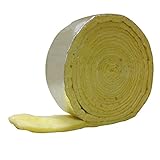
- The product is manufactured in china
- The product is highly durable and easy to use
- Easy installation and easy handling
- Size: 3" x 1" x 25 ft.The product is manufactured in china
- The product is highly durable and easy to use
Some requirements depend on the existing building and location. A qualified local professional can help identify applicable energy, fire, and moisture rules and evaluate a detail where the consequences of getting it wrong are significant. Do not select a material solely from a general sustainability label or a result from a different climate or construction type. Thickness constraints, local availability, installer capability, installation quality, and installed cost can change which alternatives are practical.
Natural Resources Canada’s retrofit guidance, “Keeping The Heat In — Section 3: Materials: insulation, house envelope, and embodied carbon,” identifies cellulose among plant-based insulation materials typically associated with lower embodied-carbon factors. That is a category-level observation, not a finding that cellulose is best for every wall, roof, or climate. The same guidance emphasizes performance and installation considerations: the material must work in the intended location and be installed to suit the assembly.
Compare equivalent functions, not isolated labels
Compare products or assemblies that perform the same job. A kilogram of one material is not necessarily a meaningful counterpart to a kilogram of another if they provide different functions, have different lifespans, or need different quantities to deliver equivalent performance. For envelope work, the relevant comparison may be between complete assemblies rather than products alone, especially when thickness, installation, or effects on heating and cooling differ.
Lifecycle assessment (LCA) can help assess environmental impacts across defined stages. An environmental product declaration (EPD) reports product impacts using a stated methodology and scope. An EPD is information, not a certification that a product is the best or lowest-impact choice. Its usefulness depends on what it measures and whether it can fairly be compared with another declaration.
Rank #3

- Fire Proof Insulation: Ceramic fiber blanket insulation, rated to 2400 F
- Product Specifications: 1" Thick x 16" x 48", density 8 lb/ft3, made in the USA
- Uses: Wood stove baffle, fireplace, pellet stove, chimney, furnace, boiler, pizza ovens and forge
- Uses: Brazing, soldering, welding, foundry, kiln, refractory, glass blowing, and jewelry making
- Similar to: Kaowool, Inswool, Durablanket, Cerablanket, TaoFiber, Fiberfrax, Ceramic Wool
When you review an LCA or EPD, check its declared or functional unit, lifecycle stages, product-category rules, geography, manufacturing context, and verification. Confirm that alternatives are being compared on a compatible basis and provide equivalent performance. If a report omits maintenance or replacement, for example, it cannot by itself answer which option has lower impacts over the full service life. Record missing or mismatched information rather than treating it as a zero.
A practical comparison checklist
- Function and performance: Do the options meet the same thermal, structural, moisture, fire, and finish requirements?
- Lifecycle boundary: Are manufacturing, transport, installation, maintenance, replacement, demolition, reuse, recycling, or disposal included?
- Data quality: Is there an LCA or EPD with a declared unit and product-category rules? Is it third-party verified, and is the comparison methodologically compatible?
- Operational effect: Could the choice change heating or cooling demand, comfort, or the performance of building systems?
- Longevity and circularity: Can the material be repaired, reused, recycled, or separated? How often might it need replacement?
- Local context: Where and how is it manufactured? Does it suit the local climate, code requirements, and available installation skills?
- Practical fit: What thickness is needed, is it available, what is the installed cost, and is there a meaningful risk of poor installation?
Use published material figures with care
YourHome publishes Australian examples of embodied energy, citing Crawford, Stephan and Prideaux (2019) for material values and Crawford (2019) for wall assemblies. They show how strongly values can vary by material and product context, but they are not universal product specifications or a ranking of renovation choices. YourHome notes that where and how a product is made and its recycled content can change the result. The figures below use different units and, in some cases, describe different kinds of things; do not compare a per-kilogram material value directly with a per-square-metre wall value.
| Australian example reported by YourHome | Embodied energy | Basis and qualification |
|---|---|---|
| Aluminium | 358 MJ/kg | Material value; YourHome cites Crawford, Stephan and Prideaux (2019). |
| Nylon carpet | 198 MJ/kg | Material value; YourHome cites Crawford, Stephan and Prideaux (2019). |
| Wool carpet | 140 MJ/kg | Material value; YourHome cites Crawford, Stephan and Prideaux (2019). |
| Ceramic tile | 18.9 MJ/kg | Material value; YourHome cites Crawford, Stephan and Prideaux (2019). |
| Clay brick | 3.5 MJ/kg | Material value; YourHome cites Crawford, Stephan and Prideaux (2019). |
| 25 MPa concrete | 1.1 MJ/kg | Material value; YourHome cites Crawford, Stephan and Prideaux (2019). |
| Flat double glazing (4:12:4) | 66.8 MJ/kg | Material value; YourHome cites Crawford, Stephan and Prideaux (2019). |
| Glasswool insulation | 57.5 MJ/kg | Material value; YourHome cites Crawford, Stephan and Prideaux (2019). |
| Hardwood weatherboard wall, timber frame | 1,325 MJ/m² | Wall assembly value; YourHome cites Crawford (2019). |
| Brick veneer wall, timber frame | 1,292 MJ/m² | Wall assembly value; YourHome cites Crawford (2019). |
Those values cannot tell you, on their own, which product to buy. The wall values describe assemblies, while the material values use a mass-based unit; even similar units do not establish equivalent performance, lifespan, or lifecycle boundaries. Manufacturing processes, energy sources, transport, and recycled content can alter impacts. Use comparable data for the actual products and project where available, and assess the complete function the renovation needs.
Quick wins for a faster PC:
Fix the driver behind crashes, sound loss and screen glitchesFind Drivers →Repair Windows errors before they cause bigger problemsFix Now →YourHome also gives a 50-year example for a typical brick veneer house in which initial and recurrent embodied energy may make up just over 50% of total life-cycle energy. The example is based on Crawford (2014), Weterings and Tustin (2017), and Australian floor-area data from 2018; it illustrates that repeat repairs and replacements can matter over time, not that the same share applies to every home.
Rank #4
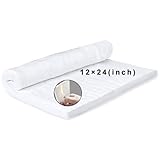
- Ceramic Fiber Insulation is high-temperature resistance, insulated, and fireproof. It is rated to 2400F so that it can maintain complete shape and size after the fire burns.
- The insulation blanket has high quality, good flexibility and tear resistance. This fiber insulation is flexible, easy to cut and stamping.
- Each is made of rockwool acoustic mineral wool insulation odorless. It has polar thermal conductivity,non-conductive, and good sound insulation.
- The fiber blankets are easy to use, easy to roll out and cut with a sharp knife or blade. They are also easy to move and install.
- It is used widely in various places. Such as dishwasher insulation blanket, wood stove baffle, fireplace, pellet stove, chimney, boiler, pizza ovens, forge and more.
For recycling, YourHome reports potential savings of up to 95% for aluminium and 20% for glass; the page does not specify a year for these figures. They are source-reported examples, not guaranteed savings for a particular project. Actual outcomes depend on what is recovered and how it is processed, so do not use these figures as a substitute for product- and project-specific data.
Independent reader supportYour contribution helps us test, update, and keep practical guides available for everyone.Think through climate, thermal mass, and operating energy
A material’s embodied energy does not reveal how the completed home will perform. A renovation can reduce demand for heating or cooling, preserve comfort, or have the opposite effect if its design is unsuitable. Consider the climate, the building’s existing construction, the planned insulation and shading, and how the material works as part of the full assembly.
YourHome explains that greater thermal mass can help reduce operational heating and cooling in a well-designed, insulated passive-solar home. In an unsuitable climate or without appropriate design, however, thermal mass may add embodied energy, increase operational energy, and reduce comfort. The useful question is therefore not “Is high thermal mass sustainable?” but “Does this amount and placement of thermal mass suit this home’s design and climate?”
Likewise, insulation should not be chosen by embodied-impact figures alone. The material must resist heat flow, fit the intended space, remain durable under expected heat and moisture exposure, and be installed correctly. A lower-impact material that cannot meet these requirements in the actual assembly may lead to poor performance or early remediation. An option with a somewhat greater initial impact may be more suitable if it provides the needed function for longer; the decision needs comparable lifecycle and performance information.
Best Value
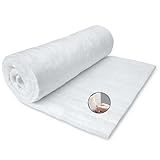
- 1、Specification: 1"(Thick) 1inch (Thick) x24inch x60inch
- 2、High Temperature Insulation: Ceramic fiber blanket is high heat and fireproof blanket, with high temperature resistance, insulation and fireproof
- 3、Easy to Install: easy to install by using mechanical fastening or high temperature adhesive, such as sodium silicate, refractory cement or RTV silicone
- 4、Easy to Operate: easy to cut and press by using a sharp knife or blade Very easy to transport and install
- 5、Applicable to: fireplace insulation, foundry, such as wood stove baffle, fireplace, pellet stove, chimney, boiler, pizza oven, forging furnace, brazing, welding, soldering, muffler packing, etc
Account for sourcing, durability, and end of life
Local sourcing and recycled content are useful questions, but distance alone does not determine the better option. Transport is one part of a product’s impact; manufacturing method and energy supply can matter substantially too. Ask where the material is made, what recycled content is included, and whether the environmental data actually describes the product being considered.
Also ask what happens after installation. A durable material that can be repaired or reused may avoid future new-material demand. A material that can be separated cleanly from other layers may be easier to reuse or recycle than one that is difficult to recover. These are project-specific advantages, not automatic guarantees: the condition of the material, local recovery pathways, and the way it is installed all matter.
The European Commission reports that new construction accounts for 18% of total whole-life emissions from the EU building stock while representing 1% of floor area, and that construction and demolition waste accounts for 40% of waste generated in the EU. These are EU-wide figures; they are not estimates of an individual renovation’s impacts or waste. They help explain why retaining sound structure and planning material recovery matter, but the choices for a particular home should rest on its own scope and local conditions.
What’s actually slowing this PC down?
Pick the symptom - the matching free tool is one click away.
Follow a selection sequence for the renovation
- Define the task. Identify the component being changed, the problem to solve, the existing materials, and whether removal is necessary.
- Assess what can stay. Retain, repair, or reuse suitable material after checking condition, performance, safety, and code requirements. Do not preserve a failed element if doing so would create a larger health, moisture, durability, or performance problem.
- Set minimum performance requirements. For insulation and envelope work, identify the target thermal performance, available thickness, moisture behavior, exposure, and installation method. Consult a qualified local professional where the existing assembly or local requirements need assessment.
- Shortlist functionally equivalent options. Compare products or assemblies that do the same job, not unlike materials by weight. Use a consistent declared or functional unit and matching lifecycle stages.
- Review the evidence. Check LCA and EPD scope, geography, manufacturing context, product-category rules, and verification. Note missing data rather than assuming it favors one option.
- Check practical and circularity factors. Confirm local availability, installer skill, installed cost, recycled content, maintenance, repair, expected service life, and realistic reuse or recycling routes.
- Consider the whole-home result. Ask how the choice could affect heating and cooling needs, comfort, maintenance, replacement frequency, and future renovation work.
Keep building rules and climate rules in their proper scope
Guidance and figures are regional. YourHome’s embodied-energy examples are Australian. Natural Resources Canada’s insulation discussion is Canadian retrofit guidance. The European Commission’s building lifecycle figures and disclosure timetable concern the EU. None is a substitute for checking the requirements that apply to a specific home.
Under the EU framework described by the European Commission, life-cycle global warming potential disclosure is required for new buildings over 1,000 m² from 2028 and for all new buildings from 2030. Those are disclosure rules for new buildings under that framework; they should not be presented as requirements that directly regulate an individual renovation. For any project, verify current local energy, fire, moisture, and building requirements before making a material decision.
Quick Recap
Product prices and availability are accurate as of the date/time indicated and are subject to change. Any price and availability information displayed on Amazon at the time of purchase will apply.