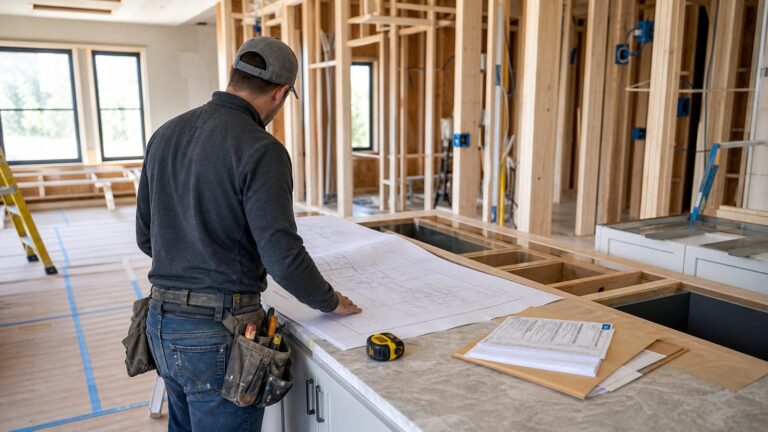
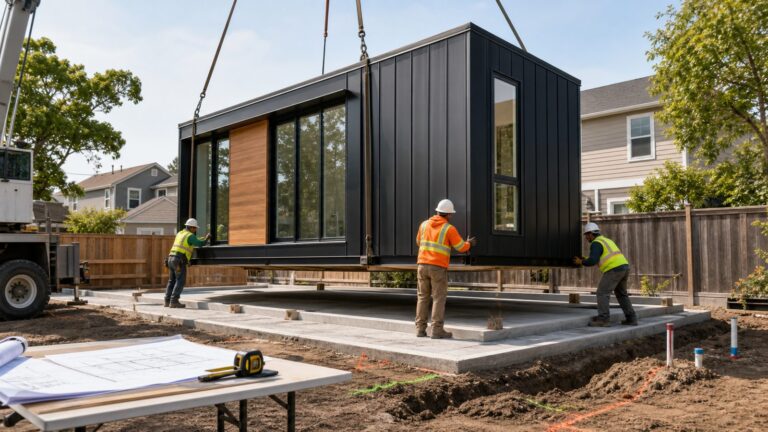
You can often repair and adapt a historic house, but there is no single approval rule for every old building. The answer depends on its legal designation and location, the effect of the work on its historic character, building-code requirements, and whether public funding, tax credits, or a government permit is involved. Identify the property’s status and ask the relevant local planning or preservation office and building department before removing materials, ordering replacements, or starting work.
First, find out what “historic” means for your house
“Historic” may simply mean old in everyday conversation. It may also mean that a house is listed on a national or state register, designated as a local landmark, included in a regulated district, or formally listed under a different country’s system. These statuses are not interchangeable, and they do not produce the same review requirements. A house may be subject to local controls even when a national listing alone does not trigger a particular approval.
As an Amazon Associate I earn from qualifying purchases.
Start with the exact property address and the authorities responsible for it. Check relevant national or state records, the local landmark or historic-district list, and the planning or preservation office. If a property is within a district, establish whether it is considered a contributing property where that distinction is used, and ask which parts of the property and kinds of work the local rules cover. Do not infer that a building is unregulated simply because you cannot find it on one register.
The National Park Service (NPS) describes rehabilitation as making a compatible use possible while preserving the portions and features that convey a property’s historic, cultural, or architectural values. Its rehabilitation standards apply to materials, features, spaces, and the relationships among spaces—not just the front elevation. The NPS standard says: “The removal of distinctive materials or alteration of features, spaces and spatial relationships that characterize a property will be avoided.” NPS: Rehabilitation as a Treatment and Standards for Rehabilitation
#1 Best Overall

- Valued Carpenter Pencil Set: You will get 2 pcs solid carpenter pencils with 26 piece 2.8 mm refills, 1 replaceable sharpener, 1 plastic storage box.The complete carpenter pencils combination allows you to finish your work faster and more easily
- Deep Hole Marker Pencil: The deep-hole construction pencils adopts 45mm elongated tip design, which is more convenient to mark in the small hole or in other tight areas that other carpenter markers cannot reach
- Carpenter Pencils with Sharpener: The sharpener is screwed into the top of the work pencil, which won't get lost either. Built-in pencil sharpener that keep the lead with pointed and smooth to Improves line of sight in fine work
- Stronger Solid Lead: This work pencil is matched with a 2.8 mm thick lead , which is much thicker and stronger during the drawing process of construction work, it will not break or damage easily
- Marks on Various Surfaces: 3 colors solid construction pencil can marks on various surfaces,such as metal, plastic, wood, paper etc. Ideals for woodworkers, contractors, craftsmen, builders, merchants and masons
How approval rules differ by jurisdiction
United States: a National Register listing is not a blanket renovation ban
In the United States, do not treat National Register listing by itself as proof that every private renovation needs federal approval. Indiana’s Division of Historic Preservation and Archaeology says private work funded without public money does not require its office’s approval solely because a property is listed on the National Register. That is an Indiana state-office example, not a nationwide rule. Review may be triggered when a project involves a grant, rehabilitation tax credit, or another federal or state agency’s funding, licensing, or permit. Local historic-district or landmark requirements may apply separately. Indiana DHPA: Do I need approval?
For a U.S. property, separate three questions: whether the local government requires preservation or planning approval, whether the building department requires permits or code review, and whether a public funding or tax-credit arrangement brings another agency into the process. The answer to one does not settle the others. Ask the relevant offices about the actual scope of work rather than relying on the register status alone.
Rank #2

- Ergonomically Designed: Work in tight areas with a compact design that gets into tough spots
- Compact and Lightweight: Both tools are designed to fit into difficult to reach spaces. The 1/4" impact driver has a length of 5.55 in. and weighs just 2.8 lbs, while the 1/2" drill/driver measures only 7.5 in. and weighs 3.6 lbs
- Both the DEWALT impact driver and electric drill driver feature integrated LED work lights with a convenient 20-second delay, ensuring enhanced visibility in dimly lit or challenging work areas
- One-Handed Loading - Keep one hand free with a 1/4 in. hex chuck that accepts 1 in. bit tips
- Power drill cordless with 1/2" single sleeve ratcheting chuck provides tight bit gripping strength, making bit changes faster and more secure
England: listed-building consent may be required for character-affecting work
In England, Historic England says listed-building consent is needed for alterations, extensions, or demolition that affect the character of a listed building. A conservation-area designation does not mean every proposed change automatically needs consent, but an Article 4 direction can remove permitted-development rights for specified work in some conservation areas, including certain window or door changes. Building-regulations approval is a separate question and may also be needed. Historic England: What Permission Might I Need to Make Changes to My Older Home?
Quick wins for a faster PC:
Clear out junk files and repair common Windows errorsFree Scan →Scan for outdated or missing drivers - takes under a minuteDriver Scan →Repair Windows errors before they cause bigger problemsFix Now →These English rules should not be applied to a house in the United States, and the Indiana example should not be generalized to every U.S. state. If the property is elsewhere, confirm the requirements with the authority for that location.
Rank #3

- 【Great Compatibility】This Katerk 1/4 inch hex shank bit holder is specifically designed for 1/4 inch hex shank drill bits. It's compatible with most 1/4 fast hex handles, hex sockets, various electric screwdrivers, and handheld screwdrivers. The bit holder makes it a valuable addition for any handyman.
- 【Secure and Safe】Built with a secure backup nut design, each drill bit holder securely locks onto your bits, ensuring they stay firmly in place. Additionally, our bit holder incorporates a high-quality steel ball rolling design that holds up to several kilograms of weight, ensuring your various drill bits don't fall off.
- 【Easy One-Handed Operation】The bit holder for impact driver allows you to change bits single-handedly, simplifying your workflow. Its multi-color design further allows for quick identification of the drill bit you need.
- 【Compact and Convenient】Thanks to its compact size, this 1/4 inch bit holder is easy to carry around. The bit holder allows for easy attachment to various tools, making this a convenient addition to your construction accessories. The Katerk bit holder is cast from high-quality alloy material, promising a long product lifespan. Despite its rugged strength, the bit holder remains lightweight, making it portable.
- 【Cool Christmas Gift For Men Stocking Stuffers】 This screwdriver bit holder, driver bit holder, impact bit holder, can be given as a gift to your loved one, especially for anyone involved in construction or electrical work. It's a must-have for stocking stuffers for men and women, tools gifts for dad, tech gadgets for men, gifts for dad, gifts for him, gifts for husband, gifts for boyfriend, cool gadgets for men, and cool gifts for dad.
Which renovation work deserves an early check?
No universal list of “allowed” and “forbidden” work can answer for every designation, location, or project. The useful first test is whether the proposed work removes, changes, or conceals distinctive historic fabric, or changes a feature, space, or relationship that contributes to the property’s character. Then establish what local rules and building requirements apply.
| Type of work | Why it merits attention | Practical starting point |
|---|---|---|
| Maintenance and repair | Repair that retains historic material can be compatible with preservation, but work on a designated property or a visible feature may still fall under local rules. | Describe the repair and materials to the local preservation or planning office before assuming it is exempt. NPS rehabilitation guidance favors retaining distinctive material. |
| Windows, doors, roof coverings, and exterior finishes | These may strongly affect appearance and historic character. In some English conservation areas, an Article 4 direction can control otherwise permitted window or door work. | Ask whether the property’s designation or district rules cover the proposed change, and provide details of the existing and replacement materials. |
| Extensions, site work, and changes to the setting | An addition or alteration to the site can affect the building’s character and its relationship to surrounding spaces. | Raise the location, size, visibility, and design of the proposal early; NPS guidance treats additions as a rehabilitation-design issue. |
| Interior alterations | Historic significance may reside in interior features, spaces, and spatial relationships. Do not assume preservation controls apply only outside. | Ask whether the relevant designation or listing covers the affected rooms or features. Historic England says protection reaches parts of a listed building whose special interest would be affected. |
| Heating, insulation, weatherization, and energy upgrades | Energy work may change historic materials or spaces, even when the goal is improved performance. Sensitive design can help reconcile sustainability and preservation. | Compare approaches for their effect on significant fabric and check code and approval requirements. NPS guidance includes weatherization and energy-saving treatments. |
| Structural, safety, accessibility, or code work | Regulatory requirements still need to be addressed, but interventions can affect historic features. Building-regulations approval may be needed for some work. | Discuss the proposed solution with the building department and preservation authority; ask how code needs can be met while limiting harm to significant features. |
The NPS standards and guidelines emphasize retaining character-defining materials and designing necessary changes sensitively. They are useful preservation guidance, not a substitute for a decision by the authority that has jurisdiction over a particular property. NPS: Secretary of the Interior’s Standards for the Treatment of Historic Properties (2017 guidance; webpage updated January 22, 2025) and NPS: Guidelines for Rehabilitating Historic Buildings
Rank #4

- Long Nib and Deep Hole Marker: Our mechanical carpenter pencil with 45mm nib is designed for easy marking of deep holes or narrow areas. These construction pencils are the great choice for woodworking tools, construction tools, carpenter tools, contractor tools, wood carpentry tools and architect tools
- Extra Refills in 2 Colors for Versatile Marking: The construction mechanical pencil comes with 12 extra 2.8mm refills, including 6 red and 6 black refills. The black refill is suitable for light surfaces, while the red wax is perfect for dark surfaces. Our carpenter mechanical pencil makes sure that you'll have an ample supply for extended use
- Built-in Sharpener: Our construction pencil comes with a built-in sharpener to ensure the mechanical pencil tip is always sharp and ready for use. Never buy an extra pencil sharpener again. A great tool for any woodworker pencil, contractor pencils. The refill can easily be extended or retracted with a simple click of the pencils mechanical, allowing you to work more efficiently and accurately
- Portable Clip Design: Our deep hole construction pencil features a portable clip design, easy to carry and attach to your pocket or tool box, so that you can keep the carpenter pencils mechanical close at hand, making it a convenient tool to have on the go. Great gifts choice for carpenters
- Stronger Pencil Lead: The black refills are made of lead, sturdy and smooth. The red refills are made of wax, clear and light. These marking pencils are much thicker and stronger than normal pencils during the marking process of construction work, suitable for various surfaces, such as glasses, metal, boards, floors, walls, furniture, etc. The written marks can be easily wiped with a wet paper towel when needed
How to choose between repair, replacement, or a larger change
When two approaches could address the same problem, compare them on the building’s actual features rather than relying on a label such as “like-for-like.” The supplied official guidance does not establish that like-for-like work is always exempt from review. Nor does it establish that interior work never needs consent. Whether either assumption is safe depends on the property and the authority’s rules.
Do these 3 things before closing this tab:
1Scan for outdated or missing drivers - takes under a minute2Repair Windows errors before they cause bigger problems3Fix the driver behind crashes, sound loss and screen glitches- Effect on historic fabric: Does the option retain distinctive material and features, or remove or alter them?
- Location and visibility: Where will the work occur, and how does it affect the property’s appearance or spatial relationships?
- Repair versus replacement: Can the existing feature be repaired? If replacement is proposed, what historic material or detail would be lost?
- Compatibility: Does the new work fit the building’s character without pretending to be historic or overwhelming the features that matter?
- Performance: How does the option address safety, code, energy, or accessibility needs, and can it do so with less impact on significant features?
- Review and funding: Could local controls, building approval, a grant, a tax credit, or a public permit affect the choice or required documentation?
For major adaptation or an addition, rehabilitation does not necessarily mean freezing a building in its original use. The NPS approach allows compatible use, while asking that changes preserve defining materials, features, spaces, and relationships. A preservation-aware architect or consultant can help develop options for a complex project; the authorities still determine which approvals apply.
Best Value

- Milwaukee Ink all Fine Point Marker, Black, 4 Per Pack
- 4 per pack Features Clog Resistant Marker Tip Writes through Dusty, Wet and Oily Surfaces Durable Marker Tip for Writing on Concrete, OSB and Rough Surfaces
- Clog resistant tip writes on dusty, wet and oily surfaces and is optimized for rough surfaces such as OSB, cinderblock and concrete
- Hard hat clip- attaches for easy access
- Quick dry time with reduced smearing and marking
NPS materials explain the Secretary’s Standards in the context of historic preservation and tax incentives. If a project seeks a rehabilitation tax credit, treat compliance and review as part of project planning rather than assuming that a design choice acceptable for an unfunded private project will meet program requirements. NPS Historic Preservation Tax Incentives: The Secretary’s Standards for Rehabilitation
What to do before hiring or ordering materials
- Confirm the address and jurisdiction. Identify the city, county, state, or national authority responsible for planning, preservation, and building requirements.
- Verify the property’s status. Check applicable registers and local lists; ask whether the house is in a historic district or conservation area and whether it has a contributing or comparable status.
- Define the complete scope. Include interior and exterior work, the site, structural changes, additions, and building systems. A narrow description can miss connected work that affects character or code requirements.
- Describe the existing condition and proposal. Prepare photographs and a written outline of the work, with drawings and proposed materials where available. Point out what will be repaired, removed, retained, or replaced.
- Ask each relevant office what review applies. Ask the preservation or planning authority about designation-related consent and the building department about permits and code review. If public funding, tax credits, or a government permit is involved, ask whether additional agency review is triggered.
- Get direction before committing to demolition or replacement. Request written guidance on the approvals identified for your scope and what information is needed to proceed. The relevant sources advise contacting authorities but do not establish one universal application process or timeline.
- Revise the design if needed, then follow the applicable approval process. If a proposed solution would remove significant fabric, explore repair or a less intrusive alternative with a qualified professional and the authority before work begins.
For substantial work, seek an architect or consultant experienced with historic buildings. That experience is especially useful when a project must reconcile preservation with structural repairs, energy improvements, safety, accessibility, or a new use.
Quick Recap
Common assumptions that can lead to trouble
- “It is on the National Register, so every private repair needs federal permission.” A listing alone is not a blanket U.S. federal renovation ban; the Indiana state example describes particular funding, tax-credit, licensing, or permitting triggers and separate possible local rules.
- “It is privately funded, so no preservation review applies.” Private funding does not remove local requirements that may apply to a landmark or district.
- “It is just an interior project.” Interior features and spaces may contribute to historic significance, and relevant controls are not necessarily exterior-only.
- “The replacement is like-for-like, so it must be exempt.” The cited official guidance does not support a universal exemption of that kind.
- “If preservation approval is not needed, no other approval is needed.” Building permits and code or building-regulations review are separate from designation-related consent.
Product prices and availability are accurate as of the date/time indicated and are subject to change. Any price and availability information displayed on Amazon at the time of purchase will apply.