Quick wins for a faster PC:
Clear out junk files and repair common Windows errorsFree Scan →Scan for outdated or missing drivers - takes under a minuteDriver Scan →Repair Windows errors before they cause bigger problemsFix Now →Some links on this page are affiliate links: if you buy through them we may earn a commission, at no extra cost to you.
Do not clean a design-focused home by choosing one “safe” product for every surface. First identify the material and its exact finish, then read the maker’s care instructions, use the least aggressive permitted method, test it in a hidden area, and escalate a persistent stain to the maker or a qualified cleaning professional.
That sequence matters because a lacquered veneer, oil-treated wood, powder-coated metal, leather, upholstery fabric and natural stone can react very differently to water, acids, solvents, friction and abrasives. The guidance below comes from manufacturer and retailer care instructions, so treat it as practical product-care advice and always give the actual item’s instructions priority.
As an Amazon Associate I earn from qualifying purchases.
The Tool Desk
Outbyte Driver Updater FREEScan for outdated or missing drivers - takes under a minuteDriver Scan →Outbyte PC Repair FREERepair Windows errors before they cause bigger problemsFix Now →Why a single cleaning method fails in a carefully finished home
Design-focused interiors often combine several materials in one room: a stone island beside lacquered cabinetry, an upholstered chair on a metal frame, and a wood table carrying leather accessories. Their appearance depends not only on the base material but also on the finish applied to it. A finish can change how much moisture a surface tolerates, whether a detergent is appropriate and how easily a mark can be polished out.
GUBI separates its care guidance into stone, wood, textiles, hard surfaces and natural fibre, and directs owners to instructions for the specific product. Vitra likewise distinguishes cover fabrics, leather, metal and wood. Those categories are a useful starting map, not permission to treat every item in a category identically. A particular coating, sealant, dye or upholstery construction can impose additional limits.
Popular on Amazon
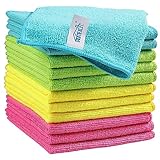
- Effective Streak-Free Cleaning: Clean kitchen countertops, windows, mirrors, bathroom surfaces, stainless steel, car interiors, glass, and other delicate surfaces with just water or your favorite cleaner—these microfiber cloths deliver streak-free, neat results with minimal effort, making daily cleanup fast and simple
- Lint-Free & Scratch-Safe: Soft to the touch and completely lint-free, these cloths won't scratch or damage delicate finishes like glass, ceramic, coated metals, car paint, or polished surfaces—clean with confidence on everything from household appliances to auto trim and electronics screens
- Ultra-Absorbent for Spills, Polishing & Drying: Designed to quickly soak up liquids, grease, and grime, making them ideal for drying dishes, wiping spills, polishing stainless steel, buffing car surfaces, and tackling everyday messes around the house, garage, or workshop—efficient cleaning without extra effort
- Reusable, Washable & Long-lasting: Machine washable and reusable hundreds of times with reinforced edges that hold up wash after wash—a durable replacement for disposable paper towels that cuts down on waste and repeat purchases for families, pet owners, detailers, and busy households
- Versatile Across Home, Auto & Beyond: Equally suited for general household cleaning, interior car detailing, exterior buffing, polishing wheels, wiping down tools, workshop surfaces, electronics, eyeglasses, screens, and more—simply rinse after use or toss in the washing machine; a practical all-around choice for homes, garages, shops, and small businesses
There is no evidence in the cited care guidance for a universally “best” cleaner, a safe pH range for every material or a guaranteed stain-removal technique. Vitra’s information is practical care advice rather than a quantified laboratory study; no topic-specific damage rate, cleaning interval or performance statistic is established. The safest approach is therefore controlled and reversible: identify, check, test, then proceed.
The five-step method for any surface
- Identify the surface and finish. Check the item label, specification sheet, handover documents and the maker’s website. Record whether the surface is, for example, solid wood or veneer, oil-treated or lacquered, fabric or leather, powder-coated metal or natural stone.
- Read the item-specific instructions. Vitra’s care guidance states: “Follow the manufacturer’s instructions and test the product on an inconspicuous area before applying.” GUBI similarly points readers from material categories to product-specific instructions. If the instructions for your item differ from a general material guide, follow the item.
- Start with the least aggressive permitted method. Remove loose dust first, then use the smallest amount of water or cleaner that the instructions allow. More product, pressure or heat does not make a method safer.
- Test in a hidden spot. Choose an underside, rear edge or concealed seam. Apply the proposed method exactly as you intend to use it, allow the area to dry, and check for colour change, dullness, swelling, tackiness, tide marks or altered texture.
- Escalate rather than experiment. Stop if the test changes the finish, if the stain remains after the approved method or if you cannot identify the material. Contact the maker or a professional cleaning company before trying a stronger chemical or abrasive.
Keep a short record of the material, finish, product used and test result. On a multi-trade project, that record prevents a decorator, cleaner or future owner from assuming that a product used successfully on one surface is suitable for another.
Material-by-material comparison
| Material or finish | Permitted starting method in the cited guidance | Moisture and friction guidance | Warnings |
|---|---|---|---|
| Upholstery cover fabric | Regular vacuuming with an upholstery nozzle; blot fresh spots promptly with an absorbent, lint-free cloth | Use controlled blotting rather than vigorous rubbing | Avoid abrasive products and aggressive all-purpose cleaners such as alcohol |
| Leather | Use a special leather cleaner suited to the item | Do not saturate; do not rub with direct pressure | Avoid stain removers, turpentine and shoe polish |
| Powder-coated metal | Water-based solution with a pH-neutral detergent, pH 5–8 | Use a soft, non-abrasive cloth and clean without scrubbing | Avoid abrasive grains or powders, acetic acid and citric acid |
| Stainless steel | Vitra mentions a dedicated stainless-steel product or ordinary washing-up liquid | Follow the product directions for the particular steel finish | Do not transfer powder-coated-metal instructions to every metal |
| Solid wood or veneer | Soft, slightly damp cloth; mild detergent for stubborn dirt | Dry wet areas immediately | Avoid harsh cleaners and products containing silicone or abrasives |
| Natural stone | Neutral cleaner made specifically for natural stone; Arhaus also advises mild soap and water for spot cleaning | Use the stone and product instructions for the sealed surface | Acids, including diluted vinegar, can etch many varieties; Daltile also warns against bleach in stone cleaners |
The table compares the cited guidance; it is not a ranking of cleaners. In particular, “neutral” is not a universal rule for every finish. The pH 5–8 specification belongs to Vitra’s powder-coated-metal guidance, while Daltile’s neutral-cleaner recommendation is specific to natural stone.
Upholstery: remove loose soil, then blot
Routine care
For cover fabrics, Vitra recommends regular vacuuming with an upholstery nozzle. Vacuuming removes loose particles without introducing moisture and helps you see whether a mark is actually a spill or simply surface soil. Keep the nozzle and attachments clean so that grit picked up elsewhere is not dragged across the fabric.
Also popular on Amazon

- 10x GRIP-ROOT WEAVE - TRAP MORE, WORK LESS: Ultra-absorbent microfiber towels for car Grip Root weave works like PLANT ROOT FOLLICLES, sucking up & LOCKING AWAY 8x to 10x its weight in liquid, particulates, moisture, grime and dirt in far LESS TIME than traditional ‘Heavy Duty’ Cleaning Rags. Each towel features a 2.5mm thick design, providing enhanced durability and better grip during use.
- WON’T LINT, SCRATCH, PILL, SWIRL, SHED, or BLEED like thin, cheaply made microfiber towels for cars. RAPID DRY release layers make these the ideal microfiber towels for cars, creating that spectacular, SWIRL-FREE MIRROR SHINE with our cleaning rags. With a solid 2.5mm thickness, these towels are built to prevent damage while ensuring optimal performance.
- LASTS 1200+ WASHES - That’s 3.27 YEARS worth of use in this 12-pack of COMMERCIAL GRADE 300 GSM Reuseable Cleaning Cloth. The 2.5mm thickness and OVERLOCK BRAIDED STITCHING makes the ideal SUSTAINABLE SOLUTION for cleaning every SURFACE, crack, and CREVICE in your home, garage, or office.
- SOAK IT UP FASTER - 4X’s MORE ABSORBENT than COTTON cloths, these are the microfiber cleaning cloth for cars to get if you want an ALL PURPOSE cleaning towel, crafted with 2.5mm thickness to scoop up your messes, oils, and liquids FASTER than a SPONGE
- UNRIVALED POWER - TEST THIS GRIP-ROOT technology risk-free for 30 full days. With a 2.5mm thick design, it LOCKS AWAY dirt, dust, grime, spills, and messes better than any other high-performance cleaning rags you’ve tried.
Fresh spots and spills
Blot a fresh spot immediately with an absorbent, lint-free cloth. Place the cloth on the spill and lift straight up; repeated rubbing can spread the liquid and work it deeper into the weave. Change to a dry section of cloth as it becomes damp. Only after checking the item’s instructions should you introduce a cleaner, and then only after a concealed-area test.
What not to use
Vitra warns against abrasive products and aggressive all-purpose cleaners such as alcohol. A product that is acceptable on a hard, sealed surface may strip colour, leave a ring or damage a fabric treatment. If blotting does not resolve the mark, identify the textile and contact the maker or a professional upholstery cleaner instead of escalating to a stronger household chemical.
Do these 3 things before closing this tab:
1Fix the driver behind crashes, sound loss and screen glitches2Repair Windows errors before they cause bigger problems3Scan for outdated or missing drivers - takes under a minuteLeather: control moisture and pressure
Leather requires a separate process from fabric. Vitra advises against saturating leather and against rubbing with direct pressure. Excess liquid can leave uneven darkening or affect the surface, while hard rubbing can burnish or abrade the finish.
Safer procedure
- Check the item-specific leather instructions and identify the leather finish if the maker provides that information.
- Remove loose dust with a soft, dry cloth or the approved attachment.
- Use a special leather cleaner intended for the item, applying only the amount directed by its maker.
- Work gently without pressing down, and allow the surface to dry as instructed.
- Stop if colour, sheen or texture changes, and seek professional advice.
Do not substitute stain remover, turpentine or shoe polish. Vitra specifically cautions against those aggressive products. Fabric-cleaning habits—such as wetting a cloth heavily or scrubbing a spot—are not interchangeable with leather care.
Also popular on Amazon

- Strong Absorbent & Streak-Free: Crafted with premium microfiber, these cleaning rags quickly absorb water and wipe away spills, dust, grease, and dirt without leaving streaks. Ideal for drying dishes, cleaning countertops, or polishing surfaces in the kitchen, car, or around the home.
- Soft & Lint-Free on Delicate Surfaces: Made from a non-abrasive blend of 85% polyester and 15% nylon, our microfiber cloths are gentle yet effective. They won’t scratch paint, glass, or delicate surfaces, and leave no lint behind—perfect for cleaning mirrors, electronics, stainless steel, and other smooth surfaces.
- Durable Construction for Long-Term Use: Designed with reinforced stitching, these cleaning cloths are not only reusable but also resist wear and tear even after frequent washing. A reliable alternative to disposable paper towels for everyday cleaning.
- Multi-Color Convenience for Any Task: Available in 4 assorted colors—Pink, Green, Blue, and Purple—for easy color-coding. Use different cleaning towels for the kitchen, bathroom, car, or electronics. Stay organized and keep your cleaning tasks clearly separated.
- Machine Washable & Quick-Drying: Each microfiber cloth measures 11.8" x 11.8", making them compact and easy to store. They can be washed by hand or machine. Quick-drying and always ready for your next cleaning job.
Metal: identify the coating before choosing a detergent
Powder-coated metal
For its powder-coated metal, Vitra specifies a water-based solution with a pH-neutral detergent in the pH 5–8 range. Use a soft, non-abrasive cloth and clean without scrubbing. Abrasive grains or powders can mark the coating; acetic acid and citric acid are also on Vitra’s avoid list.
Apply the solution to the cloth rather than flooding the component, especially near joints or openings. Rinse or wipe according to the item’s instructions and dry any remaining moisture. If a mark persists, do not assume that stronger acid or a scouring pad is the next step; contact the maker.
Other metals
Metal guidance changes with the metal and finish. Vitra mentions a dedicated stainless-steel product or ordinary washing-up liquid for stainless steel, rather than directing owners to use the powder-coated-metal method universally. Confirm whether the part is stainless steel, plated, anodised, painted or powder-coated before selecting a product, and follow the finish-specific instructions.
Wood: the finish is part of the material
Vitra says solid wood and veneer can generally be cleaned with a soft, slightly damp cloth. Mild detergent may be used for stubborn dirt, and wet areas should be dried immediately. Avoid harsh cleaners and care products containing silicone or abrasives.
Also popular on Amazon

- 【Microfiber Towels Bulk】One pack of 50 microfiber towels for cars and home, measuring 12x12 inches, Made of 87% polyester and 13% polyamide, 210gsm microfiber cloth, is vacuum-packed to reduce greenhouse gas emissions. Please allow a few minutes for the towels to expand fully after unpacking to achieve optimal fluffiness and absorbency.
- 【Super Absorbent】 TEAWOO microfiber cleaning cloths quickly soak up moisture and dry rapidly, making them ideal for both automotive and household cleaning tasks. They efficiently remove dirt, grime, and liquids with ease.
- 【Soft and Lint-Free】TEAWOO microfiber towels bulk supply of ultra-soft, non-abrasive microfiber towels ensure a scratch-free cleaning experience on surfaces, paint, glass, and coatings. Perfect for cleaning tough grease and dirt from your car, kitchen, and windows, leaving no traces behind.
- 【Reusable and Washable】These reusable and washable microfiber towels cleaning for cars can be used hundreds of times without shrinking, shedding, or losing their cleaning effectiveness. They are a cost-effective alternative to disposable towels, ideal for car and household cleaning.
- 【Easy Maintenance and Use 】Our bulk microfiber towels come in 5 colors and are crafted with high-quality fabric and sewn edges, providing a soft and scratch-free feel. They are easy to maintain and perfect for keeping both your car and home spotless.
Solid wood and veneer are not identical
Vitra notes that its solid-wood table tops are oil-treated while its veneers are lacquered. Both are wood, but the surface systems differ. Oil-treated wood may have a different maintenance regime from a lacquered veneer, so do not transfer one product or re-oiling practice between them without the maker’s approval.
Cleaning sequence
- Remove loose dust with a dry, soft cloth.
- Dampen a clean cloth slightly; it should not be dripping.
- Wipe with the grain using light pressure.
- For stubborn dirt, use only the mild detergent permitted for that item.
- Dry the surface immediately and inspect it in normal light.
Silicone-containing products and abrasive cleaners can leave an unwanted film or alter the sheen. If a spill has swollen a veneer edge, lifted a coating or left a pale ring, stop cleaning and ask the furniture maker or a qualified restorer for advice.
Natural stone: acids are a specific and serious risk
Daltile recommends neutral cleaners made specifically for natural stone and warns that acids—including diluted vinegar—can etch many varieties. It also warns against bleach in stone cleaners. A light vinegar-and-water mixture that appears mild in a kitchen can therefore produce a dull patch or progressive damage on susceptible stone.
Arhaus advises mild soap and water for stone spot cleaning, occasional products designed for stone and avoidance of acidic products such as lemon and vinegar. These directions should be read as stone-care guidance, not as proof that every stone composite, sealant or engineered surface reacts identically. Identify the stone and the sealer, then follow the product instructions.
Also popular on Amazon

- MATERIAL & CONSTRUCTION: Made of microfiber with ultra-soft & non-abrasive design that will not scratch paints, vinyl, glass, finishes or other surfaces
- SIZE & QUANTITY: Each rectangular cleaning cloth measures 40.6 by 30.5 inches; sold as a pack of 24 towels for multiple cleaning tasks & extended supply
- ABSORBENCY & PERFORMANCE: Soaks up 8 times their own weight; cleans effectively either dry or with liquid cleaners for streak-free results & a lint-free shine
- DURABLE & REUSABLE: Built for long-lasting use with durable construction; can be reused hundreds of times while maintaining softness & cleaning effectiveness
- EASY CARE: Machine washable for convenient maintenance; wash separately before first use & wash with like colors to preserve quality
Spot-cleaning process
- Lift crumbs or grit without grinding them into the surface.
- Use the approved neutral stone cleaner or mild soap-and-water method.
- Work with a soft cloth and minimal liquid.
- Remove residue and dry the area as directed.
- Compare the test area with the surrounding stone before treating a larger section.
If an acidic product has already caused a dull mark, further household cleaning is unlikely to reverse an etched surface. Contact the stone supplier, fabricator or a professional stone-care specialist.
How to manage a mixed-material room
When a room contains several finishes, divide the work rather than using one bucket and cloth everywhere. Label cloths by area, prepare only the solution allowed for the material in front of you and change tools when moving from stone to wood, upholstery or metal. This prevents a residue or abrasive particle from being carried onto a more sensitive finish.
Crashes, No Sound, or Screen Glitches?
Random freezes, missing sound and display glitches usually trace back to one bad driver. Find and replace yours safely.Free scan · under a minutePC Slower Than It Used to Be?
A free scan shows the junk files, broken settings and background clutter dragging Windows down - then fixes them in one click.Free scan · Windows 10 & 11During construction or renovation handover, gather care sheets with the appliance and fixture manuals. Photograph labels and note the finish names in the project record. A future cleaner can then verify whether a “wood” panel is oil-treated solid timber or lacquered veneer, and whether a “metal” leg is powder-coated or stainless steel.
When to stop and call for help
- You cannot identify the material, coating or sealer.
- The maker’s instructions are missing or conflict with a proposed product.
- A hidden-area test changes colour, gloss, texture or adhesion.
- The stain remains after the approved least-aggressive method.
- The surface is etched, swollen, blistered, tacky or structurally damaged.
- The item is valuable, bespoke, antique or covered by a care warranty.
Vitra recommends contacting a professional cleaning company for stubborn stains, while GUBI directs owners to product-specific instructions. Escalation is not overcautious: it limits the chance that an unsuccessful experiment turns a removable mark into permanent finish damage.
A practical handover checklist
- List every visible material and finish by room.
- Store the maker’s care instructions with the property records.
- Mark which surfaces tolerate only a slightly damp cloth and which require a named cleaner.
- Keep a soft, lint-free cloth, an upholstery nozzle and separate tools for sensitive finishes.
- Record any approved product and the hidden-area test result.
- Tell every cleaner or contractor not to substitute an all-purpose product without checking the item instructions.
The goal is consistency of decision-making, not uniformity of chemicals. A design-focused home stays looking intentional when each surface receives the method its material and finish can safely tolerate.
Quick Recap
Product prices and availability are accurate as of the date/time indicated and are subject to change. Any price and availability information displayed on Amazon at the time of purchase will apply.

