Recommended Free Tools
Some links on this page are affiliate links: if you buy through them we may earn a commission, at no extra cost to you.
To avoid going over budget, make the plan reflect your real take-home income and real spending, record purchases as they happen, and use a weekly limit for flexible spending. Check your available balance before discretionary purchases, then compare your actual totals with the plan often enough to correct a problem before it becomes a month-end surprise.
A budget is not a promise that every month will look the same. It is a working estimate that you update when income, bills, or spending habits change.
As an Amazon Associate I earn from qualifying purchases.
What an over-budget plan usually gets wrong
An over-budget plan is often unrealistic before the first purchase is made. It may use gross pay instead of take-home pay, omit annual or seasonal bills, underestimate routine costs, or treat irregular spending as if it will not happen. A plan can also fail because spending is not recorded consistently, so small purchases disappear from view until the available cash is gone.
Courtney-Rose Dantus of the Consumer Financial Protection Bureau (CFPB) put the basic problem this way: “Until you get a realistic picture of how much money you’re bringing in and where it’s going, it’s difficult to know whether you’ll have enough left over to put away.”
Popular on Amazon

- Effective Budget Plan Book – Take control of your finances with the SUNEE budget account book. This all-in-one budget planner allows you to plan and track your income, expenses, savings, and financial goals. Its intuitive layout and easy-to-use sections help you stay organized and make smart decisions to reach financial success. Our financial planner also included a comprehensive guidebook with valuable tips and instructions to help you get the most out of your budgeting planner.
- Full-Page Calendars – Each month’s full-page calendar provides plenty of space to track paydays, bills due dates, appointments, and important events. No more cramped boxes or tight writing areas, you can easily plan and organize your schedule at a glance.
- Colorful Pages Layout and Tabs – This vibrant budget planner features a user-friendly design for easy navigation and organization. Each month includes dedicated budget pages to set financial goals, track income, and plan expenses. Additional sections like debt trackers, savings goals, and bill payment trackers make managing your finances a breeze. The colorful backgrounds on each page offer clear, instant visibility.
- Bonus 4 Stickers and Convenient Design – This monthly budget planner is built for convenience and durability. Water-resistant cover protects against spills, while the elastic band keeps everything secure, and the dual-sided pocket offers extra storage. Plus, we’ve included 4 adorable sticker sheets to personalize your planner and make budgeting more enjoyable. Experience a budget planner that combines practicality with lasting quality.
- UNDATED DESIGN & 1 YEAR USE - Undated finance books start with 1 page-financial goals, 1 page-Mind Map, 1 page-Financial Strategy, 1 page-Tactics, 2 pages-Important Dates, 4 pages-Bill Tracker, 4 pages-Saving Tracker, 8 pages-Debt Tracker, followed by 12 Months(10 pages per month, 1 unique color for each month). 2 pages-Christmas Budgeting, 2 pages-Yearly Summary, 2 pages-Check Register and 12 pages-Notes(dotted). It is UNDATED, so you could start at any time, suitable for 1 year use.
The practical objective is therefore not to find a perfect budgeting method. It is to create a feedback loop:
- Estimate income and expenses from actual records.
- Set category limits that leave room for known bills, goals, and irregular costs.
- Record spending during the month.
- Check balances and limits before buying.
- Compare actual results with the plan and revise the next plan when they repeatedly differ.
Build the baseline from real money
Start with take-home income
Use the amount that actually reaches your checking account or is available to spend after taxes, insurance, retirement contributions, and other payroll deductions. If income changes from month to month, use a cautious estimate rather than assuming the highest recent month will repeat. Include other dependable income only when you can identify when it arrives and how much is normally available.
What’s actually slowing this PC down?
Pick the symptom - the matching free tool is one click away.
Write down the timing as well as the amount. A monthly total may look sufficient while still leaving a cash shortage between paydays if bills are due before the next deposit.
List bills and routine expenses
Gather several months of checking-account and card history. Add receipts, statements, or a spending notebook if an account record does not show the purpose of a purchase. Separate expenses into categories that are useful for decisions, such as housing, utilities, transportation, food, insurance, debt payments, health care, and personal spending.
Record bill due dates. A due-date list or calendar helps you see whether the money needed for a fixed bill will be available when the bill is actually charged, rather than only whether the monthly total fits on paper.
Capture expenses that do not arrive every month
Review more than one month so occasional costs do not vanish from the plan. CFPB guidance specifically points to insurance, medical costs, school costs, gifts, travel, and seasonal spending. Car repairs, annual renewals, and holiday purchases belong in the same kind of review even if they are not charged on a predictable monthly date.
The Tool Desk
Outbyte PC Repair FREEClear out junk files and repair common Windows errorsFree Scan →Outbyte Driver Updater FREEScan for outdated or missing drivers - takes under a minuteDriver Scan →Also popular on Amazon
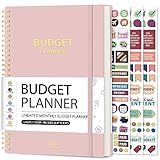
- Effective Budget Planning - Take control of your finances with the budget account book. This comprehensive planner allows you to plan and track your income, expenses, savings, and financial goals in one convenient place. With its intuitive layout and easy-to-use sections, you can stay organized and make informed decisions to achieve financial success.
- User-Friendly Layout - The budget planner features a user-friendly layout designed for easy navigation and organization. Each month, you'll find dedicated budget pages where you can set financial goals, track your income, and plan your expenses. Additional sections include debt trackers, savings goals, bill payment trackers, and more, making it simple to stay on top of your finances.
- Undated Monthly Calendar & Bonus Stickers - Featuring undated calendar each month, you'll have ample space to mark paydays, bills due, appointments, and important dates. Say goodbye to difficult writing spaces. Plus, we've included 3 cute sticker sheets that allow you to personalize your financial organizer and make budgeting more fun. Dates are not pre-printed and are completed by the user.
- Reliable and Convenient Design - Our monthly budget planner is designed for your convenience and built to last. The elastic band keeps everything securely in place, and the dual-sided pocket provides extra storage. Experience a budget planner that combines practicality and durability.
- Master Budgeting with Ease - Our financial planner includes a complete guidebook that provides valuable insights and instructions for optimal usage. From setting financial goals to tracking expenses, this guidebook offers step-by-step guidance and practical tips. Whether you're new to budgeting or an experienced user, this resource will help you make the most of your budget planner, empowering you to achieve financial success.
Create an irregular-expense category or separate lines for major items. Then reserve part of each month’s available money for those costs. If an expense is too large or too unpredictable to estimate precisely, note the uncertainty and revisit the estimate after you have more records.
Include savings and a miscellaneous category
Put savings goals into the plan alongside bills and daily spending instead of treating savings as whatever happens to remain. A miscellaneous category can absorb small, legitimate costs that do not fit elsewhere. Without one, those purchases tend to appear as unexplained overspending in another category.
Check the leftover amount
Subtract the planned expenses and savings from take-home income. The resulting amount must be compatible with the cash you expect to have available. Compare that calculation with the actual amount left in your accounts after the period’s transactions. A difference is a signal to investigate missing expenses, timing, or an estimate that is too low; it is not proof that the arithmetic alone is wrong.
Choose a tracking method you can keep using
The most sophisticated system is useless if you stop entering or reviewing transactions. CFPB guidance allows for a simple method: account history, receipts, a notebook, a worksheet, or a digital financial-management tool can all work. Choose based on how much effort you will sustain and how quickly you need feedback.
Free tools Windows power users keep installed
One-click scans. No signup required.
| Method | Effort | Feedback timing | How it shows category limits |
|---|---|---|---|
| Checking or card account history | Review transactions and assign categories | When transactions appear and you review them | Shows what has left the account; you compare it with each category’s plan |
| Receipts and a notebook | Manual entry after each purchase | Same day or at your chosen review time | Direct visibility when you total each category consistently |
| Worksheet | Manual setup and updates | Weekly or monthly, depending on your routine | Places planned and actual totals side by side |
| Digital financial-management tool | May reduce some manual logging, but still requires review | When you open and check the records | May display categories or remaining amounts; features and accuracy vary by tool |
Do not select a tool solely because it promises automation. You still need to check categories, confirm that transactions are present, and correct mistakes. If privacy, fees, or account connections matter to you, review the tool’s current terms yourself; no particular product is required for the process.
Run a spending feedback loop
1. Record purchases during the month
Enter each purchase in the system you chose, including small items and cash spending. Waiting until the end of the month makes it harder to remember what a transaction was for and removes the chance to change course while money is still available.
Also popular on Amazon

- Budget Planner: Stay on top of your finances and achieve your financial goals with our A5 Budget Planner. This beautifully designed budget book combines functionality and style, empowering you to effectively manage your budget month after month.
- Classic Design: The elegant pink cover with the striking "Budget Planner" in gold adds a touch of sophistication to your financial planner. Carry it with pride and make a statement as you take charge of your financial.
- Comprehensive Layout: Our monthly budget planner features a well-thought-out layout that simplifies your budgeting process. With a dedicated monthly budget page, four expense tracking pages, a monthly summary, and a notes section, you have all the tools you need for effective financial planning.
- 14-Month Duration: Unlike many other planners on the market, ours covers a total of 14 months, giving you an extended period of financial organization. Now you can make income and expense records at any time, ensuring every financial decision aligns with your long-term goals.
- Premium Quality and Convenience: Crafted with attention to detail, this budget planner boasts superior quality. The sturdy pink and gold coil binding allows for effortless flipping, while the A5 size makes it the perfect companion for your daily adventures, fitting into your bag or backpack without taking up too much space.
2. Check balances before discretionary shopping
Before a nonessential purchase, look at the relevant account balance and the amount remaining in that spending category. CFPB consumer guidance states: “Check your balances before going shopping, and set a spending limit based on your budget.” The balance check should account for pending charges and bills that are due before your next income arrives.
You can ask your bank or credit union about balance alerts. Some balance-checking services may involve fees, so confirm the terms before enabling one.
Crashes, No Sound, or Screen Glitches?
Random freezes, missing sound and display glitches usually trace back to one bad driver. Find and replace yours safely.Free scan · under a minuteWindows Errors? Fix Them Before They Spread
Repair common Windows errors and clear accumulated junk for a smoother, more stable PC - no reinstall needed.Free scan · no reinstall3. Review at least weekly when spending is flexible
A weekly review catches drift while there is still time to adjust. Total the week’s purchases by category, compare each total with its limit, and note bills or irregular costs that are approaching. If you only review once a month, a category can be exhausted long before you notice.
4. Compare actual totals with the plan monthly
At the end of the month, compare every category’s actual spending with its planned amount and compare the expected leftover cash with the amount actually available. Consumer.gov describes the cycle plainly: write down income and bills, subtract expenses from income, record daily spending, and use the month’s actual results to plan the next month.
5. Update the plan when circumstances change
Update the budget when employment, pay, bills, or spending habits change. A plan that was reasonable before a change becomes misleading if you keep using its old assumptions.
Set a weekly limit for small, flexible purchases
Small discretionary purchases can push a category over its monthly limit because each transaction feels insignificant. A weekly cap turns a vague monthly intention into a boundary you can check before spending.
Do these 3 things before closing this tab:
1Scan for outdated or missing drivers - takes under a minute2Clear out junk files and repair common Windows errors3Fix the driver behind crashes, sound loss and screen glitchesAlso popular on Amazon

- 【Take Control Of Your Money】Easily plan your monthly budget, track income & expenses, and stay on top of your finances. This budget planner helps you clearly see where your money goes and avoid overspending.
- 【Designed For Real Life Use】Perfect for young professionals, families, students, and anyone working toward financial goals. Whether managing daily expenses or planning long-term savings, this budget book keeps everything organized.
- 【All-In-One Budget System:】Our monthly budget planner features a well-thought-out layout that simplifies your budgeting process. Includes monthly budget pages, expense trackers, bill organizers, savings goals, and debt trackers. Everything you need to manage money in one convenient planner.
- 【12-Month Duration】Our budget planner covers a total of 12 months, giving you an extended period of financial organization. Now you can make income and expense records at any time, ensuring every financial decision aligns with your long-term goals.
- 【Premium Quality and Convenience】Crafted with attention to detail, this budget planner boasts superior quality. The sturdy pink and gold coil binding allows for effortless flipping, while the metal corner protectors effectively prevent damage to the cover, ensuring long-lasting durability.
- Track flexible purchases for a week or month so the cap starts from your actual pattern.
- Choose a weekly amount that fits inside the category’s monthly allocation after required bills and irregular costs are reserved.
- Write the remaining weekly amount where you will see it during shopping.
- Subtract each purchase from that amount immediately.
- When the week’s amount is used, postpone optional purchases or deliberately move money from another category after checking the effect on that category.
Setting aside that week’s cash at the beginning of the week is an optional way to make the limit visible. Cash is not required; a notebook, worksheet, or account review can provide the same information if you keep it current.
The CFPB reports that over 90 percent of the consumers it consulted were interested in tools showing how much budget would remain after a purchase. That figure describes the consumers consulted in that research, not a representative estimate of all consumers. The underlying need is practical: seeing the remaining amount before buying is more useful than discovering an overage after the fact.
Independent reader supportYour contribution helps us test, update, and keep practical guides available for everyone.Troubleshoot a plan that does not match reality
Your actual leftover cash is lower than planned
First look for unrecorded transactions, cash purchases, pending charges, and irregular expenses. Then check whether a category estimate was consistently too low. Correct the missing category or raise the estimate using evidence from several months before cutting essential spending.
Your actual leftover cash is higher than planned
Confirm that every bill, savings transfer, and upcoming irregular cost has been included. A temporarily high balance may be money already needed for a later due date. Once those obligations are covered, you can assign the genuine surplus to a stated goal rather than allowing it to disappear into untracked spending.
One category is repeatedly over while another is under
Repeated divergence usually means the categories do not reflect how you actually spend. Reclassify transactions consistently and adjust the limits for the next plan. Do not keep moving money silently between categories; record the change so the plan remains understandable.
The month produces a negative result
Consumer.gov advises looking for budget items that can change when expenses exceed income. Separate flexible expenses from commitments, then identify which flexible categories can be reduced, delayed, or replaced. If the shortfall comes from a recurring bill or an income change, revise the baseline rather than relying on a one-time cut.
Also popular on Amazon

- EFFECTIVELY MANAGE YOUR MONEY - Our budget planner helps you take control of your finances by providing sections for financial goals, savings, debts, daily expenses, monthly budget, monthly budget review. This finance planner is a good finance book and will help you manage your money effectively.
- PREMIUM QUALITY - Our budget planner is made with high-quality 100gsm paper that reduces ink leakage, fraying, and shade issues. The sturdy and flexible cover,, helps protect the pages. The metal lay-flat twin-wire binding ensures durability and longevity.
- ORGANIZED MONTHLY GOALS & BUDGETS - Our 12-month budget planner helps you set monthly goals, budgets, reviews, and develop good monetary habits, strategies, and action plans. Write down monthly financial goals, put reminders of bills and payments on the calendar, plan your monthly budget in each category, track daily expenses, and review the monthly budget at the end of the month.
- FLEXIBLE USAGE - Our undated finance planner allows you to start at any time and place, making it convenient to use. It has a perfect size of 8.6x5.9 inches and fits in every bag, so it's always at hand.
- CREATE FINANCIAL FREEDOM - Our budget planner is your chance to develop monthly habits, monetary strategies, and action plans to start your journey to long-term financial freedom. It allows you to track monetary flow and review each area for improvements. With this 1-Years budget book, you can take the first step towards financial freedom.
Income or work circumstances change
Recalculate using current take-home income and revise due-date planning. Remove assumptions based on former pay or hours, and rebuild category limits from the most recent reliable records.
Use a simple monthly operating routine
A repeatable routine prevents the budget from becoming a document you open only after a problem. At the start of the month, enter expected income, bills, savings, routine categories, and known irregular expenses. During the month, record every purchase and check the available balance before discretionary shopping. Each week, review flexible categories and apply the weekly cap. At month-end, compare planned and actual totals, explain material differences, and carry the corrected estimates into the next plan.
Budgeting methods and tools are personal choices. Free worksheets, ordinary account records, receipts, or a plain notebook may be enough. The deciding factor is whether the method gives you a current view of what has been spent, what remains in each category, and what bills still have to be paid.
How to tell whether the plan is working
A workable plan does not require every category to match perfectly every month. It should make the important trade-offs visible early enough for you to act. You should be able to answer three questions before making a discretionary purchase: How much is left in this category? What bills or irregular costs are still due? Will this purchase leave enough for the rest of the period?
If you can answer those questions from records you actually maintain, review the results regularly, and update estimates when reality changes, the plan is doing its job: preventing an avoidable overage from becoming a surprise.
Quick Recap
Product prices and availability are accurate as of the date/time indicated and are subject to change. Any price and availability information displayed on Amazon at the time of purchase will apply.
Quick wins for a faster PC:
Scan for outdated or missing drivers - takes under a minuteDriver Scan →Repair Windows errors before they cause bigger problemsFix Now →
