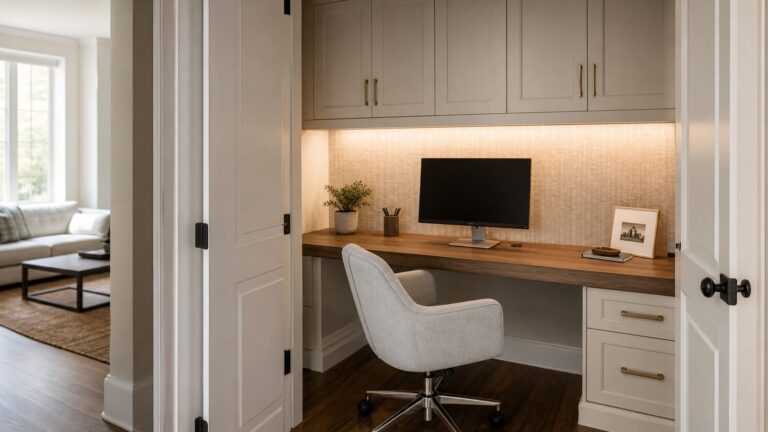
Yes, a dog crate can look like a considered part of your home rather than an afterthought—but the crate must be chosen for the dog before it is styled for the room. The safest approach is usually to decorate around a properly sized, well-ventilated, easy-to-clean crate instead of hiding the crate inside a sealed cabinet.
Below are 10 ways to integrate a crate into a living room, bedroom, kitchen, mudroom, apartment, or renovation. Each idea includes the best use case, construction considerations, safety checkpoint, and the dogs that should avoid it. A furniture-style crate is not automatically safer or stronger than a conventional wire, plastic, or heavy-duty crate.
As an Amazon Associate I earn from qualifying purchases.
Before choosing a dog crate design
A beautiful built-in will not solve the wrong crate choice. Start with these decisions:
PC Slower Than It Used to Be?
A free scan shows the junk files, broken settings and background clutter dragging Windows down - then fixes them in one click.Free scan · Windows 10 & 11Outdated Drivers Are Slowing You Down
One free scan finds every outdated or missing driver and matches the right update for your exact hardware.Free scan · exact hardware match- Measure the dog and the crate interior. Do not design cabinetry around a label such as small, medium, or large.
- Assess the dog’s behavior. Puppies, persistent chewers, escape artists, and dogs that panic in confinement may need a conventional crate, heavy-duty crate, exercise pen, or dog-proofed room.
- Protect ventilation. The dog needs unobstructed airflow and a comfortable temperature, particularly in a cabinet, window seat, island, or covered crate.
- Preserve access. The owner must be able to open the door quickly, remove the tray, reach every corner, and release the dog without moving furniture.
- Plan for cleaning. Urine, vomit, mud, shedding, spilled water, and damaged bedding are normal realities of dog ownership.
- Choose permanence deliberately. A table treatment or slipcover suits a rental; built-in millwork makes more sense during a remodel.
How to get the crate size right
Measure the dog before selecting the furniture. Preventive Vet recommends measuring from the tip of the nose to the base of the tail, rather than including the full tail length, then adding approximately 2 to 4 inches for crate length.
#1 Best Overall

- Anti-Chew & Anti-Escape: We know how important it is to keep your pets comfortable. We use 0.4 inch heavy duty iron pipe, double welding points and thickened engineered wood, and each door has 2 locks to provide multiple layers of protection to reduce your dog from escape!
- Decorative Pet Cage: This is more than just a dog kennel indoor, it can also be used as a TV stand, coffee table or side table in the living room. In the bedroom, it can be used as a nightstand or placed at the foot of the bed
- Size Fits Your Dogs: The internal size of this dog furniture crate 29.3"L x 19.8"W x 22.4"H, suitable for small/medium dog breeds such as French Bulldogs, Corgis and Dachshunds
- 3-Door Design: Our dog crates feature a 3-door design that allows for easy access from the front and sides for your furry friend
- Unique Arch Door: Our furniture dog crate adopts a novel arch design, which blends in with many modern furniture styles. The and elegant style of the arch creates a clean, tidy and comfortable living environment for you
For height, measure from the floor to the top of the dog’s head while the dog is sitting, then add approximately 2 to 4 inches. The finished interior must allow the dog to:
- Stand without crouching.
- Turn around comfortably.
- Lie down in a natural position.
- Stretch out and rest.
- Enter and exit without ducking or scraping against the opening.
These are minimum practical requirements, not reasons to build an oversized enclosure. A crate that is much too large can make housetraining more difficult for some puppies because the dog may use one end as a toilet and the other as a bed.
For a growing puppy, an adult-sized conventional crate with an adjustable divider is often more practical than repeatedly buying furniture crates. Adjust the usable area as the puppy grows, following the general guidance from VCA and the American Kennel Club. Measure the actual crate you intend to use before finalizing a bench, cabinet, island, or built-in opening.
The Tool Desk
Outbyte PC Repair FREEClear out junk files and repair common Windows errorsFree Scan →Outbyte Driver Updater FREEFix the driver behind crashes, sound loss and screen glitchesFind Drivers →Is a furniture-style dog crate safe?
It can be, but only for the right dog and the right construction. A furniture-style crate is most appropriate when the dog is already comfortable with confinement, is not a persistent chewer or escape artist, and can use the structure without catching a paw, muzzle, collar, tag, or harness.
Rover notes that many furniture-style crates are less durable than standard crates and may not suit puppies, super chewers, escape artists, or dogs new to crate training. Do not describe any home crate as escape-proof. Even the manufacturer of Fable’s current crate warns that its product is not escape-proof and cautions owners to consider a dog’s head size in relation to the window openings.
Material alone does not determine safety. Wood, MDF, rattan, acrylic, metal, and decorative slats can all be unsuitable if the opening geometry, latch, ventilation, or structural strength is wrong. For a destructive dog, the safest arrangement may be a durable wire or heavy-duty crate inside a removable table surround. The furniture should improve the room without becoming the dog’s only barrier.
Ventilation, temperature, and placement
There is no universal opening-size formula in the veterinary and manufacturer guidance reviewed for this article. Instead, treat ventilation as a design requirement that must remain visibly and physically open.
- Keep openings unobstructed on multiple sides wherever possible.
- Do not push the crate tight against a wall if that blocks side or rear airflow.
- Do not cover grilles with storage, cushions, curtains, or solid decorative panels.
- Use a cover only when it is breathable, removable, and easy to roll or tie back.
- Keep the crate out of direct sunlight and away from fireplaces, radiators, baseboard heaters, heating vents, and other heat sources.
- Be especially careful with heavy-coated, elderly, brachycephalic, or heat-sensitive dogs and with warm rooms.
- Place the crate where you can observe panting, agitation, or other signs of discomfort.
VCA recommends placing a crate in a room where the family spends time, while Preventive Vet recommends a calm, socially connected location away from heat, vents, cords, and hazards. A family-room corner, home-office area, or bedroom is often more suitable than an isolated garage, basement, utility closet, or remote storage area.
10 dog crate ideas that look intentional
1. Build a supported tabletop over a standard wire crate
The look: A wire crate becomes an end table, console, or nightstand with a coordinated wood top and independently supported sides or legs.
Best for: Renters, small spaces, budget-conscious owners, and dogs that already use a conventional wire crate safely.
This is one of the most practical ways to make a crate fit an existing room. Match the top to nearby wood furniture, repeat the room’s paint color, or use the same hardware as an adjacent cabinet. The surface can hold a lamp, books, or restrained décor, making the crate look like part of the furniture arrangement rather than a temporary cage.
The tabletop should be supported by its own legs, side panels, or frame. Do not balance a heavy board directly on the crate or use the crate itself as a structural support. Keep the original door and removable tray accessible. If you add fabric panels, use them only where they do not block airflow or the door.
Ruffwear shows an end-table conversion, and Ana White provides a woodworking plan with slatted ventilation and a 24-by-36-inch footprint as drawn. Those dimensions are not a universal crate size; verify your own crate’s interior and exterior dimensions before cutting material.
Safety checkpoint: Keep the crate airy and stable, and make sure the finished table cannot tip if the dog leans, scratches, or pushes against the crate.
Avoid this idea if: The dog can chew the table legs, pull fabric through the wire, or escape from the underlying crate.
Quick wins for a faster PC:
Clear out junk files and repair common Windows errorsFree Scan →Scan for outdated or missing drivers - takes under a minuteDriver Scan →2. Use a breathable slipcover with a roll-up front
The look: A washable textile cover softens the appearance of a wire crate and can create a more sheltered, den-like retreat.
Best for: Calm dogs that enjoy privacy and owners who want the fastest, least permanent visual improvement.
Coordinate the fabric with curtains, upholstery, or a nearby rug. Design the front so it rolls, ties, or lifts away completely rather than hanging over the door. The cover should be removable for washing and loose enough to avoid sealing the crate.
Some dogs settle more easily with reduced visual stimulation, but a cover can also trap heat, become a chewing hazard, or increase distress. PetMD warns that a covered crate can heat up and recommends supervision when a cover is being used. Test the arrangement while you are home and monitor the dog’s comfort.
What’s actually slowing this PC down?
Pick the symptom - the matching free tool is one click away.
Safety checkpoint: Keep the front and ventilation areas clear, avoid heavy or non-breathable fabric, and remove the cover if the dog pulls it through the bars or becomes hotter or more anxious.
Rank #2
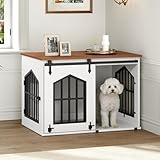
- Multi-Entrance Design: Our farmhouse dog crate furniture features a front door and a side door, the double door design allowing your pet to enter and exit with easy. The front sliding barn door saves space and adds a touch of rustic charm to your living rooms, hallways, bedrooms, or corners
- Built to Last: Made from reinforced round metal pipes and quality particleboard, the heavy duty dog kennel furniture boasts a robust structure that prevents escapes. The push-pull door comes with upper and lower latches to ensure a secure and cozy resting place for your beloved furry friend
- Wide Use: More than just a indoor dog crate, it serves as a multifunctional furniture piece. Use it as a end table, coffee table, TV stand, or nightstand. Its classic farmhouse aesthetic seamlessly complements various home decor, with the tabletop that's ideal for placing pet supplies and ornaments
- Proper Size: Dimensions: 31.5"L x 21.7"W x 24.8"H with internal space measuring 29.7"L x 21.7"W x 23.6"H This decorative dog crate end table is designed for medium to small dogs, providing ample space for your pet to relax and move, while the metal frame enhances ventilation and visibility
- Easy Assembly: The wooden dog kennel indoor with a simple structure includes clearly labeled parts, detailed assembly instructions, and necessary tools, allowing you to put it together quickly and enjoy its convenience and functionality right away
Avoid this idea if: The dog shreds fabric, eats bedding, or reacts badly to visual confinement.
3. Buy a purpose-built furniture-style end table
The look: A ready-made crate is designed to function as a side table, nightstand, or accent table from the beginning.
Best for: Small and medium dogs that are already crate-trained and do not chew wood, engineered panels, or decorative trim.
Judge the product by its dog-compartment details, not only by its finish. Check the interior dimensions, door location, latch, ventilation on each side, floor construction, and whether the tray or liner can be removed. Confirm the tabletop’s weight rating separately from the dog’s weight. Inspect decorative openings carefully for paw, muzzle, collar, or tag entrapment.
A finished product can save construction time, but it may be harder to repair or clean than a wire crate. The decorative enclosure should not make it impossible to observe the dog or open the door quickly.
Safety checkpoint: Look for a reliable latch, a wipeable interior, stable construction, generous airflow, and no sharp edges or exposed fasteners.
Avoid this idea if: The dog is a puppy, serious chewer, escape artist, or is still learning to tolerate confinement. A conventional crate with a removable furniture surround is more adaptable in those cases.
Recommended Free Tools
4. Turn a long console or credenza into a kennel
The look: A horizontally proportioned kennel reads as a console, sideboard, or entryway cabinet rather than a tall cage.
Best for: Long-bodied dogs, homes with unused wall length, or owners who need more visual and practical storage around the crate.
Use cabinet doors or drawers above and beside the dog compartment for leashes, towels, toys, or food. Align the kennel grille with the cabinet hardware so the entire unit feels intentional. Provide a wide door and a removable tray, and make sure the owner can reach the back corners without dismantling the console.
A long unit should not encourage owners to divide the interior too aggressively. Each dog needs enough independent room to stand, turn, lie down, and stretch. Two dogs should not automatically share one furniture kennel simply because the cabinet is wide; temperament, resource guarding, and emergency access must be considered.
Do these 3 things before closing this tab:
1Scan for outdated or missing drivers - takes under a minute2Clear out junk files and repair common Windows errors3Fix the driver behind crashes, sound loss and screen glitchesSafety checkpoint: Keep cleaners, cords, and sharp objects in separate secured storage—not in an accessible cabinet beside the dog.
Avoid this idea if: The only available design creates a deep, dark, single-opening box with no cross-flow or easy cleaning access.
5. Integrate the crate into a kitchen or mudroom island
The look: The crate occupies part of an island base while the countertop serves as a drop zone, mail station, pet-supply surface, or other genuine household worktop.
Best for: Renovations, open-plan kitchens, mudrooms, large dogs, and homeowners who want the crate to become part of the architecture.
Free tools Windows power users keep installed
One-click scans. No signup required.
Daily Paws shows a mudroom island built around a large wire kennel. For a construction project, retain a metal grille or the original crate as the dog-facing barrier rather than replacing it with a solid cabinet door. Use easy-clean flooring around the opening, keep the dog in view of the room, and locate nearby storage for leashes, towels, food, and cleaning supplies.
In a kitchen, keep the crate away from ovens, cooktops, dishwashers, hot plumbing, cleaning chemicals, and busy pinch points. The door must not open into a walkway where it can trip someone or be struck by a cabinet door.
Safety checkpoint: Treat the island as a hot, high-traffic work area first. If the location is noisy, overheated, chemically hazardous, or socially isolating, choose another room.
Avoid this idea if: The dog cannot rest calmly around food preparation, children, frequent foot traffic, or kitchen noise.
6. Convert the lower section of a cabinet or sideboard
The look: A dog nook is incorporated into an existing laundry-room unit, sideboard, or lower cabinet so it visually matches surrounding millwork.
Rank #3

- Suitable for Dogs: Interior size 24.6"L x 16.9"W x 21.3"H, this dog crate is fit for small dogs like Poodle, Pug, and Chihuahua. Choose as your needs
- Save Space Barn Door: Our dog furniture crate uses a unique sliding barn door that not only saves space but also adds charm and beauty. The side door is 2 locks, providing easy access for your dog while ensuring excellent firmusesness and stability
- Anti-Chew & Anti-Escape: Our dog kennel is designed to be anti-chew and anti-escape for your furry friend security. The edges of the boards are not exposed to the dog to avoid chewing on the boards, 0.4" tubes make this small dog crate escape-proof!
- Wide Application: Our wood dog crate furniture is not just a comfortable resting place for your dog. Its modern country-style furniture design also can be used as a side table, a TV stand in your living room, a bedside table in your bedroom
- Superior Material: Our wooden dog crate furniture is built to last. The boards are made of engineered wood with wear-resistant and easy-to-clean surface
Best for: Small dogs and homeowners who already have cabinetry that can be modified during a renovation.
Remove the cabinet doors and replace them with a proper grille or crate door. Preserve enough interior height and depth, add a removable tray, and make the opening large enough for both the dog and the owner’s hand to pass through comfortably. Provide airflow through more than one side where possible, and keep the rear and side panels from turning the nook into a sealed cavity.
A normal closed cabinet with a small doorway cut into it is not automatically a safe crate. Daily Paws specifically cautions owners to check cabinet size, airflow, and separation from household cleaners. Build the dog compartment as a ventilated, cleanable enclosure—not as a storage cabinet with a hole.
Safety checkpoint: Confirm that the dog cannot reach hinges, splintered edges, cabinet hardware, electrical cords, or cleaning products.
Avoid this idea if: You cannot provide sufficient ventilation, a removable floor or tray, broad access, and a fast-opening door.
7. Build a bench or window-seat kennel
The look: The crate sits beneath a bench, breakfast-nook seat, bay window, or built-in window seat, adding human seating above a dog retreat below.
Best for: Dogs that enjoy watching household activity and homes with underused seating or window-seat space.
Quick wins for a faster PC:
Fix the driver behind crashes, sound loss and screen glitchesFind Drivers →Clear out junk files and repair common Windows errorsFree Scan →Scan for outdated or missing drivers - takes under a minuteDriver Scan →Support the bench independently from the crate. Use a removable, washable cushion and make the front or side grille easy to access. Control direct sunlight with blinds, shades, or careful orientation. A window view can be enriching, but it can also trigger continuous barking at pedestrians, wildlife, deliveries, or neighboring dogs.
Homes & Gardens describes custom seating that gives a dog a view, while Daily Paws includes bench and window-seat approaches. The design should balance visibility with the dog’s individual arousal level.
Safety checkpoint: Check the temperature at the crate opening during sunny parts of the day, not only when the room is cool.
Avoid this idea if: The window produces heat, drafts, or constant visual triggers that make the dog bark, pace, or panic.
The Tool Desk
Outbyte Driver Updater FREEScan for outdated or missing drivers - takes under a minuteDriver Scan →Outbyte PC Repair FREEClear out junk files and repair common Windows errorsFree Scan →8. Use an under-stair or between-stair built-in
The look: An awkward space below or beside the stairs becomes original-looking millwork with a grille-fronted kennel.
Best for: Remodels, narrow homes, and owners who want the crate to appear integrated rather than added later.
Under-stair space can work well only when it has adequate height, airflow, light, access, and cleanability. Consider a broad grille-fronted opening and, where the layout allows, visibility or airflow from two sides. Include a removable stainless or waterproof tray. A floor drain may be appropriate in a larger custom installation, but it must be designed and installed correctly; it is not a substitute for regular cleaning.
Board & Vellum’s built-in example includes visibility, a cleanable tray, and a floor drain. Those features are useful reminders to solve maintenance before the millwork is closed in.
Safety checkpoint: Sit at the proposed crate opening and inspect the space from the dog’s perspective. Look for heat, darkness, dead-end airflow, inaccessible corners, and a door that would be difficult to open in an emergency.
Avoid this idea if: The under-stair cavity is cramped, damp, hot, difficult to clean, or separated from normal household activity.
9. Frame the crate with shelving or a room divider
The look: Open shelving, artwork, cabinetry, or a partial-height divider turns the crate into a deliberate focal point in a living room, studio apartment, or home office.
Best for: Apartment dwellers and owners who want to reclaim visual order without permanently enclosing the crate.
Do these 3 things before closing this tab:
1Clear out junk files and repair common Windows errors2Fix the driver behind crashes, sound loss and screen glitches3Repair Windows errors before they cause bigger problemsUse open shelves to frame the crate rather than block its sides. Match the grille or door to existing hardware, repeat the room’s colors, and use the shelving to organize leashes, toys, and supplies. Keep plants, candles, books, small objects, and electrical cords out of reach. Anchor tall shelving securely so it cannot tip if the dog jumps or pulls against it.
Rank #4

- 【Multi-functional】 This pet furniture can be used as pet crate ,also as a side table, end table or night stand.The wide top provides enough place to put some decorations such as small/medium plant, magazines, family picture frames and night lamps and so on.
- 【Double doors design & Adjustable feet】 Your pet will go in and out easily with double doors. When the floor is not flat , this side table can be kept stable by the adjustable feet.
- 【Particleboard and wire construction】 Chew-resistant construction for pet-safe durability and long service life.
- 【Dog crate with Cushion】 Matching cushion in the crate take your dog a warm and more comfortable sleep, and also we use the wooden plate at the bottom, no pet foot jamming, more safety.
- 【Size selection】 please be sure to measure your pet's height and length data before you buy, refer to the purchase advice to choose the right crate; if you find it difficult to choose, you can leave your pet's breed, height and length in the Q&A area, we will immediately recommend the right crate for you!
Livingetc highlights pet-focused partitions and millwork that integrate animals into the overall design, and Daily Paws shows shelving built around a kennel.
Safety checkpoint: The decorative frame must not reduce airflow, interfere with the door, or create reachable chew and falling-object hazards.
Avoid this idea if: The dog can climb, pull on, chew, or knock over the surrounding shelving.
Recommended Free Tools
10. Create a full mudroom pet station
The look: The crate is combined with hooks, leash storage, towels, food storage, washable flooring, bowls, and—where appropriate—a nearby wash station.
Best for: Active dogs, muddy climates, larger homes, and renovations where the entryway can be planned around daily pet routines.
Homes & Gardens features built-in crates and dog-wash areas in utility spaces, while Livingetc shows how built-in pet elements can form part of mudroom-style millwork. Use waterproof, non-slip flooring and a washable crate tray. Keep towels and leashes outside the dog’s reach but close enough to be useful. Store cleaners in a secured cabinet separated from the dog compartment.
Utility rooms can be noisy, hot, chemically hazardous, or socially isolating. Keep the crate away from washers, dryers, heating vents, direct drafts, and doors that open onto extreme weather. Make sure the dog has an easy route in and out and that people will not trip over the open crate door.
Safety checkpoint: Evaluate the room as a dog environment, not merely as a convenient storage location.
Avoid this idea if: The mudroom is constantly busy, has exposed chemicals or cords, or leaves the dog isolated for long periods.
Quick comparison of the 10 ideas
| Idea | Best use | Effort | Primary advantage | Primary risk |
|---|---|---|---|---|
| Supported tabletop | Renters, small rooms, calm crate users | Low to medium | Reversible and economical | Cover or tabletop blocks airflow |
| Slipcover | Dogs that like privacy | Low | Fastest visual change | Fabric shredding or heat buildup |
| Furniture end table | Trained small or medium dogs | Medium to high | Finished appearance | Weak construction or poor cleaning access |
| Console or credenza | Long dogs or storage-conscious rooms | Medium to high | Uses wall length efficiently | Too many interior divisions |
| Kitchen or mudroom island | Large dogs and remodels | High | Becomes part of the architecture | Heat, traffic, cleaners, or inaccessible door |
| Lower cabinet | Small dogs and existing millwork | Medium to high | Blends with cabinetry | Sealed enclosure and inadequate airflow |
| Bench or window seat | Dogs that enjoy a controlled view | High | Adds seating and a retreat | Sun, heat, or barking triggers |
| Under-stair nook | Remodels and compact homes | High | Uses otherwise wasted space | Poor ventilation and difficult cleaning |
| Shelving or room divider | Apartments and living rooms | Medium to high | Makes the crate a focal point | Falling décor, cords, or blocked access |
| Mudroom pet station | Active dogs and wet climates | High | Combines crate and pet storage | Noise, chemicals, heat, or isolation |
Materials, finishes, and construction details
Use smooth, sealed, wipeable surfaces and avoid exposed fasteners, splinters, sharp corners, loose slats, and chewable trim. A removable tray or liner is preferable to a fixed floor that forces you to clean inside a narrow cabinet. Design enough clearance to replace a damaged panel, remove the tray, and reach the rear corners.
Furniture must be stable independently of the dog crate. Anchor tall cabinets and shelving where appropriate, and do not rely on the wire crate to carry a countertop or bench. Any grille or slat pattern should prevent paws, muzzles, collars, tags, and harnesses from catching. The latch should be reliable and inaccessible to a dog that can manipulate it.
What’s actually slowing this PC down?
Pick the symptom - the matching free tool is one click away.
If you paint, stain, varnish, glue, or caulk the structure, keep the dog out of the work area and follow the product’s application and curing instructions. The ASPCA advises keeping pets away from paint, varnish, stain, thinners, and similar materials during home repairs until they are dry. Do not treat the words low-VOC or zero-VOC as a universal guarantee of safety: EPA explains that VOCs affect indoor air quality, and its guidance notes that low- or no-VOC labels do not establish that every product is free of potentially undesirable chemicals. Use the product label, allow complete curing, ventilate the room, and prevent access to any finish a dog may chew.
Small safety details that are easy to miss
Remove collars and harnesses where appropriate
Collars, tags, and harnesses can catch on crate bars or decorative components. PetMD and Preventive Vet both warn about this risk. Dogs should ideally be without collars in the crate, or use an appropriate breakaway option where a collar is necessary for the individual dog.
Choose bedding and toys for the individual dog
Do not automatically fill a decorative crate with a thick bed, blankets, tassels, and plush toys. Some dogs chew and ingest bedding or toys. A washable, chew-resistant mat may be safer for a puppy or destructive dog than a thick cushion. Leave only toys that the particular dog has demonstrated it can use safely, and remove anything damaged. Guidance from Preventive Vet and PetMD supports choosing crate contents according to the dog’s behavior rather than appearance.
Independent reader supportYour contribution helps us test, update, and keep practical guides available for everyone.When a stylish furniture crate is the wrong choice
Some dogs should not be placed in a decorative furniture crate simply because it matches the room.
- Puppies: They may outgrow the furniture quickly and chew wood, fabric, trim, latches, or bedding. A conventional crate with a divider is usually easier to adjust and replace.
- Serious chewers: Decorative wood or MDF can create splinters, swallowed material, structural damage, or an escape route. Use a more durable primary crate and make the furniture treatment removable.
- Escape artists: Do not rely on a product’s appearance or marketing. Even manufacturers caution that crates are not completely escape-proof.
- Dogs with confinement distress: Heavy panting, excessive salivation, frantic escape attempts, persistent howling, and intense distress are not problems to solve with darker curtains or a more enclosed cabinet.
- Large dogs: Many furniture products are made for small or medium dogs. A carefully integrated wire or heavy-duty crate may be more realistic.
- Heat-sensitive dogs: Avoid direct sun, heat sources, thick covers, and poorly ventilated cabinetry.
- Dogs that ingest bedding or toys: Use minimal, washable bedding and supervise new items.
ASPCA cautions that crate confinement may not be appropriate for dogs with separation anxiety or intense confinement distress. VCA notes that some dogs adapt better to an exercise pen, dog run, small room, or barricaded area. A baby-gated room, secure exercise pen, or dog-proofed room may be the better-looking and safer solution because it gives the dog more usable space without creating a deceptive box.
How long can a dog stay in a crate?
There is no single universal maximum that applies to every dog. Age, bladder control, health, exercise, training, daily routine, and individual tolerance all matter.
The Humane Society of the United States says puppies under six months generally should not remain crated for more than three or four hours at a time, with a similar caution for adult dogs still being housetrained. VCA gives illustrative daytime control estimates of about three hours at two months, four hours at three months, and five hours at four months, while emphasizing individual variation.
These are not permission to leave a dog confined through the workday. The HSUS warns against crating a dog all day and night. The crate is for structured rest, gradual training, short-term management, travel, or safety—not for warehousing a dog for most of the day. Training should be gradual and positive; the AKC advises getting professional help if a dog panics during crate training.
Outdated Drivers Are Slowing You Down
One free scan finds every outdated or missing driver and matches the right update for your exact hardware.Free scan · exact hardware matchPC Slower Than It Used to Be?
A free scan shows the junk files, broken settings and background clutter dragging Windows down - then fixes them in one click.Free scan · Windows 10 & 11Do not use a home furniture crate as a car crate
A decorative home crate and a travel crate answer different safety questions. Do not assume that a table crate or built-in kennel is suitable for vehicle use, even if it is sturdy in a room. Securing method, crash performance, ventilation, and vehicle compatibility require separate evaluation. Preventive Vet reports that regular metal crates did not perform well in the cited Center for Pet Safety crash testing and distinguishes heavy-duty travel crates from ordinary home crates.
Best Value

- Save Space Barn Door: Our dog furniture crate features a unique sliding barn door design that not only saves space but also adds charm and beauty. The side door is equipped with a multi-lock, providing easy access for your dog while ensuring excellent firmness and stability. It can be placed in living room, bedroom, and is definitely the ideal dog house for your furry friend!
- Suitable for Dogs: Interior size 44.9"L x 25.9"W x 30.7"H, this dog crate fits for large dog breeds such as German Shepherds, Cane Corsos, Dobermans, Bernese Mountain Dogs, and Alaskan Malamutes
- Anti-Chew & Anti-Escape: Our dog kennel furniture is designed to be anti-chew and anti-escape. The edges of the boards are not exposed to the dog to avoid chewing on the boards, 0.5-inch steel tubes and double welded points make this large dog crate chew-proof and escape-proof!
- Wide Application: Our wood dog crate furniture is not just a comfortable resting place for your dog. Its modern country-style furniture design also can be used as a coffee table in your living room, a TV cabinet, or even a bedside table in your bedroom. The stylish design blends with any interior, giving your furry family member a more comfortable life
- Superior Material: Our wooden dog crate furniture is built to last.The boards are made from chipboard with a hard-wearing and easy-to-clean surface, and the thickened steel tubing is stronger than wire, ensuring strength. This dog crate frame is made out of FSC-Certified wood
What not to do
- Do not seal a crate inside an ordinary cabinet with only a small doorway.
- Do not block ventilation with a solid panel, storage bin, cushion, curtain, or wall.
- Do not place the crate in direct sun, beside a radiator or fireplace, over a heating vent, or beside laundry appliances.
- Do not use a decorative crate for a serious chewer without testing the dog’s behavior and the structure.
- Do not leave a distressed dog confined because the crate matches the room.
- Do not store cleaners, paint, stain, thinners, cords, or other hazards in an adjacent accessible cabinet.
- Do not leave collars, tags, harnesses, unsafe bedding, or damaged toys inside.
- Do not assume low-VOC paint is automatically non-toxic or safe to chew.
- Do not assume two dogs can share one large furniture crate.
- Do not assume a home crate is safe for car travel.
A practical decision guide
Choose a supported tabletop if you rent, need a reversible project, or already have a calm dog that uses a wire crate.
Choose a slipcover if your dog likes privacy and does not pull or chew fabric.
Choose a ready-made furniture crate if your small or medium dog is crate-trained, non-destructive, and the product passes the ventilation, latch, size, and cleaning checks.
Free tools Windows power users keep installed
One-click scans. No signup required.
Choose a console, island, bench, under-stair kennel, or mudroom station when you are renovating and can plan ventilation, access, cleanability, temperature, and structural support from the beginning.
Choose a conventional wire or heavy-duty crate with a decorative surround for a puppy, large dog, serious chewer, or dog whose behavior is still being evaluated.
Choose a pen or dog-proofed room when the dog panics, injures itself trying to escape, or cannot safely tolerate a crate. The most attractive solution is the one that works for the dog and remains manageable for the household.
Frequently Asked Questions
Can I put a dog crate inside a cabinet?
Only if the cabinet is redesigned as a genuinely ventilated, stable, cleanable enclosure with a broad, quickly opened door. An ordinary sealed cabinet with a small opening may restrict airflow, trap heat, limit visibility, and make emergency access difficult. A crate placed inside a furniture surround is generally easier to inspect and replace than a cabinet that becomes the dog’s primary barrier.
How do I make a wire crate look less unattractive?
The most reversible options are a supported tabletop, coordinated breathable slipcover, or open shelving placed around the crate. Match the top, fabric, paint, grille, or hardware to nearby furniture, but keep the original door, tray, and ventilation accessible. Avoid wrapping the crate in solid panels.
Are furniture-style dog crates safe?
They can be safe for a calm, crate-trained, non-destructive dog when the crate is correctly sized, well ventilated, stable, easy to clean, and fitted with a reliable latch. They may be unsuitable for puppies, serious chewers, escape artists, large dogs, or dogs distressed by confinement.
What is the correct crate size?
Measure from the dog’s nose to the base of the tail and add approximately 2 to 4 inches for length. Measure from the floor to the top of the head while the dog is sitting and add approximately 2 to 4 inches for height. The dog must be able to stand, turn, lie down, and stretch comfortably. Design cabinetry around the crate’s actual interior and exterior dimensions.
Should I cover my dog’s crate?
Some dogs prefer reduced visual stimulation, but covers can trap heat, restrict airflow, become chew hazards, or worsen anxiety. Use breathable, washable fabric, keep the door and ventilation clear, and supervise the dog while testing the cover. Remove it if the dog becomes hot, distressed, or destructive.
What is the best crate idea for a small apartment?
A supported tabletop, removable slipcover, or open shelving surround is usually the most adaptable. These options improve the appearance of a conventional crate without permanently reducing ventilation or making it difficult to move when the room layout changes.
What works for a large dog?
A large wire or heavy-duty crate integrated into an island, console, mudroom station, or custom built-in is often more realistic than a ready-made end-table crate. Verify interior dimensions, door clearance, structural support, airflow, tray removal, and whether the dog can use the enclosure safely.
What should I do if my dog chews the crate?
Do not assume a decorative wood or MDF crate will withstand the behavior. Use a more durable primary crate, remove unsafe bedding and toys, and consider a removable furniture surround rather than making the furniture itself the only barrier. Persistent chewing or escape attempts may require professional behavioral guidance.
Can a dog stay in a crate all day?
A crate is not intended for keeping a dog confined through most of the day and night. Time depends on age, bladder control, health, training, exercise, and individual tolerance. Puppies and dogs still being housetrained need especially frequent breaks. A dog that cannot remain calm and comfortable should be considered for a pen or dog-proofed room instead.
What can I use instead of a crate?
A baby-gated dog-proofed room, exercise pen, small secure room, or dog run may work better for a dog that panics in a crate or needs more space. The alternative still needs safe flooring, no accessible hazards, comfortable temperature, and a manageable cleaning plan.
Can two dogs share one furniture crate?
Do not make this the default. Each dog needs enough space to rest comfortably, and temperament, resource guarding, feeding, and emergency access must be considered. Separate crates or a larger pen arrangement are safer when there is any uncertainty.
How do I make a built-in crate easy to clean?
Include a removable waterproof or stainless tray, a broad door, wipeable sealed surfaces, access to every corner, and replaceable panels or trim. Plan cleaning access before closing the cabinetry. A drain can be useful in some custom installations, but it does not replace routine cleaning or adequate ventilation.
The Bottom Line
The best-looking dog crate is one that disappears into the room without disappearing from your safety checklist. Choose the right crate for the dog’s size and behavior, then integrate it with a supported tabletop, washable cover, shelving, bench, island, cabinet, or custom built-in. If the design blocks airflow, complicates cleaning, weakens the barrier, or forces a distressed dog into confinement, it is not a successful renovation—no matter how good it looks.
Do these 3 things before closing this tab:
1Fix the driver behind crashes, sound loss and screen glitches2Repair Windows errors before they cause bigger problems3Scan for outdated or missing drivers - takes under a minuteQuick Recap
Product prices and availability are accurate as of the date/time indicated and are subject to change. Any price and availability information displayed on Amazon at the time of purchase will apply.