The best all-purpose outdoor kennel for most homeowners is a covered, walk-in, modular enclosure near the house or garage. It should combine secure fencing, a human-sized gate, a separate weatherproof sleeping shelter, all-day shade, a dry and paw-safe floor, secure fresh water, and distinct areas for resting, toileting, movement, and enrichment.
That recommendation is not a substitute for adapting the design to the dog. Breed, age, coat, health, behavior, climate, yard drainage, and the number of hours spent outdoors all matter. An outdoor kennel should support indoor living, walks, training, supervision, veterinary care, and daily human interaction—not replace them. A backyard alone does not provide all the exercise, novelty, or social stimulation most dogs need, as AKC guidance explains.
As an Amazon Associate I earn from qualifying purchases.
In this guide, doghouse means a weather shelter, dog run means a fenced exercise or toilet area, and kennel means either a contained run, a shelter, or a combined system. The strongest designs use a secure run plus a separate shelter.
35 Outdoor Dog Kennel Ideas for a Safer, More Comfortable Backyard
Before choosing a kennel idea
First decide what the enclosure must do. A temporary pen for supervised puppy play has very different requirements from a permanent, covered run for a large escape artist. Ask:
#1 Best Overall

- 【Heavy-Duty Metal Frame】Constructed with a strong metal frame, this outdoor dog kennel offers superior stability and durability for long-term outdoor use. The reinforced structure helps prevent bending or damage, making it suitable for active medium and large dogs.
- 【Full-Cover Waterproof Oxford Cloth Enclosure】The kennel is fully enclosed with waterproof Oxford cloth that surrounds the entire structure, not just the roof. This all-around coverage helps protect pets from rain, sun exposure, wind, and harsh weather conditions while maintaining proper ventilation.
- 【Smooth Swivel Door Access】Designed with a practical swivel door, the kennel allows easy entry and exit for pets while keeping them securely contained. The smooth operation makes daily feeding, cleaning, and interaction more convenient for owners.
- 【Weatherproof Outdoor Shelter】Built specifically for outdoor environments, this weather-resistant dog kennel creates a safe and comfortable shelter for dogs to rest, play, or stay protected throughout the seasons.
- 【Spacious Design for Medium & Large Dogs】The roomy layout provides ample space for medium and large dogs to move comfortably, making it ideal for daily outdoor use, training, or temporary containment in yards or open areas.
- Will the dog use it for short supervised periods, daytime access, overnight use, emergency separation, toileting, exercise, or all of these?
- Is the dog primarily an indoor dog, or is the plan full-time outdoor housing?
- Is the dog a jumper, climber, digger, chewer, fence charger, barker, or anxious observer?
- Will one dog or several dogs use the space?
- Does the yard have reliable shade and drainage?
- Will the structure be permanent, movable, rental-friendly, or expandable?
If the plan involves overnight or full-time outdoor living, pause before building. Check local requirements, discuss the dog’s suitability with a veterinarian, and plan for indoor access during dangerous weather. Puppies, seniors, sick or infirm dogs, short-coated dogs, brachycephalic dogs, overweight dogs, and dogs that are not acclimated to the local climate may need much shorter outdoor periods or no prolonged outdoor housing at all.
A practical default layout
For a typical homeowner, start with a rectangular or L-shaped covered run close enough to the house for frequent interaction. Put a weatherproof doghouse or enclosed sleeping zone at the driest end, a raised bed on a washable surface, a secured water station in shade, a potty area away from the bed, and a small digging or enrichment zone. Add privacy on the side facing traffic and an anti-dig treatment around the perimeter.
Quick picks by dog, yard, and climate
| Situation | Good concepts to consider first |
|---|---|
| Most homeowners | Covered modular kennel, house-attached run, side-yard corridor |
| Small yard | Fence-corner kennel, under-deck kennel, courtyard kennel |
| Renter | Portable exercise pen, freestanding modular panels, PVC lattice run |
| Strong jumper or escape artist | Full-roof walk-in kennel, buried anti-dig apron, two-door airlock |
| Digger | Anti-dig apron combined with a designated sandbox or dig box |
| Hot climate | Open-sided roofed kennel, shade-sail kennel, ventilated raised platform |
| Cold climate | Insulated shelter, windbreak, raised dry floor, weather-protected entrance |
| Multiple dogs | Divided kennel with separate feeding and resting zones |
| Reactive or anxious dog | Privacy panels, visual blockers, quiet placement away from traffic |
| Senior or mobility-limited dog | Low-threshold entry, ramp, non-slip floor, raised dry bed |
| Muddy yard | Prepared drainage base, gravel grid, pavers, artificial turf, or raised deck |
| Temporary or supervised use | Portable panels or exercise pen—not a permanent tethering system |
35 outdoor dog kennel ideas
Each idea below includes a suitable use case, construction complexity, expected permanence, main advantage, and the most important limitation. Complexity is relative: low means little site work, moderate means ordinary DIY framing or panel installation, and high means substantial foundations, drainage, roofing, or custom fabrication.
Layout and placement ideas
1. Covered walk-in chain-link kennel
A classic permanent enclosure uses chain-link sides, a solid or partially solid roof, a human-sized gate, and a doghouse or enclosed retreat inside.
Best for: Most medium and large dogs and homeowners wanting a durable, serviceable enclosure. Complexity: Moderate. Permanence: Permanent.
Advantage: Chain link is widely available, easy to inspect, and practical for a walk-in layout. Improve it with: A privacy panel on one side, a raised bed, a washable resting zone, and a roof overhang.
Watch out: Bare chain link is containment, not weather shelter. A dog still needs protection from rain, wind, snow, sun, and heat.
What’s actually slowing this PC down?
Pick the symptom - the matching free tool is one click away.
2. Modular kennel-panel system
Prefabricated welded-wire or chain-link panels can be bolted together as a rectangle, square, L-shape, or expandable run.
Best for: DIYers who want a faster installation or may expand the kennel later. Complexity: Low to moderate. Permanence: Flexible to permanent.
Advantage: Panels simplify sizing and make future reconfiguration possible. Select a gate panel wide enough for a person, a wheelbarrow, and cleaning equipment.
Watch out: Lightweight panels may need ground anchors, especially where wind, pushing, or fence charging is possible. Check every corner for gaps and panel movement.
Free tools Windows power users keep installed
One-click scans. No signup required.
3. Side-yard kennel corridor
Turn a narrow strip beside the house into a fenced passage with a sheltered end or a covered high-traffic section.
Best for: Small or elongated yards. Complexity: Moderate. Permanence: Permanent.
Advantage: It uses otherwise wasted space and can connect directly to the back door. A roof over the passage helps keep the route usable in rain.
Watch out: Do not put the entire corridor against a heat-reflecting wall or in a drainage path. Check the wall and fence for climbable objects and trapped runoff.
4. Fence-corner kennel
Use two existing property or yard fences as two sides, then add the remaining sides, gate, roof, and shelter.
Best for: Reducing materials and construction time. Complexity: Low to moderate. Permanence: Permanent.
Advantage: Existing fencing can reduce the amount of new framing. Reinforce it at the lower edge and verify that the mesh, boards, and gates are secure.
Watch out: Inspect for rot, gaps, climbable rails, sharp ends, and uncertain property ownership or boundary lines. Do not assume a shared or old fence is strong enough.
Do these 3 things before closing this tab:
1Fix the driver behind crashes, sound loss and screen glitches2Repair Windows errors before they cause bigger problems3Scan for outdated or missing drivers - takes under a minute5. House-attached indoor–outdoor kennel
Connect a mudroom, laundry room, garage-safe area, or dog room to a fenced run through a lockable dog door.
Best for: Dogs that need outdoor access without full-time outdoor living. Complexity: Moderate to high. Permanence: Permanent.
Advantage: The dog can retreat indoors during heat, cold, storms, or periods of poor air quality. Drainage at the outside threshold helps prevent water from entering the house.
Watch out: Secure the dog door during dangerous weather, wildlife activity, or unsupervised periods. Make sure the opening cannot create a trapped-paw or escape hazard.
Recommended Free Tools
6. Under-deck kennel
Build the enclosure below an elevated deck, using the deck as a roof or partial shade structure.
Best for: Small yards and homes with an existing raised deck. Complexity: Moderate. Permanence: Permanent.
Advantage: The deck provides immediate shade and can reduce roofing costs. Add a dry raised bed, mesh screening, and a gate that gives a person full access.
Watch out: Check headroom, airflow, runoff, exposed nails, deck coatings, chemicals, and stored items. A low, dark space can become damp or poorly ventilated.
Crashes, No Sound, or Screen Glitches?
Random freezes, missing sound and display glitches usually trace back to one bad driver. Find and replace yours safely.Free scan · under a minuteWindows Errors? Fix Them Before They Spread
Repair common Windows errors and clear accumulated junk for a smoother, more stable PC - no reinstall needed.Free scan · no reinstall7. Shed-side kennel
Place a run beside a garden shed or storage building, using the structure for shade, privacy, or a connected sleeping compartment.
Best for: Existing outbuildings and larger properties. Complexity: Moderate. Permanence: Permanent.
Advantage: The shed can provide a sheltered edge while the run remains open and ventilated. A covered walkway between the run and sleeping area is useful in wet weather.
Watch out: Prevent access to fertilizer, pesticides, fuel, tools, sharp equipment, and other stored chemicals. Do not use the shed itself as a dog shelter unless it has safe ventilation and a suitable interior.
8. Patio or pergola kennel
Use a covered patio, pergola, or porch as the sheltered portion of a fenced dog area.
Best for: Dogs that spend outdoor time alongside the household. Complexity: Low to moderate. Permanence: Flexible to permanent.
Advantage: It keeps the dog close to people and can provide shade, a water station, and a washable resting surface.
Watch out: A roofed patio may provide shade but not a four-sided weather shelter. Check wind-driven rain, snow exposure, hot paving, rail gaps, and furniture that could become a launch point.
Quick wins for a faster PC:
Scan for outdated or missing drivers - takes under a minuteDriver Scan →Repair Windows errors before they cause bigger problemsFix Now →Fix the driver behind crashes, sound loss and screen glitchesFind Drivers →9. Courtyard privacy kennel
Create a visually enclosed kennel with solid lower panels, open fencing above, and a sheltered den in one corner.
Best for: Nervous, reactive, territorial, or easily overstimulated dogs. Complexity: Moderate. Permanence: Permanent.
Advantage: Visual blockers can reduce startling and barking triggers. AKC kennel-design guidance identifies visual barriers as a useful option for reducing distraction and stress.
Watch out: Do not close in every side with solid material. Preserve cross-ventilation and avoid creating a heat trap. Some dogs may become more anxious if completely isolated.
The Tool Desk
Outbyte PC Repair FREERepair Windows errors before they cause bigger problemsFix Now →Outbyte Driver Updater FREEScan for outdated or missing drivers - takes under a minuteDriver Scan →10. Two-door airlock kennel
Add a small entry vestibule with two gates so the outer gate does not open directly into the dog’s escape path.
Best for: Escape artists, delivery-heavy homes, boarding situations, and multiple dogs. Complexity: Moderate to high. Permanence: Permanent.
Advantage: The airlock provides a controlled space for entering with a leash, food bowl, or cleaning tools and reduces the chance of a single open gate becoming an escape route.
Watch out: Use self-closing hardware and visible, dog-resistant latches, but continue supervising. An airlock improves containment; it does not make a kennel escape-proof.
Do these 3 things before closing this tab:
1Clear out junk files and repair common Windows errors2Scan for outdated or missing drivers - takes under a minute3Repair Windows errors before they cause bigger problemsBuild-system and material ideas
11. Timber frame with welded-wire mesh
Build a wood or metal frame and attach welded-wire fencing rather than chain link.
Best for: A cleaner residential appearance or custom dimensions. Complexity: Moderate. Permanence: Permanent.
Advantage: Framing makes it easier to create privacy panels, custom openings, and a coordinated roofline. It can also produce a stiffer lower edge than loosely attached mesh.
Watch out: Choose mesh openings appropriate for the dog’s size, fold or cap cut ends, and keep fasteners inaccessible. Wood needs inspection for rot, splinters, chewing, and coating deterioration.
What’s actually slowing this PC down?
Pick the symptom - the matching free tool is one click away.
12. Cattle-panel hoop kennel
Bend livestock panels into an arched enclosure and anchor them to a base frame, then add shade cloth or roofing.
Best for: Large rural yards, inexpensive covered volume, and simple roof framing. Complexity: Moderate. Permanence: Flexible to permanent.
Advantage: The hoop shape creates useful headroom and a broad area for movement with relatively few framing members.
Watch out: Curved panels may be climbable. Secure them against lifting, add a properly framed human gate, and use smaller interior mesh where the openings are too large for paws or heads.
13. Upcycled pallet kennel
Use sound, known-source pallets for a privacy wall, shelter exterior, or rustic decorative panel.
Best for: Budget-conscious owners wanting a rustic appearance. Complexity: Moderate. Permanence: Flexible.
Advantage: Pallets can form inexpensive privacy or windbreak panels when combined with a proper frame and roof.
Watch out: Do not use pallets with unknown treatment, oil contamination, protruding nails, splinters, or structural damage. Use new, washable interior surfaces and do not treat pallets as the entire containment system.
The Tool Desk
Outbyte Driver Updater FREEScan for outdated or missing drivers - takes under a minuteDriver Scan →Outbyte PC Repair FREEClear out junk files and repair common Windows errorsFree Scan →14. PVC lattice temporary run
Use PVC pipe and plastic lattice to create a light, removable enclosure.
Best for: Renters, small calm dogs, gardening areas, and supervised temporary use. Complexity: Low. Permanence: Temporary or flexible.
Advantage: It is lightweight and easy to dismantle. A similar portable PVC-lattice approach is described by Outdoor Happens.
Watch out: PVC lattice is not a universal permanent solution. It may fail under chewing, climbing, fence charging, wind, or repeated pushing. Use ground stakes and a rigid gate, and do not leave a determined dog unattended in it.
Free tools Windows power users keep installed
One-click scans. No signup required.
15. Outdoor exercise pen
Use a commercial folding exercise pen with shade cover, ground anchors, and a stable surface beneath it.
Rank #2
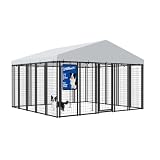
- Durable & Weather-Resistant Steel Frame: Constructed with heavy-duty galvanized welded steel wire, this outdoor dog kennel provides superior resistance to rust, corrosion, and extreme weather. It is engineered to endure strong winds, heavy rain, and prolonged outdoor exposure
- Waterproof & Removable Tarp Roof: Includes a detachable, waterproof cover that protects your dog from sun, rain, and snow. The UV-resistant tarp can be easily removed for cleaning or seasonal changes, guaranteeing comfort throughout the year
- Spacious Outdoor Freedom for Your Dog: Offer your pet ample room to play and unwind in this generously sized outdoor kennel. The open design ensures a secure area for dogs of all breeds to safely enjoy fresh air in your yard or garden
- Secure Lockable Gate for Pet Safety: Equipped with a reinforced latch mechanism, the gate stays securely closed to prevent escapes. This adds an extra layer of safety, keeping your dog protected day and night
- Quick Assembly & Dedicated Support: Designed for easy setup with minimal tools, this kennel can be quickly assembled by one or two people. Our professional customer service team is available to assist you before and after your purchase
Best for: Puppies, travel, camping, short supervised periods, and temporary separation. Complexity: Low. Permanence: Temporary.
Advantage: It is quick to deploy and easy to store. AKC recommends shade and fresh water for outdoor playpen use.
Watch out: A portable pen is not automatically escape-resistant or suitable for unsupervised all-day housing. Add a top cover for climbers and inspect every hinge and connection.
16. Rental-friendly freestanding panel kennel
Use interlocking, weighted, or anchored panels that do not require concrete footings or permanent attachment to the property.
Best for: Renters and homeowners who may move or reconfigure the yard. Complexity: Low to moderate. Permanence: Flexible.
Advantage: It can be relocated or resized without rebuilding a fence line. Select panels with secure corners and a removable roof.
Watch out: The system still has to resist pushing, digging, wind, and gate-rattling. Permission from a landlord or HOA may still be required.
17. Privacy-wall and mesh combination
Use solid panels on the lower half and mesh above to provide privacy without eliminating ventilation.
Best for: Reactive dogs, urban yards, and homes beside sidewalks. Complexity: Moderate. Permanence: Permanent.
Advantage: The dog gets a calmer sightline while the upper mesh preserves airflow and daylight. Put the sleeping retreat at the least-visible end.
Watch out: Solid walls on every side can increase heat and reduce ventilation. Leave a roof overhang and inspect panels for chewing or splintering.
18. Dog-door-access run
Build a conventional outdoor run and connect it to the home through a weather-rated dog door.
Best for: Dogs that benefit from choosing between indoor and outdoor spaces. Complexity: Moderate to high. Permanence: Permanent.
Advantage: Indoor access gives the dog a reliable temperature-controlled retreat and reduces pressure to make the outside enclosure serve as a complete home.
Watch out: Use a lockable flap and plan for threshold drainage, wildlife, storms, extreme heat, and periods when the dog cannot be monitored.
Outdated Drivers Are Slowing You Down
One free scan finds every outdated or missing driver and matches the right update for your exact hardware.Free scan · exact hardware matchWindows Errors? Fix Them Before They Spread
Repair common Windows errors and clear accumulated junk for a smoother, more stable PC - no reinstall needed.Free scan · no reinstallRoof and weather-protection ideas
19. Full-roof all-weather kennel
Cover the entire run with a sloped, durable roof while keeping at least one side open for airflow.
Best for: Rainy climates, snow, and dogs that need a dry outdoor toilet area. Complexity: High. Permanence: Permanent.
Advantage: A full roof protects more of the usable floor and makes drainage easier to control. Add gutters that discharge away from the kennel.
Watch out: A roof alone is not an insulated winter shelter or protection from wind-driven rain. Include a separate enclosed retreat and check snow load where relevant.
20. Polycarbonate-roof kennel
Install translucent corrugated or solid polycarbonate roofing over a framed run.
Best for: Rain protection while retaining daylight. Complexity: Moderate. Permanence: Permanent.
Advantage: It provides a clean, durable roof with natural light and can be fitted over modular panels.
Watch out: Translucent roofing can create a greenhouse effect. Use an opaque section or shade cloth, provide cross-ventilation, and measure the temperature below the roof during sunny weather.
Recommended Free Tools
21. Shade-sail kennel
Install a properly tensioned shade sail above part or all of an existing run.
Best for: Hot, sunny yards and retrofits. Complexity: Low to moderate. Permanence: Flexible.
Advantage: It can provide broad daytime shade without the weight of a framed roof.
Watch out: A shade sail is not a rain shelter, windbreak, or insulated sleeping structure. Use a separate weatherproof doghouse and remove or secure the sail during severe wind.
Quick wins for a faster PC:
Fix the driver behind crashes, sound loss and screen glitchesFind Drivers →Clear out junk files and repair common Windows errorsFree Scan →Scan for outdated or missing drivers - takes under a minuteDriver Scan →22. Cold-climate insulated kennel
Combine a roofed run with an insulated doghouse, raised floor, windbreak, weather flap, and dry bedding.
Best for: Cold regions and dogs acclimated to outdoor conditions. Complexity: High. Permanence: Permanent.
Advantage: A raised, dry, wind-protected retreat is more useful than simply enclosing the entire run.
Watch out: Do not seal the shelter so tightly that ventilation fails. Puppies, seniors, sick dogs, short-coated dogs, and unacclimated dogs may not be suitable for prolonged cold exposure. USDA rules for regulated facilities restrict outdoor housing for dogs that cannot tolerate or are not acclimated to local temperatures; they are not a universal temperature chart for household dogs.
What’s actually slowing this PC down?
Pick the symptom - the matching free tool is one click away.
23. Hot-climate ventilated shade kennel
Use a high roof, cross-ventilation, reflective or opaque shade cover, a raised resting platform, and more than one water option where practical.
Best for: Hot or humid climates. Complexity: Moderate to high. Permanence: Permanent.
Advantage: High, open construction allows hot air to escape while shade and a cool resting surface reduce heat load. Give the dog access to an indoor, air-conditioned retreat whenever possible.
Watch out: Do not rely on a small doghouse as the only cool area. USDA outdoor-housing guidance distinguishes shade from shelter, and humane organizations advise bringing dogs indoors during extreme heat.
Flooring, drainage, and escape-prevention ideas
24. Wash-down concrete kennel
Install a properly sloped, sealed, non-slip concrete floor with a drain or wash-down edge.
Best for: Muddy climates, multiple dogs, and high-use enclosures. Complexity: High. Permanence: Permanent.
Advantage: Concrete is easy to sweep, wash, inspect, and maintain when correctly finished. Keep a rubber mat or raised bed in the resting zone.
Watch out: Smooth concrete can be slippery, hard, cold, or dangerously hot in direct sun. Avoid standing water, exposed edges, and drain openings large enough to catch paws.
25. Paver or flagstone kennel
Install pavers or large stones around a grass, shelter, or soft-resting zone.
Best for: Attractive residential yards and transitional areas near doors. Complexity: Moderate. Permanence: Permanent.
Advantage: Pavers can reduce mud and blend with existing landscape hardscape while allowing individual units to be repaired.
Watch out: Loose, uneven, or widely spaced stones create trip and paw hazards and make waste removal difficult. Use a stable, level base.
Recommended Free Tools
26. Compacted gravel or gravel-grid floor
Prepare a contained base with compacted gravel, optionally stabilized by a grid system.
Best for: Drainage, mud control, and lower-cost construction. Complexity: Moderate. Permanence: Flexible to permanent.
Advantage: Gravel can drain well and is less expensive than a full slab. Provide a smooth, dog-tolerant aggregate and a solid resting platform.
Watch out: Monitor for digging, displaced stones, paw irritation, and ingestion. USDA regulations recognize compacted earth, sand, gravel, and grass as possible outdoor flooring in regulated facilities, but require maintenance and replacement when contaminated.
Quick wins for a faster PC:
Repair Windows errors before they cause bigger problemsFix Now →Scan for outdated or missing drivers - takes under a minuteDriver Scan →Clear out junk files and repair common Windows errorsFree Scan →27. Artificial-turf drainage kennel
Install artificial turf over a properly graded and draining base.
Best for: Small yards, high-traffic toilet areas, and mud reduction. Complexity: Moderate to high. Permanence: Permanent.
Advantage: Turf can provide a consistent surface and reduce muddy paws when the base and drainage are correctly built.
Watch out: Turf still requires waste removal, rinsing, and inspection. Its performance depends more on the base and drainage than on the turf roll alone. HGTV describes approximately a 3% grade away from the home as one installation guideline; treat that as project-specific advice, not a universal building-code requirement.
28. Natural-grass kennel with mud-control zones
Keep part of the run grassy while adding gravel, pavers, or a raised resting platform at entrances and water stations.
Best for: Dogs that enjoy natural ground and yards with adequate drainage. Complexity: Low to moderate. Permanence: Flexible.
Advantage: Grass offers a familiar, relatively soft surface and can make the enclosure feel more like a yard.
Watch out: Grass can become muddy, worn, or contaminated. Rotate high-traffic areas where possible and keep the elimination zone separate from the sleeping area.
Crashes, No Sound, or Screen Glitches?
Random freezes, missing sound and display glitches usually trace back to one bad driver. Find and replace yours safely.Free scan · under a minutePC Slower Than It Used to Be?
A free scan shows the junk files, broken settings and background clutter dragging Windows down - then fixes them in one click.Free scan · Windows 10 & 1129. Raised deck kennel floor
Add a low platform made from durable, sealed, non-slip material.
Best for: Wet climates, muddy ground, and dogs that prefer elevation. Complexity: Moderate. Permanence: Permanent.
Advantage: Elevation keeps the resting area drier and can improve airflow beneath the bed. Add a ramp for dogs that cannot safely use steps.
Watch out: Check for splinters, rot, slippery coatings, chew damage, and gaps that could trap paws or toes. The platform should not eliminate the dog’s usable open floor area.
Free tools Windows power users keep installed
One-click scans. No signup required.
30. Buried anti-dig apron
Extend welded wire, chain link, pavers, or another suitable barrier outward or downward around the fence perimeter.
Rank #3
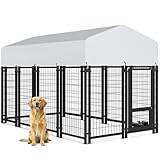
- 【Heavy-Duty Rust-Resistant Steel Construction】Unlike ordinary kennels with weak joints, our outdoor dog kennel features fully welded high-strength steel panels and galvanized tubes with a premium anti-rust coating – creating a dual-layer protection against rain, rust, and wear. The solid structure resists chewing, bending, and strong winds, keeping its shape even after long-term outdoor use. Ideal for yards, patios, or gardens. Built tough for your peace of mind.
- 【Heavy-Duty Double Deadbolt Lock System】Unlike flimsy single latches or easy-to-lose carabiners, our kennel features two 304 stainless steel slide bolts that lock deep into the reinforced frame. Built to resist shaking, jumping, and scratching, this dual-lock design keeps the door secure during rough play. No small parts to rust or misplace – just slide both bolts and it's locked. A safe den for your dog, a worry-free backyard for you.
- 【Double-Screw Locking Joints】Unlike ordinary kennels with single-screw connections that wobble and loosen over time. Ours uses double-screw locking joints at every key connection—delivering double the holding strength. This rock-solid design resists jumping, leaning, and daily rough play without loosening or rattling. No frequent repairs, just a sturdy, long-lasting kennel that stays tight for years.
- 【All-Weather Heavy-Duty Detachable Roof】Unlike thin, basic covers, our roof is made of extra-thick Oxford fabric with a premium grey UV-resistant coating—delivering superior waterproofing that blocks heavy rain and harsh sun. The sloped design instantly sheds rain, snow, and debris—no pooling, no sagging. Quick-detach design allows you to remove the cover for easy cleaning, or leave it off to create an open indoor dog run. Tougher than standard covers, yet fully removable for year-round flexibility.
- 【Easy Assembly & Cleaning Design】Unlike dog kennels with complicated assembly steps, our outside dog kennel requires no complex tools—even first-time owners can put it together quickly and easily. Daily dirt and grime can be wiped away with a damp cloth or rinsed off with water. For busy pet parents, it cuts down on home upkeep time, making it simple to keep the dog kennel clean and hygienic.
Best for: Dogs that dig below gates and fence lines. Complexity: Moderate. Permanence: Permanent.
Advantage: It protects the predictable weak point at the ground line. Pair it with a designated sandbox or dig box so the dog has an approved outlet.
Watch out: Secure or cover every edge. Exposed wire can catch paws, and buried barriers should not conflict with underground utilities. In the United States, contact 811 before digging; notice requirements vary by state.
The Tool Desk
Outbyte PC Repair FREEClear out junk files and repair common Windows errorsFree Scan →Outbyte Driver Updater FREEFix the driver behind crashes, sound loss and screen glitchesFind Drivers →Multi-dog, accessibility, and enrichment ideas
31. Divided multi-dog kennel
Create separate compartments with shared exercise space or individual runs.
Best for: Dogs with different feeding needs, incompatible temperaments, or different rest schedules. Complexity: High. Permanence: Permanent.
Advantage: Dividers allow controlled access, separate meals, and safer management when dogs should not be left together.
Watch out: Do not assume dogs can share safely because they live in the same household. Federal regulated-facility standards require compatibility to be considered; the same principle is sensible for private kennels.
32. Visual-block kennel for reactive dogs
Add solid panels, privacy fencing, landscaping outside the enclosure, or a quiet orientation away from the street.
Best for: Dogs that bark, lunge, or become distressed when watching passersby. Complexity: Low to moderate. Permanence: Flexible to permanent.
Advantage: Controlling the dog’s sightline may reduce triggers and make resting easier. Combine it with training, enrichment, and a retreat rather than relying on barriers alone.
Watch out: Avoid total visual and airflow blockage. Do not place toxic or chewable plants inside the enclosure.
Do these 3 things before closing this tab:
1Scan for outdated or missing drivers - takes under a minute2Clear out junk files and repair common Windows errors3Fix the driver behind crashes, sound loss and screen glitches33. Senior-accessible kennel
Use a low-threshold gate, a ramp instead of stairs, non-slip flooring, an easy-to-reach raised bed, and short routes between water, shelter, and the exit.
Best for: Senior dogs, dogs with arthritis, and dogs recovering from mobility problems. Complexity: Moderate. Permanence: Permanent.
Advantage: The layout reduces slipping, unnecessary climbing, and difficult transitions. Ask a veterinarian about ramp slope, temperature exposure, and appropriate exercise.
Watch out: Older or infirm dogs may be especially unsuitable for prolonged outdoor housing. The USDA’s outdoor-housing restrictions specifically identify aged, young, sick, and infirm animals as requiring veterinary consideration.
34. Sensory and enrichment kennel
Combine safe surfaces, sniffing areas, durable toys, a sandbox, raised platforms, tunnels, and rotating food puzzles.
Best for: High-energy, working, bored, or easily frustrated dogs. Complexity: Moderate. Permanence: Flexible.
Advantage: Varied surfaces and activities create more choice than an empty run. AKC guidance includes raised platforms, ramps, tunnels, digging areas, shallow pools, and sniffing opportunities as possible enrichment.
Watch out: Rotate rather than permanently crowding the enclosure. Inspect every item for chewing, trapping, overheating, splinters, and sanitation problems.
Quick wins for a faster PC:
Clear out junk files and repair common Windows errorsFree Scan →Fix the driver behind crashes, sound loss and screen glitchesFind Drivers →Repair Windows errors before they cause bigger problemsFix Now →35. Agility or play yard attached to a resting kennel
Connect the sheltered kennel to a larger exercise area with low hurdles, weave poles, tunnels, or open running space.
Best for: Active dogs and owners who use training as enrichment. Complexity: Moderate to high. Permanence: Flexible to permanent.
Advantage: Removable equipment lets the same yard support exercise, training, and quiet rest.
Watch out: Equipment must suit the dog’s size, age, health, and training level. Do not let play equipment reduce the usable resting, elimination, or full-stride areas.
How large should an outdoor kennel be?
Start by measuring the dog from the tip of the nose to the base of the tail, then measure standing height and shoulder height. Plan usable zones for resting, eating and drinking, elimination, movement, play, and human entry. Do not count a narrow passage, ramp, platform, bowls, or inaccessible corner as equivalent to open floor space.
For dogs in regulated primary enclosures, the federal floor-space formula is:
Required floor space in square feet = (length of dog in inches + 6)² ÷ 144
| Nose-to-tail length | Federal minimum floor area |
|---|---|
| 18 inches | 4.00 square feet |
| 24 inches | 6.25 square feet |
| 31 inches | 9.51 square feet |
| 36 inches | 12.25 square feet |
The same federal standard says the interior height must be at least six inches higher than the head of the tallest dog when standing normally. For multiple dogs, the total floor area must meet or exceed the sum of the individual minimum areas, while compatibility still has to be assessed. See 9 CFR § 3.6 and the USDA minimum-space reference.
These are minimum primary-enclosure figures for regulated facilities, not recommended dimensions for a comfortable home exercise kennel. A backyard run should generally be larger where possible, especially if it will be used for play, toileting, and extended daytime access. The dog should be able to stand, turn, lie down, walk, and extend to a full stride during movement and play.
Free tools Windows power users keep installed
One-click scans. No signup required.
Federal standards: useful benchmark, not automatic homeowner code
USDA Animal Welfare Act standards primarily apply to regulated dealers, exhibitors, research facilities, carriers, and related businesses. USDA APHIS explains the licensing and registration scope. They are not an automatic design code for every private backyard dog owner.
Use the federal rules in two ways: as a legal requirement if your property or business is regulated, and as a useful minimum welfare reference for any owner. They do not replace city or county zoning, fence and building permits, animal-control rules, landlord permission, HOA restrictions, property setbacks, or local noise and drainage requirements.
Shelter and shade
For regulated outdoor facilities, each dog must have accessible shelter large enough to sit, stand, lie normally, and turn freely. A separate shaded area must be large enough for all animals to use at once. The listed shelter features include a roof, four sides, a floor, protection from sun, wind, rain, and snow, plus a windbreak and rain break at the entrance. A tarp, shade sail, or roof alone is not a complete all-weather shelter. See USDA APHIS outdoor-housing guidance.
Temperature and suitability
There is no universal safe outdoor temperature for every dog. Coat, body condition, age, health, breed, humidity, wind, acclimation, shade, water, and access to indoor shelter all change the risk. USDA rules for regulated facilities restrict outdoor housing for dogs that are not acclimated to local temperatures or cannot tolerate the prevailing climate, as well as sick, infirm, aged, and young dogs unless specifically approved by the attending veterinarian. When acclimation is unknown, the federal rule prohibits outdoor housing below 50°F / 10°C in that regulated context. It should not be presented as a universal safe-temperature chart for household dogs.
AKC notes that some breeds are particularly heat- or cold-intolerant and that extreme temperatures can affect all dogs. Bring dogs indoors during dangerous heat, cold, storms, smoke, or other conditions unless a veterinarian has advised otherwise.
Floor safety and sanitation
A sound kennel has no sharp points or edges, no gaps that can trap paws or legs, flooring that protects feet and joints, surfaces that can be cleaned or replaced, and drainage that prevents persistent standing water. Material alone does not solve the problem: the base, slope, shade, cleaning routine, and the dog’s behavior determine whether concrete, gravel, grass, turf, or pavers will work.
Tethering is not a kennel
An aerial line or tie-out should not be presented as an equivalent substitute for a secure enclosure. For regulated facilities, permanent tethering is prohibited as a primary enclosure, and temporary tethering requires APHIS approval. A tether should only be considered a temporary, supervised management tool where legal and appropriate—not the main design for all-day outdoor housing.
How to build or install an outdoor kennel safely
- Define the use case. Decide whether the enclosure is for short supervised periods, daytime access, toileting, exercise, resting, emergency separation, or overnight use. The more hours the dog spends outside, the more important climate control, indoor access, welfare review, and supervision become.
- Measure the dog and plan usable zones. Record nose-to-tail length, standing height, shoulder height, and turning room. Draw separate resting, water and feeding, elimination, movement, and human-access zones before ordering materials.
- Choose the site. Favor a location close to the house, visible from frequently used rooms, naturally shaded for part of the day, above surrounding low spots, and accessible for waste removal and water changes. Check the yard morning, midday, and afternoon because early shade may disappear later.
- Check rules and utilities. Verify zoning, building and fence permits, animal-control rules, setbacks, HOA restrictions, landlord permission, property lines, noise requirements, and drainage expectations. Call 811 before installing posts, footings, buried mesh, drainage trenches, or utility connections in the United States.
- Solve drainage before fencing. Grade water away from the home and shelter. Keep roof runoff, downspouts, hose bibs, and neighboring runoff out of the kennel. Follow the selected turf, paver, gravel, or concrete system’s installation instructions instead of copying a generic base depth.
- Build containment. Install posts, panels, gates, roof supports, and anti-dig protection. Check ground-level gaps, gate alignment, latch security, corners, roof edges, exposed wire, and climbable objects. For athletic jumpers and climbers, a full roof is generally more reliable than simply adding height.
- Add shelter and shade. Provide both a weatherproof sleeping or retreat structure and a separate shaded area that remains usable as the sun moves. For multiple dogs, provide enough shade and shelter to avoid competition.
- Add water and enrichment. Use a stable or secured bowl, automatic waterer, or refill system that can be cleaned easily. Add durable, dog-appropriate enrichment and rotate it rather than filling the enclosure with permanent clutter.
- Test before leaving the dog alone. Supervise the kennel in direct sun, rain, wind, after watering, at the hottest part of the day, and after dark if it will be used overnight. Look for heat buildup, puddles, slippery surfaces, escape attempts, chewing, barking triggers, and whether the dog voluntarily uses the shelter.
- Establish maintenance. Remove waste and refresh water daily. Wash bowls, inspect flooring and drainage, check mesh and fasteners, clean high-contact surfaces, and inspect the roof, shade, anti-dig barrier, bedding, and enrichment throughout the week and each season.
For basic fence, gate, shelter, water, flooring, and maintenance planning, Lowe’s DIY dog-run guide is a useful construction reference. Treat any product dimensions or prices as project-specific and verify them locally.
Windows Errors? Fix Them Before They Spread
Repair common Windows errors and clear accumulated junk for a smoother, more stable PC - no reinstall needed.Free scan · no reinstallOutdated Drivers Are Slowing You Down
One free scan finds every outdated or missing driver and matches the right update for your exact hardware.Free scan · exact hardware matchOutdoor kennel flooring comparison
| Surface | Drainage | Cleaning | Comfort | Best use | Main concern |
|---|---|---|---|---|---|
| Sealed concrete | Good when sloped correctly | Excellent | Hard, potentially hot or cold | High-use or multi-dog kennels | Slip, heat, cold, and joint comfort |
| Pavers or flagstone | Good with a prepared base | Good | Moderate | Residential hardscape and entrances | Uneven joints and loose pieces |
| Compacted gravel or gravel grid | Very good when contained | Moderate | Varies by aggregate | Mud control and lower-cost builds | Digging, paw irritation, and ingestion |
| Artificial turf | Depends on base and slope | Moderate | Generally comfortable when cool | Small yards and toilet zones | Odor, heat, and poor underlying drainage |
| Natural grass | Good only on a suitable site | Low to moderate | Natural and soft | Part-yard exercise areas | Mud, wear, and contamination |
| Raised deck | Good if kept clear below | Good | Dry and elevated | Wet sites and resting platforms | Splinters, rot, slippery coating, trapped paws |
There is no universally best kennel floor. Hardscape is easier to wash but should not be the dog’s only resting surface. Grass and gravel feel more natural but are harder to sanitize. Turf can work well when installed over a draining base, while a raised deck helps keep a bed dry but does not replace a properly drained ground surface.
Weather planning by climate
- Hot climates: Prioritize shade that lasts through the afternoon, cross-ventilation, reflective or opaque roofing, cool resting surfaces, clean water, and indoor access. Dark metal or translucent roofing can raise temperatures quickly.
- Cold climates: Provide a dry raised floor, insulation, a windbreak, weather-protected entrance, suitable bedding, and indoor access. Make sure water does not freeze and do not house an unacclimated or medically vulnerable dog outside for prolonged periods.
- Rainy climates: Use a sloped roof, controlled downspouts, a drainage base, washable surfaces, and a shelter that blocks wind-driven rain. Test the kennel after a heavy storm rather than assuming the roof is enough.
- Snowy climates: Plan for roof load, snow drifts, entrance clearance, frozen water, and a dry route to the shelter. Remove snow before it reduces usable space or creates a climbing route.
- Humid climates: Favor airflow, cleanable and mold-resistant materials, rapid drainage, and shade. Inspect bedding, wood, turf seams, and sheltered corners for persistent dampness.
- Windy sites: Anchor panels and roof supports, use a protected entrance, and inspect shade sails and lightweight roofing after storms. A windbreak should block direct drafts without sealing off ventilation.
Adapt the design to the dog
Puppies
Choose washable flooring, small mesh openings, secure latches, and a pen that supports short supervised sessions. Puppies chew, squeeze through gaps, dig, and may not regulate temperature well. They need frequent interaction and toilet breaks rather than long unsupervised periods.
Seniors and mobility-limited dogs
Use non-slip flooring, low thresholds, a gentle ramp, shade, a dry bed, and short routes between water, shelter, and the gate. Ask a veterinarian about arthritis, heat, cold, and exercise limits.
Short-coated, flat-faced, overweight, or heat-intolerant dogs
These dogs may need indoor access even when another dog could tolerate the same weather. Brachycephalic dogs can be especially vulnerable to heat. Do not use a generic temperature rule as a substitute for observation and veterinary guidance.
What’s actually slowing this PC down?
Pick the symptom - the matching free tool is one click away.
Jumpers, climbers, and fence chargers
Remove furniture and stored items near the fence, reinforce corners, secure panel connections, control ground gaps, and consider a full roof. A taller decorative fence may still fail if the dog can climb or launch from an object.
Diggers
Find the actual digging point, secure a buried or outward anti-dig apron, block corner leverage, and provide a designated digging box. Cover wire edges so they cannot catch paws.
Reactive or anxious dogs
Use partial privacy, a quiet orientation, controlled sightlines, and a retreat that faces away from traffic. Barriers may help some dogs, but persistent barking, distress, or aggression calls for training and behavior support rather than simply more fencing.
Multiple dogs
Provide separate food and water stations, more than one retreat, and enough shade for all dogs at once. Divide the kennel if dogs have different feeding needs or uncertain compatibility. Shared housing should be based on observed behavior, not assumption.
Relative cost and construction trade-offs
Exact prices change with region, dog size, roof type, soil, permits, labor, and material availability. Avoid relying on fixed claims such as under a particular dollar amount unless the size, date, location, and complete materials list are specified. For planning, compare concepts this way:
| Approach | Material cost | DIY complexity | Weather resistance | Maintenance |
|---|---|---|---|---|
| Portable pen or PVC lattice | Low | Low | Low | High inspection needs |
| Freestanding modular panels | Low to moderate | Low to moderate | Moderate when anchored | Moderate |
| Chain-link or welded-wire permanent run | Moderate | Moderate | Moderate to high | Moderate |
| Covered custom timber kennel | Moderate to high | Moderate to high | High when detailed correctly | Moderate |
| Concrete, drainage, roof, and divided kennel | High | High | High | Lower cleaning effort but regular inspection |
Spend first on containment, the gate and latch, drainage, shade, and a dry retreat. Decorative siding, landscaping, and coordinated finishes can be added later. A beautiful kennel that floods, overheats, or allows an escape is a failed construction project.
Safety and inspection checklist
Before using the kennel and after major weather, confirm:
- There are no sharp edges, exposed wire ends, protruding nails, or splinters.
- The gate closes squarely and the latch cannot be opened by the dog.
- There are no ground-level gaps large enough for a head, paw, or leg to become trapped.
- Panels, posts, roof supports, and shade structures cannot be pushed, lifted, or blown over.
- There are no climbable objects beside the fence.
- Shade remains available during the hottest part of the day.
- A separate dry, weather-protected shelter is accessible.
- Fresh water is available in a stable, cleanable container.
- The floor is paw-safe, non-slip, cleanable or replaceable, and free of persistent standing water.
- Waste can be removed without entering an inaccessible corner.
- Plants have been checked using a current database by scientific name.
- Fertilizer, pesticides, fuel, tools, pools, and chemicals are inaccessible.
- Underground utilities were located before digging.
- The dog has room to stand, turn, lie down, walk, and play without obstacles.
- The dog was observed during sun, rain, wind, heat, and cold before being left alone.
ASPCA’s toxic and non-toxic plant database is a useful starting point, but its list is not all-inclusive. Verify plant identification by scientific name and contact a veterinarian or poison-control service after suspected ingestion. Even a plant categorized as non-toxic may cause gastrointestinal upset if eaten.
Recommended Free Tools
Common failure modes and fixes
- The dog refuses the doghouse.
- Heat buildup, poor ventilation, rain blowing inside, unfamiliar flooring, a narrow doorway, insects, or odors may be the reason. Test the shelter at different times and offer an open-sided shaded alternative while correcting the problem.
- The kennel floods.
- Check roof runoff, downspouts, surrounding grade, neighboring runoff, and the base beneath the floor. Raise the shelter and redirect water before replacing the surface material.
- The dog digs under the fence.
- Identify the exact location, install a properly secured anti-dig apron, block corner access, and provide a legal digging outlet. Never leave exposed mesh where paws can catch.
- The dog climbs or jumps.
- Remove nearby objects, secure loose panels, add a roof, or change to a covered layout. Do not rely only on a taller decorative fence.
- The dog chews the structure.
- Use durable dog-appropriate materials, remove accessible softwood edges and coatings, cover fasteners, and provide safe chew alternatives. Lightweight PVC and pallet designs may be unsuitable for a determined chewer.
- The dog barks continuously.
- The kennel may be too exposed, too isolated, close to a trigger, under-enriched, or uncomfortable. Try visual barriers, a quieter location, more interaction, training, and behavior or veterinary support.
- The kennel becomes dangerously hot.
- Measure the actual temperature inside, especially below polycarbonate, metal, or dark roofing. Add shade and ventilation, change the roof, provide water and indoor access, and do not expect a small doghouse to solve heat exposure.
- Multiple dogs compete for shelter.
- Increase shaded and sheltered space, add more than one retreat, separate food and water stations, and use divided zones when compatibility is uncertain.
- The dog is elderly, sick, young, short-coated, flat-faced, overweight, or heat-intolerant.
- Do not apply a generic outdoor-kennel plan. Use shorter outdoor periods, closer supervision, indoor access, and veterinary guidance.
- The kennel is intended for overnight or full-time outdoor living.
- Treat this as a higher-risk use case. Review veterinary suitability, local law, weather monitoring, indoor access, shelter design, and daily social interaction before construction.
Frequently Asked Questions
What is the best outdoor dog kennel design?
For most homeowners, the strongest general-purpose design is a covered, walk-in, modular enclosure near the house with secure fencing, a human-sized gate, a separate weatherproof shelter, all-day shade, a dry floor, secured water, drainage, and enrichment. Adapt it to the dog’s size, behavior, health, and climate.
How big should an outdoor dog kennel be?
Use the dog’s nose-to-tail length and standing height as a starting point. The federal primary-enclosure benchmark for regulated facilities is (length in inches + 6)² ÷ 144 square feet, with interior height at least six inches above the tallest dog’s head. A comfortable home exercise kennel should generally exceed that minimum and provide room for full-stride movement plus separate resting and elimination areas.
Does an outdoor kennel need a roof?
A roof is strongly recommended for shade and rain control, but it is not a complete shelter by itself. The dog also needs a dry retreat that protects against wind, rain, snow, and temperature extremes, plus ventilation and shade that remain usable as the sun moves.
What is the best outdoor kennel flooring?
There is no universal winner. Sloped sealed concrete is easiest to wash, gravel drains well, grass feels natural, artificial turf can work over a properly draining base, pavers suit residential yards, and raised decking helps keep beds dry. Combine any surface with correct grading, inspection, shade, and a comfortable resting zone.
Is chain link or welded wire better for a kennel?
Both can work when correctly sized, framed, anchored, and finished. Chain link is widely available and practical for permanent runs; welded wire offers custom openings and a clean framed appearance. Select openings that prevent head and paw entrapment, cover sharp ends, and design for the individual dog’s chewing, climbing, and pushing behavior.
Can a dog stay outside overnight?
Some dogs may tolerate limited overnight outdoor use in suitable conditions, but it is a higher-risk choice that depends on health, coat, acclimation, climate, shelter, security, and local rules. Indoor access is safer during extreme or changing weather, and vulnerable dogs may not be suitable for prolonged outdoor housing.
How do I stop a dog from digging under the kennel?
Install a properly secured anti-dig apron extending outward or downward at the fence line, reinforce gate corners, and provide a designated sandbox or dig box. Cover all wire edges and call 811 before digging in the United States.
How do I keep an outdoor kennel cool?
Provide shade throughout the day, cross-ventilation, a high reflective or opaque roof, cool resting surfaces, fresh water, and indoor access. Measure the temperature beneath the roof, especially with metal or translucent roofing. A small doghouse is not a substitute for a cool retreat.
The Tool Desk
Outbyte Driver Updater FREEScan for outdated or missing drivers - takes under a minuteDriver Scan →Outbyte PC Repair FREERepair Windows errors before they cause bigger problemsFix Now →Are portable exercise pens safe outdoors?
They can be useful for puppies, travel, camping, and short supervised periods when anchored and shaded. They are not automatically escape-proof or suitable for unsupervised all-day housing, especially for climbers, powerful chewers, or dogs that charge fencing.
Can two dogs share one outdoor kennel?
Only when their compatibility has been observed and the enclosure provides sufficient space, shade, shelter, and separate feeding and water options. Use divided compartments when temperaments, feeding needs, health, or rest requirements differ.
Do I need a permit to build a dog kennel?
Requirements vary by city, county, state, property type, HOA, and landlord. Check zoning, fence and building permits, setbacks, animal-control rules, drainage and noise requirements, and property lines before construction. Call 811 before digging for posts, footings, drainage, or buried anti-dig barriers.
The Bottom Line
Choose the kennel around the dog and the site, not around a picture. For most yards, a covered walk-in modular enclosure with a separate weatherproof retreat, reliable shade, drainage, secure water, and an anti-dig or anti-climb strategy is the most useful starting point. Build containment and drainage first, test the space in real weather, and treat indoor access, interaction, enrichment, and regular inspection as part of the kennel—not optional extras.
Do these 3 things before closing this tab:
1Repair Windows errors before they cause bigger problems2Scan for outdated or missing drivers - takes under a minute3Clear out junk files and repair common Windows errorsQuick Recap
Product prices and availability are accurate as of the date/time indicated and are subject to change. Any price and availability information displayed on Amazon at the time of purchase will apply.