Do these 3 things before closing this tab:
1Repair Windows errors before they cause bigger problems2Scan for outdated or missing drivers - takes under a minute3Clear out junk files and repair common Windows errorsThe bubbles are chemistry, not proof of superior cleaning power. When baking soda and vinegar meet, they react rapidly: vinegar’s acetic acid reacts with baking soda’s sodium bicarbonate and releases carbon dioxide gas. That fizz can provide brief mechanical agitation, but it also consumes much of the acid and base that gave the separate ingredients their original properties.
For routine cleaning—whether you are maintaining a kitchen, bathroom, workshop, rental property, or construction site—premixing the two is therefore an inefficient general-purpose strategy. Use soap or detergent and water for ordinary soil, choose a cleaner made for the surface, and use a properly labeled disinfectant only when disinfection is actually needed.
As an Amazon Associate I earn from qualifying purchases.
What happens when vinegar and baking soda are combined?
Vinegar is an acetic-acid solution. Baking soda is sodium bicarbonate, a mildly alkaline compound. When they are mixed, the acid reacts with the bicarbonate and produces carbon dioxide gas—the bubbles you see—along with water and sodium acetate.
A simplified version of the reaction is:
NaHCO₃ + CH₃COOH → CH₃COONa + CO₂ + H₂OThis is a neutralization reaction. The vinegar becomes less acidic as its acetic acid reacts, and the baking soda loses much of its original alkaline behavior. Once one reactant has largely been used up, adding more of the other cannot keep producing gas indefinitely; the reaction is limited by the amount of acid and bicarbonate available.
#1 Best Overall

- Plant-Powered Cleaning for Daily Messes: This all-purpose cleaner helps tackle grease, grime, stains, and soap scum across countertops, stainless steel, laminate floors, sealed wood, and glass without streaks. Made for busy homes, it helps refresh kitchens, bedrooms, and bathrooms, while staying gentle enough for use around kids and pets
- Free & Clear Formula, 0% Dyes & Fragrances: With no dyes, no fragrance, and no VOCs, this multi-surface cleaner gives you a powerful clean without harsh fumes. It wipes surfaces clear without leaving residue, supporting individuals and families who prefer unscented products and want calm, breathable shared living areas
- For Use on Multiple Surfaces: Safe for granite, stainless steel, sealed wood, and even car interiors, this surface cleaner removes smudges and everyday buildup with ease. It rinses clean and stays reliable for quick resets in kitchens, bathrooms, and busy rooms where you want surfaces to feel fresh and ready for daily use
- Thoughtfully Formulated: Made with plant-based cleaning agents and sold in sustainable packaging, this all purpose cleaner supports mindful home care. The formula shines on hard, nonporous surfaces, helping maintain a healthier-feeling home through reliable everyday cleaning
- Build Your Ideal Cleaning Routine: Pair with Seventh Generation Multi-Surface Wipes for a completed home cleaning routine. Together, they create a flexible, plant-powered cleaning routine that adapts to your day, from quick countertop wipes to thorough kitchen resets, all with ingredients you can feel good about
Why the fizz does not prove that the mixture cleans better
Visible activity is easy to mistake for cleaning performance. Carbon dioxide bubbles rise through the liquid and can loosen or move some residue by physical agitation. That may make a particular spot appear to respond, especially when the mixture is scrubbed immediately.
But bubbling does not demonstrate that the mixture is removing more soil than a cleaner selected for the job. In fact, premixing reduces the original acidity of vinegar and the alkalinity of baking soda. You end up with a reacting solution rather than two ingredients retaining their separate cleaning properties.
Commercial cleaners are formulated for specific jobs. Their ingredients, concentration, stability, and directions are selected to deliver repeatable performance. Homemade mixtures can sometimes be useful, but they are not automatically more effective simply because they foam or fizz.
Quick wins for a faster PC:
Fix the driver behind crashes, sound loss and screen glitchesFind Drivers →Repair Windows errors before they cause bigger problemsFix Now →Scan for outdated or missing drivers - takes under a minuteDriver Scan →Better rule: judge a cleaning method by the soil it removes, the surface it protects, and whether it achieves the required level of sanitation—not by how dramatic the reaction looks.
Does that mean vinegar and baking soda are always useless?
No. That would be an overstatement.
Vinegar and baking soda can each have separate household uses, and a paste or sequential method may suit a particular task if the surface and product directions permit it. For example, a mildly abrasive baking-soda paste may help with some stuck-on residue, while diluted vinegar may be useful for some mineral deposits on compatible, non-sensitive surfaces.
The narrower and more reliable conclusion is this: do not routinely premix vinegar and baking soda as a general-purpose cleaner. The reaction consumes much of what makes each ingredient chemically different, and the fizz is not a dependable test of cleaning power.
Rank #2

- All-purpose concentrated cleaner removes dirt, grease, and stains - perfect for busy parents tackling kitchen spills, mechanics cleaning shop floors, or office staff maintaining breakrooms.
- EPA Safer Choice certified, giving homeowners and daycare providers peace of mind while solving tough cleaning challenges without harsh chemical concerns.
- Cleans counters, carpets, floors, fabric, and vehicles in kitchens, garages, offices, and workshops where daily messes happen - versatile enough for both home and commercial cleaning needs.
- Use full strength for garage oil stains and BBQ grease or dilute for daily kitchen cleaning, helping budget-conscious families and small businesses save money with one versatile solution.
- Refreshing sassafras scent leaves homes, offices, and vehicles smelling clean after tackling pet accidents, food spills, or workshop grime that embarrass hosts before guests arrive.
Surface compatibility matters especially in construction and property maintenance. Do not assume an acidic product is appropriate for natural stone, cement-based materials, grout, finished wood, metals, painted finishes, electronics, or newly installed surfaces. Check the surface manufacturer’s instructions and the cleaner’s label before applying anything unfamiliar. When uncertain, test an inconspicuous area first.
Important safety distinction: this is not the bleach-and-vinegar reaction
Open-container vinegar-and-baking-soda mixing primarily produces carbon dioxide, water, and sodium acetate. It is not the same chemical hazard as mixing bleach with vinegar. Bleach combined with an acid such as vinegar can release toxic chlorine gas. Bleach mixed with ammonia can produce chloramine gases.
That distinction should not turn the baking-soda reaction into a scare story. However, do not conduct it in a sealed bottle, jar, drain line, or other closed container. The reaction produces gas, and pressure can build as carbon dioxide accumulates. An open container still does not make every chemical combination safe.
Never mix bleach with vinegar, ammonia, acids, or other cleaning products. More generally, do not combine cleaning chemicals unless the product label specifically directs you to do so.
If you have accidentally mixed products and notice fumes, strong odors, coughing, burning eyes, breathing difficulty, dizziness, or other symptoms, leave the area and get fresh air. Follow local emergency guidance or contact your local poison-control service. Do not pour in another chemical to “neutralize” the first one. Adding a third substance can create a more dangerous reaction.
Cleaning is not the same as disinfecting
Many cleaning mistakes come from treating “clean” and “disinfected” as interchangeable.
Rank #3
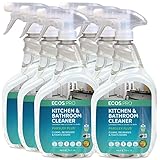
- package height : 36.398 cm
- package length :16.408 cm
- package width :27.787 cm
- Unit count: 6.0
- Cleaning removes dirt, grease, impurities, and many germs through a cleaner or detergent, water, and physical action.
- Disinfecting is a separate process intended to kill remaining microorganisms using an appropriate product according to its label.
For ordinary dirt on a frequently touched or lightly soiled surface, start with cleaning. Soap or detergent and water, followed by physical wiping or scrubbing, is often the appropriate method. A disinfectant is not automatically necessary for walls, floors, or other surfaces with minimal hand contact.
When disinfection is warranted—such as after certain contamination events or when a site-specific health procedure requires it—use an EPA-registered household disinfectant and follow its current label. Pay attention to:
- the surfaces on which the product is approved;
- required dilution, if any;
- ventilation instructions;
- required wet contact time; and
- any rinsing, protective-equipment, storage, or disposal instructions.
Cleaning generally comes first unless the product is specifically labeled as a combined detergent-disinfectant. Baking soda and vinegar should not be treated as substitutes for an EPA-registered disinfectant.
The Tool Desk
Outbyte Driver Updater FREEScan for outdated or missing drivers - takes under a minuteDriver Scan →Outbyte PC Repair FREERepair Windows errors before they cause bigger problemsFix Now →What to use instead
1. Soap or detergent and water for ordinary dirt
For dust, tracked-in soil, light grease, and routine surface grime, use an appropriate soap or detergent with water and physical wiping or scrubbing. An unscented dish soap or mild household detergent can be a practical choice for suitable washable surfaces, but do not assume dish soap disinfects or is safe for every material.
Use the smallest effective amount, follow the product directions, and remove residue when the surface instructions call for rinsing. In construction cleanup, also remove loose abrasive dust before wet wiping so you do not spread grit across a finished surface.
2. A formulated, surface-appropriate cleaner
Choose a product designed for the material and the soil: for example, a cleaner labeled for glass, finished flooring, metal, tile, or another specific surface. Read both the product label and the surface manufacturer’s care instructions. “All-purpose” does not mean “safe for every surface.”
Increase ventilation as directed, keep products in their original containers, and never combine leftover solutions in a bucket or spray bottle.
Crashes, No Sound, or Screen Glitches?
Random freezes, missing sound and display glitches usually trace back to one bad driver. Find and replace yours safely.Free scan · under a minutePC Slower Than It Used to Be?
A free scan shows the junk files, broken settings and background clutter dragging Windows down - then fixes them in one click.Free scan · Windows 10 & 11Rank #4

- All-purpose concentrated cleaner removes dirt, oil, grime, grease and stains.
- Recognized by the U.S. EPA's Safer Choice Program. This product is safer for use around people, pets, and the environment.
- For use on any washable surface. Cleans counters, carpet, floors, fabric, equipment and vehicles.
- Concentrated formula provides up to 30X the cleaning value. Use full strength on heavy messes, or custom dilute for daily cleaning.
- Cleans and leaves behind a refreshing lemon scent.
3. An EPA Safer Choice all-purpose cleaner
If you want a ready-made replacement for a premixed vinegar-and-baking-soda solution, an EPA Safer Choice all-purpose cleaner is a sensible category to investigate. EPA’s Safer Choice program evaluates eligible products against ingredient-safety and performance requirements and maintains a searchable database. Verify the product’s current certification, read its label, and confirm that it is compatible with the surface you intend to clean.
Disclosure: This article may contain compensated product links. Any recommendation is based on the product category’s documented use and fit, not on a claim of personal testing or a guarantee that every product is suitable for every surface.
4. An EPA-registered disinfectant when disinfection is required
Do not buy or use a disinfectant merely because it sounds stronger. Select one whose label covers the intended use and surface, then follow the complete process. A disinfectant may need to remain visibly wet for a specified contact time; wiping it away immediately can prevent the labeled process from being completed.
5. A microfiber cloth for the physical removal step
Microfiber cleaning cloths can help with wiping and soil removal, particularly when paired with an appropriate cleaner. They are an accessory, not a disinfectant. Use clean cloths, avoid transferring contamination from one area to another, and launder or dispose of them according to the site’s procedures.
What’s actually slowing this PC down?
Pick the symptom - the matching free tool is one click away.
A practical cleaning decision guide
- Identify the soil. Is it dust, grease, adhesive, mineral scale, biological contamination, or something else? Different soils require different approaches.
- Identify the surface. Check whether it is stone, metal, wood, paint, plastic, glass, electronics, grout, concrete, or a finished material.
- Remove loose material first. Sweep, vacuum, or wipe away dry grit where appropriate.
- Use detergent and water for routine soil. Apply a compatible product and use physical action rather than relying on fizz.
- Rinse or remove residue if directed. Cleaner residue can attract soil or affect a finish.
- Decide whether disinfection is actually needed. If it is, clean first unless the label specifies a combined product.
- Follow the disinfectant label exactly. Observe the approved surface, dilution, ventilation, protective measures, and wet contact time.
- Store products safely. Keep them in original labeled containers and away from children, pets, heat, and incompatible chemicals.
Common myths, corrected
“More fizz means more cleaning.”
Not necessarily. The fizz is carbon dioxide released by a neutralization reaction. It may agitate residue, but it does not measure cleaning effectiveness.
“Vinegar and baking soda create chlorine gas.”
Not by themselves in the ordinary open-container reaction described here. The chlorine-gas warning concerns bleach mixed with an acid such as vinegar. That does not make bleach-and-vinegar mixing safe under any circumstances—it makes it especially important not to confuse the two reactions.
“The mixture is always dangerous.”
That is also too broad. The principal concern with an open vinegar-and-baking-soda mixture is wasted reactants and unreliable cleaning performance, while a sealed container introduces pressure risk. The much more serious household warning is never to mix bleach with vinegar, ammonia, or other cleaners.
Best Value

- CLOROX ALL-PURPOSE CLEANER: Clorox EcoClean All-Purpose Cleaner cleans grease, dirt and soap scum from a variety of surfaces throughout the home and office
- MADE WITH 99% BIOBASED INGREDIENTS: This all-purpose cleaning spray meets US EPA Safer Choice Product standards and is a USDA Certified Biobased cleaner, made with 99% biobased ingredients
- USE ON A VARIETY OF SURFACES: Safe on multiple surfaces throughout the kitchen and bathroom, including counters, appliances, stainless steel, sealed granite, chrome, cooktop hoods, sinks and toilets
- FORMULATED WITHOUT BLEACH: This Clorox all-purpose cleaner is formulated without parabens, dyes, phthalates, phosphates, petroleum solvents and SLES
- GREAT FOR COMMERCIAL USE: Clorox EcoClean All-Purpose Cleaner effectively cleans without harsh chemical odors, fumes or residues and is safe for use around food contact surfaces*
“If it is natural, it can disinfect.”
Natural origin is not proof of disinfection. Vinegar and baking soda are not EPA-registered disinfectants and should not be relied on to meet a disinfection requirement.
Bottom line for household and jobsite cleaning
Stop using the dramatic reaction as your default cleaning method. Mixing baking soda and vinegar produces bubbles because an acid and a base are reacting—not because the resulting solution has exceptional cleaning power. Use each ingredient separately only when the task and surface support it, and choose detergent, a formulated surface cleaner, or an EPA-registered disinfectant according to the actual job.
For a repeatable maintenance routine, the most important improvements are less chemistry theater and more process control: identify the soil, protect the surface, use the correct product, provide physical cleaning action, ventilate properly, and never mix cleaning chemicals.
Frequently Asked Questions
Can I use baking soda and vinegar one after the other?
Sometimes, but only when the surface and product directions permit it. Using them sequentially can still cause them to react where they meet, so it is not automatically better than choosing one compatible product for the soil. Do not use the method on sensitive materials without checking care instructions.
Can vinegar and baking soda unclog a drain?
The fizz may move a small amount of residue, but it is not a reliable substitute for a drain method appropriate to the blockage and plumbing. Never seal the drain or container while producing gas, and never combine this method with bleach or commercial drain chemicals.
Recommended Free Tools
Should I use vinegar or baking soda to disinfect a surface?
No. Routine cleaning and disinfection are different tasks. Vinegar and baking soda should not be relied on as disinfectants. When disinfection is required, use an appropriate EPA-registered product according to its current label, including its required wet contact time.
What should I do if I accidentally mix bleach and vinegar?
Leave the area immediately and get fresh air. Avoid the fumes, do not add another chemical, and contact local emergency services or poison-control guidance if anyone has symptoms or if the exposure may be significant.
The Bottom Line
The short answer: baking soda and vinegar fizz because they neutralize each other. The bubbles can agitate residue, but they are not evidence of superior cleaning. Use detergent and water for ordinary dirt, a surface-appropriate formulated cleaner for specialized jobs, and an EPA-registered disinfectant only when disinfection is needed. Never seal the reaction, and never mix bleach with vinegar, ammonia, or other cleaning products.
Quick Recap
Product prices and availability are accurate as of the date/time indicated and are subject to change. Any price and availability information displayed on Amazon at the time of purchase will apply.




