Quick wins for a faster PC:
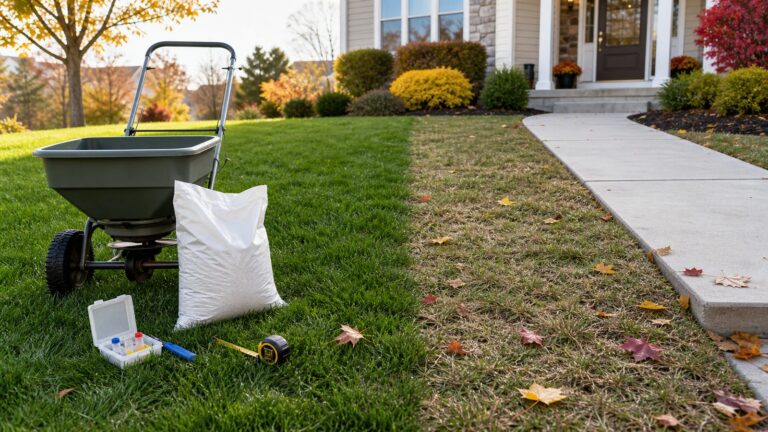
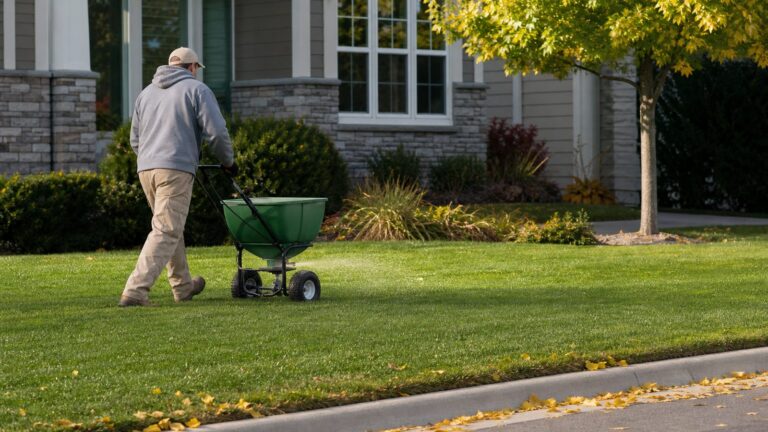
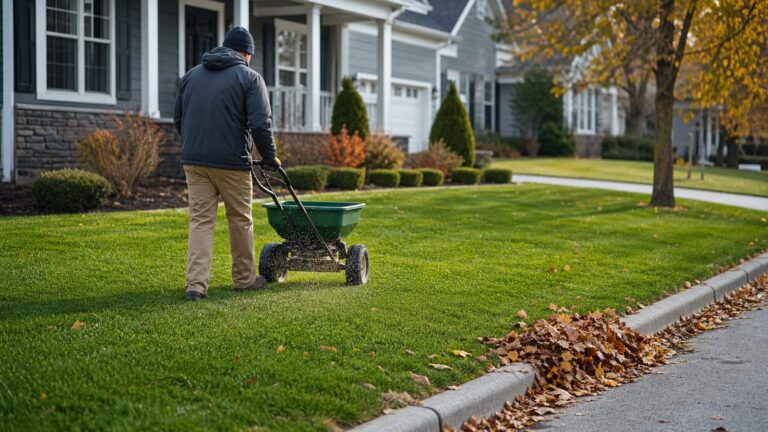
Scan for outdated or missing drivers - takes under a minuteDriver Scan →Clear out junk files and repair common Windows errorsFree Scan →Water new grass seed lightly and often until it germinates—commonly two to four short waterings per day when the surface is drying—then gradually reduce frequency and water more deeply as the seedlings establish. Do not start with the established-lawn rule of one deep watering per week. During germination, the seed and the top layer of soil must stay consistently moist, but never puddled or saturated.
The exact schedule depends on grass type, soil, slope, weather, mulch, rainfall, and sprinkler output. Use the schedule below as a starting point, then adjust it by inspecting the seedbed at least once or twice a day.
As an Amazon Associate I earn from qualifying purchases.
The correct watering schedule for new grass seed
Newly seeded soil has little or no root system to draw on. The goal changes as the grass moves from seed to seedling:
Crashes, No Sound, or Screen Glitches?
Random freezes, missing sound and display glitches usually trace back to one bad driver. Find and replace yours safely.Free scan · under a minuteWindows Errors? Fix Them Before They Spread
Repair common Windows errors and clear accumulated junk for a smoother, more stable PC - no reinstall needed.Free scan · no reinstall| Stage | How often to water | How much | What to watch for |
|---|---|---|---|
| Immediately after sowing | Water thoroughly once, then monitor closely | Enough to settle the seed and moisten the seedbed without washing seed away | Runoff, puddling, exposed seed, or dry patches |
| Before and during germination | Usually two to four light cycles per day when needed | Short applications that keep the surface moist; stop when it begins to glisten | Drying, crusting, seed movement, and standing water |
| Seedlings emerging | Continue frequent light watering, reducing cycles as the surface stays moist | Enough to support the shallow young roots without runoff | Uneven emergence, wilting, erosion, or saturated soil |
| Most seedlings established | Gradually less often | Increase the amount applied during each session as roots grow deeper | Whether water is penetrating below the surface rather than running off |
| Cooler, rainy fall | Reduce or skip irrigation when rainfall keeps the soil moist | Use rainfall as part of the water supply | Dry soil beneath the surface, especially during an unusually warm or dry fall |
Oregon State University Extension recommends light irrigation two to four times daily during germination, stopping each cycle when the surface begins to glisten. On heavy soils, an individual cycle may take approximately five to 15 minutes, but that is not a universal runtime. Sprinkler output, infiltration rate, wind, temperature, slope, and soil texture can make the correct time substantially shorter or longer. [c001]
#1 Best Overall

- OPERATION: Adjustable arm support on this seed, salt and fertilizer spreader helps provide maximum comfort
- HAND-HELD SPREADER: Perfect hand-held fertilizer, salt and seed spreader for small yards
- CAPACITY: A seed, fertilizer and salt spreader that holds up to 1,500 sq. ft. of Scotts lawn products for year-round lawn care
- USAGE: These hand spreaders for lawns are great for year-round use to seed, fertilize, salt and ice melt
- COVERAGE: These salt, fertilizer and seed spreaders for lawns are engineered for smooth, even coverage
1. Water immediately after sowing
After spreading and lightly raking in the seed, moisten the entire seedbed with a gentle spray. The first watering should settle seed into contact with the soil and wet the immediate root zone without creating channels or moving seed downhill.
Use a gentle lawn sprinkler for grass seed or another sprinkler that distributes water evenly at a low enough rate to avoid disturbing the surface. A forceful jet can expose seed, bury it too deeply, create bare patches, and erode a sloped area. If watering by hand, use a fine-spray setting rather than a concentrated stream.
Light straw or another suitable seedbed mulch can reduce evaporation and help hold seed in place, especially on exposed, sunny, windy, or sloped sites. Apply it lightly enough that seed is not buried or hidden under a dense layer. Mulch slows drying; it does not remove the need to inspect the soil. [c003] [c004]
Do these 3 things before closing this tab:
1Repair Windows errors before they cause bigger problems2Scan for outdated or missing drivers - takes under a minute3Clear out junk files and repair common Windows errors2. Keep the seedbed moist during germination
Until germination is reasonably uniform, the upper surface should remain moist—not continuously wet. In many conditions, that means checking the area at least once or twice daily and running short cycles whenever the surface begins to dry.
- Drying or light-colored soil: add a short cycle.
- Crusting: increase monitoring and correct the drying problem before newly emerging roots are damaged.
- Glistening surface: stop the cycle; more water is not automatically better.
- Puddles or runoff: shorten the cycle, lower the application rate, or divide watering into several smaller applications.
- Seed floating or collecting at the bottom of a slope: reduce spray force and use shorter, gentler cycles.
University guidance commonly describes light daily watering for about 10 to 14 days, while some recommendations call for at least daily watering for two to three weeks. Those are practical ranges, not calendar rules. Germination speed and watering needs vary with species, soil, temperature, rainfall, wind, mulch, and seedbed preparation. [c005] [c006]
Should you water new grass seed two or three times a day?
Possibly, but only when the seedbed needs it. Two to four light waterings per day is a useful germination-stage range in drying conditions. A cool, cloudy, rainy day may require little or no supplemental irrigation. A hot, sunny, windy day may require additional checks or cycles.
Do not use a fixed number of minutes without measuring what your sprinkler actually applies. A hose-end irrigation timer can automate repeatable short cycles, but it must be adjusted or turned off when rain arrives, temperatures fall, or the seedlings become established. Automation is helpful for consistency; it should not replace inspection. [c001] [c006]
3. Change the schedule after seedlings emerge
Once most of the seed has germinated and seedlings are visibly established, begin moving from frequent, shallow watering toward less frequent, deeper irrigation. Make the change gradually:
- Reduce one daily watering cycle while continuing to check the surface.
- Allow the upper surface to dry slightly between waterings, but do not let young seedlings wilt or the seedbed become hard and crusted.
- As roots develop, increase the amount applied during each watering.
- Continue reducing frequency as the grass can draw moisture from deeper soil.
The transition should not be an abrupt switch from several light sprays to one long, aggressive soaking. Young roots are still shallow, and a high-rate sprinkler can cause runoff before the soil absorbs the water. Oklahoma State University and Wisconsin Extension both describe the same general progression: frequent small applications first, followed by deeper, less frequent irrigation as the turf becomes established. [c008] [c009]
Rank #2
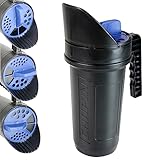
- 64-OUNCE BOTTLE: high-capacity poly bottle with a wide opening and easy screw top, quickly remove the lid to add your preferred seed, salt, fertilizer, etc. and simply screw back into place
- TURF AND SALT: year-round use; for steps, sidewalks and small paths in the winter; grass patches, shaded areas, gardens, and small sections the rest of the year
- 3 OPENINGS IN LID: twist lid to choose small, large and wide openings; each designed to fit different particulates like ice melt, salt, fertilizer, grass seed, sand and most pelletized products
- LARGE HANDLE: easy to grip, scoop and fill; accommodates small and large-sized hands, with or without gloves for use any time of the year
- PORTABLE: keep it on a shelf, in a closet or in the car and pull it out when it’s needed; you can even store it with product inside when not in use
Use cycle-and-soak on clay, compacted soil, or slopes
If water runs off before it infiltrates, divide one watering into short applications with pauses between them. For example, run the sprinkler briefly, pause to let the water soak in, and then repeat. The appropriate interval depends on the site; the important principle is to apply water more slowly than the soil can absorb it.
This approach is particularly useful on clay soil, compacted ground, and slopes. It reduces erosion and gives water time to move into the soil instead of traveling across the surface. [c010] [c011]
The Tool Desk
Outbyte PC Repair FREERepair Windows errors before they cause bigger problemsFix Now →Outbyte Driver Updater FREEScan for outdated or missing drivers - takes under a minuteDriver Scan →When does the one-inch-per-week rule apply?
The often-repeated target of approximately one inch of water per week is primarily an established-turf guideline or a later establishment-phase reference. It is not a substitute for keeping the seedbed moist during germination.
During the first stage, frequency and surface moisture matter more than reaching a fixed weekly total. Later, as roots develop, you can use deeper irrigation and measure total water more meaningfully. Rainfall counts toward the total. Place shallow, straight-sided cans or a lawn rain gauge in the irrigation area to measure rainfall and sprinkler output instead of guessing at runtime. Measurement is useful, but continue checking soil moisture because the same measured amount can behave differently in sand, clay, shade, or a sloped bed. [c010] [c012]
How fall weather should change your watering
Late summer to early fall is generally a favorable establishment window for cool-season turf. Cooler temperatures, lower weed competition, and the opportunity for fall and spring growth can help new grass develop before its first major summer heat stress. [c013] [c014]
As fall progresses, taper irrigation in response to actual conditions:
- Cooling temperatures and dependable rain: reduce or skip watering when the soil remains adequately moist.
- Dry, warm, or windy weather: continue checking the seedbed and irrigate when it begins to dry.
- Seedlings shading the soil: evaporation may decrease, so the germination schedule may no longer be necessary.
- Dry late fall: water before the soil freezes if the lawn is dry and local conditions permit.
Do not turn off irrigation solely because the calendar says fall has arrived. Conversely, do not continue several shallow daily cycles simply because that was the original schedule. Water based on the soil and the developing root system.
Rank #3

- NO ASSEMBLY REQUIRED: Scotts spreader comes pre-calibrated and ready-to-use; use it year-round including as an ice melt spreader or salt spreader for snow
- CAPACITY: Broadcast spreader holds up to 15,000 sq. ft. of Scotts lawn products, and can be used as a lawn food, salt, ice melt or grass seed spreader
- OPERATION: These fertilizer spreaders for lawns feature a hopper and agitator designed for smooth product funneling and consistent coverage
- SIDE SHIELD: Scotts exclusive EdgeGuard Technology on these broadcast spreaders for lawns keeps lawn product off landscaping, driveways, and sidewalks
- BROADCAST SPREADER: Use the Scotts Turf Builder EdgeGuard DLX Broadcast Lawn Spreader to apply Scotts lawn care products, like grass fertilizer for lawns
University of Minnesota Extension advises watering a lawn at least once before an irrigation system is shut down when the lawn is dry or fall has been unusually warm and dry. Do not irrigate frozen soil, and follow the requirements for winterizing an automatic system where freezing conditions require it. [c015]
Best time of day to water
Early morning is generally the best time. Evaporation is lower than during the hottest part of the day, and foliage has time to dry in daylight. Avoid scheduling routine irrigation during the hottest period, when more water may be lost to evaporation.
Repeated late-evening watering can leave foliage wet for many hours and may increase disease risk. However, do not allow a germinating seedbed to dry merely to avoid evening watering. If the only practical opportunity is later in the day, apply the water gently and use the shortest effective cycle. [c006] [c010] [c016]
Free tools Windows power users keep installed
One-click scans. No signup required.
Adjust the schedule to your site
| Site condition | Adjustment |
|---|---|
| Sandy soil | Inspect more often. Water may drain quickly, so shorter, more frequent cycles may be needed. |
| Clay or compacted soil | Use shorter cycles with pauses. Long applications are more likely to puddle or run off. |
| Slope | Use a gentle application rate, light mulch, and cycle-and-soak. Watch for seed movement and erosion. |
| Hot, sunny, windy weather | Check more frequently because evaporation is faster. Add a short cycle only if the surface is drying. |
| Cool, cloudy, rainy weather | Reduce or skip irrigation when rain has kept the seedbed moist. |
| Mulched seedbed | Expect slower surface drying, but continue checking under the mulch rather than relying on appearance alone. |
Uneven coverage is another common problem. If one section is dry while another is saturated, reposition or overlap the sprinkler rather than simply running the whole area longer. For a large lawn, persistent runoff, poor coverage, or an automatic irrigation system that is difficult to adjust, consider a sprinkler system inspection or certified irrigation audit. EPA WaterSense recommends inspecting irrigation systems and using qualified irrigation professionals where appropriate. [c010] [c019]
Independent reader supportYour contribution helps us test, update, and keep practical guides available for everyone.Cool-season and warm-season grass do not share the same fall schedule
This fall-focused schedule primarily applies to cool-season grasses such as Kentucky bluegrass, perennial ryegrass, fine fescue, and tall fescue. Penn State and Wisconsin Extension identify late summer or early fall as favorable establishment periods for cool-season lawns. [c013] [c014]
Warm-season grasses follow a different calendar. Bermudagrass seed, for example, needs warm soil and is generally recommended for spring to early summer seeding in Oklahoma; Oklahoma State gives May 1 through June 15 as a seeded-bermudagrass window. Warm-season turf commonly slows or becomes dormant as fall temperatures decline.
Rank #4

- Chapin Garden Spreader: Designed for all your residential lawn and garden seed, pest control and fertilizer spreader needs, this 25 lb. spreader is suitable for small areas and hard to reach places
- How to Use and Convenience: Easily adjust the gate for different materials and control the flow rate for precise spreading. The rear baffle keeps product off your clothes and legs for a cleaner, more comfortable experience
- Comfort and Control: The padded shoulder strap makes carrying easy, even in tight spaces, while simple gate and flow adjustments give you precise control over spreading
- Durable Components: This all-round spreader is waterproof and built to last, with heavy-duty materials and enclosed gears. The zippered bag keeps your seed or fertilizer protected from rain and wind while you work
- Chapin Warranty: This spreader is backed by Chapin's 2-year limited warranty and supported by a dedicated US-based customer service and technical help center
If you are in the southern United States or are unsure what was planted, identify the grass type and check local extension guidance before assuming fall is the right seeding season. A regionally appropriate certified cool-season grass seed mix should match the climate, site conditions, and existing lawn. Check the label for species or cultivar information, purity, and germination percentages rather than choosing solely by package appearance. [c017] [c018] [c020]
Signs you are watering too little or too much
Too little water
- The surface becomes visibly lighter, dry, or dusty.
- Water beads up because the soil has crusted.
- Germination is patchy in areas that dry faster.
- New seedlings wilt or stop developing.
- Wind or foot traffic exposes loose seed.
Too much water
- Water remains pooled after the cycle.
- Water runs onto sidewalks, driveways, or storm drains.
- Seed floats, gathers in low spots, or washes downhill.
- The soil stays saturated and feels muddy.
- Seedlings appear weak or establishment is poor.
Excess water can wash away seed, reduce oxygen around it, encourage disease, and interfere with germination. If you see runoff or puddling, do not solve the problem by adding more frequent long cycles. Reduce the duration, divide the application, lower the sprinkler intensity, or correct the coverage problem. [c001] [c006] [c007]
A simple decision rule for every watering check
- Has the seed germinated? If not, keep the surface consistently moist with light cycles, commonly two to four times daily when conditions require it.
- Are seedlings emerging? Continue light irrigation, checking for drying, runoff, and seed displacement.
- Are most seedlings established? Reduce frequency gradually and increase the depth of each watering.
- Has cool, rainy weather arrived? Let rainfall replace irrigation while the seedbed remains moist.
- Is late fall unusually dry before freeze-up? Water thoroughly once before the soil freezes if the lawn is dry and local conditions permit.
- At any stage, is water pooling or running off? Stop or split the cycle until the soil can absorb the application.
Mistakes that commonly ruin new fall seed
- Watering new seed only once or twice a week from the first day.
- Using a strong sprinkler stream that moves seed or erodes a slope.
- Trying to hit one inch per week during germination instead of monitoring surface moisture.
- Continuing frequent shallow watering long after emergence.
- Ignoring rainfall, soil texture, slope, wind, shade, or mulch.
- Allowing puddles to remain or runoff to reach paved surfaces and storm drains.
- Planting warm-season grass seed in fall outside a locally suitable window.
- Shutting off irrigation because the calendar says fall has begun even though the new lawn is dry.
Frequently Asked Questions
How long should I water new grass seed each time?
There is no universal runtime. On heavy soils, an individual germination cycle may be roughly five to 15 minutes, but sprinkler output, slope, wind, temperature, and infiltration change the result. Water gently and stop when the surface begins to glisten; shorten or split the cycle if water pools or runs off.
Can I water new grass seed once a day?
Sometimes, especially in cool or rainy weather, but once daily may not be enough during hot, dry germination conditions. Check the seedbed at least once or twice daily and water whenever the surface begins to dry.
When should I stop watering new grass seed several times a day?
After most seedlings have emerged and are visibly established, begin reducing the number of daily cycles gradually. Increase the amount applied per watering as roots develop, moving toward deeper, less frequent irrigation.
What’s actually slowing this PC down?
Pick the symptom - the matching free tool is one click away.
Should I water new grass seed at night?
Early morning is generally preferable because evaporation is lower and foliage can dry during the day. If the seedbed would otherwise dry out, water when necessary, using a gentle and efficient cycle rather than sacrificing moisture to follow a rigid time-of-day rule.
Is fall too late to plant grass seed?
It depends on the grass type and location. Late summer to early fall is generally favorable for cool-season grasses, while warm-season grasses such as seeded bermudagrass usually need warmer spring or early-summer conditions. Follow local extension recommendations.
The Bottom Line
Keep newly seeded soil moist, not soaked. Use short, gentle cycles—often two to four per day during germination—then taper to deeper, less frequent watering as roots develop. Let rainfall replace irrigation when appropriate, correct runoff immediately, and confirm that the grass type and fall planting window fit your region.
Quick Recap
Product prices and availability are accurate as of the date/time indicated and are subject to change. Any price and availability information displayed on Amazon at the time of purchase will apply.