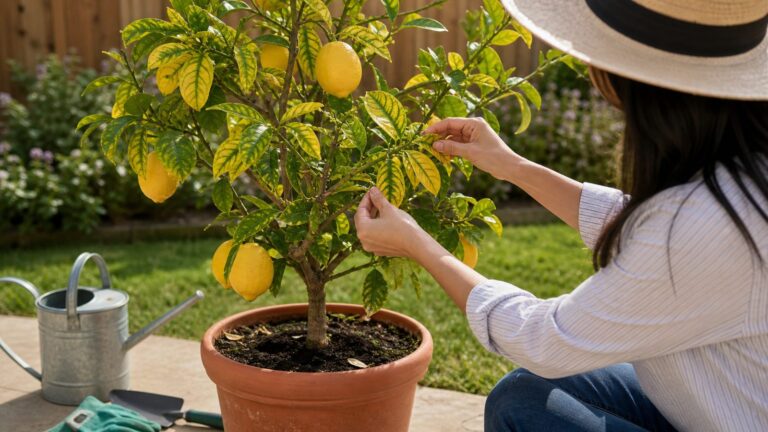
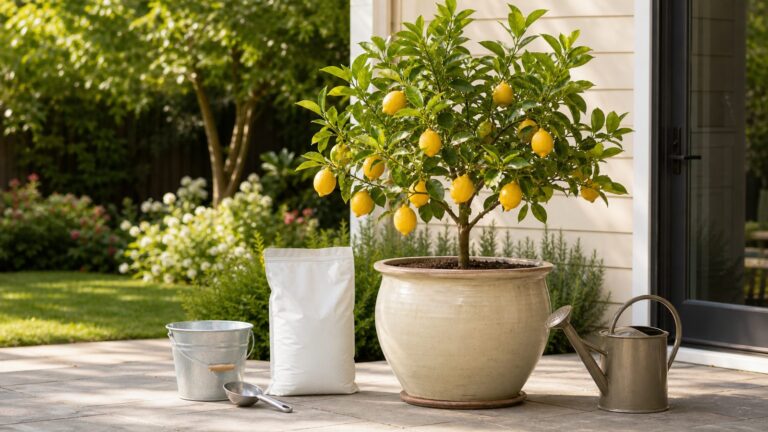
Some lemon drop is normal: citrus trees naturally shed excess small fruit after flowering. If larger green lemons are falling, stress from water or weather, pruning or nutrition problems, or fruit disease may be involved. The drop alone cannot identify the cause, so start with the fruit’s size and condition, the soil, recent weather, and the rest of the tree.
First, check whether the fallen fruit is small or large
Small fruitlets after flowering
A tree may set more fruit than it can support, then naturally shed some of the smallest fruit. UC IPM says this drop can begin soon after blossoms fall and continue for about a month, until fruit is around 1/2 inch in diameter or somewhat larger. Arizona Cooperative Extension also describes natural spring shedding. Small dropped fruit with an otherwise healthy-looking canopy is generally less concerning than larger fruit falling later. UC IPM; Arizona Cooperative Extension.
As an Amazon Associate I earn from qualifying purchases.
Larger green lemons
Excessive drop of larger fruit is more likely to point to stress or damage, but it still does not reveal a single cause. Compare when the lemons fell with changes in watering, weather, pruning, or the tree’s general health.
Windows Errors? Fix Them Before They Spread
Repair common Windows errors and clear accumulated junk for a smoother, more stable PC - no reinstall needed.Free scan · no reinstallOutdated Drivers Are Slowing You Down
One free scan finds every outdated or missing driver and matches the right update for your exact hardware.Free scan · exact hardware matchCheck water and drainage before changing your routine
Drought stress can contribute to larger citrus fruit drop, and hot, dry, windy conditions can make water stress worse. Poor drainage can also be a concern. Check moisture below the soil surface and consider whether the tree has had appropriate, deep watering for its conditions. Soil type, drainage, climate, and tree size all matter; there is no universal watering calendar for home lemon trees. UF/IFAS discusses soil-moisture monitoring in commercial Florida irrigation guidance, but its production recommendations are regional and should not be treated as a schedule for every home garden. UF/IFAS citrus irrigation guidance.
#1 Best Overall

- Made for Lemon & Citrus Trees – Formulated to support healthy growth in lemon and citrus plants.
- Supports Fruit Development & Tree Strength – Helps encourage strong roots and consistent fruit production.
- Balanced Nutrition for Citrus Care – Provides nutrients suited for steady growth and seasonal harvests.
- Ideal for Garden & Container Trees – Suitable for patios, orchards, and backyard citrus planting.
- Made in USA
A soil-moisture meter is an optional way to monitor soil conditions. Measuring moisture may help you assess irrigation; it is not a guarantee against fruit drop.
Match the timing to recent weather and physical stress
Freezing weather, high temperatures, sudden temperature changes, and windy conditions are documented contributors to excessive citrus fruit drop. Note whether falling fruit followed a period of unusual heat, cold, abrupt temperature change, or strong wind. UC IPM specifically notes that hot temperatures occurring suddenly at fruit set or shortly afterward can lead to excessive drop of small fruit. UC IPM.
Rank #2

- Made for Lemon & Citrus Trees – Formulated to support healthy growth in lemon and citrus plants.
- Supports Fruit Development & Tree Strength – Helps encourage strong roots and consistent fruit production.
- Balanced Nutrition for Citrus Care – Provides nutrients suited for steady growth and seasonal harvests.
- Ideal for Garden & Container Trees – Suitable for patios, orchards, and backyard citrus planting.
- Made in USA
Review pruning and nutrition without overcorrecting
Inadequate nutrition may contribute to fruit drop, but more fertilizer is not automatically the answer. Aim for appropriate nutrition, including adequate rather than excessive nitrogen, and follow local growing guidance. Heavy or poorly timed pruning can remove foliage that supports fruit, so avoid aggressive pruning while the tree is carrying fruit.
What’s actually slowing this PC down?
Pick the symptom - the matching free tool is one click away.
Inspect fallen fruit and the whole tree for disease signs
Look for visible decay
Fruit affected by Botrytis blight or brown rot may drop, often with visible decay. Check the fallen lemons and fruit still on the tree rather than inferring a disease from drop alone. UC IPM citrus fruit drop guidance.
Rank #3

- Made for Lemon & Citrus Trees – Formulated to support healthy growth in lemon trees and citrus plants
- Supports Fruit Development & Leaf Health – Helps encourage strong foliage and consistent fruit production.
- Granular Nutrition for Steady Feeding – Designed to release nutrients gradually through soil for balanced support.
- Ideal for Garden & Container Citrus – Suitable for backyard citrus trees, patios, and potted lemon plants.
- Made in USA
Consider broader symptoms, not drop in isolation
Citrus greening (HLB) can be associated with premature fruit drop and broader symptoms. UF/IFAS’s diagnostic and management guidance is specific to Florida; a home gardener elsewhere should consult local extension or a qualified citrus professional if drop persists alongside conspicuous leaf mottling, decline, or other unusual symptoms. Fruit drop by itself does not confirm HLB. UF/IFAS HLB guidance; UF/IFAS HLB diagnostic guidance.
Postbloom fruit drop is a fungal disease affecting flowers and newly set fruit. UF/IFAS identifies the Colletotrichum acutatum species complex as its cause and notes that severity varies with bloom timing relative to rainfall. It is most relevant when flowers or newly set fruit are affected, not as a general explanation for mature lemons falling later. UF/IFAS postbloom fruit drop guidance.
Quick Recap
Best Value
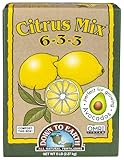
- Down To Earth Citrus Mix is a five pound box of all natural fertilizer with 6-3-3 formula and is listed by the Organic Materials Review Institute (OMRI) for use in organic production
- Formulated with primary and secondary plant nutrients like calcium, sulfur, zinc and iron, plus selected micronutrients
- It supplies the proper ration of nitrogen, phosphorus and potassium that helps promote lush new growth, abundant green foliage, fragrant blossoms and bountiful fruit
- An excellent option for citrus trees of all kinds and may also be used to feed other fruit trees, vines and ornamentals for equally enjoyable results
- Ingredients: feather meal, fish bone meal, alfalfa meal, greensand, langbeinite, basalt, sulfate of potash, zinc sulfate and kelp meal. DOES NOT EXPIRE, if kept in a cool, dry place
Rank #4

- Balanced Organic Nutrition – Supplies a 6‑3‑3 NPK ratio along with calcium, sulfur, iron, and zinc to foster healthy foliage, flowering, and fruit.
- Crafted from Premium Natural Sources – Includes feather meal, fish bone meal, alfalfa meal, langbeinite, basalt, potassium sulfate, zinc sulfate, kelp, and humic acids derived from leonardite for enhanced nutrient uptake.
- OMRI-Listed for Organic Use – Certified for organic gardening, ensuring no synthetic additives—a great match for organic or sustainable gardens.
- Mini Box, Maximum Flexibility – Compact 1 lb packaging is ideal for small-scale use, raised beds, containers, or trial applications before committing to larger sizes.
- Easy Application Schedule – Apply 3–4 times a year—late winter, late spring, and early fall—by spreading around the drip line or mixing in fresh soil at planting or repotting.
A practical check to make now
- Note the fruit stage: record whether the fallen lemons are tiny post-bloom fruitlets or larger fruit approaching maturity.
- Check the soil: assess moisture below the surface and whether water drains appropriately; adjust irrigation for local conditions rather than a fixed calendar.
- Review recent conditions: consider heat, cold, wind, and abrupt weather changes around the time the fruit began falling.
- Look for other changes: inspect fallen fruit for decay and the canopy for unusual leaf symptoms or general decline.
- Avoid guesses as treatments: do not respond with heavy pruning, extra fertilizer, or pesticide before identifying a plausible problem. If drop continues or the tree is declining, ask a local extension office or qualified citrus professional to assess it.
Product prices and availability are accurate as of the date/time indicated and are subject to change. Any price and availability information displayed on Amazon at the time of purchase will apply.