A data center can be compatible with nearby homes, but only when its site, utilities, equipment and operating conditions are evaluated together. Before construction, residents and local decision-makers should verify zoning and buffers, drainage and wetlands, utility capacity, water and wastewater plans, construction and operating noise, backup-generator emissions, traffic, and enforceable monitoring requirements. There is no single U.S. approval checklist: the controlling rules depend on the state, municipality, parcel and facility design.
Use the questions and comparison framework below to turn a proposal into specific, reviewable commitments rather than relying on the developer’s general description.
As an Amazon Associate I earn from qualifying purchases.
Start with a site-specific due-diligence file
Request one complete project file and check every claim against the applicable local, state and federal authority. A parcel that is close to a transmission line or water main is not necessarily served by infrastructure with enough capacity. Likewise, industrial zoning does not eliminate requirements for setbacks, stormwater control, wetlands protection, air permits or building and fire approvals.
Quick wins for a faster PC:
Scan for outdated or missing drivers - takes under a minuteDriver Scan →Repair Windows errors before they cause bigger problemsFix Now →Fix the driver behind crashes, sound loss and screen glitchesFind Drivers →What to map before approving a site
- Parcel boundaries, acreage, ownership, adjoining land uses, homes, schools, parks, hospitals and other sensitive receptors.
- Existing zoning, conditional-use requirements, overlay districts, view corridors, height limits, lot coverage, density limits, setbacks or standoff distances, landscape buffers and lighting rules.
- Topography, slopes, vegetation, geology, soils, seismic or subsidence conditions, flood exposure and the portion of the parcel that is actually buildable.
- Streams, wetlands, drainage paths, groundwater conditions, storm-sewer outfalls and downstream properties that could receive runoff.
- Prevailing winds and the location of cooling equipment, exhaust stacks, loading areas, access roads and emergency generators relative to homes.
- Potable-water, sanitary-sewer, storm-sewer, electric and communications systems, with written confirmation of available capacity from each provider.
The U.S. Environmental Protection Agency’s Facilities Manual Volume 2: Architecture and Engineering Guidelines, revised December 15, 2023, provides this kind of site-resource inventory for EPA projects. It is a useful checklist, not a private-data-center rulebook. The manual states: “The siting of facilities near existing communities is strongly encouraged to reduce natural and financial resources required for construction and maintenance of utilities infrastructure.” That statement concerns EPA facilities guidance; it does not establish that any particular data center belongs near homes.
#1 Best Overall

- 2.25-inch LCD Screen with Backlight: This TS-501B sound level meter is measured noise levels are expressed in decibels and displayed on the 2.25-inch LCD screen, it easy to read on a big display design. Long press the backlight button to turn on a backlight, making it easy to view even in dim light
- Decibel Meter with A/C Weighting: TopTes TS-501B decibel meter uses a precise condenser microphone to capture sound. It’s equipped with A-weighting and C-weighting facilities that measure noise levels from 30 to 130 dB with an accuracy of 1.5 dB, Frequency from 30 to 8000Hz. Perfect for monitoring noise levels in communities, home theaters, audio systems, automobiles, workshops, schools, offices, factories
- MAX/MIN Measurement: The sound pressure level (SPL) meter has Max or Min measurement values to represent the maximum/minimum (high/low peak) value of the sound produced within a certain time, and the data hold function can freeze the current reading based on the sound measurement according to individual needs
- Easy Use and Feature Packed: The non-slip side design ensures that the portable noise meter fits easily in the hand. TS-501B SPL meter is a battery-operated noise meter that comes with three durable batteries and has an automatic power off function to extend battery life. A low battery indicator will appear on the screen when the battery is low to remind the user to replace the battery in time
- What’s in the Box: One TS-501B Decibel Meter, Three AAA Batteries, One User Manual, One Carry Case. The device has been factory calibrated to ensure high measurement accuracy and compliance with quality standards.
Understand zoning and every permit pathway
Ask the planning department for a written determination of the proposed use, not just the project’s marketing label. A data center may be treated as a technology, industrial, utility or other use, and local codes can distinguish the building from substations, generators, cooling plants, fuel tanks and transmission work.
Permits and approvals that may be involved
| Approval area | Questions to ask | Why it matters |
|---|---|---|
| Zoning and site plan | Is the use permitted, conditional or prohibited? What hearings, setbacks, height, buffers, landscaping, lighting and traffic conditions apply? | These rules determine whether the parcel and the proposed layout are legally compatible with neighboring homes. |
| Building and fire safety | Which building, electrical, fire-code and hazardous-material reviews apply? How will fuel storage, battery rooms and fire access be handled? | Large electrical rooms, batteries, generators and fuel systems create design and emergency-response obligations beyond an ordinary office. |
| Stormwater, grading and wetlands | Are grading, erosion-control, floodplain, wetland or stream permits required? Where will runoff and construction sediment go? | Impervious roofs and paved yards can change drainage and increase downstream flooding or erosion if controls are inadequate. |
| Water and wastewater | Who supplies cooling and potable water? Are withdrawal, sewer, discharge or industrial-waste approvals needed? Who measures use and blowdown? | Cooling demand, wastewater chemistry and drought conditions can affect both utility reliability and environmental compliance. |
| Air quality | What engines, turbines, boilers or other combustion equipment are proposed? What permits, emission limits, testing hours and monitoring apply? | Backup power can be a regulated stationary source even when it is intended for emergencies. |
| Utility and grid approvals | What interconnection, substation, transmission or distribution work is needed, and who pays for it? | Construction may depend on upgrades outside the parcel, with costs and schedules that affect other customers. |
Ask for application numbers, decision dates, hearing notices and the agency responsible for each approval. A permit application is not the same as an issued permit, and an approval for the building does not automatically authorize generators, water withdrawals or off-site utility construction.
Evaluate construction and operating noise separately
Noise comes in two phases. Construction produces intermittent, often high-energy activity from demolition, pile driving, rock work, cranes, trucks and concrete operations. Once occupied, a facility can produce continuous or tonal sound from cooling fans, compressors, pumps, transformers, air-handling equipment and generator testing. A project that is acceptable during daytime construction may still create a nighttime operating problem.
What a credible acoustic study should show
- Modeled sound levels at the nearest homes and other sensitive receptors, with the distance and elevation used for each receiver.
- Separate daytime and nighttime results, including the quietest operating condition and the highest expected cooling load.
- All permanent sources, not only the building shell: rooftop or yard cooling systems, fans, compressors, pumps, transformers, loading activity and alarms.
- Backup-generator starts and periodic testing, including the number of units that could run simultaneously and the expected duration.
- Existing background sound, tonal or low-frequency characteristics and the method used to account for weather and terrain.
- A compliance plan stating who will monitor, which locally accepted method will be used, how complaints are logged and what corrective action follows an exceedance.
Local ordinances and project conditions establish the applicable limits; the federal material available for this topic does not establish one national data-center decibel threshold. Formal evaluation may require a qualified acoustical specialist. A consumer sound-level meter can help document conditions, but it does not by itself prove compliance.
Rank #2
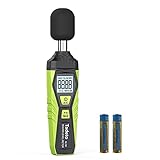
- 【Accurate Measurement】 The measuring range of the sound level meter is 30dB to 130dB . Highly accurate with ± 2.0 dB. Real-time monitoring can give you accurate data on the sound level in the area.
- 【A/C Weighted Measurement】 The A weighted simulates the frequency characteristics of low-intensity human ear noise, which is suitable for the detection of ambient noise. The C weighted simulates the frequency properties of high-intensity noises of the human ear, which are suitable for the sound pressure analysis of machine motors and machines. More professional measurement methods provide users with a more perfect user experience.
- 【Fast and Slow Measurement】 The sound level meter has the function of converting the fast and slow response rate. The fast response rate uses a time constant of 0.125s/time for general environmental measurement. The slow response rate uses a 1s/time constant, which is used for environmental measurements with relatively large changes in noise levels.
- 【Digital LCD Display 】 The digital display is a 4-digit LCD display with a resolution of 0.1 dB. Backlit LCD digital display, the reading effect is clearer in dark places. When the battery is low, the LCD display will display a low voltage icon, indicating that the power is low at this point and the battery needs to be replaced.
- 【Convenient and Lightweight 】Tadeto sound level meter is lightweight and easy to carry. It's widely used in factories, transportation, car, baby room and audio system offices, sound quality control in homes, schools, and construction sites.
Mitigation to require in plans and conditions
Environmental-review material from the U.S. Department of Energy’s 2012 solar programmatic environmental impact statement describes measures that can be adapted as examples, not as data-center requirements. They include scheduling loud work at less-sensitive times, giving residents advance notice, using temporary barriers, placing immobile construction equipment and permanent sound sources away from homes, selecting quieter equipment, adding acoustic screens, barriers or berms, and monitoring results. For a data center, the site plan should show how cooling fans, compressors and pumps are oriented, screened or specified for lower noise.
Ask exactly how water will be supplied, used and discharged
Do not accept a single annual water figure without the assumptions behind it. Request expected demand by source and season, the cooling technology, operating conditions, water-quality requirements and the effect of drought or heat waves.
Questions for the developer and utility
- Will cooling use potable water, reclaimed water, groundwater, surface water or a combination?
- What is the design-day and seasonal demand, and how does it change as computing capacity is added?
- Does the system use evaporative cooling, air cooling, closed-loop systems or another approach? What water is lost to evaporation, drift, blowdown or maintenance?
- What reuse, rainwater or condensate-recovery measures are planned?
- Where will wastewater and cooling-tower blowdown go, what treatment is required, and could discharge limits change?
- What drought-contingency stages apply, who can curtail use, and what happens to facility operations during a restriction?
- Which withdrawals, sewer connections, discharge authorizations or industrial-waste permits are required, and who will measure actual flows?
- Has the utility confirmed capacity for both ordinary operations and the project’s maximum build-out?
EPA’s state and local government resources identify a data-center water permitting, reuse and best-practices resource, but no national water-use number or universal cooling comparison is established here. Water rights, permits and utility capacity are jurisdiction-specific, so insist on the project’s own calculations and enforceable reporting terms.
Recommended Free Tools
Determine how electricity demand could affect the community
Data-center demand varies by region and can rise in large steps as new halls become operational. The Department of Energy describes these facilities as users that often need firm, continuous power. A proposal therefore affects more than the parcel: it can require substations, transmission or distribution upgrades, new generation, storage, efficiency measures or demand-management arrangements.
Rank #3

- Accurate 30-130dB Noise Measurement: The Goldeep SL750A decibel meter measures sound levels from 30 to 130dB with ±1.5dB accuracy and a 31.5Hz-8KHz frequency response. This sound decibel meter is ideal for checking home noise, neighbor noise, traffic sound, office noise, construction sites, factories, classrooms, baby rooms and musical instruments.
- A/C Weighting for Different Sound Environments: This digital sound level meter supports A/C weighting modes for more flexible noise testing. A-weighting is suitable for environmental noise such as urban traffic, schools, offices, business areas and construction sites. C-weighting is designed for industrial noise from machinery, equipment, aerospace, high-speed rail and other high-intensity sound sources.
- dB/SONE Units for Sound & Loudness Testing: Use the dB unit to measure sound intensity for environmental noise, machine noise, traffic noise and workplace noise. Switch to SONE to better understand perceived loudness, making this db meter useful for music, audio systems, acoustic checks and instrument noise control..
- FAST/SLOW Response with MAX/MIN Tracking: The spl meter includes FAST and SLOW response settings. FAST response, 0.125s per reading, is useful for changing noise levels, while SLOW response, 1s per reading, is suitable for steady-state noise. MAX/MIN value tracking helps record peak and minimum noise levels over a period of time.
- Easy-to-Use Sound Meter for Daily & Professional Needs: Designed with data hold, clear LCD display, anti-slip grip and a windbreak ball, this sound meter is practical for indoor and outdoor use. Package includes 1 sound level meter, 2 AAA 1.5V batteries and 1 user manual, so you can start measuring noise right away.
Questions about grid reliability and customer costs
- What is the facility’s connected load, expected peak load and phased energization schedule?
- What load-flow, reliability and interconnection studies has the utility completed, and what assumptions do they use for future expansion?
- Which substation, feeder, transmission or generation upgrades are required, and who pays for design, construction, maintenance and stranded capacity?
- Will other customers receive a tariff, contribution agreement or other enforceable protection against project-specific costs?
- Is backup generation emergency-only, or can it operate routinely for peak shaving, testing or grid services?
- What happens if the facility’s construction schedule changes or the promised load does not materialize?
There is no automatic rule that a data center will raise or lower household electricity bills. The effect depends on the utility’s rate design, cost-allocation rules, required upgrades, load timing and regulatory decisions. Obtain the utility filing and regulator’s order rather than relying on a general assurance.
Design choices that can reduce system pressure
DOE guidance identifies information-technology efficiency, airflow management, cooling design, electrical-system efficiency, heat recovery and benchmarking as facility levers. It also discusses clean generation and storage, demand resources and demand flexibility. These are options, not guarantees. Ask which measures are committed in the construction documents, how performance will be measured and whether any flexibility is available during grid emergencies.
Review air permits and backup-power operation
Stationary combustion turbines and engines are common data-center power sources and can be subject to Clean Air Act requirements. EPA’s data-center air-quality resources are a starting point for identifying standards and permitting tools; they do not determine whether a particular generator is permitted or exempt.
What’s actually slowing this PC down?
Pick the symptom - the matching free tool is one click away.
Request a complete generator record
- Manufacturer, model, fuel type, rated output and emissions-control equipment for every engine or turbine.
- Maximum annual operating hours, emergency-only limitations, routine testing schedule and procedures for synchronized operation.
- Potential emissions estimates for nitrogen oxides, particulate matter, carbon monoxide, sulfur compounds and other regulated pollutants, as applicable.
- Permit applications, proposed limits, stack locations, dispersion modeling and the name of the federal, state or local permitting authority.
- Fuel-storage capacity, delivery frequency, spill prevention and the plan for prolonged outages.
Rules and guidance can change. Check the current EPA and state materials and read the permit’s actual operating conditions, including testing and recordkeeping requirements.
Rank #4

- 【Widely Used】The noise meter is the use of environmental sound level instrument, can be widely used in such as factories, workshops, schools, residential, office areas, traffic roads, audio and other occasions of sound level measurement. Also suitable for noise engineering, product quality control, health,prevention and control.
- 【Accurate Measurement】Measuring Range:30~130dB ;Accuracy:±1.5dB(94dB@1KHz);Display Resolution:0.1dB
- 【A Weighted Measurement】 A Weighted network (automatic switching range display)
- 【Fast/Slow mode selection】Press the MODE key, you can convert the response speed of the noise meter, FAST fast, SLOW slow
- 【MAX/MIN Measurement】Press RANGE key to measure the maximum value of MAX and minimum value of MIN.A maximum duration of more than 3 seconds is recorded, with a normal test sampling rate of 0.5 seconds. The maximum error is ± 5%.
Treat a former industrial or contaminated parcel as a controlled reuse
Former industrial land may already have roads, utilities and industrial zoning, making it attractive for redevelopment. That history is not proof that the parcel is safe or suitable. EPA’s Superfund redevelopment guidance emphasizes community engagement, alignment with cleanup standards, protection of remedies and upkeep of engineering controls such as caps and barriers.
Documents to examine
- The cleanup decision, status reports, land-use restrictions and any institutional controls.
- Maps showing capped areas, barriers, monitoring wells, vapor controls and zones where excavation or groundwater use is restricted.
- The construction management plan for soil handling, worker protection, dust control and unexpected contamination.
- The long-term owner’s obligations to inspect, repair and report on caps, barriers or other controls.
- Whether foundations, utility trenches, stormwater ponds or deep piles could disturb a remedy or change groundwater movement.
Make these obligations conditions of site approval and transfer them into construction and operations contracts. A redevelopment listing is not a site-specific finding of safety.
Compare sites and designs on identical terms
When more than one parcel, cooling system or power configuration is available, require a side-by-side record. The comparison should use the same build-out, operating hours and weather assumptions.
| Comparison axis | Evidence to place in the record |
|---|---|
| Relationship to homes | Distance, orientation, elevation, intervening buildings, trees, berms and nighttime visibility. |
| Land-use compatibility | Zoning classification, setbacks, buffers, height, lot coverage, traffic access and future adjacent development. |
| Noise | Construction schedule, modeled day/night levels, cooling and generator sources, barriers, monitoring and complaint remedies. |
| Water and wastewater | Source, seasonal demand, cooling method, reuse, drought response, blowdown handling, discharge route and utility capacity. |
| Electricity | Connected and phased load, interconnection studies, upgrade scope, cost allocation, storage and demand flexibility. |
| Air quality | Generator inventory, emissions, operating hours, stack locations, permits, testing and fuel controls. |
| Physical risk | Flooding, drainage, wetlands, slopes, soils, wildfire or other site hazards relevant to the jurisdiction. |
| Community burden | Construction traffic, haul routes, work hours, road wear, emergency access, lighting and enforceable response terms. |
Choose the alternative with the clearest evidence and strongest enforceable protections, not merely the shortest construction schedule or the lowest advertised land cost.
Best Value
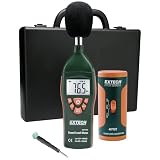
- Datalogs up to 16,000 readings with USB interface for downloading to a PC
- Triple LCD displays humidity, temperature, and date (year, month, and day)
- Programmable from keypad or PC
- Selectable data sampling rate
- User programmable audible and visual alarms
Build enforceable community protections into approvals
Public comments are most effective when they ask for measurable conditions. Request a construction-management plan with work hours, truck routes, dust and erosion controls, road repair, emergency contacts and advance notice for unusually loud activities. For operations, seek requirements for acoustic monitoring, generator testing notice, water-use and discharge reporting, lighting, stormwater inspections and a documented complaint-response process.
Conditions should identify the responsible party, measurement method, reporting frequency, deadline for correction and remedy if the condition is missed. A voluntary promise in a presentation is weaker than a permit condition, development agreement, utility tariff or recorded restriction that survives a change in ownership.
A practical review sequence for residents and local officials
- Obtain the complete concept plan. Get the site plan, building size and height, equipment yards, cooling layout, generator and fuel locations, access roads, utility corridors and ultimate build-out.
- Confirm jurisdiction and zoning. Ask planning staff to identify every discretionary approval, hearing and applicable overlay or buffer.
- Map sensitive receptors and physical constraints. Overlay homes, schools, wetlands, flood areas, drainage paths, slopes, contaminated areas and utility corridors.
- Verify utility capacity. Request written water, sewer, electric and communications assessments, including upgrade scope, timing and cost responsibility.
- Commission or review technical studies. Examine acoustic, traffic, stormwater, environmental, air-quality and geotechnical work using assumptions that match the full build-out.
- Check permit status. Distinguish draft applications, issued permits, construction authorizations and operating permits; record appeal and renewal deadlines.
- Negotiate measurable conditions. Put noise, work hours, monitoring, water reporting, generator testing, stormwater maintenance and complaint response in enforceable documents.
- Track construction and operations. Keep permit records, inspection reports, monitoring results and complaints together so recurring problems can be demonstrated and corrected.
This process does not produce a universal yes-or-no answer. It shows whether a particular design can meet local rules while protecting neighbors, utility customers and environmental resources, and it identifies the conditions that must be secured before construction begins.
Windows Errors? Fix Them Before They Spread
Repair common Windows errors and clear accumulated junk for a smoother, more stable PC - no reinstall needed.Free scan · no reinstallOutdated Drivers Are Slowing You Down
One free scan finds every outdated or missing driver and matches the right update for your exact hardware.Free scan · exact hardware matchQuick Recap
Product prices and availability are accurate as of the date/time indicated and are subject to change. Any price and availability information displayed on Amazon at the time of purchase will apply.

