Quick wins for a faster PC:
Repair Windows errors before they cause bigger problemsFix Now →Scan for outdated or missing drivers - takes under a minuteDriver Scan →The Kasa Smart app is a practical control center for compatible TP-Link plugs, switches, bulbs and other devices: it handles setup, remote control, schedules, timers, scenes and selected automations. It works best for straightforward Wi-Fi smart-home tasks, not as a universal hub. Before buying or troubleshooting—especially a camera—check the exact model, region and app: TP-Link’s current camera guidance sends users to Tapo for some detection controls.
What the Kasa app does
Kasa Smart is TP-Link’s mobile app for adding, configuring and controlling compatible devices. It is available for Android and iOS, requires a TP-Link ID, and is designed for phone and tablet use rather than as a desktop control panel. You can share control across phones by signing into the same TP-Link ID. TP-Link says it sets no limit on the number of smart-home products you can add, though your Wi-Fi network and account still have practical limits. See TP-Link’s Kasa compatibility and feature guidance.
As an Amazon Associate I earn from qualifying purchases.
Depending on the model, the app can provide on/off control, dimming, schedules, countdown timers, Away Mode, scenes, Smart Actions, energy information and firmware updates. Alexa and Google Assistant can also control compatible devices after account linking. Kasa is not a general-purpose hub: TP-Link says its current Kasa products use 2.4-GHz Wi-Fi and do not support Zigbee, Z-Wave, IPv6 or Ethernet.
Do these 3 things before closing this tab:
1Clear out junk files and repair common Windows errors2Scan for outdated or missing drivers - takes under a minute3Repair Windows errors before they cause bigger problemsWhich devices work with Kasa?
Kasa app listings include plugs, switches and dimmers, power strips, bulbs, light strips and certain cameras. The Android and U.S. iOS listings do not present identical model lists, and support can depend on region, hardware version and firmware. Check the exact product’s documentation and app requirements before purchase rather than treating a family name as a compatibility guarantee: Google Play listing and U.S. App Store listing.
#1 Best Overall

- Voice control: Kasa smart plugs that work with Alexa and Google Home Assistant. Enjoy the hands free convenience of controlling any home electronic appliances with your voice via Amazon Alexa or Google Assistant
- Easy set up and use: 2.4GHz Wi-Fi connection required. Plug in, open the Kase app, follow the simple instructions and enjoy
- Scheduling: Use timer or countdown schedules set your smart plug to automatically turn on and off any home electronic appliances such as lamps, fan, humidifier, Christmas lights etc.
- Smart Outlet Control from Anywhere: Turn electronics on and off from anywhere with your smartphone using the Kasa app, whether you are at home, in the office or on vacation.
- Trusted and Reliable: Kasa is trusted by over 6 Million users and being the Reader’s Choice of PCMag 2020. UL certified for safety use. 2-year warranty.
There is some cross-brand overlap within TP-Link’s range, but it is specific rather than universal. TP-Link documents adding selected Tapo sensors—T100, T110, T300, T310, T315, S200B and S200D—through a Kasa KH100 Smart Hub in the Kasa app; regional availability and compatible hardware apply. Consult the KH100 sensor instructions before relying on that combination.
What you need before setup
- A Kasa device confirmed as compatible with your region and intended use.
- An Android or iOS phone or tablet with the current Kasa Smart app.
- A TP-Link ID and access to the home’s 2.4-GHz Wi-Fi network.
- The device powered on and within reliable Wi-Fi range.
- The correct regional model and voltage for your home.
TP-Link lists WEP or WPA/WPA2 encryption for current Kasa Wi-Fi products; router settings and individual product requirements can vary. A phone connected only to a 5-GHz network may not be able to complete setup. Kasa does not turn a Wi-Fi device into a Zigbee or Z-Wave device, and regional hardware should not be assumed interchangeable.
How to set up a Kasa device
- Install Kasa Smart from Google Play or the Apple App Store.
- Open the app and sign in with a TP-Link ID, or create one.
- Tap the add-device control, choose the device category and select the model.
- Follow the app prompt to place the device in setup mode. The indicator and reset procedure differ by product.
- If prompted, connect the phone to the device’s temporary Wi-Fi network, then return to Kasa.
- Select the home’s 2.4-GHz Wi-Fi network and enter its password.
- Wait for pairing and any requested firmware checks to finish; then name the device and assign it to a room.
- Test manual control before adding schedules or other automations.
TP-Link’s setup guidance and camera app guide describe the account-and-app flow; on-screen wording can differ by device and app version.
Windows Errors? Fix Them Before They Spread
Repair common Windows errors and clear accumulated junk for a smoother, more stable PC - no reinstall needed.Free scan · no reinstallCrashes, No Sound, or Screen Glitches?
Random freezes, missing sound and display glitches usually trace back to one bad driver. Find and replace yours safely.Free scan · under a minuteIf setup cannot find the device
- Confirm the phone is on 2.4-GHz Wi-Fi and the password is correct.
- Check that the device is powered and actually in pairing mode.
- Allow any local-network, Bluetooth or location permissions the app requests.
- Check router encryption and signal strength, and make sure the device is intended for your region.
- If the device was registered to another TP-Link ID, resolve account ownership before resetting it.
Schedules, timers, Away Mode, scenes and Smart Actions
| Feature | What it does | Example and caveat |
|---|---|---|
| Schedule | Repeats a device action at selected times and days. | Turn a lamp on in the evening. Sunrise and sunset options depend on device and firmware. |
| Timer | Performs an action after a countdown. | Switch a fan off after 30 minutes. Manually operating a device in the app can stop a running timer. |
| Away Mode | Varies device activity within a selected window to make a home appear occupied. | Randomize lamps while travelling. It is an occupancy-simulation feature, not a security system. |
| Scene | Groups supported device actions under one named command. | “Bedtime” might turn off selected lights. Available controls and participating device types vary. |
| Smart Action | Links supported devices through a trigger or action relationship. | A compatible camera might trigger a light on motion. Model support determines what can be linked. |
Examples of useful routines include a dusk lighting schedule, a bedtime shutdown for selected lights, a countdown for a fan, or a motion-triggered light where the camera and light support the same Smart Action. A coffee-maker plug is appropriate only if the appliance is designed to resume safely when power returns. TP-Link describes Smart Action types such as motion sensing, switch control, scheduled scenes and auto-off timers in its Smart Actions guide; its schedule and Away Mode examples show additional use cases.
Rank #2

- Voice control: Kasa smart plugs that work with Alexa and Google Home Assistant. Enjoy the hands free convenience of controlling any home electronic appliances with your voice via Amazon Alexa or Google Assistant
- Easy set up and use: 2.4GHz Wi-Fi connection required. Plug in, open the case app, follow the simple instructions and enjoy. Kasa app reqiured
- Scheduling: Use timer or countdown schedules set your smart plug to automatically turn on and off any home electronic appliances such as lamps, fan, humidifier, Christmas lights etc.
- Smart Outlet Control from Anywhere: Turn electronics on and off from anywhere with your smartphone using the Kasa app, whether you are at home, in the office or on vacation.
- Trusted and Reliable: Kasa is trusted by over 6 Million users and being the Reader’s Choice of PCMag 2020. UL certified for safety use. 2-year warranty.
TP-Link says schedules and timers are loaded locally and can continue when the internet is unavailable. That does not mean all Kasa functions are local: remote access, voice-assistant control and cloud-delivered firmware updates depend on online services. A schedule remains active if you manually control a device, but manual app operation can cancel a running timer.
Scenes and Smart Actions in practice
Use a scene for a one-tap state change
Create a named group of actions for a moment such as “Movie Time” (dim supported lights and switch off selected lamps) or “Leaving Home” (turn off chosen lights and nonessential plugs). A scene is a convenient preset; it does not necessarily wait for a sensor or condition. The devices and controls available in a scene depend on their capabilities.
Use a Smart Action for a trigger-based relationship
Choose a Smart Action when one supported device should prompt another to act—for example, motion detection triggering a compatible bulb. Check the model-specific support information first. Do not assume every Kasa camera, sensor, plug and light can participate in every automation.
Free tools Windows power users keep installed
One-click scans. No signup required.
Connect Kasa to Alexa or Google Home
Kasa supports Alexa and Google Assistant integrations. These are cloud-to-cloud integrations, so the devices must be online and accounts linked; the speaker does not have to be in the same room as the device. Commands and routines available through an assistant may not match every control in Kasa.
Rank #3

- 【Apple Homekit Support】This Apple HomeKit compatible smart plug fully integrates into your Apple ecosystem, just ask Siri to turn on/off the devices in your home. (Apple HomeKit remote control requires an additional networked Apple device at home such as an iPad, HomePod or Apple TV.)
- 【Energy Monitoring & 15A Max Load】Use the smart Wi-Fi home plug to monitor your connected device's energy usage in real-time and view its historical power consumption within the Kasa Smart app. 1800W, 15A max load supported.
- 【Super Easy Setup】Enjoy an extremely easy and quick setup process with this Amazon Frustration-Free Setup (FFS) & Google Seamless Setup (GSS) supported smart plug. You can also setup in a few steps with the Kasa App.
- 【Compact & Flame Retardant Design】Avoid blocking additional outlets with its compact design, and plug in your WiFi smart plug with confidence thanks to its UL certified flame retardant design and 2-year limited warranty.
- 【App & Voice Control】Control your WiFi smart plug from anywhere, anytime via the free Kasa App or just give voice commands to Siri, Amazon Alexa, Google Assistant or Samsung SmartThings. Your favorite smart assistant enables you to have a truly hands-free experience. Operating Humidity: 5%~90% RH, Non-condensing
- Set up the device in Kasa and confirm it responds there.
- Open the Alexa or Google Home app and add or link the TP-Link/Kasa service.
- Sign in with the TP-Link ID associated with the device.
- Run device discovery, then give devices clear names and assign them to rooms.
- Test a simple voice command before building multi-device routines.
For a broader household control layer, Alexa or Google Home can be useful alongside Kasa. Kasa remains the place to onboard compatible hardware and access its Kasa-specific settings.
Energy monitoring and smart-plug safety
Energy reporting is not present on every Kasa product. TP-Link says all Kasa lighting products support energy-consumption monitoring, while only selected Kasa plugs do; verify the exact product specification. Readings can help reveal consumption patterns or standby loads, but they are not a substitute for a revenue-grade utility meter, and monitoring alone does not reduce energy use. Reporting details and intervals can vary by model.
Before connecting an appliance, check the plug’s own electrical rating and the appliance’s startup load. TP-Link warns that some devices can draw a startup surge above their normal operating specification and specifically cautions about loads such as space heaters. Do not run a plug at its maximum rating, use it as a substitute for a properly rated safety control, or connect a load unless its electrical characteristics are suitable. Hardwired switches should be installed in accordance with local electrical codes.
For outdoor use, choose only a model expressly rated for outdoor installation; an enclosure that looks weather-resistant is not proof. TP-Link says using an indoor-rated product outdoors may void its warranty. Products are guaranteed for their region of sale and intended use, and TP-Link does not offer an international warranty. See the product compatibility and safety guidance.
Rank #4

- Voice control: Kasa smart plugs that work with Alexa and Google Home Assistant. Enjoy the hands free convenience of controlling any home electronic appliances with your voice via Amazon Alexa or Google Assistant. Compatible with Android 5.0 or higher and iOS 10.0 or higher
- Smart Outlet Control from anywhere: Turn electronics on and off your smart home devices from anywhere with your smartphone using the Kasa app, whether you are at home, in the office or on vacation
- Scheduling: Use timer or countdown schedules to set your wifi smart plug to automatically turn on and off any home electronic appliances such as lamps, fan, humidifier, Christmas lights etc. The Kasa app is free and compatible with iOS 10.0 or later.
- Easy set up and use: 2.4GHz Wi-Fi connection required. Plug in, open the Kasa app, follow the simple instructions and enjoy
- Trusted and reliable: Designed and developed in Silicon Valley, Kasa is trusted by over 5 Million users and being the reader’s choice for PCMag 2020. UL certified for safety use.
Update Kasa firmware
TP-Link’s documented firmware path is through the Kasa app, rather than a manual browser update. Its June 24, 2026 guidance gives this route: Me > Firmware Update.
- Sign in to Kasa with the TP-Link ID and confirm the device is controllable.
- Tap Me, then Firmware Update.
- Select an available update and leave the device powered; do not operate it until installation completes.
If an update repeatedly fails, check the phone’s internet connection, retry without interrupting power, and consult the device-specific support page. See TP-Link’s firmware instructions.
Independent reader supportYour contribution helps us test, update, and keep practical guides available for everyone.Kasa and Tapo: which app should you use?
Kasa and Tapo are related TP-Link ecosystems, not interchangeable labels for one app. The split is particularly important for cameras: TP-Link’s current camera detection guidance directs users to Tapo for detection settings on Kasa cameras and doorbells, while Kasa app listings still mention camera compatibility. That mismatch makes older generic tutorials unreliable for a specific model. Check the camera’s model, hardware version, region, firmware and current support instructions.
The Tool Desk
Outbyte Driver Updater FREEFix the driver behind crashes, sound loss and screen glitchesFind Drivers →Outbyte PC Repair FREERepair Windows errors before they cause bigger problemsFix Now →For selected sensors, the KH100 route described above is an explicitly documented exception, not proof that all Tapo devices work in Kasa. If you want newer TP-Link camera, doorbell or sensor workflows, compare the device’s instructions in Tapo and Kasa before buying. Tapo Care is a separate service whose features and plans vary by region and device; see TP-Link’s Tapo Care FAQ.
Best Value
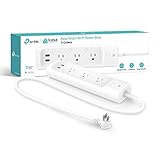
- Surge protection: ETL-certified surge protection shields sensitive electronics and appliances from sudden power surges.
When another smart-home platform makes more sense
| Platform | Consider it when | Trade-off |
|---|---|---|
| Alexa | You already use Echo devices and want voice control and routines across brands. | Kasa linking is cloud-based; Kasa remains useful for onboarding and device-specific settings. |
| Google Home | Your household uses Google Nest, Android or Google speakers and wants a broader control layer. | Voice and routine behavior can differ from the native Kasa app. |
| Samsung SmartThings | You want to coordinate multiple brands. | Check compatibility for the exact Kasa model; support is not universal. |
| Home Assistant | You prioritize advanced automations, dashboards and local-control options. | Setup, networking and ongoing maintenance are more technical; verify support for each device. |
TP-Link directs SmartThings users to check compatibility by model in its Kasa FAQ. None of these options removes the need to verify device-level support before purchase.
Troubleshoot an offline or unreliable device
It paired, but remote control does not work
First check whether the home internet is up and the device appears online locally. Then check Wi-Fi signal, whether the router name or password changed, and whether the TP-Link account session or linked service needs attention. Remote access normally requires internet connectivity; a cloud outage or account-linking problem can also affect it. Avoid factory-resetting immediately if the device has schedules you depend on.
A timer or schedule seems to have stopped
Check whether you manually operated the device in Kasa: that can stop a running timer. A schedule is separate and should remain active. Also confirm the schedule is enabled and the device has power.
What’s actually slowing this PC down?
Pick the symptom - the matching free tool is one click away.
A camera control is missing
Check TP-Link’s current instructions for the precise camera model; some detection settings are directed to Tapo even when the camera appears in Kasa materials. Do not infer that all camera controls are available in both apps.
Is Kasa still worth using in 2026?
Kasa is a sensible choice for an existing owner or someone who wants uncomplicated plug, light or switch automation and has compatible 2.4-GHz Wi-Fi. It is less suitable if your priority is one app for many brands and protocols, robust local-only operation, a desktop dashboard, or complex conditional automation. The app’s cloud account model and the Kasa–Tapo overlap are meaningful trade-offs, not reasons to assume Kasa hardware has been discontinued.
For a new camera purchase, verify the app and cloud-storage requirements for the exact model before committing. Kasa Care is optional for relevant camera services, and the App Store listing describes auto-renewing plans; prices and features depend on billing channel, region, tax and offer. Basic Kasa control of plugs, switches and lights does not inherently require a camera subscription.
Quick Recap
Product prices and availability are accurate as of the date/time indicated and are subject to change. Any price and availability information displayed on Amazon at the time of purchase will apply.