What’s actually slowing this PC down?
Pick the symptom - the matching free tool is one click away.
Some links on this page are affiliate links: if you buy through them we may earn a commission, at no extra cost to you.
Most weather authorities use 32°F (0°C) as the practical threshold for a freeze and about 28°F (-2.2°C) for a hard freeze. A hard freeze is colder and often more prolonged, making it much more likely to kill seasonal plants and damage exposed outdoor plumbing. Frost is different: it is visible ice on a surface and can form even when the official air temperature is above freezing.
Most weather authorities use 32°F (0°C) as the practical threshold for a freeze and about 28°F (-2.2°C) for a hard freeze. A hard freeze is a more severe freeze—often lasting long enough for cold to penetrate plant tissue, soil, and exposed plumbing. It is much more likely to kill seasonal plants and damage unprotected outdoor pipes.
As an Amazon Associate I earn from qualifying purchases.
Frost is different. Frost is visible ice that forms on surfaces. It can appear even when an official air-temperature reading several feet above the ground is a few degrees above 32°F, and a damaging freeze can occur without any visible frost.
Freeze vs. hard freeze: the quick comparison
| Term | Common threshold | What it means in practice |
|---|---|---|
| Frost | Often associated with readings around 33°F to 36°F, but conditions vary | Ice has formed on exposed surfaces. The air temperature measured at the standard height may remain above freezing. |
| Freeze | About 32°F (0°C) or below | Unprotected plants may be injured, particularly if temperatures remain at or below freezing for several hours. Exposed water lines may begin to freeze. |
| Hard freeze | Commonly 28°F (-2.2°C) or below | A severe or killing freeze with a much higher risk of destroying tender vegetation and damaging exposed plumbing. |
These are practical weather categories, not guarantees of identical damage at every property. The result depends on the minimum temperature, duration, wind, humidity, soil moisture, elevation, exposure, plant species, and the condition and location of plumbing.
Popular on Amazon
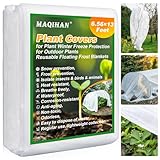
- Product Features: Our plant covers are ideal for protecting all plant. Made from premium 1 oz/sq non-woven fabric, their durability and breathability ensuring both insulation against frost and facilitation of sunlight penetration for healthy plant growth
- Versatility: These covers serve triple duty as frost protection, snow protection, animal barriers, insect barriers, and sun shields, adaptable to various gardening needs, the versatile row covers promise a tailored fit for all horticultural necessities
- Usability: Users can cut the frost blanket according to the size of the plant, and then easily cover the plant blanket directly on the plant, lay the cover loosely over plants, or fix it with the help of hoops or frames, providing customizable protection
- Cold & Wind Protection: Shield delicate plants from wintry chills and harsh winds, safeguarding them from frost damage. Regulate sunlight exposure to prevent overheating, maintaining optimal growth conditions. Maintain stable soil temperatures
- Optimize Performance: Deploy the covers before sunset to harness residual warmth from the soil. Once morning temperatures rise above freezing, remove the covers to permit sunlight warming. Wet covers should be dried before reuse
What is a freeze?
A freeze occurs when the air temperature reaches approximately 32°F (0°C) or lower. At that point, water can freeze, and unprotected plants may suffer injury. Flowers, blossoms, newly emerged growth, tender annuals, and recently transplanted plants are usually more vulnerable than established cold-hardy vegetation.
A reading of 31°F meets the usual definition of a freeze even if the grass is dry and no frost is visible. Visible ice is not required. Dry air or other atmospheric conditions may prevent frost from forming while plant tissue, soil, or exposed materials still experience freezing temperatures.
A short period near 32°F may damage sensitive plants without killing hardier ones. It may also be less damaging to pipes than a longer, colder event, although an exposed or poorly protected water line can freeze under the right conditions.
What is a hard freeze?
A hard freeze is commonly defined as an air temperature of 28°F (-2.2°C) or below. The term is also sometimes called a killing freeze because temperatures in this range are far more likely to destroy warm-season annuals, tender transplants, blossoms, and many unprotected landscape plants.
The threshold is not a universal law. Some National Weather Service offices use a different local criterion; for example, the NWS office serving Tallahassee has used 25°F as its hard-freeze threshold, while 28°F is common elsewhere in the United States. Local National Weather Service guidance should take precedence over a generic rule of thumb.
Also popular on Amazon

- ALL-SEASON PLANT PROTECTION - Safeguard your plants through the harsh winters with our breathable Plant Frost Cover, designed to shield against frost, freezing temperatures, snow, and harsh winds. Extend your growing season into the colder months while ensuring your plants thrive year-round.
- PROMOTES HEALTHY GROWTH - Our frost cover acts as an insulation layer, creating a microclimate that keeps plants warmer in cold weather. This helps prevent frost damage and promotes healthier growth, giving your plants a head start in the growing season and accelerating germination.
- BREATHABLE & PERMEABLE DESIGN - Engineered to allow essential light, air, and water to penetrate while keeping out the cold. Your plants receive the necessary nutrients for growth without being smothered, making it ideal for delicate seedlings and established plants alike.
- UV SUN SCORCH & WIND PROTECTION - Not just for the cold, this cover also offers UV protection to prevent sunburn scorching during unexpected winter sun exposure, while also serving as an effective windbreaker, reducing plant stress caused by strong winds.
- DURABLE & EASY TO USE - Made from high-quality, reusable materials, our Plant Frost Cover is easy to install and remove, making seasonal transitions simple. Its durable construction ensures long-lasting protection, giving you peace of mind through multiple winters.
Duration matters as much as the minimum temperature. A forecast of 27°F for several hours generally represents a much greater threat than a brief dip near 32°F. Prolonged cold gives freezing conditions more time to penetrate plant tissues, the ground around shallow lines, and exposed plumbing components.
Freeze versus frost: why the terms are not interchangeable
Frost describes ice on a surface; freeze describes air temperature. Those measurements are related but not identical.
On a calm, clear night, the ground, grass, vehicles, roofs, and plant leaves can radiate heat and become colder than the air measured several feet above the ground. Moisture on those surfaces can freeze, producing visible frost even when a standard thermometer reads 35°F.
Frost is more likely when skies are clear, winds are light, and moisture is available. A low-lying or sheltered area may develop frost while a nearby, more exposed location does not. Conversely, air temperatures can fall below 32°F without visible frost when the air is dry or conditions do not produce enough surface moisture.
That is why a frost advisory, a freeze warning, and a hard freeze are not interchangeable terms. Check the forecast minimum, expected duration, and the wording from the local forecast office rather than relying only on whether ice is visible.
Crashes, No Sound, or Screen Glitches?
Random freezes, missing sound and display glitches usually trace back to one bad driver. Find and replace yours safely.Free scan · under a minutePC Slower Than It Used to Be?
A free scan shows the junk files, broken settings and background clutter dragging Windows down - then fixes them in one click.Free scan · Windows 10 & 11Also popular on Amazon

- ALL-SEASON PLANT PROTECTION - Safeguard your plants through the harsh winters with our breathable Plant Frost Cover, designed to shield against frost, freezing temperatures, snow, and harsh winds. Extend your growing season into the colder months while ensuring your plants thrive year-round.
- PROMOTES HEALTHY GROWTH - Our frost cover acts as an insulation layer, creating a microclimate that keeps plants warmer in cold weather. This helps prevent frost damage and promotes healthier growth, giving your plants a head start in the growing season and accelerating germination.
- BREATHABLE & PERMEABLE DESIGN - Engineered to allow essential light, air, and water to penetrate while keeping out the cold. Your plants receive the necessary nutrients for growth without being smothered, making it ideal for delicate seedlings and established plants alike.
- UV SUN SCORCH & WIND PROTECTION - Not just for the cold, this cover also offers UV protection to prevent sunburn scorching during unexpected winter sun exposure, while also serving as an effective windbreaker, reducing plant stress caused by strong winds.
- DURABLE & EASY TO USE - Made from high-quality, reusable materials, our Plant Frost Cover is easy to install and remove, making seasonal transitions simple. Its durable construction ensures long-lasting protection, giving you peace of mind through multiple winters.
Why hard freezes cause more damage
Plant cells contain water. When that water freezes, expansion and ice formation can rupture cell structures and damage tissue. The colder the temperature and the longer the exposure, the greater the likelihood that damage will extend beyond a few leaves or blossoms.
A hard freeze is especially dangerous to:
- warm-season annuals and vegetables;
- newly planted or recently emerged growth;
- flowers, blossoms, and fruiting plants;
- tropical and subtropical landscape plants;
- plants in containers or raised beds, where roots may have less thermal protection; and
- unprotected outdoor plumbing, irrigation components, hose bibs, and exposed water lines.
The 28°F rule should not be treated as a promise that every plant will die. Plant hardiness, developmental stage, wind exposure, soil warmth, moisture, and microclimate all affect the outcome. Low spots can be colder than nearby higher ground, and temperatures close to the surface can differ substantially from an official shelter-level observation.
What the current NWS warning names mean
Since October 1, 2024, the National Weather Service’s Hazard Simplification initiative has consolidated the former hard-freeze products:
- Hard Freeze Watch and Freeze Watch were consolidated into Freeze Watch.
- Hard Freeze Warning and Freeze Warning were consolidated into Freeze Warning.
The warning description may still say that temperatures are expected to reach hard-freeze levels. Therefore, the absence of a product literally named “Hard Freeze Warning” does not necessarily mean the threat is minor. Read the forecast minimum temperature, expected duration, warning description, and local office criteria.
How to prepare plants before a freeze
- Check the local forecast and timing. Pay attention to the expected minimum and how long temperatures may remain near or below freezing. A forecast near 28°F deserves more preparation than a brief forecast near 32°F.
- Move containers to a protected location. Place vulnerable potted plants inside a garage, shed, greenhouse, or sheltered area where appropriate. Do not block required exits or create a fire hazard.
- Cover plants before temperatures fall. Cloth covers, floating row covers, and low tunnels can trap heat released from the soil. Put them in place before the coldest part of the night.
- Secure the edges. Covers work better when cold air cannot freely enter from below. Use soil, weights, or suitable garden cover pins to hold the edges down without damaging plants. The visible link is intended as a product category; availability and specifications should be checked before purchase.
- Keep the material off delicate foliage when possible. Support a cover with hoops or another structure so it does not crush plants or abrade leaves and blossoms.
- Remove or vent plastic after sunrise. Plastic can overheat plants rapidly in direct sunlight and should not rest directly on foliage. It must be removed or vented when conditions warm.
For a practical physical barrier, compare frost protection cloth for plants by fabric weight, size, and intended use. Lightweight covers may provide only a few degrees of protection; heavier materials may provide more insulation but can transmit less light and require more support. No cover guarantees survival through every hard freeze.
Row covers are generally most effective on relatively still nights when only a few degrees of frost protection are needed. Strong wind can reduce their effectiveness by removing trapped heat and lifting the material. The amount of heat stored in the soil, the air space under the cover, the fabric weight, and the condition of the plant all matter.
Also popular on Amazon

- THICKER MATERIAL: Our plant freeze protection cover is made of UV stabilized polypropylene. Upgraded thicker 0.9oz./sq.yard lightweight but durable. Soft plant covers are friendly and no harm to your plants. Breathable non-woven fabric allow light, air go through the frost cloths and reach the plants.
- 6.5FTx16FT PLANT COVER: The frost covers for outdoor plants measures 6.5FTx16FT, and this plant covers for winter covers area up to 104 square feet. The freeze plant protection cover is easily trimmed to different size to fulfill different need. After cold weather ends, you can easily fold and store this winter floating row cover.
- WINTER PROTECTION: Frost blankets for outdoor plants protect your plants and crops from harsh weather such as low tem, cold wind, frost, snow, hail, sleet in winter,early spring and late fall. Warm support for young transplants, seedling and extend the growing season.
- SHADE COVER FROM SUN: The outdoor plant cover is not only for winter freeze protection, you can also use it as garden shade cloth cover or plant shade cover from sun, block certain proportion of sunlight and heat. Additionally, it can be used as a screen barrier to prevent birds, small animals and insects during the growth
- EASY-TO-USE: Secured this plant frost cover with soils, stakes, staples, blocks, stones, sticks or garden hoops to provide sufficient space for your vegetables, flowers, crops and small trees such as tomato, strawberry, blueberry, schinus, kale, citrus, grass, rised bed and potted plants.
How to prepare outdoor plumbing
Hard freezes are a construction and home-maintenance concern as well as a gardening concern. Water expands as it freezes, creating pressure that can split pipes, damage hose bibs, and affect irrigation components. Damage may not become obvious until the ice thaws and pressurized water begins to leak.
Before a significant freeze:
- Disconnect and drain garden hoses.
- Protect exposed hose bibs and above-ground water lines with suitable insulation.
- Insulate vulnerable pipes where insulation is appropriate, while keeping materials away from heat sources and following product instructions.
- Locate the main water shutoff so it can be used quickly if a pipe breaks.
- Protect or drain unprotected sprinkler and irrigation systems according to the system manufacturer’s or an irrigation professional’s instructions.
- Check crawl spaces, garages, unfinished areas, and exterior walls for pipes that may be exposed to cold air.
For exposed lines, outdoor pipe insulation can be a useful part of a freeze-preparation plan. Insulation slows heat loss; it does not create heat and is not a guarantee against a prolonged hard freeze. A licensed plumber may be appropriate where pipes are difficult to drain, concealed, already damaged, or part of a backflow-prevention or irrigation assembly.
Do these 3 things before closing this tab:
1Repair Windows errors before they cause bigger problems2Scan for outdated or missing drivers - takes under a minute3Clear out junk files and repair common Windows errorsThree forecast examples
Forecast low: 35°F on a calm, clear night
This does not meet the usual definition of a freeze, but frost may form on grass, vehicles, roofs, and exposed leaves because surface temperatures can fall below the air temperature. Protect unusually sensitive plants if local conditions have produced frost before.
Forecast low: 31°F
This meets the usual definition of a freeze, even if no frost appears. Tender plants may be injured, and exposed plumbing should be assessed—especially if the temperature is expected to remain low for several hours.
Forecast low: 27°F for several hours
This is commonly treated as a hard freeze. Expect a high risk of severe damage to tender vegetation and a greater risk to exposed outdoor plumbing. Covers may help when the required protection is only a few degrees and conditions are relatively calm, but a hard freeze may exceed what a basic cover can provide.
Independent reader supportYour contribution helps us test, update, and keep practical guides available for everyone.How to judge the risk at your property
Do not rely on a single number from a weather app if your property has unusual exposure. Consider:
Also popular on Amazon

- 【Best Winterize Protections for Plants & Trees】 Extra Stable Plant Blanket creates and retains warmth while protecting against frosts (down to 38 degrees F.), harsh weather, birds, animals and insect. Faraer 1.06 oz. fabric thick fabric is ideal for extending the growing season into early spring and late fall, or for insulating strawberries, herbs, perennials, small fruits, and other tender landscape plants all winter long.
- 【All-Purpose Garden Plant Cover】Faraer Large 10x33 ft Size Floating Row Cover is a polypropylene garden covers that transmits 70 percent of available light. It keeps heat in, bugs out, and is an excellent windbreak for young transplants. Best choice for protect plants from frost and freeze. It allows rain and overhead irrigation to reach plants and soil. Secure with landscape pins or stones (sold separately).
- 【Strong & Durable Reusing Plant Covers】Our plant cover really works great in the heavy and dusty snow area due to its high quality. It is very easy to install and cover your plant without waiting your time much. More than that, it is lightweight enough for allowing air, water, moist to reach your plant personally as well as not harmful to its growing process. It is made of polypropylene fabric, but it is UV stabilized and reusable more than the other plant covers.
- 【10FT X 33FT Rectangular Plant Cover】 The fabric can be cut with scissors to fit over conventional-width rows or used as-is for wide-row plantings. When not being used, the material should be folded and stored away from sun and moisture. Against freeze, frost and other cold weather during winter, but also can protect your plants from strong sun, insect and birds during spring and summer.
- 【Winterize Your Garden Easily & Safety】Our helpful and knowledgeable team is available anytime to provide advice and answer any questions about the planting technology. Moreover, we offer lifetime 100% satisfaction service. If you are not satisfied with our plant cover, you can contact us for refund or replacement. No risk purchase here. Just have a try and enjoy your shopping experience here.
- Measurement height: Official forecasts generally refer to air temperature measured under standardized conditions, not the temperature directly at leaf level or beside a pipe.
- Topography: Cold air can settle in low areas, making a valley, depression, or low corner of a yard colder than nearby ground.
- Wind: Wind can increase heat loss and make plant covers less effective, although the thermometer’s air temperature remains the primary forecast measure.
- Sky and humidity: Clear, calm conditions favor radiational cooling and frost formation.
- Duration: Several hours below freezing create more risk than a short dip.
- Materials and exposure: A pipe against an exterior wall, in a crawl space, or above ground may be more vulnerable than a protected interior line.
An outdoor thermometer can help you monitor conditions in a garden or exposed area, but it does not replace the official forecast. Place it in a shaded, ventilated location and understand that a near-ground reading may not match a standard shelter-level measurement.
Common mistakes to avoid
- Waiting for visible frost. A freeze can damage plants and plumbing without producing frost.
- Assuming 32°F always kills plants. Species, exposure, plant maturity, and duration determine the damage.
- Assuming 28°F guarantees every plant will die. It is a severe-risk threshold, not an absolute biological cutoff.
- Leaving plastic on plants all day. Direct sun can cause dangerous heat buildup; plastic should not touch foliage.
- Using a cover without securing it. Gaps and wind can remove much of the benefit.
- Treating insulation as a heat source. Pipe insulation slows heat loss but may not protect a line through a long, severe freeze.
- Trying overhead irrigation casually. Freeze-protection irrigation is a sensitive, crop-specific process requiring continuous, correctly timed water application. It is not a general do-it-yourself substitute for covers or proper plumbing preparation.
- Ignoring local warning criteria. National thresholds are useful rules of thumb, but local National Weather Service guidance controls the wording and criteria for local alerts.
Bottom line
Use 32°F as the practical starting point for identifying a freeze and about 28°F as the common U.S. rule of thumb for a hard freeze. A hard freeze is colder and often more prolonged, so it presents a substantially greater risk to seasonal plants and exposed plumbing. Frost is a separate observation: it is ice on surfaces and can occur even when the official air temperature remains above freezing.
Frequently Asked Questions
What temperature is considered a freeze?
Most weather authorities use 32°F (0°C) as the practical threshold for a freeze. A freeze may injure unprotected plants, especially when temperatures remain at or below freezing for several hours.
What temperature is considered a hard freeze?
A hard freeze is commonly defined as 28°F (-2.2°C) or below, although local National Weather Service offices may use different criteria. It is more likely to kill tender plants and damage exposed plumbing.
Quick wins for a faster PC:
Scan for outdated or missing drivers - takes under a minuteDriver Scan →Repair Windows errors before they cause bigger problemsFix Now →Can a freeze happen without frost?
No. Frost is ice that forms on surfaces, while a freeze refers to air temperature. Frost can form when a standard thermometer reads a few degrees above 32°F, and a freeze can occur without visible frost.
Will covering plants protect them from a hard freeze?
Yes. Cloth covers, floating row covers, and low tunnels can provide a few degrees of protection when installed before temperatures fall, secured at the edges, and supported away from foliage. They are not guaranteed to protect plants during every hard freeze.
How should I prepare outdoor plumbing for a hard freeze?
Disconnect and drain hoses, protect exposed hose bibs and pipes, address vulnerable irrigation components, and locate the main water shutoff. Insulation slows heat loss but does not guarantee protection during a prolonged hard freeze.
The Bottom Line
Remember: 32°F usually means a freeze; about 28°F usually means a hard freeze. Frost is visible surface ice, not a temperature category, so do not wait for frost before protecting vulnerable plants or exposed plumbing.
The Tool Desk
Outbyte PC Repair FREEClear out junk files and repair common Windows errorsFree Scan →Outbyte Driver Updater FREEScan for outdated or missing drivers - takes under a minuteDriver Scan →Quick Recap
Product prices and availability are accurate as of the date/time indicated and are subject to change. Any price and availability information displayed on Amazon at the time of purchase will apply.

