Some links on this page are affiliate links: if you buy through them we may earn a commission, at no extra cost to you.
Yes, salt can kill weeds—but it is usually a bad trade-off. Salt damages plants by disrupting water uptake and causing ion toxicity, and it can also harm lawns, garden soil, shrubs, trees, waterways, and anything planted there later. Use hand removal, hoeing, mulch, or a properly labeled herbicide instead of treating salt as a safe homemade weed killer.
Salt can kill weeds, but it is usually a poor weed-control method. Sodium chloride damages plants by making it difficult for roots to absorb water and by becoming toxic to plant tissues. The same process can injure lawns, flowers, shrubs, trees, soil, and future plantings. Salt is best treated as a last-resort warning—not as a generally safe homemade herbicide.
As an Amazon Associate I earn from qualifying purchases.
PC Slower Than It Used to Be?
A free scan shows the junk files, broken settings and background clutter dragging Windows down - then fixes them in one click.Free scan · Windows 10 & 11Outdated Drivers Are Slowing You Down
One free scan finds every outdated or missing driver and matches the right update for your exact hardware.Free scan · exact hardware matchFor most yards, beds, and planted areas, remove weeds by hand or hoe, suppress new growth with correctly applied mulch, or use an appropriate product whose current label specifically permits the intended site and weed. Do not use salt around desirable plants, drainage channels, ponds, streams, or soil you plan to plant later.
How salt kills weeds
Salt damage begins when sodium chloride accumulates in the soil or contacts plant tissue at a sufficiently high concentration. A salty soil solution holds water more tightly, so roots may struggle to take up water even when the soil looks damp. This is osmotic stress: the plant experiences a form of dehydration because the water is harder to absorb.
Popular on Amazon
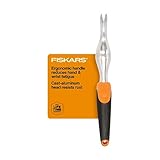
- GARDENING ESSENTIAL: Garden weeder ideal for a variety of gardening tasks like removing invasive weeds, maintaining your herb garden, uprooting dandelions and thistles, and more to encourage overall plant health and appearance
- MAXIMUM POWER AND PRECISION: Cast-aluminum angled head boosts leverage for uprooting in tough soil; Ergonomic handle with SoftGrip allows for more control of scratch tool and reduces fatigue
- LONG-LASTING AND RELIABLE: Aluminum head is rust-resistant and stays sharp through heavy use, providing excellent durability for lasting value; Fiskars hand trowels and garden tools are built to last
- QUALITY GARDEN TOOLS: Designed to help you cultivate a better garden, Fiskars garden and yard tools are equipped with smart technologies and award-winning, ergonomic features that make it easier and more enjoyable to transform your outdoor space
- INCLUDES: 1 Fiskars Ergo Weeder with hang hole; Full lifetime warranty
Sodium and chloride can also build up to toxic levels inside or around plant tissues. They can interfere with the uptake or balance of nutrients such as calcium, magnesium, and potassium. Typical symptoms include:
- browning or scorching along leaf edges;
- wilting despite apparently moist soil;
- yellowing, or chlorosis;
- stunted growth;
- leaf drop; and
- eventual plant death.
These symptoms may appear gradually rather than immediately. Salt can remain in the soil, move with water, or be carried by splash and soil movement. Penn State Extension explains the relationship between salinity, water uptake, and plant growth in its guidance on saline soils and plant growth.
Why salt is a risky weed killer
Salt is not selective
Salt does not reliably distinguish a weed from a plant you want to keep. A salt application near a flower bed, lawn, shrub, or tree can damage desirable vegetation as readily as the target weed. Tree and shrub roots may extend well beyond the visible canopy, so a plant does not have to be directly sprayed or visibly touched to be affected.
Runoff can spread the damage
Rain, irrigation, and pressure washing can move dissolved salt away from the original application point. Runoff from a driveway crack or paved area may reach a lawn, planting bed, storm drain, ditch, pond, or stream. Salt can also move sideways through soil or be tracked into planted areas on shoes, tires, and equipment.
It can make soil difficult to replant
Repeated or excessive salt applications can leave soil unsuitable for new vegetation. Sodium is especially troublesome in some clay soils because it can cause soil particles to expand and disperse. That may increase compaction and reduce the soil’s ability to let water infiltrate.
Also popular on Amazon

- 2-in-1 Multi-Purpose Garden Tool: Engineered with a dual-function head featuring a 3.75-inch rake and a sharp trapezoid hoe, this weed remover tool makes it easy to loosen compacted soil and pull weeds by the roots. The rake's sharp teeth securely grabs stubborn weeds and dandelions, helping pull them out by the roots to prevent regrowth
- Sturdy Tempered Spring Steel: Built with high-density tempered spring steel, our dual hoe and rake heads handle daily garden use with ease. Unlike carbon steel tools that weaken or break over time, this material delivers superior toughness and spring-back resilience, resisting bending or snapping even under heavy levering
- Adjustable 61-inch Handle for Comfort: Featuring a 4-section locking handle adjustable up to 61 inches, this stand up weed puller tool lets you weed comfortably while standing upright without bending, making it especially helpful for seniors and those with back concerns. Quickly shorten the handle to your preferred length for raised beds, flower pots, and tight spots between plants
- Rust-Proof and Weather-Resistant Design: Featuring a sand texture finish on the weed puller tool heads for improved grip and excellent corrosion resistance, along with 304 stainless steel bolts and nuts for a tight, sturdy connection, CKLT weeding tool is built to withstand harsh outdoor environments
- Versatile for All Garden Spaces: Suitable for precise weed removal between plants in flower beds and vegetable gardens, this versatile garden tool easily handles hard soil and tough weeds across garden beds, lawns, open yards, and gravel driveways. It delivers reliable performance for maintaining both narrow, detailed spaces and larger garden areas with ease
Chloride also presents a risk to aquatic environments at high concentrations. It can harm fish, aquatic insects, and amphibians. For these reasons, salt is particularly inappropriate in garden beds, vegetable plots, lawns, tree root zones, ornamental plantings, drainage channels, and anywhere intended for future planting. Penn State calls table salt one of the most problematic ingredients in homemade weed-control mixtures in its guidance on managing poison ivy and homemade weed-control practices.
What about weeds in driveway or sidewalk cracks?
A small weed growing in an isolated crack in concrete is a different situation from weeds growing in planted soil. Because the crack contains little soil and is separated from most roots, the potential area of damage may be smaller. Even there, however, salt is not automatically harmless.
Before using any salt-based approach, consider where rainwater flows, whether nearby trees or planting beds can reach the area, and whether the crack borders a lawn or drainage route. Salt can wash out of the crack and affect nearby soil. It can also make later repairs, reseeding, or planting more difficult.
For one or two hardscape weeds, pulling the plant and removing as much of its root as possible is usually the more controlled choice. For persistent growth in a joint or crack, repair the opening when practical. Preventing light and soil accumulation in the crack is generally more durable than repeatedly salting it.
Do not rely on salt recipes
There is no universally safe household salt concentration for landscape weed control. The result depends on soil texture, drainage, rainfall, proximity to desirable plants, the weed species, the amount applied, and whether the area will be replanted. A recipe that appears to work on one paved area can cause lasting damage when used beside a lawn or garden.
Free tools Windows power users keep installed
One-click scans. No signup required.
Also popular on Amazon

- Portable Weeding Tools :Close-range precision weeding, gap cleaning, portable and labor-saving,13.3 inches Weeder tool,It is the perfect length for a gardening tools.Adopting stainless steel polishing process,The durable handle is more comfortable to hold
- Durable All-Steel Design: The four-tooth uprooting weeding tool is made of high-quality anti-rust steel, with high hardness and durability. Has high impact resistance and tensile strength, not easy to deform or break
- Weed Remover Tool: Sharp Durable Garden Weed Tool, Handle weeding and digging tasks with ease. Perfect helper for agricultural work such as weeding, digging, shoveling grass for orchards and gardens. No need to pull those pesky weeds by hands!
- Multi-Functional: Our Gardening tools Great for prying thistles, dandelions, crabgrass, chickweed and common garden weeds. Also suitable for growing flowers and vegetables to make your garden beautiful
- Safety Tips: The blade surface of this garden hoe is relatively sharp, please wear gloves when using it to prevent scratches
Do not combine salt with bleach, dish detergent, vinegar, or other household chemicals. Dish detergents are not formulated for plant use, and bleach is not labeled for vegetation management. Bleach can also react with other chemicals and produce hazardous gases. Penn State’s safety guidance specifically warns against treating household mixtures as automatically safe or effective.
Is Epsom salt safer?
No. Epsom salt is magnesium sulfate, not sodium chloride, but it is not a reliable safe substitute. There is little scientific evidence that it selectively kills weeds. Applying it unnecessarily can create nutrient imbalances, and concentrated foliar sprays can scorch leaves. UMN Extension warns that Epsom salts can harm soil, plants, and water; its discussion of salt effects on landscapes also illustrates why salt-like soluble materials should not be applied casually.
Safer ways to control weeds
1. Pull or dig isolated weeds
Hand removal is often the best option where weeds are close to flowers, shrubs, trees, vegetables, or turf you want to protect. Pull when the soil is slightly moist, grip the weed near its base, and remove as much of the root as possible. For taprooted or established perennial weeds, a digging tool may be more effective than pulling alone.
A hand weeder tool can help target individual weeds without salting the surrounding soil. It is particularly useful in planting beds and cracks where a broad treatment would be difficult to control. Perennial weeds may return from roots or missed fragments, so inspect the area and repeat removal as needed. Penn State’s home-garden weed-management guidance discusses hand removal and the difficulty of controlling established weeds.
2. Hoe shallow annual weeds
Shallow hoeing can control small annual weeds in open beds before they establish deep roots or produce seed. Work just below the soil surface rather than turning up large amounts of soil, which can bring additional weed seeds to the surface.
A garden hoe is most useful where rows or open areas provide room to work. Use care around shallow-rooted crops and ornamentals: cutting or scraping too close can damage their roots. Hoeing is less suitable for large perennial weeds, dense plantings, and areas where the target’s roots are intertwined with desirable plants.
3. Use mulch to prevent new weeds
Mulch suppresses weed emergence mainly by blocking light at the soil surface. It works best when applied after existing weeds have been removed and before new weeds become established. Organic materials such as wood chips and shredded bark can also moderate soil temperature and help retain moisture.
Also popular on Amazon

- Easy to Use: The handheld weeder tool removes weeds from your garden, including stubborn weeds like dandelions and thistles. The stainless steel two-pronged fork cuts through weeding roots with ease, allowing surrounding plants to grow healthily and thrive
- Robust and Sturdy: The weed puller tool is made of high-hardness polished stainless steel that is extremely resistant to rust and corrosion, ensuring longevity and reliability. And it won't bend or break during use, and can quickly meet any challenges in gardening
- Ergonomic Soft-Grip Handle: Non-slip and comfortable plastic handle is gentle on hands and improves control while reducing hand and wrist fatigue, which is a good helper for gardening and weeding
- Convenient Size for Storage: Our lightweight gardening weeding tool is 11.5 inches in length and light in weight (5.3 oz), and the practical handle hanging hole design and lanyard allow for convenient storage after use
- Wonderful Gifts for Gardening Lover: The manual weed puller can help you weeding easily in farms, gardens, yards, fields, bonsai, and more. A sharp gardening hand tool for weeding, and digging, it is a practical gift for gardeners or gardening enthusiasts
For many landscape situations, apply organic mulch at roughly 2 to 4 inches, keeping it away from direct contact with plant stems and tree trunks. Do not pile mulch against a trunk or bury the crowns of ornamentals. Excessive depth can harm plants and may create a place for weed seedlings to grow in decomposed material. A layer of organic garden mulch is a prevention measure, not a dependable way to kill established perennial weeds. See UMN Extension’s guidance on mulching and garden health for material and application considerations.
Quick wins for a faster PC:
Repair Windows errors before they cause bigger problemsFix Now →Scan for outdated or missing drivers - takes under a minuteDriver Scan →4. Consider Landscape fabric only for specific designs
Landscape fabric or geotextile can be useful beneath certain decorative mulches and in some long-term landscape installations. It is not a permanent, maintenance-free answer. Weeds can germinate in organic material that accumulates above the fabric, and some weeds can grow through it. Removing old fabric later may be difficult, especially when roots have grown into it.
If you use a fabric barrier, install it for a clearly defined purpose, overlap and secure it correctly, and expect maintenance. Penn State describes these limitations in its guidance on weed control in landscape plantings.
5. Use a labeled herbicide when chemical control is justified
For a severe infestation, chemical control may be appropriate, but select the product by the weed, the site, and the label—not by a homemade recipe or a generic internet recommendation. An EPA-registered product’s current label should specifically cover the intended use, such as lawn, ornamental bed, vegetable garden, driveway edge, or another site.
The pesticide label is legally enforceable and includes application directions, precautions, first aid, storage, disposal, and environmental restrictions. Read the current label before every use, wear the specified protective equipment, avoid drift and runoff, and keep people and pets away as directed. A product approved for one site is not automatically approved for another. EPA explains these requirements in Keep Safe: Read the Label First.
Recommended Free Tools
Do not casually buy or recommend agricultural or restricted-use herbicides for home use. In the United States, paraquat products have no homeowner uses and are restricted-use pesticides limited to trained, certified applicators, according to the EPA’s paraquat information. State requirements and product registrations can vary, so follow both the current federal label and applicable state rules.
Also popular on Amazon

- Standup Weeding Tool For A Better Gardening Experience: Get rid of weeds with this long handled lawn weeding tool. The 39” tall handle lets you uproot the weeds without having to bend over or go down to your knees. The foot pedal lets you put enough force on the gardening weed extractor to penetrate the ground and grab the whole weed, including the roots, so it doesn’t grow back. It is good tools for your garden, backyard, frontyard landscaping
- Pointed 3 Claw Design Suitable For Different Soil Types: Three 2.75” Steel teeth are long enough to efficiently uproot grass roots. Please keep stand-up, simply push the tines into the roots of the weeds/flower/grass, let the tine grasps grass roots, tilt to one side and pull out the weed and release the grass. The tool is workable for crabgrass, thistle, tap root, crab grass, taproot, plantain, clover, burdock, bush etc
- Durable And High Strength Materials: This weed removing tool is made from durable stainless high strength steel. This is a durable stainless steel garden weed puller, so you don't have to buy another weeder.
- Labor Saving: Effortlessly pull weeds from your garden without having to bend down or kneel. When you use the weeder to uproot grass/flower which can assure minimum fatigue. It is really a great gift for grandfather, grandmother, grandpa, grandma, father, Mother, husband and wife.
- Service: If you have any questions or need assistance with the product, please feel free to contact us. Note: Keep the land moist before use and do not pull weeds in gravelly soil.
What to do if you already applied salt
- Stop adding salt. Do not try to compensate with more salt, Epsom salt, bleach, detergent, or another homemade mixture.
- Remove visible contaminated material where practical. If salty soil or heavily salted mulch can be safely removed without spreading it, place it according to local disposal requirements rather than moving it into a garden bed.
- Prevent contaminated runoff. Do not wash salt into a storm drain, pond, stream, neighboring planting bed, or another sensitive area.
- Leach only when conditions permit. Clean water can move soluble salts below the root zone, but this requires adequate drainage and enough space for the water to leave without carrying contamination elsewhere.
- Test before replanting if damage is significant. A soil test for soluble salts can help determine whether the area is suitable for new plants and whether further remediation is needed.
Penn State reports that six inches of water can leach approximately 50% of salt from affected soil under the conditions described in its deicer-damage guidance. This is a remediation observation, not a universal watering prescription. Soil texture, drainage, salt quantity, rainfall, groundwater, and the location of the runoff all matter. Do not flood compacted soil or a poorly drained site.
Does gypsum neutralize salt?
Gypsum is not an instant cure and does not make excessive salt applications harmless. It may be useful for some sodium-affected soils when soil testing and local conditions support its use, but it should not be applied as a blanket fix. Remediation decisions should account for the type of salt, soil structure, drainage, and the plants you intend to grow. Penn State discusses gypsum and other considerations in its guidance on minimizing deicer damage.
Quick decision guide
| Situation | Better first choice | Why |
|---|---|---|
| One or two weeds in a bed | Hand-pull or dig | Targets the weed without exposing nearby soil to a persistent soluble material. |
| Small annual weeds in an open bed | Shallow hoeing | Quickly disturbs young weeds when desirable roots are not nearby. |
| Recurring weeds across bare soil | Remove existing weeds, then apply suitable mulch | Reduces light and prevents new seedlings from emerging. |
| Decorative area beneath mulch | Consider fabric cautiously | Can help in selected installations but requires maintenance and is not permanent. |
| Large or persistent infestation | Identify the weed and check a current, site-appropriate label | Provides a controlled option when nonchemical methods are insufficient. |
| Weed beside a lawn, bed, tree, pond, or drain | Avoid salt | Runoff, roots, and soil movement can spread injury beyond the target. |
Bottom line
Salt works against weeds because it disrupts water uptake and damages plant cells, but it has no useful selectivity and can persist long enough to harm the landscape you are trying to maintain. Pull or hoe isolated weeds, use mulch to prevent new growth, treat landscape fabric as a limited design tool, and use only a properly labeled herbicide when chemical control is necessary. If salt has already contaminated soil, stop applying it, control runoff, improve or verify drainage, and test the soil before replanting.
The Tool Desk
Outbyte Driver Updater FREEScan for outdated or missing drivers - takes under a minuteDriver Scan →Outbyte PC Repair FREERepair Windows errors before they cause bigger problemsFix Now →Frequently Asked Questions
Does salt really kill weeds?
Salt can kill weeds by making soil water difficult for roots to absorb and by allowing sodium and chloride to reach toxic levels. However, it can also injure nearby plants, damage soil, and spread through runoff, so it is generally not recommended as a homemade landscape weed killer.
Is Epsom salt safer for killing weeds?
No. Epsom salt is magnesium sulfate rather than sodium chloride, but there is little evidence that it selectively kills weeds. It can cause nutrient imbalances and concentrated sprays may scorch leaves.
How do I repair soil after using salt on weeds?
Stop applying salt, prevent contaminated runoff, and remove visibly contaminated soil or mulch where practical. Clean water may leach soluble salts when drainage is adequate and runoff will not reach waterways or other planting areas. Test soil for soluble salts before replanting if damage is substantial.
What is safer than using salt to kill weeds?
For isolated weeds, hand-pulling or digging is the most controlled option. Hoeing can work for shallow annual weeds in open beds, while properly applied mulch helps prevent new weeds. For chemical control, choose a product whose current label covers the specific weed and site.
The Bottom Line
Salt can kill weeds, but the risk to soil, nearby plants, and water usually outweighs the convenience. Use targeted removal or prevention first, and rely on a current, site-specific pesticide label—not a homemade salt recipe—when chemical control is needed.
Quick Recap
Product prices and availability are accurate as of the date/time indicated and are subject to change. Any price and availability information displayed on Amazon at the time of purchase will apply.

