Some links on this page are affiliate links: if you buy through them we may earn a commission, at no extra cost to you.
Eastern cottonwood (Populus deltoides) is the best-supported rapid-growth benchmark among North American native trees, adding about 5 feet of height per year during its first 10 to 15 years on favorable sites. But the fastest tree is not automatically the best tree: cottonwood becomes enormous, has weak limbs and aggressive roots, and is a poor fit for most small residential lots.
This practical list compares 15 native species by documented or authoritative descriptions of rapid growth, while accounting for climate, soil, moisture, mature size, structural strength, and construction-related site constraints.
As an Amazon Associate I earn from qualifying purchases.
15 of the Fastest-Growing Native Trees
Eastern cottonwood (Populus deltoides) is the best-supported benchmark for rapid growth among North American native trees. On a favorable, moist site, it can add about 5 feet of height per year during its first 10 to 15 years. That speed comes with trade-offs: cottonwood becomes enormous, has relatively weak wood, develops aggressive roots, and is unsuitable for most small residential lots.
The other trees on this list can also grow quickly, but none is universally “the fastest.” Growth depends on soil moisture, fertility, sunlight, competition, climate, tree age, and whether the measurement is seedling height, juvenile height, trunk diameter, or stand volume. The list is therefore a practical comparison—not a strict national league table.
Popular on Amazon
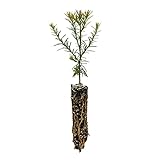
- Grow the world's tallest tree species!
- Seed-grown on California's Redwood Coast
- Transplanting and care instructions included
- Trees can provide a natural barrier against high winds, temperatures, noise pollution and soil erosion, all while benefiting local air quality, wildlife and property values — a Jonsteen seedling will only grow in value and beauty!
For construction and landscaping projects, the most important question is not simply How quickly will this tree grow? It is How large, stable, and demanding will it be when the site is finished? A tree that provides shade quickly may also interfere with utilities, pavement, foundations, septic systems, access routes, or future building work.
Quick comparison
| Tree | Native range or region | Best site | Practical use | Main mature-size or performance warning |
|---|---|---|---|---|
| Eastern cottonwood Populus deltoides |
Eastern and central North America; especially floodplains | Moist alluvial soil, river bottoms, open sunlight | Large-property shade, riparian restoration, wildlife habitat | Enormous, aggressive roots, weak limbs, relatively short-lived |
| Black willow Salix nigra |
Eastern and central river systems | Wet stream margins and freshly deposited alluvium | Streambank restoration and naturalized sites | Short-lived and structurally weak; frequent limb breakage |
| Silver maple Acer saccharinum |
Eastern and central bottomlands | Moist or periodically wet soil with room to spread | Fast shade on large properties; flood-tolerant planting | Invasive roots, included bark, weak branch unions |
| River birch Betula nigra |
Eastern and southeastern United States | Moist soil, streambanks, and some urban sites | Large landscapes, rain-fed low areas, riparian planting | Drought-prone upland sites can produce disappointing growth |
| American sycamore Platanus occidentalis |
Eastern and central United States | Deep, moist bottomland soil | Large-property shade, restoration, specimen planting | Massive trunk and crown; messy and capable of dropping large limbs |
| Tuliptree Liriodendron tulipifera |
Eastern United States | Deep, fertile, well-drained soil with sunlight | Rapid vertical growth and tall-canopy shade | Very large; drought, root disturbance, and exposed sites can cause problems |
| Loblolly pine Pinus taeda |
Southern United States | Warm, humid Southeast; suitable upland or bottomland soils | Fast-growing conifer, screening, timber and restoration | Performs poorly on shallow, eroded, waterlogged, or drought-stressed soil |
| Sweetgum Liquidambar styraciflua |
Southeastern and east-central United States | Moist alluvial, Piedmont, and Coastal Plain sites | Broad regional planting and commercial forestry | Spiny fruit balls can be troublesome; needs full sun |
| Red maple Acer rubrum |
Much of eastern North America | Regionally appropriate soil with adequate moisture | Versatile shade and fall color tree | Growth and form vary by seed source, cultivar, soil, and heat |
| American basswood Tilia americana |
Eastern and central North America | Fertile woodland soil with adequate moisture | Long-term shade and pollinator value | Needs substantial canopy room; not as universally fast as cottonwood |
| American elm Ulmus americana |
Eastern and central North America | Good bottomland soil or an open site after release | Large-canopy restoration and habitat tree | Dutch elm disease remains a major consideration |
| Boxelder Acer negundo |
Broad continental range, especially floodplains and disturbed ground | Open, moist, disturbed, or difficult sites | Restoration and wildlife planting | Weak wood, irregular form, and multiple stems are common |
| Paper birch Betula papyrifera |
Northern and boreal North America | Cool climate and moist, well-drained soil | Rapid young growth and northern landscape character | Heat, drought, borers, and shorter landscape life can limit it |
| Bigleaf maple Acer macrophyllum |
Pacific Northwest | Moist western sites, especially after canopy opening | Rapid shade and habitat tree in suitable western landscapes | Large and moisture-demanding; dry or compacted sites slow it sharply |
| Fremont cottonwood Populus fremontii |
Intermountain West and Southwest riparian corridors | Alluvial ground with dependable moisture | Western riparian restoration and wildlife habitat | Very large and unsuitable for ordinary dry residential conditions |
1. Eastern cottonwood
Populus deltoides is the clearest choice when the goal is maximum early height growth on a suitable site. The U.S. Forest Service reports approximately 5 feet of annual height growth during the first 10 to 15 years under favorable conditions. Early diameter growth can also reach about 0.7 to 1 inch per year.
Recommended Free Tools
This is a floodplain tree, not a general-purpose yard tree. It performs best in deep, moist alluvial soil, full sunlight, and open space. A mature cottonwood can become enormous, and its roots can be troublesome near foundations, septic systems, pavement, and buried infrastructure. Weak or damaged limbs are another concern. Use it for large properties, riparian corridors, restoration projects, and quick shade where the final tree can be accommodated safely.
2. Black willow
Salix nigra is a fast pioneer of wet river margins and newly deposited alluvium. In natural stands in the lower Mississippi Valley, 10-year-old trees averaged about 49 feet tall, while 20-year-old trees averaged about 72 feet. Those figures describe a particular region and stand condition; they are not a guaranteed landscape growth rate.
Black willow is valuable where rapid establishment and streambank function matter. It is short-lived and structurally weak, however, and limbs can break frequently. That makes it a better fit for streambank restoration, wildlife habitat, and large naturalized sites than for a lawn beside a house, driveway, or occupied building.
3. Silver maple
Acer saccharinum grows rapidly in moist bottomlands and tolerates periodic flooding. Under favorable conditions, young trees may add roughly 12 to 36 inches of height in the first year. Typical diameter growth ranges from about 0.5 to nearly 1 inch per year.
Quick wins for a faster PC:
Clear out junk files and repair common Windows errorsFree Scan →Scan for outdated or missing drivers - takes under a minuteDriver Scan →Silver maple can produce quick shade, but its speed is also its central weakness in built environments. It tends to develop invasive roots, included bark, and weak branch unions. Give it generous separation from structures, paving, utilities, and other trees. On a large property with moist soil, it can be useful; on a constrained lot, a slower-growing tree with stronger branch structure is usually the better construction decision.
4. River birch
Betula nigra is a vigorous native birch associated with streambanks and moist ground. Seedlings are described as fast-growing, and the species commonly establishes as a pioneer on streambank alluvium. It can also tolerate some challenging urban conditions better than many birches.
River birch is one of the more practical fast-growing choices for a large, moist landscape because it generally has a more useful landscape form than the weakest willows. It still needs room, and its performance drops on drought-prone upland sites. Do not select it simply because a property has irrigation; the long-term soil moisture and drainage pattern should fit the species.
5. American sycamore
Platanus occidentalis is one of the largest hardwoods in eastern North America. It grows quickly when young, particularly in deep, moist bottomland soil, and it can be exceptionally long-lived.
The Tool Desk
Outbyte Driver Updater FREEScan for outdated or missing drivers - takes under a minuteDriver Scan →Outbyte PC Repair FREERepair Windows errors before they cause bigger problemsFix Now →Its scale makes it appropriate only where a massive trunk, broad crown, peeling bark, leaf litter, and occasional large-limb hazards can be managed. Sycamore can be an outstanding large-property, restoration, or streamside tree, but it is a poor choice beneath utility lines or close to buildings. Plan for the mature tree before construction access, grading, drainage work, and paving are finalized.
6. Tuliptree or yellow-poplar
Liriodendron tulipifera is a tall eastern native with strong juvenile height growth on deep, fertile, well-drained soil and adequate sunlight. It can become one of the tallest hardwoods in the eastern United States.
Tuliptree is especially valuable when a project needs rapid vertical growth and has enough room for a future high canopy. It is not a good fit for a compact urban planting strip. Drought, root disturbance, and exposed locations can reduce performance or increase branch problems. Protecting the root zone during construction is particularly important: heavy equipment, grade changes, and trenching can undermine a tree that otherwise grows rapidly.
7. Loblolly pine
Pinus taeda is one of the fastest-growing native conifers in the southern United States. It has documented rapid juvenile growth and strong volume production on suitable sites, which explains its importance in southeastern forestry.
Do these 3 things before closing this tab:
1Repair Windows errors before they cause bigger problems2Scan for outdated or missing drivers - takes under a minute3Clear out junk files and repair common Windows errorsIts best region is the warm, humid Southeast. Performance can be poor on shallow, eroded, waterlogged, or drought-stressed soil. Loblolly pine is a useful candidate for large-scale screening, timber, restoration, and open-property planting, but site preparation must not create a compacted or chronically saturated root zone. Its mature size and storm exposure also need to be considered near buildings and access roads.
8. Sweetgum
Liquidambar styraciflua is a widespread southeastern and east-central native. It grows well on moist alluvial soils and has commercially acceptable growth across a broad range of Piedmont and Coastal Plain sites. It is sunlight-demanding, so shaded or crowded locations will not deliver the same performance.
The major residential objection is its spiny fruit balls, which can be unpleasant on walks, lawns, and driveways. Seedless cultivars may address that particular nuisance, but cultivar selection is separate from the goal of preserving local native genetics. For restoration and large landscapes, choose material appropriate to the local region rather than treating every nursery cultivar as interchangeable.
9. Red maple
Acer rubrum is one of the most broadly distributed trees in eastern North America and is commonly described by extension professionals as fast-growing. Compared with silver maple, it generally offers broader site tolerance, but its actual growth rate and form vary considerably.
Seed source, cultivar, soil moisture, heat, and local climate all matter. A red maple selected for a cool, moist region may not perform like one selected for a warmer or drier site. It can be a useful shade-tree candidate where there is sufficient canopy room, but “red maple” is not a guarantee of identical performance across the continent. Regionally appropriate material is the safer choice.
Also popular on Amazon
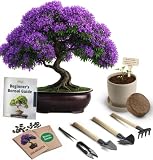
- FREE EXTRA SEEDS!! Avergo’s bonsai starter kit comes with 2 additional seed packets just in case you’ll need more
- A COMPLETE BONSAI STARTER KIT – Avergo’s DIY bonsai tree kit contains everything you need to grow your own special mini trees
- BONSAI TREE STARTER KIT - With seeds of Avergo's most popular Japanese bonsai mini tree
- SPECIAL GIFTS – Indoor planting is just fun! Bonsai kit is a great gift for plant lovers - birthday, Mother’s Day, Valentine's Day, Christmas, etc. For women & men
- EASY TO GROW – Sprouting bonsai trees can be challenging. Though our seeds have higher germination rate we've added extra seeds to increase your chances of success
10. American basswood
Tilia americana, also called American linden, is a large and relatively rapid-growing hardwood of fertile eastern and central woodland soils. With adequate moisture, it can provide shade sooner than many slower-growing long-lived hardwoods and has value for pollinators.
Basswood is generally a better long-term structural choice than very weak-wooded willows, but it is not as universally fast as cottonwood or silver maple. Its mature canopy requires substantial room. It belongs on larger properties, parks, habitat plantings, and spacious landscape plans—not in a narrow strip between a wall and a driveway.
11. American elm
Ulmus americana can grow rapidly after release from competition and on good bottomland sites. It is long-lived and can develop the high, arching canopy historically associated with mature American elms.
Dutch elm disease remains the critical qualification. Resistant cultivars are not automatically equivalent to genetically diverse local native populations, and resistance levels vary. An American elm planting should therefore account for disease risk, cultivar provenance, local conservation objectives, and the desired long-term form. It is a considered restoration or large-landscape choice rather than an automatic fast-shade recommendation.
12. Boxelder
Acer negundo is a fast-growing maple found across a broad continental range, especially in floodplains, open disturbed ground, and other sites where quick establishment matters. It tolerates a wide range of conditions and can be useful in wildlife or restoration work.
Boxelder often develops weak wood, irregular form, and multiple stems. Those characteristics may be acceptable in a naturalized restoration area but undesirable beside a house, parking area, or pedestrian route. It is a functional site-recovery tree, not a universally desirable specimen tree for a small yard.
13. Paper birch
Betula papyrifera is a rapid-growing young tree of northern and boreal North America. The Forest Service reports that young trees grow rapidly, with growth declining substantially as they age.
What’s actually slowing this PC down?
Pick the symptom - the matching free tool is one click away.
Paper birch is best suited to cool climates and moist, well-drained soil. Heat and drought can shorten its useful landscape life, and birch borers may become a problem when trees are stressed. It can be an excellent regional choice in northern landscapes, but it is not a reliable fast-growing birch for hot, dry locations.
14. Bigleaf maple
Acer macrophyllum is the strongest western candidate on this list for rapid shade on a suitable site. It can respond quickly after a canopy opening or overstory removal, particularly in the moist portions of the Pacific Northwest.
The species has very large leaves and can develop substantial mature dimensions. Growth is much less impressive on dry or heavily compacted ground. Bigleaf maple belongs on a site with adequate moisture and room for the crown—not in a narrow, compacted planting pocket created by a building project.
15. Fremont cottonwood
Populus fremontii is a rapid-growing western riparian tree and one of the largest deciduous trees in the Intermountain West and Southwest. It reproduces readily from seed, cuttings, and vegetative sprouts when conditions are suitable.
Free tools Windows power users keep installed
One-click scans. No signup required.
Its requirement is the key qualification: Fremont cottonwood depends on appropriate alluvial moisture. It is a restoration, wildlife, and large-property tree for river corridors, washes, and wet valleys—not a general-purpose tree for an ordinary dry residential landscape. Like eastern cottonwood, it can become very large and should be kept away from constrained infrastructure.
Best fast-growing native trees by project type
For the fastest shade on a large, moist site
Start with eastern cottonwood, silver maple, American sycamore, river birch, or tuliptree. The right choice depends on whether the site is wet or well-drained, how much room exists for the mature canopy, and how close the tree will be to buildings and utilities. Cottonwood and silver maple are among the fastest, but they also demand the most caution around infrastructure.
For riparian restoration
Eastern cottonwood, black willow, river birch, Fremont cottonwood, and boxelder are especially relevant because their natural habitats include floodplains, streambanks, and disturbed alluvium. Restoration plantings should use locally appropriate genetic material and account for flooding, erosion, browsing, channel movement, and changing groundwater conditions.
For larger restoration projects, riparian tree seedlings and native restoration tree shelters may be useful, but shelters and protective products cannot compensate for the wrong species, wrong elevation, or inadequate moisture. Verify local availability, provenance, and any state or watershed requirements before ordering.
Crashes, No Sound, or Screen Glitches?
Random freezes, missing sound and display glitches usually trace back to one bad driver. Find and replace yours safely.Free scan · under a minuteWindows Errors? Fix Them Before They Spread
Repair common Windows errors and clear accumulated junk for a smoother, more stable PC - no reinstall needed.Free scan · no reinstallFor the Southeast
Loblolly pine and sweetgum are strong regional candidates. Tuliptree, river birch, red maple, and American sycamore may also work, depending on soil depth, drainage, sunlight, and moisture. Paper birch is generally not a comparable choice for hot southeastern conditions.
For the Pacific Northwest
Bigleaf maple is the clearest match in this list for rapid western shade where moisture is adequate. Local riparian cottonwoods may be preferable in wet valleys and floodplain settings. Do not transfer the performance of a Pacific Northwest tree to a dry inland site without checking local conditions.
For northern climates
Paper birch, silver maple, red maple, American basswood, and regionally appropriate cottonwoods can be considered. Paper birch needs cool conditions, while cottonwoods and silver maples need sufficient space and moisture. Heat and drought limits should be checked before planting a species that is fast-growing farther north.
For a small residential lot
There is no universal winner. Most of the fastest-growing trees become too large, have weak or brittle limbs, develop aggressive roots, or require wet soils. A slower-growing native tree with stronger structure and a mature size suited to the lot is often safer, less disruptive, and less expensive over the life of the property.
Also popular on Amazon

- FREE EXTRA SEEDS!! Avergo’s bonzie starter kit comes with additional seed packets just in case you’ll need more
- COMPLETE BONSAI STARTER KITS – Avergo’s DIY bonsai kit for beginners contains everything you need for growing your own bonsai plants
- BONSAI TREE STARTER KIT - With seeds of Avergo's most popular bonsai mini tree Wisteria, Flame tree (Delonix Regia), Blue jacaranda (Jacaranda Mimosifolia), Pigeon Pea, and more
- SPECIAL GIFTS – Indoor planting is fun! Bonsai kit is a great gift for plant lovers, women & men – whether for birthdays, Mother’s Day, Valentine’s Day, Christmas, etc.
- GIFTS FOR MOM – Bonsai tree kits are ideal as a Mother’s Day gift for mom and a fun DIY family activity with kids.
A native tree identification book can help confirm whether a candidate is native to the project’s state or ecoregion, distinguish similar species, and avoid buying a tree that is native somewhere in North America but inappropriate locally.
Independent reader supportYour contribution helps us test, update, and keep practical guides available for everyone.How construction changes the planting decision
Plan for the finished site, not the empty construction site
Before selecting a tree, map the final location of buildings, additions, driveways, sidewalks, retaining walls, septic components, drainage routes, fences, overhead utilities, and underground services. A vacant lot may appear to have plenty of room, but the usable planting area often shrinks after grading and infrastructure are installed.
Large trees should not be selected by the size of the nursery container. Base the decision on the mature height, crown width, root behavior, limb strength, and likely maintenance needs. Confirm utility clearances with the utility owner and use local arboricultural or extension guidance where mature dimensions are uncertain.
Protect soil and existing trees during site work
Compacted soil, altered grades, trenching, and damaged roots can reduce establishment even when the species is well matched to the climate. Tuliptree, river birch, bigleaf maple, and other moisture-responsive species are particularly unlikely to show their potential in a severely compacted or poorly drained planting area.
Recommended Free Tools
Keep construction traffic, stored materials, spoil piles, and washout away from planned planting areas and the root zones of trees being retained. If a project changes drainage or final grade, reassess the species choice rather than assuming irrigation will correct every soil problem.
Match the tree to moisture—not just to a hardiness zone
Floodplain species such as cottonwoods, black willow, silver maple, and boxelder can grow rapidly where moisture and oxygen conditions suit them. The same species may struggle or become stressed on dry upland soil. Conversely, loblolly pine, tuliptree, and paper birch each have regional and soil limitations that can be hidden by a generic plant tag.
Identify whether the finished site is dry, seasonally wet, flood-prone, irrigated, compacted, or affected by a high water table. Native status does not eliminate the need for site matching.
Establish young trees after the crew leaves
Rapid-growing species still need reliable establishment. Water deeply enough to keep the root ball and surrounding soil from repeatedly drying, while avoiding chronic saturation unless the species and site are adapted to it. Mulch can reduce competition and conserve moisture, but it should not be piled against the trunk.
In restoration areas, browsing, mowing, and competing vegetation can kill a seedling before its growth rate matters. A tree watering bag and tree shelter can support early establishment in appropriate situations, but product size, duration, animal pressure, flooding, and local maintenance capacity should be evaluated first.
Use professional help when the consequences are high
Large cottonwoods, sycamores, willows, maples, and elms can create substantial future risk if planted beside structures or access routes. A certified arborist tree selection service or local tree professional can help evaluate mature size, structural risk, existing trees, utility conflicts, and the effects of grading. For high-risk sites, that assessment is often cheaper than correcting a badly placed large tree later.
Fast growth versus good structure
| Priority | What to favor | What to question |
|---|---|---|
| Maximum early height | Cottonwood, black willow, silver maple, tuliptree on suitable sites | Whether the site can accommodate the mature tree and its limbs |
| Long-term shade structure | Regionally appropriate basswood, red maple, sycamore, tuliptree, or elm after careful evaluation | Whether rapid juvenile growth is being mistaken for strong branch architecture |
| Wetland or stream restoration | Local cottonwoods, black willow, river birch, boxelder, and Fremont cottonwood where appropriate | Using nursery stock from the wrong watershed or moisture regime |
| Small urban landscape | A smaller, better-structured native species chosen for the exact site | Cottonwood, black willow, silver maple, sycamore, and other trees that outgrow the space |
| Dry or compacted site | A species proven locally for those conditions, possibly after soil improvement | Assuming “native” means tolerant of every disturbed construction soil |
Fast-growing trees are often pioneer species. They are adapted to seize open sunlight and disturbed ground, not necessarily to remain compact, strong, and trouble-free beside buildings for many decades. Some are short-lived; others have weak wood, brittle limbs, poor branch unions, invasive roots, pest problems, or demanding moisture requirements.
Where to source native trees
Buy live trees and seeds from a regional or local source whenever possible. Native provenance matters: a species can be native to the United States but not native to the project’s state, watershed, or ecoregion. Hardiness, drought tolerance, flood timing, disease resistance, and genetic adaptation may differ between populations.
If you are ready to find native tree seedlings, filter by state, ecoregion, watershed, or restoration zone rather than searching only by common name. Confirm whether stock is bare-root, container-grown, or locally collected; whether the seller can document provenance; and whether shipping or planting restrictions apply. For conservation work, coordinate with the local extension service, conservation district, or restoration program before ordering.
One fast-growing tree to exclude: tree-of-heaven
Do not include tree-of-heaven (Ailanthus altissima) in a native-tree planting list. Although it can produce several feet of seedling or sprout growth per year, it is nonnative and invasive in the United States. Rapid growth alone does not make a tree ecologically appropriate. A construction site should not become a source of invasive spread through soil movement, unmanaged sprouts, or contaminated plant material.
Selection checklist
- Confirm local native status: Check the state, ecoregion, watershed, or restoration zone—not just the country.
- Measure the finished planting area: Include buildings, pavements, utilities, septic systems, drainage infrastructure, and future access.
- Check mature dimensions: Plan for the final height, crown width, trunk size, roots, litter, fruit, and limb behavior.
- Match soil moisture and drainage: A floodplain tree may fail on dry compacted fill, while a dry-site tree may fail in saturated soil.
- Protect the root zone: Avoid unnecessary traffic, grade changes, trenching, and material storage where trees will be planted or retained.
- Choose the objective: Quick shade, restoration, wildlife habitat, screening, timber, pollinator value, or a durable residential specimen may require different species.
- Plan establishment care: Arrange watering, weed control, mowing protection, browsing protection, and inspection before planting.
- Use professional assessment for high-risk locations: Especially where a large or weak-wooded species will be near occupied structures, roads, utilities, or public areas.
For a deeper site-selection process, a tree planting guide can help organize mature-size, soil, moisture, spacing, and establishment decisions. It should supplement—not replace—local species guidance and a site-specific assessment.
Bottom line: Eastern cottonwood is the strongest documented rapid-growth benchmark, but the best tree for a real project is the fastest-growing native species that fits the finished site for decades. On large wet properties, cottonwood, willow, silver maple, sycamore, or river birch may be appropriate. In the Southeast, consider loblolly pine and sweetgum; in the Pacific Northwest, bigleaf maple; in northern regions, paper birch, red maple, basswood, and suitable cottonwoods. On small lots or near construction infrastructure, prioritize mature size, root behavior, structural strength, and local adaptation over raw speed.
Frequently Asked Questions
What is the fastest-growing native tree on this list?
Eastern cottonwood is the strongest documented rapid-growth benchmark among these trees. Under favorable conditions, the U.S. Forest Service reports about 5 feet of annual height growth during its first 10 to 15 years. That does not make it suitable for every climate or property: it needs moist soil and enormous amounts of room.
Which fast-growing native trees are best for wet sites?
For wet ground, consider regionally appropriate eastern cottonwood, black willow, river birch, silver maple, sycamore, boxelder, or Fremont cottonwood. The western Fremont cottonwood is primarily a riparian tree, while eastern species should still be matched to local climate and flood conditions.
Which fast-growing native tree is best for a small yard?
Usually none of the very fastest species is ideal by default. Cottonwood, black willow, silver maple, sycamore, and boxelder can become too large, develop weak wood, or cause root and limb problems near buildings. A smaller, slower-growing native tree with stronger structure may be safer.
Does native mean a tree will grow well anywhere in North America?
No. Native status is geographic, not universal. A tree can be native somewhere in North America but unsuitable or nonnative in another state or ecoregion. Check local native status, provenance, soil moisture, climate, and any restoration requirements before buying stock.
Do these 3 things before closing this tab:
1Scan for outdated or missing drivers - takes under a minute2Clear out junk files and repair common Windows errors3Fix the driver behind crashes, sound loss and screen glitchesWhy is tree-of-heaven excluded from this list?
Tree-of-heaven (Ailanthus altissima) should not be included. It can grow rapidly, but it is nonnative and invasive in the United States. Fast growth is not a substitute for ecological suitability.
How should construction projects plan for fast-growing trees?
Construction traffic, soil compaction, grade changes, trenching, drainage alterations, and stored materials can damage roots or make a site unsuitable for a fast-growing species. Plan the final tree location before site work, protect planting areas, and evaluate utilities, septic systems, pavement, and future access.
The Bottom Line
Eastern cottonwood is the best-supported rapid-growth leader, but it is rarely the best choice for a small or infrastructure-heavy site. Select a locally native species by matching mature size, soil moisture, structural strength, and regional provenance to the finished property—not by growth rate alone.
Quick Recap
Product prices and availability are accurate as of the date/time indicated and are subject to change. Any price and availability information displayed on Amazon at the time of purchase will apply.

