Free tools Windows power users keep installed
One-click scans. No signup required.
A 100V outlet supplies a different nominal voltage from a 120V outlet. The plugs may look similar, but a 100V appliance is not automatically safe to use on 120V—and a 120V appliance may not operate correctly on 100V.
Before connecting equipment, compare the outlet’s voltage and frequency with the appliance nameplate. A plug adapter changes only the physical connection; it does not change voltage or frequency.
As an Amazon Associate I earn from qualifying purchases.
100V vs. 120V at a glance
| System | Nominal voltage | Frequency | Typical application |
|---|---|---|---|
| Japan household supply | 100V AC | 50Hz or 60Hz, depending on region | Japanese residential equipment |
| United States general household receptacles | 120V AC | 60Hz | North American residential equipment |
These are nominal values, not guarantees that every receptacle measures exactly 100V or 120V. Japan’s cited voltage-maintenance rule allows approximately 95–107V around its 100V standard. U.S. guidance referencing ANSI C84.1 lists recommended 120V utilization ranges including 108–126V for Range A and 104–127V for Range B.
Quick wins for a faster PC:
Scan for outdated or missing drivers - takes under a minuteDriver Scan →Repair Windows errors before they cause bigger problemsFix Now →Fix the driver behind crashes, sound loss and screen glitchesFind Drivers →Sources: Japan Ministry of Justice electrical information, Japan electrical installation regulation, and USDA guidance referencing ANSI C84.1.
#1 Best Overall

- NON-CONTACT DETECTION of AC voltage in cables, cords, circuit breakers, lighting fixtures, switches, non-tamper-resistant outlets, and wires
- CLEAR INDICATION: Bright LED illuminates green to indicate tester is operational and flashes red and emits a beeping alert when voltage is detected
- BROAD APPLICATION with a 50 to 1000V AC power detection range
- CONSERVE BATTERIES with auto power-off function
- LIGHTWEIGHT AND DURABLE compact design with a convenient clip fits securely in pocket; 6.6-Foot (2 m) drop protection
Voltage, frequency and plug shape are different things
Voltage is the electrical potential supplied by the receptacle. Frequency is the number of AC cycles per second, measured in hertz. Plug and receptacle configuration describes the physical shape, grounding, polarization and current rating.
Some Japanese and American installations use similar Type A or Type B plug arrangements, but physical similarity does not establish electrical compatibility. Receptacles vary by installation and local code requirements. A plug that fits can still deliver the wrong voltage or frequency.
In North America, “110V,” “115V” and “120V” are often informal or historical terms for the same general household system. Modern U.S. general-purpose receptacles are nominally 120V, although the actual measured voltage varies. The U.S. Department of Energy describes common household service as 120/240V at 60Hz: Electricity 101.
What’s actually slowing this PC down?
Pick the symptom - the matching free tool is one click away.
Why Japan uses 100V and the United States uses 120V
The difference is historical and infrastructural, not a simple choice between a “better” and “worse” voltage. Electrical systems developed under different utility standards, and each country’s wiring, transformers, appliances, safety rules and installed equipment evolved around those standards.
Japan’s household supply is standardized around 100V. U.S. general-purpose residential receptacle circuits are nominally 120V. Existing infrastructure makes changing an entire national system impractical. NEMA’s comparison of NEC and IEC systems discusses utilization voltage as one of the major differences among national electrical infrastructures: NEMA NEC/IEC comparison.
Rank #2

- SMART BUY: A complete, high-performance kit that offers convenience and value
- COMPLETE OUTLET TESTER TOOL KIT: Includes GFCI Tester (Cat. No. RT210) and Non-Contact Voltage Tester Pen (Cat. No. NCVT1P)
- DETECT COMMON WIRING PROBLEMS: Quickly identifies wiring issues in standard and GFCI receptacles
- GFCI OUTLET COMPATIBLE: Confirms the proper operation of ground fault protective devices in GFCI outlets
- VOLTAGE TESTER PEN: Non-contact detection of voltage in cables, circuit breakers, lighting fixtures, switches, and more
What the 20% difference does to equipment
Nominally, 120V is 20% higher than 100V:
(120 - 100) / 100 = 20%For a purely resistive load with an unchanged resistance, power varies approximately with the square of voltage:
P = V² / R
P120 / P100 = (120 / 100)² = 1.44
That means the same resistance could theoretically dissipate about 44% more power at 120V than at 100V. Actual appliances may behave differently because they include thermostats, electronic controls, motors, switching power supplies or other components.
Heating appliances
Rice cookers, soldering irons, hot plates, toasters, lamps and other heating equipment may become hotter or draw more power when a 100V model is connected directly to 120V. Excess heat can damage heating elements, insulation, switches, thermostats and control electronics, and may create a fire or shock hazard.
Motors and compressors
A 100V motor on 120V may draw abnormal current, run hotter or suffer winding and insulation damage. Starting behavior matters particularly for pumps, tools, refrigerators and compressors. Wattage alone is not enough to determine whether a transformer is suitable.
Electronic equipment
Some electronics fail immediately when overvolted; others develop overheating or component damage over time. Many laptop, phone, camera and USB-C power supplies accept a wide range such as 100–240V, but that must be confirmed on the label.
Rank #3
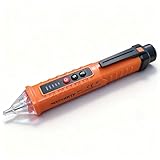
- NCV: The Non-Contact Voltage Tester is equipped with NCV sensing probe, which provides you with the easiest and safest way to check the voltage in a wire, outlet, or switch. When it is close to an outlet or power cord, the voltage detector will emit different levels of alarm sounds and signal indicator lights to indicate the presence and strength of voltage
- 3 Sensitivity Modes: The live wire tester suits different voltage detection ranges. After powering on, it is in low sensitivity mode by default (buzzer 1 time), press "S" once to enter medium sensitivity mode (buzzer 2 times), and press "S" again to enter high sensitivity mode (buzzer 3 times)
- Detection Light and Flashlight: Built-in detection light and tail flashlight bring you convenience when working in the dark, and can be used as an emergency light in emergencies. The tail flashlight can only be turned on when the tester is off
- Compact Design: The pocket-sized electrical tester pen comes with a convenient pen hook that makes it easy to carry in your shirt pocket. When the battery voltage is lower than 2.5V, the power indicator flashes 3 times, and the buzzer buzzes and then automatically shuts off, please replace the battery in time. Automatic Power Off after 3 minutes without operation or signal detection
- Widely Applicable: The circuit tester is suitable for checking circuit breakers, lighting fixtures, switches, and outlets, which is the safest way to check for electrical leakage. The electrical tester is perfect for professional testers, DIY users, hobbyists, and homeowners
For a specific example, Hakko warns that its Japanese 100V FR-301 requires a step-down transformer on a 120V outlet and explains that direct connection can overvolt its PCB and heating element. That warning applies to that model, not automatically to every 100V product: Hakko’s FR-301 guidance.
The Tool Desk
Outbyte Driver Updater FREEScan for outdated or missing drivers - takes under a minuteDriver Scan →Outbyte PC Repair FREEClear out junk files and repair common Windows errorsFree Scan →Can a 100V appliance be used in a 120V outlet?
Do not connect it directly unless the manufacturer explicitly states that its permitted input range includes 120V. A device marked only 100V should generally be treated as a 100V-only appliance.
If the appliance is otherwise appropriate for use, a properly rated 120V-to-100V step-down transformer may be required. The transformer must have adequate continuous capacity, startup capacity where applicable, correct grounding and suitable thermal protection. It corrects voltage but does not automatically correct frequency, certification or warranty limitations.
Can a 120V appliance be used in Japan?
A 120V-only appliance connected to 100V receives about 83.3% of its rated voltage:
100 / 120 = 0.833Heating equipment may run cooler or more slowly. Motors may fail to start, run weakly or overheat during abnormal operation. Electronic controls may malfunction. Lower voltage is not automatically harmless.
Rank #4

- Additional Tips - The following incorrect operations may cause the multimeter not to show results: Firstly, the plugs of test leads are not fully inserted or not inserted into the correct sockets. Secondly, the manual rotary switch is not placed in the correct position. In addition, this meter can not test all AC Current and below 100mV AC Voltage. Please check the user manual carefully before measurement.
- Versatile Digital Multimeter - Accurately measures AC/DC Voltage, DC Current, Resistance, and Diode. This Multimeter is a really useful tool for solving industrial and household electrical issues. Suitable for Household Outlets, Fuses, Batteries (including Vehicles), Automotive Circuit Troubleshooting, Charging Systems, Testing electronics in Cars etc.
- Troubleshooting with Accuracy - This Multimeter has a sampling speed of 2 times per second; Built-in a backlight LCD display with 3 ½ digits (1999 count) 0.6”, and high polarity including negative and positive readings.
- Ensures Safety - Double fuse is anti-burn and protects from overloading. The silicone cover can protect the multimeter from failing damage and prevent electric shocks. And low battery indication will be displayed when battery power is low.
- Ease of Use - Support Data Hold and Continuity Buzzer. Includes Convenient feature like LCD Backlit Screen makes it easy to use in dimly light areas. Batteries/Set of Test Leads/User Manual are Included.
If the manufacturer permits it, a 100V-to-120V step-up transformer may be appropriate. Frequency compatibility must still be checked because a step-up transformer normally leaves the input frequency unchanged.
Why frequency matters
The United States uses 60Hz household AC. Japan uses 50Hz in eastern regions and 60Hz in western regions. Many modern power supplies accept both, but motors, clocks, turntables, transformers and timing-sensitive equipment may not.
A transformer changes voltage, not necessarily frequency. Equipment marked 50/60Hz is generally designed for either frequency. Equipment marked only 50Hz or 60Hz requires closer checking. Japan’s electrical product guidance is available from METI.
Plug adapter vs. transformer vs. frequency converter
| Equipment | What it changes | When it is appropriate |
|---|---|---|
| Plug adapter | Physical plug shape only | The appliance already accepts the local voltage and frequency |
| Step-down transformer | Higher voltage to lower voltage | For example, 120V input to 100V output |
| Step-up transformer | Lower voltage to higher voltage | For example, 100V input to 120V output |
| Frequency converter | Electrical frequency, sometimes with voltage | Only when the equipment specifically requires 50Hz-to-60Hz or 60Hz-to-50Hz conversion |
Be cautious with products marketed as “voltage converters.” The term can describe different devices, including ordinary transformers and load-specific electronic converters. Check input voltage, output voltage, continuous wattage or VA, surge capacity, waveform, grounding, certification and thermal protection.
PC Slower Than It Used to Be?
A free scan shows the junk files, broken settings and background clutter dragging Windows down - then fixes them in one click.Free scan · Windows 10 & 11Outdated Drivers Are Slowing You Down
One free scan finds every outdated or missing driver and matches the right update for your exact hardware.Free scan · exact hardware matchA surge protector is not a voltage converter. It may address certain transient overvoltages, but it does not turn 120V into 100V.
Best Value

- SAFETY FIRST: It will send out multiple alarms through sound and light. When the voltage is detected, the tip will send out red light and beep. When the higher the sensed voltage is, or the closer it is to the voltage source, it beeps at a higher frequency and the percentage value will be larger. At the same time, the screen will be red or green, red means high voltage and live wire are detected, green means low voltage and null wire are detected
- NON-CONTACT: With NCV inductive probe for AC voltage; Just place the tip near a terminal strip, outlet, or supply cord. When the tip glows red and the pen beeps, you know there's voltage present. The live wire detector can automatically detect the live or neutral wire. Ideal for breakpoint Test. Handy circuit tester for electricians, homeowners
- DUAL RANGE: Detects standard and low voltage (12-1000V AC / 70-1000V AC) for more sensitive and flexible measurements. Press the S button to adjust sensitivity and adapt low range for doorbells, thermostats, irrigation wiring etc.; The NCV sensor automatically recognizes the voltage and displays it on the bar graph, and the percentage value can display the voltage signal intensity more intuitively
- SECURITY LEVEL: IEC rated CAT III 1000V CAT IV 600V, Meets CE requirements; The electrical tester is safely double insulated. High Voltage Alert to warn you of voltage above 90V, the screen turn red and the safety symbol on the screen shines
- COMPACT DESIGN: Bright LED flashlight for work in dim ares; Low-Power-Indicator when battery voltage is below 2.5V; Automatic Power Off after 5 minutes without operation or signal detection; Pocket-sized, pen hook allows you to carry it in your shirt pocket. We provide 36-Month after sale service, Please feel free to contact us if you have any concerns
How to read the appliance label
Check the nameplate, power brick or manufacturer’s manual before plugging anything in.
- 100–240V, 50/60Hz: Generally designed for worldwide voltage ranges. A plug adapter may be all that is needed, if the plug shape differs.
- 100/120V, 50/60Hz: May indicate a supported range or a selectable configuration. Follow the model-specific instructions.
- 100V, 50/60Hz: Treat as single-voltage 100V equipment unless the manufacturer says otherwise.
- 120V, 60Hz: Treat as single-voltage North American equipment unless the permitted range includes 100V.
- 100V/200V: This may describe a selectable or system-specific rating, not a universal input range. Consult the manual.
Also check wattage or VA, frequency, voltage-selector position, grounding, plug configuration, intended market, certification and warranty conditions. Conair gives examples of the distinction between single-voltage and dual-voltage labels: Conair customer support.
Choosing and sizing a transformer
- Find the appliance’s rated watts or VA.
- Identify whether the load is resistive, electronic, inductive or motor-driven.
- Choose a transformer with a continuous rating above the appliance’s demand.
- Allow for startup surges from motors, compressors, pumps and some switching power supplies.
- Confirm the exact output voltage and whether the output frequency is suitable.
- Check grounding, ventilation, fuse protection, thermal protection and certification.
There is no universal multiplier that makes every transformer choice safe. A small resistive load and a compressor have very different requirements. High-wattage heaters, kitchen equipment, HVAC equipment, medical equipment and permanently installed devices should be evaluated by a qualified electrician or replaced with locally rated equipment.
Do these 3 things before closing this tab:
1Fix the driver behind crashes, sound loss and screen glitches2Repair Windows errors before they cause bigger problems3Scan for outdated or missing drivers - takes under a minuteWhen a local replacement is safer
For high-power heating appliances, refrigerators, compressors, tools and permanently installed equipment, a local-voltage model is often simpler and safer than relying on a converter. It avoids transformer sizing problems and may provide the correct plug, grounding, local certification, warranty support and frequency rating.
A transformer also does not make an imported appliance automatically compliant with local safety requirements. Japan’s Electrical Appliances and Materials Safety Act includes PSE requirements for covered products: METI PSE information. Electrical operation, product certification, installation compliance and warranty coverage are separate questions.
Practical decision tree
Does the appliance label include the outlet voltage?
├─ Yes: Is the local voltage inside the stated range?
│  ├─ Yes → Use a plug adapter only if needed for the plug shape.
│  └─ No → Use an appropriate transformer, or do not use the appliance.
└─ No → Do not connect it until the rating is verified.
Before energizing equipment, verify:
- Local nominal voltage and measured voltage where relevant.
- Appliance input-voltage range.
- Required frequency.
- Wattage or VA rating.
- Motor, compressor, heater or electronic load type.
- Startup-current requirements.
- Grounding and polarization.
- Certification, warranty and local installation requirements.
If the plug fits but the label is unclear, leave it disconnected. A physical fit is not proof of electrical safety.
Quick Recap
Product prices and availability are accurate as of the date/time indicated and are subject to change. Any price and availability information displayed on Amazon at the time of purchase will apply.




