Outdated Drivers Are Slowing You Down
One free scan finds every outdated or missing driver and matches the right update for your exact hardware.Free scan · exact hardware matchWindows Errors? Fix Them Before They Spread
Repair common Windows errors and clear accumulated junk for a smoother, more stable PC - no reinstall needed.Free scan · no reinstallThe best front-door color depends on the house around it. Deep navy, charcoal or black, deep green, classic red, muted teal, warm yellow, warm white and natural wood are dependable choices—but the right one should coordinate with the roof, siding, brick, stone, trim, landscaping and available light.
The best front-door color is the one that works with your home’s fixed exterior elements—not necessarily the color that looks most appealing on a phone screen. For most homes, the strongest starting points are deep navy, charcoal or black, deep green, classic red, muted teal, warm yellow, and natural wood.
As an Amazon Associate I earn from qualifying purchases.
Before choosing, look at the roof, siding, brick, stone, trim, porch, landscaping and the amount of sunlight at the entry. Then decide whether you want the door to blend into that palette or provide a deliberate focal point. Test physical samples on the actual door before buying a full container of paint.
7 front-door colors that reliably improve curb appeal
1. Deep navy: the safest colorful alternative to black
Deep navy gives a front door the authority of a dark neutral while adding more color and depth. It works especially well on Colonial, traditional, coastal-inspired and transitional homes. Navy pairs naturally with white trim, gray siding, beige, natural wood, stone and many brick colors.
#1 Best Overall

- Ready to use, pre-mixed door and trim paint offers a fresh new look on interior or exterior metal, wood and fiberglass
- Water-based paint formula emits less odor and withstands fading for a long lasting finish
- Dries to the touch in 45 minutes, up to 3X faster than traditional oil-based paints
- Durable, chip resistant coating provides ultimate protection with modern curb appeal
- Beautiful satin door paint is available in 6 pre-mix color options for the perfect look
Use a saturated navy when you want a formal, defined entrance. A lighter or slightly grayed blue creates a more relaxed coastal or cottage effect. Sherwin-Williams includes shades such as Naval and In the Navy in its exterior color guidance; Benjamin Moore highlights options including Van Courtland Blue, Yarmouth Blue and Aegean Teal; and Behr describes deep blue choices such as Compass Blue as sophisticated and timeless.
2. Charcoal or black: crisp, versatile contrast
Black is one of the most adaptable front-door choices. It creates clean contrast against white, cream and pale gray siding, and it can look equally appropriate on a traditional, modern or transitional home. Charcoal is a useful alternative when pure black feels too severe or when the house already contains cool gray siding, stone or other subdued materials.
Sherwin-Williams identifies Tricorn Black and Iron Ore as classic or refined choices, while Benjamin Moore includes Black HC-190 among its popular front-door colors. Behr also describes black as a timeless option that suits many home styles.
Quick wins for a faster PC:
Clear out junk files and repair common Windows errorsFree Scan →Fix the driver behind crashes, sound loss and screen glitchesFind Drivers →Repair Windows errors before they cause bigger problemsFix Now →Dark paint deserves a little extra caution. It can make dents, sanding marks and uneven surfaces more noticeable, and it may absorb more heat in direct sun. Check the door manufacturer’s guidance, particularly for composite, fiberglass or other manufactured doors, before choosing a very dark finish.
3. Deep green: grounded and connected to the landscape
Green links the entry to trees, shrubs, gardens and natural materials. A deep green such as a hunter or forest shade creates a grounded, traditional appearance. Softer sage works better for farmhouse, Craftsman, rustic and relaxed homes.
Sherwin-Williams describes Hunt Club as a lush, grounding green and Retreat as a softer sage. Benjamin Moore’s suggested green families include Salisbury Green, Mohegan Sage and Cactus Green.
Green is especially effective beside wood, stone, warm neutral siding and mature planting. View the sample in both direct and reflected daylight, however. Foliage can reflect green onto the door and make a color appear more vivid or yellow than it looked on a paint card.
Rank #2

- Ready to use, pre-mixed door and trim paint offers a fresh new look on interior or exterior metal, wood and fiberglass
- Water-based paint formula emits less odor and withstands fading for a long lasting finish
- Dries to the touch in 45 minutes, up to 3X faster than traditional oil-based paints
- Durable, chip resistant coating provides ultimate protection with modern curb appeal
- Beautiful satin door paint is available in 6 pre-mix color options for the perfect look
4. Classic red: a warm, unmistakable focal point
Red brings warmth, energy and traditional character to an entry. It is a strong choice when you want the front door to be noticed from the street, particularly against light siding or neutral trim.
Deep brick red and burgundy usually coordinate more naturally with traditional architecture, red brick, brown roofs and warm masonry. A brighter red or coral is more playful and can enliven a pale exterior. Sherwin-Williams lists colors such as Sun Dried Tomato and Coral Clay, while Benjamin Moore highlights Red 2000-10 and Caliente AF-290. Behr likewise presents red as a traditional, welcoming entrance color.
Red should still relate to the home’s existing undertones. A blue-based red can look disconnected beside orange brick or a warm beige facade, while an orange-based red may clash with cool gray siding.
5. Muted teal or blue-green: distinctive without being loud
Blue-green combines blue’s calm quality with green’s connection to nature. A muted teal can look sophisticated and low-drama; a brighter aqua or turquoise makes the door the home’s strongest visual statement.
Do these 3 things before closing this tab:
1Clear out junk files and repair common Windows errors2Fix the driver behind crashes, sound loss and screen glitches3Repair Windows errors before they cause bigger problemsThis family suits coastal, cottage, Craftsman and contemporary homes, especially with white trim, pale gray siding or natural wood. Benjamin Moore features Aegean Teal, while Behr highlights options such as Pure Turquoise and Breezeway. Blue-green is also a practical choice when a plain navy feels too expected but a bright color would be excessive.
6. Warm yellow, gold or amber: cheerful in a shaded entry
Yellow and amber can brighten a recessed porch, north-facing entry or otherwise neutral facade. They create a welcoming impression and work particularly well with white, gray, blue-gray, dark green, natural wood and warm masonry.
Soft golden yellow is generally easier to live with than a highly saturated lemon shade. Mustard, ochre and amber provide more weight on a large facade. Sherwin-Williams lists Forsythia, Nugget and Rookwood Amber among its front-door inspirations; Benjamin Moore highlights Sunny Days and Marblehead Gold; and Behr includes Celebration as a mustard-toned accent.
Rank #3

- Ready to use, pre-mixed door and trim paint offers a fresh new look on interior or exterior metal, wood and fiberglass
- Water-based paint formula emits less odor and withstands fading for a long lasting finish
- Dries to the touch in 45 minutes, up to 3X faster than traditional oil-based paints
- Durable, chip resistant coating provides ultimate protection with modern curb appeal
- Beautiful satin door paint is available in 6 pre-mix color options for the perfect look
Sample yellow carefully. Strong daylight and reflected greenery can make it appear more intense than expected.
7. Warm white, cream or natural wood: restrained and cohesive
A warm-white or cream door is the lowest-contrast option and can make an entry feel clean, calm and coordinated. It is particularly useful when the house already has a strong brick, stone or siding pattern and the door should not compete with it.
Choose a warm white rather than a stark blue-white when the exterior includes beige, cream, brown, red brick or warm wood. Match the undertones rather than trying to find a universally “true” white.
If the door is made from attractive wood, paint may not be the best finish. A stain can preserve the grain and suit stone, brick, Craftsman architecture and earthy Southwest palettes. Brown, cedar and other warm wood tones also provide contrast without introducing a separate bright accent color.
How to match a door color to the rest of the house
Start with the materials that are expensive or impractical to change. The roof, brick, stone, siding, fixed trim, porch and established landscaping should establish the color direction. Exterior color guidance from Sherwin-Williams specifically recommends considering the roof, brick and stone, while Benjamin Moore recommends using the existing exterior palette and natural landscape as inspiration.
Recommended Free Tools
| Existing exterior | Front-door colors to test first | What to watch for |
|---|---|---|
| White or pale siding | Black, charcoal, navy, red, green, yellow or teal | Almost any accent can work, so use the home’s architecture and desired mood to narrow the choice. |
| Gray siding | Navy, charcoal, black, muted green, yellow or warm wood | A gray door too close in value may disappear unless a blended look is intentional. |
| Beige, tan or cream siding | Deep green, navy, charcoal, dark brown, red, blue-green, yellow or amber | Very cool colors can look disconnected from a strongly warm facade. |
| Red or brown brick | Deep green, navy, black, charcoal, muted teal or warm wood | Brick undertones vary. Place samples beside the actual masonry rather than relying on a generic brick photo. |
| Stone exterior | A color drawn from a repeated stone undertone, or a controlled contrasting accent | Avoid competing with stone’s natural variation; a highly saturated color may overwhelm it. |
| Wood or Craftsman home | Deep green, blue-green, navy, warm red, amber or natural stain | Coordinate with the wood species, stain, brackets, porch beams and surrounding planting. |
| Modern home | Black, charcoal, saturated navy, restrained teal or a carefully selected bright accent | Keep the color decision deliberate and graphic rather than adding an unrelated decorative hue. |
Choose between a blending color and a contrasting color
A door does not have to be dramatic to improve an exterior. Use a blending color when the facade already has prominent brick, stone, siding patterns or architectural detail. Warm white, cream, a related brown or a subdued green can make the entry feel integrated.
Use a contrasting color when the exterior is visually quiet or the entry needs more presence. Navy against white siding, black against pale gray, red against cream, or teal against natural wood creates a clear focal point.
Rank #4
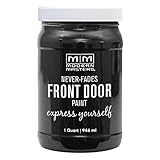
- Suitable for interior/exterior metal or wood surfaces such as doors and shutters
- Water-based formula provides long last durability
- Dries to the touch in 1 hour and covers up to 100 sq. ft.
- Never-Fade technology ensures surface will stay as beautiful as the first day it was painted
- Provides an easy to maintain smooth satin finish
Contrast depends on more than hue. A medium blue may not stand out against medium-gray siding, even though blue and gray are different colors. Compare the lightness and darkness of the door with the surrounding facade as well as the undertones.
Account for region, orientation and changing light
The same paint can look substantially different depending on climate, landscape and exposure. Behr’s regional guidance notes that Northeast light changes significantly by season, coastal locations often suit lighter or sun-washed colors, colder regions may have dense shade and strong snow reflection, and Southwest homes can support earth tones as well as bright blue, green and pink accents.
The Tool Desk
Outbyte Driver Updater FREEScan for outdated or missing drivers - takes under a minuteDriver Scan →Outbyte PC Repair FREERepair Windows errors before they cause bigger problemsFix Now →- North-facing or shaded entries: Warm white, amber, warm red and some greens can prevent the doorway from feeling cold or flat.
- South- or west-facing entries: Strong sunlight can intensify warm colors. Test yellow, red and orange-based shades at the brightest part of the day.
- Heavily landscaped entries: Green may blend beautifully with planting, but reflected foliage can alter the way the paint reads.
- Coastal or high-glare locations: Pale blue, muted teal, white and sun-softened neutrals may feel more natural than very dark, heat-absorbing colors.
- Snowy or high-reflection environments: Sample dark and saturated colors carefully because reflected light can make them appear sharper and more intense.
View samples at the actual door in morning, midday and evening light. Paint chips and digital visualizers are useful for narrowing down candidates, but they cannot fully reproduce the effect of the door’s material, sheen, surrounding colors and outdoor light. Benjamin Moore recommends obtaining samples before committing.
Paint selection: finish and product compatibility matter
For a frequently touched exterior door, satin, semi-gloss and gloss finishes are generally more practical than flat finishes. They are easier to wipe clean and tend to handle scuffs better. Gloss reflects the most light, but it also exposes dents, brush marks and other surface imperfections more readily. Satin or semi-gloss is often the more forgiving compromise.
Choose an exterior-rated coating that is compatible with the door’s material. Exterior doors experience ultraviolet exposure, rain, humidity, temperature changes and repeated handling. Interior door paint is not automatically suitable for that environment.
Benjamin Moore recommends Regal Select Exterior for front doors and identifies Element Guard for wet or humid environments. It also describes a waterborne alkyd product when a smooth, higher-shine finish is desired. Behr identifies Cabinet, Door & Trim Enamel as an exterior door option. These are examples of manufacturer guidance—not a universal ranking. The product label and the door manufacturer’s instructions should control the final choice.
Once you have narrowed the color, compare the label’s instructions for wood, fiberglass, metal, composite or previously painted surfaces. If the door is exposed to intense sun, ask the manufacturer whether the selected dark color and coating are appropriate for that substrate and exposure.
Best Value

- Suitable for interior/exterior metal or wood surfaces such as doors and shutters
- Water-based formula provides long last durability
- Dries to the touch in 1 hour and covers up to 100 sq. ft.
- Never-Fade technology ensures surface will stay as beautiful as the first day it was painted
- Provides an easy to maintain smooth satin finish
Supplies to gather before painting
The core purchase is exterior door paint or an exterior-rated door-and-trim enamel. Select the finish and formula only after confirming compatibility with the door material and existing coating.
You may also need exterior door primer, particularly for bare areas, repairs, stained surfaces, a major color change, an uncertain or incompatible old coating, or a substrate that requires specialized adhesion. Use a general-purpose primer for many non-metal doors and a metal primer for metal doors, following the product label.
- Fine- to medium-grit sandpaper appropriate for the existing finish
- Painter’s tape and protective plastic or drop cloths
- A small paint roller suitable for the door’s surface
- An angled paint brush for panels, edges and detail work
- Cleaner, rags and a scraper for loose coating
- Filler or exterior repair compound for compatible dents and cracks
- Screwdriver or other tools needed to remove hardware
A front door painting supplies kit can be convenient, but bundled tools are not automatically right for every door. Check the roller nap, brush type, abrasive grade and tape suitability for the coating and surface.
How to paint an exterior front door
- Check the weather and the door’s condition. Aim for conditions near 60–75°F with low humidity when possible. Avoid painting in direct sun, during rain, or when temperatures fall outside the product’s specified range. The paint label takes priority because requirements vary.
- Remove or protect hardware. Removing the handle, lockset, hinges where practical and other hardware produces cleaner edges. If removal is not practical, mask it carefully with painter’s tape and protect the surrounding threshold, floor and trim.
- Repair the surface. Scrape away loose or peeling coating. Fill compatible dents and cracks, then allow repairs to cure as directed. Do not paint over failing paint and expect the new finish to correct it.
- Sand the door. Smooth rough edges and dull the existing finish enough to help the new coating adhere. Feather repaired areas so they do not telegraph through the final paint.
- Clean and let the door dry. Remove dust, grease, chalking and residue with a cleaner compatible with the substrate. Paint will not adhere reliably to a contaminated surface.
- Prime where required. Prime bare material, repairs, stained areas, major color changes and surfaces that need improved adhesion. Use a metal primer for a metal door when the product instructions call for it. Allow the primer to dry fully.
- Apply thin, even coats. Work methodically through panels, rails, stiles and edges. Avoid loading the brush or roller so heavily that paint runs into corners or forms ridges.
- Allow the stated recoat time. Drying time changes with temperature, humidity, ventilation, color and product. Rushing the second coat can drag or soften the first.
- Apply the second coat if needed. Dark colors, bright colors, porous repairs and major color changes may require additional coverage. Inspect in angled light before deciding the job is complete.
- Reinstall hardware only after the finish has hardened sufficiently. Follow the label’s cure guidance, not just the point at which the surface feels dry. Protect the new finish from heavy use during that period.
Common mistakes to avoid
- Choosing from a screen alone: Digital color can vary by display and does not show how the paint interacts with the facade.
- Ignoring undertones: A cool blue-white may look harsh beside warm brick; an orange-red may fight cool gray siding.
- Skipping preparation: Dirt, gloss, peeling paint and unrepaired damage are common causes of poor adhesion and an uneven finish.
- Using interior paint outside: Exterior doors need a coating designed for weather, light and temperature changes.
- Painting in unsuitable conditions: Direct sun, rain, high humidity or temperatures outside the label range can affect drying and finish quality.
- Assuming one sheen fits every door: Higher sheen is washable but reveals more defects; flatter finishes hide defects but are less practical for a high-touch entrance.
- Picking a dark color without checking heat exposure: Confirm that the coating and door material can handle the location.
A practical decision checklist
- Photograph the house and identify the undertones in the roof, brick, stone, siding and trim.
- Choose whether the door should blend in or contrast.
- Shortlist two or three colors from the families above.
- Test physical samples on the door or on large boards positioned beside it.
- Check the samples in shade, direct sunlight and evening light.
- Confirm the door material, existing coating, recommended primer and exterior-use rating.
- Select a practical sheen, then prepare the surface before opening the paint.
For most homeowners, deep navy is the best first colorful sample, charcoal or black is the most versatile high-contrast choice, and deep green is the strongest option when landscaping or stone is prominent. Red, teal, yellow, warm white and natural wood can be equally successful when they respond to the home’s existing palette rather than competing with it.
Frequently Asked Questions
What is the best colorful alternative to a black front door?
Deep navy is the safest colorful alternative to black because it provides strong contrast while remaining compatible with traditional, coastal and transitional homes. It works well with white, gray, beige, wood, stone and many brick exteriors.
Is black paint a good choice for an exterior front door?
Yes, but check the door material, sun exposure and manufacturer’s instructions first. Dark colors absorb more heat and can make surface imperfections more visible, especially on doors exposed to intense sunlight.
What paint finish is best for a front door?
Satin and semi-gloss are practical choices for many exterior doors because they are easier to clean and resist scuffs better than flatter finishes. Gloss is more reflective but can reveal dents and brush marks.
What’s actually slowing this PC down?
Pick the symptom - the matching free tool is one click away.
Do I need primer before painting my front door?
Use primer on bare, repaired, stained or significantly different surfaces, and whenever the existing coating may be incompatible or the substrate requires specialized adhesion. Metal doors may need a metal-specific primer.
The Bottom Line
Bottom line: There is no universally best front-door color. Start with the roof, siding, brick, stone, trim and landscape; choose blend or contrast; test samples in real outdoor light; and use an exterior-rated coating matched to the door material. Deep navy, charcoal or black, deep green, classic red, muted teal, warm yellow and natural wood are the most dependable starting points.
Quick Recap
Product prices and availability are accurate as of the date/time indicated and are subject to change. Any price and availability information displayed on Amazon at the time of purchase will apply.