Some links on this page are affiliate links: if you buy through them we may earn a commission, at no extra cost to you.
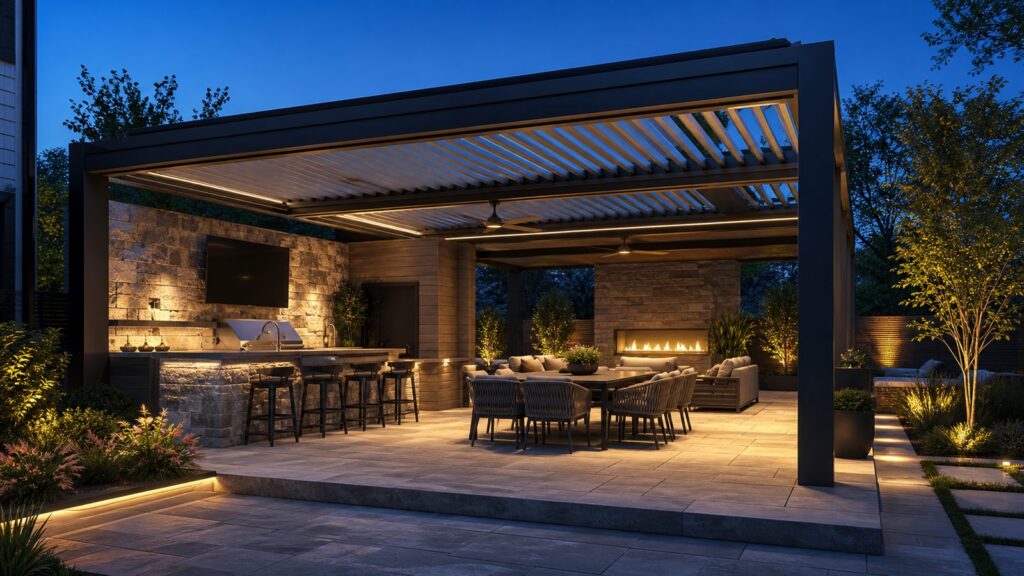
A luxury patio is not created by adding a few app-controlled bulbs after the furniture arrives. The best outdoor spaces are planned like an extension of the house: structure first, utilities next, then lighting, controls, shade, comfort, cooking, and entertainment. When those layers are designed together, the finished patio feels calm, intentional, and easy to use.
On our job sites, the most expensive patio tech mistakes usually happen before any device is installed. A homeowner pours a slab without conduit sleeves. A pergola is ordered before anyone checks footing requirements. A TV wall is framed without a dry wiring path. A grill island is built before the electrical load, gas route, ventilation clearances, and drainage are settled. Fixing those misses later can mean saw-cutting concrete, pulling pavers, opening ceilings, or rebuilding finished stonework.
As an Amazon Associate I earn from qualifying purchases.
The Tool Desk
Outbyte PC Repair FREERepair Windows errors before they cause bigger problemsFix Now →Outbyte Driver Updater FREEScan for outdated or missing drivers - takes under a minuteDriver Scan →For 2026 projects, the smart money goes into five upgrades: layered low-voltage lighting, motorized shade or a louvered pergola, outdoor-rated audio/video and Wi-Fi, climate controls, and smart kitchen or water-management systems. The visible result is comfort and polish. The hidden value is infrastructure that keeps the patio useful, serviceable, and upgrade-ready.
1. Layered Smart Lighting That Changes With the Evening
Lighting is usually the highest-impact smart patio upgrade for the money. A well-designed system makes the patio safer, more usable after sunset, and more refined without making it feel overlit. The goal is not one bright fixture over the seating area. The goal is zones.
Popular on Amazon

- LONG WI-FI RANGE AND IP64: Long Wi-Fi range up to 300 feet with IP64 weather resistance, protecting against dust and splashes of water. Waterproof cover is attached to protect it from dirt when not in use. Supports up to 15A/1875W.
- VOICE AND REMOTE CONTROL: Control outdoor devices hands-free with Alexa or Google Assistant, or turn them on and off from anywhere using the Kasa app.
- EASY SETUP AND USE: 2.4GHz Wi-Fi connection required. Plug in, open the Kasa app, follow the simple instructions and enjoy the wifi smart plug. For landscape lighting, swimming pool pumps, holiday lights, or other appliances.
- SCHEDULING: Use schedules or countdown timer to set your smart plug to automatically turn on and off at the time you want. Sunset/sunrise offset makes it even smarter to act according to the real daytime.
- 𝐍𝐞𝐰 𝐅𝐞𝐚𝐭𝐮𝐫𝐞 𝐇𝐢𝐠𝐡𝐥𝐢𝐠𝐡𝐭: 𝐊𝐚𝐬𝐚 𝐝𝐞𝐯𝐢𝐜𝐞𝐬 𝐚𝐫𝐞 𝐧𝐨𝐰 𝐬𝐞𝐚𝐦𝐥𝐞𝐬𝐬𝐥𝐲 𝐬𝐮𝐩𝐩𝐨𝐫𝐭𝐞𝐝 𝐛𝐲 𝐓𝐚𝐩𝐨 𝐀𝐩𝐩, 𝐰𝐢𝐭𝐡 𝐧𝐨 𝐡𝐚𝐫𝐝𝐰𝐚𝐫𝐞 𝐫𝐞𝐩𝐥𝐚𝐜𝐞𝐦𝐞𝐧𝐭 𝐧𝐞𝐞𝐝𝐞𝐝. 𝐄𝐧𝐣𝐨𝐲 𝐨𝐧𝐞-𝐭𝐚𝐩 𝐢𝐧𝐭𝐞𝐠𝐫𝐚𝐭𝐢𝐨𝐧(𝐥𝐨𝐠𝐠𝐞𝐝 𝐢𝐧 𝐰𝐢𝐭𝐡 𝐭𝐡𝐞 𝐬𝐚𝐦𝐞 𝐚𝐜𝐜𝐨𝐮𝐧𝐭), 𝐦𝐨𝐫𝐞 𝐬𝐦𝐚𝐫𝐭 𝐡𝐨𝐦𝐞 𝐝𝐞𝐯𝐢𝐜𝐞 𝐨𝐩𝐭𝐢𝐨𝐧𝐬 𝐟𝐫𝐨𝐦 𝐓𝐏-𝐋𝐢𝐧𝐤, 𝐚𝐧𝐝 𝐞𝐟𝐟𝐨𝐫𝐭𝐥𝐞𝐬𝐬 𝐜𝐨𝐧𝐭𝐫𝐨𝐥 𝐢𝐧 𝐨𝐧𝐞 𝐚𝐩𝐩.
For most patios, we separate lighting into task, ambient, accent, path, and security zones. Task lighting belongs at grills, prep counters, sink areas, and serving ledges. Ambient lighting belongs around dining and lounge areas. Accent lighting highlights trees, masonry, columns, water features, or the face of an outdoor fireplace. Path and step lighting protect edges, changes in elevation, and routes back to the house. Security lighting covers gates, side yards, and approaches without blasting the whole patio.
A typical professionally installed low-voltage outdoor lighting project in 2026 often lands around $2,000 to $6,000. Smaller 10- to 20-fixture systems may come in around $1,000 to $2,000. Larger systems with 40 or more fixtures can exceed $5,000, especially when they include brass or copper fixtures, long wire runs, automation, core drilling, step lights, hardscape integration, or difficult trenching.
What Makes Lighting Feel Luxury Instead of Busy
Luxury lighting is controlled glare. We prefer warm white light for most residential patios, commonly in the 2700K to 3000K range. The fixture should disappear and the surface should glow. Under-cap lights on seat walls, recessed step lights, downlights from a pergola beam, and shielded path lights often look better than exposed lamps.
Smart controls are worth planning early. A patio should have scenes such as cooking, dinner, lounge, cleanup, and away mode. Dimming matters because the correct level at 7:30 p.m. is not the correct level at 10:30 p.m. We also like astronomical timers, which adjust with sunset automatically, and separate control for security lighting so it does not ruin the atmosphere during normal use.
Build-Ready Checklist for Smart Lighting
Before hardscape goes in, decide where the transformer, controller, switches, and serviceable junctions will live. Do not bury critical connections where stone, cabinets, or planting beds make them painful to reach. If a patio, walkway, retaining wall, or outdoor kitchen is being built now, add empty conduit sleeves under hard surfaces even for future zones. A spare sleeve is inexpensive during construction and expensive after concrete or pavers are finished.
For exposed fixtures, choose wet-rated products when possible. Damp-rated fixtures can be appropriate in protected areas, but patios see wind-driven rain, sprinklers, humidity, insects, and cleaning spray. We treat exterior lighting as a harsher environment than the catalog photo suggests.
2. A Motorized Pergola, Smart Shade, or Screen System
Shade is where a patio starts to feel like a true outdoor room. A motorized louvered pergola, retractable shade, or automated screen system changes the way the space performs during heat, rain, glare, wind, and insect season. It is also one of the upgrades that most clearly separates a basic patio from a custom outdoor living space.
A standard pergola commonly falls around $4,250 to $4,500 nationally, with typical project ranges near $1,900 to $6,500 depending on size, material, site conditions, and detailing. Motorized louvered pergolas cost substantially more because they add aluminum framing, motors, controls, drainage channels, optional lighting, wind or rain sensors, and engineered fastening requirements. For a serious luxury patio, this is not just a product purchase. It is a structural and electrical scope.
Before ordering, confirm the system’s wind rating, snow rating if relevant, post layout, footing size, attachment method, drainage path, warranty terms, and approved accessory list. If integrated screens, heaters, fans, or lights are part of the plan, those should be supported by the manufacturer or engineered into the structure, not improvised after installation.
Also popular on Amazon

- INDIVIDUAL CONTROL OF 2-IN-1 OUTLETS: Control two AC outlets independently, with up to 15A/1875W max per outlet. Attached durable covers help protect the outlets from dirt when not in use, while IP64 weather resistance supports outdoor use.
- Group Control: Group your Kasa smart bulbs, plugs, and switches together for convenient control. Turn multiple connected devices on or off simultaneously with a single tap.
- Voice & Remote Control: Control outdoor devices with your voice using Alexa or Google Assistant, or turn them on and off from anywhere using the Kasa app, whether you are at home, in the office or on vacation.
- App-Guided Set Up and Use: 2.4GHz Wi-Fi connection required. Plug in, open the Kasa app, follow the simple instructions and enjoy the wifi smart plug. Ideal for landscape lighting, swimming pool pumps, holiday lights, or other appliances.
- Scheduling: Use schedules or countdown timer to set your smart plug to automatically turn on and off at the time you want. Sunset/sunrise offset makes it even smarter to act according to the real daytime.
Attached vs. Freestanding Pergolas
An attached pergola can feel more like an extension of the house, but it raises flashing, ledger, wall attachment, drainage, and permit questions. A freestanding pergola avoids some wall-connection issues but needs its own footings and anchoring. In cold climates, footing depth may need to reach below frost line. In high-wind areas, anchoring cannot be treated casually. In coastal areas, fasteners and hardware need stronger corrosion resistance.
Free tools Windows power users keep installed
One-click scans. No signup required.
Local rules vary, but patio covers and accessory structures often trigger permit review based on size, attachment, height, electrical work, setbacks, and structural loading. A small decorative shade structure is one thing. A motorized roof system with lighting, heaters, screens, and drainage is another.
Build-Ready Checklist for Shade Systems
Plan post locations before the patio slab or pavers are finalized. Keep drainage away from posts, cabinets, door thresholds, and seating zones. Decide where motor wiring and controls will run. Leave access for service. Confirm whether the system needs a dedicated circuit or can share an exterior circuit based on load calculations by a licensed electrician.
For homeowners phasing the project, we often rough in conduit and footing locations before the pergola is purchased. That keeps the patio upgrade-ready without forcing every cost into phase one.
3. Outdoor-Rated Audio, TV, and Wi-Fi That Actually Work
Entertainment tech can be excellent outside, but outdoor conditions punish shortcuts. Interior speakers under a roofline, a regular TV in a cabinet, or a weak Wi-Fi signal through masonry may work for a while. Then humidity, heat, corrosion, insects, glare, or connectivity problems catch up.
Recommended Free Tools
For audio, use outdoor-rated speakers, corrosion-resistant brackets, protected wiring routes, and a serviceable amplifier or receiver location. Ceiling speaker installation costs vary widely, but professional speaker work often depends on wire access, ceiling finish, number of zones, and whether the patio ceiling is open during construction. If the ceiling is already finished, labor rises because fishing wire cleanly takes time.
For TVs, the location matters as much as the screen. A covered wall with controlled sun exposure, a proper mount, an outdoor-rated display, and a protected power/data path will outperform a cheaper setup that fights glare and moisture every day. Plan viewing height from actual seating, not from a blank wall. For most lounge areas, the center of the screen should sit near seated eye level, often lower than people expect.
Why Wi-Fi Needs Construction Planning
Mesh Wi-Fi can be useful, but it is not magic. Exterior walls, masonry, low-E glass, steel framing, large lots, and elevation changes can weaken signals. If the patio will depend on streaming, app-controlled lighting, security cameras, irrigation controls, or smart appliances, plan the network as part of the build.
For many patios, the best answer is a wired outdoor access point connected by Ethernet back to the house network. That requires a protected cable route, proper exterior-rated cable or conduit, drip loops, and a mounting location with coverage over the seating, kitchen, and pool or yard zone as needed.
Quick wins for a faster PC:
Scan for outdated or missing drivers - takes under a minuteDriver Scan →Clear out junk files and repair common Windows errorsFree Scan →Also popular on Amazon

- SMART UPGRADE: Amazon Basics Smart Outdoor Plug works with Alexa to add remote and voice control to traditional outdoor lightings and devices
- CONTROL FROM ANYWHERE: Schedule lights and outdoor electronic appliances to turn on and off automatically, or control them remotely when you’re away
- SIMPLE TO SET UP WITH ALEXA: Plug in the smart outdoor plug, open the Alexa app, and get started in minutes as you get notified “device found and connected”. Otherwise, you can add your outdoor plug directly from Alexa app. No hubs or 3rd party apps or skills required. For zero touch set up experience, check “Link device to your Amazon account to simplify setup” during checkout and get started with your smart outdoor plug in no time. Note: Amazon Basics smart outdoor plug work exclusively with Alexa to be set up with 2.4GHz Wi-Fi only.
- INDIVIDUAL CONTROL OR GROUPING: Includes 2 independently controllable outlets. Control each outlet individually by voice or remotely; or create groups in the Alexa app to combine devices together
- NO SMART HOME HUB REQUIRED: Set up routines and schedules through the Alexa app; 2.4GHz Wi-Fi required; works exclusively with Alexa
Build-Ready Checklist for Outdoor AV
Decide on speaker zones before framing or ceiling finishes. Provide dry, ventilated equipment storage. Keep low-voltage and line-voltage wiring separated according to code and manufacturer requirements. Use exterior-rated boxes, covers, and fittings. Label cables while walls and ceilings are open. A clean handoff matters because the next service technician should not need to guess which wire controls which speaker, TV, camera, or access point.
Smart Patio Upgrade Cost Snapshot
| Upgrade | Typical 2026 Installed Cost | Main Cost Drivers | Best Time to Plan It |
|---|---|---|---|
| Smart low-voltage lighting | $2,000-$6,000 for many professional systems; small systems around $1,000-$2,000 | Fixture count, fixture material, transformer size, trenching, automation, hardscape drilling | Before patios, walls, steps, and planting beds are finished |
| Standard pergola | Often around $4,250-$4,500; common ranges near $1,900-$6,500 | Size, material, footings, attachment, finish level, site access | Before slab, paver layout, or footing work |
| Outdoor kitchen electrical and lighting | Lighting often $500-$3,000; dedicated circuits roughly $570-$1,000; inspections may add $100-$400 | Appliance load, outlets, fixture count, trenching, panel capacity, distance from house | Before island framing, stone veneer, countertops, or appliance ordering |
| Patio or hardscape base work | Varies by material and square footage; tech rough-ins are cheapest before installation | Concrete, pavers, stone, excavation, drainage, access, demolition | At the very beginning of design |
| Outdoor audio/video/Wi-Fi | Highly variable; budget for outdoor-rated hardware plus wiring labor | Number of zones, ceiling access, TV rating, data runs, equipment location | During framing, cover construction, or electrical rough-in |
These numbers are planning ranges, not bids. The same device can cost very different amounts depending on whether we are installing it while the structure is open or after finished masonry, ceiling panels, and pavers are already in place.
4. Climate Controls for Longer Seasons and Better Comfort
Comfort tech is not just about luxury. It determines whether the patio gets used for 40 evenings a year or 140. The right mix depends heavily on climate, exposure, roof coverage, wind, humidity, and how the homeowner uses the space.
Ceiling fans are still one of the most practical upgrades for covered patios. Use wet-rated fans for exposed areas and damp-rated only where the location is genuinely protected. Fan size should match the zone. A small fan over a large dining area will disappoint, while an oversized fan under a low cover can feel aggressive. For many covered patios, 52- to 60-inch fans are common, but larger outdoor rooms may need multiple fans instead of one huge fixture.
Infrared heaters can extend use into cooler months because they warm people and surfaces more directly than air. They need careful placement, clearances, and electrical planning. Many electric heaters require dedicated circuits and proper mounting height. Gas heaters require fuel planning, ventilation, and clearances from combustibles.
Misting systems are climate-specific. In dry regions, high-pressure misting can make a patio much more comfortable. In humid climates, it can leave surfaces damp and make the air feel heavier. If misting is part of the plan, include filtration, winterization points, drain valves, and service access. Water lines hidden behind finished ceilings or stone without access panels are a maintenance problem waiting to happen.
Screens, Bugs, and Wind
Retractable screens are one of the most underrated comfort upgrades. They cut glare, reduce insects, soften wind, and help hold conditioned comfort within a covered patio. Motorized screens need straight openings, structural attachment, protected wiring, and room for housing. They should be planned with the pergola or patio cover, not measured casually after trim is finished.
Build-Ready Checklist for Climate Tech
Confirm electrical loads before choosing fans, heaters, and controls. Use a licensed electrician for new exterior circuits, heaters, motorized shades, outdoor kitchens, and pool-adjacent electrical work. Smart switches and app controls still depend on conventional electrical safety: GFCI protection where required, weather-resistant devices, in-use covers, correct box ratings, and proper grounding.
Do these 3 things before closing this tab:
1Fix the driver behind crashes, sound loss and screen glitches2Repair Windows errors before they cause bigger problems3Scan for outdated or missing drivers - takes under a minuteFor exposed or semi-exposed ceilings, specify fixtures by rating, not just style. Outdoor-rated fans, wet-location fixtures, and corrosion-resistant fasteners cost more than interior products, but replacement labor and water damage cost more.
Also popular on Amazon

- 【Award-Winning Smart Plug】The Tapo P400M was named Best Outdoor Smart Plug by Wirecutter in 2026 for its independently controllable dual outlets, durable IP65 weather resistance, and response Matter compatibility, among other standout features.
- 【Matter: All-Round Compatibility】Matter devices work with any certified platform such as Apple Home, Alexa, Google Home & SmartThings.
- 【2 Independent Outlets】Two independent AC outlets allow you to control connected devices individually through your apps, Amazon Alexa, Apple Siri, or Google Assistant.
- 【Long-Range WiFi Coverage】With dual antennas, the outdoor plug's signal reaches up to 300 ft in an open field and transmits 164 ft through three concrete walls2, offering you stable connection over longer distances.
- 【IP65 Weatherproof】Works safely in the garden, patio, or backyard to power your outdoor devices. With outdoor temperature resistance of -4~122℉(-20~50℃), it withstands rain, snow, dust, and other harsh weather.
5. Smart Outdoor Kitchens, Irrigation, and Water Management
The outdoor kitchen has become the appliance hub of the patio. Wi-Fi grills, smart thermometers, beverage refrigeration, ice makers, charging drawers, lighting scenes, app-controlled appliances, and weatherproof storage can all be worthwhile. But every one of those features asks something from the structure.
Outdoor kitchen projects can range widely depending on size and finish level. Electrical alone can be a meaningful line item. Outdoor kitchen lighting often runs about $500 to $3,000, with some fixture-level pricing around $260 per fixture. Running electrical lines to an outdoor kitchen averages around $500 before adding fixtures, outlets, or appliance costs. Outlets and fixtures may add roughly $50 to $100 each. Dedicated circuits often run around $570 to $1,000, and inspections may add $100 to $400.
Plan appliance loads before building the island. Refrigeration, ignition systems, rotisserie motors, lighting, outlets, heaters, and convenience charging can add up. A licensed electrician should determine whether the existing panel can support the loads or whether subpanel work is needed. If gas is involved, the BTU demand, shutoff location, pipe sizing, and routing need to be settled before stone or cabinetry closes the chase.
Smart Irrigation Has a Real Payback Case
Smart water management is less flashy than a pergola, but it is one of the most practical patio-adjacent upgrades. The EPA’s WaterSense program notes that U.S. residential outdoor water use is nearly 8 billion gallons per day, and as much as 50 percent can be wasted through overwatering and inefficient systems. A WaterSense-labeled controller can adjust watering based on weather, soil, slope, sun exposure, and plant needs.
For patios with planters, turf edges, new trees, or planting beds, irrigation should be coordinated with drainage and hardscape. Sleeves under walkways and patios allow future irrigation, lighting, or low-voltage changes without demolition. Valves, controllers, filters, and backflow components should be reachable for service. Burying them behind permanent cabinets or under decorative stone creates needless cost later.
Drainage Is the Quiet Luxury Feature
Luxury patios fail when water is ignored. Motorized pergolas collect and redirect rain. Outdoor kitchens have cabinets, appliances, and sometimes plumbing. Patio covers concentrate runoff. Misting and irrigation add water on purpose. All of that needs slope, drains, discharge points, and materials that tolerate exposure.
For most patios, we want water moving away from the house, away from posts, and away from cabinet bases. Drain cleanouts should remain accessible. If the patio has a roof or louvered system, downspout or gutter routing should be integrated into the design instead of treated as an afterthought.
What’s actually slowing this PC down?
Pick the symptom - the matching free tool is one click away.
When to DIY and When to Hire a Pro
There is room for DIY on a smart patio, but the dividing line should be safety, code, and what would be expensive to fix after finishes are complete.
Homeowners can often handle basic smart plug setup, app configuration, furniture-level speakers, battery accent lights, and simple Wi-Fi device onboarding. Some low-voltage lighting kits are DIY-friendly for small gardens or temporary layouts, especially when no hardscape drilling, long trenching, wall integration, or transformer sizing challenge is involved.
Also popular on Amazon

- 【Designed Exclusively for Dimmable Lights】Enjoy your smart home outside with this weather-resistant smart dimmer. Remotely adjust the brightness of your outdoor dimmable lights with the Kasa app or use voice commands via Alexa or Google Assistant for hands-free control. [Lights must be dimmable in order to use dimmer function. 4 Amp maximum]
- 【IP64 WEATHER RESISTANCE & LONG-RANGE Wi-Fi】IP64 rating helps protect your plug against dust intrusion and splashes of water. The TP-Link based Kasa Smart plug will bring you more stable Wi-Fi connectivity with a longer coverage range of up to 300ft. 2.4GHz Wi-Fi only.
- 【GROUPING & SCHEDULING】You can group multiple dimmers and string lights to control them together at the same time via the Kasa app. Use schedules to switch your outdoor lighting on and off on a schedule to save energy and have total automation.
- 【EASY SET UP & USE】Plug in, open the Kasa app, follow the simple instructions and you will be up and running in no time. Ideal dimmable control for outdoor string lights, landscape lighting, holiday lights, 2.4GHz Wi-Fi connection required.
- 【TRUSTED & RELIABLE】IP64 water resistant, ETL certified, fire/heat resistant with UL94-V0 PC shell. Max Power: 300W Incandescent, 150W LED/CFL. 2-year warranty. Kasa is trusted by over 7 Million users and the 2020 Reader’s Choice Award Winner for Smart Plugs. Schedule your Plug-in Dimmers to turn on/off automatically at specified times or according to Sunrise/Sunset.
Hire a pro when the work touches new exterior circuits, dedicated circuits, panel capacity, heaters, motorized pergolas, outdoor kitchens, gas lines, plumbing, permanent shade structures, patio covers, structural footings, drainage, pool-adjacent wiring, or finished hardscape. This is where the quality of the hidden work determines whether the visible tech feels effortless or constantly troublesome.
Permits are local, but common triggers include attached patio covers, large accessory structures, electrical additions, gas lines, plumbing, structural changes, and work near pools or property setbacks. A professional builder should help identify those triggers early so the design does not get redesigned halfway through construction.
Windows Errors? Fix Them Before They Spread
Repair common Windows errors and clear accumulated junk for a smoother, more stable PC - no reinstall needed.Free scan · no reinstallOutdated Drivers Are Slowing You Down
One free scan finds every outdated or missing driver and matches the right update for your exact hardware.Free scan · exact hardware matchA Practical Build Sequence for a Smart Luxury Patio
The cleanest projects follow a sequence. First, define the zones: cooking, dining, lounging, circulation, storage, entertainment, and landscape. Second, decide what must be built now and what should be roughed in for later. Third, coordinate structure, drainage, electrical, low-voltage, gas, water, and data routes before finishes are selected. Fourth, choose rated fixtures and equipment that match the exposure. Fifth, document the system with labeled circuits, controller locations, warranty information, and app handoff.
For a typical backyard upgrade, we would rather see a homeowner spend money on conduit, circuits, drainage, and service access than overbuy devices in the first phase. Devices change. Good infrastructure keeps its value. A patio that is wired, drained, shaded, and planned correctly can accept better lighting, a stronger network, upgraded appliances, or new controls later without tearing itself apart.
The best smart patios do not announce themselves as tech-heavy. They simply work. The lights shift for dinner. The louvers close when rain starts. The Wi-Fi holds during a game. The fan, heater, or screen makes the evening comfortable. The grill island has power where it should. The plants get watered without waste. That kind of luxury comes from planning the construction details before the gadgets arrive.
Frequently Asked Questions
What is the best first smart upgrade for a patio?
Layered low-voltage lighting is usually the best first upgrade. It improves safety, mood, and usability, and professional systems commonly run about $2,000 to $6,000 depending on fixture count, trenching, controls, and hardscape conditions.
Quick wins for a faster PC:
Scan for outdated or missing drivers - takes under a minuteDriver Scan →Repair Windows errors before they cause bigger problemsFix Now →Fix the driver behind crashes, sound loss and screen glitchesFind Drivers →Do smart patio upgrades need a permit?
Some do. Permits are commonly triggered by new exterior circuits, gas or plumbing lines, attached patio covers, large pergolas, structural footings, and pool-adjacent electrical work. Requirements vary by city and county.
Is a motorized louvered pergola worth it?
It can be worth it when shade, rain control, screens, lights, fans, or heaters are central to how you want to use the patio. Confirm wind and snow ratings, footing requirements, drainage, electrical needs, and warranty terms before buying.
Can I add smart patio technology after the patio is built?
Yes, but it often costs more. Adding conduit, wiring, drainage routes, and junction access before concrete, pavers, stone, ceilings, or cabinets are finished is usually much cheaper than retrofitting later.
What outdoor electrical features should be handled by a licensed electrician?
Use a licensed electrician for new exterior circuits, dedicated appliance circuits, heaters, motorized pergolas, outdoor kitchen power, pool-adjacent wiring, and any work requiring GFCI protection, weather-rated devices, or inspection.
Quick Recap
Product prices and availability are accurate as of the date/time indicated and are subject to change. Any price and availability information displayed on Amazon at the time of purchase will apply.

