Free tools Windows power users keep installed
One-click scans. No signup required.
Some links on this page are affiliate links: if you buy through them we may earn a commission, at no extra cost to you.
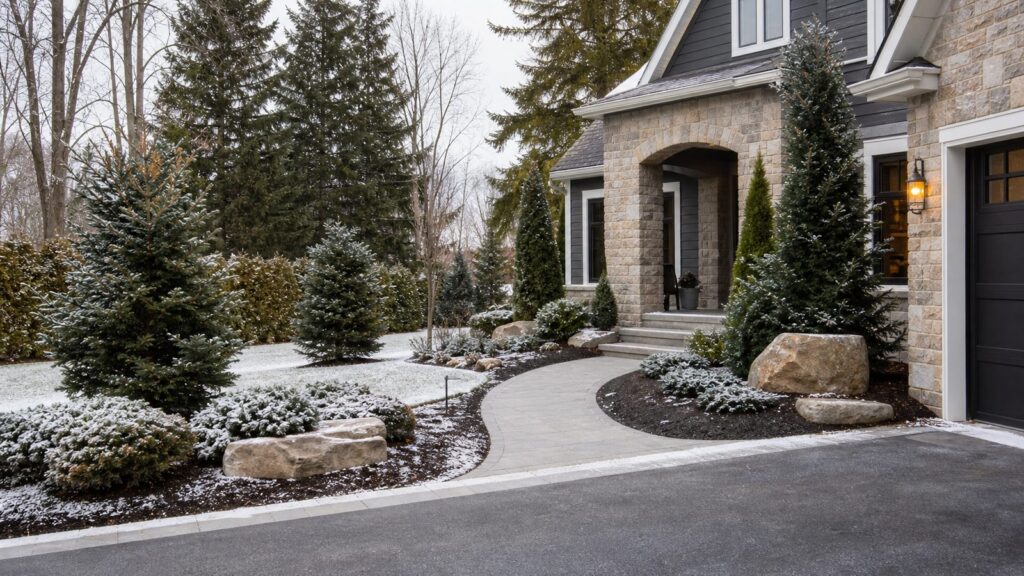
Evergreens are one of the most practical winter landscaping upgrades a homeowner can make. When deciduous trees drop their leaves and perennial beds go flat, evergreen trees and shrubs keep the yard organized, private, and visually finished. They can screen a neighbor’s second-story window, soften a new addition, block winter wind, frame an entry, protect wildlife, and make hardscape look intentional instead of exposed.
The mistake is treating evergreens like simple decoration. On our job sites, the evergreen installations that last are planned like construction details: mature size, drainage, utilities, snow storage, salt exposure, property lines, irrigation, and access all get checked before the plant ever comes off the truck. A $250 arborvitae planted in the wrong place can become a $2,000 removal problem later. A properly spaced screen can perform for decades.
As an Amazon Associate I earn from qualifying purchases.
What’s actually slowing this PC down?
Pick the symptom - the matching free tool is one click away.
For most U.S. homeowners, the best evergreen plan starts with three questions: What problem are you solving in winter? What will the plant measure at maturity? What site condition is most likely to kill it? Answer those honestly, and evergreens become a strong four-season investment instead of a row of stressed plants that brown out after the first hard winter.
Why Evergreens Work So Well in Winter Landscapes
Evergreens keep foliage year-round, which gives them value when most of the landscape is dormant. That does not mean they stop functioning as living plants in winter. They still lose moisture through needles or leaves. Frozen soil, dry wind, bright sun, and road salt can pull moisture faster than roots can replace it. That is why winter burn often shows up as tan, bronze, or brown foliage on exposed sides of arborvitae, spruce, pine, holly, boxwood, yew, and other evergreens.
Popular on Amazon
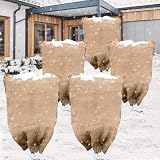
- [VALUE 5 PACK]:You will receive 5 large burlap plant cover bags, each measuring 32 X 40 inches. This ample quantity and rustic design ensure you have enough covers to protect your plants throughout winter, with added convenience for replacement. Perfect for various garden sizes and tree types.
- [HIGH-QUALITY BURLAP MATERIAL]:Our plant cover bags are crafted from premium burlap, a breathable and eco-friendly material. It creates a safe and natural environment for your plants, protecting them from harsh winter weather while also keeping pests and animals at bay. The durable fabric resists wear and tear while allowing for proper airflow.
- [ADJUSTABLE DRAWSTRING DESIGN]:Designed with an easy-to-use drawstring closure, our winter plant covers offer a customizable fit for better frost protection. Securely tighten the drawstring to prevent wind damage, ensuring your plants stay safe and protected from the cold.
- [ADJUSTABLE DRAWSTRING DESIGN]:Designed with an easy-to-use drawstring closure, our winter plant covers offer a customizable fit for better frost protection. Securely tighten the drawstring to prevent wind damage, ensuring your plants stay safe and protected from the cold.
- [REUSABLE & LONG-LASTING]Made from durable, high-quality burlap, these plant covers are reusable year after year. Simply wash, dry, and store them for future use, making them a cost-effective and environmentally friendly solution for plant protection.
Good evergreen design solves visible winter problems. A line of arborvitae or juniper can restore privacy after leaf drop. Spruce, pine, cedar, and hemlock can slow prevailing winds. Boxwood, yew, holly, and false cypress can give foundation beds structure without blocking windows. Low junipers can hold slopes and define edges near retaining walls. Broadleaf evergreens can add polish in milder zones, while tougher conifers carry colder sites.
Evergreens also make construction work look complete. After a porch, patio, driveway, addition, retaining wall, or outdoor living space is built, the site can feel raw until the landscape adds mass and scale. We often use evergreens as anchors around hardscape because they do not disappear for five months of the year. A patio with winter structure still looks designed in January. A front elevation with evergreen anchors looks settled even before spring color returns.
PC Slower Than It Used to Be?
A free scan shows the junk files, broken settings and background clutter dragging Windows down - then fixes them in one click.Free scan · Windows 10 & 11Crashes, No Sound, or Screen Glitches?
Random freezes, missing sound and display glitches usually trace back to one bad driver. Find and replace yours safely.Free scan · under a minuteChoose Evergreens by Site Conditions, Not Just Appearance
The best evergreen for one property can fail on the next property a few streets away. Cold hardiness, sun exposure, wind, soil drainage, deer pressure, salt exposure, and available space matter more than a generic plant list. A good nursery tag is a starting point, not a design plan.
Start with USDA hardiness zone and microclimate
Hardiness zone tells you whether a plant is likely to tolerate your winter lows. Microclimate tells you whether it will tolerate your actual yard. A south-facing wall can reflect heat and sun in winter, creating moisture stress. A northwest corner can take the full hit of cold winter wind. A low pocket can stay saturated after snowmelt. A driveway edge may receive salt spray and plowed snow.
For colder regions, conifers such as spruce, pine, juniper, arborvitae, cedar, and hemlock are common options, but each has limits. In warmer regions, broadleaf evergreens such as holly, boxwood, certain magnolias, and other regional species may provide better texture and winter presence. The right answer is local. Match the plant to your hardiness zone, then place it where winter sun and wind will not punish it beyond its tolerance.
Drainage is usually more important than size
Homeowners often want the tallest plant they can afford, especially for privacy. We look at drainage first. Many evergreens hate sitting in saturated soil. In heavy clay, compacted subgrade, or low areas near downspouts, an expensive 8-foot evergreen can decline quickly if the root zone stays wet. Poor drainage limits oxygen around the roots and can lead to root rot.
Before planting, dig a test hole roughly the depth of the root ball and fill it with water. If the water sits for many hours or the hole becomes slick and soupy, the location may need grading, soil correction, drain tile, a raised planting bed, or a different plant. Do not solve a drainage problem by digging a deeper hole. A deep hole can become a bathtub that collects water under the root ball.
Design from mature dimensions
Nursery size is temporary. Mature size is the real footprint. Before we install a screen or foundation planting, we mark mature spread on the ground with paint, flags, or tape. If a plant will be 10 feet wide, we want to see that 10-foot circle before anyone commits to it.
This one step prevents many common failures: evergreens crowding siding, blocking windows, swallowing walkways, lifting edging, growing into fences, narrowing driveways, or crossing property lines. A 3-foot nursery plant can look harmless next to a porch. Ten years later, it may be pressing into gutters or trapping moisture against the wall.
Best Uses for Evergreens Around the Home
Evergreens are most valuable when they have a job. The plant choice, spacing, and budget should follow that job.
Quick wins for a faster PC:
Clear out junk files and repair common Windows errorsFree Scan →Fix the driver behind crashes, sound loss and screen glitchesFind Drivers →Repair Windows errors before they cause bigger problemsFix Now →Privacy screening
For privacy, the goal is not simply height. The goal is year-round visual coverage at the sightline that matters. If you are screening a patio from a neighboring deck, the needed coverage may be between 5 and 10 feet high. If you are screening a second-story window, you may need taller material or a different layout.
A staggered double row often performs better than one straight row where space allows. For example, two offset rows of evergreens spaced 8 to 12 feet apart can cover gaps more naturally than one tight line. It also reduces the risk that a single plant failure creates a hole in the entire screen. The tradeoff is space. A double-row screen can easily need 12 to 20 feet of depth once mature spread is included.
Windbreaks
Winter windbreaks work best when placed upwind of the area being protected. In many colder U.S. regions, that means paying close attention to northwest and west winds, though local patterns vary. A windbreak does not need to be a solid wall. In fact, a slightly porous planting often reduces wind more effectively and with less turbulence than a dense, flat barrier.
Also popular on Amazon
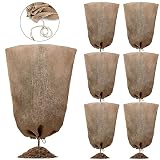
- What You Will Receive: you will receive 6 pieces of large burlap plant covers with drawstrings, the sufficient quantity and rustic design are enough to satisfy your daily use and replacement
- Proper Size to Cover Your Plants: burlap covers for plants in winter measure about 24 x 40 inches/ 60.96 x 101.6 cm , large enough to cover your plants, won't take up much space, convenient to use
- Reliable and Sturdy to Use: burlap plant covers freeze protection are made of quality burlap material, breathable and reliable, strong and sturdy, not easy to deform or break, which can serve you for a long time
- Useful Design: burlap covers for plants in winter are designed with drawstrings on the bottom, can help tighten your burlap plant bags, withstand the winter chill and keep plants from being blown away by the wind
- Widely Applied: shrub burlap covers for plants can be applied to wrap potted plants, citrus trees, shrubs, small potted plants, young trees, tomatoes and other upright plants, giving you much convenience
For larger properties, a mixed evergreen windbreak may include taller conifers behind medium evergreens and lower shrubs. Around suburban homes, even a small grouping near a patio or exposed corner can make an outdoor space feel less harsh.
Foundation and entry planting
Evergreens near the house should be scaled carefully. We generally avoid placing large conifers close to foundations unless there is enough room for mature width, maintenance access, roof drainage, and air movement. Compact yew, boxwood, holly, juniper, false cypress, and dwarf spruce varieties can work well, but “dwarf” does not mean “tiny forever.” Always read the mature height and spread.
Keep shrubs far enough from siding to allow maintenance and airflow. As a practical rule, leave at least 18 to 24 inches of clear space between mature foliage and the wall, and more near windows, meters, vents, hose bibbs, and service panels.
Hardscape backdrops
Evergreens make patios, walkways, walls, and outdoor kitchens feel grounded in winter. They also soften the straight lines of construction. For hardscape projects, we coordinate evergreen installation after major grading, drainage, utility trenching, and heavy equipment work. Fresh root balls and compacted construction traffic do not mix.
If irrigation, lighting, conduit, gas, or drainage lines are part of the project, those routes should be documented before planting. It is much cheaper to plan around utilities than to repair them after a planting crew finds them with a shovel.
Do these 3 things before closing this tab:
1Clear out junk files and repair common Windows errors2Fix the driver behind crashes, sound loss and screen glitches3Repair Windows errors before they cause bigger problemsEvergreen Installation Costs in 2026
Evergreen installation costs vary widely because the plant size, access, soil, delivery distance, and scope of work vary widely. National 2026 cost guides commonly put professional tree planting from about $150 to $2,000 per tree, with broader ranges reaching about $3,000 for larger or more complicated installations. Small saplings may be inexpensive, while large 20-foot specimen trees can approach $5,000 installed in difficult conditions.
For a homeowner planning a real project, a useful budget separates the plant from the work required to make it survive. Delivery, layout, utility coordination, soil prep, drainage correction, mulch, staking, irrigation, warranty, and cleanup all affect the final number.
| Project Type | Typical 2026 Cost Range | What Usually Drives the Price |
|---|---|---|
| Small DIY evergreen shrub or sapling | $50-$150 for plant stock; about $115+ with basic tools if needed | Plant size, tool ownership, mulch, soil amendments, transport |
| Small professional planting | $150-$600 per plant | Minimum service charge, access, nursery stock, simple soil prep |
| Mid-size evergreen tree | $565-$2,000 installed | Container vs. balled-and-burlapped stock, delivery, labor, staking, mulch |
| Large evergreen or specimen tree | $2,000-$5,000+ | Height, root ball weight, machine access, crane or backhoe needs, warranty |
| 10-plant privacy screen | Low thousands to $10,000+ | Plant height, spacing, irrigation, grading, access, warranty, deer protection |
Professional labor commonly runs about $50 to $150 per hour, and many companies have a minimum trip or service charge. A small evergreen planted near a driveway with easy access is one kind of job. A row of 10 balled-and-burlapped trees hauled uphill through a narrow side yard is a different job. Large root balls are heavy, and moving them safely may require equipment.
Plant size is one of the biggest cost decisions. A 3- to 4-foot evergreen costs less, establishes faster, and is easier to water correctly. A 7- to 10-foot evergreen gives faster screening, but it costs more to buy, deliver, handle, and warranty. For privacy, many homeowners are better served by a well-designed row of smaller, healthy plants than by stretching the budget for fewer oversized trees.
Spacing Evergreens for Privacy, Safety, and Long-Term Maintenance
Spacing is where many evergreen projects go wrong. Tight spacing looks good on installation day but can create disease pressure, dead interior growth, snow damage, and future removals. Wide spacing may look sparse for the first few years but usually produces healthier plants.
For a privacy screen, mature width controls spacing. If a species matures at 6 feet wide, spacing plants 5 to 6 feet on center may eventually create a continuous screen. If the plant matures at 10 feet wide, spacing it 4 feet on center is asking for crowding. Some municipal codes require evergreen screening trees to be planted so mature canopies touch while keeping mature growth inside the lot and out of the public right-of-way. That means you need both coverage and containment.
As a practical layout method, mark the center of each plant, then mark mature spread around it. Check three things before digging: Will mature foliage stay inside the property? Will it stay clear of sidewalks, driveways, signs, meters, hydrants, and sight triangles? Will you still have access to maintain the house, fence, or hardscape?
For staggered rows, offset the second row so plants cover the gaps. A common layout might use plants 6 to 10 feet apart within each row, with the rows 5 to 8 feet apart, depending on species. Large conifers need more room. Compact shrubs need less. The spacing should come from the mature plant dimensions, not a one-size-fits-all rule.
The Tool Desk
Outbyte PC Repair FREERepair Windows errors before they cause bigger problemsFix Now →Outbyte Driver Updater FREEScan for outdated or missing drivers - takes under a minuteDriver Scan →Also popular on Amazon

- 30ft Long: This burlap fabric is 40 inches wide and 30 feet long. The large size provides enough cutting space, and you can freely cut the burlap fabric according to your needs. It is very easy to cut.
- Natural & Premium Burlap: Our burlap are made from selected natural quality jute material, a natural plant fibre that is very safe for plants and does not cause any harm to them. Burlap fabric breathes well, the plant growth environment is more comfortable, which can grow better.
- Ideal Plant Antifreeze Protection: Plants can be very sensitive to environmental changes, and cold climates can easily lead to plant frost damage. The breathable burlap is a perfect choice for plant mulch as it provides a protective layer against cold air and can effectively protect plants from freezing damage.
- Perfect Ground Cover: Burlap is a powerful assistant for growers. Laying burlap on the ground as a grass proof cloth can not only prevent weeds from growing on the ground, but also effectively protect seeds and prevent plant roots from rotting. This provides great convenience for growers while reducing planting costs.
- Versatile: Not only can this burlap be used as an antifreeze cloth and cover to protect a variety of plants, such as outdoor potted plants, fruit trees, shrubs, etc., it is also a material for making placemats, tablecloths, DIY decorations, wreaths, fall table runner, Halloween garland, Christmas table runner, etc.
Permits, Utilities, and Property Line Checks
Before planting evergreens, call 811 or submit a locate request through your state’s utility notification system. This applies even if the hole seems shallow. Gas, electric, communications, irrigation, lighting, and private utility lines can be closer to the surface than expected, especially around older homes, additions, pools, detached garages, and landscape lighting systems.
Utility locating marks public utilities, but private lines may not be marked. Irrigation, low-voltage lighting, private sewer laterals, propane lines, drainage pipe, and electric feeds to detached structures may require a private locate or careful documentation from previous work. On our sites, we treat “I think it runs over there” as a warning sign, not a plan.
Planting near the street or sidewalk may also require a permit. Some cities regulate trees in the public right-of-way, parkway, boulevard, or easement area. Requirements may cover species, spacing, canopy clearance, distance from intersections, distance from utilities, and whether the homeowner or city is responsible for maintenance. HOA rules may also limit height, species, fence-line screening, and front-yard changes.
Property lines matter because evergreens expand. A tree planted 2 feet inside the line may be on your property today but over the line at maturity. Keep mature canopies out of rights-of-way unless local rules allow otherwise, and preserve driveway visibility. At intersections and driveway exits, sight triangles should remain clear so drivers and pedestrians can see each other.
How We Plant Evergreens for Long-Term Survival
Planting technique matters. Many evergreen failures begin at installation, even if symptoms do not show for a year or two. The highest-risk details are planting depth, root flare exposure, soil backfill, watering, and mulch.
Set the root flare correctly
The root flare is where the trunk widens into the main roots. It should be visible at or slightly above finished grade. With balled-and-burlapped stock, the flare is sometimes buried under several inches of soil in the nursery ball. We expose and verify it before setting the plant. If the flare is buried, excess soil comes off the top before final depth is set.
Planting too deep can lead to poor oxygen exchange, trunk rot, girdling roots, slow decline, and eventual failure. This is one of the most expensive mistakes because the tree may look fine at first. By the time the decline is obvious, the root system may already be compromised.
Dig wide, not deep
The planting hole should generally be two to three times the width of the root ball, with the bottom firm enough that the plant does not settle. The hole should not be deeper than the root ball after the flare is exposed. If the bottom is over-dug, compact the soil back to the correct height before setting the plant.
For most sites, backfill primarily with native soil. Heavy amendment inside the hole can create an abrupt texture change that holds water like a basin. Compost or topsoil may be appropriate when a soil test, drainage plan, or bed preparation calls for it, but the goal is to help roots move into the surrounding soil, not keep them confined in a pocket of imported material.
Handle burlap, wire, and containers correctly
For container plants, loosen circling roots and correct any root defects before planting. For balled-and-burlapped trees, stabilize the root ball in the hole, then remove or pull back the top burlap, twine, and wire basket material as much as practical without breaking the ball apart. Synthetic burlap should be removed because it does not break down reliably.
Large evergreens may need staking or guying, especially in windy sites, but staking should not be permanent. The goal is to stabilize the root ball while allowing some trunk movement. Ties should be broad and flexible, never wire against bark. Remove staking once the plant is established enough to stand securely, often after one growing season.
Mulch as a ring, not a mound
Use about 2 to 4 inches of organic mulch over the root zone, shaped as a wide ring. Keep mulch several inches away from the trunk or stems. Mulch piled against bark, often called a mulch volcano, traps moisture, invites decay, and can encourage girdling roots. A proper mulch ring moderates soil temperature, holds moisture, and reduces mower or string trimmer damage.
Recommended Free Tools
Watering and Winter Protection
New evergreens need structured watering. A common establishment schedule is daily watering for the first 1 to 2 weeks, then every 2 to 3 days for the next 12 weeks, then weekly until roots are established, adjusting for rainfall, soil type, and temperature. Sandy soil dries faster. Clay soil holds water longer. Large root balls need more water per event than small shrubs, but they still need oxygen.
Also popular on Amazon

- Flexibility Burlap Fabric Roll: You will get 1pcs burlap plant cover freeze protection, the size: 15 feet x 40 inches, large enough for your use, it can be directly used for covering large garden areas and outdoor plants, or provides the freedom to cut to any size you want. Whether you're making gardening and permaculture projects,the burlap will help you achieve versatile outdoor creations
- Natural & Sturdy Burlap: Our burlap cloth is made from natural jute fiber, a renewable and biodegradable resource. The burlap fabric is sturdy and strong, the edges are specially treated to ensure firm. Its high-density weaving makes it thick enough to enhance winter plant protection. If you mind the natural smell of itself, the smell will dissipate after opening and airing out for a while
- Excellent Frost & Cold Protection: Burlap provides frost protection and a strong insulating barrier during the cold winter months, protecting your outdoor plants from frost, rain and snow. Wrapping tree trunks in burlap insulates them from cold winds and protects critical parts of the tree from damage. It is also designed for easy removal in the spring, reducing winter wear and tear and extending its life
- Breathable & Moisture-Absorbing: Burlap blanket can be used to hold soil in place and retain moisture, its tight density material provides excellent breathability and drainage, creating an environment conducive to seed germination and plant growth. It can also be used as a cover and wrap to effectively prevent animals from invading plants,thus protecting and promoting your green investment in all aspects
- Wide Application: Burlap frost cloth has a variety of uses outdoors and in the garden, it can be used as a tree wrap in the winter to protect them from the cold, as a garden carpet, weed barrier, burlap bags, or to make custom sized planter liners and other DIY projects; It can also be used for Halloween, Christmas decorations
Water deeply and slowly so moisture reaches the root ball and surrounding soil. A quick spray over the foliage does little. Drip irrigation, soaker hose, or a slow hose trickle can work well. The root ball itself can dry out even when surrounding soil looks damp, especially with container-grown plants in bark-heavy nursery media.
Before freeze-up, evergreens should go into winter hydrated. This is especially important for first-year plantings and broadleaf evergreens. During winter thaws, watering may be appropriate where the ground is not frozen and local conditions allow it. Do not water into saturated soil.
Wind protection can help vulnerable new plantings. Use breathable burlap or canvas screens on the windward side, supported by stakes. The screen should reduce wind exposure without wrapping the plant tightly or trapping heat. Avoid black plastic because it can create damaging temperature swings and moisture problems.
Salt is another winter threat. Evergreens near roads, sidewalks, and driveways can be damaged by salt spray and salty plowed snow. Choose more salt-tolerant species near pavement, keep snow storage away from root zones and foliage, and avoid piling road snow onto shrubs. If salt exposure is unavoidable, build the planting plan around that reality instead of hoping the plants tolerate it.
Independent reader supportYour contribution helps us test, update, and keep practical guides available for everyone.When to Plant Evergreens
Planting season depends on region, plant type, and soil condition. In much of the United States, spring and fall are preferred because temperatures are moderate and root growth can occur without peak summer stress. Fall planting can work very well when there is enough time for roots to begin establishing before hard freeze.
Balled-and-burlapped evergreens can often be planted whenever soil can be worked, but “can be planted” does not mean “should be planted in any condition.” Avoid planting into frozen soil, saturated soil, drought-stressed soil, or a site that is about to be disturbed by grading, trenching, paving, or heavy equipment.
Winter planting may be possible in milder climates or during workable conditions, but the margin for error is smaller. Water management, root ball handling, and wind protection become more critical. If the site is exposed, dry, compacted, or not ready, waiting for spring is usually the better construction decision.
What’s actually slowing this PC down?
Pick the symptom - the matching free tool is one click away.
When to DIY and When to Hire a Pro
DIY evergreen planting can make sense for small container shrubs, young saplings, and simple beds with known utilities and good access. If the plant is small enough for two people to handle safely, the soil drains well, and the layout is straightforward, a careful homeowner can do good work with a shovel, hose, mulch, and patience.
DIY becomes risky when the project involves large balled-and-burlapped trees, privacy screens, slopes, rocky soil, drainage corrections, utility conflicts, tight access, expensive plant material, or work near hardscape and foundations. A large root ball can weigh several hundred pounds. If it drops, rolls, or is set too deep, the plant and the people handling it are both at risk.
Hire a professional when the evergreen is part of a larger construction or landscape plan. If a patio, wall, driveway, drainage system, addition, or outdoor lighting package is involved, sequencing matters. We want the heavy work, trenching, grading, and drainage resolved before evergreen installation, then irrigation and mulch finished in a way that supports establishment.
A pro should also be involved when warranty matters. Plant warranties vary, but they usually require proper installation and watering. If you are spending several thousand dollars on a screen, the value is not just the labor. It is layout judgment, equipment, sourcing, planting depth control, watering guidance, and accountability if something fails under warranty terms.
Common Evergreen Mistakes to Avoid
The first mistake is choosing evergreens for looks alone. A plant can look perfect at the nursery and still be wrong for your yard because of mature size, shade, drainage, deer pressure, salt, or exposure. The second mistake is planting too close to buildings, fences, sidewalks, driveways, and utilities because the installed plant looks small.
Planting too deep is another major failure point. Always locate the root flare. Do not assume the top of the nursery soil is the correct grade. With balled-and-burlapped stock, excess soil above the flare is common enough that it should be checked every time.
Mulch volcanoes are also common. Mulch belongs over the root zone, not against the trunk. Keep the ring broad, shallow, and pulled back from bark.
Also popular on Amazon

- 50 Feet, Extra Long: You will receive a natural jute burlap plant blanket, measuring approximately 50 feet in length and 40 inches in width. This generous size ensures thorough protection against the cold for your plants and offers great convenience in wrapping them. Moreover, the burlap plant blanket can be easily cut to accommodate multiple plants.
- Natural & Durable Burlap: The burlap plant cover is made of high-quality jute which is natural and friendly to earth. Jute fiber is very resilient and wear-resistant, which greatly improves the service life of burlap fabric. Our jute burlap plant covers do not contain any toxic substances and will not cause any harm to plants. You can use them with confidence.
- Breathable and Cold-proof: Our burlap plant covers are designed to protect winter plants from freezing temperatures and cold winds. This winter plant wrap provides excellent insulation and moisture resistance, effectively shielding plants from frigid temperatures. The loose weave of the plant protection cloth allows for optimal breathability, promoting the overall health of your plants.
- Perfect Freeze Protection for Plants: The natural jute burlap plant blanket serves multiple functions. During the winter, the burlap plant blanket safeguards plants from the harsh effects of cold and frost, shielding them from extreme sunlight exposure. Additionally, burlap plant covers can be utilized to protect plant nutrients during the transplanting process of trees, ensuring their well-being and growth.
- Wide Application: Our burlap frost cloth is suitable for many plants, including outdoor potted plants, fruit trees, shrubs, landscape trees, and garden ornamentals. When vegetation is transplanted, this wrap also helps to keep the soil in place. Besides, you can also use our burlap to DIY planting bags, winter anti-skid mats, and so on.
Skipping utility locating is never worth it. “Just a shrub” can still require a hole large enough to hit irrigation, lighting, internet, gas, or electric lines. Make the locate request before digging, and remember that private lines may need separate attention.
Quick wins for a faster PC:
Fix the driver behind crashes, sound loss and screen glitchesFind Drivers →Clear out junk files and repair common Windows errorsFree Scan →Finally, do not ignore water after planting. New evergreens are not established just because they look green. They may need consistent watering for months, and they should enter winter with adequate soil moisture. Many winter burn issues are really design, exposure, salt, or watering problems showing up when the plant is under stress.
A Practical Evergreen Plan for a Winter-Ready Yard
If you are planning an evergreen upgrade, start with the winter problem you want solved. Mark the view you want screened, the wind you want reduced, the entry you want framed, or the hardscape you want softened. Then measure the space and select plants based on mature dimensions, not nursery size.
Check utilities, easements, right-of-way rules, HOA requirements, drainage, and snow storage before buying plant material. If the site is wet, compacted, salty, or exposed, solve that condition first or choose a plant that can handle it. For screens, consider mixed species and staggered rows where space allows. A mixed evergreen layout is often more resilient than a single-species wall, especially when pests, disease, deer, or weather stress hit.
Budget realistically. In 2026, a small DIY evergreen may be a low-cost weekend project, while a professionally installed privacy screen can run from the low thousands to well over $10,000. The difference is not just plant count. It is plant size, delivery, access, labor, drainage, irrigation, mulch, protection, and warranty.
Crashes, No Sound, or Screen Glitches?
Random freezes, missing sound and display glitches usually trace back to one bad driver. Find and replace yours safely.Free scan · under a minuteWindows Errors? Fix Them Before They Spread
Repair common Windows errors and clear accumulated junk for a smoother, more stable PC - no reinstall needed.Free scan · no reinstallDone well, evergreens are not just winter color. They are permanent structure. They make a property feel more private, more finished, and better protected through the harshest months of the year. The best results come from treating them like part of the built environment: placed with clearance, installed at the right depth, protected from known site stresses, and maintained through the establishment period.
Frequently Asked Questions
What are the best evergreen trees and shrubs for winter landscaping?
The best choice depends on your USDA hardiness zone, soil drainage, sun, wind, deer pressure, and salt exposure. Common options include arborvitae, juniper, spruce, pine, cedar, hemlock, yew, boxwood, holly, and false cypress. Choose by mature size and site conditions, not appearance alone.
How much does it cost to install evergreen trees in 2026?
Professional tree planting commonly ranges from about $150 to $2,000 per tree, with larger or more complicated installations reaching $3,000 or more. Small DIY plantings can be much less, while a 10-plant privacy screen can run from the low thousands to well over $10,000 depending on size, access, irrigation, and warranty.
Can evergreens be planted in winter?
In some regions, evergreens can be planted when soil is workable, especially balled-and-burlapped stock. Avoid planting into frozen, saturated, or drought-stressed soil. For much of the U.S., spring and fall are safer planting windows because roots can establish with less heat or freeze stress.
Do these 3 things before closing this tab:
1Scan for outdated or missing drivers - takes under a minute2Repair Windows errors before they cause bigger problems3Fix the driver behind crashes, sound loss and screen glitchesHow far apart should evergreens be planted for privacy?
Spacing should be based on mature width. If an evergreen matures at 6 feet wide, 5 to 6 feet on center may create a full screen over time. Larger conifers need more room. For better coverage, a staggered double row can fill gaps more naturally than a single straight row.
Do I need a permit to plant evergreen trees near the street?
Possibly. Many cities regulate planting in the public right-of-way, boulevard, parkway, or easement area. Rules may cover species, spacing, distance from intersections, utility clearance, and sight triangles. Always check local requirements and call 811 before digging.
How do I prevent winter burn on new evergreens?
Plant the right species for the exposure, water deeply before freeze-up, avoid salt-laden snow, mulch correctly, and use breathable burlap or canvas wind screens on exposed sides when needed. Do not wrap plants tightly in plastic, and do not let new root balls dry out during establishment.
Quick Recap
Product prices and availability are accurate as of the date/time indicated and are subject to change. Any price and availability information displayed on Amazon at the time of purchase will apply.

