Some links on this page are affiliate links: if you buy through them we may earn a commission, at no extra cost to you.
Most full-house siding replacement projects in the United States cost about $8,000 to $30,000 in 2026. The broad installed range is roughly $3.50 to $25.00 per square foot, with premium stone veneer, masonry details, complex architecture, or hidden water damage pushing some projects above $50,000.
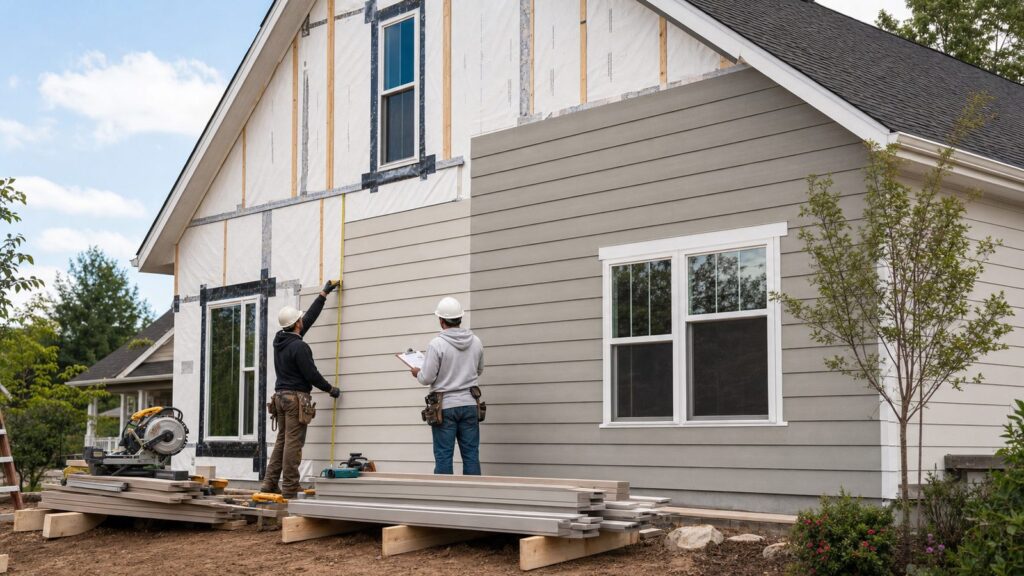
The biggest mistake homeowners make is pricing siding from the home’s floor area. A 2,000-square-foot house does not automatically have 2,000 square feet of siding. Siding is priced from exterior wall coverage, plus waste, gables, dormers, corners, trim, openings, tear-off, weather barrier, flashing, disposal, repairs, and access. Two homes with the same interior square footage can have very different siding costs.
As an Amazon Associate I earn from qualifying purchases.
Free tools Windows power users keep installed
One-click scans. No signup required.
On our job sites, the lowest clean bids are usually vinyl. Fiber cement, engineered wood, and metal sit in the middle to upper range. Natural wood depends heavily on species and finish. Stucco and masonry can be reasonable on simple work and expensive when moisture damage is discovered. Manufactured stone veneer is usually a premium accent, not a budget full-house cladding.
2026 Siding Replacement Cost by Material
Use the table below as a planning range, not a substitute for a measured estimate. Installed price includes typical material and labor, but every line can change based on wall height, removal, trim package, code requirements, regional labor, and repair scope.
Popular on Amazon

- 【Works Wonders 】The siding removal tool can get in the top and bottom edges of the vinyl siding pieces,the curved tip securely grips the lip of the vinyl siding, helping it to quickly be removed.Make housing repair work easier and safer.
- 【Humanized Design】: Designed the most suitabe length after listened a lot market voice ,The tool has a total length of 6.25", the material of the handle is changed from hard steel to comfortable silicone, so the palm will not feel uncomfortable even if you work for a long time.
- 【Quick And Easy Vinyl Siding Removal】 :The vinyl siding easily and quickly without any damage to the vinyl siding. Compared with screwdrivers and other tools, Save your time and money by cleanly removing vinyl siding, with this zip tool that allows you to get under the top and bottom edges of the vinyl siding tool.
- 【High Quality Metal Built To Last】The siding removal tool is a perforated design ,Easy to carry and store,1MM thickness steel sheet,quenched to enhance the hardness,Sturdy and durable.The High-quality silicone handle design with non-slip textured which can provides a comfortable grip and has a non-slip effect.
- 【Package includes】:1 pc siding removal tool
| Material | Typical Installed Cost | Common Full-House Range* | Best Fit |
|---|---|---|---|
| Vinyl siding | $4-$12 per sq. ft. | $8,000-$24,000 | Budget-conscious replacement, low maintenance |
| Insulated vinyl | $6-$14 per sq. ft. | $12,000-$28,000 | Cleaner wall appearance, modest thermal upgrade |
| Engineered wood or composite | $5-$13 per sq. ft. | $10,000-$26,000 | Wood-look siding with lower weight than fiber cement |
| Fiber cement / Hardie-style siding | $7-$18 per sq. ft. | $14,000-$36,000 | Durability, fire resistance, strong resale appeal |
| Natural wood | $6-$20+ per sq. ft. | $12,000-$40,000+ | Historic homes, premium curb appeal, custom profiles |
| Metal siding | $6-$16 per sq. ft. | $12,000-$32,000 | Modern profiles, durability, low maintenance |
| Stucco | $7-$9 per sq. ft. for many new applications | $14,000-$18,000+ | Southwest, Florida, masonry-style exteriors |
| Brick veneer | $10-$25+ per sq. ft. | $20,000-$50,000+ | Long-life premium exterior, masonry appearance |
| Manufactured stone veneer | $15-$30 per sq. ft. | Often used as $8,000-$20,000 accent work | Entry walls, porch bases, chimney accents, facades |
*Full-house ranges above assume roughly 2,000 square feet of siding area, not a 2,000-square-foot floor plan.
Removal and disposal usually add about $0.70 to $2.00 per square foot before repairs. Labor alone can run about $2 to $12 per square foot, depending on material, building height, terrain, staging, cutting, fastening schedule, and how much trim and flashing work is included.
How Contractors Calculate Siding Square Footage
A proper siding estimate starts with wall area. Crews measure each wall length multiplied by wall height, then add gables and other triangular sections. Window and door openings may be deducted partially, but not always fully, because small cuts, starter strips, J-channel, casing, waste, and labor still remain.
Here is a simple example. A one-story rectangular home measuring 50 feet by 30 feet with 9-foot exterior walls has a perimeter of 160 linear feet. At 9 feet tall, that is 1,440 square feet before gables. Two gable ends might add another 180 to 300 square feet. Waste, cuts, corners, and starter pieces can add 7% to 15%. That house may price closer to 1,750 to 2,000 square feet of siding coverage, even if the living area is a different number entirely.
Contractors also use the term siding square. One square equals 100 square feet of coverage. A 2,000-square-foot siding job is a 20-square job before add-ons. That does not mean every 20-square house costs the same. A plain ranch with easy access and simple corners is faster than a three-story home with dormers, bump-outs, bay windows, decks, and steep grades.
Vinyl Siding Cost
Vinyl is usually the budget benchmark for siding replacement. In 2026, installed vinyl siding commonly costs about $4 to $12 per square foot. A house with 2,000 square feet of siding area often lands around $8,000 to $24,000, with many common projects clustering in the low-to-mid teens when the scope is straightforward.
The Tool Desk
Outbyte Driver Updater FREEFix the driver behind crashes, sound loss and screen glitchesFind Drivers →Outbyte PC Repair FREERepair Windows errors before they cause bigger problemsFix Now →Vinyl’s main advantages are cost, low maintenance, and speed. It does not need painting, it is widely available, and experienced crews can install it efficiently. The tradeoff is that lower-grade vinyl can look flatter, fade sooner, crack in cold weather, warp near heat sources, or perform poorly if fastened too tight.
Where Vinyl Costs More
Vinyl siding prices rise when the home needs a heavier panel, dark color technology, upgraded profile, foam backing, extra trim, or high-wind fastening details. Coastal and high-wind regions should not be priced with the thinnest commodity panel. Ask for the panel rating, fastening schedule, and whether the installation changes when siding is installed over foam insulation.
On our projects, we also look closely at penetrations: hose bibbs, exterior lights, receptacles, dryer vents, deck ledgers, meter bases, and wall-mounted HVAC lines. Vinyl is forgiving visually, but it still needs proper flashing and mounting blocks. Water behind inexpensive siding is still water behind the wall.
Insulated Vinyl Siding Cost
Insulated vinyl typically costs about $6 to $14 per square foot installed. For 2,000 square feet of siding area, that puts many jobs around $12,000 to $28,000.
The rigid foam backing can help the panel lay flatter and may modestly improve thermal performance. It is not a replacement for proper wall insulation, air sealing, or window flashing. The installation details matter because foam changes wall thickness. That affects trim depth, outside corners, window transitions, penetrations, and sometimes fastening requirements.
Insulated vinyl makes the most sense when the homeowner wants vinyl’s low maintenance but wants a more solid-looking wall. It is less compelling when the existing walls already need major sheathing repair, window work, or a deeper exterior insulation strategy. In those cases, the whole wall assembly should be priced together instead of treating siding as a surface-only upgrade.
Also popular on Amazon
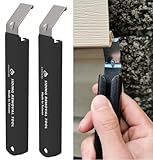
- 𝗕𝘂𝘆𝟮𝗼𝗿𝗠𝗼𝗿𝗲, 𝗔𝘂𝘁𝗼𝗦𝗮𝘃𝗲𝟱%✅HIGH-QUALITY VINYL SIDING TOOLS – This heavy-duty siding removal tool is made with durable steel construction that won't bend or break after a couple of uses and will last for years. It makes repairs a snap, allowing you to replacement or repair vinyl siding on a house or outbuildings and fix your problem in a minute.
- ✅QUICK AND EASY SIDING REMOVAL - Are you searching for the right tool that will help you to remove vinyl siding? Save your time and money by cleanly removing vinyl siding, with this zip tool that allows you to get under the top and bottom edges of the vinyl siding pieces. How cool is that?
- ✅THIS TOOL WORKS WONDERS - Compared to other similar siding removal tools, this one has extra-long handle with bending strength reinforcement for extra reach and leverage making the job take the minimum of effort. What's more this great is that now instead of one you’ll getthis pack of twotools for vinyl, making it particularly helpful if you've got another pair of hands to help you.
- ✅COMFORT GRIP-With a smooth unlocking motion, an easy-to-grasp straight handle, and a non-slip textured grip makes this zip tool vinyl siding a MUST HAVE when removing damaged siding or replacing vinyl siding, perfect for both professionals and DIY-ers.
- ✅WORK SMARTER AND BE MORE PRODUCTIVE - Forget trying to remove vinyl sidings using a screwdriver, hammer, and even your bare hands and protects them from knuckles from the siding surface.When you tuck the tool and slide it behind the siding, the curved tip securely grips the lip of the vinyl siding, helping it to quickly be removed.
Fiber Cement and James Hardie-Style Siding Cost
Fiber cement siding commonly costs about $7 to $18 per square foot installed in 2026. A national estimating range for fiber cement starts around $8.92 to $14.69 per square foot, while complex regional Hardie-style jobs can run $16 to $22+ per square foot. For 2,000 square feet of siding area, a realistic planning range is $14,000 to $36,000, with complicated projects higher.
Fiber cement costs more than vinyl because it is heavier, harder to cut, slower to install, and more demanding at clearances and joints. Crews need the right cutting setup, dust control, flashing details, fasteners, and product-specific installation instructions. Manufacturer requirements can vary by product line and climate zone, so the installer should be working from current instructions, not memory from a job five years ago.
Do these 3 things before closing this tab:
1Clear out junk files and repair common Windows errors2Scan for outdated or missing drivers - takes under a minute3Repair Windows errors before they cause bigger problemsIs Fiber Cement Worth More Than Vinyl?
Often, yes, if the budget supports it and the installation is done correctly. Fiber cement has a more substantial appearance, strong durability, good fire resistance characteristics, and broad buyer acceptance. The latest available national cost-value data places fiber-cement siding replacement at a $21,485 job cost with $24,420 in value at sale. Vinyl siding replacement was listed at a $17,950 job cost with $17,313 in value at sale.
Those numbers are not a promise for a specific home. They do show why exterior replacement often performs well compared with purely cosmetic interior work: curb appeal, weather protection, and perceived maintenance all affect buyer confidence.
Engineered Wood and Composite Siding Cost
Engineered wood and composite siding usually costs about $5 to $13 per square foot installed. For a 2,000-square-foot siding area, many projects fall around $10,000 to $26,000.
This category is broad. Some products are treated wood strands or fibers. Others are composite panels or boards with factory finishes. The appeal is a wood-like look with less weight than fiber cement and often lower installed cost. It can be a strong option for lap siding, board-and-batten, gable accents, and modern farmhouse profiles.
What’s actually slowing this PC down?
Pick the symptom - the matching free tool is one click away.
Do not treat engineered wood as maintenance-free. Clearances from roofs, decks, grade, and hard surfaces matter. Cut ends, paint finish, trim transitions, and water management still decide how long the job lasts. We like to see clear written details for bottom clearances, kick-out flashing, window head flashing, and joint treatment before the siding goes up.
Natural Wood Siding Cost
Natural wood siding commonly ranges from about $6 to $20+ per square foot installed. Basic wood lap siding may sit near the lower middle of that range. Cedar shakes, premium species, custom milling, staining, back-priming, and complex trim can push the project much higher.
Wood is chosen for appearance. It has depth, texture, and historic character that manufactured products try to imitate. The cost is not just the first installation. Wood needs a maintenance plan: paint or stain cycles, caulking, insect monitoring, rot repair, and more frequent attention at shaded, damp, or poorly ventilated walls.
For homeowners comparing wood with fiber cement or engineered wood, we recommend pricing at least the next 10 to 15 years, not just the installation week. If a wood wall needs repainting every 5 to 8 years, that maintenance belongs in the real cost comparison.
Quick wins for a faster PC:
Fix the driver behind crashes, sound loss and screen glitchesFind Drivers →Clear out junk files and repair common Windows errorsFree Scan →Metal Siding Cost
Metal siding, including aluminum and steel, commonly costs about $6 to $16 per square foot installed. Price depends on metal type, gauge, coating, profile, fastening system, trim, and whether the house needs custom bends or brake-formed details.
Aluminum resists rust but can dent. Steel is tougher but coating quality and cut-edge protection matter, especially in wet or coastal environments. Modern metal siding can look sharp on contemporary homes, additions, workshops, and mixed-material facades. It can also look too commercial if the profile and trim are not selected carefully.
Also popular on Amazon

- ✅HIGH-QUALITY VINYL SIDING TOOLS – This heavy-duty siding removal tool is made with durable steel construction that won't bend or break after a couple of uses and will last for years. It makes repairs a snap, allowing you to replacement or repair vinyl siding on a house or outbuildings and fix your problem in a minute.
- ✅QUICK AND EASY SIDING REMOVAL - Are you searching for the right tool that will help you to remove vinyl siding? Save your time and money by cleanly removing vinyl siding, with this zip tool that allows you to get under the top and bottom edges of the vinyl siding pieces. How cool is that?
- ✅THIS TOOL WORKS WONDERS - Compared to other similar siding removal tools, this one has extra-long handle with bending strength reinforcement for extra reach and leverage making the job take the minimum of effort. What's more this great is that now instead of one you’ll getthis pack of twotools for vinyl, making it particularly helpful if you've got another pair of hands to help you.
- ✅COMFORT GRIP-With a smooth unlocking motion, an easy-to-grasp straight handle, and a non-slip textured grip makes this zip tool vinyl siding a MUST HAVE when removing damaged siding or replacing vinyl siding, perfect for both professionals and DIY-ers.
- ✅WORK SMARTER AND BE MORE PRODUCTIVE - Forget trying to remove vinyl sidings using a screwdriver, hammer, and even your bare hands and protects them from knuckles from the siding surface.When you tuck the tool and slide it behind the siding, the curved tip securely grips the lip of the vinyl siding, helping it to quickly be removed.
In coastal areas, corrosion exposure should be discussed before signing. In high-wind regions, fastening and panel rating matter. With darker metal panels, heat movement and oil-canning risk should also be considered, especially on long, flat wall sections.
Stucco Cost
New stucco application is often shown around $7 to $9 per square foot in 2026 cost guides, but replacement pricing can change quickly. The expensive part is not always the new stucco. It is what crews find behind the failed stucco after removal.
Outdated Drivers Are Slowing You Down
One free scan finds every outdated or missing driver and matches the right update for your exact hardware.Free scan · exact hardware matchPC Slower Than It Used to Be?
A free scan shows the junk files, broken settings and background clutter dragging Windows down - then fixes them in one click.Free scan · Windows 10 & 11Stucco walls need a working drainage plane, proper lath, weep screeds, flashing, control joints, and correct transitions around windows and doors. If an old stucco system trapped water, sheathing and framing repairs can add thousands. We have seen small exterior cracks turn into larger repair scopes because the wall had been wet for years.
If you are replacing failed stucco, ask the contractor to separate the bid into demolition, inspection, repair allowances, WRB or drainage mat, lath, base coat, finish coat, and painting or integral color. A single lump sum with vague repair language is risky.
Brick and Manufactured Stone Veneer Cost
Brick veneer often runs about $10 to $25+ per square foot installed. Manufactured stone veneer commonly falls around $15 to $30 per square foot installed. These materials are labor-heavy, and cost depends on wall support, openings, masonry detailing, weather barrier, lath or ties, mortar, corners, and regional masonry labor.
Stone veneer is usually used as an accent: entry walls, porch columns, skirt walls, chimney faces, or front elevations. A national benchmark for a 300-square-foot manufactured stone veneer project was $11,702. That is a useful reminder that stone can be excellent for curb appeal, but it is not usually the economical way to reclad an entire house.
Recommended Free Tools
Masonry veneer also requires careful water management. Mortar and stone are not waterproof. The wall still needs drainage, flashing, weeps, and proper transitions. If those details are skipped, a premium-looking wall can hide expensive moisture problems.
Major Cost Drivers Beyond the Siding Material
Material choice matters, but the line items around the siding often decide whether the final invoice is fair.
Tear-Off and Disposal
Removing old siding commonly costs about $0.70 to $2.00 per square foot. More layers, difficult access, asbestos concerns, lead-safe work, high landfill fees, or heavy masonry removal can increase that number. Installing over old siding may look cheaper, but it can hide rot, flattening problems, bad flashing, and trapped moisture.
Sheathing and Rot Repairs
Every serious siding bid should include unit pricing for hidden repairs. Ask for a price per sheet of sheathing, per linear foot of trim replacement, and hourly or unit rates for framing repair. Small patches may be minor. Widespread water damage can add several thousand dollars.
Housewrap, WRB, Flashing, and Rainscreen Details
The weather-resistive barrier and flashing details matter more than the finished color. Building codes require exterior walls to manage water. That means the siding is only one layer of the assembly. Kick-out flashing, window head flashing, deck ledger transitions, wall penetrations, and drainage paths are critical.
In wet climates, coastal areas, or walls with low drying potential, a rainscreen or drainage mat can be worth pricing. Behind absorptive claddings, that drainage space can help the wall dry instead of holding moisture against sheathing.
Also popular on Amazon

- 【Works Wonders 】The siding removal tool can get in the top and bottom edges of the vinyl siding pieces,the curved tip securely grips the lip of the vinyl siding, helping it to quickly be removed.Make housing repair work easier and safer.
- 【Humanized Design】: Designed the most suitabe length after listened a lot market voice ,The tool has a total length of 6.25", the material of the handle is changed from hard steel to comfortable silicone, so the palm will not feel uncomfortable even if you work for a long time.
- 【Quick And Easy Vinyl Siding Removal】 :The vinyl siding easily and quickly without any damage to the vinyl siding. Compared with screwdrivers and other tools, Save your time and money by cleanly removing vinyl siding, with this zip tool that allows you to get under the top and bottom edges of the vinyl siding tool.
- 【High Quality Metal Built To Last】The siding removal tool is a perforated design ,Easy to carry and store,1MM thickness steel sheet,quenched to enhance the hardness,Sturdy and durable.The High-quality silicone handle design with non-slip textured which can provides a comfortable grip and has a non-slip effect.
- 【Package includes】:1 pc siding removal tool
Trim Package
Trim can change the job dramatically. Basic vinyl corners and J-channel cost less than wide composite trim, fiber cement trim, PVC boards, frieze boards, custom window surrounds, belly bands, crown details, or board-and-batten layouts. A detailed trim package may add thousands even when the siding square footage is unchanged.
Height, Access, and Complexity
Two-story and three-story walls need more labor, staging, pump jacks, ladders, and safety time. Steep lots, tight side yards, decks, shrubs, overhead wires, and limited driveway access also slow production. Dormers, gables, bay windows, bump-outs, chimneys, and many corners increase cuts and waste.
Regional Costs
High-cost metros, coastal wind zones, wildfire zones, and jurisdictions with strict inspections can run 15% to 25% or more above national averages. Local labor availability also matters. A material that is common and competitively installed in one region may be expensive in another.
Independent reader supportYour contribution helps us test, update, and keep practical guides available for everyone.Permits, Codes, and Lead-Safe Work
Many municipalities require a building permit for full siding replacement, especially when sheathing is replaced, structural repairs are made, fire-rated assemblies are involved, or wind-zone requirements apply. Permit fees are local, but skipping the permit can create problems when selling, filing insurance claims, or correcting failed work.
For older homes, lead-safe rules may apply when painted surfaces are disturbed. Homes built before 1978 deserve extra attention because lead-based paint may be present. That can affect containment, cleanup, worker procedures, and cost.
Code compliance also touches fastening, flashing, water-resistive barriers, foam sheathing, fire separation, and wall covering requirements. Good contractors do not treat siding as decoration. It is part of the wall system.
What’s actually slowing this PC down?
Pick the symptom - the matching free tool is one click away.
Can New Siding Be Installed Over Old Siding?
Sometimes it can, but we rarely recommend it without a careful inspection. Installing over old siding may reduce tear-off cost, but it can also trap problems that should be fixed while the wall is open.
We prefer removal when there are signs of rot, soft sheathing, past leaks, insect damage, bad window flashing, wavy walls, multiple existing layers, or unknown water barrier conditions. Tear-off gives the crew a chance to inspect sheathing, correct flashing, install a proper WRB, and document repairs before everything is covered.
If a contractor proposes going over old siding, ask what happens at windows, doors, outlets, hose bibbs, vents, corners, roof-wall intersections, and deck ledgers. Those transitions are where shortcuts usually fail.
When to DIY vs. When to Hire a Pro
Small siding repairs can be reasonable DIY work for a capable homeowner. Replacing a cracked vinyl panel, repairing a small piece of trim, or swapping a damaged section on a one-story wall may be manageable with basic tools, matching material, and safe ladder access.
Full siding replacement is different. Hire a professional when the project involves more than one wall, second-story work, fiber cement cutting, stucco, masonry veneer, metal panels, sheathing repair, window flashing, lead-safe work, permits, or warranty-certified installation. The risk is not only appearance. A bad siding job can direct water into the wall for years before the damage is visible inside.
DIY also changes warranty and liability. Some manufacturers require specific fasteners, clearances, flashing, storage, cutting, and installation methods. If those are missed, the product warranty may not help. For a full-house project costing $15,000 to $35,000, professional installation is usually the lower-risk choice.
Also popular on Amazon
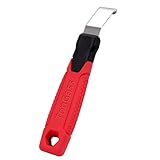
- Heavy-Duty Steel Construction – Made from 1mm thick quenched steel, this vinyl siding removal tool is built for durability and strength. The perforated design makes it lightweight and easy to carry, ensuring long-lasting performance for any siding installation or repair project.
- Efficient Vinyl Siding Zip Tool – Designed for both removal and installation, this siding hand tool allows you to work quickly while keeping the siding and wall intact. A must-have for professionals and DIY home improvement projects.
- Ergonomic Non-Slip Handle for Comfort – Featuring an extra-long red silicone handle with a textured grip, this siding removal tool provides enhanced control and comfort. The added length improves leverage, making siding installation and removal easier.
- Quick & Damage-Free Siding Removal – Remove, install, or repair vinyl siding in a single move without damaging the panels. This siding tool streamlines the process, ensuring smooth and efficient work with minimal effort.
- Essential Tool for Home & Professional Use – Whether you're a contractor or a homeowner, this vinyl siding zip tool is the ideal solution for siding projects. Its reliable design eliminates the need for makeshift tools, making every job easier and more efficient.
How to Compare Siding Bids Fairly
Do not compare siding bids by total price alone. A $19,000 bid can be cheaper than a $16,500 bid if it includes tear-off, better WRB, proper flashing, permits, disposal, trim details, and written repair unit prices.
Ask every contractor to price the same written scope. At minimum, the proposal should list material brand and profile, installed square footage, number of siding squares, tear-off, disposal, WRB, flashing, trim package, fasteners, paint or factory finish, permits, cleanup, warranty terms, and repair unit pricing.
We also recommend asking for photos before the walls are covered. A good job file should include sheathing repairs, WRB laps, window flashing, kick-out flashing, penetrations, and any areas where rot was removed. Those photos are useful for warranty questions, future repairs, and resale documentation.
Practical Budget Examples
For a simple one-story home with about 1,600 square feet of siding area, vinyl might price around $6,400 to $19,200. Fiber cement might price around $11,200 to $28,800. Engineered wood might fall around $8,000 to $20,800.
For a larger two-story home with about 2,400 square feet of siding area, vinyl might price around $9,600 to $28,800. Fiber cement might land around $16,800 to $43,200. Add a detailed trim package, hidden sheathing repairs, difficult access, and permits, and the same home can move higher quickly.
For a front elevation upgrade, manufactured stone veneer on 300 square feet of wall area may cost roughly $4,500 to $9,000 at $15 to $30 per square foot, with national benchmark projects around the low five figures depending on scope. That is why stone is often used selectively where it changes curb appeal the most.
Best Value by Situation
For the lowest upfront cost, vinyl is usually the answer. For stronger curb appeal and durability without going into masonry pricing, fiber cement and engineered wood are common value choices. For historic character, natural wood can be worth it when the homeowner accepts maintenance. For modern design, metal can be excellent when detailed well. For regional styles, stucco can be practical, but failed stucco replacement needs a repair contingency. For premium accents, manufactured stone veneer can deliver a large visual upgrade in a limited area.
The best siding choice is not the one with the lowest square-foot number. It is the material and wall assembly that fit the house, climate, budget, maintenance tolerance, and resale plan. A fair estimate should make the hidden parts visible: wall area, tear-off, WRB, flashing, trim, repair allowances, permits, and warranty requirements. Once those are clear, the material comparison becomes much easier.
Frequently Asked Questions
How much does siding replacement cost in 2026?
Most full-house siding replacement projects cost about $8,000 to $30,000 in 2026. Installed pricing commonly ranges from about $3.50 to $25.00 per square foot, depending on material, wall area, tear-off, trim, repairs, access, and region.
What is the cheapest siding material to install?
Vinyl siding is usually the lowest common replacement option, typically around $4 to $12 per square foot installed. Basic vinyl costs less than insulated vinyl, fiber cement, engineered wood, natural wood, metal, stucco, brick, or stone veneer.
How much does vinyl siding cost compared with fiber cement?
Vinyl siding usually costs about $4 to $12 per square foot installed. Fiber cement commonly costs about $7 to $18 per square foot installed, with complex Hardie-style jobs sometimes reaching $16 to $22 or more per square foot.
Is Hardie board worth the extra cost over vinyl siding?
Hardie-style fiber cement can be worth the added cost when appearance, durability, fire resistance, and resale appeal matter. It costs more to install than vinyl because it is heavier, slower to cut and fasten, and requires strict installation details.
Do I need a permit to replace siding?
Many municipalities require a permit for full siding replacement, especially when sheathing, water-resistive barrier, structural repairs, fire-rated assemblies, or wind-zone requirements are involved. Permit rules and fees are local, so confirm before work starts.
What hidden costs should I expect when old siding is removed?
Common hidden costs include rotten sheathing, damaged trim, missing flashing, failed housewrap, insect damage, lead-safe work on pre-1978 homes, disposal fees, and code upgrades. Ask for written unit prices for sheathing replacement and trim repair before demolition.
Quick Recap
Product prices and availability are accurate as of the date/time indicated and are subject to change. Any price and availability information displayed on Amazon at the time of purchase will apply.

