A SCIF is not merely a reinforced room. It is an accredited facility authorized for specific handling of Sensitive Compartmented Information (SCI), supported by physical construction, access controls, acoustic and technical protections, operating procedures, documentation, inspections, and continuing oversight.
The most transferable lesson is simple: security is a lifecycle and governance system, not a construction feature. A facility can have strong doors and walls yet fail through sound leakage, an unprotected service penetration, unmanaged credentials, an untested alarm, an undocumented renovation, or a missing accreditation record.
As an Amazon Associate I earn from qualifying purchases.
What a SCIF actually is
SCIF means Sensitive Compartmented Information Facility. It is a facility or defined area accredited to process, store, and/or discuss SCI. Those activities are not interchangeable: a room approved for discussion may not be approved for open storage or electronic processing.
Free tools Windows power users keep installed
One-click scans. No signup required.
Accreditation is the dividing line between a secure-looking room and a SCIF. Under U.S. Department of State security policy, SCI activities are authorized only in accredited SCIFs. Accreditation begins an ongoing process of monitoring, evaluation, re-evaluation, and documentation review.
#1 Best Overall
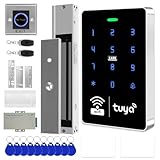
- All-in-one kit: Your full access control kit is a complete access control system that provides everything you need in one kit (including WiFi access control host, power supply, 280kg magnetic lock + ZL bracket, sensor switch, doorbell, remote control, IC keychain)
- The wiring is super simple and the installation is more convenient: just connect the 6 terminals to the corresponding numbers to complete the wiring, which is a step faster and solves the wiring pain points. It is really great.
- WiFi access control keypad: supports 1000 users, IP68 outdoor waterproof, supports five ways to open the door: WiFi Tuya APP/temporary password/RFID card/password/RFID card + password, remote door opening , touch blue backlit keyboard, supports always-on mode, can set to add and delete cards
- Sturdy 280kg Magnetic Lock - This magnetic lock has a powerful 600-pound holding force, ensuring your door stays securely locked. It features a fail-safe feature and comes with both Z- and L-shaped brackets to fit a wider range of door types. Easy installation. [Note: For single-door wooden doors, iron doors, and UPVC doors (inward opening), you can purchase the ZL bracket set.]
- The power supply has been upgraded for super-easy installation: 1. The power input cable is pre-connected; simply plug it into an outlet (eliminating the hassle of wiring and increasing safety). The cable is available in 2-meter lengths to accommodate various installation scenarios. 2. The power output cable is pre-connected (the cable closest to the power supply is tightened before shipment; please do not loosen it). Simply plug the corresponding digital terminals into the connectors to easily complete the wiring.
That distinction also prevents several common category errors:
- SCI is not the same as collateral classified information. Different information categories can have different facility and handling requirements.
- A SCIF is not automatically a SAPF. A Special Access Program Facility supports program-specific controls that may impose additional requirements.
- A secure room is not necessarily a SCIF. Secure rooms, vaults, secure areas, temporary secure work areas, compartmented areas, and permanent SCIFs have different purposes and approval paths.
- Construction completion is not accreditation. The approving authority must review the facility, its systems, its records, and its operating arrangements.
Public references identify ODNI technical specifications as an implementing specification for the Intelligence Community Directive 705 framework. Public DoD references also identify Technical Specification Version 1.5.1, dated July 26, 2021. Requirements can change, and agency, mission, threat, service, and program rules may add constraints, so any real project should confirm the current controlled guidance with its Accrediting Official (AO).
Lesson one: define the asset and threat before designing the room
The first design question should not be “Which wall assembly should we buy?” It should be “What failure would matter most, and how could it occur?”
What’s actually slowing this PC down?
Pick the symptom - the matching free tool is one click away.
A practical threat and asset assessment asks:
- What information is being protected?
- Will it be discussed, processed, stored, or all three?
- What would disclosure, alteration, or loss mean?
- Who needs access, and who only needs escorted or temporary access?
- What public spaces, shared walls, roofs, windows, utilities, contractors, visitors, and emergency responders are nearby?
- Could sound, sight, electromagnetic emissions, devices, credentials, or maintenance activity bypass the intended boundary?
- How will the facility function during fire, power loss, communications failure, flooding, severe weather, or evacuation?
The ODNI technical specifications describe a risk-management process involving threats, vulnerabilities, and assets. That approach generalizes well to data centers, laboratories, control rooms, executive communications spaces, and other high-consequence environments.
Lesson two: build a complete, layered security boundary
Physical security should not be concentrated in one impressive door. It should be layered from the site perimeter inward:
Rank #2
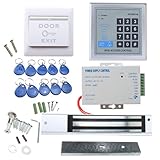
- [Modern Technology for Home Security] This RFID Proximity door access control system kit is one of the modern electronic access control systems
- [Safely and Reliable] The state-of-the-art CPU and integrated circuit techniques are applied to keep all the data from loss due to power failure.
- [Easy To Access] AGPtEK door security system is powerful and can open the door using proximity cards, passwords, or the hybrid.
- [More Convenient] The rfid lock kit access controller can provide users with more convenience by connecting to terminals, including the button for opening the door, doorbell, and electric lock that is normally open or closed.
- [Wide Application] The door lock installation kit offers a method for controlling access safely and automatically, qualifying it as ideal equipment for businesses, offices, factories, and communities. Get the full set of door security system to update your home security!
- Control the site perimeter and define legitimate entry points.
- Use access control appropriate to the facility’s size, entry configuration, and risk.
- Protect doors, frames, hinges, thresholds, locking points, and adjacent construction as one assembly.
- Integrate intrusion detection with monitoring and a documented response process.
- Control visitors, escorts, deliveries, maintenance personnel, and emergency access.
- Provide approved storage and interior compartmentation where different activities or information require separation.
- Maintain procedures for lost credentials, forced entry, power loss, alarms, and suspected compromise.
ICS 705-1 addresses access-control approaches, intrusion-detection systems, and installation and service requirements. The DoD Lock Program equipment matrix associates SCIF doors with applicable ICD 705 requirements and identifies Federal Specification FF-L-2740 in the relevant lock context.
A high-security lock cannot compensate for tailgating, propped doors, shared credentials, unmonitored alarms, stale access lists, or an emergency procedure that staff do not understand. Hardware is one control in a system.
Do these 3 things before closing this tab:
1Repair Windows errors before they cause bigger problems2Fix the driver behind crashes, sound loss and screen glitches3Clear out junk files and repair common Windows errorsLesson three: acoustic security is information security
Confidential information can escape without anyone forcing entry. Speech may be intelligible through a shared wall, door assembly, ceiling void, air return, cable pathway, floor, or utility penetration.
Security-grade acoustic design therefore considers the complete boundary:
- Walls, floors, ceilings, doors, frames, thresholds, and adjacent rooms.
- Shared plenums, ducts, drains, conduits, cable trays, and service penetrations.
- Room layout and the location of sensitive conversations relative to public or uncontrolled areas.
- Noise masking and operational controls where appropriate.
- Testing of the installed assembly rather than reliance on a component’s marketing claim.
Ordinary office soundproofing is not automatically an acceptable security solution. A door with a strong core may still underperform because of its frame, threshold, seals, surrounding wall, or ventilation path. The goal is not quiet comfort; it is preventing unauthorized observation or disclosure. The IC technical specifications identify this protection as a core purpose.
Rank #3

- Multiple Access Options - This access control system offers a variety of ways to enter and exit a secure area including password input, card swiping and remote control.
- Enhanced Security - The 600LBS electromagnetic lock ensures that the door is tightly secured, enhancing the safety and security of the premises.
- Visitor Management - Visitors can easily press the doorbell on the access keypad, letting those indoors know when someone has arrived. The indoor unit comes with a remote control that allows easy entry for visitors without the need to go outside.
- Easy Installation - The system is user-friendly and can be installed with ease, requiring minimal time and effort.
Lesson four: technical security must be assessed as a system
Electronic equipment can create compromising electromagnetic emanations, and technical-surveillance risks can arise from more than the obvious presence of a wireless device. Depending on the facility, equipment, boundary, threat, and technical authority’s assessment, controls may involve equipment choices, cable routing, grounding, filters, shielding, RF controls, and verification.
Recommended Free Tools
It is inaccurate to say that every SCIF is an identical Faraday cage. Technical requirements are mission- and risk-dependent. ICS 705-02 identifies TEMPEST review and verification by a Certified TEMPEST Technical Authority as part of the accreditation documentation when required by the AO. It also states that TSCM inspections may be required for new SCIFs or significant renovations.
Device restrictions remain important. Phones, wearables, cameras, microphones, removable media, and wireless equipment may be restricted according to the facility’s rules. But a phone ban is an operational control, not a replacement for engineered technical protections.
Service-level rules can add requirements. For example, a 2023 Marine Corps directive references mandatory radio-frequency countermeasure requirements for certain new Department of the Navy SCIFs. This illustrates why project teams must identify the applicable authority early rather than assume a universal package.
Lesson five: accreditation is an engineering deliverable
Accreditation should be built into the project schedule, design reviews, procurement documents, construction controls, testing plan, and handover package.
The Tool Desk
Outbyte PC Repair FREEClear out junk files and repair common Windows errorsFree Scan →Outbyte Driver Updater FREEScan for outdated or missing drivers - takes under a minuteDriver Scan →Rank #4

- Security: The electromagnetic lock provides reliable access control security, preventing unauthorized entry.
- Convenience: The remote access control system allows authorized personnel to conveniently unlock the door remotely, for example, using a remote control.
- Flexibility: The electromagnetic lock can release immediately upon receiving the unlock signalled, allowing for quick access.
- Automation: The electromagnetic lock can be integrated into an automatic access control system, streamlining the entry and exit process.Multiple authorization methods: Access control systems typically support various authorization methods, such as passwords, card access, and fingerprint recognition, offering a range of access management options.
- Practicality: The electromagnetic lock is easy to install, requires minimal space, and is suitable for various access control scenarios.
Depending on the project, documentation may include:
- Fixed Facility Checklist.
- Standard operating procedures and emergency plans.
- Construction Security Plan.
- Pre-construction and TEMPEST checklists.
- Drawings, diagrams, boundary details, and equipment schedules.
- Waiver requests and supporting evidence.
- Co-use or joint-use agreements.
- Acoustic, technical, access-control, alarm, and inspection records.
- Maintenance, configuration, and change-control records.
ICS 705-02 describes AO review and inspection before final accreditation and calls for review of design, construction, operating, emergency, construction-security, and waiver documentation.
The construction phase is part of the security problem. Drawings, photographs, material substitutions, subcontractor access, temporary openings, and unapproved site changes can expose sensitive information before the facility opens. The Marine Corps process requires security involvement during planning, design, construction, and renovation—not merely at final inspection.
Lesson six: people are part of the boundary
Clearance alone does not eliminate risk. Access must also reflect need-to-know, role, mission, time, and location.
Operating controls should address:
- Role-based access and current access lists.
- Visitor registration, escorting, and temporary access.
- Cleaning, delivery, maintenance, construction, and emergency personnel.
- Training, recurring briefings, reporting, and insider-threat awareness.
- Separation of duties for approvals, access administration, monitoring, and review.
- Controls for devices, media, printing, photographs, and conversations outside the boundary.
The State Department’s 12 FAM 710 notes that an AO may impose clearance, suitability, or fitness requirements on tradespeople working inside or adjacent to a SCIF, depending on the threat and work scope.
Best Value

- It's ANSI strike lock,widely used in North American. Note that 1).It's installed within your door frame,need to Cut Door Frame if have no existing hole. 2).It's NOT for PUSH Bar,it's for Knob lock or Mechanic Lock which has handle. 3).Lock Length is 4.84 in. Make sure size is sutiable for your door before purchase. 4)1000kg Force, Keep locked in case of power failure by default(fail secure mode), also can adjust to Fail Safe mode.
- Control 4 doors.Get in door by swiping card or PIN code, and get out door by push button or turn lock handle/knob. Can store/download/check entry records and generate report by professional management software.Powerful and professional management software makes the system have many extended control functions.Have phone APP to open lock remotely(Support iPhone & Android )
- User capacity: 20,000 user / up to 100,000 records. Auto open/close at any pre-set time during any day. Support "who" can enter which door at certain time, authorized access control.
- Card Type: EM-ID Card. Less than 0.2 second Response Speed, 5-10cm Proximity Range. Desktop USB reader,read card number into software so that easy programming/register user. Detail video guide and wire diagram make all easily, you can DIY.
- Network communication via TCP/IP, Software Support Win7/Win8/Win10/Win11 both 32 & 64 bit ALL Windows system. After programming done, it's fully stand alone running system, no need network connection, no need hook to computer.
Lesson seven: opening day is the beginning, not the finish
A secure facility is a living system. Publicly available ICS 705-02 text describes periodic re-evaluation based on sensitivity, threat, modifications, and past performance, or at least every five years. Major modifications, changes in program sensitivity, and changes in threat can require earlier review and re-accreditation to current standards.
Between formal reviews, operators should manage:
- Credential issuance, revocation, and periodic access reviews.
- Door, lock, alarm, power, and monitoring tests.
- Maintenance contractors and service visits.
- Building-system changes affecting HVAC, ceilings, utilities, fire protection, or penetrations.
- Configuration records and approved deviations.
- Emergency access and recovery procedures.
- Training and reporting of anomalies or suspected compromise.
When a facility is retired or repurposed, de-accreditation is also formal. SCI and observable elements of the mission must be removed, disposed of, or sanitized as required; a room does not automatically become ordinary office space simply because its occupants have moved out.
Design decisions that deserve early attention
| Decision | Why it matters | Trade-off |
|---|---|---|
| Processing, storage, discussion, or all three | Defines the facility’s approved scope and systems. | Broader capability can increase cost and operational complexity. |
| Permanent, temporary, or modular construction | Affects speed, relocatability, utilities, testing, and sustainment. | Modular construction may be faster but still needs site-specific integration and accreditation. |
| Shared walls and plenums | Can create acoustic and technical paths outside the intended boundary. | May reduce initial construction cost but increase testing and remediation risk. |
| RF shielding and technical controls | May reduce collection risk where required. | Can complicate penetrations, grounding, HVAC, maintenance, and future expansion. |
| Electronic access control | Provides flexibility and audit records. | Requires power, cybersecurity, maintenance, and manual fallback procedures. |
| Open versus closed storage | Open storage can improve workflow. | It generally imposes more demanding physical-security controls. |
Common failure modes
During construction and renovation
- Starting work before concept approval or security review.
- Treating a checklist as paperwork rather than design criteria.
- Using ordinary commercial doors, frames, acoustic products, or access components without confirming suitability.
- Forgetting ceiling voids, ducts, drains, cable trays, utility paths, and penetrations.
- Allowing unapproved workers into the construction area.
- Changing materials or layouts without documenting and reviewing the change.
- Installing shielding without coordinating penetrations and testing.
- Assuming a previously accredited room remains compliant after renovation.
During daily operations
- Tailgating, door propping, shared credentials, or unmanaged temporary access.
- Unapproved phones, wearables, cameras, microphones, or removable media.
- Visitors, cleaners, technicians, or emergency personnel entering without controls.
- Printed material or conversations left outside approved boundaries.
- Alarm faults ignored because they occur frequently.
- Access lists not updated after personnel or contract changes.
- Staff relying on the room’s reputation rather than its current accreditation status.
In governance
- Missing drawings, waivers, test records, emergency procedures, or construction-security records.
- Assuming one agency’s accreditation automatically satisfies another agency’s use case.
- Failing to obtain a co-use agreement where required.
- Making major modifications without re-accreditation.
- Treating a waiver as permanent.
- Failing to sanitize the facility after de-accreditation.
What other organizations can borrow
An ordinary corporate boardroom, laboratory, data center, healthcare space, legal office, or control room does not become a SCIF by copying a door or buying a product advertised as “ICD 705 compliant.” Only the applicable government authority can determine SCIF acceptability.
Organizations can, however, borrow the underlying method:
- Define the information. Identify what must be protected and whether it is discussed, processed, stored, or transferred.
- Identify the authority and owner. Assign responsibility for security decisions, approvals, operations, and maintenance.
- Map the full boundary. Include walls, ceilings, floors, doors, HVAC, utilities, cable routes, roofs, windows, adjacent rooms, and service access.
- Control people and devices. Apply least privilege, visitor controls, credential governance, device rules, and training.
- Test the installed system. Validate acoustic, physical, access-control, alarm, and technical protections under the actual configuration.
- Document what was built. Keep drawings, test results, approvals, changes, maintenance records, and exceptions together.
- Operate and inspect continuously. Treat alarms, access reviews, maintenance, and training as security work.
- Reassess after change. Renovation, new equipment, new tenants, new threats, and new information types can change the risk.
- Plan retirement. Define how information, devices, records, and security features will be removed or sanitized.
How to evaluate vendors and contractors
Commercial suppliers may provide modular structures, specialized doors, locks, acoustic treatments, intrusion detection, RF products, testing, or accreditation support. A vendor’s marketing claim is not the same as government accreditation.
Procurement documents should require:
- Relevant experience with the applicable agency, mission, or accrediting authority.
- A clear distinction between product certification, installation testing, and facility accreditation.
- Scope covering doors, frames, ceilings, floors, penetrations, HVAC, utilities, access control, alarms, acoustic performance, RF requirements, and documentation.
- Test reports tied to the actual installed configuration.
- Construction-security and change-control procedures.
- Warranty, maintenance, inspection, and future re-accreditation support.
- Compliance with applicable federal, building, fire, life-safety, export-control, and information-security requirements.
- No promise of “guaranteed accreditation” outside the authority of the AO.
Products marketed as “TEMPEST,” “ICD 705 compliant,” or “government approved” should be evaluated narrowly: which version, which component, which installation, which test conditions, and which authority? A certified product does not make the entire room secure.
Quick Recap
A practical lifecycle checklist
- Define the information and approved activities.
- Identify the AO, security manager, technical authorities, inspectors, and responsible owner.
- Map threats, assets, adjacent spaces, utilities, people, and emergency conditions.
- Draw the complete physical, acoustic, visual, electronic, and operational boundary.
- Plan access control, storage, intrusion detection, visitor handling, and response.
- Coordinate acoustic, RF, TEMPEST, TSCM, HVAC, fire, power, egress, and communications requirements.
- Secure the construction process and control drawings, photographs, workers, substitutions, and changes.
- Test the installed configuration and preserve the records.
- Obtain inspection, approval, and accreditation before authorized operations.
- Operate, train, maintain, inspect, and review continuously.
- Reassess after modifications, mission changes, threat changes, or significant incidents.
- Sanitize and formally de-accredit when retiring or repurposing the facility.
Product prices and availability are accurate as of the date/time indicated and are subject to change. Any price and availability information displayed on Amazon at the time of purchase will apply.

