The Tool Desk
Outbyte Driver Updater FREEFix the driver behind crashes, sound loss and screen glitchesFind Drivers →Outbyte PC Repair FREEClear out junk files and repair common Windows errorsFree Scan →Some links on this page are affiliate links: if you buy through them we may earn a commission, at no extra cost to you.
A plywood dado is a simple joint, but it exposes sloppy work fast. The groove has to be straight, the depth has to stay consistent, and the width has to match the actual plywood in your hand, not the thickness printed on the rack tag. That is the part that catches a lot of homeowners: 3/4 in. plywood is rarely a true 0.750 in. sheet. It may measure closer to 23/32 in., 0.703 in., or something slightly different across the same stack.
On our job sites, we treat dado routing as a layout and setup problem first, and a cutting problem second. Measure the plywood with calipers. Cut a test dado in scrap from the same sheet. Adjust the router, bit, or jig until the shelf or divider slides in snugly without being forced. Then repeat that setup across the real parts using stop blocks, registration edges, and clean dust control.
For cabinet boxes, bookcases, closet systems, pantry shelving, mudroom benches, and built-ins, that small amount of discipline is what separates a professional installation from one that looks slightly off forever. A good dado should hold the part square during assembly, give glue and fasteners real bearing, and leave no obvious shadow gap at the face.
Do these 3 things before closing this tab:
1Repair Windows errors before they cause bigger problems2Fix the driver behind crashes, sound loss and screen glitches3Clear out junk files and repair common Windows errorsAs an Amazon Associate I earn from qualifying purchases.
What a Dado Does in Plywood Construction
A dado is a three-sided groove cut into one workpiece to receive another. In plywood work, it is commonly used for fixed shelves, vertical dividers, cabinet bottoms, partitions, stair parts, and built-in components. The groove gives the mating panel a mechanical seat instead of relying only on screws through an edge.
In a basic 3/4 in. plywood bookcase, for example, a shelf might sit in a 1/4 in. deep dado cut into each side panel. The shelf still may get glue, brads, screws, or confirmat-style fasteners depending on the design, but the dado keeps it aligned and helps transfer load into the side panels. For painted utility shelving, that may be enough. For a built-in that needs to carry dishes, books, tools, or a stone countertop, the dado is only one part of the structural plan.
#1 Best Overall

- Route dados and straight cuts sized to receive dressed plywood
- Premium C3 micro-grain tungsten carbide blades for a sharper & longer lasting edge
- For use on CNC, table mount and handheld routers
- Silver induction brazing for maximum strength and durability
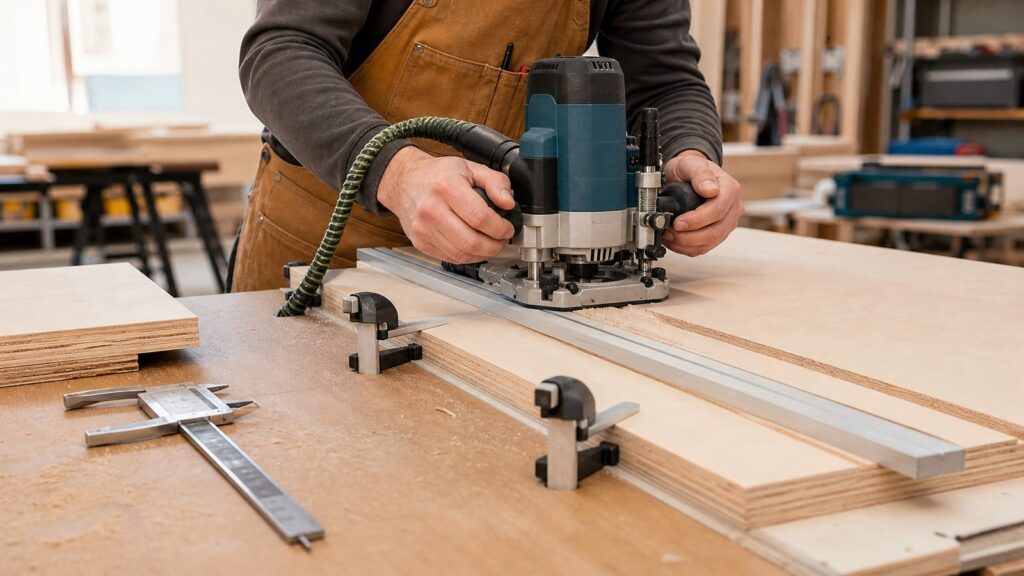
Routing is often the best way to cut dadoes in sheet goods because it works well on large panels, stopped grooves, finished faces, and jobsite setups where a table saw dado stack is impractical. A router with a straightedge or adjustable jig can cut a stopped dado for a cabinet side without running the groove through the visible front edge. That matters when the finished face needs to look clean.
The Real Issue: Plywood Is Not Its Nominal Size
The biggest mistake is assuming nominal plywood thickness is exact. A sheet sold as 3/4 in. plywood is not guaranteed to be 3/4 in. thick. Cabinet-grade hardwood plywood at a big-box store may be listed as 3/4 in., but actual thickness commonly falls under that. One prefinished birch plywood listing, for example, shows an actual thickness of 0.703 in. for a nominal 3/4 in. panel.
That difference matters. A 3/4 in. router bit cutting a true 0.750 in. groove can leave a loose fit around plywood that measures 0.710 in. or 0.720 in. A loose dado lets parts rack during assembly, creates visible gaps at finished edges, and reduces the joint’s ability to register the part square. On the other hand, a dado that is too tight can split veneer, bow a cabinet side, scrape glue off the joint, or make assembly so forceful that the cabinet goes out of square.
Common undersized plywood bits are made to address this problem. You will see sizes around 7/32 in. for nominal 1/4 in. plywood, 15/32 in. or 31/64 in. for nominal 1/2 in. plywood, and 23/32 in. for nominal 3/4 in. plywood. Those bits are useful, but they are not magic. Sheets still vary by manufacturer, core type, sanding, face veneer, moisture, and finish.
Our rule is simple: measure the material, not the label. Check several points on the sheet with calipers, especially near the parts you will actually use. Then size the dado to the thickest practical reading plus a small assembly allowance. You want the part to slide in with hand pressure, not a mallet and a prayer.
Tools and Materials for Accurate Router Dadoes
You do not need a full cabinet shop to cut accurate dadoes, but you do need a controlled setup. A handheld router wandering along a pencil line is not a professional method. The router must be guided by a straightedge, fence, track, template, or purpose-built dado jig.
Core tools
For most plywood dado work, we use a router with enough power to hold speed under load, a sharp straight or spiral bit, clamps, a reliable straightedge or jig, calipers, a square, a marking knife or sharp pencil, and scrap from the same plywood sheet for setup cuts. A flat sacrificial surface under the work helps keep the panel supported and prevents blowout at the end of through cuts.
If the homeowner already owns a router, a practical setup budget is usually about $75 to $300. That covers a plywood dado bit or spiral bit, clamps, jig material, calipers, dust adapters, and basic eye and hearing protection. If you also need to buy a capable router and dust extractor, the setup can move into the $250 to $800+ range quickly.
Bit choices
A basic straight bit can cut dadoes, but it is not always the cleanest option on veneered plywood. Downcut spiral bits help protect the top face because they push fibers downward as they cut. Compression bits can be useful where both faces matter, though they cost more and need the right depth strategy to work properly. Spiral bits also clear chips better than many basic straight bits, which reduces burning and makes depth more consistent.
Undersized plywood bit sets are convenient for common cabinet stock. Budget single bits may run around $14 to $25, while professional 3-piece or 4-piece sets often start around $65 and go up from there. A 23/32 in. bit is common for nominal 3/4 in. plywood, but if the sheet measures 0.703 in., even that may be wider than ideal. That is where a two-pass jig wins.
Best Methods for Routing Plywood Dadoes
There is no single best method for every dado. The right setup depends on whether the dado is through or stopped, how many parts you need to repeat, whether the face is prefinished, and whether the project is being done in a shop or inside an occupied home.
Rank #2
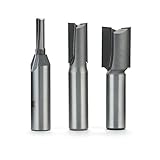
- TOOL SPECS: Set includes solid carbide straight bit (SC218) and 2 carbide tipped straight bits (1065A and 1083A) for use with 1/2" collets.
- DADO ROUTER SET: These router bits are crafted to match nominal plywood thicknesses, ensuring accurate and consistent cuts.
- FEATURES: Contains a 7/32" solid carbide cutter for 1/4" plywood, a 31/64" carbide-tipped bit for 1/2" plywood, and a 23/32" carbide-tipped bit for 3/4" plywood.
- CARBIDE CUTTING EDGES: Offers an excellent balance of quality and cost, making it ideal for a wide range of applications.
- STEEL SHANK: The steel body creates a rigid tool with reduced vibration while the carbide cutting edges provide extended life.
| Method | Best Use | Accuracy | Typical Cost | Jobsite Practicality |
|---|---|---|---|---|
| Fixed undersized plywood bit | Fast dadoes in common nominal plywood | Good if the sheet matches the bit | $14-$65+ | Very good |
| Two-pass straight bit | Exact fit to real plywood thickness | Excellent with careful setup | $20-$80 for bit and guide materials | Good |
| Adjustable dado jig | Repeat cabinet shelves and dividers | Excellent | $25-$150 depending on shop-made or commercial | Excellent |
| Router table | Smaller parts and repeatable grooves | Very good | $150-$600+ if not already owned | Fair; less useful for large panels |
| Track-guided router | Long straight dadoes in large panels | Very good | $100-$400+ for track system | Very good |
| Table-saw dado stack | Through dadoes in manageable parts | Excellent when dialed in | $80-$250+ for stack | Poor to fair on large panels or occupied sites |
| CNC router | Production cabinet parts | Excellent with calibrated tooling | High shop cost | Not jobsite friendly |
Fixed undersized bit
This is the fastest approach when the bit matches the plywood. Install the bit, set the fence, make a test cut, and check the fit. For shop cabinets using consistent sheet stock, that can be efficient. The risk is assuming the bit fits every panel sold under the same nominal label. It does not.
Two-pass adjustable method
For the most reliable fit, we prefer a two-pass method with a straight or spiral bit narrower than the plywood. The first pass establishes one shoulder of the dado. The second pass shifts the guide just enough to create the exact width. A plywood offcut becomes the setup gauge. This solves the real problem: actual panel thickness varies.
What’s actually slowing this PC down?
Pick the symptom - the matching free tool is one click away.
With a shop-made adjustable jig, the offcut itself sets the spacing between the fences. When the router base rides between the fences, the bit removes exactly enough material for that plywood. This is one of the best methods for built-ins because it adapts to the actual material delivered to the project.
Step-by-Step: Routing a Clean Plywood Dado
1. Pick a reference edge
Start by deciding which edge controls the layout. For cabinet sides, that is often the bottom edge or front edge. Mark every part consistently. If one side panel is measured from the bottom and the other is measured from the top, shelf dadoes can miss each other by 1/16 in. or more, and that error will show at the face.
2. Measure the plywood
Use calipers, not a tape measure. Check the thickness at several points. If the panel ranges from 0.705 in. to 0.715 in., build your setup around the thicker practical reading and test the fit. Forcing a slightly thicker section into a too-tight dado can telegraph through the veneer or open the side panel.
3. Set the dado depth
For most 3/4 in. plywood cabinet and shelving work, a dado depth of 1/4 in. to 3/8 in. is common. Dadoes seldom need to exceed 1/2 in. deep in this type of work. Deeper is not automatically stronger. A deeper groove increases glue area and registration, but it also removes more material from the side panel. For a 3/4 in. side panel, a 1/4 in. dado leaves about 1/2 in. of panel thickness behind the groove, which is usually a reasonable balance for bookcases and cabinet boxes.
Quick wins for a faster PC:
Scan for outdated or missing drivers - takes under a minuteDriver Scan →Clear out junk files and repair common Windows errorsFree Scan →4. Make a test cut in matching scrap
Use scrap from the same sheet, not random shop scrap. Cut the dado at the intended depth and test the mating panel. The fit should be snug enough that the piece stands or holds alignment, but loose enough to assemble by hand. If it needs hard hammering, it is too tight. If it rocks side to side, it is too loose.
5. Score or tape finished veneer
For exposed veneer or prefinished plywood, we make a light scoring pass first or use masking tape along the cut line. A sharp downcut spiral bit helps keep the top face clean. Prefinished plywood is less forgiving because chips, scratches, and glue squeeze-out are harder to hide. Factory finish also limits glue bond, so mechanical fastening may need to carry more of the load.
6. Rout in controlled passes
Do not try to hog out a deep dado in one pass. A shallow scoring pass followed by one or more full-depth passes is cleaner and easier on the bit. Keep the router base flat. Clear chips between passes so debris under the base does not change the depth. On large panels, support the work fully so the router does not dip at the edge.
7. Use stops for stopped dadoes
For stopped dadoes, use stop blocks instead of trusting pencil marks. Mark the router base location, not just the bit location, because the bit is hidden under the router during the cut. A stopped dado that runs 1/2 in. too far can ruin a visible cabinet side.
Rank #3
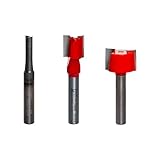
- Specs: Shank Dia. 1/4"
- Sets include bits that match the true thickness of 1/4", 1/2" and 3/4" plywood
- Routs hardwood, softwood, plywood or composites
- Use on hand-held and table-mounted routers
- Includes Freud's wooden shadowbox case
8. Pair matching sides
When practical, rout left and right cabinet sides together with inside faces up and registration edges aligned. This makes shelf dadoes match exactly. A shelf that is level in one side and 1/16 in. high in the other creates a twist that is hard to fix later.
Jobsite Accuracy: What Changes Outside the Shop
Shop work happens on flat benches with predictable lighting and dust collection. Jobsite work happens around finished floors, uneven walls, baseboards, electrical boxes, and other trades. That changes how we plan dadoed plywood work.
For permanent built-ins, routing accurate dadoes is only half the job. The cabinet or shelving unit still has to be scribed to uneven walls, shimmed level, anchored into framing, and built with enough clearance to fit the room. We usually leave a controlled installation allowance rather than building wall-to-wall parts dead tight. A room that is 1/4 in. out of square over 8 ft. can turn a perfectly routed cabinet into a poor fit.
Dado locations should also be coordinated with wall anchoring. If a tall bookcase or pantry cabinet will be fastened to studs, the cabinet needs backs, nailers, cleats, or blocking that transfer load properly. A shelf dado may carry the shelf load into the cabinet side, but the cabinet still needs to be secured so it cannot tip, rack, or pull away from the wall.
Recommended Free Tools
For heavy storage, children’s rooms, garages, laundry rooms, and mudrooms, we treat anti-tip fastening as part of the installation, not an optional add-on. Books, tools, dishes, and countertop appliances can create real loads. Current residential code tables include live-load assumptions for building elements, but built-in casework design also depends on anchoring, span, fasteners, panel type, and how the homeowner will actually use it.
Material Choices and 2026 Cost Reality
Panel selection changes both the dado quality and the finished cost. Cabinet-grade 3/4 in. hardwood plywood at big-box US retail is commonly about $75 to $80 per 4 ft. by 8 ft. sheet for birch, maple, or similar PureBond-type panels. Current visible examples include 3/4 in. PureBond birch around $74.98, red oak around $79.98, and maple around $74.98. A 3/4 in. melamine white particleboard panel can be closer to $47.20 per sheet.
Those prices are useful planning numbers, not guaranteed bids. Local inventory, freight, veneer grade, core type, species, fire rating, formaldehyde compliance documentation, and Pro Desk pricing all affect cost. Prefinished birch, Baltic birch-style panels, marine plywood, fire-retardant panels, and premium veneer sheets can run materially higher.
Veneer-core hardwood plywood usually holds dado shoulders and screws better than particleboard-core panels. MDF-core panels can machine smoothly but are heavier and less forgiving with fasteners. Melamine is economical and clean-looking for utility cabinets, but chip control is harder, glue bonding is limited, and exposed edges need treatment. Prefinished plywood saves finishing labor, but every cut must be cleaner because repairs are more visible.
For interior built-ins, composite wood products should comply with TSCA Title VI formaldehyde emission standards. Reputable suppliers can provide compliant material. On professional projects, we do not treat panel sourcing as an afterthought, especially in occupied homes, schools, offices, and healthcare-adjacent spaces.
Labor Costs: DIY Setup Versus Professional Work
The cost of routing dadoes is rarely priced as a standalone line item for homeowners. It is usually embedded in cabinet fabrication, shelving installation, or built-in construction. Still, the labor numbers help set expectations.
| Work Type | 2026 Planning Range | What Drives the Price |
|---|---|---|
| DIY dado setup if router is owned | $75-$300 | Bits, clamps, jig material, calipers, dust adapters, PPE |
| DIY including router and dust extractor | $250-$800+ | Router quality, dust collection, tracks, bits, accessories |
| Carpenter labor | $45-$110 per hour | Market, skill level, site conditions, finish expectations |
| Built-in cabinet labor | $60-$120 per hour | Custom layout, scribing, installation, finish work |
| Cabinetmaker fabrication | $50-$100 per hour | Shop tooling, material handling, precision, assembly |
| Cabinet installation labor | $50-$110 per hour | Anchoring, leveling, trim, field adjustments |
| Shelving installation benchmark | $21.67-$33.48 per linear foot | Simple shelving, access, wall conditions, material type |
| Cabinet installation benchmark | $274-$422 per cabinet | Cabinet size, layout, fastening, site prep |
For a small garage shelf, a careful DIYer can justify buying a bit and making a jig. For a wall of painted built-ins, the labor is not just the router work. It includes layout, material selection, shop cuts, edge treatment, assembly, transport, scribing, anchoring, caulking, filling, priming, painting, and cleanup. That is why professional built-ins cost more than the sheet count suggests.
Rank #4

- Route dados and straight cuts sized to receive dressed plywood
- Premium C3 micro-grain tungsten carbide blades for a sharper & longer lasting edge
- For use on CNC, table mount and handheld routers
- Silver induction brazing for maximum strength and durability
Safety, Dust Control, and Permits
Routing plywood makes fine dust from wood fibers, veneer, adhesive, and core material. Dust collection is not optional in professional work. OSHA identifies engineering controls such as local exhaust ventilation as preferred controls for wood dust exposure, with respirators as a secondary layer of protection. In plain jobsite terms: connect the router to a vacuum or dust extractor, use a clean filter, control airborne dust, and wear proper eye, hearing, and respiratory protection.
Outdated Drivers Are Slowing You Down
One free scan finds every outdated or missing driver and matches the right update for your exact hardware.Free scan · exact hardware matchWindows Errors? Fix Them Before They Spread
Repair common Windows errors and clear accumulated junk for a smoother, more stable PC - no reinstall needed.Free scan · no reinstallSecure the panel before routing. A router can shift a loose workpiece faster than most people expect. Keep cords and vacuum hoses clear of the router path. Let the bit reach full speed before entering the cut. Keep both hands on the router. Avoid climb-cutting with a handheld router except for very controlled light scoring passes by experienced operators, because the router can self-feed and pull away from the guide.
Permit requirements depend on scope and location. A freestanding bookcase usually does not trigger a building permit. Permanent built-ins may become part of a larger permitted project if they involve structural changes, electrical work, plumbing changes, fire-rated assemblies, egress conditions, or modifications to framing. If a built-in includes outlets, lighting, appliance circuits, or hidden wiring, electrical code and permits may apply. The safe assumption is to check with the local building department before cutting into walls or modifying utilities.
Independent reader supportYour contribution helps us test, update, and keep practical guides available for everyone.Common Problems and How to Fix Them
Loose dado
A loose dado usually means the bit was too wide, the jig shifted, or the plywood was thinner than expected. For non-visible utility work, glue and fasteners may still make the joint serviceable. For finished cabinetry, remake the part if the gap is visible at the face. Do not rely on filler to hide a structural fit problem.
Tight dado
A tight dado means the groove is undersized or the plywood varies thicker than your test piece. Widen the dado with a controlled second pass. Do not force assembly. If the joint scrapes off all the glue or bows the cabinet side, the tight fit has created a different failure.
Free tools Windows power users keep installed
One-click scans. No signup required.
Tearout on veneer
Use a sharp downcut spiral bit, tape the cut line, score first, and support the exit edge. Dull bits and one-pass cutting are common causes. On prefinished plywood, slow down and test first because a chipped factory face is hard to repair cleanly.
Router drift
Router drift usually comes from weak clamping, pushing the router inconsistently against the guide, or routing in the wrong direction for the setup. Clamp both ends of the guide. Add a second fence if needed. Keep steady pressure against the reference edge through the whole cut.
Burning
Burning can come from a dull bit, slow feed rate, too much depth in one pass, or poor chip evacuation. Clean the bit, reduce pass depth, increase feed slightly, and make sure dust extraction is working.
Mismatched shelf locations
This is a layout problem, not a router problem. Use a story stick, stop blocks, or paired side routing. Always register from the same edge. If matching dadoes are off, the shelf will twist or the face line will show the error.
Quick wins for a faster PC:
Clear out junk files and repair common Windows errorsFree Scan →Scan for outdated or missing drivers - takes under a minuteDriver Scan →When to DIY and When to Hire a Pro
DIY makes sense when the project is small, the material is affordable, and the consequences of a mistake are manageable. A garage cabinet, shop storage unit, laundry shelf, or paint-grade bookcase is a good learning project. Budget at least half a day for setup if you have not built the jig before. The first accurate dado usually takes longer than the next ten.
Best Value

- Specs: 4 Pieces Straight Router Bits 1/2" Shank, Cutting Diameter: 7/32", 11/32", 15/32", 23/32". UNDERSIZED PLYWOOD DADO: Bit cutting diameter matches undersized plywood, ensuring precise dado cuts.
- Premium Carbide: AT03:ULTRA-FINE WC grain size, 94.5 HRA Solid Carbide, 2400N/mm2 TRS, 7.40 SEVNB, ensure long-lasting cutting edge performance and tool life.
- Applicable Materials: Laminate, Melamine, Melamine Particle Board, MDF, Veneered Plywood, and Wood.
- Applicable Machines:Suitable for engraving machines, Table Mount Router, and CNC machining centers.
- Industrial Quality: Aoranto Tool is made in the CHINA, specializing in industrial quality cutting tools for the woodworking, plastics, aluminum, composite, and metal industries. Each tool is equipped with a traceability code, enabling full-process quality tracking. If you have any needs or questions about Aoranto, please feel free to contact us, reply within 24 hours.
Hire a professional when the work is highly visible, built into the house, tied into electrical or other systems, or expected to carry meaningful loads. A floor-to-ceiling living room built-in, kitchen pantry wall, mudroom locker system, office cabinetry, or closet installation needs more than accurate grooves. It needs proper layout, anchoring, scribing, finish planning, and sequencing with the rest of the home.
The break-even point is not just tool cost. It is risk. Ruining one $75 to $80 sheet of cabinet plywood, damaging a prefinished panel, or building a cabinet that cannot be squared on site can erase the savings fast. If the final piece needs to look like it was built with the house, professional layout and installation matter as much as the router cut.
Our Practical Standard for Plywood Dadoes
For most cabinet and built-in work, our standard is straightforward: measure the sheet, test in matching scrap, use a guided router setup, cut in clean passes, and verify the fit before production. We prefer adjustable jigs for exact plywood, undersized bits for speed when material is consistent, and stopped dadoes when the finished front edge must stay clean.
The Tool Desk
Outbyte Driver Updater FREEFix the driver behind crashes, sound loss and screen glitchesFind Drivers →Outbyte PC Repair FREEClear out junk files and repair common Windows errorsFree Scan →A good dado is not impressive because it is complicated. It is impressive because every shelf lands where it should, every face line stays tight, and the cabinet goes together square without being forced. That accuracy starts before the router turns on. It starts with understanding that plywood is variable, homes are rarely square, and built-ins have to perform after the dust is gone.
Frequently Asked Questions
What router bit should I use for 3/4 inch plywood dadoes?
A 23/32 inch undersized plywood bit often works for nominal 3/4 inch plywood, but measure the actual sheet first. If the panel is closer to 0.703 inch, an adjustable two-pass jig may give a better fit.
How deep should a dado be in 3/4 inch plywood?
For most cabinet and shelving work, 1/4 inch to 3/8 inch is a practical dado depth in 3/4 inch plywood. Dadoes rarely need to exceed 1/2 inch deep for typical built-in casework.
Is a router better than a table saw for plywood dadoes?
A router is often better for stopped dadoes, large panels, finished veneer, and jobsite work. A table saw dado stack is excellent for repeat through dadoes when the parts are small enough to handle safely.
Why is my plywood loose in the dado?
The groove is wider than the actual plywood thickness. Nominal plywood is often undersized, so a true 3/4 inch groove can be too wide for a sheet that measures around 23/32 inch or less.
Can I glue prefinished plywood into a dado?
You can, but glue does not bond well to many factory finishes. For prefinished plywood, plan cleaner cuts, control squeeze-out, and consider screws, confirmat fasteners, cleats, or other mechanical support where strength matters.
Do built-in shelves with dadoes need to be fastened to studs?
Many permanent built-ins should be anchored to framing, especially tall units or shelves carrying books, dishes, tools, or appliances. The dado supports the shelf inside the cabinet, but wall anchoring prevents tipping and racking.
Quick Recap
Product prices and availability are accurate as of the date/time indicated and are subject to change. Any price and availability information displayed on Amazon at the time of purchase will apply.
What’s actually slowing this PC down?
Pick the symptom - the matching free tool is one click away.

