Some links on this page are affiliate links: if you buy through them we may earn a commission, at no extra cost to you.
Rose of Sharon, botanically Hibiscus syriacus, is one of the more forgiving flowering shrubs a homeowner can plant. It handles heat, blooms when many shrubs are finished for the year, and grows well across much of the United States in USDA Zones 5 through 9. The catch is that it can become too large for tight spaces, older seed-producing varieties can self-sow aggressively, and poor drainage can turn an otherwise easy shrub into a yellow-leafed problem.
On our job sites, we treat Rose of Sharon less like a small ornamental and more like a permanent landscape element. A standard variety can reach 8 to 12 feet tall, with some selections stretching toward 16 feet, so placement matters. Before planting one near a house, walk, fence, utility line, or HVAC unit, measure the mature size, check drainage, call 811, and decide whether you want a fertile, sterile, compact, columnar, or hedge-form cultivar.
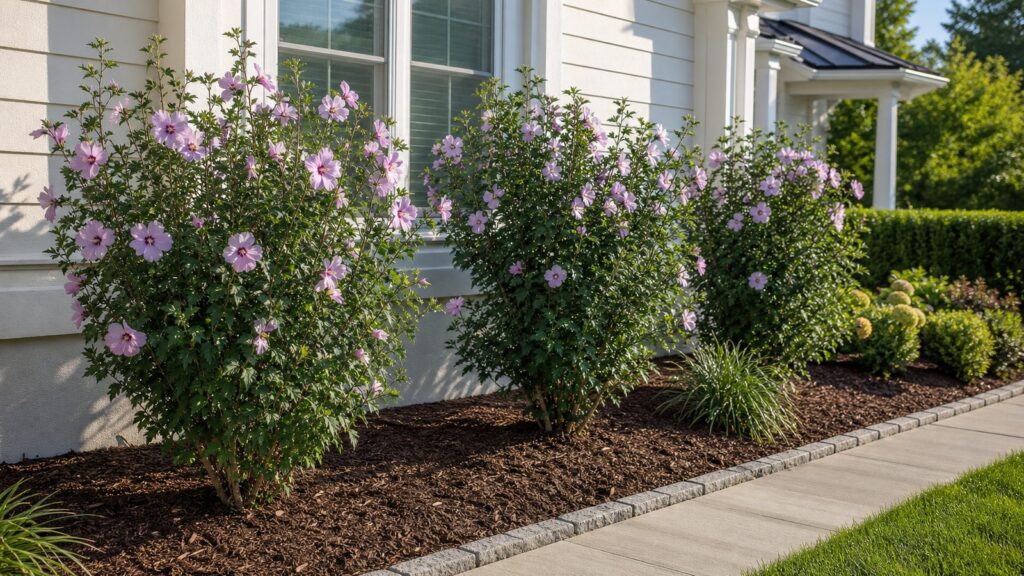
If the site is right, Rose of Sharon is a practical shrub for late-season color, informal screening, pollinator activity, and foundation-bed height. If the site is wrong, it becomes a pruning chore. This guide covers how to plant it, care for it, prune it, control seedlings, and budget for DIY or professional installation in 2026.
Quick wins for a faster PC:
Scan for outdated or missing drivers - takes under a minuteDriver Scan →Repair Windows errors before they cause bigger problemsFix Now →As an Amazon Associate I earn from qualifying purchases.
What Rose of Sharon Is Best Used For
Rose of Sharon is a deciduous flowering shrub, also called shrub althea or hardy hibiscus. It produces hibiscus-like flowers in summer into fall, usually on new wood. That bloom timing is the reason it earns space in many landscapes: when spring shrubs are done and summer heat has burned through annuals, Rose of Sharon is often still carrying color.
The plant works best as a background shrub, flowering screen, loose hedge, specimen near a patio edge, or vertical accent in a mixed border. It is not the best choice where you need year-round privacy because it drops its leaves in winter. If a client wants a screen that blocks views in January, we usually pair or replace it with evergreen structure, then use Rose of Sharon for seasonal flowers.
Popular on Amazon

- Thrives in USDA Zones 5-9
- Grows to mature size 24-36″ W x 120-192″ H
- Full sun to partial shade
- Deciduous – Foliage loss in winter and new growth in spring
- Recommended spacing 24 inches
Mature size varies by cultivar. Compact types may stay around 3 to 5 feet tall. Many standard varieties land around 8 to 12 feet tall and several feet wide. Some older or vigorous selections can reach about 16 feet high with spreads that may range from 2 to 10 feet depending on variety and pruning. That range is too wide to guess from a nursery tag alone. Buy by mature dimensions, not by how small the pot looks at checkout.
Free tools Windows power users keep installed
One-click scans. No signup required.
Best Growing Conditions
Sunlight
Full sun produces the strongest bloom. Plan for at least 6 hours of direct sun per day. Rose of Sharon will tolerate part shade, but fewer hours of sun usually means fewer flowers and leggier growth. In hot regions, a little afternoon shade can reduce stress, but deep shade is the wrong location.
Climate
Rose of Sharon is generally suited to USDA Zones 5 through 9. It is cold-hardy enough for many northern yards and heat-tolerant enough for much of the South. In colder parts of Zone 5, protect young plants from winter wind exposure during the first year. In hot climates, fall planting often gives the roots more time to establish before the next summer.
Soil and Drainage
This shrub is adaptable, but it does not like sitting wet. Chronic overwatering, compacted clay, and low spots that hold water are common causes of yellow leaves, weak growth, root stress, and root rot. Before planting, dig a test hole about 12 inches deep and fill it with water. If water is still standing after several hours, improve the drainage, raise the planting area, or pick another location.
For clay soil, avoid digging a tiny amended pocket filled with rich compost. That can create a bathtub effect where water collects in the planting hole. We prefer a wide hole, loosened edges, mostly native backfill, and modest compost only where the whole bed is being improved. A raised bed or regraded planting strip is often a better fix than trying to force drainage in one hole.
Recommended Free Tools
How Far From the House to Plant Rose of Sharon
Spacing is where many Rose of Sharon problems begin. A 3-gallon plant looks harmless at the nursery, but a standard shrub can fill a large section of a foundation bed within a few years. As a practical rule, plant standard Rose of Sharon at least 5 to 6 feet from a house wall, fence, or permanent structure. For larger varieties, 6 to 8 feet is safer. Compact varieties can usually sit closer, but still leave enough room for airflow, maintenance, and mature width.
Keep the shrub clear of siding, windows, hose bibs, downspout outlets, crawlspace vents, and exterior electrical equipment. Around HVAC condensers, leave at least 3 feet of working clearance on all sides, and more where the manufacturer or service technician requires it. A flowering shrub that blocks airflow or service panels is not a finished landscape; it is a future service problem.
For sidewalks and driveways, account for branch spread. Keep standard varieties 4 to 6 feet back from walk edges unless you are prepared to prune regularly. For property lines, check local rules or HOA standards before planting a hedge. A Rose of Sharon hedge can be useful, but it should not force branches, seedlings, or roots into a neighbor’s yard.
Call 811 Before You Dig
Call 811 before planting shrubs, even if the hole seems shallow. Utility marking is not only for major excavation. Shrub and tree planting can still intersect irrigation, cable, electric, gas, or communication lines. Submit the request several business days before digging, follow your state’s waiting period, and keep the marked area visible until planting is done.
Hand-dig carefully within the tolerance zone around marked utilities. If you are installing several shrubs, edging, irrigation, lighting, or drainage pipe, the job moves from simple planting into light landscape construction. That is when a measured layout and marked utilities matter most.
Choosing the Right Variety
For low-maintenance landscapes, cultivar selection matters as much as planting technique. Older fertile varieties can produce many seedlings. In some regions, Rose of Sharon has invasive or invasive-tendency concerns, including reports or warnings in states such as Virginia, Kentucky, Pennsylvania, Tennessee, and Connecticut. Local rules and recommendations vary, so check your state extension guidance before planting, especially near woods, drainageways, or natural areas.
When seed spread is a concern, look for sterile or low-seed cultivars. Some Chiffon, Satin, Sugar Tip, triploid, and dwarf selections are commonly chosen for lower seed production, but availability varies by region and nursery. Verify the actual cultivar, not just the common name on the tag.
Also popular on Amazon

- Thrives in USDA zones 5-9
- Mature size 48-72″ W x 96-144″ H
- Deciduous – Foliage loss in winter and new growth early spring
- Full sun to part shade; Blooms spring through fall
- Used in containers, landscapes, and as accents
Choose compact selections for small front beds, columnar types for narrow vertical accents, and standard varieties only where you have enough width and height. For a screen, decide whether you want a formal hedge or a loose flowering row. A loose row needs less pruning and generally has better airflow.
How to Plant Rose of Sharon
The best planting windows are spring and early fall. Spring planting gives the shrub a full growing season to establish. Early fall planting is often excellent in hot climates because the soil is still warm, air temperatures are lower, and the plant can root before summer heat returns. Avoid planting during frozen soil, extreme heat, or drought unless irrigation is already in place.
Tools and Materials
For a clean install, gather the shrub, shovel or spade, garden fork, tape measure, hose or drip line, mulch, gloves, eye protection, and a tarp or wheelbarrow for soil. A mattock or digging bar helps in compacted soil. Compost, soil conditioner, slow-release fertilizer, deer protection, and a soil test are optional depending on site conditions.
Planting Steps
Measure from the house, walk, fence, and utilities before digging. Mark the mature spread, not the pot width. Dig the planting hole two to three times wider than the root ball, but no deeper than the root ball itself. The root flare should sit at or slightly above surrounding grade. Planting too deep is one of the most common ways shrubs decline.
Remove the plant from the container and inspect the roots. Loosen circling roots with your fingers or make a few shallow vertical cuts if the root ball is tight. Set the plant straight, backfill mostly with native soil, and firm the soil enough to remove large air pockets without compacting it into a brick. Water thoroughly to settle the soil.
Do these 3 things before closing this tab:
1Repair Windows errors before they cause bigger problems2Scan for outdated or missing drivers - takes under a minute3Clear out junk files and repair common Windows errorsApply 2 to 3 inches of organic mulch over the root zone. Keep mulch several inches away from the stems. Mulch piled against the trunk holds moisture where the plant needs air and can invite rot and pests. Finish by building a broad watering basin only if it will not trap water long-term.
Watering, Mulch, and Fertilizer
During the first growing season, water deeply instead of sprinkling lightly every day. The goal is to encourage roots to move into surrounding soil. In average soil, a new shrub may need a deep watering once or twice per week during dry weather. In sandy soil, it may need more frequent water. In clay soil, it may need less frequent water but longer drying time between soakings.
Once established, Rose of Sharon is fairly drought tolerant, but flowering is better when the plant receives deep water during hot, dry spells. Drip irrigation or a soaker hose is preferable to overhead watering, especially in humid areas where powdery mildew and leaf spot can show up. Water at the base in the morning so foliage dries quickly.
Fertilizer should be modest. In many yards, compost or a slow-release balanced shrub, rose, or landscape fertilizer in spring is enough. Heavy nitrogen can produce lots of leaves with fewer flowers. If growth is weak and the site has adequate sun and drainage, use a soil test before adding more fertilizer.
Pruning Rose of Sharon
Rose of Sharon blooms on new wood, so late winter or early spring is the best time to prune. That timing lets you shape the plant before new growth pushes and avoids removing developed flower buds later in the season. In most regions, pruning in February, March, or early April works, depending on weather and local growth timing.
For a natural shrub, remove dead, damaged, crossing, or inward-growing stems. Thin congested areas to improve airflow. For larger blooms, some gardeners cut back selected stems more heavily in late winter, leaving fewer shoots to carry larger flowers. For a hedge, prune with restraint. Repeated hard shearing can create a dense outer shell, shade the interior, reduce airflow, and encourage dieback or mildew.
Do not assume the plant is dead just because it leafs out late. Rose of Sharon often wakes up later than many spring shrubs. Scratch a small section of bark with a fingernail or pruner; green tissue underneath means the stem is alive.
Also popular on Amazon
- Thrives in USDA Zones 5-9
- Grows to mature size 24-36″ W x 120-192″ H
- Full sun to partial shade
- Low maintenance
- Used in containers, landscapes, and as accents
Pests, Diseases, and Common Problems
Rose of Sharon is generally durable, but it is not problem-free. Common pests include Japanese beetles, aphids, and whiteflies. Common diseases include leaf spot, powdery mildew, canker, and root rot. Most issues are easier to prevent with spacing, drainage, and watering habits than to fix after the shrub is stressed.
What’s actually slowing this PC down?
Pick the symptom - the matching free tool is one click away.
Yellow Leaves
Yellow leaves often point to water stress. That can mean too little water during establishment, but it can also mean too much water in poorly drained soil. Check soil moisture 4 to 6 inches down before adding more water. If the soil is wet and sour-smelling, drainage is the problem, not thirst.
Few Flowers
Low bloom usually comes from too much shade, heavy nitrogen fertilizer, drought during bud formation, or pruning at the wrong time. Move container plants or young shrubs to more sun if possible. For established plants, thin nearby competing growth and adjust fertilizer before assuming the shrub needs replacement.
Seedlings Everywhere
If a fertile variety is allowed to set seed, volunteers may appear around the bed and beyond. Deadhead flowers or remove seed pods before they mature. In areas where seedlings are already spreading, replace older fertile shrubs with sterile or low-seed cultivars and remove volunteers while they are small.
2026 Cost to Plant Rose of Sharon
A single DIY Rose of Sharon planting can often stay under $100 if you already own basic tools and the soil does not need correction. A typical 2- to 5-gallon nursery plant often runs about $35 to $75, with many current 3-gallon retail or nursery examples around $50. Premium branded, dwarf, sterile, or larger specimen plants cost more.
Professional shrub planting costs vary widely. Basic shrub planting may run about $25 to $85 per shrub when the plant and labor are included for simple conditions. Broader landscaping cost guides show shrub planting ranging from about $25 to $300 each depending on plant size, market, access, soil, and scope. A small curb-appeal bed with shrubs, mulch, edging, and soil work commonly moves into the $800 to $3,000 range. Larger front-yard refresh projects can run about $2,000 to $8,000 when lighting, irrigation changes, grading, or multiple plantings are included.
| Item or Scope | Typical 2026 Cost | Notes |
|---|---|---|
| DIY 2- to 5-gallon Rose of Sharon | $35-$75 per plant | Many common 3-gallon plants are around $50; premium cultivars cost more. |
| Basic professional shrub planting | $25-$85 per shrub | Applies to simple planting with easy access and prepared soil. |
| Higher-end shrub planting | $25-$300 per shrub | Driven by plant size, labor market, access, soil correction, and layout. |
| Installed mulch | $30-$120 per cubic yard | Bagged wood mulch is often about $3.33-$3.97 per 1.5-2 cubic foot bag before labor or delivery. |
| Small flower bed installation | $800-$3,000 | Useful range for a new curb-appeal bed with shrubs, mulch, edging, and prep. |
| Front-yard refresh | $2,000-$8,000 | May include multiple shrubs, bed redesign, lighting, irrigation, and grading. |
| Shrub removal before replacement | $25-$150 typical; $60-$250 large shrubs | Project averages can land around $380-$1,170 depending on roots, hauling, and access. |
Cost drivers include container size, cultivar availability, local labor rates, existing shrub removal, stump or root work, disposal fees, amendment needs, drainage corrections, mulch depth, irrigation changes, and whether equipment can reach the bed. The cheapest install is not always the best value if the bed needs drainage or spacing corrections first.
When to DIY and When to Hire a Pro
DIY makes sense for one or two shrubs in an open bed with good soil, clear utility markings, easy water access, and no major grade or drainage issue. A homeowner with a shovel, hose, mulch, and a free Saturday can usually plant a 3-gallon Rose of Sharon cleanly.
Hire a professional when the work includes removing mature shrubs, regrading a bed, correcting drainage, working near marked utilities, changing irrigation, planting a hedge row, building a new foundation design, or coordinating shrubs with hardscape. Also hire help if access is tight or the plant size is large enough that handling the root ball safely becomes a two-person job.
The Tool Desk
Outbyte Driver Updater FREEScan for outdated or missing drivers - takes under a minuteDriver Scan →Outbyte PC Repair FREEClear out junk files and repair common Windows errorsFree Scan →On our construction and exterior projects, we look at the whole edge condition: roof runoff, downspouts, foundation clearance, walkways, lighting, utility routes, soil elevation against the structure, and maintenance access. A shrub that looks good on day one but traps moisture against siding or blocks a service panel is not a good installation.
Independent reader supportYour contribution helps us test, update, and keep practical guides available for everyone.Best Companion Planting and Design Uses
Rose of Sharon is strongest when it is part of a layered planting rather than the only feature. Because the shrub is deciduous and can have bare lower stems, use lower perennials, grasses, or native shrubs around the base. Good companion choices depend on your region, but the design goal is consistent: cover the lower structure, extend bloom time, support pollinators, and keep airflow around the main shrub.
For a foundation bed, place Rose of Sharon toward the back or at a corner where its height makes sense. For a screen, space plants according to mature width and desired density. A loose flowering screen may use wider spacing, while a hedge uses closer spacing and more pruning. For narrow side yards, choose a columnar cultivar rather than forcing a broad shrub into a 3-foot strip.
Also popular on Amazon

- Thrives in USDA zones 5a-9b
- Grows to mature Sizes- 120-192 inches H and 48-60 inches W
- Deciduous – Foliage loss in winter and new growth in spring
- Full sun to part shade; Blooms spring through fall
- Used in containers, landscapes, and as accents
Do not rely on Rose of Sharon alone for erosion control, drainage correction, or year-round privacy. It is a flowering shrub, not a grading solution or evergreen wall.
Windows Errors? Fix Them Before They Spread
Repair common Windows errors and clear accumulated junk for a smoother, more stable PC - no reinstall needed.Free scan · no reinstallCrashes, No Sound, or Screen Glitches?
Random freezes, missing sound and display glitches usually trace back to one bad driver. Find and replace yours safely.Free scan · under a minuteCommon Mistakes to Avoid
The biggest mistake is planting too close to the house, sidewalk, fence, or HVAC unit. The second is choosing an older fertile variety in an area where seedlings are a known issue. Those two decisions create years of unnecessary pruning and cleanup.
Other frequent mistakes include skipping 811, planting too deep, overwatering mature plants, mulching against the stems, fertilizing heavily with nitrogen, pruning after flower buds have developed, shearing into a dense shell every year, and assuming the shrub is dead because it leafs out late in spring.
If you already have an overgrown Rose of Sharon in the wrong place, hard pruning may buy time, but replacement can be the better long-term choice. Removal of small shrubs may cost about $25 to $150 each, while larger shrubs can run about $60 to $250 each, with full projects averaging higher when roots, hauling, and access are involved. If removal opens the chance to fix drainage, widen the bed, and choose a sterile compact cultivar, the replacement often performs better with less work.
Bottom Line
Rose of Sharon is a tough, attractive shrub when it is matched to the right site. Give it full sun, well-drained soil, deep establishment watering, 2 to 3 inches of mulch, and late-winter or early-spring pruning. Plan for mature height and width from the beginning, keep it off the house and utilities, and choose sterile or low-seed cultivars where self-seeding is a concern.
Do these 3 things before closing this tab:
1Repair Windows errors before they cause bigger problems2Fix the driver behind crashes, sound loss and screen glitches3Clear out junk files and repair common Windows errorsFor one simple shrub, DIY is usually practical and affordable. For a full foundation bed, hedge, removal-and-replacement project, or drainage correction, bring in a professional so the planting works with the structure, utilities, grade, and long-term maintenance plan.
Frequently Asked Questions
Is Rose of Sharon invasive in my state?
It depends on your state and the cultivar. Older seed-producing Rose of Sharon varieties can self-sow heavily, and invasive or invasive-tendency concerns have been noted in states including VA, KY, PA, TN, and CT. Check your local extension guidance and consider sterile or low-seed cultivars.
How far from a house should you plant Rose of Sharon?
For standard varieties, allow at least 5 to 6 feet from the house, and 6 to 8 feet for larger cultivars. Compact types can be closer, but still need airflow, maintenance access, and clearance from windows, siding, vents, and HVAC equipment.
When is the best time to plant Rose of Sharon?
Spring and early fall are the best planting windows. In hot climates, early fall is often ideal because roots can establish before the next summer. Avoid planting during extreme heat, drought, frozen soil, or saturated soil.
What’s actually slowing this PC down?
Pick the symptom - the matching free tool is one click away.
When should Rose of Sharon be pruned?
Prune in late winter or early spring before new growth develops. Rose of Sharon blooms on new wood, so pruning after flower buds form can reduce that season’s bloom.
How much does it cost to plant Rose of Sharon in 2026?
A DIY planting can often stay under $100 if tools and soil are already handled. Plants commonly cost about $35 to $75 for 2- to 5-gallon sizes. Professional shrub planting often ranges from about $25 to $85 per shrub for basic work, and up to $300 per shrub for larger plants or difficult conditions.
Should I call 811 before planting shrubs?
Yes. Call 811 before digging for shrubs, trees, irrigation, edging, lighting, or drainage work. Even shallow planting holes can conflict with buried utilities.
Quick Recap
Product prices and availability are accurate as of the date/time indicated and are subject to change. Any price and availability information displayed on Amazon at the time of purchase will apply.

