There is no universal strength or cost winner. Recycled textile fibers can improve crack control, toughness and post-cracking behavior, but results depend on the polymer, fiber shape and length, dosage, mix and test. “Recycled textile” describes where a fiber came from; “synthetic” describes what it is made of. A recycled polypropylene (PP) or polyester (PET) textile fiber is therefore both recycled textile fiber and synthetic fiber.
What the two fiber labels mean
The terms are not mutually exclusive. Recycled textile fibers may come from post-consumer clothing or industrial textile waste; synthetic fibers are defined by material chemistry and include PP and PET. Virgin PP is synthetic but not recycled textile fiber. PET recovered from bottles is recycled polymer, but evidence about bottle-derived PET does not by itself establish how textile-waste PET performs.
As an Amazon Associate I earn from qualifying purchases.
When comparing products or studies, identify both the feedstock and polymer. Also check fiber length, shape, surface or indent geometry, modulus, tensile strength and bond with the concrete. These details can matter as much as the broad label.
Does recycled fiber make concrete stronger?
Not reliably in every strength measure. Fibers can bridge cracks and improve tensile-related behavior, toughness, ductility or residual capacity after cracking. Compressive strength may stay similar, rise modestly or fall, depending on the fiber and mix. Too much fiber or poor dispersion can reduce workability and contribute to clumping and voids, affecting compressive performance. A 2025 review of recycled textile fibers reports these cross-study patterns and notes that dosage guidance should not be treated as a ready-made mix design: Shahriar, Rahman and Kamal, 2025.
#1 Best Overall

- Package Include: 1 Pack x Fiberglass Chop Strands(Weight: 4.4LB/ Pack,Length: 3/4 inch,Material: Glass Fibers)
- Anti-cracking Fiber Glass Chop Strands: Our fiber mesh for concrete can improve the high temperature stability and low temperature resistance, greatly prevent the cement from cracking, extend the service life of road surfaces. Fiber additive helps prevent cracks in concrete walls, floors, and structures.
- Seepage Proofing Concrete Fiber Glass:ZENFUN fiber glass strands are greatly increase the density of cement, which solve the drawbacks of the cement, avoiding penetration, enhance impermeability and frost resistance performance
- How to Use: Put sand, cement, and chopped fiber glass together, and then add appropriate amount of water, and finally evenly mixed; Please note that the mixing time is 30 to 60 seconds longer than without fiber glass.
- Wide Applications: ZENFUN white fiber glass set is suitable for building wall, garden floor, Swimming pool construction, etc; perfect for countertop reinforcement to solve water seepage problem, and also suitable for some repairing works or mixed with other fillers.
Recycled PP compared with virgin PP
Yin and co-authors compared recycled and virgin PP fibers in 25 MPa and 40 MPa concrete intended for footpaths and precast panels. They reported good alkali resistance and significant ductility from post-cracking reinforcement. In the 40 MPa mix, recycled PP was similar to or slightly below virgin PP in the crack-mouth-opening-displacement test; in the 25 MPa mix, it performed better. The authors also found fiber modulus more influential than tensile strength in that 25 MPa mix. The results argue against assuming that either recycled or virgin PP always performs better: Yin et al., 2016.
A separate 2015 study of recycled PP fibers from industrial waste highlighted diamond-indent recycled fibers for post-cracking performance. It reinforces the importance of geometry and bond rather than treating all waste-derived PP fibers as interchangeable: “Post-cracking performance of recycled polypropylene fibre in concrete,” 2015.
Rank #2

- Package Content: The package contains 4.4 pounds of white chopped fiberglass, with individual fibers measuring 0.78 inches /2 cm in length, made from fiberglass
- Usage Instructions: Mix sand, cement, and glass fiber evenly, add appropriate water and stir thoroughly, extending mixing time by 30-60 seconds compared to mortar without glass fiber
- Waterproof and Leak Prevention: Can be mixed into cement mortar, the high volume of fiber strands increases cement density, significantly enhancing impact and seismic resistance while resolving leakage issues; improves mortar toughness and enhances floor water proofing performance
- Enhance Crack Resistance: Adding glass fiber to concrete enhances high-temperature stability and low-temperature resistance, suppressing the formation of micro-cracks
- Wide Application: White chop fiberglass is suitable for building walls, ponds, garden surfaces, road construction, courtyard steps, partial repair projects, or blending with other fillers
A 2026 study specifically identified waste PP textile materials as the main source of recycled PP fiber. It tested 3 mm and 6 mm fibers at volume fractions of 0.1%, 0.2% and 0.3% in C35 concrete at 7 and 28 days. The study reports that mechanical changes depended on fiber type, length and dosage; its best-performing formulation is a result for that experimental setup, not a universal prescription: 2026 study record.
Free tools Windows power users keep installed
One-click scans. No signup required.
What recycled PET studies show—and do not show
Ochi, Okubo and Fukui developed concrete-reinforcing PET fiber from used bottles. They reported increased bending toughness compared with unreinforced concrete, with application examples including mine gateway support and bush-road pavement. This is evidence about bottle-derived PET, not necessarily textile-derived PET: Ochi, Okubo and Fukui, 2007.
Rank #3
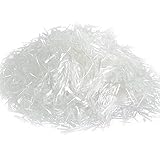
- Anti-cracking: Mixing fiberglass and mortar together, the irregular distribution of fiberglass in the mortar enhances the toughness of mortar, and inhibits the formation of fine cracks
- Waterproof and Impermeable: A large number of fiber filaments increase the density of cement, which can effectively solve the problem of penetration. It is very suitable for wet place such as basements, pond, Exterior wall
- Impact Resistance: High-strength fiber filaments are attached to each other as a dense net to hold the cement tightly. It can effectively enhance the impact and seismic performance of cement
- How to Use: Evenly mix sand, cement and fiberglass together, then add an appropriate amount of water, and finally stir (the stiring time is 30-60 seconds longer than without fiberglass)
- Dosage: Use 1 lb. (1 pkg) per cubic yard (27 cubic feet) of concrete. You can add a little more in the area with strong impact or severe freeze-thaw
Kim and co-authors tested recycled PET and PP fiber concrete at volume fractions of 0.5%, 0.75% and 1.0%. In their experiments, compressive strength and elastic modulus decreased as PET fiber fraction increased, while drying-shrinkage cracking was delayed compared with plain concrete. PET-fiber-reinforced beams also had greater ultimate strength and relative ductility than companion beams without fibers. These findings describe those mixes and tests; they are not a general prediction for every PET fiber concrete: Kim et al., 2010.
Which concrete fiber is cheaper?
No current, comparable delivered prices are established for recycled textile fibers versus virgin synthetic fibers. The answer depends on the location, supply, fiber specification and quantity—not just the price per kilogram. Recycled material may be less expensive in a particular supply chain, but sorting and processing can affect its cost and consistency.
Rank #4
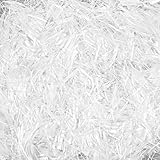
- 【Concrete Fiber Reinforcement】Our glass fibers are designed for concrete applications, enhancing the impact and earthquake resistance of concrete, greatly preventing the cement from cracking, extend the service life of road surfaces. Fiber additive helps prevent cracks in concrete walls, floors, and structures and add strength to your project.
- 【Excellent Concrete Fiber Glass】Adding fiberglass to your mixture greatly increases the density of cement, which solves the drawbacks of the cement, avoiding penetration, enhancing impermeability and frost resistance performance, and ensuring long-term protection of structural integrity.
- 【Easy to Use】Our fiberglass is 3/4 inch in length and can be easily mixed into your concrete mix, then add an appropriate amount of water, and finally evenly mix. Increasing cement density, enhancing mortar toughness, simplifying the reinforcement process, and improving efficiency.
- 【Wide Application】The fiberglass is suitable for various concrete applications, this glass fiber plays a good role in reinforcing cement mortar and is suitable for building walls, garden floors, swimming pool construction, etc; and also suitable for some repairing works or mixed with other fillers.
- 【Package Include】You will receive 1 Pack x Fiberglass Chop Strands, Add more for high impact or severe freeze or thaw areas(Weight: 6.6LB/ Pack, Length: 3/4 inch).
Yin et al. described potential economic benefits of recycled macro-plastic fibers relative to virgin plastic or steel fiber/mesh, and noted that plastic fibers can be mixed directly into concrete trucks, potentially avoiding some mesh preparation labor in the context discussed. That is a possible cost mechanism, not a controlled current price comparison. The 2025 review reports a 12.7% reduction for one specified mix-design example; it is not evidence that recycled fiber is generally 12.7% cheaper than virgin fiber.
Recommended Free Tools
For an apples-to-apples estimate, compare the delivered fiber and processing cost alongside the dosage needed, admixtures, workability, placement and labor, quality assurance, expected maintenance and service-life effects. A cheaper fiber per kilogram may not produce the lower-cost installed mix if it requires more material or complicates batching and placement.
Best Value

- Package Includes: you will receive 10 lb concrete fiberglass, the fiberglass filler size is 0.75 inch, can be applied as a reinforcement material, basically meet your family's daily needs
- Anti Leakage: this reinforcement fiberglass is beneficial to increase the density of cement and can effectively solve the problem of penetration; The irregular distribution of glass fiber in the mortar enhances the toughness of the mortar and inhibits the formation of small cracks
- Impact Resistance: high strength fiber filaments are interconnected into a dense network, which tightly fixes the cement, which can effectively enhance the impact and earthquake resistance of cement, which is suitable for strengthening cement works
- How to Use: mix sand, cement and concrete fiber evenly, then add an appropriate amount of water, and finally stir; The stirring time is 30-60 seconds longer than without glass fiber
- Wide Application: our white fibers for concrete are very suitable for improving the stability, crack resistance and impermeability of the products, very suitable for wet places such as basements, ponds, exterior walls, gardens, courtyards, etc
Where recycled textile fibers are used
Published work reports or discusses applications including footpaths, precast panels, pavement, mine support, repair mortar and tunnel lining. The evidence differs by application: footpaths and precast panels appear in the 2016 PP study; pavement and mine gateway support are reported for bottle-derived PET; repair mortar and tunnel lining are potential uses discussed in the 2025 review. Review-level potential should not be mistaken for proof of field performance in every structure.
Fiber reinforcement is not a drop-in substitute for code-qualified reinforcing bars, mesh or other specified structural reinforcement. For load-bearing or safety-critical work, require project-specific engineering, supplier technical data, representative mix trials and acceptance testing relevant to the intended function and exposure. The 2025 review identifies limited design-code guidance, long-term field data and structural-scale evidence as barriers to broader application.
How to choose a fiber for a concrete project
- Define the job. Decide whether the aim is shrinkage-crack control, toughness, ductility or post-crack capacity. These are different performance requirements.
- Specify the material. Record whether the feedstock is post-consumer textile, industrial textile waste, bottle PET or virgin polymer, and identify the polymer and fiber geometry.
- Match evidence to the mix. Check concrete strength class, fiber length and dosage, dispersion, workability, placement method and curing. Results from a different fiber or mix are not a guaranteed forecast.
- Trial and test. Use representative batches and tests tied to the required performance, including relevant cracking or residual-capacity measures rather than relying on compressive strength alone.
- Qualify durability and supply. Assess alkali stability and project exposure, confirm batch consistency, and verify specification or code acceptance for the intended application.
- Compare installed cost. Include delivered material, processing, dosage, admixtures, quality control and placement labor, then consider service-life and maintenance implications.
Bottom line on strength, cost and uses
Recycled textile fibers can be useful where crack bridging and post-cracking behavior are priorities, but neither improved compressive strength nor lower cost is guaranteed. Compare a specific recycled fiber with a specific synthetic alternative in the intended mix, and qualify the result for the project rather than relying on the category label.
What’s actually slowing this PC down?
Pick the symptom - the matching free tool is one click away.
Quick Recap
Product prices and availability are accurate as of the date/time indicated and are subject to change. Any price and availability information displayed on Amazon at the time of purchase will apply.