Crashes, No Sound, or Screen Glitches?
Random freezes, missing sound and display glitches usually trace back to one bad driver. Find and replace yours safely.Free scan · under a minuteWindows Errors? Fix Them Before They Spread
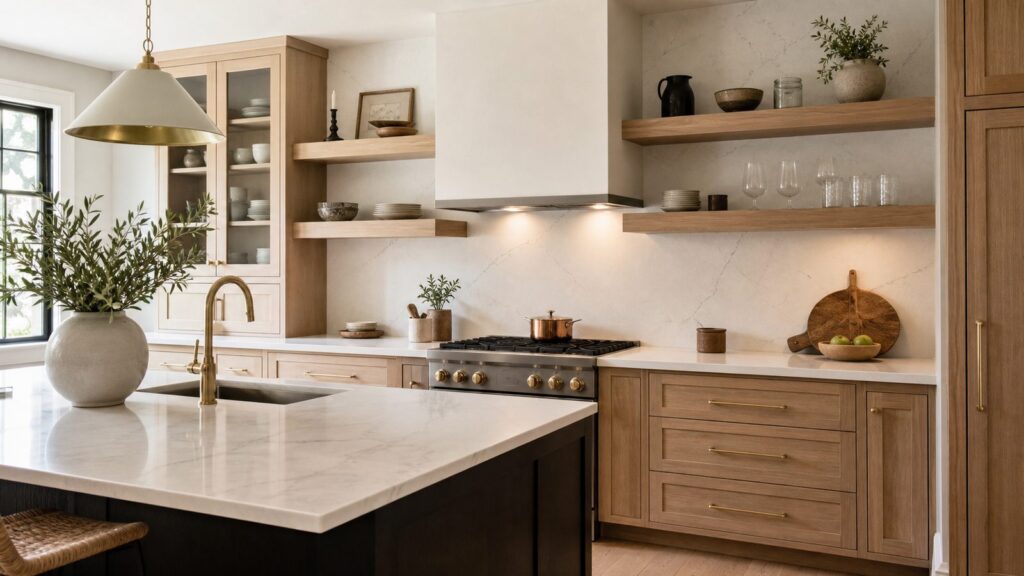
Repair common Windows errors and clear accumulated junk for a smoother, more stable PC - no reinstall needed.Free scan · no reinstallOpen kitchen shelving is still a good idea in 2026, but the best versions are more restrained than the full-wall displays that were popular a few years ago. The strongest approach is usually a short, intentional shelf zone: one 24- to 48-inch run, a coffee bar, a sink wall, a range-hood accent, or a pantry-adjacent display area. Used that way, open shelving can make a kitchen feel larger, break up heavy upper cabinets, and put everyday items within reach without turning the room into a dusting project.
On our job sites, we treat open shelving as a construction detail first and a decorating feature second. That means checking studs, planning blocking before tile or slab goes in, matching shelf depth to what will actually sit there, and keeping heat, grease, steam, and electrical conflicts out of the design. A shelf that looks good on install day but sags under dinner plates is not a finished product.
As an Amazon Associate I earn from qualifying purchases.
For budgeting, a simple open-shelf update can be much less expensive than replacing upper cabinets, but the range is wide. Basic DIY or handyman-grade shelves may run about $150 to $600 in materials and simple hardware. Professionally installed wood floating shelves often land around $500 to $1,700 for a 3- to 4-shelf setup. Custom hardwood, integrated lighting, specialty brackets, wall blocking, slab backsplash work, or difficult wall conditions can push a small shelving zone to $1,500 to $4,000 or more.
The Tool Desk
Outbyte Driver Updater FREEScan for outdated or missing drivers - takes under a minuteDriver Scan →Outbyte PC Repair FREEClear out junk files and repair common Windows errorsFree Scan →Before You Choose Open Shelves, Plan the Build
Good open shelving starts with three questions: what will it hold, where will it attach, and what will happen behind it?
#1 Best Overall

- Heavy Duty design, maxium support weight of 100lb for a pair of this L bracket. Matte black powder coat finish. Creating a rustic, reclaimed, salvaged look,perfect for your home, office, garage, work space or anywhere else
- Size:L 10" , 5mm Thick. Package included: 12 x Brackets , 48 x long Screws, 24 x short Screws,(Wood plank is Not included)
- Sturdy and durable: Made from steel, these shelf angle supports offer a strong bearing force ,Our corner brace joints are perfect for hanging in a garage, living room or office
- All screws included - Black screws needed to install your new shelf brackets are included.
- Easy to Install design using basic DIY tools. Easily mount your favorite shelves in your garage, home, office, bathroom, kitchen, living room, dining room, bedroom
For depth, 8 inches works for mugs, spices, small bowls, and decorative pieces. A 10- to 12-inch shelf fits most dinner plates and everyday bowls. For serving platters, pitchers, and larger pieces, 12 to 15 inches is more realistic. Once shelves get 16 inches deep or more, they begin to feel bulky in many kitchens and require more careful support because the load sits farther from the wall.
For spacing, we commonly start with the lowest shelf about 18 to 24 inches above the countertop, then adjust for coffee makers, stand mixers, faucets, backsplashes, and the homeowner’s reach. Vertical spacing between shelves often falls between 12 and 16 inches, depending on what is being stored.
For support, do not design around drywall anchors alone when the shelves will hold dishes. Floating-shelf bracket manufacturers commonly reference about 45 to 50 pounds per stud for a properly installed bracket system, or roughly 90 to 100 pounds when fastened into two studs. Actual capacity depends on stud condition, fasteners, bracket design, shelf depth, shelf material, and how weight is distributed. Heavy stoneware stacked at the outer edge of a deep shelf is a different load than mugs spread across a shallow shelf.
When we open walls during a remodel, we prefer to install blocking before backsplash tile, quartz, stone, or finished drywall goes in. That gives the installer solid attachment exactly where the shelf layout requires it instead of forcing the finished design to follow random stud locations.
2026 Open Shelving Cost Guide
Open shelving is often sold as a budget-friendly cabinet alternative, and sometimes it is. But many low-cost estimates price only boards and brackets. A real project may include cabinet removal, drywall repair, paint, tile cuts, blocking, finish carpentry, electrical work for lighting, and cleanup.
| Project Type | Typical 2026 Cost Range | Best Use |
|---|---|---|
| DIY basic shelves | $150-$600 | Small refresh, lightweight items, simple wall conditions |
| Professional floating wood shelves | $500-$1,700 for 3-4 shelves | Everyday dishes, coffee bars, sink-side shelves |
| Custom shelf zone with lighting or specialty finish | $1,500-$4,000+ | Remodel-grade kitchen feature, slab backsplash, custom hardwood |
| Built-in or recessed shelving | $2,500-$6,000 | Alcoves, pantry display walls, cabinetry-grade work |
| Installed kitchen cabinets | About $486-$736 per cabinet, or $100-$650 per linear foot for stock or semi-custom installed cabinets | Closed storage, full kitchen remodels, high-capacity storage |
Homewyse’s May 2026 national benchmark for installing shelving starts around $21.67 to $33.48 per linear foot before project-specific factors. That number is useful as a baseline, not a complete kitchen estimate. In a finished kitchen, the real cost is often driven by wall conditions, finish quality, backsplash work, and whether existing upper cabinets need to come down.
For whole-kitchen context, 2026 remodeling sources commonly put minor kitchen updates around $15,000 to $25,000, with major remodel medians around $55,000 nationally and higher for larger kitchens. Open shelving is best viewed as a targeted refresh or a detail within a larger remodel, not a substitute for a well-planned kitchen storage strategy.
1. Replace One or Two Upper Cabinets
The most reliable open shelving idea is also the simplest: remove one or two upper cabinets and install a short shelf run in their place. A 24- to 48-inch section can lighten the room without giving up the storage capacity of the entire kitchen.
This works especially well near a sink, on the end of a cabinet run, or beside a window where bulky uppers make the room feel closed in. Use 10- to 12-inch deep shelves for everyday plates and bowls, or 8-inch shelves if the goal is mugs, small glasses, and a few display pieces.
Material choice should match the kitchen. White oak gives a warm, current look and holds up well when sealed properly. Walnut feels richer and more formal. Painted hardwood can blend with painted cabinetry. We are more cautious with painted MDF around wet zones because exposed or damaged edges can swell if moisture gets in.
Best location: sink wall, end of an upper-cabinet run, small kitchen wall.
Recommended Free Tools
Maintenance level: moderate. Everyday dishes are better than rarely used pieces because regular handling keeps dust down.
DIY or pro: DIY-friendly only if you can locate studs, use proper fasteners, and repair the wall cleanly after cabinet removal.
2. Flank a Range Hood with Short Shelves
Shelves on either side of a range hood can create a custom focal wall, but this is one of the areas where restraint matters. Keep shelves short and do not store heat-sensitive items, paper goods, oils, spices, cookbooks, or plastics near the stove. Heat, grease, steam, and fire risk make those poor choices.
For range walls, we prefer shelves that hold ceramics, a few frequently used bowls, or sturdy display pieces. A wipeable backsplash is essential. Tile, stone, quartz, stainless steel, or another washable surface will hold up better than flat paint behind a cooking zone.
Do these 3 things before closing this tab:
1Clear out junk files and repair common Windows errors2Scan for outdated or missing drivers - takes under a minute3Repair Windows errors before they cause bigger problemsDepth should usually stay around 8 to 10 inches near a range so the shelves do not crowd the work area or project too aggressively into the cooking zone. Confirm clearances for the hood, surrounding cabinets, and any local code or manufacturer requirements. If electrical, ventilation, or gas work is being moved, that can trigger permits and licensed trades.
Best location: beside a properly installed range hood, not directly over burners.
Suggested material: sealed hardwood, metal, or stone with engineered support.
Rank #2

- 【Standard 90° bending】In order to ensure that each shelf bracket can be at 90° to the maximum extent possible, we add a rigorous picking process before the shelf brackets are packaged. The standardized 90-degree design is so important that it’ s the objective factor in ensuring that items remain level and do not tip over after being placed on the board(board is not included).
- 【Heavy Duty Iron & Durable Coating】Our floating shelf hardware is made of thick, heavy-duty iron, stamped and bent in one piece, no welds are not easy to break with better toughness. Each pair of floating shelf bracket can hold up to 160 pounds of weight. The surface is covered with a thick layer of black frosted coating. It increases the friction between the board and the bracket, on the other hand, it is more waterproof and less prone to rust, which prolongs its service life.
- 【Complete Accessories & Easy to Install】Boards is no included. Provide all the screws needed for different wall mountings, and extra spare screws are prepared for unexpected situation. They can achieve strong grip on wall surface. And a spirit level is also included to measure as well as keep the shelf hardware balanced during installation. Detailed installation instructions are provided. Just follow the steps, this wall mount shelf bracket can be installed even by someone without experience.
- 【For Wood&Plaster&Concrete Wall】No need to worry about you can’t use our heavy duty shelf brackets on the wall you want to. These black shelf brackets can be used on wooden wall, drywall and hard concrete wall. The screws used for wooden wall and plaster walls are the same and are explained in detail in the instructions.
- 【Unrestricted Space Usage】We provided 6in, 8in, 10inch and 12inch brackets for floating shelves. Pick the right bracket or use it in combination depending on the actual space or the size of the planks. Hanging shelf bracket is not limited to kitchen use only, is also for living rooms, bedrooms, bathrooms, storage rooms, utility rooms, checkrooms, laundry room and corners to store green plants, photo frames, handwork, books, toiletries, storage baskets, sundries or to be a cat climbing frame.
Maintenance level: high. Grease film is real.
DIY or pro: better for a pro, especially with tile, venting, or electrical nearby.
Quick wins for a faster PC:
Fix the driver behind crashes, sound loss and screen glitchesFind Drivers →Clear out junk files and repair common Windows errorsFree Scan →3. Build a Coffee Bar Shelf Zone
A coffee bar is one of the most practical places for open shelving because the storage need is narrow and predictable. Mugs, beans, filters, tea, syrups, and small canisters all fit well on shallow shelves. This is also a good way to turn an underused counter section into a defined station without adding more upper cabinets.
For most coffee bars, 8- to 10-inch shelves are enough. Set the lowest shelf high enough to clear the coffee maker lid, grinder, or espresso machine. In many kitchens that means 18 to 24 inches above the counter, but taller appliances may need more.
Pair the shelves with a drawer base or cabinet below. A deep drawer can hold filters, pods, towels, and backup supplies so the open shelves stay clean and intentional.
Best location: short counter run, butler’s pantry, breakfast nook, beverage area.
Suggested material: sealed wood, painted hardwood, or metal brackets with wood shelves.
Maintenance level: low to moderate.
DIY or pro: often DIY-friendly unless lighting, tile, or cabinet changes are involved.
4. Use Corner Shelves Where Cabinets Feel Heavy
Upper corner cabinets can be awkward. They often store items that are hard to reach, and visually they can make a small kitchen feel boxed in. Open corner shelves can soften that transition, especially near a window or breakfast area.
The main issue is support. Corner shelves need a solid plan at both walls, and long floating spans are more likely to deflect. Visible brackets can be a good choice here because they are easier to inspect and can become part of the design. If you want a clean floating look, blocking should be installed in both walls before finished surfaces go up.
Free tools Windows power users keep installed
One-click scans. No signup required.
Keep corner shelves useful but not overloaded. Bowls, mugs, small serving dishes, and cookbooks away from the stove are better than stacks of heavy plates pushed into the corner.
Best location: inside corners, breakfast zones, near windows.
Suggested depth: 8 to 12 inches.
Maintenance level: moderate, because corners collect dust.
DIY or pro: pro recommended for floating corner shelves or tiled walls.
What’s actually slowing this PC down?
Pick the symptom - the matching free tool is one click away.
5. Run Shelves Across a Window Carefully
Shelves across a kitchen window can look custom and airy, especially for plants, glassware, or small dishes. The key word is carefully. You need to think about window operation, cleaning, sunlight, condensation, and how the shelf will attach without compromising trim or structure.
We only like this approach where the window is large enough to spare some visual space and where the shelf will not block locks, cranks, shades, or regular cleaning. Glass shelves or slim wood shelves can keep the look lighter. For plants, remember that water and soil add weight quickly.
In many homes, a partial shelf beside the window is more practical than a full shelf across the glass. If you do span across, plan brackets at structurally sound points rather than relying on trim.
Best location: bright sink walls or breakfast areas with generous windows.
Suggested material: glass, slim hardwood, or metal-supported shelves.
Maintenance level: high if the window gets condensation or cooking residue.
Rank #3

- The bracket has a 1" backplate and is designed for use with boards 1.5" thick or more.NOTE: The board thickness we refer to is the actual (not nominal) size.
- 【Invisible Floating Shelf Bracket for Sleek, Modern Aesthetic】Say goodbye to bulky L shaped or pipe brackets. Crafterspirit heavy duty floating shelf bracket are completely hidden inside the shelf, creating seamless, minimalist design. Once mounted, the hidden shelf brackets remain invisible from every angle, enhancing modern interiors. Perfect for home office, living room, kitchen and even outdoor patios. Keep shelves neat, stylish, and maximize space while maintaining clean, contemporary look.
- 【Heavy Duty Shelf Brackets for Reliable, Long-Lasting Support】Constructed from durable galvanized steel with 1 inch height and 5mm thick backplate, these metal shelf brackets support up to 160 lbs per pair. Ideal for fireplace mantel,bookshelves,kitchen storage or garage shelving, they provide long-term stability. The rust-resistant black finish ensures durability in both indoor and outdoor environments,making these metal shelf brackets reliable solution for heavy duty shelving needs.
- 【All-In-One Installation Kit for Easy Setup】Save time and money with our all-in-one kit , which includes everything needed for installation—long and short screws, auger and router bit, plus drilling and routing jigs. No need for extra tools! Ideal for DIY projects in homes, garages, or patios, this hidden floating shelf bracket kit makes installation fast, easy, and cost-effective, ensuring you get the job done without additional hassle or expense.
- 【Adjustable Brackets for Precise Alignment】These floating shelf brackets feature an adjustable elliptical track for precise alignment with American standard stud . If screws aren’t aligned the first time, easy adjustments can be made without re-drilling, preventing wall damage. This feature guarantees secure, sturdy mount, making installation straightforward for both beginners and experienced DIYers.
DIY or pro: pro recommended if attaching near trim, tile, or stone.
6. Add Recessed Niche Shelves
Recessed niche shelves are more built-in than standard open shelves. Instead of projecting from the wall, the storage is framed into a wall cavity or alcove. This can be excellent in pantry-adjacent areas, old chimney bump-outs, unused wall pockets, or remodels where framing is already exposed.
This is a different cost tier than basic floating shelves. Built-in shelving and wall units commonly run around $2,500 to $6,000, depending on size, finish, and complexity. The higher cost comes from framing, drywall, trim, finish carpentry, paint, and sometimes moving electrical or mechanical items.
Depth depends on the wall. A standard 2×4 interior wall does not provide much usable recessed depth once drywall is considered, so true storage niches often require deeper framing, an alcove, or custom cabinetry work.
Best location: pantry walls, transition spaces, alcoves, remodels with open framing.
Suggested material: painted hardwood, plywood with hardwood edging, or cabinetry-grade panels.
Maintenance level: low to moderate.
DIY or pro: pro recommended. Framing, wiring, plumbing, and fire blocking must be respected.
7. Use Metal Bistro rails for Secure Display
A small metal rail at the front of an open shelf can keep items from drifting forward and gives the kitchen a more finished, furniture-like detail. Bistro rails work well for glassware, barware, spice jars away from heat, and decorative ceramics.
The shelf still needs proper structural support. The rail is not a substitute for brackets or blocking. Think of it as a retention and design detail, not the load-bearing system.
This is a good option when the kitchen has unlacquered brass, polished nickel, black steel, or stainless accents elsewhere. Match the rail finish to cabinet hardware or lighting so it feels intentional.
Outdated Drivers Are Slowing You Down
One free scan finds every outdated or missing driver and matches the right update for your exact hardware.Free scan · exact hardware matchWindows Errors? Fix Them Before They Spread
Repair common Windows errors and clear accumulated junk for a smoother, more stable PC - no reinstall needed.Free scan · no reinstallBest location: beverage station, coffee bar, pantry display, glassware area.
Suggested depth: 8 to 10 inches.
Maintenance level: moderate because rails add cleaning edges.
DIY or pro: DIY-friendly for light-duty shelves; pro for custom metalwork or heavy loads.
8. Pair Open Shelves with a Slab Backsplash
Stone, quartz, or porcelain slab behind open shelving gives a kitchen a clean, high-end look. It also makes cleaning easier because there are fewer grout lines behind dishes and small appliances. This works especially well when shelves are part of a larger kitchen remodel rather than an afterthought.
The sequencing matters. If the shelves are heavy, blocking should be installed before the slab goes up, and the bracket layout should be coordinated with the slab fabricator. Drilling into finished stone or quartz after the fact is possible in some cases, but it raises the risk and cost.
Stone or quartz shelves themselves can look excellent, but they are heavy and need engineered support. Do not treat them like wood floating shelves. Bracket design, wall structure, and shelf span all matter.
Best location: feature wall, sink wall, luxury remodel, bar area.
Suggested material: wood shelves over slab, or engineered stone shelves with structural support.
Recommended Free Tools
Rank #4

- ✓ HIGH-QUALITY METAL MATERIALS: Our shelf support is made of thick and heavy duty iron materials.Features a thick black matte surface coating that delivers enhanced water resistance and effective anti‑rust performance for long‑term daily use.
- ✓ HEAVY DUTY CONSTRUCTION: Made from premium quality metal with reinforced design, each pair of shelf bracket supports up to 150 lbs, providing reliable strength for your floating shelves, kitchen shelves, bathroom storage, and home organization needs
- ✓ CONCEALED HIDDEN DESIGN: Invisible floating shelf brackets create a clean, modern look with no visible hardware. The blind shelf support system makes your hidden shelf support appear to float on the wall, perfect for contemporary home decor
- ✓ VERSATILE APPLICATION: Ideal for floating shelves in living room, bedroom, kitchen, bathroom, garage, or office. Perfect for displaying books, plants, photos, decorative items, or creating additional storage space in any room
- ✓ TWO INSTALLATION METHODS: Our floating shelf brackets can be installed upwards or downwards, and it is certain that no matter which installation method is chosen, it can be easily done.
Maintenance level: low for the backsplash, moderate for the shelves.
DIY or pro: pro only for slab work and heavy shelf systems.
9. Install Under-Shelf Lighting
Under-shelf lighting turns open shelving from decoration into task lighting. It can brighten a prep zone, make a coffee bar easier to use, and add depth to a backsplash. The cleanest installations hide wiring before tile or drywall is complete.
Plan this early. Low-voltage LED tape, puck lights, or linear fixtures all need power, switching, and a place for drivers or transformers. In many jurisdictions, electrical changes require a permit and licensed work. Even where minor work is allowed without a permit, the installation still needs to meet electrical code and manufacturer requirements.
Lighting adds cost, but it also makes the shelves feel deliberate. For a small shelf zone, the electrical portion may cost more than the shelves themselves if a new circuit, switch leg, or wall repair is needed.
Best location: prep area, coffee bar, sink wall, display wall.
Suggested depth: 10 to 12 inches for useful light coverage.
Maintenance level: moderate. Choose wipeable fixtures and accessible components.
DIY or pro: pro recommended for hardwired lighting.
10. Use Glass Shelves to Keep a Small Kitchen Light
Glass shelves can reduce visual weight, especially in a small kitchen where wood shelves would feel too heavy. They work best for glassware, small bowls, and light display items rather than stacks of dense stoneware.
Use tempered glass and proper brackets. Thickness, span, bracket spacing, and edge finish should be chosen for the load. Glass also shows dust, fingerprints, and water spots more than wood, so it is not the lowest-maintenance option.
In a tight kitchen, glass can be a smart compromise: you get some storage and visual openness without adding another block of cabinetry.
Do these 3 things before closing this tab:
1Repair Windows errors before they cause bigger problems2Scan for outdated or missing drivers - takes under a minute3Clear out junk files and repair common Windows errorsBest location: small kitchens, bar areas, window-adjacent walls.
Suggested depth: 8 to 10 inches.
Maintenance level: high if used daily.
DIY or pro: pro recommended for custom glass and secure installation.
Independent reader supportYour contribution helps us test, update, and keep practical guides available for everyone.11. Combine Open Shelves with Deep Drawers Below
The best open shelving layouts usually work because the closed storage below is doing its job. Deep drawers and rollouts are a better partner for open shelves than standard base-cabinet doors because they keep heavy cookware, food storage, and small appliances accessible.
If you remove upper cabinets, replace the lost storage before you start styling the wall. A 36-inch drawer base can hold a surprising amount of cookware or dishes. Rollouts in a pantry cabinet can absorb items that should not be displayed. An appliance garage can keep the counter clean without putting small appliances on open shelves.
The Tool Desk
Outbyte Driver Updater FREEFix the driver behind crashes, sound loss and screen glitchesFind Drivers →Outbyte PC Repair FREEClear out junk files and repair common Windows errorsFree Scan →This hybrid solution fits the 2026 direction well: fewer uppers, one intentional shelf zone, stronger base storage, and a cleaner work surface.
Best location: full remodels, cabinet replacements, kitchens short on lower storage.
Suggested material: shelves coordinated with drawer fronts, flooring, or island finish.
Best Value

- The bracket has a 1" backplate and is designed for use with boards 1.5" thick or more.NOTE: The board thickness we refer to is the actual (not nominal) size.
- 【Invisible Floating Shelf Bracket for Sleek, Modern Aesthetic】Say goodbye to bulky L shaped or pipe brackets. Crafterspirit heavy duty floating shelf bracket are completely hidden inside the shelf, creating seamless, minimalist design. Once mounted, the hidden shelf brackets remain invisible from every angle, enhancing modern interiors. Perfect for home office, living room, kitchen and even outdoor patios. Keep shelves neat, stylish, and maximize space while maintaining clean, contemporary look.
- 【Heavy Duty Shelf Brackets for Reliable, Long-Lasting Support】Constructed from durable galvanized steel with 1 inch height and 5mm thick backplate, these metal shelf brackets support up to 160 lbs per pair. Ideal for fireplace mantel,bookshelves,kitchen storage or garage shelving, they provide long-term stability. The rust-resistant black finish ensures durability in both indoor and outdoor environments,making these metal shelf brackets reliable solution for heavy duty shelving needs.
- 【All-In-One Installation Kit for Easy Setup】Save time and money with our all-in-one kit , which includes everything needed for installation—long and short screws, auger and router bit, plus drilling and routing jigs. No need for extra tools! Ideal for DIY projects in homes, garages, or patios, this hidden floating shelf bracket kit makes installation fast, easy, and cost-effective, ensuring you get the job done without additional hassle or expense.
- 【Adjustable Brackets for Precise Alignment】These floating shelf brackets feature an adjustable elliptical track for precise alignment with American standard stud . If screws aren’t aligned the first time, easy adjustments can be made without re-drilling, preventing wall damage. This feature guarantees secure, sturdy mount, making installation straightforward for both beginners and experienced DIYers.
Maintenance level: low to moderate because fewer items need to be exposed.
Quick wins for a faster PC:
Repair Windows errors before they cause bigger problemsFix Now →Scan for outdated or missing drivers - takes under a minuteDriver Scan →DIY or pro: pro recommended if changing cabinetry.
12. Add Pantry-Adjacent Display Shelves
If you like the look of open shelving but do not want it in the main cooking zone, place it near the pantry. This gives you a spot for serving bowls, baskets, cookbooks, jars, or occasional-use pieces without exposing everything to range grease and sink splash.
Pantry-adjacent shelves can also bridge the look between kitchen cabinetry and a dining area. They are useful in remodels where a wall cabinet would feel too deep or too formal.
Because these shelves are often outside the busiest work triangle, you can use slightly deeper shelves, such as 12 to 15 inches, for larger serving pieces. Just make sure the walkway remains clear. In a kitchen, every inch projecting from the wall affects how the room moves.
Best location: pantry entrance, dining transition, butler’s pantry, unused wall run.
Free tools Windows power users keep installed
One-click scans. No signup required.
Suggested material: sealed hardwood, painted built-ins, or cabinet-matched shelving.
Maintenance level: low to moderate.
DIY or pro: DIY possible for simple shelves; pro for built-in cabinetry-grade work.
Best Open Shelving Ideas by Situation
| Situation | Best Choice | Why It Works |
|---|---|---|
| Small kitchen | Replace one upper cabinet or use glass shelves | Reduces visual weight without removing all closed storage |
| Heavy dishes | Short wood shelves into studs or blocking | Better support and less deflection than long unsupported spans |
| Rental or temporary update | Freestanding shelf or light-duty wall shelves with approval | Avoids major wall, tile, or cabinet changes |
| Luxury remodel | Slab backsplash with planned shelf blocking | Looks integrated and avoids drilling surprises later |
| Around windows | Partial slim shelves or glass shelves | Keeps light moving and protects window function |
| When open shelves are not practical | Glass-front cabinets or shallow uppers | Gives display value with less dust and grease exposure |
When to DIY and When to Hire a Pro
Open shelving can be a reasonable DIY project when the wall is simple, the shelves are light-duty, you are not disturbing tile or electrical, and you can fasten into studs. A small coffee bar shelf or one short painted shelf for mugs may be well within reach for a careful homeowner.
Hire a pro when shelves will hold heavy dishes, when the wall needs blocking, when upper cabinets are being removed, when tile or slab backsplash is involved, when shelves are near a range hood, or when hardwired lighting is part of the plan. Also bring in help if you have plaster walls, masonry, steel studs, unknown wall conditions, or signs of old water damage.
What’s actually slowing this PC down?
Pick the symptom - the matching free tool is one click away.
Permits depend on scope and location. Cosmetic shelf installation usually does not require a permit in many areas, but moving electrical, plumbing, HVAC, gas lines, structural framing, or ventilation can trigger one. The 2021 IRC includes exemptions for certain minor work, but local rules control the actual requirement. If a kitchen project involves commercial or food-service use, health department and commercial code requirements are a separate issue and should be checked before design decisions are finalized.
What Not to Put on Open Kitchen Shelves
The best shelf layout will fail if the wrong items live on it. Avoid paper towels, paper goods, oils, spices, cookbooks, plastics, and heat-sensitive containers near the stove. Do not overload floating shelves with stacks of heavy dinnerware unless the support system was designed for that weight. Avoid rarely used pieces in greasy zones because they collect dust and film.
Good candidates include everyday plates, bowls, mugs, drinking glasses, sturdy ceramics, frequently used serving pieces, and a small number of decorative items. The more often an item is used, the less likely it is to sit long enough to collect dust.
The Bottom Line
Open kitchen shelving works best as a precise remodeling move, not a blanket replacement for cabinets. A short run of well-supported shelves can update a kitchen, make a small room feel more open, and create a useful daily storage zone. The winning formula is simple: keep most high-capacity storage closed, add drawers or pantry storage where needed, use open shelves only where they make daily life easier, and build them into studs or blocking with the right depth for the load.
For most homeowners, the sweet spot is one 24- to 48-inch shelf area with 10- to 12-inch deep sealed wood shelves, installed into solid framing, backed by a wipeable surface, and used for everyday dishes or a specific station. That gives you the style benefit without asking open shelving to do a cabinet’s job.
Frequently Asked Questions
Are open kitchen shelves still in style in 2026?
Yes, but the trend has shifted toward smaller, intentional shelf zones mixed with closed cabinets. Full walls of open storage are less practical for most homes.
How deep should open kitchen shelves be?
Use about 8 inches for mugs and small items, 10 to 12 inches for most plates and bowls, and 12 to 15 inches for serving pieces. Shelves deeper than 16 inches need more careful support.
How much weight can floating kitchen shelves hold?
Many bracket systems cite about 45 to 50 pounds per stud when properly installed, or roughly 90 to 100 pounds into two studs. Actual capacity depends on framing, fasteners, bracket design, shelf depth, material, and load distribution.
Do these 3 things before closing this tab:
1Repair Windows errors before they cause bigger problems2Fix the driver behind crashes, sound loss and screen glitches3Clear out junk files and repair common Windows errorsHow much does open kitchen shelving cost in 2026?
A basic DIY setup may cost $150 to $600. Professionally installed wood floating shelves often run $500 to $1,700 for 3 to 4 shelves. Custom work with lighting, blocking, stone, or tile can reach $1,500 to $4,000 or more.
Should I replace all upper cabinets with open shelves?
Usually no. Most kitchens work better with a hybrid layout: closed cabinets or pantry storage for bulk items, deep drawers below, and one short open-shelf area for everyday pieces.
Do open kitchen shelves require a permit?
Simple cosmetic shelf installation often does not, but local rules vary. Permits may be required if the project changes electrical, plumbing, gas, HVAC, structural framing, or ventilation.
Quick Recap
Product prices and availability are accurate as of the date/time indicated and are subject to change. Any price and availability information displayed on Amazon at the time of purchase will apply.

