What’s actually slowing this PC down?
Pick the symptom - the matching free tool is one click away.
Mechanics-length drill bits are shorter than standard jobber bits, which can make them easier to use when a drill has limited clearance. They are a good fit only when their flute length reaches far enough for the hole you need. Check the bit’s actual flute and overall lengths, diameter, material, point, and shank before choosing: the label “mechanics length” alone does not tell you whether a specific bit will fit your setup or workpiece.
What does “mechanics length” mean?
Mechanics length describes a shorter twist-drill format. Fastenal says these bits are mostly used in handheld drilling and are usually fluted about two-thirds of the way along the bit. The remaining shank area may have flats intended to help prevent the bit from twisting in the chuck. Exact dimensions vary by bit diameter and product, so treat the length-family name as a starting point, not a specification. Fastenal’s drill-bit selection guide, updated August 8, 2025, describes the format and its typical use.
Mechanics length is not a synonym for every short drill-bit type. Fastenal discusses screw-machine bits separately: they are short-reach bits used in machine drilling and can be used for spot-weld drilling. Check the product’s stated format and dimensions rather than assuming two short bits are interchangeable.
Mechanics length vs. jobber and other drill-bit lengths
Choose a length format by balancing clearance against the depth the flutes must reach. A shorter bit may fit where a longer one cannot, but it cannot reach as far into the workpiece. Jobber bits offer longer flutes for deeper drilling; extra-length bits are intended for still longer, deep-hole needs. Aircraft-extension bits are a different format: they have a long shank relative to their fluted length.
Do these 3 things before closing this tab:
1Fix the driver behind crashes, sound loss and screen glitches2Clear out junk files and repair common Windows errors3Scan for outdated or missing drivers - takes under a minute#1 Best Overall
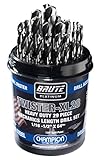
- Drill 3x Longer (than competitors drills), Drill 2x Faster (than cobalt), Drill Accurate (135 deg split point, tapered web geometry)
- Better than cobalt-XL28 is able to flex when cobalt drills chip or snap.
- Reduced overall length provides added strength and rigidity. Flatted shanks for fast chucking in keyless power tools.
- Premium high speed steel and NOMO surface treatment for longer tool life, fast penetration, and flexibility. Self centering 135 degree split point prevents drill from walking.
- Ultimate workhorse for drilling steel, stainless steel, titanium alloys and other hard to drill materials
| Format | What it is suited to | What to check |
|---|---|---|
| Mechanics length | Restricted-clearance work where a shorter bit can still reach the required hole depth; Fastenal says these are mostly used in handheld drilling. | Actual flute length, overall length, shank shape, and clearance around the drill. |
| Jobber length | General-purpose drilling where longer flutes provide more reach for deeper holes. | Flute length against hole depth, plus the bit’s material and point. The RUKO jobber-length catalog distributed by AutomationDirect lists dimensions by size. |
| Screw-machine | Short-reach machine drilling; Fastenal also identifies spot-weld drilling as an application. | Confirm that its reach and shank suit the machine and operation; do not assume it is the same format as a mechanics-length bit. |
| Aircraft-extension | Applications needing a long shank relative to the fluted length. | Confirm the fluted portion reaches the work and the long shank fits the setup. |
| Extra length | Longer-reach drilling, including long, deep holes. | Confirm the specified flute and overall lengths, as well as the machine and setup. |
As a rough comparison only, Benchmark Abrasives described jobber bits as having a length-to-diameter range of 8–12 times and mechanics-length bits as “typically 5 times” in an October 28, 2022 article. Those are that retailer’s generalizations, not universal dimensions or a standards table; use the manufacturer’s dimensions for the bit you plan to buy. Benchmark Abrasives’ comparison
How to decide whether a mechanics-length bit will fit the job
- Measure the available clearance. Check the space from the drill’s chuck to the workpiece and around the drilling point. Compare it with the bit’s overall length and the drill’s physical dimensions; a shorter bit can help in a confined area, but it does not guarantee that the drill itself will fit.
- Confirm flute reach against hole depth. Compare the listed flute length with the depth you need to drill. The flutes must reach the material being cut and provide a path for chips; if the required depth exceeds the bit’s useful fluted reach, choose a format with more reach.
- Match the diameter and shank to the setup. Verify the hole diameter, chuck capacity, and shank shape. If the listing shows shank flats, confirm the chuck can grip the shank securely.
- Choose material and point geometry for the workpiece. Length does not determine whether the bit material or point is appropriate. Match those separately to the material, starting conditions, and machine setup.
- Check the individual product specification. Compare diameter, flute length, overall length, material, point, and shank before ordering. Retail category examples include fractional sizes such as 1/16-inch, 7/64-inch, 1/8-inch, 5/16-inch, and 3/8-inch on Fastening Concepts’ drill-bit page; those examples establish listed sizes on that page, not current stock elsewhere.
Choose bit material separately from length
The shorter format does not make a bit suitable for every metal or machine. Fastenal presents the following as general selection guidance; the right choice still depends on the workpiece and the rigidity and capability of the setup.
Rank #2

- 【Faster Cutting and Longer Life】Drill bit with proprietary parabolic flute clears chips and debris to reduce heat buildup. Drill bit also features an ENHANCED TAPERED WEB that greatly increases strength and reduces premature breakage.
- 【135° Split Points】The 135 degree split point design reduces walking on working surface and allows easier hole starting. Three flats on shank eliminate bit spinning in chuck.
- 【Drill Bit Sizes】1/16", 5/64", 3/32", 7/64", 1/8", 9/64", 5/32", 11/64", 3/16", 13/64", 7/32", 15/64", 1/4", 17/64", 9/32", 19/64", 5/16", 21/64", 11/32", 23/64", 3/8", 25/64", 13/32", 27/64", 7/16", 29/64", 15/32", 31/64" and 1/2" (by 1/64" increments).
- 【Black & Gold Finish】Black and gold surface treatment helps to generate less friction and provides longer life.
- 【Wide Applications】HIGHFIRE 29 PCS machenics set with sharp and hard cutting edge is ideal for versatile applications especially mechnic projects. And also can be used in production and MRO.
| Material | Fastenal’s general guidance | Selection consideration |
|---|---|---|
| High-speed steel (HSS) | Low-cost, general-purpose option for metal, hardwood, and many other materials. | Consider it for general-purpose work, then verify suitability for the specific material and operating conditions. |
| Cobalt-alloyed HSS | Offers abrasion resistance relative to standard HSS; Fastenal identifies tough metals including free-machining stainless steel, high-temperature alloys, and titanium. | Use the material recommendation as a starting point, not a guarantee of performance in every alloy or setup. |
| Carbide | Stiffer and suited to high-speed operation in rigid shop setups. | Match it to a suitably rigid machine and setup; do not select it based on length alone. |
These descriptions are Fastenal’s material-selection guidance, not comparative test results. Its selection guide discusses length, material, and point geometry as distinct choices.
Select the point for the material and starting conditions
Point angle and split-point design are separate from the length family and bit material. Fastenal describes two common options with different use considerations:
Quick wins for a faster PC:
Repair Windows errors before they cause bigger problemsFix Now →Scan for outdated or missing drivers - takes under a minuteDriver Scan →Rank #3
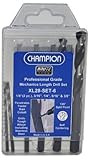
- Precision ground, self centering 135 Deg. Split Point
- HSS, point geometry and Nomo treatment
- Able to flex when cobalt drills chip or snap
- Drilling Steel, especially stainless steel, titanium alloys and other hard to drill materials
- Steel erection, mining & heavy construction, truck & trailer manufacturing, textile & paper plants, food processing, aircraft maintenance & manufacturing, railway & dockyard maintenance
- 118° point: Fastenal identifies this as suited to softer materials such as aluminum alloys. It may walk when starting, so a center punch can help locate the hole.
- 135° split point: Fastenal says this produces smaller chips and can help the bit stay centered without a pilot hole when used on harder, stronger materials.
These are selection options, not a guarantee that one point will always perform better. Check the bit’s listed geometry against the material and how the hole will be started.
Independent reader supportYour contribution helps us test, update, and keep practical guides available for everyone.What product specifications should you compare?
Before purchase, compare the specific values on the manufacturer or seller listing rather than relying on a category label or a general length rule.
Rank #4
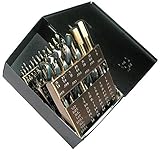
- 29 pc. Set Premium Mechanic 3-Flats on Shank 135-Degree Split Point
- 135-Degree split point for accurate centering and fast penetration
- Precision ground point, flutes, body, clearance and drill diameter for ultimate accuracy and performance
- Special Hi-Molybdenum tool steel/ Gold Oxide
- Mechanics Length 3-flats on shank
- Diameter: Must match the intended hole and the drill’s capacity.
- Flute length: Must provide enough cutting reach for the hole depth.
- Overall length: Affects clearance and how far the bit can extend from the chuck.
- Material: HSS, cobalt-alloyed HSS, and carbide have different application guidance and setup demands.
- Point: Check angle and whether the point is split; these affect starting and are not implied by length.
- Shank: Confirm diameter and shape, including any flats, against the chuck.
The RUKO jobber-length catalog illustrates why these details matter: it lists HSS and HSS-TiN jobber bits with 118° points, HSS-Co5 bits with 135° points, applications across materials including steel and stainless steel, cast iron, short-chipping aluminum alloys, brass, and bronze, and flute and overall lengths by size. Treat those as catalog specifications for the listed products, not as universal rules for every bit of the same length family.
Quick Recap
Quick decision guide
- Choose mechanics length when clearance is restricted and the listed flute length still reaches the required hole depth.
- Choose jobber length when you need more fluted reach for a deeper hole and have enough clearance.
- Consider extra length for a longer-reach or deep-hole requirement, and verify the actual dimensions.
- For screw-machine or aircraft-extension formats, check their distinct geometry and intended use rather than treating them as synonyms for mechanics length.
- If material, point, or machine suitability is uncertain, resolve that separately from the length choice using the product specification and application guidance.
Product prices and availability are accurate as of the date/time indicated and are subject to change. Any price and availability information displayed on Amazon at the time of purchase will apply.