Some links on this page are affiliate links: if you buy through them we may earn a commission, at no extra cost to you.
The first time Lunar Lumber showed up on one of our job sites, it did not arrive like ordinary framing material. There was no banded unit of 2x10s dropped beside the driveway, no familiar grade stamps facing up, no assumption that it would disappear behind drywall by Friday. It arrived as a carefully wrapped specialty order, with the homeowner waiting beside it because the story mattered to them.
They had sourced moon-phase harvested wood, sometimes called moon wood, for several visible areas in a custom home: a stair wall, a mantel, and a pair of exposed ceiling beams. The supplier described trees felled during the waning moon, when traditional woodcutters believed sap and moisture were lower and the finished timber would move less, resist decay better, and last longer. The boards were beautiful. The story was even better.
As an Amazon Associate I earn from qualifying purchases.
Free tools Windows power users keep installed
One-click scans. No signup required.
But the first thing we did was not admire it. We checked it.
That is the right way to approach Lunar Lumber in a U.S. construction project. It can be a thoughtful, memorable material when it is used in the right place. It can also become an expensive problem if someone assumes the moon phase matters more than species, grade, moisture content, structural documentation, treatment, fasteners, span tables, and local inspection. On our jobs, Lunar Lumber is treated as wood first and story second.
Popular on Amazon

- HUMIDITY SENSOR: Our handy meter tool can quickly determine what level of remediation is needed to keep your family safe from black mold. High levels of dampness that go untreated are the leading cause of harmful fungus growth in the home.
- WATER LEAK DETECTOR: Finding the moisture content in your wood or drywall is the first step in early prevention. Continuously check and test suspicious water stains around the house so you can determine whether the area is wet or has already dried. Low, medium and high moisture tones and on-screen icons, Reading HOLD button
- MOISTURE READER: The mold test features large 0.3" high digits in a backlit LCD for quick and easy detecting. Our mildew scanner includes extra 8mm stainless steel pins, a protective cap that doubles as a calibration checker, and a “9V” battery.
- MOLD TESTER: For an accurate test read, stick the stainless steel pins into the surface of what you're measuring. The gauge has a broad range of 5 - 50% for wood and 1.5 - 33% for building materials such as concrete and drywall.
- GENERAL TOOLS: We're a recognized leader in designing and developing specialized precision tools dedicated to delivering exceptional customer service. We encourage artisans and DIYers to work smarter, measure better, and repair more productively.
The short answer for homeowners is this: Lunar Lumber is usually best used where you can see it and appreciate it, such as exposed beams, stair parts, paneling, trim, mantels, doors, cabinetry, saunas, cabins, and custom interior details. For structural framing, it needs the same documentation any other structural lumber needs. If it does not have an acceptable grade mark or engineered design values, it may be beautiful material, but it is not automatically acceptable as a framing member.
What Lunar Lumber Actually Means
Lunar Lumber is timber harvested according to a moon phase, usually during the waning moon or last quarter. In older European building traditions, some carpenters and foresters believed that cutting trees at specific lunar times produced wood with lower sap content, better dimensional stability, fewer checks, improved insect resistance, and longer service life.
What’s actually slowing this PC down?
Pick the symptom - the matching free tool is one click away.
You may also hear the terms moon wood, moon-phase harvested timber, lunar-harvested lumber, or winter moon wood. The details vary by supplier. One seller may mean trees felled during a particular moon phase in winter. Another may include slow air drying, specific forest management practices, or hand-selected logs. Another may use the term mainly as a provenance story.
That variation matters. Lunar Lumber is not a standardized U.S. lumber category. It is not like ordering No. 2 Southern Pine, Douglas Fir-Larch, Spruce-Pine-Fir, pressure-treated ground-contact lumber, or an engineered glulam beam. A building inspector is not going to approve a load-bearing member because the tree was cut under a certain moon. They are going to ask what the wood is, what grade it is, what design values apply, where it is being used, whether it is treated if required, and whether the installation matches the approved plans.
That does not make Lunar Lumber useless. It means the homeowner and builder need to separate three things:
- The tradition: the cultural and craft belief that timing the harvest improves the wood.
- The measurable material: species, grade, dimensions, moisture content, defects, drying method, and treatment.
- The approved use: whether the wood is decorative, non-load-bearing, structural, exterior, interior, fire-rated, or part of an engineered assembly.
When those lines stay clear, Lunar Lumber can be used intelligently. When they blur, the risk goes up fast.
The Personal Lesson: Beautiful Wood Still Has to Pass the Jobsite Test
On that first Lunar Lumber project, the homeowner had done more homework than most. They knew the wood would cost more. They knew lead time would be longer. They also understood that the exposed areas of the home were where the material would have the most value.
That made the conversation easier. We were not being asked to frame an entire house with undocumented specialty boards. We were being asked whether a few highly visible features could be built responsibly with a material that had meaning to the owner.
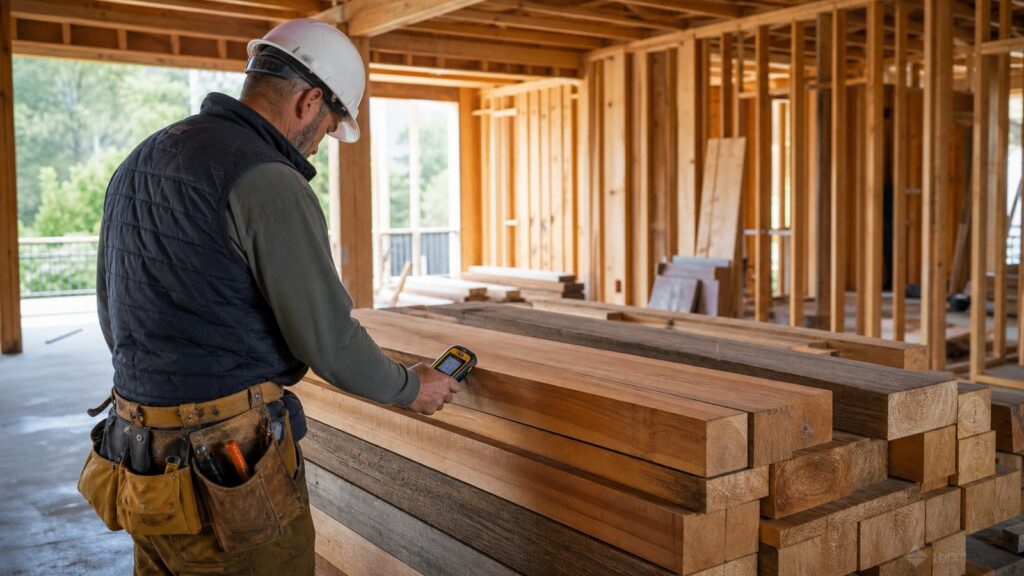
Our process was straightforward. We laid the material out, checked the order against the specification, looked for stamps or supplier documentation, took moisture readings, inspected for twist and checks, confirmed dimensions after drying, and separated decorative pieces from anything that might carry load. We also confirmed how the material would be stored before installation. Specialty wood can be ruined in a week if it sits flat on wet soil, gets wrapped too tightly, or bakes under plastic with no airflow.
The most important moment came before installation. One beam looked perfect to the homeowner but did not have the documentation needed for the intended structural role. We did not argue about the moon phase. We treated it like any other unverified timber: if it could not be confirmed structurally, it could not be used structurally. The solution was to use engineered structural support where required and reserve the Lunar Lumber for visible cladding and finish details where it could tell its story without carrying the risk.
That is still how we think about it. Lunar Lumber can be special. It does not get to skip due diligence.
What Building Science Says About Moon Wood Claims
The claimed benefits of moon-phase harvesting usually center on moisture and biological resistance. Supporters say that trees felled during certain lunar periods contain less water or sap, which supposedly leads to less warping, checking, cracking, fungal susceptibility, and insect activity.
Those claims are not broadly accepted as proven construction science. A 2023 Scientific Reports study evaluated the moon-wood concept using roughly 2,000,000 hourly stem-radius measurements and found no support for lunar-cycle effects large enough to validate the tradition as a general rule for wood performance. That does not mean every individual board marketed as moon wood is poor. It means the moon phase alone should not be treated as a reliable performance specification.
Also popular on Amazon
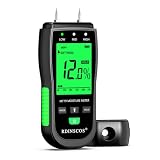
- FIND HIDDEN WALL MOISTURE EARLY — Check suspicious drywall and building surfaces after a leak, water stain, or other moisture concern. Detect abnormal moisture before a small issue develops into more extensive damage and costly repairs
- CHECK BEFORE YOU REPAIR — Don't rely on a wall looking or feeling dry. Use the moisture meter to check questionable areas before painting, repairing, or covering the surface, helping you make decisions based on actual moisture readings.
- CHECK FIREWOOD BEFORE YOU BURN — Test firewood before placing it in your fireplace or wood stove. Knowing the moisture level of your firewood helps you choose wood that is ready for burning and avoid relying on appearance alone.
- PIN-TYPE TESTING FOR DIRECT MEASUREMENTS — The contact pins penetrate the material to measure moisture inside wood and building materials. This makes it useful for checking areas where surface conditions may not tell the whole story.
- ONE TOOL FOR TWO IMPORTANT HOME CHECKS — Keep it ready for two practical jobs: checking walls for hidden moisture and checking firewood before burning. A simple way to make informed decisions before a moisture problem becomes expensive or wood goes into the fireplace.
On a job site, we can measure some things and we cannot measure others. We cannot verify a lunar story with a moisture meter. We can verify actual moisture content. We cannot tell by looking at a beam whether it meets structural design values. We can require a grade stamp, engineering letter, or accepted product documentation. We cannot guarantee that special harvesting prevents checking. We can specify drying, acclimation, storage, finish, and installation details that reduce movement.
That distinction is where good construction decisions happen. Tradition can guide a homeowner’s material choice. Measurable performance has to guide the build.
Code Reality: Lunar Lumber Is Still Lumber
For U.S. residential and light commercial work, Lunar Lumber is evaluated under the same basic framework as any other wood product. The International Building Code and residential code provisions do not create a special approval lane for moon-phase harvested material. Wood used structurally has to satisfy code requirements for species, grade, design values, size, span, connection, treatment where required, and installation.
In practical terms, that means a beautiful board without acceptable structural documentation may be limited to finish use. That is not a downgrade. Many specialty woods belong in finish work because that is where the homeowner can actually see and enjoy them.
What We Want Before Structural Use
If a client asks about using Lunar Lumber structurally, we want the conversation to happen before purchase, not after delivery. At minimum, the builder, supplier, engineer, and local building department should be aligned on the following:
PC Slower Than It Used to Be?
A free scan shows the junk files, broken settings and background clutter dragging Windows down - then fixes them in one click.Free scan · Windows 10 & 11Outdated Drivers Are Slowing You Down
One free scan finds every outdated or missing driver and matches the right update for your exact hardware.Free scan · exact hardware match- Species and source region.
- Actual dimensions after drying and milling.
- Recognized grade stamp or structural certification.
- Design values for bending, shear, compression, and modulus of elasticity when relevant.
- Moisture content at delivery and target moisture before enclosure.
- Treatment classification for exterior, deck, porch, ground-contact, or wet-area use.
- Fastener and connector compatibility, especially with treated lumber.
- Span tables, engineered calculations, or approved shop drawings.
- Replacement policy if pieces arrive twisted, checked beyond the agreed limit, wet, or undocumented.
For decks, porches, and exterior structures, the bar gets higher. Deck framing must satisfy code requirements for joists, beams, posts, ledgers, guards, stairs, lateral load connections, footings, fasteners, corrosion resistance, and preservative treatment. A lunar-harvested board used outside still needs the correct durability classification or treatment. End-grain protection, flashing, drainage, and compatible hardware matter more than the harvest story.
Where Lunar Lumber Makes the Most Sense
The best use of Lunar Lumber is usually not hidden framing. Hidden framing is price-sensitive, schedule-sensitive, and inspection-sensitive. Once drywall goes up, the homeowner gets none of the daily enjoyment of the material’s appearance or story.
Where Lunar Lumber shines is in visible work. That is where the premium can make emotional and architectural sense.
Good-Fit Uses
- Exposed beams: especially when paired with engineering documentation or used as non-structural beam wraps.
- Mantels: a strong use because one large timber can become a focal point without complicating the framing package.
- Accent walls and paneling: good for bedrooms, entries, studies, stair walls, wine rooms, and cabin-style interiors.
- Stair parts: treads, newel posts, rail caps, and wall trim where movement can be planned for.
- Custom doors: best when built by a shop that understands wood movement and moisture control.
- Cabinetry and built-ins: especially as face frames, floating shelves, benches, or display walls.
- Saunas and retreats: only with species and installation details appropriate for heat and moisture cycling.
- Cabins and owner-story features: where provenance is part of the design brief.
Poor-Fit Uses
- Commodity wall framing that will be covered by drywall.
- Load-bearing members without grade stamps or engineering.
- Exterior decks without proper treatment or natural durability documentation.
- Ground-contact posts unless specifically approved for that use.
- Fire-rated assemblies without tested or approved documentation.
- Any substitution into approved plans after permits are issued without review.
If a homeowner wants Lunar Lumber because it feels personal, we generally steer it toward touchpoints: the beam over the kitchen, the mantel in the family room, the stair wall you pass every morning, or the built-in bench where the grain is right at eye level. That keeps the value visible and the risk manageable.
Cost: What Lunar Lumber Can Do to a 2026 Budget
Lunar Lumber does not price like commodity framing lumber. Commodity lumber is traded and discussed in dollars per thousand board feet, or MBF. As of July 31, 2026, lumber was around $615 per 1,000 board feet as a market benchmark. That number is useful for understanding the market, but it is not the delivered retail price for a small custom order at a residential job site.
National installed wood-house framing costs in 2026 are commonly in the range of $7 to $16 per square foot, including about $4 to $10 per square foot for labor and $3 to $6 per square foot for materials. A 2,000-square-foot home might therefore see framing in the $14,000 to $32,000 range. A 3,000-square-foot home might be $21,000 to $48,000. Garages often run closer to $4 to $5 per square foot, while second-story work can add around $3 per square foot or reach $10 to $19 per square foot depending on complexity.
Those numbers describe conventional framing. Lunar Lumber can cost substantially more because it is custom harvested, slow dried, provenance-marketed, imported or regionally limited, and often sold in smaller lots. Pricing behaves more like specialty timber, architectural millwork, reclaimed wood, or custom finish material than ordinary framing lumber.
| Use | Typical 2026 Cost Behavior | Budget Risk | Our Practical Take |
|---|---|---|---|
| Standard hidden framing | Often estimated within the $7-$16 per sq. ft. installed national framing range | Medium, mostly tied to lumber volatility, labor, and plan complexity | Use normal grade-stamped lumber unless there is a specific structural and budget reason not to |
| Exposed decorative beam or wrap | Specialty timber pricing, often quoted per piece or board foot | Medium to high if dimensions, checking limits, and lead time are not specified | One of the best places to use Lunar Lumber because the owner sees it every day |
| Interior paneling or accent wall | Closer to architectural millwork than framing lumber | High if moisture, acclimation, waste, and color matching are ignored | Order extra material and allow acclimation before installation |
| Structural beam | May require engineering, grading documentation, shop drawings, or substitution review | High if bought before approval | Confirm acceptance before purchase; consider structural beam plus Lunar Lumber cladding |
| Deck or exterior framing | Depends on treatment, species, fasteners, and code acceptance | High due to water exposure, inspection, and connector requirements | Do not use outside unless durability, treatment, and hardware requirements are documented |
The hidden costs are often larger than the board cost. Delay can be expensive. Re-engineering can be expensive. Rejected inspection can be expensive. So can acclimation time, milling, matching, waste, and replacement material if the first shipment arrives wet, twisted, or undocumented.
Quick wins for a faster PC:
Clear out junk files and repair common Windows errorsFree Scan →Fix the driver behind crashes, sound loss and screen glitchesFind Drivers →Repair Windows errors before they cause bigger problemsFix Now →For planning, we like to separate the budget into five lines: material purchase, freight, inspection or engineering review, milling and finishing, and waste. For specialty interior work, a 10% waste factor may be too low if color and grain matching matter. For narrow boards or paneling with strong visual standards, 15% to 25% extra material is often more realistic.
Also popular on Amazon
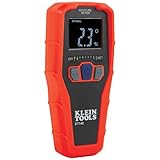
- WATER LEAK DETECTOR detects relative moisture content from leaks and flooding
- PINLESS MOISTURE METER measures relative moisture content in building materials
- NONDESRUCTIVE DETECTION up to 3/4-Inch deep using Electromagnetic field (EMF) technology
- USE ON DRYWALL, MASONRY, HARDWOOD, AND SOFTWOOD; calibrated for these materials only
- REVERSE-CONTRAST DISPLAY for easy viewing of reading and nine LED bars to indicate moisture range
What I Asked Before We Used It
When Lunar Lumber is proposed for a project, we use a practical checklist. It keeps the conversation out of folklore and inside buildable details.
1. What Species Is It?
Species affects strength, movement, decay resistance, hardness, weight, fastener behavior, and finishing. Pine, spruce, fir, oak, cedar, cypress, and larch are not interchangeable. A supplier saying “moon wood” is not enough. We need the actual species.
2. Is It Grade-Stamped or Structurally Documented?
If it is structural, we need recognized grading or engineering documentation. No stamp or design values usually means no load-bearing use unless an engineer and building department approve another path.
The Tool Desk
Outbyte PC Repair FREEClear out junk files and repair common Windows errorsFree Scan →Outbyte Driver Updater FREEScan for outdated or missing drivers - takes under a minuteDriver Scan →3. What Is the Moisture Content?
We take moisture readings on delivery and again before installation. Interior finish wood commonly needs to acclimate to the building conditions before it is installed. If a home will operate around 35% to 55% relative humidity, the wood needs time to approach that environment. Installing specialty paneling too wet is asking for gaps, cupping, and callbacks.
4. How Was It Dried?
Air drying and kiln drying produce different schedules, costs, and risks. Slow air-dried material may be part of the moon wood tradition, but the builder still needs to know the current moisture content and whether the material is ready for the intended use.
5. Where Will It Go in the Build?
A mantel and a structural ridge beam are different conversations. So are interior paneling and exterior deck joists. We identify whether the wood is decorative, structural, interior, exterior, wet-area, fire-rated, or part of a permitted assembly.
6. What Are the Appearance Limits?
Checks, knots, wane, color variation, planer marks, and twist may be acceptable in rustic work but not in a clean modern interior. Put the acceptance criteria in writing. A phrase like “premium moon wood” is not a specification.
Do these 3 things before closing this tab:
1Scan for outdated or missing drivers - takes under a minute2Clear out junk files and repair common Windows errors3Fix the driver behind crashes, sound loss and screen glitches7. What Is the Backup Plan?
Specialty lumber can arrive late. It can arrive short. It can fail the moisture check. It can be rejected by an engineer. Before we commit the schedule to it, we identify a backup material and decide which parts of the project can continue without it.
Storage and Acclimation Matter More Than the Moon Phase
Even excellent wood can be damaged by poor handling. Once specialty lumber reaches the site, it needs to be stored like it matters.
We keep it off the ground, stickered for airflow, covered from direct rain, and ventilated so moisture is not trapped. We avoid laying it directly on concrete slabs that are still releasing moisture. We do not leave it wrapped tight in plastic under the sun. We protect exposed faces from mud, overspray, and jobsite traffic.
For interior finish wood, acclimation is not optional. The right time depends on species, thickness, moisture content, HVAC status, and site conditions. A few days may be enough for some trim. Thicker timbers, paneling packages, or custom millwork may need one to several weeks. The key is not the calendar alone; it is stable moisture readings and a building environment close to normal living conditions.
Recommended Free Tools
We also photograph moisture readings and labels for the project file. That protects the owner, builder, and supplier. If a problem develops later, the records help separate a material issue from a storage, installation, or building humidity issue.
Exterior Use: Decks, Porches, and Siding Need Extra Discipline
Homeowners often ask whether Lunar Lumber can be used outside because the tradition includes claims about durability and insect resistance. Our answer is cautious: only if the species, treatment, detailing, and code acceptance support exterior use.
Also popular on Amazon

- 🌲【Accurate and fast measurements reveal hidden water leaks】: It has 2 high-precision pins that can penetrate the surface to be tested and quickly measure moisture content to estimate potential moisture increase throughout the home. COCZOW moisture meter is the ideal tool for measuring moisture.
- 🌲【Professional Wood Moisture Meter】: 6 calibrated scales. Our moisture meter is a great tool for manufacturers, floorers, inspectors and wood suppliers to quickly and easily measure moisture content (% Mc). You can quickly determine if the moisture content is low (5-12%), medium (12-17%) or high (17-60%). Checking moisture content prevents wood from cracking and warping.
- 🌲【Widely Used】: PM6811A moisture meter is ideal for carpentry, building construction, agricultural restoration and floor laying. Measure moisture content of wood products such as hardwood floors, cabinets, furniture, lumber, lath, beams, plywood, panels, composite boards, window frames, forestry wood, coils, building materials, etc.
- 🌲【User-friendly】: With LCD backlight, the backlight color is divided into three types of green, yellow and red, or display the moisture content of different measurement types. Hold function, maximum/minimum moisture measurement function and 5-minute automatic shutdown function (no power supply required).
- 🌲【Why choose COCZOW Wood Moisture Meter】: LED display function, large measuring range (wood: 2.0%-75.0%. Building materials: 1.5-30%), durable stainless steel needle, heat insulation, light weight and easy to carry. Get professional and accurate results with Peakmeter Wood Moisture Tester.
For decks and porches, the material is exposed to wetting, drying, UV, temperature swings, fastener corrosion, and structural loads. Building codes and deck guides focus on footings, post sizes, beam spans, joist spans, ledger attachment, lateral load resistance, guard height, stair geometry, handrails, flashing, and approved connectors. The moon phase does not replace those requirements.
If a lunar-harvested board is going into an exterior assembly, we want written confirmation of:
- Approved preservative treatment or natural durability for the intended exposure.
- Ground-contact rating if it touches soil or is close to grade.
- Compatible fasteners, hangers, bolts, and connectors.
- End-cut treatment requirements.
- Drainage, ventilation, and flashing details.
- Finish system and maintenance schedule.
- Local inspector acceptance before installation.
For siding, soffits, porch ceilings, or decorative exterior brackets, Lunar Lumber may be easier to justify than for deck joists or posts. Even then, detailing is everything. Water needs a way out. End grain needs protection. Horizontal ledges need slope or flashing. Finish maintenance needs to be realistic. No harvest tradition protects wood that is installed in a water trap.
Independent reader supportYour contribution helps us test, update, and keep practical guides available for everyone.When to DIY vs. When to Hire a Pro
Some Lunar Lumber projects are reasonable for a careful homeowner. Others should be handled by a builder, carpenter, engineer, or millwork shop.
Reasonable DIY Uses
A skilled homeowner can often handle small, non-structural projects such as a floating shelf, simple mantel wrap, decorative wall boards, a small bench, or a furniture-style feature. The work still requires moisture awareness, straight material, proper anchoring, and a finish plan, but the risk is limited if the piece is not structural and not part of a fire-rated or exterior assembly.
For DIY interior work, use a moisture meter, let the wood acclimate, prefinish when appropriate, leave movement gaps where needed, and fasten in a way that allows seasonal movement. If the board is wide, flat, and expensive, do not trap it so tightly that normal expansion splits it.
Outdated Drivers Are Slowing You Down
One free scan finds every outdated or missing driver and matches the right update for your exact hardware.Free scan · exact hardware matchWindows Errors? Fix Them Before They Spread
Repair common Windows errors and clear accumulated junk for a smoother, more stable PC - no reinstall needed.Free scan · no reinstallHire a Pro For These Uses
Bring in a professional when the wood is structural, overhead, part of stairs or guards, used outdoors, tied into a permitted remodel, installed around fireplaces, or milled into doors, cabinets, or large built-ins. Also hire a pro when the material cost is high enough that one bad cut would be painful.
Structural beams, deck framing, stair systems, and guardrails are not good places to improvise. A guardrail that looks solid but fails under load is a safety hazard. A beam that checks, twists, or lacks bearing can become a structural problem. A deck ledger installed incorrectly can cause catastrophic failure. Those are not moon wood problems; they are construction problems.
Permits, Safety, and Inspection Notes
Permits depend on the scope of work and the local jurisdiction. Replacing a decorative mantel may not require a permit. Altering structural framing usually does. Building a deck almost always does. Modifying stairs, guards, openings, load paths, fire-rated assemblies, or exterior structural elements can trigger permit and inspection requirements.
Before buying specialty wood for permitted work, ask the building department or your contractor how substitutions are handled. If the approved plans call for a specific engineered beam, pressure-treated member, or grade of framing lumber, swapping in Lunar Lumber may require engineer review and revised documentation.
Safety also includes fire clearances. Mantels and wood trim near fireplaces must respect appliance instructions and local code requirements. A beautiful piece of moon wood installed too close to a firebox is not charming; it is unsafe.
For treated material, fastener compatibility matters. Some preservative treatments require hot-dip galvanized, stainless steel, or otherwise approved connectors. Mixing the wrong fasteners with treated wood can lead to corrosion and connection failure.
How We Would Specify Lunar Lumber on a Contract
Vague language causes most specialty-material disputes. If Lunar Lumber is going into a construction contract, the specification should be clear enough that the owner, builder, and supplier all know what counts as acceptable.
Also popular on Amazon

- Easy to Read with Large LCD Screen: This wood moisture meter is easy to get an accurate reading from the surface of materials and displays accurate moisture readings on the 2.25" big screen. Use this handheld meter to check the moisture content in firewood or drywall, it can stand up on the table, the moisture content is displayed with a bar graph and percentage (_%RH) on the screen. Date Hold and Max/Min function is used to freezes readings, useful for writing down data
- Tricolor Backlight Display, Easy to Use: TopTes Moisture Meter TS-630 features an HD tri-color backlight to easily know if the wood/wall humidity is Dry, Moist, or Wet. Green backlight for Low moisture, orange backlight for middle moisture, and red moisture for high moisture. After selecting the mode, and putting pins into the firewood, easy and quick to get a visible alert from the clear screen
- Seven Calibration Scales, Two Material Mode: It is designed with built-in characteristic parameters of 7 calibration scales for wood and building material, ranging from 0.0% to 57%. This humidity meter is perfect for woodworking, water damage restoration, building construction, and home renovation. Easily Check and test suspicious water leaks around the wall/floor so you can quickly determine what level of remediation is needed
- Pin Type & Battery Operated: TopTes TS-630 moisture meter is a pin-type moisture meter and operates on batteries. With a high precision multi-material sensor, DON’T need calibration. It’ll support an accurate reading after inserting the stainless steel pins into the surface of the wood or building materials. It will auto shut off after 10 minutes of non-use to help save energy. A low-battery indicator will appear on the screen when the battery is running out
- What's in the Box: One TS-630 Moisture Meter, three AAA Batteries, one User Manual, one Carry Pouch, one Pair of Test Pins, one Mini Wrench
A practical specification might include:
- Species and source.
- Nominal and actual dimensions.
- Quantity, length schedule, and waste allowance.
- Grade or appearance classification.
- Structural documentation if applicable.
- Moisture content range at delivery.
- Drying method, such as kiln dried or air dried.
- Maximum allowable twist, bow, cup, checks, wane, knots, and color variation.
- Finish expectations, including sanding level and whether end sealing is required.
- Delivery date and required acclimation period.
- Storage responsibility after delivery.
- Replacement policy for rejected pieces.
- Backup material if the shipment does not meet the schedule or specification.
That level of detail may feel excessive for a small mantel, but it is not excessive for a package of paneling, exposed beams, stair components, or custom millwork. The more visible and expensive the wood, the more precise the agreement should be.
Free tools Windows power users keep installed
One-click scans. No signup required.
Regular Lumber vs. Lunar Lumber: The Builder’s View
Regular framing lumber wins on availability, grading, price transparency, and inspection familiarity. It is not romantic, but it is predictable. Crews know how to order it, frame with it, brace it, inspect it, and move on schedule.
Lunar Lumber wins on story, visual character, and owner connection. It can make a home feel personal in a way ordinary lumber cannot. But it needs more planning. The schedule has to allow sourcing, delivery, moisture checks, acclimation, and sometimes engineering review. The budget has to allow waste and replacement. The design has to put the material where it matters.
That is the biggest lesson from our experience: Lunar Lumber is not a better version of every stick of framing lumber. It is a specialty material. Treat it that way and it can be excellent. Treat it like a magic substitute for code-compliant lumber and it can become a problem.
Our Bottom Line on Lunar Lumber
I like materials with a story, but I trust measurements, documentation, and good installation. Lunar Lumber can belong in a well-built home when the owner values its origin and the builder respects its limits.
Recommended Free Tools
Use it where it will be seen. Verify it before it is installed. Do not buy structural specialty wood until the builder, supplier, engineer, and inspector agree on the requirements. Take moisture readings. Store it correctly. Write down the acceptance criteria. Keep a backup plan.
For most homeowners, the best Lunar Lumber project is not a whole-house framing package. It is a visible feature that carries meaning without complicating the bones of the building: a mantel, stair wall, exposed beam wrap, ceiling detail, custom door, or built-in. That is where the tradition can be appreciated and the construction can still stay disciplined.
On our jobs, that balance is the standard. The wood can have a personal story. The work still has to be buildable, inspectable, durable, and safe.
Frequently Asked Questions
What is Lunar Lumber?
Lunar Lumber, or moon wood, is timber harvested during a specific moon phase, often the waning moon or last quarter. Supporters believe the timing may improve moisture behavior and durability, but in U.S. construction it is still evaluated by species, grade, moisture content, treatment, engineering, and code requirements.
Quick wins for a faster PC:
Clear out junk files and repair common Windows errorsFree Scan →Scan for outdated or missing drivers - takes under a minuteDriver Scan →Repair Windows errors before they cause bigger problemsFix Now →Is Lunar Lumber scientifically proven to be stronger or more durable?
Not as a broad construction rule. Modern research has not confirmed moon phase as a reliable predictor of wood performance. Builders should rely on measurable factors such as moisture content, species, grade, drying method, storage, and installation quality.
Can Lunar Lumber be used for structural framing in a U.S. home?
Only if it has acceptable structural documentation, such as a recognized grade stamp, design values, or engineer approval. Without that documentation, it is usually better suited for non-structural finish work.
How much does Lunar Lumber cost compared with regular framing lumber in 2026?
Regular wood-house framing commonly runs about $7 to $16 per square foot installed in 2026. Lunar Lumber usually costs more because it is specialty material with custom harvesting, drying, freight, lead time, and appearance requirements. It should be budgeted more like architectural millwork or specialty timber than commodity framing.
Where is Lunar Lumber worth using?
It is usually most worthwhile in visible features: exposed beams, mantels, accent walls, stair parts, custom doors, cabinetry, built-ins, saunas, cabins, and other owner-story details. Hidden commodity framing is rarely the best use of the premium.
Can Lunar Lumber be used outside for decks or porches?
Possibly, but only if the species, preservative treatment, fasteners, connectors, drainage details, and local code acceptance are appropriate for exterior exposure. Moon-phase harvesting does not replace deck code requirements or pressure-treatment rules.
Quick Recap
Product prices and availability are accurate as of the date/time indicated and are subject to change. Any price and availability information displayed on Amazon at the time of purchase will apply.

