
Some links on this page are affiliate links: if you buy through them we may earn a commission, at no extra cost to you.
The ideal humidity level in most U.S. homes is 30% to 50% relative humidity. For day-to-day comfort, many houses land best around 40% to 50% in warm or humid months. In colder winter weather, especially when windows start sweating, the better target is often 30% to 40%.
The hard ceiling is sustained humidity above 60% RH. Once a house spends long periods above that level, the risk of mold, dust mites, condensation, musty odor, swollen wood, and finish damage rises quickly. On our job sites, we treat high humidity as a building-system problem, not just a thermostat problem. The fix may involve HVAC sizing, bath exhaust, crawl-space moisture, drainage, air sealing, insulation, vapor retarders, or all of the above.
As an Amazon Associate I earn from qualifying purchases.
A $10 to $50 digital hygrometer can tell you where you are. The real skill is knowing what the number means, where to measure it, and what to fix before buying equipment.
Best Indoor Humidity Range by Season
Relative humidity changes with temperature. A room at 50% RH and 75 degrees F contains more actual water vapor than a room at 50% RH and 65 degrees F. That is why the same humidity reading can feel fine in summer but cause condensation in winter when warm indoor air touches cold glass, framing, or sheathing.
Popular on Amazon

- Wellness Indicator: This humidity meter with humidity level icon indicates air conditions - DRY/COMFORT/WET, allowing this humidity sensor to ensure you’re always aware of changes to your home/household with just a quick glance
- High Accuracy & Quick Refresh Rate: This inside thermometer features a high accuracy of +/-2 to 3%RH and +/-1°F, making it ideal for measuring fluctuating readings like those found in a greenhouse, data measurements are updated every 10 seconds to give you the latest updates on your environment
- High & Low Records: This hygrometer digital thermometer displays high/low temperature and humidity levels to allow you to make proper comparisons using your home’s data
- Healthier Home & Environment: This thermometer hygrometer with temperature and humidity monitor ensures proper indoor humidity that achieves important health benefits for skin and allergen, can also serve as a refrigerator thermometer, freezer thermometer, reptile thermometer, soil thermometer, humidor hygrometer, cigar hygrometer, and more
- Practical Design: This indoor room thermometer features a tabletop stand and a magnetic back, place the temperature monitor on your counter or fridge; °F/°C selector; Includes 1 AAA battery
For most homes, use these targets:
- Spring and summer: 40% to 50% RH is a strong comfort and mold-control target. Short spikes after showers or cooking are normal if they clear quickly.
- Fall: 35% to 50% RH is usually acceptable, depending on outdoor conditions and HVAC runtime.
- Cold winter climates: 30% to 40% RH is often safer if windows, exterior walls, or attic sheathing show condensation.
- Upper limit: Avoid sustained indoor humidity above 60% RH.
- Lower limit: Below about 30% RH, many people notice dry skin, static, irritated eyes, and wood movement.
If your home has old single-pane windows, weak insulation, thermal bridging, or air leaks into the attic, you may need to run winter humidity lower than a newer, tighter, better-insulated home. A new house with high-performance windows may tolerate 40% RH in winter. A 1960s house with cold aluminum windows may show condensation at the same setting.
Why 60% Humidity Is Too High for a House
Humidity above 60% is not an automatic disaster for one afternoon. Homes see short humidity spikes after showers, mopping, cooking, laundry, rainy weather, and open-window days. The problem is persistent high humidity: repeated readings above 60%, damp basements, clammy bedrooms, musty closets, or condensation that keeps returning.
Mold does not need standing water in the middle of a room. It needs moisture, a food source, and time. Drywall paper, wood framing, dust, insulation facings, carpet backing, and trim can all support growth when moisture conditions stay favorable. Dust mites also thrive in damp indoor conditions, and wood products can swell, cup, or bind.
High humidity can also hide in specific zones. A hallway hygrometer may read 48% while a basement corner, crawl-space-adjacent bedroom, unvented bathroom, or closet behind an exterior wall is much wetter. We see this often during remodels: the homeowner thinks the house is fine because the main floor feels comfortable, but the crawl space has exposed soil, torn vapor barrier, wet insulation, or duct leakage adding moisture every day.
How to Measure Humidity Before You Spend Money
Do not make a $3,000 equipment decision from one reading. Buy two to four digital hygrometers and measure for a full week. Basic units usually cost $10 to $50. Smart multi-room sensors cost more, but they can help if you are chasing basement, bathroom, or bedroom differences.
Place sensors in practical locations:
- Main living area, away from supply registers and direct sunlight
- Primary bedroom, especially if windows sweat overnight
- Basement or lower level
- Bathroom hallway or laundry area
- Crawl-space-adjacent room if applicable
Record morning and evening readings. Also check after showers, cooking, laundry, rain, and long HVAC cycles. If humidity jumps to 65% after a shower but falls below 50% within 30 to 60 minutes, the house may be doing its job. If it stays high for hours, the exhaust or ventilation strategy needs attention.
Quick wins for a faster PC:
Clear out junk files and repair common Windows errorsFree Scan →Scan for outdated or missing drivers - takes under a minuteDriver Scan →Repair Windows errors before they cause bigger problemsFix Now →For more useful notes, write down indoor temperature with each humidity reading. Relative humidity without temperature is only half the story. Condensation happens when moist indoor air hits a surface cold enough for water to form. That is why insulation, air sealing, and window quality are humidity-control tools, not just energy upgrades.
Signs Your Home Has Too Much or Too Little Humidity
High Humidity Signs
High humidity often shows up before a meter confirms it. Look for condensation on windows, pipes, toilet tanks, exterior walls, or supply registers. Watch for musty odor, visible mold, clammy rooms, swollen wood doors, cupped floors, peeling paint, sticky drawers, damp carpet edges, and basement or crawl-space odor.
HVAC behavior matters too. If the air conditioner runs constantly and the house still feels damp, the system may have airflow, refrigerant, coil, duct, fan-speed, or sizing issues. If the AC short cycles, it may cool the house before it runs long enough to remove moisture.
Also popular on Amazon

- Face Icon Comfort Indicator: Humidity temperature gauge features face icons to indicate DRY/COMFORT/WET air conditions, quickly informs you how to adjust your humidifier or dehumidifier to achieve optimal comfort.
- Highly Accurate Sensors: This temperature humidity sensor features a high accuracy of +/-1°F/°C and +/-2% to 3%RH, making it ideal for measuring dynamic environments like greenhouses.
- Fast Refresh Rate: This digital indoor thermometer refreshes every 10 seconds to provide the latest updates for temperature and humidity readings.
- Compact Display with Large Digits: This digital thermometer indoor outdoor features a compact LCD display with large bold digits, allowing you to read the room thermometer indoor from any angle and distance.
- Mini Size, 3-Way Mount, Use Anywhere: Compact mini humidistat with 3 placement options — Tabletop Stand / Magnetic Back / Hanging Mount, easily fits a nursery, baby room, craft room, grow tent, greenhouse, chick brooder, RV, outdoor patio, kitchen, guitar room, office or cellar.
Low Humidity Signs
Low humidity is common in winter, especially in cold climates with leaky homes. Signs include static electricity, dry skin, irritated eyes, scratchy throat, nosebleeds, shrinking wood floors, cracked trim joints, and musical instruments or furniture moving out of shape.
Free tools Windows power users keep installed
One-click scans. No signup required.
Adding humidity can help, but winter humidifiers must be used carefully. Setting a humidifier to 45% or 50% in cold weather can create window condensation or hidden wall moisture in some homes. If you see water on glass or staining at exterior corners, lower the setting and inspect for air leaks and insulation gaps.
Common Causes of High Indoor Humidity
When we diagnose moisture problems, we start with water first, then air. Equipment comes later. The most common mistake is buying a dehumidifier while rainwater, plumbing leaks, roof leaks, clogged gutters, poor grading, or wet crawl-space soil keep feeding the problem.
Typical causes include:
- Bulk water entry: roof leaks, plumbing leaks, foundation seepage, failed flashing, poor site drainage, or gutters discharging too close to the house.
- Weak exhaust: bath fans that are undersized, loud, disconnected, blocked, or vented into attics, soffits, garages, or crawl spaces.
- Wet crawl spaces: exposed soil, loose vapor barriers, open vents in humid climates, missing drainage, or unsealed ductwork.
- Oversized AC: equipment that cools quickly but does not run long enough for moisture removal.
- Duct leakage: leaky return ducts pulling humid air from attics, garages, crawl spaces, or wall cavities.
- Ventilation without a moisture plan: code-required fresh air in humid regions can add moisture if the system is not designed for latent load.
- Poor insulation and air sealing: cold surfaces create condensation even when average room humidity looks acceptable.
Humidity Trouble: Quick Diagnostic Table
Use this table to narrow the likely source before calling for bids or buying equipment.
| Symptom | Likely Cause | Best Next Step |
|---|---|---|
| Whole house stays above 60% RH | Oversized AC, poor dehumidification, ventilation moisture, duct leakage, or water source | Measure for one week, inspect water entry, then have HVAC airflow, charge, ducts, and sizing checked |
| Basement only is damp or musty | Foundation moisture, poor drainage, missing vapor control, low air movement | Check grading, gutters, seepage, slab/wall moisture, and consider basement dehumidification |
| Crawl-space odor reaches living areas | Exposed soil, torn vapor barrier, duct leakage, open vents, standing water | Address drainage, seal ground vapor barrier seams, air seal, and size crawl-space dehumidification if needed |
| Winter window condensation | Indoor RH too high for window temperature, air leaks, weak glazing, poor insulation | Lower RH toward 30% to 40%, run bath exhaust, improve air sealing, and inspect cold surfaces |
| Dry winter air below 30% RH | Air leakage, high heating runtime, no humidification | Air seal first where practical, then consider a controlled whole-house humidifier |
| Musty odor when HVAC starts | Dirty coil, wet drain pan, duct moisture, microbial growth, poor filtration | Service coil, pan, drain, filter, and inspect ducts for condensation or leakage |
Bath Fans, Kitchen Exhaust, and Ventilation
Bathrooms are one of the easiest places to create a moisture problem and one of the cheapest places to improve control. A hot shower can push a small bathroom well above 70% RH. That is acceptable only if the fan removes the moisture quickly and sends it outdoors.
Recommended Free Tools
Common bathroom airflow targets are 50 cfm intermittent or 20 cfm continuous. The label on the fan box is not enough. Long duct runs, crushed flex duct, too many elbows, blocked exterior hoods, and poor makeup air can reduce actual installed airflow. On remodels, our crews check that bath fans terminate outdoors, not into an attic or soffit cavity.
A good bath fan strategy includes:
- Fan ducted outdoors through a proper wall or roof cap
- Smooth or properly stretched duct with short, direct routing where possible
- Timer or humidity-sensing control so the fan runs after the shower
- Door undercut or transfer path for replacement air
- Quiet fan selection so people actually use it
Kitchen range hoods and dryers also need correct exterior termination. A dryer dumping into a garage or crawl space is not a humidity shortcut; it is a moisture and lint problem. In tight homes, strong exhaust may also need planned makeup air depending on appliance type and local code.
HVAC Sizing and Dehumidification
Air conditioners remove moisture only while they run and only when airflow, coil temperature, refrigerant charge, and controls are right. A system can hit 72 degrees and still leave the house damp if it does not manage latent load.
Also popular on Amazon

- Face Icon Comfort Indicator: Humidity temperature gauge features face icons to indicate DRY/COMFORT/WET air conditions, quickly informs you how to adjust your humidifier or dehumidifier to achieve optimal comfort
- Highly Accurate Sensors: This temperature humidity sensor features a high accuracy of +/-1°F/°C and +/-2% to 3%RH, making it ideal for measuring dynamic environments like greenhouses
- Fast Refresh Rate: This digital indoor thermometer refreshes every 10 seconds to provide the latest updates for temperature and humidity readings
- Compact Display with Large Digits: This digital thermometer indoor outdoor features a compact LCD display with large bold digits, allowing you to read the room thermometer indoor from any angle and distance
- Multiple Placement Options: This humidistat has 3 placement options - Tabletop Stand / Magnetic Back / Hanging Mount, place the wall thermometer anywhere you wish such as living room, baby room, kitchen, greenhouse, guitar room, office or cellar
Before assuming your AC is too small, check the basics: refrigerant charge, blower speed, filter condition, evaporator coil cleanliness, duct leakage, return-air path, thermostat settings, and condensate drainage. If the unit is oversized, it may satisfy temperature too quickly and shut off before pulling enough moisture from the air.
Do these 3 things before closing this tab:
1Scan for outdated or missing drivers - takes under a minute2Clear out junk files and repair common Windows errors3Fix the driver behind crashes, sound loss and screen glitchesIn humid regions, fresh-air ventilation needs a dehumidification plan. An ERV can reduce the moisture penalty compared with bringing outdoor air straight in, but it may not hold the house at 50% RH by itself. For new construction or major remodeling, coordinate Manual J load calculations, equipment selection, duct design, ventilation rate, and dehumidification early. Humidity problems are often designed in before drywall is installed.
Portable vs Whole-House Dehumidifiers
A portable dehumidifier can work well for a basement, laundry room, or temporary seasonal problem. Expect basic portable units to cost about $40 to $450, with larger basement units commonly around $250 to $450 before drainage setup and electricity.
A whole-house dehumidifier is better when moisture is distributed across the home or when the HVAC system needs dedicated latent control. Installed 2026 costs commonly fall around $1,100 to $3,500. Homewyse’s May 2026 national estimate starts around $2,774 to $3,285 per unit. Higher quotes usually involve larger capacity, duct modifications, dedicated electrical, controls, condensate pumps, difficult access, and high-labor markets. Operating costs for whole-house or large dehumidifiers may add roughly $10 to $30 per month, depending on runtime, local electric rates, moisture load, and equipment efficiency.
Crawl Spaces and Basements: Where Humidity Problems Start
If a home has a damp crawl space, do not expect the living area to stay perfect. Moisture moves upward through air leaks, duct systems, framing gaps, and pressure differences. A dehumidifier sitting over exposed soil is usually a partial fix at best.
A durable crawl-space moisture approach includes ground vapor control, sealed seams, sealed penetrations, drainage correction, air sealing, insulation strategy, and mechanical drying when needed. High-quality vapor barrier material may cost roughly $0.30 to $0.70 per square foot for material alone. Installed vapor-barrier-only work is often quoted around $1.35 to $2.00 per square foot, depending on thickness and detailing.
Full crawl-space encapsulation commonly runs about $3 to $10 per square foot or $3,000 to $15,000 total in 2026 national ranges. Basic work stays near the lower end. Drainage repair, mold remediation, insulation, sump pumps, electrical, access improvements, and crawl-space dehumidifiers push costs higher.
Basements need the same order of operations: fix exterior drainage, gutters, downspouts, grading, cracks, and plumbing leaks before relying on a machine. If water is entering during storms, humidity equipment is treating the symptom.
Also popular on Amazon
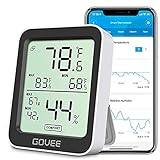
- Smart Features: The Govee Wireless Thermometer Hygrometer supports all basic functions as well as smart functions such as remote monitoring and temp humidity graphs. Our humidity meters are reliable and easy to use for homes, greenhouses and more.(Only supports 164ft Bluetooth connection)
- High Accuracy and Fast Refresh Time: With the Swiss-made smart hygrometer sensor, the temperature is accurate up to ±0.54°F while the humidity is ±3%RH, a 40% increase. Up to 2S refresh speed always gives you the lastest changes of temp and humidity.
- Upgraded Display: This room humidity gauge is easy to read due with a 3-inch bright LCD screen with large numbers. The max/min temp humidity records and the comfort indicators (dry/comfort/wet) will keep you aware of the indoor humidity at any time.
- Smart App Alerts: You'll receive an instant alert once the temperature or humidity is out of its preset range. Know the status of your bedroom, baby room, wine cellar, basement, plant nursery or other areas, even when you're not beside the device.
- Free Data Storage: Make plans according to historic temp and humidity data. The 20-day curve graphs provide a clear data-changing track. You can export data from the past 2 years and convert it to a CSV format. Stay on track of your daily routine.
Vapor Retarders, Insulation, and Condensation
Vapor retarders are not interchangeable from climate to climate. Placement depends on wall assembly, insulation type, sheathing, interior finishes, and local code. Put the wrong material in the wrong location and you can trap moisture inside a wall instead of controlling it.
Outdated Drivers Are Slowing You Down
One free scan finds every outdated or missing driver and matches the right update for your exact hardware.Free scan · exact hardware matchPC Slower Than It Used to Be?
A free scan shows the junk files, broken settings and background clutter dragging Windows down - then fixes them in one click.Free scan · Windows 10 & 11For remodels, this matters most when opening exterior walls, finishing basements, insulating crawl spaces, or adding continuous exterior insulation. Cold surfaces are where condensation happens. A wall can have a normal room RH reading nearby and still develop moisture at a cold stud bay, rim joist, duct boot, or window frame.
Good moisture control is layered: keep bulk water out, allow assemblies to dry in the intended direction, insulate enough to keep surfaces warm, air seal to stop moist air movement, and ventilate or dehumidify to manage indoor load. Paint, plastic sheet, foam board, kraft facing, housewrap, and exterior insulation all affect drying. For significant envelope work, this is worth professional design, not guesswork.
What It Costs to Control Indoor Humidity in 2026
The right budget depends on the cause. A hygrometer and better fan habits may solve a mild bathroom problem. A wet crawl space with drainage failure is a construction project.
| Item | Typical 2026 Cost | When It Makes Sense |
|---|---|---|
| Digital hygrometer | $10 to $50 each | First step for nearly every homeowner |
| Portable room dehumidifier | $40 to $450 | Single room, basement, temporary seasonal humidity |
| Whole-house dehumidifier | $1,100 to $3,500 installed; Homewyse May 2026 starts at $2,774 to $3,285 | Whole-home humidity, humid climates, HVAC latent-load issues |
| Whole-house humidifier | $400 to $1,200 installed; Homewyse May 2026 starts at $927 to $1,111 | Dry winter homes after air leakage and condensation risk are considered |
| Bath fan replacement or addition | Varies by access, ducting, termination, electrical, drywall, and controls | Bathrooms with lingering moisture, fogged mirrors, or missing outdoor exhaust |
| Crawl-space encapsulation | $3 to $10 per sq. ft.; often $3,000 to $15,000 total | Damp crawl spaces, exposed soil, musty odor, recurring high RH |
| Dehumidifier operation | About $10 to $30 per month for many large or whole-house units | Ongoing moisture control where source reduction is not enough |
Do not compare quotes only by equipment model. For dehumidifiers and humidifiers, the installation details matter: duct routing, controls, condensate disposal, service access, electrical work, and integration with HVAC operation. For crawl spaces, material thickness is only one part of the job; seam sealing, wall attachment, drainage, and penetrations decide whether the system works.
When to DIY and When to Hire a Pro
Good DIY Steps
Most homeowners can start with measurement and basic source control. Buy hygrometers, track readings for a week, run bath fans during showers and for 20 to 30 minutes afterward, use lids when cooking, verify the dryer vents outdoors, clean obvious blocked exterior hoods, keep gutters flowing, and move downspout discharge away from the foundation.
A portable dehumidifier is also reasonable DIY if you can place it safely, clean the filter, drain it properly, and avoid extension-cord hazards. Use a gravity drain or condensate pump if the unit will run often; constantly emptying a bucket gets old fast and usually leads to inconsistent use.
Hire a Professional
Bring in a qualified contractor, HVAC professional, electrician, plumber, or building-envelope specialist when the problem involves whole-house equipment, persistent RH above 60%, visible mold, electrical work, roof or plumbing leaks, wet crawl spaces, foundation seepage, duct modifications, combustion appliances, or suspected wall/attic condensation.
Also popular on Amazon

- This 2-pack indoor hygrometer thermometer helps monitoring room temperature and humidity in real time. Temperature range: -58 ~ 158 ℉( -50 ~ 70℃ ), Humidity range: 10%~99%
- Separate temperature and humidity sensors ensure a more accurate reading over time. After turning on, its reading will rapidly fluctuate in seconds for 3~5 minutes until stabilize at a value closest to your room air conditions. Temperature accuracy: +/-2℉ (+/-1℃), Humidity accuracy: +/-5%RH. Design for home use
- The bigger digital letters on the larger LCD screen make it easier to read from any angle and distance. It comes with CR2032 button battery, providing long-last using. You can turn it off to extend battery lifespan when not in use
- It features durable kickstand and strong magnets. Simple to place it wherever you want. Stick on metal surface, place on bedside table, or just put on top of square doorbell on the wall. You will be proud to use this great product for years to come
- Pack of 2, worth every cent! One for bedroom table, another one for baby nursery, living room, kitchen refrigerator, sauna, bathroom, warehouse, greenhouse, garage, vehicle, guitar room, basement, greenhouse, vacuum-seal jar, jewelry box, gun case, egg incubator, reptile terrarium, tortoise house, aquarium, hermit crab habitat, snake / frog tank, crawl pet terrarium, cellar, or office
Permits may be required for new bath fan wiring, new roof or wall penetrations, dedicated electrical circuits, HVAC changes, gas appliance makeup air work, structural repairs, and some crawl-space or basement improvements. Local code also affects ventilation requirements, fan sizing, duct termination, and vapor-retarder rules. A permit is not paperwork for its own sake; it is how the work gets checked before it is hidden behind drywall, insulation, or roofing.
What’s actually slowing this PC down?
Pick the symptom - the matching free tool is one click away.
A Practical Humidity Plan for Homeowners
If you want a clean sequence, use this order:
- Measure first. Use multiple hygrometers for seven days in different rooms.
- Fix water entry. Address leaks, gutters, grading, drainage, and wet soil before buying equipment.
- Control wet rooms. Make sure bathrooms, kitchens, laundry areas, and dryers exhaust outdoors.
- Inspect low areas. Check basements and crawl spaces for vapor control, standing water, odor, duct leakage, and insulation issues.
- Evaluate HVAC. Confirm airflow, refrigerant charge, coil condition, duct leakage, fan speed, runtime, and sizing.
- Add equipment only after diagnosis. Choose portable, whole-house dehumidification, or humidification based on the actual moisture pattern.
- Adjust seasonally. Aim for 40% to 50% in warm months and 30% to 40% in cold winter conditions if condensation appears.
The best humidity number is not a fixed setting for every house in every climate. It is a range that keeps people comfortable while keeping building materials dry. For most homes, that means 30% to 50% RH, never sustained above 60%, with winter settings low enough to prevent condensation. When the house is built, ventilated, drained, insulated, and conditioned correctly, humidity control becomes steady instead of a constant fight.
Frequently Asked Questions
What is the ideal humidity level in a home?
Most homes should stay between 30% and 50% relative humidity. A practical target is 40% to 50% in warm months and 30% to 40% in cold winter weather if condensation appears.
Is 60% humidity too high inside a house?
Yes, if it is sustained. Short spikes after showers or cooking are normal, but repeated readings above 60% increase the risk of mold, dust mites, condensation, musty odor, and material damage.
What should indoor humidity be in winter?
In cold climates, 30% to 40% RH is often the safer winter range. If windows sweat, exterior corners stain, or walls feel damp, lower the humidity and check insulation, air sealing, and ventilation.
The Tool Desk
Outbyte PC Repair FREEClear out junk files and repair common Windows errorsFree Scan →Outbyte Driver Updater FREEScan for outdated or missing drivers - takes under a minuteDriver Scan →Do I need a whole-house dehumidifier?
You may need one if high humidity affects most of the house, especially in humid climates or homes with ventilation moisture loads. For one damp room or basement, a portable dehumidifier may be enough after water entry is fixed.
Can high humidity cause mold even without a leak?
Yes. Mold can grow from persistent moisture, condensation on cold surfaces, unvented bathrooms, wet crawl spaces, duct leakage, or high indoor RH, even when there is no obvious plumbing or roof leak.
Can a house be too dry?
Yes. Below about 30% RH, many homes develop static, dry skin, irritated eyes, cracked trim, and wood movement. Air sealing and controlled humidification can help, but avoid setting winter humidity high enough to cause condensation.
Quick Recap
Product prices and availability are accurate as of the date/time indicated and are subject to change. Any price and availability information displayed on Amazon at the time of purchase will apply.

