Vinegar is not a proven way to repel skunks. It may be tried sparingly as a temporary scent-based experiment, but the measures that last are removing food and shelter, using humane noncontact deterrence, and installing physical exclusion after confirming that no animal or dependent young is trapped inside.
Vinegar is not a proven way to keep skunks out of a yard or garden. Ordinary vinegar may be worth trying as a short-lived, scent-based experiment, and diluted vinegar can help reduce skunk odor in some situations. However, the available extension and regulatory guidance does not establish a reliable vinegar concentration, application schedule, or success rate for repelling skunks.
As an Amazon Associate I earn from qualifying purchases.
The dependable strategy is to remove food and shelter, use humane noncontact deterrence, and permanently exclude skunks from buildings and other protected spaces. Vinegar should never replace those measures.
Free tools Windows power users keep installed
One-click scans. No signup required.
Can vinegar repel skunks?
Household vinegar contains acetic acid, and its smell may be unpleasant to some animals. That does not make it a validated skunk repellent. Penn State Extension discusses diluted vinegar primarily as a way to reduce skunk odor—not as a tested treatment for preventing skunks from entering a yard or garden.
#1 Best Overall
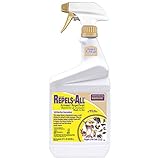
- Keep animals out of your yard and garden with Repels-All Animal Repellent from Bonide! This special formula naturally deters a wide variety of garden pests including deer, mice, chipmunks, squirrels and more!
- Natural ingredients act as a deterrent that will not cause harm to critters. The strong scent will cause animals to naturally avoid your garden and go elsewhere.
- When used as directed, this product is safe for use around people and pets. Biodegradable ingredients will not harm ornamentals, edibles or other desirable plants in your yard and garden.
- Apply animal repellent concentrate wherever you need protection. This product can be safely applied to structures, plants and more. Use as a perimeter around your yard to prevent new pests from arriving.
- This product arrives conveniently ready-to-use in a spray nozzle bottle! Apply directly to foliage, bulbs, seeds or hard surfaces of structures to protect and control. For best results, follow the detailed instructions on the product label.
There is no evidence in the reviewed guidance supporting claims that vinegar “always” repels skunks, that a particular homemade ratio is guaranteed to work, or that stronger vinegar is necessarily better. A strong-smelling product may still fail if the property offers easy food, water, or shelter.
If you try vinegar, treat the result as temporary and uncertain. Reapply only as appropriate for the surface and product label, and switch to attractant reduction and exclusion if skunk activity continues.
A cautious way to try vinegar
If you want to test this home remedy, use ordinary distilled white vinegar, not concentrated horticultural acetic acid. Do not improvise a “stronger” formula or assume that more acetic acid will produce better wildlife control.
Quick wins for a faster PC:
Scan for outdated or missing drivers - takes under a minuteDriver Scan →Clear out junk files and repair common Windows errorsFree Scan →- Keep people and animals away. Bring pets indoors or secure them before applying anything. Do not approach or corner a skunk.
- Use a dedicated sprayer. A clean spray bottle or hand sprayer is preferable to a container that has held another chemical.
- Apply sparingly to a suitable nonliving perimeter surface. Examples might include an appropriate hardscape edge or a removable object near a travel route. Do not indiscriminately spray soil, plants, edible crops, or waterways.
- Protect vegetation. Vinegar can injure plants. Do not spray desirable plants or garden crops unless the product label specifically permits that use and gives directions for the crop and application site.
- Reassess quickly. If tracks, digging, or sightings continue, stop relying on vinegar and address the conditions attracting the skunk.
Do not mix vinegar with bleach, ammonia, peroxide, or other cleaners. Combining household chemicals can create dangerous fumes or other hazards and does not create a proven wildlife deterrent.
Important concentration and product warning
Do not substitute concentrated horticultural vinegar for household vinegar. The U.S. Environmental Protection Agency warns that acetic acid above 8 percent can cause severe burns and eye damage and can act as a potent herbicide. The fact that vinegar may appear as an inert ingredient in some minimum-risk pesticide products does not mean vinegar is a minimum-risk active ingredient or a registered skunk repellent. Always follow the product label.
Rank #2

- GETS RID OF and KEEPS AWAY Skunks, Raccoons, Rats, Mice, Deer and Nuisance Pests & Critters From Unwanted Areas Such As Homes, Yards, Flowers, Gardens and Landscaping
- INDOOR/OUTDOOR USE - For Indoor Applications Use Inside Your Home, Garages, Sheds & Patios. For Outdoor Applications Use Sidewalks, Driveways, Outdoor Plants & Gardens
- EASY TO USE JUST SHAKE AND SPRAY - Comes With Comfortable Heavy Duty Trigger Sprayer That Is Guaranteed Not To Clog. Covers Approximately 1,000 square feet. Product is Waterproof and Lasts Up To 90 Days and Doesn't Wash Off Easily
- NATURAL INGREDIENTS - DOESN'T STINK! Peppermint Scent.
Remove what is attracting skunks
Odor-based remedies are easily defeated when a property provides food or a safe den. Before applying any repellent, work through this checklist:
- Secure garbage. Use containers with tight-fitting lids and keep them closed. If possible, store them in a garage, shed, or other protected location until collection day.
- Bring pet food indoors. Remove bowls and leftovers immediately if pets must be fed outside.
- Clean up fallen fruit and food scraps. Secure compost and do not leave food waste accessible overnight.
- Reduce shelter. Clear debris piles and manage wood piles. Inspect the space beneath porches, sheds, slabs, garages, and crawl spaces for openings.
- Investigate lawn digging. Skunks often forage for grubs and other insects in wet soil. Repeated shallow holes may point to overwatering or insect-rich turf rather than an attempt to eat garden plants.
These steps are more durable than repeatedly refreshing a smell because they address the resources that make the property attractive.
Try humane, noncontact deterrence
When a skunk is using a yard but is not inside a structure or actively caring for young, mild harassment may encourage it to move elsewhere. Humane World for Animals describes making a dark, quiet den less attractive with light or noise, provided the skunk is not close by when the disturbance begins.
A motion-activated sprinkler is another reasonable noncontact option for a repeated travel route. Position it to protect the problem area without spraying pedestrians, pets, or neighbors. It is a practical deterrence tool, not a guarantee: detection range, coverage, water supply, and the animal’s route all affect results.
Never use predator-urine products. Humane World for Animals warns that these products are produced under inhumane conditions and are unnecessary for effective skunk deterrence.
Rank #3
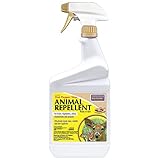
- Hot Pepper Wax Spray effectively repels critters like deer, rabbits and squirrels from your yard and garden.
- Made from Cayenne Pepper and capsaicin, Bonide Hot Pepper Wax Spray is an irritant that produces a burning sensation that makes your garden unattractive to pests.
- This product is a ready-to-use liquid spray that features an easy to use spray bottle nozzle. To use, apply until foliage is completely wet and repeat application for 2-3 weeks, or until control is established.
- This long-lasting formula can be applied directly to vegetables, ornamentals, structures and more! Hot Pepper Wax Spray will keep animals away from your flowers and out of your yard & garden.
- Hot Pepper Wax Spray for plants deters deer, rabbits and squirrels from your lawn, garden and any outdoor space. Keep animals away
Check whether a den is occupied before sealing it
Sealing an opening without checking it first can trap a skunk—or dependent young—inside. Before installing a permanent barrier, loosely fill the entrance with soil, leaves, straw, or crumpled paper. Do not pack the material tightly. Watch for signs that it has been pushed aside.
Do these 3 things before closing this tab:
1Clear out junk files and repair common Windows errors2Fix the driver behind crashes, sound loss and screen glitches3Repair Windows errors before they cause bigger problemsIn ordinary conditions, observe the opening for two or three nights. In winter, wait longer because skunks may remain inactive for extended periods. If the material is disturbed and the entrance is reopened, assume the den is occupied and do not seal it.
A one-way door may be appropriate in some situations, but only when dependent young will not be trapped inside. Humane World for Animals recommends leaving the door in place for several nights to a week to confirm that the skunk has exited before permanently closing the opening. This is a situation where a wildlife professional can prevent costly and inhumane mistakes.
Use physical exclusion for a lasting solution
Exclusion is the most durable way to stop skunks from returning beneath a building or structure. Inspect the foundation, porch, shed, garage, crawl-space vents, and utility penetrations, then repair openings with materials a skunk cannot easily dig or push through.
Common construction materials include:
- welded wire or heavy hardware cloth for screened openings and barriers;
- sheet metal for vulnerable edges and structural gaps; and
- concrete or another durable foundation repair where appropriate.
Where digging is likely, extend the barrier roughly 1 to 2 feet below ground, consistent with the site and local recommendations. Penn State Extension describes burying fencing approximately 11⁄2 to 2 feet; Colorado State University Extension gives a one- to two-foot range. An L-shaped footer can provide additional protection: continue the welded wire or similar mesh down into the soil and/or outward from the fence line so the skunk cannot simply dig beneath the vertical face.
Recommended Free Tools
Rank #4
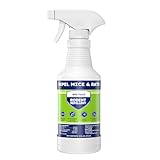
- Safe for People and Pets: Formulated with natural ingredients for use around children and pets when used as directed, providing a solution without harsh chemicals
- Long-Lasting Coverage: Extra-strength formula provides coverage for up to 90 days with one application, offering extended protection against unwanted rodents
- High-Quality Ingredients: Features high-grade peppermint essential oil, locally sourced from quality farms, known for its strong scent that rodents find unpleasant
- Versatile Indoor and Outdoor Use: Suitable for use in homes, garages, gardens, and vehicles, providing coverage for approximately 1,000 square feet per application
- Easy Application: Comes with a user-friendly trigger sprayer that prevents clogging, simply shake the bottle and spray desired areas to create a dry-spray barrier with a fresh peppermint scent
Before backfilling, remove loose debris from the perimeter and close smaller gaps with durable materials. Avoid leaving a narrow trench or soft soil that creates a new digging opportunity. If the opening is part of a foundation, crawl space, or retaining structure, make sure the repair does not compromise drainage, ventilation, or access needed for future maintenance.
What not to use against skunks
- Mothballs: Do not scatter them around gardens, fence lines, crawl spaces, or wildlife areas. EPA says pesticide products must be used according to their labels and notes that mothballs are not approved for general animal-repellent use in those locations.
- Concentrated acetic acid: Horticultural vinegar above 8 percent can burn skin and eyes and damage plants. It is not a safe “stronger vinegar” solution.
- Chemical mixtures: Never combine vinegar with bleach, ammonia, peroxide, or other cleaners.
- Trapping, poisoning, or fumigation: These methods can injure people, pets, and wildlife and may be regulated locally. Do not handle a skunk or attempt to fumigate an occupied den.
- Blind sealing: Closing a hole before confirming that it is empty can trap an animal or young underground or beneath a structure.
Skunk safety: spray, pets, and rabies
Skunks are generally nocturnal and nonaggressive, but they may spray when threatened. Keep your distance, avoid cornering the animal, and bring dogs, cats, and other pets indoors or keep them securely restrained.
Rabies is a serious reason to avoid contact. The Centers for Disease Control and Prevention identifies skunks among wildlife species that can carry rabies. Keep dogs, cats, and ferrets current on rabies vaccination. After a bite, scratch, or other possible exposure, wash the wound immediately with soap and water and contact a healthcare professional or public-health authority promptly.
Do not approach a skunk that appears sick, unusually aggressive, confused, active at an unusual time, or otherwise abnormal. Contact local animal control or a qualified wildlife professional instead.
What’s actually slowing this PC down?
Pick the symptom - the matching free tool is one click away.
When to call a wildlife professional
Contact a humane wildlife-control professional or local nuisance-wildlife service when:
Best Value

- STRONG REPELLER - This unique blend of ingredients causes mild irritation to animal's nasal passages. When an animal touches, tastes, or smells Repels-All Animal Repellent, it triggers the natural instinct to escape/avoid and the pest leaves.
- ANIMALS AFFECTED - Our granules repel species of squirrel, deer, rabbit, chipmunk, mouse, skunk, rat, beaver, raccoon, porcupine, bird, groundhog and more rodent species.
- DEFEND YOUR GARDEN AND HOME - Apply around homes, gardens, garbage cans, barns, swimming pools, sheds, woodpiles, decks, patios, and campsites to prevent grazing, chewing, gnawing, nibbling and browsing damage to plants and property.
- BIODEGRADABLE - Repels-All granules are biodegradable and will not harm animals, lawns, gardens, flowerbeds, or other desirable plants when used as directed.
- an occupied den is beneath a porch, slab, shed, garage, or home;
- dependent young may be present;
- you cannot safely determine whether an opening is occupied;
- skunks repeatedly return despite removing food and shelter;
- the animal is sick, injured, unusually active, or behaving abnormally; or
- the required exclusion work involves a foundation, crawl space, roof, utility opening, or other area you cannot safely access.
Ask what method will be used, how the professional checks for young, how entry points will be repaired, and whether the service is licensed or permitted where required. Local rules and humane-wildlife practices vary by location.
The practical answer
You can try ordinary distilled white vinegar sparingly around a suitable nonliving perimeter surface, but there is no validated homemade vinegar recipe that reliably repels skunks. Do not spray crops, use concentrated acetic acid, scatter mothballs, or mix cleaning chemicals.
For results that last, secure garbage and pet food, remove fallen fruit and accessible compost, reduce denning sites, address wet lawn conditions, use noncontact deterrence when appropriate, and confirm that a den is empty before sealing it. A properly installed buried or L-shaped wire barrier is far more dependable than a scent that fades.
Frequently Asked Questions
Does vinegar really repel skunks?
No. Ordinary vinegar may smell unpleasant and can help reduce skunk odor, but authoritative guidance does not establish it as a reliable skunk-exclusion treatment or provide a proven spray ratio.
How can I tell whether a skunk is living under my porch?
Do not seal the opening immediately. Loosely plug it with leaves, straw, soil, or crumpled paper and observe it for at least two or three nights; wait longer in winter. If the plug is disturbed, the den may be occupied.
Can I fence skunks out of my garden?
Yes, but only with appropriate precautions. Use a buried or L-shaped welded-wire or hardware-cloth barrier, and do not install it until you have confirmed that the den is empty. A professional is advisable if young may be present.
Are mothballs safe for keeping skunks away?
No. EPA says mothballs are not approved for general animal-repellent use around fence lines, gardens, crawl spaces, or wildlife. Use attractant reduction and physical exclusion instead.
The Bottom Line
Bottom line: Vinegar is, at most, an unproven temporary experiment and may help with odor rather than exclusion. Skunk control works best when you remove attractants and install humane physical barriers after confirming that no skunk or dependent young is inside.
Quick Recap
Product prices and availability are accurate as of the date/time indicated and are subject to change. Any price and availability information displayed on Amazon at the time of purchase will apply.




