To get rid of sugar ants, remove food and moisture, wipe away their scent trails, place a slow-acting bait beside active trails, and seal entry points after activity declines. “Sugar ants” is a consumer term rather than a precise species diagnosis, so no single product is guaranteed to work in every home.
“Sugar ants” is a common household term, not a precise species identification. Several small ants are attracted to sweets, grease, pet food, moisture, and other materials found around a home. The most reliable approach is not to kill only the ants you can see. Remove competing food and water, erase their trails, place a slow-acting bait where workers are active, then seal entry points after the bait has had time to work.
As an Amazon Associate I earn from qualifying purchases.
These five methods work best as a sequence. A single spray or homemade remedy may provide a short-term reduction without eliminating the colony.
1. Remove food and water sources
Start by making the area less attractive to foraging ants. Inspect kitchens, pantries, utility rooms, bathrooms, garages, and construction or renovation areas where materials may have disturbed an existing route.
#1 Best Overall

- ATTRACTS & KILLS: Liquid ant bait stations provide comprehensive ant control, targeting common household ants including acrobat, crazy, ghost, little black, odorous house, and pavement ants throughout your home with effective ant traps indoor
- KILLS THE QUEEN & THE ENTIRE COLONY: TERRO liquid ant bait contains borax-based formula that attracts worker ants to consume and carry back to the colony, effectively eliminating both visible ants and hidden nest populations for complete indoor ant killer control
- EFFECTIVE ELIMINATION: Fast-acting ant killer bait reduces ant activity within days as worker ants transport the liquid ant bait back to their colony, providing widespread elimination of entire ant populations with these sugar ant traps indoor
- EASY TO USE: Ready-to-use ant bait stations require no setup and can be placed along baseboards, corners, countertops, and other high-traffic areas where ants commonly travel for optimal ant trap indoor pest control results
- LONG-LASTING: Once placed, the bait continues to work for weeks, as long as ants continue to visit the stations. Complete control may take up to 2-4 weeks, depending on the infestation size
- Wipe up sugar, syrup, juice, grease, and other spills immediately.
- Clean crumbs from counters, floors, cabinet corners, and beneath appliances.
- Keep sugar, honey, cereal, pet food, and other attractive foods in tightly sealed containers.
- Rinse cans, bottles, jars, and other recyclable containers before placing them in the recycling bin.
- Empty indoor trash regularly and clean residue from the bottom of the bin.
- Do not leave pet food or water bowls out overnight if ants are visiting them.
- Repair dripping faucets, leaking supply lines, damp cabinets, and other moisture sources.
This is more than routine housekeeping. Accessible food can compete with bait and make ants less likely to accept or carry the bait back to the nest. Moisture can also sustain activity, especially around sinks, bathrooms, windows, crawl-space access points, and plumbing penetrations.
2. Erase the ant trail with soapy water
Ants leave a chemical trail that helps other workers follow the same route. Wipe the visible trail with soapy water, paying particular attention to the path, the point where ants enter, and nearby counters, cabinet faces, windowsills, baseboards, or floors.
- Remove food, dishes, and other objects from the area.
- Wipe the entire visible route with soapy water.
- Clean the likely entry point and the surrounding surface, not just the ants themselves.
- Repeat when a trail reappears.
Trail cleaning can temporarily stop recruitment, but it does not remove the nest. Use it alongside baiting and exclusion. If you wipe a trail and immediately spray insecticide everywhere, you may kill foragers without solving the colony problem and may make bait less attractive or inaccessible.
3. Use slow-acting bait to reach the colony
For many small, sweet-feeding household ants, slow-acting liquid bait is the central treatment step. Workers feed on the bait and carry it to nestmates, including ants that never appear in the room. By contrast, killing visible workers with contact spray usually removes only the ants currently outside the nest.
Rank #2

- Kills ants where they hide for up to 3 months
- After ants feed on the bait, they return to the colony and transfer the bait to the queen and the others, thereby killing the entire colony
- Use indoors in corners, along walls and near entry points
- Child-resistant
Place a household ant bait beside an active trail or close to the entry point, exactly as the current product label directs. A liquid ant bait station labeled for the target pest may be a practical option; one example is TERRO’s T300 format. The official product information describes six liquid stations containing 5.40% sodium tetraborate decahydrate and lists several common sweet-eating household ants among the intended targets. That does not make it appropriate for every ant species or every location, so check the current label before buying or placing it.
Do not expect an immediate disappearance. Depending on the ant, nest location, colony size, competing food, and product, activity may take days or weeks to decline. During active feeding:
- Do not spray insecticide on or near the bait.
- Do not repeatedly move or disturb the station unless the label instructs you to do so.
- Keep competing sweets, grease, crumbs, and pet food away from the bait.
- Replace or replenish bait only according to the product directions.
- Observe whether ants are feeding on it; if they ignore it, the species may prefer a different formulation or the bait may be unsuitable.
Liquid sugar bait is a logical first choice for sweet-feeding ants, but ant food preferences vary. A gel or another labeled formulation may be more appropriate in some situations, particularly for approved crack-and-crevice applications. Neither liquid bait nor gel is automatically best for every infestation.
4. Seal entry points and correct the conditions attracting ants
Once bait has had reasonable time to work and ant activity is declining, inspect where the trail begins. Common access points include:
Rank #3

- Kills the Colony: Controls ants at all feeding cycles. Designed to attract foraging ants* which carry the bait back to the nest, triggering a ripple effect that wipes out the queen and the entire colony. *Excluding harvester, carpenter and pharaoh ants
- Targets Multiple Ant Species: Kills 11 types of ants*, including sugar and protein loving ants. Whether you're dealing with seasonal or year-round invasions, this ant bait delivers dependable protection. *Excluding harvester, carpenter and pharaoh ants
- Quick, Lasting Results: Formulated with Fipronil, a powerful and fast-acting ingredient that begins working within hours. The solid and gel baits contain a blend of foods that ants* find attractive. *Excluding harvester, carpenter and pharaoh ants
- Monitor & Control with Ease: The transparent station lets you monitor bait levels for easy replacement, while the compact design fits tight spaces like under sinks and behind appliances. Suitable for indoor or outdoor, just place where ants trail
- Mess-Free Setup: Includes four convenient, ready-to-use bait stations with snap-off tabs for quick setup—no scissors needed. The easy way to solve your ant problem, with no vapors,or odors—great for kitchens, bedrooms, and living areas
- Gaps around exterior doors and windows
- Cracks at baseboards and wall-floor joints
- Openings around pipes, cables, vents, and other utilities
- Gaps behind or beneath cabinets
- Openings around sinks and plumbing fixtures
- Damaged weatherstripping or poorly fitting doors and windows
Seal suitable cracks and gaps with an appropriate caulk or sealant, improve door and window fit where practical, and repair leaks or damp materials. Outside, trim vegetation that contacts the building and look for routes from soil, mulch, firewood, or plants to siding and openings.
Do not use exclusion as a substitute for colony-directed baiting when ants are already active indoors. Sealing an opening too early can redirect ants into another room or force them farther into a wall. Bait first when appropriate, then close the route once activity has reduced.
5. Know when to call a pest professional
DIY control is reasonable for a small, clearly identified trail. Escalate to a licensed pest-management professional when:
Recommended Free Tools
- Ants continue after sanitation, baiting, and reasonable exclusion.
- New trails appear in multiple rooms or return repeatedly.
- You cannot identify what kind of ant you are dealing with.
- Ants are emerging from a wall, ceiling, cabinet void, crawl space, or another inaccessible location.
- There are signs of leaks, damp framing, rot, or another possible structural or moisture problem.
- The infestation is extensive, or children, pets, or sensitive occupants make pesticide placement difficult.
Ask the provider to identify the ant and its source, investigate moisture or building conditions, and explain the proposed treatment before pesticides are applied. A professional inspection is particularly useful when a recurring trail may be entering through concealed construction gaps rather than an easily sealed surface opening.
Rank #4

- TOTAL COLONY CONTROL: Outdoor ant killer intercepts ant colonies at their source, providing long-lasting pest control to intercept and target ants before they enter your home
- KILLS THE QUEEN & THE ENTIRE COLONY: TERRO liquid ant bait contains proven active ingredients that worker ants carry back to the colony, effectively targeting both visible ants and those hiding out of sight for complete elimination of the entire nest
- EASY TO USE: Ready-to-use ant killer outdoor stakes feature simple insert-and-cut design - just push into ground where ant activity is detected, cut the tab, and let the weatherproof ant bait stations work effectively through various weather conditions
- EFFORTLESS MONITORING: See-through bait station allows easy monitoring of ant activity and bait consumption, helping you determine when replacement ant traps are needed for continuous outdoor ant bait effectiveness against ant infestations
- AMPLE COVERAGE: 12-pack of outdoor liquid ant bait stakes designed to attract and eliminate common household ants including acrobat, crazy, ghost, and little black ants before they enter your home for comprehensive ant control
What not to do
- Do not assume every “sugar ant” is the same species. The common name does not establish an identification or guarantee that one bait will work.
- Do not spray over active bait. Repellent or contact insecticide can kill workers before they carry bait to the colony.
- Do not expect bait to work instantly. Colony control often takes longer than killing visible ants.
- Do not treat borax or “natural” products as automatically safe. Follow the label just as you would with any pesticide.
- Do not apply a pesticide in an unapproved location or at an improvised dose. Use only products labeled for the target pest and site.
Child, pet, and household safety
Read the label before use. Pesticide labels are legally enforceable. Keep bait stations and pesticide containers inaccessible to children and pets, use products only as directed, store them in their original containers, and follow the label’s disposal instructions. Do not place bait where a child or pet can reach it. “Low toxicity,” “natural,” and “borax-based” are not substitutes for reading the current label.
A practical order of operations
- Find the active trail and look for food, water, and moisture sources.
- Clean spills, crumbs, pet-food residue, trash, and recycling.
- Wipe the trail and nearby surfaces with soapy water.
- Place a slow-acting bait labeled for household ants beside the active route.
- Leave the bait undisturbed and avoid spraying around it while ants are feeding.
- After activity declines, seal the entry gap and correct leaks or damp conditions.
- Call a licensed professional if the ants persist, the nest is inaccessible, or the building may have a moisture or structural issue.
For most minor indoor trails, this sequence is more dependable than repeatedly killing visible ants. It addresses the immediate attractants, the trail, the colony, and the building opening that allows reinvasion—without promising that every infestation can be solved by one product.
Frequently Asked Questions
What are sugar ants?
“Sugar ants” is a broad common name for small ants attracted to sweet foods; it does not identify one particular species. Different species can respond differently to bait and control methods.
Quick wins for a faster PC:
Repair Windows errors before they cause bigger problemsFix Now →Fix the driver behind crashes, sound loss and screen glitchesFind Drivers →How long does ant bait take to work?
Depending on species and conditions, activity may decline over days or weeks after bait is placed. Do not spray or disturb active bait unless the product label says to do so.
Best Value
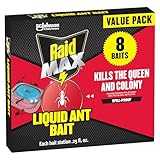
- Raid Max Liquid Ant Bait kills listed ants where they breed (excluding fire ants, carpenter ants, harvest ants and pharaoh ants)
- Pre-filled liquid ant killer that is both convenient and ready-to-use
- After ants consume the liquid from the ant bait , they return to the colony and transfer the bait to the queen, other worker ants and larvae, killing the colony
- For indoor and outdoor use
- Ant bait station that controls listed ants around your home: Foraging Ants, Sweet-feeding Ants, Pavement Ants, Moisture Ants, Little Black Ants, Argentine Ants, Crazy Ants, Acrobat Ants, Bigheaded Ants, Cornfield Ants, Ghost Ants, Odorous House Ants
Should I spray ants around bait stations?
Yes. Spray can kill foraging workers before they carry bait to the colony and can make the bait less effective. Keep insecticide away from active bait placements.
When should I call a pest-control professional?
Call a licensed professional if ants persist after sanitation, baiting, and exclusion; appear to come from a wall or other inaccessible space; are difficult to identify; or are associated with leaks, dampness, rot, or suspected structural damage.
The Bottom Line
Bottom line: Remove food and moisture, wipe ant trails with soapy water, use a properly labeled slow-acting bait without spraying around it, and seal entry points after activity declines. Persistent, concealed, misidentified, or moisture-related infestations warrant a licensed pest-control inspection.
Quick Recap
Product prices and availability are accurate as of the date/time indicated and are subject to change. Any price and availability information displayed on Amazon at the time of purchase will apply.




