What’s actually slowing this PC down?
Pick the symptom - the matching free tool is one click away.
Hard maple usually means sugar maple; soft maple is a commercial category that commonly includes red and silver maple. The most reliable visual approach is to combine the supplier’s information with sapwood color, pith flecks, growth rings, end-grain rays, and approximate density. No single clue—including whiteness, weight, or a casual hardness test—can prove the species.
What “hard maple” and “soft maple” mean
Hard maple usually means sugar maple (Acer saccharum), also called rock maple. Soft maple is not one species: it is a lumber-trade category that commonly includes red maple (Acer rubrum) and silver maple (Acer saccharinum). Depending on the region and supplier, the category may also include bigleaf maple, boxelder, or other maple species.
| # | Preview | Product | Price | |
|---|---|---|---|---|
| 1 |

|
WOOD! Identifying and Using Hundreds of Woods Worldwide | $37.99 | Buy on Amazon |
| 2 |

|
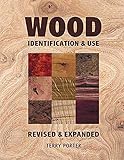
Wood Identification & Use | $25.20 | Buy on Amazon |
| 3 |

|
Identifying Wood: Accurate Results with Simple Tools | $26.11 | Buy on Amazon |
| 4 |
|
Wood ID & Use Handbook | $18.63 | Buy on Amazon |
| 5 |
|
Wood Identification & Use: Identification & Use | $11.99 | Buy on Amazon |
As an Amazon Associate I earn from qualifying purchases.
That distinction is important because no single visual test proves what a board is. Color, grain, pith flecks, end-grain rays, and weight can all provide evidence, but growing conditions, moisture content, milling, heartwood or sapwood selection, and finishing can make the clues overlap. For an ordinary woodworking decision, combine several clues. For a defensible species identification, use reliable provenance or submit a properly prepared sample for anatomical examination.
| Clue | Hard maple, typically sugar maple | Soft maple, commonly red or silver maple |
|---|---|---|
| Commercial meaning | Usually a species: sugar maple | A group of species; the exact mix varies by supplier and region |
| Average density at about 12% moisture content | About 44 lb/ft3 | Red maple about 38 lb/ft3; silver maple about 33 lb/ft3 |
| Typical appearance | Pale and relatively uniform, especially selected white sapwood | Often more color variation, with gray, reddish, brown, or darker heartwood possible |
| Sapwood | Often whiter and more uniform | Often wider, but commonly less starkly white |
| Pith flecks | Less common on average | More common, although not guaranteed |
| End grain | Often shows a mixture of very narrow and noticeably wider rays | Silver maple often has a narrower, more uniform range of ray widths |
| Relative hardness | Harder and denser on average | Softer and lighter on average, but still suitable for many woodworking projects |
The density figures are averages, not identification cutoffs. A dense soft-maple board can overlap a lighter hard-maple board, especially if the pieces have different moisture contents or came from different growing conditions.
#1 Best Overall
- Brand New in box. The product ships with all relevant accessories
How to identify a maple board: a practical workflow
1. Start with the supplier and source
Before examining the board, record what it was sold as, where it came from, and whether the seller can provide the scientific species. “Hard maple” is normally a useful indication of sugar maple. “Soft maple” is less specific because it may describe red maple, silver maple, or another commercially accepted maple.
Ask the supplier:
- What is the scientific species or species mix?
- Is the lumber kiln-dried, air-dried, or still green?
- Is it selected white sapwood, ordinary mixed-color stock, or mostly heartwood?
- What grade is it?
- Was it sourced from a particular region?
A documented species and moisture condition are more useful than an assumption based only on whiteness. Treat the trade label as evidence, not as laboratory proof.
2. Compare sapwood and heartwood
Hard maple is often pale, light-colored, and fairly uniform, particularly when sold as white hard maple or selected sapwood. Soft maple commonly has wider sapwood and may show more gray, reddish, brown, or otherwise darker heartwood variation. Soft-maple sapwood is often not as white as hard-maple sapwood.
Recommended Free Tools
However, color is only a supporting clue. Light exposure and oxidation can change wood color. Mineral streaks, stains, finishes, and the choice of sapwood versus heartwood can make two boards from the same species look very different. Conversely, selected soft-maple sapwood can look remarkably similar to hard maple.
Do not identify a white board as hard maple automatically. If the surface is finished, compare an unfinished area or a freshly cut section as well; a clear coat, oil, stain, or age-related darkening can distort the surface color.
Rank #2
3. Look for pith flecks
Pith flecks are small, dark marks caused by insect injury while the tree was growing. They are usually more common in soft maple, so numerous pith flecks increase the likelihood that a board is soft maple.
This is not a pass-or-fail test. Hard maple can contain occasional defects, and a soft-maple board may have few or no visible pith flecks. Their presence is useful supporting evidence; their absence does not prove hard maple.
Do these 3 things before closing this tab:
1Fix the driver behind crashes, sound loss and screen glitches2Clear out junk files and repair common Windows errors3Scan for outdated or missing drivers - takes under a minute4. Inspect the end grain
End grain can reveal anatomical features that are hidden on a broad face. For the clearest comparison, examine a clean, freshly cut end. Plane or sand it finely enough to remove torn fibers, then use strong, even light. A 10x hand lens can make the ray structure easier to see than the unaided eye.
Under magnification, hard maple often shows two noticeably different ray widths: very narrow rays mixed with wider, more conspicuous rays. Silver maple tends to show a narrower and more uniform range of ray widths. This distinction is useful with practice, but it is not a guaranteed species test, particularly when the end grain is rough, dirty, coated, or viewed at an unsuitable angle.
Also look at the growth rings. Hard maple often has relatively close growth rings, while soft maple may show wider spacing. Ring width varies greatly with site conditions and growth rate, though, so this should be combined with ray structure, color, pith flecks, and source information rather than used alone.
Rank #3
5. Use weight as a screening clue
When two samples have similar dimensions and moisture content, the hard-maple sample will often feel heavier. Average density at approximately 12% moisture content is about 44 lb/ft3 for sugar maple, compared with about 38 lb/ft3 for red maple and 33 lb/ft3 for silver maple.
Free tools Windows power users keep installed
One-click scans. No signup required.
For a useful comparison, weigh pieces of known or carefully measured volume and compare lumber at a similar moisture condition. A wet board can weigh substantially more than a dry board, and a small offcut may not represent the average density of the whole board. Grain orientation, defects, growth rate, and natural variation also affect the result.
Weight can support an identification, but a heavy board is not automatically hard maple. Nor is a light board automatically soft maple.
6. Treat casual hardness tests cautiously
Sugar maple is harder on average than red or silver maple, and a controlled hardness test can help compare known samples. A casual screwdriver, fingernail, or dropped-object test is not reliable species identification. It is affected by the exact location tested, surface condition, grain direction, moisture, and the force used.
Do not damage a finished cabinet, floor, or piece of furniture based on an informal dent test. If hardness matters for a construction or woodworking decision, rely on documented species, a controlled test, or a sample from an inconspicuous area.
PC Slower Than It Used to Be?
A free scan shows the junk files, broken settings and background clutter dragging Windows down - then fixes them in one click.Free scan · Windows 10 & 11Outdated Drivers Are Slowing You Down
One free scan finds every outdated or missing driver and matches the right update for your exact hardware.Free scan · exact hardware matchRank #4
How hard maple and soft maple differ in use
“Soft” does not mean that soft maple is fragile or unsuitable for construction. The terms describe relative density, hardness, and strength within the maple group. Soft maple is used for furniture and many other woodworking applications, and better grades may substitute for hard maple where the required wear resistance, stiffness, appearance, and price make that appropriate.
The choice should therefore follow the application rather than the label alone. If a component must resist significant abrasion or repeated impact, the higher average hardness of sugar maple may matter. If the project allows a lighter, generally easier-to-machine maple and the appearance is acceptable, soft maple may be a practical alternative. Grade, moisture condition, defects, dimensions, and the design loads still matter.
For a construction purchase, ask for the species and grade in writing when those details affect pricing, durability, matching, or performance. A seller’s “maple” label is not sufficiently precise if the specification requires hard maple or a particular soft-maple species.
Identifying a living maple tree
If the tree is still standing, leaves, bark, twigs, and fruit can provide more useful species information than the color of a finished board. This identifies the tree, not necessarily a separate piece of lumber, unless you know the board came from that tree.
Sugar maple
- Leaves generally have five pointed lobes.
- The spaces between the lobes, called sinuses, are commonly U-shaped.
- Young bark is light gray and tightly held.
- Older bark develops long, narrow plates.
Red maple
- Leaves more often have sharper, V-shaped sinuses.
- Leaf margins are commonly serrated.
- Bark changes substantially with age and can become darker, rougher, and more platy.
Tree identification should be based on several features, not one leaf photograph. It also should not be used to claim that an unrelated board is sugar maple simply because sugar maple grows nearby.
Independent reader supportYour contribution helps us test, update, and keep practical guides available for everyone.Common identification mistakes
- “All soft maple is red maple.” Soft maple is a commercial grouping, not a single species.
- “All hard maple is the same thing everywhere.” The term usually means sugar maple, but trade usage and regional species mixes should be confirmed with the supplier.
- “The whitest board is hard maple.” Selected soft-maple sapwood and finished wood can look very white.
- “The heaviest board is hard maple.” Density overlaps, and moisture content can overwhelm the difference.
- “Bird’s-eye, curly, tiger, or fiddle-back figure proves the species.” These figures are not exclusive to hard maple; some can occur in soft maple and other woods.
- “A photograph is enough.” A photo rarely shows moisture, density, end-grain anatomy, or provenance well enough for definitive identification.
- “No pith flecks means hard maple.” Pith flecks are more common in soft maple, but they are not present in every soft-maple board.
When visual identification is not enough
For a quick woodworking estimate, combine supplier context, color, pith flecks, end grain, and approximate weight. That can often answer practical questions such as whether an unidentified board is more likely to be hard maple or soft maple.
Use a higher standard when the identification affects an appraisal, species-specific contract, restoration, structural decision, or significant purchase. A professional wood-identification service examines cellular structure and generally identifies wood to the genus level rather than promising the exact species in every case. Submit an adequately sized, representative sample rather than a tiny shaving or a painted surface.
For sample preparation, a fine saw, sharp knife, or small chisel may be appropriate, but these tools are not necessary for ordinary visual comparison. Follow the receiving laboratory’s instructions, and do not cut into valuable furniture or installed flooring without permission and a clear plan for repair.
A useful reference is WOOD! Identifying and Using Hundreds of Woods Worldwide by Eric Meier. This illustrated wood-identification book covers hard maple, red maple, silver maple, and related lookalikes. It is most valuable when used to compare clean end-grain images and anatomical descriptions, not as a substitute for professional confirmation.
A quick decision guide
- Need a practical estimate? Start with the supplier’s label and region, then combine color, sapwood, pith flecks, end grain, and relative weight.
- Buying or pricing lumber? Request the scientific species, grade, moisture condition, and whether the stock is selected sapwood.
- Matching a floor, cabinet, or antique? Compare the unfinished end grain and the finished face separately. Surface finish and age can alter color substantially.
- Need defensible confirmation? Preserve provenance and submit a properly prepared sample to a qualified wood-anatomy laboratory or professional identification service.
Frequently Asked Questions
Is hard maple the same as sugar maple?
Hard maple usually refers to sugar maple, or Acer saccharum. Soft maple is not one species; it commonly includes red maple and silver maple, with the exact species mix varying by region and supplier.
Can you identify hard maple by its white color?
No. A white board may be selected soft-maple sapwood, or its color may have been affected by finishing, light, oxidation, or mineral streaks. Color should be combined with supplier information, end-grain features, pith flecks, and relative density.
Is soft maple weaker than hard maple?
Soft maple is generally lighter and less hard than sugar maple, but the ranges overlap. Moisture content, growing conditions, board size, and natural variation make casual weighing or denting unreliable as a species test.
What is the most reliable way to identify maple lumber?
For a practical estimate, compare supplier context, color, pith flecks, end grain, and approximate weight. For an appraisal, contract, restoration, or other high-consequence decision, use documented provenance or submit a properly prepared sample for professional anatomical identification.
The Bottom Line
Hard maple usually means sugar maple and is denser, harder, and often more uniform than soft maple. Soft maple is a group—commonly red or silver maple—and often shows more color variation and pith flecks. Use several clues together, especially supplier information and clean end-grain anatomy. Color, weight, grain figure, or a casual dent test alone cannot prove the species.
Quick Recap
Product prices and availability are accurate as of the date/time indicated and are subject to change. Any price and availability information displayed on Amazon at the time of purchase will apply.