Some links on this page are affiliate links: if you buy through them we may earn a commission, at no extra cost to you.
The best first hydroponic garden for most beginners is a small deep-water culture (DWC) system growing lettuce or herbs. It is inexpensive, easy to inspect, and does not require an irrigation timer. If you want the simplest possible passive setup, choose a wick system instead. Ebb and flow, nutrient film technique (NFT), and drip systems offer more control or better support for larger crops, but they also add pumps, tubing, timers, channels, or irrigation lines.
Hydroponics grows plants without garden soil. The roots receive water and dissolved mineral nutrients directly, while a growing medium, container, or structure supports the plant. Your system can be indoors or outdoors, but every successful setup still needs four essentials: suitable plants, nutrient solution, root support, and adequate light.
As an Amazon Associate I earn from qualifying purchases.
Do these 3 things before closing this tab:
1Fix the driver behind crashes, sound loss and screen glitches2Clear out junk files and repair common Windows errors3Scan for outdated or missing drivers - takes under a minuteWhat you need before choosing a method
A hydroponic garden is not simply a plant sitting in water. You need a way to deliver oxygen and nutrients to the roots, prevent excessive light from reaching the solution, and provide enough light for the leaves. A basic system normally includes:
- A reservoir or container for water and nutrients
- Hydroponic fertilizer formulated for the crop
- A net pot, growing container, channel, tray, or other root-support structure
- A suitable soilless growing medium, where the method requires one
- A light source: appropriate sunlight outdoors or a grow light indoors
- Some way to monitor water level and, ideally, pH; an EC meter is useful for tracking nutrient concentration
Choose food-safe materials wherever a container, tube, or fitting contacts the plant or nutrient solution. An opaque reservoir is preferable because excluding light helps discourage algae.
#1 Best Overall

- 5 TIMES FASTER GROW: Hydroponics growing system with a 24-watt LED light that simulates the effects of sunlight which promotes photosynthesis for plants. Even if leave indoor garden in a corner, plants also germinate and grow quickly. Harvest fresh all year round. indoor herb garden LED panel can be adjusted to 180°maximum and 21 inches maximum height. Compact design fits on any windowsill or kitchen shelf, gardening gifts for women
- QUIET CIRCULATE MOISTURE PUMP: Herb garden with super quiet (less than 20 dB) water pump that circulation every 30 minutes, not only provides oxygen for better root development but also saves energy and is eco-friendly. Indoor gardening system designed with a water shortage indicator, don't worry about forgetting to water
- EXTREMELY EASY SETUP & USE: indoor herb garden with grow light comes with everything you need for gardening plant grower germination kit to start your garden. Designed with a smart timer that provides your plants with 16 hours of light to promote photosynthesis and turns the LED lights off the other eight hours to let the plants rest. Just pop in fertilizer and water and the hydroponic growing system will work its own magic. A perfect indoor herb garden starter kit
- DETACHABLE, HEIGHT ADJUSTABLE: Smart garden LED light pole is detachable to avoid short circuits while cleaning plant lights for indoor growing, and also height adjustable, you can set it at the optimal height for small starts and then raise it as they grow. Hydroponics 3L large water tank with a viewing window allows for easy monitoring of both water levels and plant root growth
- GROW ANYTHING, ANYTIME: You can grow any fruit or vegetable locally without the need to wait for the perfect season. The satisfaction of watching a plant and nurturing a veggie until it's ripe is a great feeling. Best of all, this user-friendly indoor garden kit is suitable for beginners and experienced gardeners alike. Also make a fun gift for all ages from cooks to kids who want to get started growing their own plants
If you are buying rather than assembling every component, a hydroponic garden starter kit can simplify the first build. Check that it actually includes the items your chosen method needs; a small wick kit, for example, will not necessarily include the air pump required for DWC.
The five main hydroponic methods
1. Wick system: the simplest passive option
A wick system uses capillary action rather than a pump. One or more absorbent wicks draw nutrient solution from a reservoir into a porous growing medium around the roots. Oklahoma State University describes the wick system as the simplest type of hydroponic system.
Outdated Drivers Are Slowing You Down
One free scan finds every outdated or missing driver and matches the right update for your exact hardware.Free scan · exact hardware matchPC Slower Than It Used to Be?
A free scan shows the junk files, broken settings and background clutter dragging Windows down - then fixes them in one click.Free scan · Windows 10 & 11Best for: Small herbs, leafy greens, demonstrations, and growers who want a quiet setup with no pump or electrical irrigation components.
Basic equipment
- A covered reservoir or container
- One or more absorbent wicks
- A growing container or pot
- A porous medium such as coco coir or another suitable soilless medium
- hydroponic nutrients and an appropriate light source
The medium must hold the plant upright while retaining moisture and enough air space for the roots. Position the wick so it remains in contact with the nutrient solution and the growing medium, but do not assume that a saturated medium is automatically well oxygenated.
Advantages and limitations
Wick systems are inexpensive, quiet, and mechanically simple. There is little to break, and they are useful for learning how roots, water, nutrients, and light work together.
The trade-off is limited delivery capacity. Capillary action may not keep up with a large, fast-growing, thirsty, or fruiting plant. A wick system also gives you less control over root-zone oxygen and irrigation than an active system. Use it for small, low-demand plants rather than treating it as a universal design.
2. Deep-water culture (DWC): the best first active system
In deep-water culture, plants sit above a reservoir and their roots grow down into the nutrient solution. A typical active DWC system uses an air pump, airline tubing, and an airstone to oxygenate the water.
Best for: Lettuce, basil and other herbs, kale, mustard greens, and similar leafy crops. Larger plants can also be grown when the container, lighting, nutrients, and support structure are sized for them.
How to build a small DWC system
- Choose a clean, food-safe reservoir. A five-gallon bucket or plastic storage bin can work if it is clean, food-safe, and sturdy enough to support the lid and plants. Use an opaque container or block light from reaching the solution.
- Make plant sites in the lid. Fit net pots into the openings. The pots should be supported securely without allowing large gaps through which light can enter.
- Start seedlings in an appropriate medium. The medium should support the plant in the net pot while allowing roots to grow through it into the reservoir.
- Mix the nutrient solution according to the fertilizer label. Do not guess at concentration or use ordinary garden fertilizer unless it is specifically suitable for hydroponic use.
- Install aeration. Connect the air pump to the airstone with airline tubing and place the airstone in the reservoir. The bubbles keep the solution moving and supply oxygen to submerged roots.
- Add plants and provide light. Keep the lid closed around the net pots and position the light according to the plant’s needs.
- Watch the water level as roots develop. Do not keep the entire root mass submerged. Allow part of the roots to remain exposed to air while maintaining enough solution for the developing roots.
Why beginners usually succeed with DWC
DWC is inexpensive, easy to expand, and easy to inspect. You can see the water level, check the roots, and manage one reservoir without programming flood cycles or balancing multiple emitters. The basic reservoir does not require an irrigation timer.
Its main risks come from the reservoir itself. Nutrient solution can warm, lose oxygen, grow algae, or develop biofilms if the container is exposed to light and sanitation or aeration is neglected. Check the water level and plant condition regularly, keep the air pump operating as intended, and clean the system between crops.
Quick wins for a faster PC:
Repair Windows errors before they cause bigger problemsFix Now →Scan for outdated or missing drivers - takes under a minuteDriver Scan →Clear out junk files and repair common Windows errorsFree Scan →Rank #2

- High planting efficiency: Start an indoor herb garden with the Ahopegarden hydroponic growing system, which includes a water reservoir, an overhead LED grow light, and a circulation system that keeps the water fresh. The hydroponic setup and lighting systems allow plants to grow up to faster and healthier in controlled conditions. Simply add plant seeds, water, and nutrients to the reservoir and watch the plants grow
- 10 Pods & Water Level Window Included: This indoor grow kit with light offers 10 growing stations, The reservoir of our hydroponic vegetable garden kit also comes with a see-through water level window, so with a glance, you can see how much water is in the reservoir and when it’s time to add more water.
- 2 Growing Modes for Veggies, Fruits & Flowers: The grow light of our indoor veggie growing system features full-spectrum lamps that simulate natural sunlight, and you can choose between two different light modes (vegetables or flowers&fruit ) based on what you are growing, blue for vegetables and red for fruit. Flowers also can be grown in this indoor plant grower system
- 14.5 Inches Height-Adjustable Light Post: Our harvest indoor hydroponic garden comes with a bright grow light that can be adjusted in height as the plants grow taller. Plants can grow up to 14.5 inches. What’s more, the grow lights are on a 16-hours-on, 8-hours-off timer. So with an automatic light timer, there’s really not much you have to do to get your plants growing u
- Perfect for Family: This indoor garden plant germination kit is an ideal for families on Christmas and other holidays. This hydroponic growing kit is small enough to fit on the counter in the kitchen, which allows users to grow and vegetables indoors year-round. This indoor planter with grow light really is the that keeps on giving
For a first build, the most useful accessories are hydroponic nutrients, an air pump and airstone, net pots, a suitable medium, and a way to check pH.
3. Ebb and flow, or flood and drain
An ebb-and-flow system periodically floods a growing tray with nutrient solution and then drains it back into a reservoir. A submerged pump and timer control the flood cycles. Between floods, the drained medium and roots receive air.
Best for: Seedlings, herbs, leafy greens, and nursery-style plants grown in a tray containing a coarse, well-draining medium.
Basic equipment
- A reservoir
- A grow tray or flood table
- Coarse, well-draining growing medium
- A submersible pump
- Supply tubing
- A drain or overflow fitting
- A timer
The tray must drain reliably. Before adding plants, test the system repeatedly: confirm that the pump fills the tray, the timer stops the pump as expected, the drain returns water to the reservoir, and the overflow prevents an accidental flood.
Advantages and limitations
Flooding supplies nutrients and moisture, while draining helps restore air around the roots. One reservoir can serve multiple plants, and the system can be homemade or purchased as a prefabricated unit.
There are more failure points than in a wick system or basic DWC. A failed pump can leave plants dry; a failed timer can alter the flood schedule; and a blocked drain or incorrectly fitted overflow can flood the growing area. A medium that holds too much water or drains too slowly can also deprive roots of air.
4. Nutrient film technique (NFT)
NFT sends a shallow, continuous film of nutrient solution through slightly sloped channels. Roots rest in or near the channel, and the solution flows from a reservoir through the channels before returning to it.
Best for: Short-lived leafy greens and herbs, especially where space is limited or a vertical arrangement is desirable. Suitable crops include lettuce, arugula, kale, mustard greens, spinach, and Swiss chard.
What’s actually slowing this PC down?
Pick the symptom - the matching free tool is one click away.
Basic equipment
- A reservoir
- A pump
- shallow channels or troughs
- Supply tubing
- Plant sites or net pots
- A return line
Install the channels with a slight slope and make sure the flow is uninterrupted. Test every channel for leaks, blockages, and a reliable return to the reservoir before planting.
Rank #3

- HARVEST ANYWHERE & ANYTIME: Indoor gardening system efficient 24-watt LED grow light simulates optimal effects of sunlight. Technology optimized for plants, herbs garden LED panel can be adjusted to 180° maximum and 21inches maximum height, plants receive more illumination area, maximize photosynthesis, and also more convenient for pruning branch leaves. Hydroponics plants grow 5 times faster than soil, harvest fresh all year round
- QUIET SMART WATERING SYSTEM: Hydroponic growing system water pump with premium quality ceramic core technology, super quiet (less than 20 dB). The pump runs every 30 minutes, not only efficient and energy-saving but also provides oxygen for better root development. Indoor herb garden designed with the water shortage indicator, don't worry about forgetting to water
- SUPER EASY SETUP AND USE: Hydroponics comes with everything you need gardening plant grower germination kit (seeds not included) to start your garden. Automatically controls light on 24-hour cycle (16 hours on, 8 hours off). You just select the veggies or flowers & fruits light mode by buttons on the control panel, plants growth can be observed
- DETACHABLE, EASY TO CLEAN: LED light pole is detachable to avoid short circuits while cleaning plant lights for indoor growing, and the light pole is adjustable in height to accommodate changing hydroponics growing system indoor gardening plants. 3L large water tank with a see-through water level window, allowing one to know at a glance and add water in time
- INDOOR GARDENING GIFTS AND FUN: Indoor herb grower garden starter kit comes with 8 pods perfect for you to grow herbs and vegs such as basil, lettuce, rosemary, and tomatoes. These are not only cool things but also healthy and fresh! Ideal gift for family or gardeners and plant lovers, great experiment using hydroponic with your kids
Advantages and limitations
NFT uses water and space efficiently and makes centralized nutrient management possible. Multiple channels can be arranged in a compact or vertical garden.
The system is less forgiving of interruptions. The roots depend on a thin moving film, so a blocked line, failed pump, or power outage can stop water and nutrient delivery quickly. NFT is also a poor match for plants with large, heavy root systems that can obstruct the channel. Keep an eye on roots and channels as plants mature.
5. Drip system
A drip system delivers nutrient solution through narrow lines or emitters to the base of individual plants. A pump and timer regulate irrigation. Excess solution may either return to the reservoir in a recirculating design or leave the system in a run-to-waste design.
Recommended Free Tools
Best for: Larger, long-lived, or vining plants grown in a substantial medium such as coco coir. Tomatoes, strawberries, peppers, and other plants that need physical root support are better candidates for drip or bucket-style systems than for a small wick setup.
Basic equipment
- A reservoir
- A pump and timer
- Distribution tubing
- drip lines or emitters
- Containers or grow bags
- A suitable growing medium
- Support or trellising for plants that become heavy or vine
Each plant can receive a controlled volume of solution, but the schedule must match the crop, medium, temperature, humidity, and overall design. Inspect emitters and narrow tubing regularly because clogs can leave one plant dry while the rest continue receiving water.
Advantages and limitations
Drip irrigation supports large plants and lets you adjust delivery to individual containers. It is often more practical than DWC for long-season crops whose roots, stems, and fruit eventually require substantial physical support.
The system is more demanding to tune. Emitters can clog, pumps and timers can fail, and recirculating reservoirs require monitoring of nutrient concentration and water quality. Do not assume that one irrigation schedule will work equally well for seedlings, mature vines, and plants in different media.
Which hydroponic method should you choose?
| Your priority | Best starting choice | Why |
|---|---|---|
| No pump or electrical irrigation | Wick | Passive, quiet, and suitable for small, low-demand plants. |
| First active system | DWC | Simple construction, easy observation, low cost, and no irrigation timer in the basic design. |
| Seedlings or a shared tray | Ebb and flow | Periodic flooding and draining can wet several plants while restoring air between cycles. |
| Many leafy greens in limited or vertical space | NFT | Channels use space efficiently and can share centralized nutrient management. |
| Large or vining plants | Drip or bucket-style | Individual irrigation and a substantial medium provide better support for long-lived crops. |
Start with one crop family and one reservoir. Crops with substantially different nutrient requirements should not automatically share the same solution; tomatoes and lettuce, for example, may be better managed separately.
Choose beginner-friendly crops
Lettuce, basil and other herbs, kale, mustard greens, arugula, Swiss chard, and similar leafy greens are good first crops because they are relatively compact and perform well in small-scale systems.
Rank #4

- Avant-garde and modern design: Our smart hydroponics growing system kit merges urban farming innovation with minimalist aesthetics. Crafted from durable ABS, its 17" space-saving profile features an LCD touchscreen for one-touch control, perfect for tech-savvy gardeners or as a unique gift. The integrated full-spectrum panel adapts seamlessly to indoor hydroponics, blending functionality with sleek vertical farming appeal.
- Optimal plant growth: Designed for organic vegetables and herbs, this indoor herb garden maximizes yields in compact settings. Its 17" adjustable height prevents light burn on tall stems, ideal for balcony hydroponics or cultivating tomatoes and basil. The science-backed structure supports healthy eating by accelerating photosynthesis, ensuring nutrient-rich harvests even in limited spaces.
- Versatile planting options: Grow 12 fresh herbs or leafy greens simultaneously with our kitchen hydroponics grow system kit. Dual light modes mimic natural sunlight for year-round indoor garden benefits, whether nurturing peppermint or strawberries. This soilless farming solution thrives in apartments, offices.
- Lighting duration control: Engineered using hydroponic farming research, our system’s 22-hour mode boosts flowering by 50% and enhances fruit sweetness—perfect for organic gardening enthusiasts. The mimic ideal greenhouse conditions, turning your living room into a high-efficiency plant growth lab for faster, tastier yields.
- Efficient water management: Our Growth Lamp is equipped with a water tank with a capacity of up to 5L, providing ample space for root development. herb garden built-in ultra-quiet water pump runs in a 30-minute cycle to ensure fresh water circulation, keeping the water fresh without disturbing your peace. Maximum energy savings. Easy harvest of fresh fruits making healthy eating accessible even for beginners or busy urban dwellers.
Tomatoes, cucumbers, peppers, and strawberries can also be grown hydroponically, particularly outdoors in summer. Indoors, however, they may require considerably more supplemental light, heat management, space, trellising, root support, and nutrient management than a beginner expects. Do not choose a large fruiting crop for a tiny countertop system simply because it can technically be grown hydroponically.
Water, nutrients, pH, and EC
Use a complete hydroponic fertilizer
Follow the fertilizer label for the crop and system. Plants need more than nitrogen, phosphorus, and potassium: hydroponic nutrition also involves calcium, magnesium, sulfur, iron, manganese, boron, copper, zinc, molybdenum, chlorine, and nickel. Concentration depends on the product, crop, plant age, water source, and system, so a universal mixing rate would be misleading.
Check source water before mixing
Measure or otherwise understand your source water before establishing a routine. Softened water may contain excess salts, while hard water may contribute substantial calcium and magnesium. Those starting conditions affect both nutrient balance and pH management.
Check pH before and after adding nutrients. Small-scale guidance gives a broad target around pH 5.4–7, while other hydroponic guidance recommends a more acidic general range around pH 5.0–6.0. These are not contradictory instructions for every crop: the appropriate target depends on the plant, fertilizer, water, and system. Use the range specified for your crop and nutrient product rather than treating one number as universal.
A hydroponic pH meter or reliable test strips make routine checks easier. Calibrate a meter as directed by its manufacturer and avoid making large corrections without rechecking the result.
Use EC as a concentration check
Electrical conductivity (EC) estimates the concentration of dissolved nutrients. It is useful for noticing whether a reservoir is becoming unusually concentrated as water evaporates or unusually dilute after topping up. An EC/TDS meter can support consistent monitoring, but the correct EC depends on the crop, growth stage, fertilizer, and source water.
The Tool Desk
Outbyte PC Repair FREEClear out junk files and repair common Windows errorsFree Scan →Outbyte Driver Updater FREEFix the driver behind crashes, sound loss and screen glitchesFind Drivers →Top off reservoirs with nutrient-containing water at the label concentration when appropriate, check pH regularly, and change the solution according to the crop and system. Leaving a solution unchanged may be more defensible for a short-lived crop such as lettuce than for long-season tomatoes or continuously harvested herbs, which place different demands on the reservoir over time.
Lighting and location
Outdoor systems need an appropriate amount of sunlight and protection from unsuitable weather and temperature extremes. Indoor gardens usually need supplemental lighting. For hydroponic lettuce and herbs, approximately 12–14 hours of light per day is a typical recommendation. A timer helps keep the photoperiod consistent.
A common indoor starting distance for lettuce and herbs is roughly 6–12 inches from the light, but distance alone does not determine whether plants receive enough light. Fixture output, coverage, heat, plant response, and the manufacturer’s instructions matter more than a fixed measurement. Raise or lower the light based on plant growth and signs of stress.
White or balanced lights are broadly suitable. Blue or mixed light works well for seedlings and leafy greens, while flowering and fruiting crops may have different lighting requirements. Indoor tomatoes, cucumbers, peppers, and strawberries can require substantially more light and space than leafy greens.
Free tools Windows power users keep installed
One-click scans. No signup required.
For an indoor build, an LED grow light for herbs paired with a timer is a task-specific purchase, not an optional decoration: insufficient light is one of the fastest ways to produce weak, disappointing plants.
Independent reader supportYour contribution helps us test, update, and keep practical guides available for everyone.Food safety and sanitation
Hydroponic systems use warm, nutrient-rich water, which can support rapid microbial growth. Biofilms may harbor organisms that can transfer to produce, so cleanliness is part of growing—not an occasional cosmetic task.
Best Value
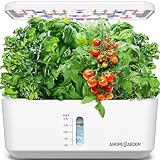
- High planting efficiency: Start an indoor herb garden with the Ahopegarden hydroponic growing system, which includes a water reservoir, an overhead LED grow light, and a circulation system that keeps the water fresh. The hydroponic setup and lighting systems allow plants to grow up to faster and healthier in controlled conditions. Simply add plant seeds, water, and nutrients to the reservoir and watch the plants grow
- 10 Pods & Water Level Window Included: This indoor grow kit with light offers 10 growing stations, The reservoir of our hydroponic vegetable garden kit also comes with a see-through water level window, so with a glance, you can see how much water is in the reservoir and when it’s time to add more water.
- 2 Growing Modes for Veggies, Fruits & Flowers: The grow light of our indoor veggie growing system features full-spectrum lamps that simulate natural sunlight, and you can choose between two different light modes (vegetables or flowers&fruit ) based on what you are growing, blue for vegetables and red for fruit. Flowers also can be grown in this indoor plant grower system
- 14.5 Inches Height-Adjustable Light Post: Our harvest indoor hydroponic garden comes with a bright grow light that can be adjusted in height as the plants grow taller. Plants can grow up to 15.3 inches. What is more, the grow lights are on a 16-hours-on, 8-hours-off timer. So with an automatic light timer, there is really not much you have to do to get your plants growing
- Enjoy the fun of family planting: This indoor garden plant germination kit is an ideal hydroponic growing system for families. hydroponic herb growing kit is small enough to fit on the counter in the kitchen, which allows users to grow herbs and vegetables indoors year-round
- Wash your hands before planting, changing water, measuring pH, or adding nutrients.
- Use food-safe components that contact the solution or edible plants.
- Protect the reservoir and channels from sunlight.
- Between plantings, remove plant debris, wash surfaces with detergent and water, and then apply an appropriate sanitizer according to its directions.
- Clean reservoirs, trays, tubing, pumps, net pots, tools, and other reusable components.
- Prevent splashes from reservoir water onto edible plant parts.
- Harvest with clean hands and sanitized tools.
- Rinse produce thoroughly before eating.
Keep the solution from becoming stagnant and excessively warm. In DWC, effective aeration is particularly important because submerged roots depend on oxygenated solution.
A practical beginner DWC build
For a first project, grow one type of lettuce or herbs in a small DWC reservoir. Gather:
- A clean, food-safe opaque bucket or tote with a lid
- Net pots and a suitable growing medium
- Seeds or healthy seedlings
- Hydroponic nutrients
- An air pump, airline tubing, and airstone
- A pH test method or hydroponic pH meter
- An EC/TDS meter if you want to track nutrient concentration more precisely
- A timer-controlled LED grow light if the garden is indoors
- Clean and rinse the reservoir, lid, net pots, pump, tubing, and airstone.
- Fit the net pots into the lid and block unnecessary openings so light cannot reach the solution.
- Start seedlings in the chosen medium and place them in the net pots once they can be supported securely.
- Mix the nutrient solution according to the product label and check pH after mixing.
- Place the airstone in the reservoir and run the air pump.
- Set up the light and timer for the crop. For lettuce and herbs, begin with a consistent 12–14-hour photoperiod and observe the plants rather than relying only on the fixture’s claimed distance.
- Monitor water level, pH, plant condition, and—if available—EC. As roots grow, leave part of the root mass exposed to air.
- Remove dead leaves and spilled growing medium promptly.
- After the crop, empty, wash, sanitize, rinse as appropriate for the sanitizer, and dry the system before starting again.
A starter kit may be convenient, but do not assume a specific kit has been tested or that every kit suits every crop. Match its reservoir size, aeration, lighting, and plant support to the plants you intend to grow.
Common failure modes and fixes
| Problem | Likely causes | What to check |
|---|---|---|
| Plants wilt even though the reservoir is full | Insufficient oxygen, excessive heat, damaged roots, or unsuitable water level | Confirm the air pump and airstone work, check solution temperature and root condition, and avoid submerging the entire root mass. |
| Green growth appears in the reservoir | Light reaching nutrient solution | Use an opaque reservoir, seal gaps around net pots, and clean and sanitize the system between crops. |
| One plant is dry while others look healthy | Clogged drip emitter or line, poor channel flow, or uneven irrigation | Inspect the affected line, emitter, pump, and channel slope; test flow before replanting. |
| Flood tray overflows or does not drain | Blocked drain, incorrectly fitted overflow, pump mismatch, or poor tray level | Stop the pump, inspect fittings, and run several water-only tests before using nutrient solution. |
| Leaf growth is weak indoors | Insufficient light, unsuitable photoperiod, poor nutrition, or unsuitable temperature | Check light coverage and timer settings, then review pH, EC, nutrient mixing, and room conditions. |
| pH or EC changes unexpectedly | Evaporation, plant uptake, topping up, source-water chemistry, or nutrient imbalance | Measure consistently, record readings, check source water, and follow the crop and fertilizer guidance rather than making blind corrections. |
What hydroponics can—and cannot—guarantee
Hydroponics can make productive growing possible where outdoor soil or garden space is limited. It may support year-round production, efficient water use, and compact layouts. Those are possibilities, not guarantees. Results depend on light, crop choice, temperature, nutrient management, sanitation, water quality, and system design.
The method should solve a specific growing problem. Choose a wick system for low-demand plants with minimal equipment, DWC for the simplest active leafy-green garden, ebb and flow for tray-based periodic irrigation, NFT for compact leafy-green channels, and drip for larger plants that need individual irrigation and substantial root support.
Frequently Asked Questions
What is the easiest hydroponic system for a beginner?
Deep-water culture (DWC) is usually the easiest first active system for lettuce, herbs, and other leafy greens. It needs a reservoir, net pots, growing medium, nutrients, and an air pump with an airstone, but no irrigation timer in its basic form. A wick system is simpler still if you want a passive setup with no pump.
Can I grow hydroponic plants without a grow light?
Yes, if the garden receives suitable outdoor sunlight or strong natural light. Indoor hydroponic gardens usually need supplemental lighting. Lettuce and herbs commonly receive about 12–14 hours of light daily, but fixture output, coverage, plant response, and heat matter more than a fixed light distance.
What pH should a hydroponic garden have?
There is no single correct value for every crop and nutrient product. Small-scale guidance gives a broad range around pH 5.4–7, while general hydroponic recommendations often use approximately pH 5.0–6.0. Follow crop- and fertilizer-specific guidance, and check the water before and after adding nutrients.
Should tomatoes and lettuce share one hydroponic reservoir?
Not necessarily. Crops with substantially different nutrient requirements are often better kept in separate reservoirs. Lettuce and tomatoes are a common example of plants that may need different nutrient management.
How often should hydroponic nutrient solution be changed?
The appropriate schedule depends on the crop, system, reservoir size, water quality, and how long the crop remains in production. A short-lived lettuce crop places different demands on a reservoir than long-season tomatoes or continuously harvested herbs. Monitor water level, pH, EC, plant condition, and cleanliness rather than relying on one universal interval.
What’s actually slowing this PC down?
Pick the symptom - the matching free tool is one click away.
The Bottom Line
For most first-time growers, build a small, opaque DWC system for lettuce or herbs, aerate the nutrient solution, provide consistent light, monitor pH and water level, and clean the equipment between crops. Move to wick, ebb and flow, NFT, or drip when your crop, space, or desired level of automation justifies the additional trade-offs.
Quick Recap
Product prices and availability are accurate as of the date/time indicated and are subject to change. Any price and availability information displayed on Amazon at the time of purchase will apply.

