Some links on this page are affiliate links: if you buy through them we may earn a commission, at no extra cost to you.
The correct household-freezer target is 0°F (-18°C) or below. Verify that temperature with an appliance thermometer rather than relying only on the control setting, package food to limit air exposure, keep the door closed as much as practical, and use storage-time charts as quality guidance—not automatic safety deadlines. Food that was properly handled and remains continuously frozen at 0°F or below can remain microbiologically safe indefinitely, although its texture, flavor, and appearance will gradually deteriorate.
The four rules that matter most
- Hold the freezer at 0°F (-18°C) or below. The same target applies to the freezer compartment of a combination refrigerator-freezer.
- Measure the actual temperature. A freezer control setting is not a reliable substitute for an appliance thermometer.
- Protect food from air and moisture loss. Use freezer-rated packaging, remove excess air, seal packages closely, and label them with their contents and date.
- Thaw food safely. Use the refrigerator, cold water, or the microwave—not a kitchen counter, garage, porch, car, or outdoor location.
These principles align with guidance from USDA FSIS, the FDA, FoodSafety.gov, and ENERGY STAR. They apply whether you have a compact upright freezer, a chest freezer in a utility room, or the freezer section of a kitchen refrigerator.
As an Amazon Associate I earn from qualifying purchases.
What temperature should a freezer be?
Set and maintain a household freezer at 0°F (-18°C) or colder. A freezer does not need to be set dramatically colder for ordinary home food storage, but it must not spend extended periods above the target.
The refrigerator portion of a combination appliance should be held at 40°F (4°C) or below. These are separate targets: a refrigerator that feels cold is not necessarily cold enough in its freezer compartment, and a freezer control dial marked with numbers may not indicate the temperature inside the food.
#1 Best Overall

- Convenient and practical: Our refrigerator thermometer is suitable for traditional refrigerators, freezers, insulated boxes, etc. It has a large dial with clear blue and red area indication on the surface of the fridge thermometer, making it easier for you to read the temperature.
- Temperature range: Refrigerator thermometer measures refrigerator temperature -20~80 °F/ -30~30 °C, meeting different requirements and requirements. Clear reading scale helps you measure food stored at the right temperature to ensure safety.
- Exquisite design: The refrigerator thermometer uses a hook type panel design, can be hung or placed in different positions, reading instant with the mechanical design, no need for battery power with our freezer thermometer.
- Durable material: Refrigerator thermometer is made of stainless steel material, not easy to break, long life, durable, easy to clean structure and glass protective lens, very suitable for use in the refrigerator and freezer.
- What you get: 2 x PECULA Refrigerator Thermometer and our 7*24 friendly customer service for peace of mind.
For an independent check, use a freezer thermometer or appliance thermometer designed to remain in the compartment. Place it according to the thermometer and appliance instructions, allow the reading to stabilize, and check it periodically. It is especially useful after installing a freezer, moving it, experiencing a power interruption, seeing unusual frost, or suspecting a damaged door seal. A model that records or indicates the highest temperature reached can be particularly helpful during an outage.
Safety and quality are not the same thing
At 0°F or below, freezing stops the growth of most microorganisms that cause food to spoil or make people ill. It does not sterilize food, reverse unsafe handling, or improve food that was already spoiled before freezing. If food was properly handled before freezing and remains continuously frozen, it can remain safe from a microbiological standpoint indefinitely. The practical limit is usually quality.
The Tool Desk
Outbyte PC Repair FREEClear out junk files and repair common Windows errorsFree Scan →Outbyte Driver Updater FREEFix the driver behind crashes, sound loss and screen glitchesFind Drivers →FoodSafety.gov storage tables therefore describe periods for best quality. They are not universal discard deadlines. Texture and flavor may suffer sooner when food was initially old, poorly wrapped, exposed to temperature swings, or repeatedly handled.
| Food category | Approximate period for best quality | How to interpret it |
|---|---|---|
| Ground meat | 3–4 months | Quality guidance when continuously frozen at 0°F or below |
| Beef, veal, lamb, and pork steaks, chops, and roasts | 4–12 months | The range varies by food and packaging; it is not a single safety cutoff |
| Poultry pieces | About 9 months | Best-quality guidance, assuming proper handling and continuous freezing |
| Whole chicken or turkey | About 12 months | Best-quality guidance rather than an automatic discard date |
When a chart gives a range, use the shorter end when packaging is less protective or temperature control has been inconsistent. Date packages so you can use older food first instead of treating the freezer as a permanent archive.
What freezer burn means
Freezer burn is dry, leathery, pale, or discolored damage caused by air reaching the food surface. It is primarily a quality problem. Food that has freezer burn may still be safe if it stayed properly frozen, although the affected portions can have poor texture and flavor. You can trim badly affected areas after thawing when appropriate, or use the food in a preparation where the texture matters less.
Freezer burn becomes more likely when food is loosely wrapped, when a package contains a large air pocket, or when repeated temperature fluctuation allows moisture to move from the food to the package interior. Protective overwrap—such as freezer paper, freezer-weight plastic bags, or aluminum foil over porous packaging—helps limit that exposure. USDA guidance supports the underlying principle: keep air away from the food surface.
How to package food for the freezer
Packaging should be made for freezing, sealed as closely as practical, and suitable for the type of food being stored. Ordinary thin storage bags are not necessarily equivalent to freezer bags; the relevant feature is a freezer-rated barrier that helps reduce air and moisture transfer.
Rank #2

- Measuring range:-20~80℉
- Material type:Stainless steel
- Installation mode:Wide base and integrated hook allow it to be placed anywhere in the refrigerator
- Easy to read
- Great quality
For everyday storage, freezer-safe storage bags work well for many solid foods and portioned meals. Press out excess air before sealing without crushing delicate food. Use airtight freezer containers when a rigid shape protects the food, prevents crushing, makes stacking easier, or contains a liquid. Containers and bags should be closed according to their manufacturer’s instructions.
- Portion food before freezing. Divide bulk purchases and prepared meals into amounts that can be used at one time. This reduces the need to thaw a large package and then refreeze unused portions.
- Leave room for expansion. Liquids expand as they freeze. Do not fill a container to the lid; follow the container maker’s headspace guidance and leave enough room for expansion without forcing the seal open.
- Remove unnecessary air. Flatten a bag carefully, press air toward the opening, and seal it securely. Flat portions also stack efficiently and are convenient to thaw.
- Use rigid protection for fragile items. A container or protective overwrap can keep bread, baked goods, delicate produce, and prepared food from being crushed or exposed to air.
- Label every package. Record the contents and freezing date, especially when the package will become opaque or when several foods look similar.
- Freeze while the food is still in good condition. Freezing preserves the food at its current state; it does not restore freshness that has already been lost.
Freezer labels and a freezer-safe marker make date-based organization easier, but any labeling method that remains legible at low temperatures can work. Write the food name, date, and—when useful—the number of portions or reheating instructions.
Is a vacuum sealer worth using?
A vacuum sealer for freezer meals can be useful for bulk shoppers and people portioning meat, fish, or prepared food. Reducing air exposure can help limit freezer burn, particularly during longer storage. It is an optional packaging tool, not a substitute for keeping the freezer at 0°F or below and following safe food-handling practices.
Follow the sealer and packaging manufacturer’s instructions, and use food-specific guidance for moist foods, cooked foods, and foods that need additional protection. A vacuum-sealed package is not automatically safe to store at room temperature, and sealing cannot make previously mishandled food safe.
Safe ways to thaw frozen food
USDA identifies three safe thawing methods:
- In the refrigerator. This is the most controlled method and is usually the best choice for large cuts, whole poultry, and foods that need time to thaw gradually. Put the package in a container or on a tray to contain drips.
- In cold water. Keep the food in packaging that will not leak or allow water to contact the food. Maintain cold conditions, monitor the water, and cook the food promptly after it thaws.
- In the microwave. Use this method only when you will cook the food immediately afterward. Parts of the food may begin warming or cooking during microwave thawing.
Do not thaw food on the kitchen counter, in a garage, basement, car, outdoors, or on a porch. Do not use a dishwasher or a plastic garbage bag as a thawing method. The outside of a package can enter the temperature danger zone while the center remains frozen; a frozen middle does not make prolonged warm exposure safe.
If food has been thawed safely in the refrigerator and has remained cold, it may often be refrozen, although quality can decline. Food thawed in cold water or in a microwave should be cooked promptly rather than left sitting for later. When a package has been exposed to uncertain conditions, use the applicable USDA or FoodSafety.gov guidance for that specific food instead of relying on smell or taste.
What to do when the power goes out
Keep the freezer door closed as much as possible. Opening it releases the cold air that protects the food and makes the eventual temperature harder to assess. Do not move food outdoors to a snowbank or another improvised location: outdoor temperatures, sunlight, animals, and changing conditions can allow food to thaw even when the weather appears cold.
After power returns, inspect the food rather than automatically discarding everything or automatically refreezing everything:
- Ice crystals remain: Food can generally be refrozen or used, though texture and quality may be worse.
- The food is 40°F or below: It may generally be refrozen or used, again with possible quality loss.
- The food was above 40°F for more than two hours: Evaluate it using the food-specific emergency chart from FoodSafety.gov. Many perishable foods should be discarded.
- The food’s history is unknown: Do not taste it to test safety. When the temperature and exposure time cannot be established, a cautious decision is appropriate.
The emergency guidance is not identical for every frozen product. Frozen meat, poultry, seafood, soups, and many egg products may generally be refrozen when they still contain ice crystals and feel refrigerator-cold. Ice cream and frozen yogurt are listed for discard even when ice crystals remain because their specific texture and safety considerations differ. Use the emergency chart for the actual food in question.
Rank #3

- ENSURE FOOD SAFETY: Thermometer displays true appliance temperature instantly to ensure safe food storage
- EXTREME TEMPERATURE RANGE: Thermometer reads between 20° and 80° degrees Fahrenheit/30° and 30° degrees Celsius
- PERFECT FOR ANY KITCHEN: Designed for professional kitchens with the highest quality in mind; Works perfectly in any home or commercial space
- MULTIPURPOSE: This product is perfect for traditional refrigerators, mini fridges, freezers, coolers, or any cooling based food appliance
- DURABLE: Stainless steel construction and shatter proof lens makes this thermometer highly dependable
A thermometer that shows the highest temperature reached can make this decision easier, but it cannot reconstruct an outage history that was never recorded. If the freezer repeatedly warms, alarms, or softens food after power is restored, investigate the appliance rather than repeatedly resetting the control.
Chest freezer or upright freezer?
Neither configuration is universally better. The right choice depends on available floor area, how much food you store, how often you open the freezer, how easily you can bend or reach into it, and whether you are willing to maintain an inventory system.
Crashes, No Sound, or Screen Glitches?
Random freezes, missing sound and display glitches usually trace back to one bad driver. Find and replace yours safely.Free scan · under a minuteWindows Errors? Fix Them Before They Spread
Repair common Windows errors and clear accumulated junk for a smoother, more stable PC - no reinstall needed.Free scan · no reinstall| Feature | Chest freezer | Upright freezer |
|---|---|---|
| Door and cold-air loss | Top-opening design generally lets less cold air escape when opened, so it is typically more energy efficient | Front-opening design can release more cold air during access |
| Organization | Usually needs baskets, dividers, labels, and an inventory list; food at the bottom can be difficult to reach | Shelves, drawers, and vertical compartments make contents easier to see and retrieve |
| Space | Requires floor area for its footprint and clearance above the opening | Uses vertical space and often fits more naturally beside other appliances |
| Best fit | Bulk purchasing, long-term storage, and households that open the freezer less often | Frequent access, shelf visibility, and users who prefer not to lift or dig through contents |
Chest freezers can be especially useful for bulk storage, but their efficiency advantage does not remove the need for organization. Baskets for small packages, labeled zones, and a simple list attached nearby can prevent forgotten food. An upright freezer is often the more practical choice when visibility and accessibility matter more than maximum cold retention during each opening.
Manual defrost or automatic defrost?
Manual-defrost freezers generally use less energy, but they require maintenance. ENERGY STAR states that manual-defrost models use about half the energy of automatic-defrost models. That advantage is meaningful only if the owner actually removes accumulated frost.
Do not allow frost to build beyond approximately one-quarter inch if you want to preserve the manual-defrost energy advantage. Excess frost takes up usable space and makes the freezer work harder. Defrost according to the owner’s manual, including its instructions for moving food, managing meltwater, choosing safe scraping tools, and restarting the appliance.
Automatic-defrost models trade some energy efficiency for convenience. They periodically manage frost without requiring the owner to empty and manually defrost the compartment, but they may use more energy and expose food to periodic temperature changes. This is a convenience-versus-energy decision, not a universal ranking of food quality.
What’s actually slowing this PC down?
Pick the symptom - the matching free tool is one click away.
How to choose and size a freezer
Start with the space and the household’s actual storage pattern rather than buying the largest model that will fit. A larger appliance generally uses more energy, and unused capacity still costs money to operate. Measure not only the installation space but also the delivery path, including doors, stairs, corners, and the final clearance needed to open the lid or door.
Rank #4
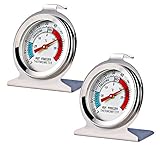
- Measuring range:-20~80℉
- Material type:Stainless steel
- Installation mode:Wide base and integrated hook allow it to be placed anywhere in the refrigerator
- Easy to read
- Please give the thermometer enough reaction time
When comparing appliances, compare models of similar type and capacity using the yellow EnergyGuide label. The Federal Trade Commission says the label estimates energy use and operating cost so shoppers can compare similar covered appliances, including freezers. Do not compare the annual-use number of a large chest freezer directly with that of a small upright and conclude that one design is inherently cheaper; capacity and configuration matter.
ENERGY STAR-certified freezers are at least 10% more energy efficient than the applicable federal minimum standard. Certification is useful, but it should be considered alongside usable capacity, climate requirements, service access, and the way your household actually uses the appliance. As you shop, compare ENERGY STAR freezers using the EnergyGuide estimates rather than relying on a marketing claim or a generic marketplace ranking.
Freezer-buying checklist
- Usable capacity: Consider shelves, baskets, drawers, insulation, and the shape of the interior—not just the advertised cubic-foot figure.
- External dimensions and clearance: Confirm the footprint, lid or door swing, rear clearance, ventilation space, and delivery path.
- Configuration: Choose chest for bulk storage and lower cold-air loss, or upright for visibility and convenient access.
- Defrost type: Choose manual defrost if lower energy use justifies periodic maintenance; choose automatic defrost if convenience is more important.
- Interior features: Look for baskets, shelves, drawers, lighting, adjustable storage, and a layout that matches your packages.
- Safety features: A door lock or child-safety feature may matter in some households.
- Temperature monitoring: Consider a built-in alarm or connectivity if it will genuinely help your household respond to a temperature rise. It should complement, not replace, an independent thermometer.
- Energy information: Read the yellow EnergyGuide label and check whether the model is ENERGY STAR certified.
- Location requirements: Check the manufacturer’s ambient-temperature range before placing the unit in a garage, basement, utility room, or other nonconditioned space.
- Service and ownership: Review warranty terms, local service availability, delivery, installation, and old-appliance recycling.
Where should a freezer be installed?
Keep a freezer indoors where possible. ENERGY STAR notes that extreme temperatures can make the compressor work harder and may reduce appliance life. A garage or basement may be suitable for one model and unsuitable for another, so the installation environment must be checked against the owner’s specifications.
Recommended Free Tools
Leave the manufacturer-recommended space around the cabinet, including a few inches behind the freezer when specified, so heat can dissipate and air can circulate. Keep the area around external ventilation clear. A unit that is forced tightly against a wall or surrounded by stored items may struggle even when its internal setting has not changed.
Independent reader supportYour contribution helps us test, update, and keep practical guides available for everyone.Organization that reduces waste and door-open time
The best freezer system is the one that lets you find food quickly. Group items by category—such as meat, prepared meals, vegetables, baking ingredients, and breakfast foods—and use baskets or bins for small packages. Put older items where they will be used first. Label opaque containers and keep a simple inventory for a chest freezer.
Portioning food before freezing also improves day-to-day use. Thin, flat packages stack efficiently and are convenient to thaw, but do not assume that every food freezes at a particular speed. Package according to the food’s needs and follow the appliance’s loading instructions.
A well-filled freezer can retain cold effectively, but there is no universal percentage at which every model should be packed. Do not block vents or disregard the manual’s loading limits in pursuit of a fuller compartment. Maintain enough usable organization that the door can be closed quickly and completely.
Free tools Windows power users keep installed
One-click scans. No signup required.
Best Value
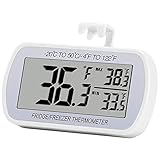
- Large Screen, Small Size: LCD display, big digits. You can visually observe the temperature, and also won't take too much places.(Tips: Please remove the protective film on the screen surface before use)
- Wide Measuring Range & Accurate: Temperature range is -4°F to 122°F with high accuracy 2°F up/down. Max/Min temperature value display on screen, you can easily monitor the temp change of your fridge.
- Hook, Magnet, Stand: Temperature sensing point is on the back. Hanging inside the refrigerator, the measuring temperature is more accurate.
- New Design Upgrade: Waterproof structure level IPX3, ABS environmentally friendly material. Worked with CR2032 battery(included), batteries can be replaced.
- Multiple uses: Digital refrigerator thermometers can be used in household fridge, restaurants, bars, cafes, large supermarkets and convenience store freezers, pharmacy medicine chests, rooms, wineries, etc.
Maintenance and troubleshooting
Routine checks prevent small problems from becoming a food-loss event:
- Monitor temperature: Keep an appliance thermometer inside and investigate readings that remain above 0°F.
- Inspect the gasket: Look for cracks, gaps, distortion, dirt, or a section that will not make continuous contact with the cabinet.
- Control frost: Remove excessive frost according to the owner’s manual. Manual-defrost appliances should not be allowed to accumulate a thick insulating layer.
- Protect ventilation: Keep the area around the exterior and any condenser ventilation clear of dust, boxes, and other obstructions.
- Limit door-open time: Arrange contents so common items are easy to reach and close the door promptly.
- Follow the manual: Use the specified cleaning products, drain position, scraping tools, and restart procedure.
A persistently warm freezer, unusual frost pattern, damaged gasket, repeated temperature alarms, compressor behavior that seems abnormal, or food that softens without an obvious outage warrants help from the manufacturer or a qualified appliance technician. Repeatedly changing the control setting is not a substitute for diagnosis.
Do not attempt electrical or refrigerant-system repairs without model-specific documentation and appropriate qualifications. Unplug the appliance before cleaning or performing a manual-defrost procedure when the owner’s manual directs you to do so, and keep water away from electrical components.
A practical freezer routine
- On installation: Confirm the location, ventilation, ambient-temperature requirements, and delivery clearances. Read the manual before loading food.
- At startup: Set the freezer to the recommended target and verify the actual temperature with an appliance thermometer before relying on it for long-term storage.
- When storing food: Use freezer-rated packaging, remove excess air, leave expansion room for liquids, and label contents and dates.
- Each week or two: Move older food forward, update the inventory, and remove items that will not be used while quality is still acceptable.
- After a problem: Keep the door shut during an outage, assess food by temperature and ice crystals, and use the FoodSafety.gov emergency chart for food-specific decisions.
- When performance changes: Check the gasket, frost, ventilation, and thermometer reading. If the problem persists, contact the manufacturer or a qualified technician.
Frequently Asked Questions
Is 0°F the exact temperature a freezer must show?
0°F (-18°C) or below is the household target. Small fluctuations can occur, but the actual temperature should be checked with an appliance thermometer because a control dial does not necessarily represent the temperature throughout the compartment.
Quick wins for a faster PC:
Clear out junk files and repair common Windows errorsFree Scan →Scan for outdated or missing drivers - takes under a minuteDriver Scan →Can freezer-burned food still be eaten?
Usually, freezer burn is a quality issue rather than a safety issue if the food remained properly frozen. The affected areas may be dry, leathery, or unpleasant, so trim or discard those portions based on quality and use the remaining food only if it was handled safely.
Can partially thawed food be refrozen after a power outage?
Food that still contains ice crystals or is 40°F or below may generally be refrozen or used, although quality may decline. If it was above 40°F for more than two hours, consult the food-specific FoodSafety.gov emergency chart; ice cream and frozen yogurt are listed for discard even when ice crystals remain.
Which is better, a chest freezer or an upright freezer?
A chest freezer generally loses less cold air when opened and is typically more energy efficient, but it needs more floor space and can be harder to organize. An upright freezer offers shelves and easier visibility. Choose based on storage volume, access frequency, available space, and mobility needs.
How much frost is too much in a manual-defrost freezer?
ENERGY STAR recommends not allowing frost to build beyond approximately one-quarter inch if you want to preserve the energy advantage of manual defrost. Follow the appliance manual for the safe defrosting procedure.
Do these 3 things before closing this tab:
1Repair Windows errors before they cause bigger problems2Scan for outdated or missing drivers - takes under a minute3Clear out junk files and repair common Windows errorsThe Bottom Line
A reliable freezer is a temperature-control and food-quality system: hold it at 0°F (-18°C) or below, verify the temperature independently, protect food from air, label and rotate packages, thaw with the refrigerator, cold water, or microwave, and treat outage decisions as food-specific. When buying an appliance, match chest or upright design and manual or automatic defrost to your habits, then compare capacity, EnergyGuide data, ENERGY STAR certification, installation requirements, and service support.
Quick Recap
Product prices and availability are accurate as of the date/time indicated and are subject to change. Any price and availability information displayed on Amazon at the time of purchase will apply.

