The Tool Desk
Outbyte PC Repair FREERepair Windows errors before they cause bigger problemsFix Now →Outbyte Driver Updater FREEFix the driver behind crashes, sound loss and screen glitchesFind Drivers →To reseason a cast iron skillet correctly, remove loose rust or seasoning, wash and dry the pan completely, apply an exceptionally thin coat of oil, and cure it in the oven. Repeat the oven cycle two or three times only if the skillet has substantial rust or seasoning loss. Patchy color, minor scratches, and a few dull spots usually do not require stripping the pan; regular cooking will gradually build more seasoning.
What cast iron seasoning actually is
Seasoning is not a synthetic coating sprayed onto the skillet. It is a thin layer of cooking oil that has been heated until it polymerizes and bonds to the iron. The resulting surface is dark, water-resistant, helps protect the metal from rust, and can improve food release as additional layers build.
As an Amazon Associate I earn from qualifying purchases.
The important practical detail is that seasoning should be built from very thin, interlocking films of polymerized oil. A visible, wet layer of oil is not better seasoning. Too much oil can remain sticky, pool during baking, create blotches or spiderweb-like marks, and eventually flake.
Recommended Free Tools
Do you really need to reseason the skillet?
Many skillets are reseasoned unnecessarily. Cast iron seasoning often looks uneven while it is developing, and a patchy black or brown appearance does not automatically mean the pan is damaged.
Reseason when you see a real loss of protection
- Surface rust has been scrubbed away, leaving exposed or noticeably bare iron.
- A cleaning process or prolonged acidic cooking has removed a substantial amount of seasoning.
- Seasoning is loose, peeling, or flaking and cannot be removed through ordinary cleaning.
- The surface remains persistently sticky because excess oil has not cured and normal cooking has not corrected it.
- The pan has been substantially stripped and food is repeatedly sticking to exposed areas.
Do not strip the pan just because it looks imperfect
- Patchy or uneven color is normal and usually evens out with use.
- Minor scratches generally improve as you continue cooking.
- A few shiny, dull, or differently colored areas are not by themselves a problem.
- If the surface is sound, the skillet cooks normally, and no loose material is getting into food, cleaning, drying, lightly oiling, and cooking is usually the better repair.
Full stripping is a restoration procedure, not the routine solution for cosmetic changes. Severe rust, extensive flaking, or a heavily failed vintage finish may justify a more complete process using stripping chemicals or electrolysis, but those methods are unnecessary for a small rust spot or ordinary uneven seasoning.
#1 Best Overall

- Mild and Easy: Grapeseed Oil is at its best in stir-fries and sautés; it doesn't overwhelm other ingredients and lets fresh flavors shine. When grilling or frying, it is a must-have in the pantry.
- Quality You Can Taste: The mainstay of all La Tourangelle’s artisanal oils is premium taste derived from the best quality ingredients. Add the flavor of La Tourangelle to any meal!
- Delicious and Versatile: Our oils make it easy to create distinctive dishes for professional chefs, novice cooks, and foodies. Great for salads, meats, pastas, and more!
- Gourmet and Sustainable: La Tourangelle's natural artisan oils provide the perfect touch to make a delicious breakfast, lunch, or dinner. We are passionate about making high-quality ingredients that are good for the table, community, and planet. Through artisan production methods and nature-friendly tin packaging, we want to empower people to cook like they care.
- Flavors of the World: From Extra Virgin Olive Oil and sustainably produced Grapeseed Oil, to award winning Toasted Sesame Oil, La Tourangelle brings the best oils and flavors from around the world straight to your kitchen.
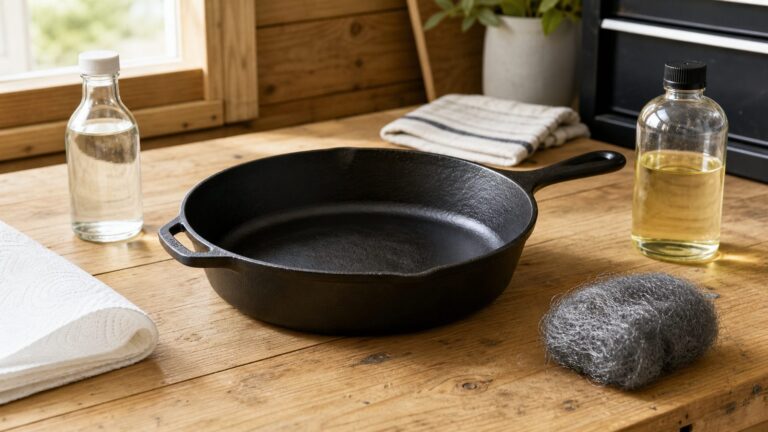
What you need
- Warm water and a small amount of ordinary dish soap
- A pan scraper, stiff brush, chain-mail scrubber, or steel wool for loose residue and rust
- A lint-free towel or paper towels
- A neutral, food-grade cooking oil such as vegetable or canola oil, melted shortening, or a dedicated cast iron seasoning oil
- An oven and, preferably, a stovetop burner for quick drying
- Heat-resistant gloves or thick oven mitts
A cast iron pan scraper can be useful for stuck food before washing. A chain-mail scrubber is another optional tool for stubborn residue or loose seasoning, but neither tool is required for every skillet and neither should be used to grind away sound seasoning.
How to reseason a cast iron skillet
1. Remove loose seasoning, carbon, and rust
Start by removing material that is already loose. Scrub rusty areas with steel wool, a stiff brush, or a chain-mail scrubber. Use a scraper to lift stuck-on food and carbon. Work until the loose flakes and rust are gone, but do not aggressively scour the entire skillet merely to make its color uniform.
If rust is extensive or the old seasoning is failing across most of the pan, stop and assess whether a full restoration is appropriate. A severely compromised surface may need to be stripped before it is rebuilt. A cracked skillet is different: reseasoning cannot restore structural integrity, so a cracked pan should not be treated as safe for cooking.
2. Wash the skillet
Wash the pan by hand with warm water and a small amount of dish soap. Use the scraper or scrubber to remove remaining food and loose residue. Properly cured seasoning can withstand ordinary dish soap; routine soap use is not the same as using a strong lye-based cleaner to strip the pan.
Rinse away all soap and debris. If black material continues to come off on the towel or appear on food, scrub the skillet again. A small amount of dark residue can occur during cleaning, but persistent black particles usually indicate loose carbon or incompletely bonded seasoning that needs to be removed.
3. Dry it completely
Immediately wipe the skillet with a lint-free cloth or paper towel. Then place it briefly over a burner or in a low oven to evaporate moisture from the cooking surface, side walls, handle, and other crevices.
Do these 3 things before closing this tab:
1Fix the driver behind crashes, sound loss and screen glitches2Clear out junk files and repair common Windows errors3Scan for outdated or missing drivers - takes under a minuteThis step matters because cast iron rusts readily when water remains on the metal. Do not oil a damp pan and assume the oven will solve the problem. Thoroughly dry it first.
Rank #2
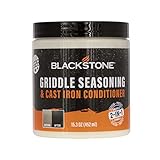
- TLC for your griddle cooktop: All you need to build a slick, easy-release surface that's protected from rust and easy to work with using Blackstone griddle seasoning and cast iron conditioner
- 2 in 1 formula (conditions & protects): Our cast iron seasoning formula creates a nonstick seasoning layer that makes cooking and cleanup of your cooktop easy while also protecting it from rust, moisture and other elements
- Not just for griddles: Season or re-season your cast iron pans as well
- Proprietary Blend: Made of a proprietary blend of palm oil shortening, beeswax, palm oil, canola oil, and soy oil
- A little goes a long way: Just spread a thin layer evenly across the surface and let it burn off. Since only one or two small scoops are needed, each bottle lasts a long time
4. Apply an exceptionally thin coat of oil
Coat the cooking surface, side walls, exterior, and handle if the skillet manufacturer’s care method calls for it. Then wipe the pan repeatedly with clean paper towels until almost all visible oil is gone. The finished surface should look nearly dry, satin-like, or dull and matte—not wet or glossy.
As a practical example, Field Company’s documented method uses approximately 1/8 teaspoon for the cooking surface and another 1/4 teaspoon for the bottom and handle, followed by thorough wiping. The exact quantity is not universal; the thinness of the film is the important part.
If you think you have wiped off too much oil, wipe it once more. Most reseasoning problems come from leaving too much behind, not too little.
What’s actually slowing this PC down?
Pick the symptom - the matching free tool is one click away.
5. Cure the oil in the oven
The following is a manufacturer-published staged method from Field Company. It is a documented approach rather than a universal requirement for every oil, skillet, or oven. If your pan has specific manufacturer instructions, follow those instructions instead.
- Preheat the oven to 200°F and let it run for about 10 minutes to evaporate moisture.
- Wash the skillet and remove visible water.
- Dry the skillet briefly on a stovetop burner.
- Put the dry skillet in the 200°F oven for 10 minutes.
- Remove it, raise the oven temperature to 300°F, and apply the oil.
- Wipe away all visible excess oil until the pan looks dry and matte.
- Place the skillet in the 300°F oven for 10 minutes.
- Raise the oven temperature to 400°F. Before the final bake, inspect the pan and wipe away any pooled oil.
- Place the skillet upside down in the 400°F oven for one hour. Position a baking sheet or foil on a lower rack if you want to catch drips.
- Turn off the oven and let the skillet cool inside for approximately 30 to 60 minutes before handling it.
For a skillet with substantial rust or seasoning loss, repeat the thin-oil and oven-curing process two or three times. For a pan that only needed a small repair, one cycle followed by regular cooking may be enough.
Choosing the oil
You do not need a rare or expensive oil. Lodge recommends vegetable oil, melted shortening, or canola oil. A dedicated seasoning oil is also convenient, particularly if you want a product formulated and packaged specifically for cast iron.
Rank #3

- YOUR NEW GO-TO SEASONING SPRAY: The Lodge Seasoning Spray is the perfect seasoning spray to maintain your cast iron cookware. It is made of 100% canola oil - no additives or propellants, to protect your cookware and enhance its finish.
- HOW TO CLEAN CAST IRON COOKWARE: Step 1. Wash your cast iron cookware by hand, using a small amount of soap (for stubborn, stuck-on food, simmer water for 3-5 minutes. Use a pan scraper after the pan has cooled. Step 2. Dry promptly and thoroughly with a lint-free cloth or paper towel. Step 3. Rub a light layer of Seasoning Spray onto the surface of your cookware. Use a paper towel to wipe the surface until no oil residue remains.
- FAMILY-OWNED: Lodge is more than just a business; it is a family. The Lodge family founded the company in 1896, and they still own it today. From environmental responsibility to community development, their heads and hearts are rooted in America. Lodge products are made in the USA with non-toxic, PFOA & PTFE free material.
Oil chemistry helps explain why several choices can work: oils with more unsaturated fat are generally more reactive during polymerization than highly saturated animal fats. That does not make one oil universally best. Application technique, temperature, and leaving only a thin film are more important than chasing a single “perfect” oil.
Flaxseed oil is not mandatory. Its use is debated, and Field Company warns that it can produce a brittle seasoning that is prone to flaking. For most cooks, a neutral food-grade oil with a suitable smoke point is a simpler choice.
Optional supply: If you prefer a product made for this particular job, compare a cast iron seasoning oil with ordinary vegetable or canola oil. A dedicated oil is convenient, not essential, and should still be applied in an almost invisible layer.
For cleaning and maintenance, a care kit can combine a scraper, brush, scrubber, and oil or seasoning spray. It is useful for convenience, but no kit is required, and not every included tool is appropriate for removing heavy rust or stripping a pan.
Troubleshooting after reseasoning
Sticky surface
A sticky finish usually means too much oil was applied or the oil has not fully polymerized. Heat the skillet over medium heat for a few minutes, let it cool, and wipe it thoroughly. Minor residue may be incorporated through continued cooking. If the surface remains heavily tacky, scrub away the excess and repeat the seasoning cycle using dramatically less oil.
Spiderweb marks, splotches, or pooled spots
These marks usually come from oil pooling during the curing process. Adding more oil will not fix them. Scrape or scrub away loose residue, wash and dry the skillet, then apply a much thinner coat. Wipe especially carefully around the edges, side walls, and any low spots before putting the pan in the oven.
Flaking or peeling seasoning
Remove every loose flake, wash the pan, dry it completely, and rebuild the surface with two or three thin oven-seasoning rounds if the loss is substantial. Do not seal loose seasoning under another coat. Until the base is durable again, favor cooking with some oil or fat and avoid long acidic or liquid-heavy recipes.
Surface rust
Remove rust before using the skillet for food. Rust should not be treated as harmless simply because the underlying iron can often be restored. Scrub the rusty area until the rust is gone, wash away the residue, dry the pan immediately and completely, and reseason the exposed metal.
Rank #4

- RESTORES & RESEASONS | Includes our Cast Iron Scrub designed to restore & remove stubborn rust spots. Helps to remove burnt & stuck on food spots that develop over time. Made with high quality coconut oil to help season & enhanced with essential oils to eliminate odours.
- CLEANS CAST IRON | Includes our Cast Iron Soap unlike detergent based soaps, this soap is formulated with 100% natural plant-based oils & free of sulfates, phosphates, parabens & petrochemicals! Gentil on cast iron seasoning & on your hands!
- SEASONS & CONDITIONS CAST IRON | Made with FOOD grade, solvent-less, refined coconut oil that is safe for food contact and cast iron surfaces. The result is a premium product that is guaranteed to be made exclusively from coconuts
- ELIMINATES FOOD ODORS | Premium products specially designed to help clean, restore & build and maintain the natural seasoning. Enhanced with a proprietary blend of pure essential oils that help to naturally eliminate food odors, making your kitchenware easier to clean & your food tasting better!
- BACKED BY THE CARON FAMILY GUARANTEE | Our family takes great pride in the products we create & are confident you & your family will enjoy them as much as we do.
Black residue on food or a towel
A small amount of dark residue during cleaning can be normal, especially after rust or loose carbon has been disturbed. If black material continues to appear on food or towels, scrub the pan more thoroughly. Persistent residue points to loose seasoning or carbon buildup rather than a finished, stable surface.
Free tools Windows power users keep installed
One-click scans. No signup required.
What to cook after restoration
Resume regular cooking after the curing cycles, but give a newly restored surface time to strengthen. For the first several meals, choose foods that use a little oil or fat. Cooking itself deposits additional thin layers and is the most practical long-term way to maintain the skillet.
Delay long, acidic, liquid-heavy recipes—particularly tomato-based dishes—until the seasoning has regained strength. High-acid foods can break down seasoning, especially when the finish is new or already weakened.
Independent reader supportYour contribution helps us test, update, and keep practical guides available for everyone.Maintenance that prevents another full reseasoning
- Wash the skillet by hand after use.
- Use a small amount of dish soap when needed; do not confuse normal washing with chemical stripping.
- Loosen stuck food with a scraper or suitable scrubber.
- Dry the skillet immediately and thoroughly, using brief burner heat if necessary.
- Rub on a very light oil film after drying, then wipe away all visible residue.
- Cook regularly instead of repeatedly stripping the pan whenever its color changes.
- Be cautious with prolonged acidic cooking while the seasoning is still developing.
The aim is not a perfectly uniform black finish. The aim is a clean, dry, stable cooking surface built from thin layers over time.
Bare cast iron versus enameled cast iron
This procedure is for bare cast iron. Do not apply it to an enameled cooking surface. Enamel is a nonporous glass-like finish, not polymerized oil, and it has different cleaning and temperature requirements.
Windows Errors? Fix Them Before They Spread
Repair common Windows errors and clear accumulated junk for a smoother, more stable PC - no reinstall needed.Free scan · no reinstallOutdated Drivers Are Slowing You Down
One free scan finds every outdated or missing driver and matches the right update for your exact hardware.Free scan · exact hardware matchFor enameled cast iron, follow the manufacturer’s instructions. Le Creuset, for example, cautions against abrasive tools and provides product-specific guidance for temperatures, lids, knobs, handles, and cleaning. Do not use steel wool, chain mail, or an oven-seasoning cycle on enamel unless the manufacturer expressly permits it.
Best Value

- HOW TO USE: The key to naturally nonstick cast iron cookware? Cook often, and apply Seasoning Oil every time you clean your pan. Clean your cast iron with soap and a brush, then use a chain mail scrubber to smooth out existing seasoning layers. Apply a dab of Seasoning Oil and spread it thinly over the surface with a paper towel or clean rag. Wipe away excess oil to leave a dry, matte finish.
- HOW IT WORKS: We use organic oils high in polyunsaturated fats because these oils polymerize easily—creating a hard, durable, nonstick layer that improves with every use. Each time you heat your cast iron, the oil bonds to the surface, strengthening your seasoning over time.
- WHY IT MATTERS: Our cast iron seasoning oil and conditioner blend naturally restores, protects, and maintains your cookware. It builds a smooth, nonstick surface without synthetic coatings—so your cast iron performs beautifully for decades..
- INGREDIENTS: Organic grapeseed oil, organic sunflower oil, and beeswax. For best results, use within one year or refrigerate to extend shelf life.
Quick decision checklist
| What you see | What to do |
|---|---|
| Patchy color with a sound surface | Wash, dry, lightly oil, and keep cooking. |
| Minor scratches without loose flakes | Clean and continue cooking; the seasoning can rebuild gradually. |
| Small rust spot | Scrub away all rust, wash, dry completely, and reseason the exposed area. |
| Sticky or blotchy finish | Remove excess residue and repeat with a much thinner oil film. |
| Widespread flaking or major seasoning loss | Remove loose material and apply two or three thin oven-seasoning rounds. |
| Severe rust or failed historical finish | Consider full restoration and stripping rather than ordinary reseasoning. |
| Crack or structural damage | Do not rely on reseasoning; the pan’s structural integrity is compromised. |
| Enameled cooking surface | Do not use this bare-cast-iron method; follow the enamel manufacturer’s care instructions. |
Frequently Asked Questions
How often should I reseason cast iron?
There is no fixed schedule. Reseason when rust, substantial seasoning loss, persistent stickiness, or flaking makes it necessary. If the skillet is clean, dry, stable, and cooking well, regular use and a very light oil film are usually enough.
Can I use dish soap on a seasoned cast iron skillet?
Yes. A small amount of ordinary dish soap is compatible with properly cured seasoning. Strong lye-based cleaners are different: they can dissolve the polymerized oil and are used for stripping, not routine washing.
Why is my newly seasoned skillet sticky?
The most common cause is excess oil. Warm the pan briefly, let it cool, and wipe it thoroughly. If heavy tackiness remains, scrub away the residue and repeat the cycle with an almost invisible coat of oil.
Is rust on cast iron safe to cook with?
Remove rust before cooking. Scrub it away, wash the skillet, dry it completely, and reseason the exposed metal. A cracked or structurally damaged skillet is a separate safety issue that reseasoning cannot fix.
Can I reseason enameled cast iron?
Not with this method. Enamel is a different, nonporous surface and should not be treated like bare iron. Follow the cookware manufacturer’s cleaning and temperature instructions.
The Bottom Line
The right reseasoning method is simple but precise: remove only loose rust and seasoning, wash, dry completely, apply almost no oil, and cure it thoroughly. Repeat the cycle only when the skillet has meaningful seasoning loss. For ordinary patchiness or minor scratches, the best repair is usually regular cooking—not stripping the pan again.
Quick Recap
Product prices and availability are accurate as of the date/time indicated and are subject to change. Any price and availability information displayed on Amazon at the time of purchase will apply.