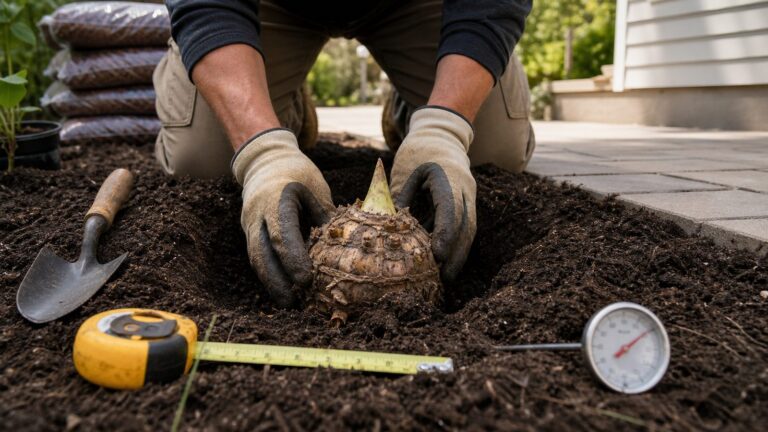
Red spider lily (*Lycoris radiata*) is one of the easiest flowering bulbs to grow when it is planted shallowly in well-drained soil and left undisturbed. Plant the bulbs with their necks at or just above soil level, give them sun or partial shade, keep them moderately moist while they are actively growing, and let the soil become drier during summer dormancy. After flowering, leave the strap-like leaves in place until they yellow naturally.
“Spider lily” is also used for plants in the genus Hymenocallis. Check the botanical name on the plant label or bulb packaging before planting, because those plants have different moisture and cold-hardiness requirements. This guide focuses on the red spider lily, Lycoris radiata.
As an Amazon Associate I earn from qualifying purchases.
What is a red spider lily?
Red spider lily is a perennial bulb in the amaryllis family. Its accepted botanical name is Lycoris radiata, and it is native from China through Japan, Korea, and Nepal. Other common names include hurricane lily, surprise lily, magic lily, and resurrection lily.
The plant’s unusual growth cycle is the reason for many of those names. In late summer or early fall, leafless flower stalks rise about 1 to 2 feet above the ground. Each stalk carries an umbel of brilliant red flowers with strongly recurved tepals and long stamens. The flowers appear first, apparently without foliage, and the leaves emerge afterward.
#1 Best Overall

- BIG HEALTHY BULBS: Get 3 Fresh, Healthy Spider Lily Bulbs to Grow.
- FITS ANY SIZE: Ideal for mass planting or in a container. . Beautiful vibrant colors bloom early spring.
- MADE IN USA: We Guarantee our products!
- GOOD SOIL: We reccomend using top quality soil like CZ GRAIN soil or Fox Farms Ocean Forest Soil to give plants a head start.
Once flowering is over, gray-green, strap-like leaves grow from the bulb. In many U.S. gardens, those leaves remain green through winter and die back in late spring. The bulb then rests through summer before beginning the next cycle.
Before you plant: confirm the botanical name
Common names can cause a genuine care problem. “Spider lily” may refer to Lycoris radiata or to Hymenocallis species, which are also called Peruvian daffodils or spider lilies.
- Lycoris radiata: a relatively dry-tolerant, summer-dormant bulb that prefers well-drained soil and is commonly grown in USDA Zones 6–10, with local variation.
- Hymenocallis: a different group that generally prefers consistently moist to wet soil and is less cold-hardy.
Do not rely on a photograph or common name alone when buying bulbs. Look for Lycoris radiata on the label. That botanical-name check is especially important if you have children or pets, because the bulbs contain toxic alkaloids and should not be eaten.
Free tools Windows power users keep installed
One-click scans. No signup required.
Where to plant spider lilies
Light
Choose a location in full sun to part shade. Red spider lily tolerates full sun, but partial shade can be preferable in hot climates, especially when it protects the plant from intense afternoon sun. A site beneath high, open tree branches or at the edge of a sunny bed can work well, provided the soil is not crowded with aggressive roots.
Too little light can reduce flowering, while harsh exposure can stress plants in hot, dry regions. If you are choosing between a fully exposed western site and a bright location with afternoon protection, the latter is often the safer choice in warm climates.
Soil and drainage
The ideal soil is organically rich, medium-moisture, and well drained. The most important seasonal balance is:
- reasonable, even moisture while roots and foliage are active; and
- comparatively dry soil during the summer dormant period.
Avoid low spots, heavy clay that stays saturated, and irrigation areas that remain wet after rain. Overwatering can lead to root or bulb rot. If the site drains slowly, improve the planting area before setting bulbs rather than trying to correct poor drainage with frequent fertilizer.
How to plant red spider lily bulbs
- Choose the planting time. Plant in fall when bulbs are available and the soil can still be worked. Newly planted bulbs may need a season or more to establish before they flower reliably.
- Prepare the soil. Loosen the bed and remove competing weeds. Add organic matter if the soil is poor, but preserve good drainage.
- Set the bulbs shallowly. Position each bulb with the neck exposed or only lightly covered. A practical target is to leave roughly the top quarter-inch of the neck above the soil surface. Deep planting is one of the most common reasons for poor flowering.
- Space the bulbs. Allow about 6 to 12 inches between bulbs. Approximately 9 inches is a useful middle distance for a colony that will fill in over time.
- Orient them correctly. The pointed growing end should face upward. If the bulb’s orientation is unclear, planting it on its side is safer than burying it deeply; the emerging stem can grow upward.
- Water once. Water after planting to settle the soil around the bulbs. Then provide supplemental water during dry periods while roots are establishing and whenever the plant is actively growing.
If you are ready to plant, look specifically for red spider lily bulbs labeled Lycoris radiata. That combination of common and botanical names helps prevent accidentally buying a different plant sold under the same common name.
Rank #2

- TEXAS GROWN SPIDER LILY BULBS are perfect for southern United States climates and have been raised locally in Texas, ready to be transplanted into your garden where they’ll sprout red flowers that burst open like a firework on 1-2 foot stalks.
- THE RED SPIDER LILY acts different from your other flowers. It puts on its foliage during the winter months to take in nutrients. Then it goes dormant for the summer. When the rains come in late summer/early fall, it will pop out of the ground and bloom within a few days. Then it will go dormant for a couple more months before it puts on new foliage during the winter to help prepare for the next year's bloom.
- ALSO KNOWN AS THE HURRICANE LILY OR SURPRISE LILY, the Lycoris radiata gets its name from the softball-size coral-red flowers that appear after the cooler temperatures and heavy rains (hurricane) in late summer or early fall and have long stamens resembling spider legs. The blooms will suddenly "surprise" you by popping out of the ground and blooming a couple of days after the rains where there didn't appear to be anything planted before.
- FOLIAGE NEEDS 6+ HOURS OF WINTER SUN every day to thrive and soak up plenty of sun energy and your red spider lily bulbs should be planted at a depth about 2-3 times the height of the bulb. You can plant them anytime but avoid planting during a hard freeze
- THE RED SPIDER LILY GROWS WELL IN ZONES 7-10 and is a hardy perennial that is drought and heat resistant, often lasting decades and they multiply with new bulb offsets quite readily, so your 10 bulbs will turn into many over the years
A bulb planter is optional rather than essential. It can save time when installing many bulbs in loose soil, but a hand trowel works just as well for a small planting and gives you better control over the shallow planting depth.
Watering through the seasons
Red spider lily’s water needs change during its yearly cycle.
| Season or stage | What to do |
|---|---|
| After planting | Water thoroughly once to settle the soil. Water again during prolonged dry weather while roots are becoming established. |
| Active growth | Keep the soil reasonably and evenly moist, but never saturated. Good drainage remains essential. |
| Flowering | Do not allow newly planted or actively growing bulbs to become severely dry for long periods, but avoid keeping the bed wet. |
| Summer dormancy | Let the soil become comparatively dry. Do not maintain a regular, heavy irrigation schedule after the foliage has died back. |
Routine fertilizer is not required for red spider lily. If you choose to feed an established planting, treat it as optional and follow the product label. Fertilizer will not compensate for bulbs planted too deeply, waterlogged soil, inadequate light, restricted container roots, or leaves removed too soon.
Quick wins for a faster PC:
Fix the driver behind crashes, sound loss and screen glitchesFind Drivers →Clear out junk files and repair common Windows errorsFree Scan →Do not cut the leaves while they are green
The foliage that appears after flowering is doing important work. Its leaves photosynthesize and replenish the bulb, helping it build the resources needed for future flowers.
Leave the leaves attached until they yellow and die back naturally, usually in late spring in many U.S. gardens. You can remove dead foliage once it is dry and loose. Flower stalks may be cut down after the blooms fade if you prefer a tidier appearance, but removing the green leaves early can weaken the bulb and reduce later flowering.
This timing can be inconvenient because the plant’s leaves and flowers do not appear together. Consider planting the bulbs among ground covers or late-season perennials that can visually fill the space without shading the lily heavily.
How long do spider lilies take to flower?
Red spider lilies are long-lived but not necessarily immediate. A bulb may produce foliage without flowers during its first season, particularly after transplanting, shipping, division, or planting in a new climate. Some bulbs need several seasons to reach flowering size or become fully established.
PC Slower Than It Used to Be?
A free scan shows the junk files, broken settings and background clutter dragging Windows down - then fixes them in one click.Free scan · Windows 10 & 11Outdated Drivers Are Slowing You Down
One free scan finds every outdated or missing driver and matches the right update for your exact hardware.Free scan · exact hardware matchOnce settled, the bulbs can naturalize by producing offsets and form colonies over time. They generally prefer not to be disturbed, so avoid moving them simply because the bed looks sparse during the first year.
Dividing and propagating spider lilies
The usual method of propagation is separating offsets from an established clump. Do this only when the foliage has yellowed and is beginning to wither, or during the plant’s dormant period.
Rank #3

- STRIKING RED FALL BLOOMS: Produces breathtaking scarlet-red spider lily flowers with elegant curling petals that bloom in late summer to fall, creating a dramatic display when many other flowers are fading
- HARDY PERENNIAL BULBS: Lycoris radiata returns year after year in USDA Hardiness Zones 7-10. Once established, these low-maintenance bulbs multiply over time for an even more impressive display
- EASY TO GROW: Thrives in full sun to partial shade and well-drained soil. Plant bulbs in spring or late summer for reliable seasonal blooms and healthy long-term growth
- VERSATILE LANDSCAPE USE: An excellent choice for flower beds, borders, woodland gardens, walkways, foundation plantings, and naturalized areas. The unique blooms make a stunning focal point in any garden
- QUALITY BULBS WITH PLANTING INSTRUCTIONS: Carefully selected planting bulbs shipped with planting instructions to help gardeners of all experience levels enjoy beautiful, long-lasting blooms
- Watering is not necessary immediately before digging; allow the soil to be workable but not wet.
- Lift the clump carefully with a fork or spade, staying far enough from the bulbs to avoid cutting them.
- Separate offsets gently by hand or with a clean tool.
- Replant the divisions promptly at the same shallow depth, keeping the bulb neck exposed or nearly exposed.
- Water to settle the soil, then follow the normal active-growth and dormancy watering pattern.
Do not divide on a fixed annual schedule. A crowded colony is not automatically a problem. Divide when flowering declines because of genuine overcrowding, when the planting must be relocated, or when offsets need to be separated. Small or recently divided bulbs may take another year or two to flower.
Hardiness and winter protection
Lycoris radiata is commonly rated for USDA Zones 6–10, but hardiness is not a guarantee. Plants may perform differently depending on the local population, soil drainage, exposure, snow cover, and the severity of a particular winter. A bulb can survive cold while still flowering poorly after substantial winter injury.
In colder areas:
- plant in a sheltered, well-drained site rather than an exposed low spot;
- protect winter foliage from severe freezing where practical;
- avoid disturbing bulbs late in the season; and
- consider containers only if you can protect them from extreme cold.
Newly planted bulbs are more vulnerable than established colonies. If your local conditions are near the edge of the plant’s hardiness range, expect establishment and flowering to be less predictable.
Growing spider lilies in containers
Container culture is possible, but it is less forgiving than growing the bulbs in the ground. Red spider lily develops an extensive root system, and a small or shallow pot can produce weak growth or no flowers.
Use a large, deep container with drainage holes and a well-draining potting mix. Keep the bulb neck exposed, just as you would in the ground. A deep container for bulbs is a conditional purchase—not a requirement for the plant, but an important consideration if in-ground drainage or winter protection is unavailable.
Water while the plant is actively growing, allowing excess water to drain freely. During summer dormancy, reduce watering substantially and do not leave the container standing in a saucer of water. In cold climates, move the container to a sheltered location before severe weather. Container roots are more exposed to freezing than bulbs planted in the ground.
Do these 3 things before closing this tab:
1Clear out junk files and repair common Windows errors2Scan for outdated or missing drivers - takes under a minute3Repair Windows errors before they cause bigger problemsPests, disease, and safety
Red spider lilies usually have few serious pest or disease problems. Occasional narcissus bulb fly damage is possible, and excessively wet soil can contribute to root rot. The best preventive measures are correct planting depth, good drainage, careful watering, and minimal disturbance.
The bulbs contain toxic alkaloids, including lycorine, and are considered poisonous if eaten. Their compounds also help deter deer and rabbits. Because “spider lily” may identify different plants and because animal responses can vary, do not assume that a deer-resistant plant is safe for pets or children. Keep bulbs, offsets, and discarded plant material away from ingestion, and confirm the botanical identity with a veterinarian or appropriate poison-control resource if ingestion occurs. This guide does not assign a species-specific symptom list.
Independent reader supportYour contribution helps us test, update, and keep practical guides available for everyone.Troubleshooting: foliage but no flowers
If the plant produces healthy leaves but no flowers, check the cultural basics before adding fertilizer.
Rank #4
- TEXAS GROWN SPIDER LILY BULBS are perfect for southern United States climates and have been raised locally in Texas, ready to be transplanted into your garden where they’ll sprout red flowers that burst open like a firework on 1-2 foot stalks.
- THE RED SPIDER LILY acts different from your other flowers. It puts on its foliage during the winter months to take in nutrients. Then it goes dormant for the summer. When the rains come in late summer/early fall, it will pop out of the ground and bloom within a few days. Then it will go dormant for a couple more months before it puts on new foliage during the winter to help prepare for the next year's bloom.
- ALSO KNOWN AS THE HURRICANE LILY OR SURPRISE LILY, the Lycoris radiata gets its name from the softball-size coral-red flowers that appear after the cooler temperatures and heavy rains (hurricane) in late summer or early fall and have long stamens resembling spider legs. The blooms will suddenly "surprise" you by popping out of the ground and blooming a couple of days after the rains where there didn't appear to be anything planted before.
- FOLIAGE NEEDS 6+ HOURS OF WINTER SUN every day to thrive and soak up plenty of sun energy and your red spider lily bulbs should be planted at a depth about 2-3 times the height of the bulb. You can plant them anytime but avoid planting during a hard freeze
- THE RED SPIDER LILY GROWS WELL IN ZONES 7-10 and is a hardy perennial that is drought and heat resistant, often lasting decades and they multiply with new bulb offsets quite readily, so your 10 bulbs will turn into many over the years
- Bulbs planted too deeply: Recheck the exposed neck. If necessary, move the bulbs during dormancy and replant them shallowly.
- Insufficient establishment time: Newly planted, divided, or undersized bulbs may need one or more seasons.
- Too much disturbance: Repeated digging or dividing can interrupt the cycle. Leave established clumps alone unless there is a clear reason to move them.
- Inadequate light: Bright shade can support foliage but may not provide enough energy for strong flowering.
- Poor drainage or summer irrigation: Look for persistently wet soil, soft or rotting bulbs, and irrigation that continues heavily during dormancy.
- Restricted container roots: Move bulbs from a small or shallow pot into a larger, deeper container during dormancy.
- Winter injury: Severe cold can reduce flowering even when the bulb survives. Improve shelter and allow time for recovery.
- Premature leaf removal: Cutting green foliage deprives the bulb of energy needed for the next bloom cycle.
When a mature in-ground colony declines, assess winter exposure, drainage during summer, planting depth, and the history of foliage removal. Those factors are more likely to explain poor flowering than a lack of fertilizer.
A simple annual care checklist
- Fall: Plant available bulbs shallowly, with the neck exposed or nearly exposed. Water them in.
- Late summer to early fall: Watch for the sudden appearance of leafless flower stalks.
- After flowering: Remove spent stalks if desired, but leave all green leaves.
- Winter through spring: Maintain reasonable moisture while foliage is active, without waterlogging the bed.
- Late spring: Remove foliage only after it yellows and dies back naturally.
- Summer: Keep dormant bulbs comparatively dry and avoid unnecessary digging.
- During dormancy: Divide or relocate established clumps only when needed.
Frequently Asked Questions
Why are my spider lily flowers appearing before the leaves?
That is the normal growth cycle of red spider lily, Lycoris radiata. Leafless flower stalks emerge in late summer or early fall, and the strap-like leaves follow after flowering.
Can red spider lilies grow in full shade?
They are best planted in full sun to part shade. Full shade may produce foliage but often results in weaker flowering. In hot climates, partial shade with protection from intense afternoon sun can be beneficial.
Should I cut back spider lily leaves after flowering?
No. Leave the leaves until they yellow and die back naturally. They replenish the bulb and help support future flowering. Remove only dead foliage.
Are spider lilies poisonous to pets?
Red spider lily bulbs contain toxic alkaloids, including lycorine, and should not be eaten. Because the common name can refer to several plants, confirm the botanical identity and contact a veterinarian or poison-control resource if a pet may have ingested any part.
What’s actually slowing this PC down?
Pick the symptom - the matching free tool is one click away.
Why did my spider lilies produce leaves but no flowers?
Common causes include deep planting, recent planting or division, insufficient light, poor drainage, summer overwatering, a container that is too small, severe winter injury, or cutting the foliage while it was still green.
The Bottom Line
For reliable red spider lily flowers, plant Lycoris radiata shallowly in well-drained soil, provide sun or partial shade, keep it moderately moist during active growth, and let it dry more during summer dormancy. The most important maintenance rule is simple: leave the green leaves alone until they die back naturally.
Quick Recap
Product prices and availability are accurate as of the date/time indicated and are subject to change. Any price and availability information displayed on Amazon at the time of purchase will apply.