If a building condition may put someone in immediate danger, move away from the affected area and contact local emergency services; do not wait for a routine repair request. For a serious but non-immediate concern, report it promptly to the organization responsible for the home or building, keep a written record, and escalate to the relevant local authority if the response is inadequate. The routes and legal duties vary by location. The England-specific examples below are not universal; elsewhere, use your local equivalents.
What to do first if a building may be unsafe
Immediate danger: get people clear and seek emergency help
Leave the affected area if you can do so safely. Warn other people only if that does not put you at risk, then contact your local emergency services. Do not enter a visibly unstable area to investigate, take photographs, or retrieve belongings, and do not wait for an ordinary maintenance complaint to be processed.


As an Amazon Associate I earn from qualifying purchases.
In England, government guidance identifies suddenly appearing or rapidly worsening large cracks, sagging ceilings or walls that indicate instability, and leaning or displaced external elements as signs that may need urgent professional attention. These are warning signs, not a way for residents to diagnose structural failure. The guidance describes an emergency structural hazard as one where “structural failure or risk of structural failure poses imminent danger.” Read the England Phase 2 hazard triage guidance.
Recommended Free Tools
Serious but not immediately dangerous: make a prompt written report
Use the official repair, safety, or complaints channel for the party responsible for the property. Depending on your situation, that may be your landlord, housing association or society, property manager, or building manager. If you are unsure who is responsible for a shared part of the building, report it to the manager or housing provider and ask them to identify the accountable contact.
#1 Best Overall
How to make a useful report
- Describe the location precisely. Include the full address and where the issue is—for example, a particular room, stairwell, entrance, or external wall.
- Record what you observed. State what appears wrong, when you first noticed it, whether it has changed or worsened, and who may be affected. Stick to observable facts rather than declaring the building structurally unsafe.
- Attach evidence only if it is safe to obtain. Dated photographs or video may help show what has changed. Do not approach or enter a hazardous area to collect them. England’s social-landlord guidance says images may sometimes allow a remote investigation, although an in-person inspection may still be needed. See the England guidance for social landlords.
- Ask for a traceable response. Request confirmation that the report was received, a case or reference number, information about inspection arrangements, any interim safety measures, and a written outcome. These are practical requests, not universal legal entitlements.
- Keep your records. Save your original report, attachments, acknowledgements, reference number, and any replies. Note dates and the names or roles of people you speak with.
Choose the right organization to contact
| Situation | First route | Possible escalation |
|---|---|---|
| Problem inside a rented home | Landlord or housing provider, using its designated repair or safety channel | Relevant local housing or building-safety authority if a serious hazard is not adequately addressed; the exact route depends on location and tenure |
| Shared structural or maintenance defect | Housing society or association, property manager, or building manager | Ask the manager to identify the responsible party; contact the relevant local authority if the concern remains serious and unresolved |
| Fire-safety concern in shared parts of a building in England | The building’s Responsible Person—the person or organization responsible for fire safety in the common parts | Use the relevant fire-safety authority route for your location if the issue is not addressed |
| Danger to the public from a structure | Local emergency services if danger is immediate | Relevant local authority or building-safety enforcement body |
Responsibility can depend on whether the defect is inside a dwelling, in a shared area, or part of a public structure. Do not assume that every building has the same “housing society” process: use the contact route for the party responsible for the affected area and the risk involved.
When and how to escalate to a local authority
If a serious hazard has not been dealt with, contact the local authority or other enforcement body responsible for housing or building safety in your area. Include the address, a concise description, when and how you reported it to the provider, any reference number, and the provider’s response. If circumstances worsen or danger becomes immediate, use the emergency route rather than waiting for an authority complaint to progress.
England: council housing and hazard enforcement
In England, a tenant who believes their house or flat is seriously dangerous can tell the local council. The council may assess the home under the Housing Health and Safety Rating System (HHSRS). The 2026 statutory enforcement guidance describes 21 potential hazards covered by that system; this is a count of hazard types, not a measure of how often unsafe conditions occur. Authorities must take enforcement action when they find a Category 1 hazard and may take action for a Category 2 hazard. Read the HHSRS enforcement guidance.
Crashes, No Sound, or Screen Glitches?
Random freezes, missing sound and display glitches usually trace back to one bad driver. Find and replace yours safely.Free scan · under a minuteWindows Errors? Fix Them Before They Spread
Repair common Windows errors and clear accumulated junk for a smoother, more stable PC - no reinstall needed.Free scan · no reinstallIf the council is also your landlord, submit the complaint through its housing-provider process as well. A housing complaint and an enforcement concern involve different roles, even when the same council handles both.
England: social housing complaints and Awaab’s Law
Social housing tenants in England can use their provider’s formal complaint process and, where the matter falls within its remit, the Housing Ombudsman’s guidance and complaint route. See the Housing Ombudsman’s guidance on complaints about hazards.
Awaab’s Law sets investigation and response requirements for specified hazards in qualifying social housing in England; it should not be assumed to apply to private renting or housing outside England. Government Phase 2 guidance, updated 31 July 2026, says significant structural-collapse hazards are added to the extended scope from 30 November 2026. The applicable duties and timeframes depend on the hazard and circumstances, so check the current government guidance and ask your landlord which requirements apply to your report. Read the Phase 2 guidance.
Independent reader supportYour contribution helps us test, update, and keep practical guides available for everyone.If the condition worsens while you are waiting
- Move away from the affected area if there are signs of immediate danger; contact local emergency services rather than relying on the routine complaint process.
- Update the responsible housing provider or building manager in writing, noting what changed and when.
- Keep new evidence only if it is safe to gather, and add it to your existing case or reference number.
- If the risk remains serious and there is no adequate response, contact the relevant local authority or enforcement body and provide the reporting history.
What to include in your first message
You can adapt this short format:
Subject: Safety concern at [address and exact location]
Special offer. See more information about Outbyte and uninstall instructions. Please review EULA and Privacy policy.I am reporting [observable condition] at [precise location]. I first noticed it on [date], and since then [describe any change, or say that it has not changed]. It may affect [people or areas, if known]. I have attached [safe, dated images, if available]. Please confirm receipt, provide a reference number, and tell me what assessment or interim safety steps are planned. Please send me the outcome in writing.
Best Value
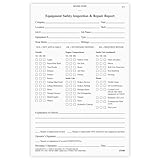 J. J. Keller Equipment Safety Inspection Report Book, 10 Pack
- Vehicle inspection report book helps document and report needed repairs to help maintain safe workplace utility vehicles.
- Heavy equipment inspection report contains a checklist of 36 common vehicle items and space for additional comments. Easy to use for reporting vehicle condition.
- This equipment maintenance log book set comes with 10 books. Each book contains 31 sets of forms. In total, you will receive 310 forms.
- The maintenance book is 2-ply and carbonless.
- Driver inspection books measure 5.5" x 8.5".
If the condition presents immediate danger, do not use a written message as a substitute for moving to safety and contacting emergency services.
Quick Recap
Product prices and availability are accurate as of the date/time indicated and are subject to change. Any price and availability information displayed on Amazon at the time of purchase will apply.




