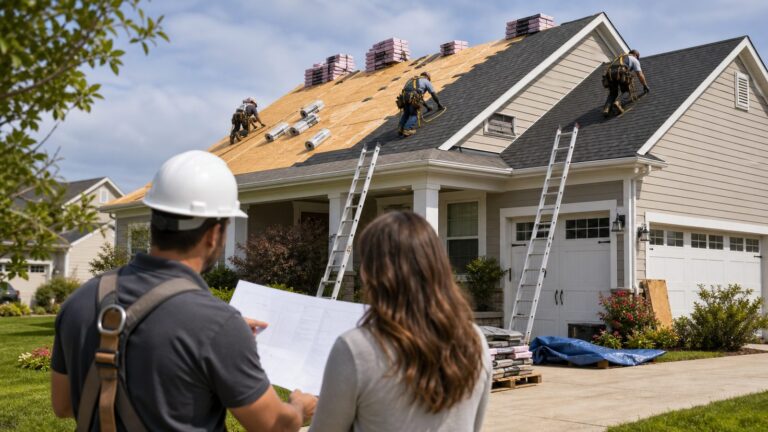
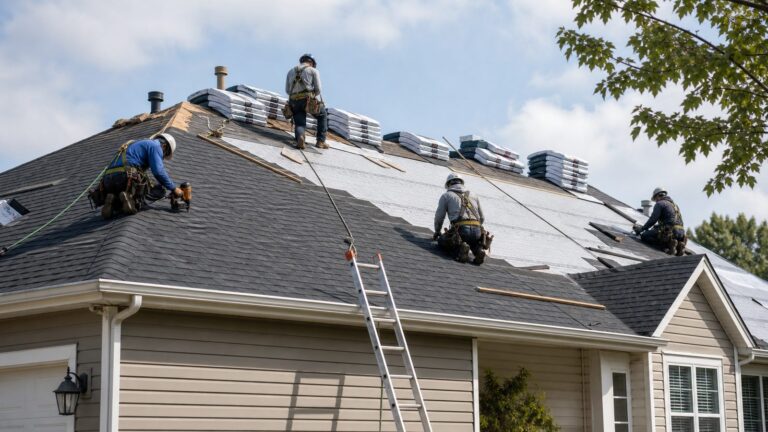
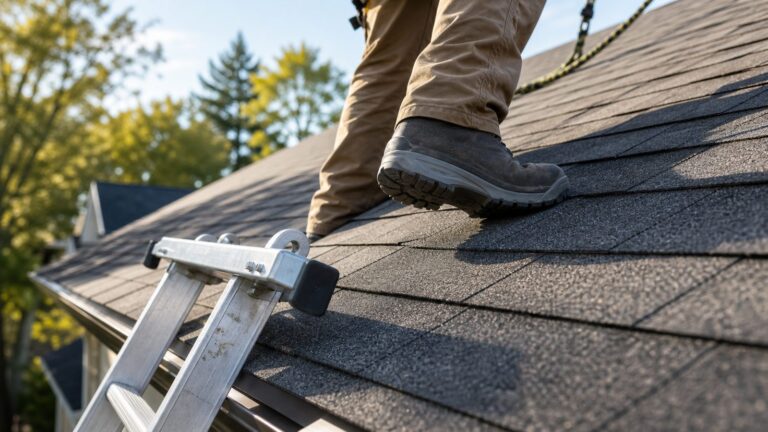
The safest way to remove moss from a typical asphalt-shingle roof is not pressure-washing. First identify the roof material and inspect for damage from the ground and attic. If the roof is dry, sound, accessible, and suitable for carefully controlled work, remove only loose growth in a downward direction, apply a roof-labeled moss treatment exactly as instructed, and rinse only when the label requires it. Then reduce shade, clear debris, correct drainage, and keep gutters open.
If the roof is steep, high, wet, fragile, old, damaged, slate, tile, cedar, or otherwise unfamiliar, hire a qualified roof-cleaning or roofing professional. Moss removal is a fall and roof-damage risk, not an ordinary pressure-washing job.
As an Amazon Associate I earn from qualifying purchases.
First, determine whether it is moss
“Green growth” is not a precise diagnosis. Before choosing a tool or chemical, look at the roof from the ground with binoculars:
What’s actually slowing this PC down?
Pick the symptom - the matching free tool is one click away.
| Growth | Typical appearance | What it means |
|---|---|---|
| Moss | Green, three-dimensional, tufted, or cushion-like growth, often concentrated in shade and along shingle joints | It retains water and debris and can interfere with drainage and the roof’s intended water-shedding path. |
| Algae | Usually flat black, brown, or blue-green streaks or discoloration | Often primarily an appearance issue on asphalt shingles. The Asphalt Roofing Manufacturers Association (ARMA) says algae discoloration has not been shown to reduce asphalt-roof service life. |
| Lichen | Crusty, leafy, gray-green, or firmly attached patches | It may be more difficult to remove without disturbing the roof surface and is a good reason to obtain material-specific advice. |
Do not treat every dark streak as moss. Flat algae staining does not call for the same physical removal approach as thick, three-dimensional moss. ARMA warns that algae staining is often mistaken for moss, fungus, soot, dirt, or tree debris. Conversely, substantial moss should not be dismissed as harmless discoloration.
#1 Best Overall

- USE: Makes washing an RV roof or other surfaces a quick and speedy process
- BEAUTIFUL LOOK: Leaves your RV looking spotless and shining wherever you are
- MEDIUM BRISTLE: Stiffer bristles help scrub the membrane's bores and easily lifts away any dirt and impurities
- COMPATIBILITY: Made for ideal use with Dicor's long telescoping pole, but compatible with a variety of brush poles
- SIZE: Brush measures 10 inches wide for easy cleaning
Why moss grows on roofs
Moss is usually a symptom of a roof surface that stays damp long enough for it to establish. Common contributing conditions include:
- Persistent shade, especially on a north-facing roof slope
- Rain, dew, humidity, or a climate with slow drying
- Leaves, pine needles, soil, and other organic debris
- Clogged gutters or downspouts
- Poor roof drainage or an upper-story downspout emptying onto a lower roof
- Branches that overhang the roof, rub against it, or block airflow
- Roof or attic moisture problems when regrowth is unusually rapid
Removing the visible growth without correcting these conditions usually produces a short-lived result. Shade reduction, better airflow, debris removal, and functional drainage are as important to long-term control as the initial treatment. Persistent regrowth can also justify an attic and roof inspection for leaks, wet insulation, inadequate ventilation, or an aging and porous covering.
Does moss damage a roof?
Moss does not normally “eat through” roofing material, and a small patch does not instantly destroy every roof. The damage mechanism is more practical:
Free tools Windows power users keep installed
One-click scans. No signup required.
- Moss holds moisture and organic debris against the covering.
- It can obstruct the roof’s water-shedding path.
- On asphalt shingles, growth under or between shingle edges can lift or separate them and contribute to granule loss.
- Repeated wetting can accelerate decay in wood shakes and shingles.
- A moss-covered surface becomes slippery, making inspection and maintenance more dangerous.
The ARMA residential asphalt-roofing manual distinguishes moss damage from algae discoloration and warns that moss can damage asphalt shingles and interfere with water shedding. Oregon State University Extension similarly describes moisture retention and debris accumulation as long-term roof risks.
Before you climb: is this a DIY job?
For many homeowners, the safest DIY decision is to stay on the ground and call a professional. A roof can be dry from below while still being slippery, brittle, or structurally unsound. Moss can also conceal lifted shingles, rotten decking, and failed flashing.
DIY may be reasonable only if all of these are true
- You know the roof covering, manufacturer, and relevant cleaning instructions.
- The growth is limited and can be reached without risky roof travel.
- The roof is dry, structurally sound, and not unusually steep or high.
- You have the ladder, access, and fall-protection competence needed for the work.
- There are no solar panels, fragile skylights, exposed wiring, loose tile, fragile slate, or obvious roof damage.
- The treatment’s runoff can be controlled and will not enter a pond, stream, storm drain, rain barrel, vegetable garden, or sensitive planting.
- The product label and roof warranty permit the proposed treatment.
Hire a qualified professional when
- The roof is steep, wet, high, more than one story, or difficult to access.
- Moss is thick enough to conceal the roof surface.
- Shingles are brittle, curled, cracked, loose, or losing substantial granules.
- You see leaks, stained decking, soft wood, damaged flashing, or suspected rot.
- The roof is slate, tile, cedar shake, a membrane, coated metal, or an unfamiliar synthetic product.
- You would need to walk on the roof without a properly designed fall-protection system.
- There is substantial chemical runoff or sensitive landscaping, aquatic life, or stormwater infrastructure nearby.
- Moss returns quickly after a properly completed treatment.
CDC/NIOSH ladder-safety guidance identifies incorrect ladder angle, poor ladder selection, inadequate inspection, overreaching, carrying objects, and excessive force as important fall contributors. NIOSH recommends setting an extension ladder at approximately 75 degrees. OSHA’s residential fall-protection rules generally apply to employees performing covered construction work six feet or more above a lower level; they are a useful safety benchmark, not a statement that a homeowner is automatically safe below six feet or legally covered in the same way.
Inspect the roof before cleaning
Start from the ground with binoculars. Do not climb merely to perform an initial inspection. Then inspect the attic, preferably after wet weather, if it is safely accessible.
From the ground, look for
- Missing, cracked, curled, lifted, or loose shingles
- Exposed fiberglass mat or unusually heavy granule loss
- Moss growing beneath shingle edges
- Damaged ridge caps, valleys, pipe boots, or flashing
- Sagging roof planes
- Branches rubbing against or overhanging the roof
- Blocked gutters and downspouts
- Upper-story downspouts discharging onto lower roof sections
In the attic, look for
- Water stains or active dampness
- Wet insulation
- Mold or persistent condensation
- Damaged or soft roof decking
- Daylight showing through areas that should be sealed
CertainTeed’s roof-maintenance guidance recommends ground-based inspection and checking the attic for stains, wet insulation, or mold. Leave repairs to a qualified roofing professional. Cleaning cannot repair a failed flashing detail, replace missing shingles, or restore rotten decking.
What you need for a compatible, controlled job
The exact equipment depends on the roof and product label, but a typical approved setup may include:
- Binoculars for the initial inspection
- Gloves, eye protection, and any additional PPE required by the treatment label
- A soft-bristle tool or long-handled reach tool only if the roof manufacturer and treatment guidance permit it
- A garden hose or low-pressure applicator, if rinsing is required
- A product specifically labeled for moss control on the particular roof surface
- Plant and site protection materials permitted by the product label
- Gutter-cleaning equipment and a plan for collecting or managing debris
A pressure washer is not required and should not be used on asphalt shingles.
How to remove moss from an asphalt-shingle roof
The following sequence is for a typical asphalt-shingle roof only, and only when the safety conditions above are satisfied. Manufacturer instructions and the product label take priority.
1. Identify the roof and check its instructions
Find the roof covering type, manufacturer, product line if known, installation date, and warranty documents. Note any algae-resistant granules, coatings, ridge metal, unusual flashing, or copper gutters and downspouts. Asphalt shingles, cedar, slate, tile, metal, membranes, and synthetic products do not have identical cleaning tolerances.
Rank #2

- Moss Remover Deck Crevice Cleaning Tool: It is good for removing moss, mud, and dirt from gaps between paving, especially sidewalk cracks and other tight spaces. Made from premium-quality materials for enhanced durability, and efficiently cleans moss, mud, and dirt from sidewalk, driveway, patio, deck, and paver joints
- Moss Remover Deck Crevice Cleaning Tool: Stainless steel poles are hard and do not rust easily. The pole is adjustable in length and you can adjust the length according to your needs. The pole can be adjusted to 59.8 inch at most, so you don't have to bend over and worry about injuring your back
- Moss Remover Deck Crevice Cleaning Tool: Good for removing moss, mud, and dirt. Works on most soil types especially after a good rain or watering
- Moss Remover Deck Crevice Cleaning Tool: There’s a handle so you don’t need to bend down! Good for removing moss, mud, and dirt from the gap between pavement and wall. It can enter the narrowest area with astonishing accuracy, and is very suitable for completely removing small tap rooted weeds
- Moss Remover Deck Crevice Cleaning Tool: Steel wired brush and deck crack crevice cleaning tool are suitable for any areas with moss weed growth, effectively helping you remove clinging moss, mud, and dirt. Whether it's cracks on the walkway, driveway, joints on patio pavers, or slats on decks. If you encounter any problem while using the product, we would sincerely serve you
2. Read the current product label and warranty requirements
Use only a treatment labeled for both the target growth and the roof surface. In the United States, a pesticide product’s label is legally controlling. Before application, record or confirm:
- EPA registration number, if the product is a pesticide
- Active ingredient
- Permitted roof surfaces
- Mixing ratio and application rate
- Required gloves, eye protection, respirator, or other PPE
- Contact or dwell time
- Whether the treatment should be rinsed or left to weather away
- Weather restrictions
- Plant, soil, aquatic, pet, and runoff precautions
- Disposal and equipment-cleaning requirements
The EPA Pesticide Product Label System provides searchable current and historical labels by product, active ingredient, company, and registration number. Do not rely solely on a retailer’s summary or an old online recipe.
3. Choose suitable weather and protect the property
Follow the label’s temperature, rainfall, wind, and drying requirements. As a general safety principle, do not work on a wet, icy, or frost-covered roof, and do not apply a treatment in wind that could carry spray onto neighboring property.
Do these 3 things before closing this tab:
1Clear out junk files and repair common Windows errors2Fix the driver behind crashes, sound loss and screen glitches3Repair Windows errors before they cause bigger problemsBefore applying anything, move or protect outdoor furniture, toys, pet bowls, rain barrels, and garden equipment. Protect plants only in the manner permitted by the label; some products call for pre-wetting or rinsing vegetation, while others require a different approach. Keep people and pets away for the label’s restricted-entry, drying, or re-entry period.
Plan where the runoff will go. Do not allow contaminated water or treatment residue to flow into ponds, streams, storm drains, rainwater-collection systems, or sensitive planting beds. The City of Eugene’s roof-moss handout recommends dry-weather application to limit runoff and warns that many products can harm fish and aquatic invertebrates. The EPA explains that stormwater runoff from hard surfaces can carry pollutants directly to water bodies without treatment.
4. Remove loose leaves and debris without driving material under shingles
Use a nonabrasive method, such as carefully controlled hand removal or a blower operated from a safe position. Direct debris down the slope, never upward beneath shingle laps. Do not stand on an unsafe roof simply to use a blower.
The ARMA manual recommends nonabrasive debris removal and downward-directed airflow.
The Tool Desk
Outbyte Driver Updater FREEFix the driver behind crashes, sound loss and screen glitchesFind Drivers →Outbyte PC Repair FREERepair Windows errors before they cause bigger problemsFix Now →5. Remove only loose moss, gently
Where the manufacturer permits it, a soft-bristle brush or long-handled tool may loosen moss from composite or asphalt shingles. Use light strokes from the ridge toward the eave. Do not pull hard on moss that is embedded beneath a shingle edge; the shingle may lift with it.
Avoid wire brushes, metal scrapers, aggressive push-broom pressure, upward brushing, and any tool that catches shingle edges. Do not walk on wet, treated, or visibly damaged shingles.
This instruction depends on both the growth and the roof. OSU Extension describes gentle brushing for some composite-shingle moss situations, and CertainTeed describes professional use of a cleaning agent followed by gentle brushing. However, ARMA warns against scrubbing asphalt shingles when treating flat algae staining, because friction can remove protective granules. Do not treat every dark streak as a brushing job.
6. Apply a roof-labeled moss treatment
Apply the selected product exactly as its current label directs. Product categories used for roof moss control can include zinc sulfate, potassium salts of fatty acids, and other registered formulations. OSU Extension identifies zinc sulfate monohydrate and potassium salts of fatty acids as possible roof-moss treatment options, but neither category is a universal answer for every roof or site.
Outdated Drivers Are Slowing You Down
One free scan finds every outdated or missing driver and matches the right update for your exact hardware.Free scan · exact hardware matchWindows Errors? Fix Them Before They Spread
Repair common Windows errors and clear accumulated junk for a smoother, more stable PC - no reinstall needed.Free scan · no reinstallFor example, OSU gives a zinc-sulfate-monohydrate example of 3 pounds in 9 gallons of water for approximately 600–1,000 square feet, with stronger treatment rates for heavy growth. That is an OSU example for applicable products and roof conditions—not a recipe to apply to an unknown roof or to substitute for the product label. A specific EPA-registered zinc-sulfate label identifies a product containing 99% zinc sulfate monohydrate and warns that it is toxic to fish and aquatic invertebrates.
Rank #3

- V-shaped Wire Brush: This moss remover brush is covered with V-shaped brass bristles on the wooden head, sturdy, rust-resistant and durable, making it an efficient outdoor tool to precisely remove the moss, weeds and unwanted plants on roof, in corners and narrow gaps in between driveway, crack, slabs, patio stone and paver
- Curved Metal Blade Scraper: Equipped with a curved metal weeding scraper blade on the weed remover brush head top, this weed remover tool moss killer is particularly designed for removal of weeds & moss on roof and in those narrow gaps. All you need is to loose up the weeds roots with this blade scraper and then use the V-shaped wire brush bristles to clean up
- 57'' Long Handle: Provided with 4-section extendable steel poles for this weed puller, easily assembled and sturdy enough for cleaning garden weeds. You do not need to bend over or kneel down to pull those unwanted weeds and moss, free your back from pains. A thoughtful gift for the aged parents, the disabled, the friends with back pains
- 4 Sets of Wood Brush Head: Adopt premium wood material for the outdoor moss b ware head, this deck patio cleaner tool can withstand any demanding of outdoor weed removal and puller tasks, even with the heavy growth of weeds & moss in rainy season. Supplied with 4 brushes heads, longer time to use
- Mitclear's Mission: With this Eco-friendly weed moss remover tool, you can say goodbye to high-pressure hoses and pesticides that harm nature. Mitclear is aimed to provide a resource-saving, effective, chemical-free and safe weeding method
Zinc sulfate also should not be used with copper gutters, downspouts, or flashing because it can corrode copper. Potassium salts of fatty acids may be described as a lower-corrosion option, but “soap-based” or “biodegradable” does not mean harmless to plants or waterways. Use the actual label and control overspray and runoff.
7. Never mix cleaners casually
- Never mix bleach with ammonia, acids, or other cleaning products.
- Do not add dish detergent unless the exact product label permits it.
- Do not combine two roof treatments.
- Do not use laundry detergent as a roof moss killer.
- Do not assume vinegar, baking soda, oxygen bleach, or patio cleaner is safe for roofing.
EPA warns that mixing bleach with other cleaning products can create toxic vapors. Household bleach also creates plant, runoff, roof-finish, and warranty concerns. Consumer instructions publish materially different bleach ratios, so there is no responsible universal homemade bleach recipe for every roof. Use bleach only when the roof manufacturer and the applicable product label specifically permit it.
8. Rinse only when required, and use low pressure
Some treatments are designed to remain on the roof and weather away; others require rinsing after a specified contact time. Follow the label rather than rinsing automatically.
Quick wins for a faster PC:
Scan for outdated or missing drivers - takes under a minuteDriver Scan →Clear out junk files and repair common Windows errorsFree Scan →Fix the driver behind crashes, sound loss and screen glitchesFind Drivers →If rinsing is required:
- Use a garden hose or other low-pressure method.
- Work from the ridge toward the eave.
- Keep the spray directed downward.
- Never spray upward beneath shingle laps.
- Keep runoff away from plants, storm drains, ponds, streams, and rain barrels.
- Do not use a pressure washer.
GAF’s moss-removal guidance and ARMA both distinguish low-pressure, downward rinsing from high-pressure cleaning.
9. Allow time for the treatment to work
Dead moss may not disappear immediately. Depending on the product, it may brown, dry, loosen, and wash away during later rain. GAF notes that treatment can make growth easier to remove, while consumer guidance from This Old House describes some bleach-based treatments taking days before visible die-off. These are product-specific observations, not a guaranteed timeline.
Do not escalate to pressure-washing simply because the roof does not look clean the next day. Wait for the label’s stated period, then reassess from a safe location or have a professional complete any remaining removal.
Methods compared
| Method | Useful for | Main risk or limitation |
|---|---|---|
| Gentle manual removal | Loose moss and debris when the roof and manufacturer permit it | Foot traffic, abrasion, lifted edges, and granule loss |
| Low-pressure hose rinse | Removing loosened material or rinsing a label-required treatment | Can still make the roof slippery or drive water beneath laps if aimed upward |
| Roof-labeled liquid treatment | Killing remaining growth without aggressive scrubbing | Runoff, plant damage, PPE, label restrictions, and delayed results |
| Zinc sulfate | An established moss-control active ingredient | Can corrode copper and harm aquatic life; runoff must be controlled |
| Potassium salts of fatty acids | A soap-based moss-control option identified by OSU Extension | Overspray and runoff can still affect plants and waterways |
| Household bleach | Only certain manufacturer- or label-approved applications | No universal ratio; plant damage, toxic mixing, runoff, roof, and warranty concerns |
| Pressure washing | None on ordinary asphalt shingles | Granule loss, lifted shingles, water intrusion, surface damage, and fall risk |
| Zinc or copper ridge strip | Passive prevention after existing growth is addressed | Limited coverage, installation penetrations, compatibility issues, and no removal of existing moss |
What not to do
- Do not pressure-wash asphalt shingles. High pressure can dislodge protective granules, lift shingles, force water beneath laps, and shorten roof life. A driveway does not have shingle laps, granules, or underlayment to protect.
- Do not spray upward. Water or chemicals can be driven beneath shingle courses.
- Do not use wire brushes or aggressive scraping. These can remove granules, damage wood fibers, crack tiles, or lift edges.
- Do not walk on wet or treated shingles. The surface may be unusually slippery, and treatment can change traction.
- Do not use a universal bleach ratio. Product directions differ, and roof compatibility is not universal.
- Do not use lawn moss killer, laundry detergent, vinegar, baking soda, or patio cleaner unless the product is specifically labeled and approved for that roof.
- Do not install a ridge strip by casually lifting shingles and adding fasteners. Incorrect installation can create leaks and may affect the warranty.
- Do not assume a professional is safe just because they are a contractor. Ask whether they pressure-wash, what product they use, and how they control runoff and falls.
Roof-material exceptions
Asphalt shingles
No pressure-washing is the central rule. Avoid abrasive scrubbing that removes granules, and follow the shingle manufacturer’s cleaning guidance. Treat thick, three-dimensional moss differently from flat algae streaks. Algae-resistant shingles may reduce algae staining, but they are not guaranteed to prevent moss.
See the ARMA algae bulletin, CertainTeed maintenance guidance, and Owens Corning’s asphalt-shingle cleaning guidance.
Cedar shakes and shingles
Wood roofs are especially vulnerable to retained moisture and fiber loss from aggressive cleaning. Cedar-specific maintenance instructions should control the treatment. A professional familiar with wood roofing is preferable when growth is substantial or shakes are deteriorated.
The Cedar Shake & Shingle Bureau and OSU’s wood-roof care guide discuss moisture, cleaning, and preventive treatments. Zinc or copper strips may offer limited control, but compatibility matters for factory-preserved or fire-retardant products. Zinc sulfate also requires particular caution around copper components.
Clay or concrete tile
Walking can crack or dislodge tile. Methods also vary with the tile finish, mortar, underlayment, and manufacturer. Do not transfer an asphalt-shingle or cedar procedure to tile. Use an experienced tile-roof professional for steep, brittle, barrel, or mortar-bedded tile.
Recommended Free Tools
Slate
Slate can crack or delaminate, and walking on it can cause damage even when individual pieces appear sound. Use a slate-roof specialist rather than a general pressure-washing company. The National Slate Association provides slate-specific repair guidance.
Rank #4

- VERSATILE OUTDOOR WEED REMOVER TOOL This multi-purpose weed brush is your go-to solution for refreshing outdoor spaces. It is expertly designed to clear stubborn moss, weeds, and accumulated dirt from narrow crevices. Beyond brick patios and driveway cracks, it excels at detailing stone garden edges, sidewalk joints, poolside pavers, and even hard-to-reach deck gaps, restoring a neat and professionally maintained look to your entire property
- ERGONOMIC STAND-UP OPERATION Say goodbye to backache and knee strain with Jardineer 59-inch extra-long metal handle. Specifically designed for seniors and homeowners with large-area cleaning needs, this stand-up block paving brush allows you to work in a comfortable upright posture. By eliminating the need for bending or crouching, it makes routine maintenance of long driveways and expansive patios much easier and more efficient compared to traditional short-handled weeding tools
- HEAVY DUTY V-SHAPED BRISTLES & SCRAPER Jardineer patio cleaning brush head features 3 rows of stiff, angled steel wire bristles that stay firmly attached and resist shedding even during demanding jobs. The integrated sharp metal patio scraper acts as a powerful hook for prying out deep-rooted weeds and hardened dirt from pavement slabs. Supported by a high-strength metal pole, this moss brush provides the solid leverage needed for tough scraping without the flexing or snapping common in wooden or flimsy handles
- STURDY ASSEMBLY & EASY STORAGE The multi-section iron pole of the patio cleaning brush is designed for quick and straightforward assembly, ensuring a firm and wobble-free connection during operation. When not in use, the detachable handle allow for compact storage in a tool box or on a shelf, keeping your garage organized without occupying much space
- USAGE TIPS & CUSTOMER SUPPORT For the better cleaning results, Jardineer recommend using the metal weed scraper to loosen thick debris before sweeping with the wire brush. Please use on hard surfaces like concrete and stone, and wear gloves for a better grip. Jardineer is dedicated to your satisfaction and is available to assist with any garden brush questions or assembly needs
Metal
Metal roofs do not have asphalt’s granular surface, but painted and coated finishes can be damaged by incompatible chemicals or abrasion. Dissimilar-metal contact can accelerate corrosion. Do not install zinc or copper products against a metal roof without confirming compatibility with the roof and coating manufacturers.
Membranes, synthetic slate, and specialty coatings
Use written, manufacturer-specific cleaning instructions where possible. A cleaner that is acceptable for asphalt shingles may damage a membrane, coated metal, synthetic slate, specialty coating, or photovoltaic equipment.
Independent reader supportYour contribution helps us test, update, and keep practical guides available for everyone.How to keep moss from coming back
Reduce shade carefully
Prune branches that heavily shade or overhang the roof to improve sunlight and airflow and reduce leaf and needle accumulation. Use an arborist for large, hazardous, or structurally important limbs. Do not create a new roof problem by cutting a tree without considering its health or stability.
Remove debris before it becomes a moisture blanket
Clear leaves, pine needles, branches, and soil with a nonabrasive, downward-directed method. Do not scrape debris uphill beneath shingle edges. Routine ground inspections make this work easier to schedule before moss becomes thick.
Keep gutters and downspouts functional
Clean gutters and confirm that downspouts discharge safely away from the foundation and do not empty onto lower roof sections. Overflowing eaves and upper-roof drainage extend wetness and encourage growth.
Investigate fast regrowth
If moss returns quickly after proper cleaning, check shade, debris, drainage, roof-plane leaks, gutter leaks, interior humidity, attic ventilation, roof age, and the condition of the covering. GAF’s zinc-strip instructions note that continuing regrowth may indicate an underlying issue such as inadequate attic ventilation. Ventilation is only one possibility; it does not explain every case.
Consider a compatible ridge strip
Zinc strips can help inhibit growth below the strip as rain carries dissolved metal down the roof. They do not remove existing moss, and they do not provide full-roof protection. Complex roofs may need protection along hips as well as the ridge, and broad roof sections may require product-specific placement.
For one GAF Master Flow product, the instructions specify installation on both sides of the ridge, no more than one inch beneath asphalt shingles, corrosion-resistant nails with neoprene washers spaced 12 inches apart, and a possible second strip when the roof extends more than 14 feet below the first. Those figures belong to that product’s instructions; they are not a universal rule for every strip, roof material, or climate.
Cedar guidance describes strip control over a more limited number of courses, which differs from the GAF product’s roof-distance instructions. Resolve that difference by following the exact product instructions and the roof manufacturer’s requirements rather than relying on a generic “one strip protects X feet” claim. Installation also creates penetrations and can cause leaks if done incorrectly, so a roofer should install it when access is difficult or the roof is under warranty.
Choose the right roof at replacement
At reroofing, ask about algae-resistant shingles. Copper-containing granules can resist blue-green algae staining. However, algae-resistant does not mean moss-proof: Owens Corning distinguishes algae-resistant products from products marketed as moss-resistant. Selection should account for the roof’s shade, moisture, material, warranty, and local conditions.
When cleaning is the wrong answer
Moss removal can expose damage without fixing it. Request a roofing evaluation rather than a cleaning-only quote when you see:
- Missing, cracked, loose, or widely lifted shingles
- Exposed mat or widespread granule loss
- Failed flashing, ridge caps, valleys, or pipe boots
- Leaks, stained decking, wet insulation, or soft wood
- Sagging roof planes
- Growth that conceals much of the roof surface
- A roof near the end of its expected service life with several other defects
An old roof with widespread deterioration may be a replacement candidate. Cleaning it aggressively can remove remaining granules or turn a marginal covering into a leaking one.
Best Value

- White tampico
- 2 inch trim
- 7 inch length
How to choose a roof-cleaning professional
Do not accept “we soft-wash everything” as a complete answer. Soft washing should mean a controlled, low-pressure chemical application—not a blanket endorsement of pressure-washer equipment or one chemical for every material.
Ask each contractor:
- What roof material do you see, and what method do you use for it?
- Will you pressure-wash any part of the roof?
- What product and active ingredient will you apply?
- What is the EPA registration number, if applicable?
- Will you provide the current product label or safety data?
- How will you protect plants, siding, windows, gutters, pets, ponds, rain barrels, and storm drains?
- Will you remove thick moss manually before treatment?
- How will workers access the roof and provide fall protection?
- Will you inspect for lifted shingles, flashing defects, leaks, and decking damage?
- Will you clean gutters and remove treatment debris?
- Could the work affect the roof manufacturer’s warranty?
- Do you carry current general-liability and workers’ compensation insurance?
- Can you provide local references and a written scope?
The National Roofing Contractors Association recommends checking credentials, references, liability insurance, and workers’ compensation certificates. A written scope should state the roof material, access method, treatment product, runoff controls, whether rinsing is included, expected delayed results, cleanup, inspection findings, and exclusions for repairs.
Quick decision guide
- Flat black or brown streaks only? It may be algae rather than moss. Avoid abrasive scrubbing and confirm the manufacturer’s preferred appearance-treatment method.
- Three-dimensional green growth? Treat it as moss, but inspect the roof before removing it.
- Any leak, sagging, rotten decking, brittle shingles, or severe granule loss? Stop and obtain a roof evaluation.
- Steep, wet, high, fragile, slate, tile, cedar, membrane, coated, or unfamiliar roof? Hire a specialist.
- Sound and safely accessible asphalt roof? Use only a compatible, roof-labeled treatment and nonabrasive, downward-directed work.
- After treatment? Reduce shade, remove debris, correct drainage, clean gutters, and consider product-specific ridge protection.
Sources and further guidance
For technical and product-specific details, consult the ARMA Residential Asphalt Roofing Manual, ARMA’s revised June 2024 algae bulletin, the relevant roof manufacturer, and the current product label. Safety and runoff guidance is also available from CDC/NIOSH, EPA, and local stormwater authorities.
Frequently Asked Questions
Can I pressure-wash moss off my roof?
Not from ordinary asphalt shingles. High pressure can remove protective granules, lift shingles, force water beneath laps, damage flashing, and shorten roof life. A low-pressure hose used downward is different from pressure-washing, and it should be used only when the product label or roof guidance calls for rinsing.
Can I use bleach to remove roof moss?
Only if the roof manufacturer and the applicable product label permit it. There is no universal household bleach ratio for every roof. Bleach can damage plants and create runoff concerns, and it must never be mixed with ammonia, acids, or other cleaners. Follow the current label and its PPE, contact-time, rinse, and disposal instructions.
Will vinegar remove moss from a roof?
Do not assume vinegar is roof-safe or effective. Unless a product is specifically labeled for the roof surface and target growth, it should not be used as a roof treatment. The same caution applies to baking soda, laundry detergent, patio cleaner, and lawn moss killer.
Will a zinc strip remove existing moss?
No. A zinc strip is a preventive measure that may inhibit growth below it after rain carries dissolved metal down the roof. It does not remove existing moss and does not protect every part of a complex roof. Installation and coverage are product-specific, and zinc sulfate runoff can harm aquatic life or corrode copper components.
How long does it take for treated moss to disappear?
Results vary by product, weather, growth thickness, and roof material. Some treatments kill moss first, after which it browns, loosens, and washes away over later rain. Follow the label’s waiting period rather than pressure-washing immediately because the roof still looks green.
Will moss come back after cleaning?
It can, especially where shade, dampness, leaves, poor drainage, overflowing gutters, upper-roof discharge, or attic moisture remain. Prune appropriate branches, remove debris, keep gutters open, correct drainage, and investigate unusually rapid regrowth.
Can I clean a slate or tile roof the same way as asphalt shingles?
No. Slate can crack or delaminate, and walking on it can cause damage. Tile can crack or dislodge, with methods also affected by finish, mortar, and underlayment. Use a slate or tile specialist and follow the material manufacturer’s instructions.
Should I clean a roof that is already old or damaged?
Not before obtaining a roofing evaluation. Missing or lifted shingles, severe granule loss, exposed mat, leaks, soft decking, failed flashing, sagging, or widespread concealed moss may indicate that repair or replacement is more appropriate than cleaning.
What if I have copper gutters or flashing?
Do not use zinc sulfate without confirming compatibility. OSU Extension cautions that zinc sulfate can corrode copper. Also check compatibility before installing zinc or copper ridge products near other roof metals, coatings, or specialty materials.
What should a roof-cleaning contractor tell me before starting?
The contractor should identify the roof material, explain the cleaning method, disclose the product and active ingredient, provide the current label or EPA registration information when applicable, explain plant and runoff protection, describe fall protection, confirm insurance, discuss warranty implications, and provide a written scope.
The Bottom Line
For most asphalt-shingle roofs, the winning strategy is gentle, label-directed treatment—not force. Confirm that the growth is moss, inspect for roof damage, avoid pressure-washing and abrasive tools, control chemical runoff, and use a qualified professional whenever the roof or access is unsafe. Afterward, fix the damp conditions that allowed moss to grow: shade, debris, drainage, gutters, and unresolved moisture.
Quick Recap
Product prices and availability are accurate as of the date/time indicated and are subject to change. Any price and availability information displayed on Amazon at the time of purchase will apply.
The Tool Desk
Outbyte Driver Updater FREEFix the driver behind crashes, sound loss and screen glitchesFind Drivers →Outbyte PC Repair FREERepair Windows errors before they cause bigger problemsFix Now →