What’s actually slowing this PC down?
Pick the symptom - the matching free tool is one click away.
A sewer gas smell in a house usually comes from a dry or defective plumbing trap, failed toilet seal, loose cleanout, blocked vent, damaged drain pipe, septic-system fault, or sulfur in the water supply. For a mild, localized odor, refill rarely used traps first and trace the pattern. If the odor is strong, widespread, or accompanied by symptoms, leave immediately and call emergency services from a safe location.
Do not enter a crawlspace, basement pit, septic tank, manhole, sewer, or other confined space to investigate. Hydrogen sulfide may be present; it is toxic and flammable, and your ability to smell it can disappear as exposure increases.
As an Amazon Associate I earn from qualifying purchases.
First, make sure the air is safe
A sewer-gas smell is usually a plumbing, drainage, septic, or water-supply problem—not something to cover with fragrance. If the odor is strong or widespread, or anyone has dizziness, headache, nausea, eye or throat irritation, breathing difficulty, confusion, or becomes incapacitated, leave the house or affected area and call emergency services from a safe location.
Do not enter a basement pit, crawlspace, septic tank, manhole, sewer, or other confined space to investigate or rescue someone. Hydrogen sulfide may be present in sewer gas. It is colorless, flammable, and toxic, and your ability to smell it can disappear as exposure increases. A fading rotten-egg odor does not prove that the air is safe.
#1 Best Overall

- Perfect for upgrading kitchen and bathroom sink fixtures, ensuring seamless functionality and style.
- Comparable in quality to products found in your neighborhood supermarket, guaranteeing reliability and durability.
- Engineered to prevent any leaks when installed correctly, providing peace of mind and hassle-free maintenance.
- Versatile inlet design, accommodating both 1.5" and 1.25" tailpieces with included TPE washers for a secure fit.
- Effortless compatibility with 1.5" waste connectors or solvent weld threaded adapters with 1.5" plastic pipes, ensuring smooth drainage and connectivity.
Avoid smoking, candles, flames, and operating electrical equipment in a heavily contaminated or poorly ventilated area. Ventilate only if you can do so without entering or remaining in the affected space. An ordinary fan is not a substitute for atmospheric testing or professional assessment.
The fastest safe answer
For a mild, localized odor with no safety symptoms, begin by mapping where and when it occurs, then refill every rarely used plumbing trap. A dry P-trap is the most common homeowner-level cause. If the smell persists or returns quickly, inspect visible plumbing and toilet seals, then have a licensed plumber check the drain system and venting. On a septic property, treat outdoor sewage odor, wet ground, backups, and multiple slow drains as septic-system warning signs rather than a simple dry-drain problem.
What sewer gas is—and how it enters a house
Sewer gas is not one single chemical. It is a mixture of gases produced by wastewater and organic decomposition; hydrogen sulfide may be one component. In a correctly installed and maintained drainage system, water-filled traps block indoor air from the sewer, while vent pipes equalize pressure and route gases outdoors.
Odor gets inside when that water barrier is missing, when pressure changes pull water out of a trap, or when a drain, toilet seal, vent, or sewer pipe leaks. The most common entry points are:
- Dry P-traps: Water evaporates from an infrequently used floor drain, shower, tub, sink, laundry drain, or utility-room fixture.
- Damaged or incorrectly installed traps: A cracked trap, failed connection, missing trap, or improper S-trap arrangement can leave a route around the intended water seal.
- Blocked or defective vents: Debris, ice, a disconnected pipe, incorrect sizing, or poor installation can create pressure changes that siphon traps or push odors indoors.
- Loose cleanout plugs: A missing or unsecured plug can release sewer gas directly into a basement, garage, or utility area.
- Failed toilet seals: A worn wax ring or defective closet-flange connection can allow odor and leakage around the toilet base.
- Damaged drain or sewer piping: Cracks, separated joints, corrosion, or concealed leaks can release gas inside walls, ceilings, crawlspaces, or floors.
- Septic-system problems: A tank, drainfield, roof vent, or other component can be the source, especially when outdoor sewage odor is accompanied by drainage symptoms.
- A non-plumbing source: Sulfur in well water, a water-heater reaction, or an outside source can smell like sewer gas. Odor that occurs only at faucets or only in hot water points toward the water supply rather than a drain.
Use the odor pattern to narrow the source
The strongest-smelling room is not always the point where gas entered. Air movement can carry odor through a house, and gases may collect in a different room or at a lower level. Note the strongest location, whether the smell is constant or intermittent, and what happens immediately before it appears.
| Pattern | Likely possibilities | Next step |
|---|---|---|
| One bathroom, laundry room, or basement drain | Dry or defective trap | Refill the trap and monitor it. If the odor returns, investigate siphoning, leaks, or venting. |
| Odor concentrated around a toilet base | Failed wax ring, flange, or drain connection | Check for rocking, dampness, staining, or odor at the floor connection. |
| Several fixtures smell, gurgle, or drain slowly | Vent defect, blocked drain, or main sewer problem | Stop treating individual drains and arrange a plumbing inspection. |
| Basement, utility room, or garage odor | Floor drain, cleanout plug, exposed pipe, or concealed leak | Check only accessible components without opening a contaminated cleanout. |
| Outdoor odor near a tank or drainfield | Septic-system problem | Arrange a septic inspection, particularly if there are wet spots, backups, or lush vegetation. |
| Odor only while using hot water or only at faucets | Water heater, well water, or sulfur in the water supply | Compare hot and cold water and contact the water utility, well professional, or plumber. |
| Odor after rain or during wind | Roof vent, exterior sewer connection, septic vent, or an outdoor source | Do not climb onto an unsafe roof; have the venting and exterior system checked. |
Step-by-step: identify the source safely
1. Record when the odor appears
Write down whether the smell follows flushing, showering, laundry, running a particular sink, heavy rain, wind, or a period when the house was closed. Also note whether it is limited to hot water, whether more than one fixture is affected, and whether drains gurgle.
Rank #2

- One-stop Installation and Great Time Saver: The 1-1/2" sink trap kit is designed for easy installation , which includes all the needed parts and sink drain pipes to install or repair your kitchen sink drain, you don't have to spend much time fumbling around in the store, plumbing department trying to find the right thing,making it a user-friendly solution for all your kitchen sink drainage worries.
- Universal Compatibility kitchen sink drain kit: This kitchen sink plumbing kit includes all essential tubular parts to remove guesswork during repairs or modifications. The kitchen sink drain pipe are designed for easy installation by homeowners and PROs, allowing configuration as P trap kit, S trap drain kit, end outlet waste, center outlet waste, or washing machine trap. Fits most sink drains with standard 1 1/2" drain pipes, whether connecting to wall or floor drainage systems.
- Budget-Friendly Drain Solution:This sink plumbing kit includes J-Bend pipes,Wall bend tubular,slip joint extension tube ,slip joint nut ,tailpiece and slip joint washers ,most of the time , make repairs to problem areas of kitchen drain system or attach your kitchen sink drain , utility sink laundry tub or lavatory to the wall or floor , you only need buy this completed 30-piece kit and without buy other drain tubular,so that you can save costs.
- Leak-resistant Design, No Tools Needed: This slip joint easily connects sink drain pipe kit and kitchen sink trap. Just hand-tighten the slip nut with the included high performance TPE slip joint washers — It seals tight in seconds, effectively reducing leak risks.
- Sturdy Build: Made with tough engineering polyvinyl chloride plastic(PVC), this Sink drain kit withstands high water temperatures, resists alkali, and reduces cracking risks. The kitchen sink drain kit stays strong through daily use, working reliably year after year in your bathroom or kitchen.
This simple record helps distinguish evaporation from pressure or drainage problems. For example, an odor from one unused floor drain that improves after water is added suggests a dry trap. An odor that returns whenever another fixture drains suggests siphoning or defective venting.
The Tool Desk
Outbyte Driver Updater FREEFix the driver behind crashes, sound loss and screen glitchesFind Drivers →Outbyte PC Repair FREERepair Windows errors before they cause bigger problemsFix Now →2. Refill every rarely used trap
Run water into every sink, shower, tub, floor drain, laundry drain, utility sink, and other fixture that may have been unused. For a floor drain, add water slowly until the trap seal is restored. Include drains in mechanical rooms, basements, garages, guest bathrooms, and other obscure locations; these are easy to overlook.
For a useful diagnostic, refill one suspect drain at a time and observe whether the odor decreases. Then check whether it returns. If it comes back quickly, the problem may be a leaking trap, an improperly installed trap, a siphoning trap, or a venting defect—not simple evaporation.
After confirming that a rarely used trap is sound, local plumbing guidance may permit a small amount of a slow-evaporating liquid above the restored water seal. EPA materials identify USP mineral oil as an example of a nontoxic, slow-evaporating option for appropriate infrequently used traps. Follow local requirements and the product label. Never substitute automotive fluids, solvents, or unknown chemicals, and do not pour bleach mixtures into a trap as a maintenance treatment.
3. Inspect accessible cleanouts and exposed piping
Look at visible drain piping for cracks, separated joints, corrosion, dampness, sewage staining, or residue. Check that accessible cleanout plugs are present and appear properly seated. A loose cleanout can be a direct odor pathway.
Free tools Windows power users keep installed
One-click scans. No signup required.
Do not casually remove a cleanout plug when there is a strong odor, visible sewage, or suspected pressure behind it. Wastewater may discharge unexpectedly, and opening a contaminated fitting can expose you to hazardous air. Stop and call a plumber if the cleanout is damaged, missing, difficult to access, or surrounded by sewage.
4. Check the toilet-to-floor connection
If the smell is strongest around a toilet, gently check whether the toilet rocks or moves. Look for dampness, staining, soft flooring, or odor concentrated at the base. These signs can indicate a failed wax ring, closet flange, or subfloor connection.
Rank #3
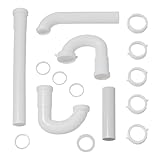
- UNIVERSAL INSTALLATION: Our complete bathroom sink drain repair kit includes several replacement pipes and fittings to fit most sinks with drainage that connects to the wall or to the floor.
- COST-EFFECTIVE SOLUTION: Our bathroom sink drain assembly is a versatile and cost-effective option for making repairs to problem areas like J-bend and P-trap sink pipes and multiple installation options.
- EASY TO INSTALL: Our bathroom sink plumbing kit comes with a detailed instruction sheet that removes the guesswork from any repair task or modification. Plumbing parts are easy to use for homeowners and pros.
- STURDY DRAIN PIPES: Every piece of our bathroom sink repair kit is made of durable thermoplastic from the drainage pipes to the polyethylene washers. Get peace of mind working with reliable components.
- WE UNDERSTAND YOUR NEEDS: At Plumbcraft we pride ourselves on getting to know our customers to fully understand their needs. We offer practical advice and cost effective solutions for your home.
A toilet wax ring is an appropriate replacement part only when inspection indicates that the toilet seal is the problem. Resetting a toilet requires removing it, inspecting the flange and surrounding floor, installing the correct seal, and setting the toilet level and securely. Caulking around the base may hide evidence temporarily, but it does not repair a failed seal or an active leak. If the toilet rocks, the flange is damaged, or the floor is soft, use a plumber rather than sealing over the problem.
5. Look for signs of a venting or main-drain problem
Venting should move sewer gases outdoors and allow drains to operate without abnormal pressure. Suspect a vent or broader drainage problem when you notice:
- Gurgling drains or toilets
- Several fixtures draining slowly
- Trap water disappearing after another fixture drains
- Recurring odor even after all traps have been refilled
- Odor that began after plumbing work or a renovation
- Water backing up into a tub, floor drain, or other low fixture
Roof vents can be blocked by debris or ice, but do not climb onto a wet, steep, icy, or otherwise unsafe roof. A plumber can inspect or clear a vent and determine whether it is blocked, disconnected, undersized, improperly terminated, or incorrectly connected. A recurring problem may require inspection of concealed piping rather than another dose of drain cleaner.
6. Separate septic problems from indoor plumbing problems
If the home uses septic, inspect the pattern around the property without entering or opening the tank. Arrange professional help when sewer odors occur outdoors near the tank or drainfield, or when you see:
- Backups or sewage surfacing
- Several slow drains at once
- Gurgling fixtures
- Standing water or persistently wet ground near the tank or drainfield
- Unusually lush or fast-growing vegetation over part of the system
- Repeated outdoor sewage odors
These signs can indicate a failing component, hydraulic overload, a blocked line, or drainfield trouble. Repeatedly using drain cleaner will not correct a septic failure and may create additional handling and environmental problems. A septic inspection can identify whether the tank, outlet, distribution components, or drainfield needs attention; septic tank pumping may be appropriate, but pumping alone is not a cure for every septic defect.
7. Test whether the smell is actually in the water
Compare hot and cold water at more than one faucet. If the rotten-egg odor appears only in hot water, the water heater may be involved. If it appears in both hot and cold water, particularly at every faucet, sulfur in well water or the incoming supply is another possibility.
In that situation, do not assume the drain system is responsible. Contact the water utility if you use municipal water, or ask a licensed plumber and qualified well-water professional about testing, the water heater, and any required treatment. A drain odor can be stronger near a sink, but the source may still be the water itself.
Rank #4

- Our p trap Crafted from top plastic, specifically designed to withstand extreme water temperatures, resist alkali, and prevent cracking. standing up to the rigors of daily use while resisting rust and chemical corrosion.Comparable in quality to products found in your neighborhood supermarket.
- The innovative leak - proof design is a standout feature. Our engineers have meticulously designed the joints, seals and thickened silicone pad to create a tight fit, eliminating the risk of leaks that can lead to water damage in your kitchen.
- The innovative leak - proof design is a standout feature. Our engineers have meticulously designed the joints, seals and thickened silicone pad to create a tight fit, eliminating the risk of leaks that can lead to water damage in your kitchen. This sink plumbing kit includes J-Bend pipes, Wall bend tubular,slip joint extension tube ,slip joint nut and slip joint washers ,most of the time, make repairs to problem areas of bathroom and kitchen drain system, kitchen sink drain to the wall or floor.
- Installation is a breeze. We've included all the necessary parts and a set of simple, step - by - step instructions. Whether you're a DIY enthusiast or just looking to make a quick fix, you'll find that setting up this drain pipe is straightforward and stress - free.
- The built - in odor - blocking trap is a game - changer. It stops foul sewer smells from seeping into your kitchen, ensuring that your cooking and dining area remains fresh and inviting. Upgrade your kitchen plumbing with this reliable and functional drain pipe today!
How to remove the smell after fixing the source
Odor removal is primarily source control. Once the entry point is corrected:
- Restore trap seals: Refill dry traps and periodically run water in rarely used fixtures.
- Repair the failed component: Replace defective traps, cleanout plugs, drain piping, toilet seals, or vent components as appropriate.
- Clean contaminated surfaces: If sewage has leaked, use suitable gloves and eye protection, ventilate safely, and clean affected surfaces with products used according to their labels. Porous materials may require professional remediation.
- Ventilate after correction: Once the source is controlled and the area is safe to occupy, exchange indoor air. Ventilation cannot compensate for an active leak.
- Do not mask the odor: Air fresheners and scented cleaners may hide the warning without removing the gas. Ozone generators are not a substitute for fixing the plumbing and can create their own indoor-air concerns.
Never mix drain cleaners with bleach, acids, ammonia, or other chemicals. Chemical reactions can generate toxic gases, heat, or dangerous splashes. If a drain cleaner has already been used and the area is producing fumes, leave it and call for professional guidance rather than adding another product.
Prevent recurring dry-trap odors
Make a periodic home-maintenance list for guest bathrooms, floor drains, laundry rooms, garages, mechanical rooms, and other fixtures that are rarely used. Run water into each one often enough to maintain a water seal, especially during dry weather or extended vacancies.
Windows Errors? Fix Them Before They Spread
Repair common Windows errors and clear accumulated junk for a smoother, more stable PC - no reinstall needed.Free scan · no reinstallCrashes, No Sound, or Screen Glitches?
Random freezes, missing sound and display glitches usually trace back to one bad driver. Find and replace yours safely.Free scan · under a minuteFor a recurring floor-drain problem, an automatic drain trap primer can add water to the trap when the plumbing system operates. It is a prevention device, not an odor cure. The appropriate model, connection method, and installation depend on the drain and local plumbing requirements; installation may need a plumber, particularly where new water or waste connections are involved.
Also investigate why a trap keeps losing its seal. Fast evaporation, siphoning, a blocked vent, incorrect piping, or a damaged trap requires a different remedy. Repeatedly adding water without finding the reason can delay a necessary repair.
Independent reader supportYour contribution helps us test, update, and keep practical guides available for everyone.When to call a professional
Call a licensed plumber when the odor persists after traps are refilled, returns quickly, affects multiple fixtures, accompanies gurgling or slow drainage, comes from a toilet base, began after plumbing work, or appears near a wall, ceiling, crawlspace, or inaccessible pipe. A sewer camera inspection may help locate breaks, separated joints, or a damaged building sewer. A plumbing vent inspection can address blocked, disconnected, undersized, or improperly terminated vents.
If you are searching for a licensed plumber near me, verify that the provider is licensed where required and ask whether the proposed work includes diagnosis of the odor source—not merely deodorizing or applying drain cleaner. EPA guidance favors correcting failed or unattached sewer-vent components before proceeding with home upgrades, so persistent odor should be resolved before walls, floors, or fixtures are enclosed or renovated.
Quick wins for a faster PC:
Fix the driver behind crashes, sound loss and screen glitchesFind Drivers →Clear out junk files and repair common Windows errorsFree Scan →Best Value

- PREMIUM QUALITY & DURABILITY – Built from polypropylene tubular construction with a PVC Marvel adapter, this P-Trap kit ensures long-lasting durability, corrosion resistance, and a leak-free connection for all your plumbing needs.
- CERTIFIED & RELIABLE – Proudly Made in the USA, this trap meets top industry standards: IAPMO approved, NSF certified, CSA certified, UPC certified, and F409 compliant – guaranteeing safety, reliability, and peace of mind.
- STRONG & SECURE CONNECTION – Designed with ribbed threaded nuts for maximum strength, easy tightening, and a sturdy leak-proof connection that prevents loosening over time.
- COMPLETE INSTALLATION KIT – Includes everything you need for a quick and hassle-free setup: J-bend, wall arm, PVC Marvel adapter, 3 ribbed nuts, 1 reducing poly washer, and 2 poly washers – no extra parts required.
- UNIVERSAL PLUMBING APPLICATION – Ideal for kitchen sinks, bathroom sinks, utility sinks, and laundry tubs, this 1-1/4" P-Trap kit is available in both PVC and ABS materials to suit a wide range of plumbing systems.
Call a septic professional for backups, sewage surfacing, standing water, wet or unusually lush areas near the tank or drainfield, repeated outdoor septic odors, or several drainage symptoms at once. Contact the local sewer utility when the odor is strongest outdoors, appears near a manhole or street connection, affects neighboring properties, or may come from the public sewer rather than the house.
What not to do
- Do not enter a crawlspace, pit, tank, sewer, or other confined space to locate the smell.
- Do not rely on your nose as a gas detector; odor fatigue can occur.
- Do not use a flame, candle, cigarette, or ordinary electrical equipment in a suspected accumulation.
- Do not open a pressurized or contaminated cleanout casually.
- Do not climb onto an unsafe roof to inspect a vent.
- Do not mix drain cleaners, bleach, acids, ammonia, or other chemicals.
- Do not use air fresheners, ozone generators, or fragrance as the repair.
- Do not assume every rotten-egg odor is a drain problem; compare hot and cold water when appropriate.
Professional gas monitoring is not a homeowner entry pass
Qualified plumbers, septic professionals, inspectors, and industrial responders may use a properly selected and maintained hydrogen sulfide gas monitor or four-gas monitor when assessing an area. A detector must not be treated as permission for a homeowner to enter a confined space, investigate a septic tank, or remain in a suspected hazardous atmosphere. Monitoring, ventilation, rescue, and entry procedures require appropriate training and equipment; in an emergency, leave and call for help.
The central fix is simple even when the diagnosis is not: find and repair the path that lets sewer-related gases indoors. Refill a dry trap when that is clearly the cause, but persistent, recurring, widespread, or concealed odors need professional plumbing, sewer, septic, or water-supply diagnosis.
Frequently Asked Questions
Is a sewer gas smell dangerous?
Yes. Sewer gas can contain hydrogen sulfide, which is toxic and flammable. Leave if the odor is strong or widespread, if anyone has symptoms, or if someone is incapacitated, and call emergency services from a safe location. Do not enter a confined space or rely on smell as a continuing warning.
Do these 3 things before closing this tab:
1Repair Windows errors before they cause bigger problems2Fix the driver behind crashes, sound loss and screen glitches3Clear out junk files and repair common Windows errorsWhy does the sewer smell return after I add water to the drain?
A dry trap may have been refilled, but a damaged trap, siphoning, leaking connection, blocked vent, or other drain defect may still be allowing gas inside. Odor that returns quickly should be professionally diagnosed rather than repeatedly treated with water or drain cleaner.
Will bleach get rid of sewer gas smell?
No. Bleach does not repair a dry trap, failed seal, blocked vent, or leaking pipe, and mixing bleach with drain cleaner, acids, ammonia, or other chemicals can create toxic gases and heat. Fix the entry point instead.
How can I tell whether the smell is in my water instead of my drain?
Compare hot and cold water at several faucets. Odor only in hot water can point to the water heater; odor in both hot and cold water may indicate sulfur in well water or the incoming supply. Contact the water utility, well professional, or plumber rather than assuming the drain is the source.
Should I buy a hydrogen sulfide detector to investigate the smell?
A hydrogen-sulfide-capable monitor may be appropriate for trained professionals, but owning one does not make it safe to enter a crawlspace, septic tank, pit, sewer, or other confined space. Homeowners should leave a suspected hazardous area and obtain professional or emergency assistance.
Recommended Free Tools
The Bottom Line
Bottom line: Start with safety, then refill rarely used traps and map the odor pattern. If the smell returns, affects several fixtures, surrounds a toilet, comes from concealed areas, or is associated with septic warning signs, stop masking it and arrange a qualified inspection.
Quick Recap
Product prices and availability are accurate as of the date/time indicated and are subject to change. Any price and availability information displayed on Amazon at the time of purchase will apply.