The Thanksgiving cactus (Schlumbergera truncata) needs care more like a tropical houseplant than a desert cactus. Give it bright filtered light, an airy organic potting mix, thorough but well-timed watering, moderate humidity, and protection from hot sun and temperature swings. To encourage flowers in late fall, provide about five to six weeks of cool nights and uninterrupted long darkness—usually at least 12 to 13 hours each night, with 14 hours a practical target for dependable results.
With the right seasonal routine, a Thanksgiving cactus can grow for many years and flower reliably. The main mistakes are treating it like a dry desert cactus, keeping its roots in saturated soil, exposing it to hot direct sun, or disturbing it after flower buds form.
As an Amazon Associate I earn from qualifying purchases.
| Care need | Best target |
|---|---|
| Light | Bright indirect or filtered light; an east-facing window is often suitable |
| Water | Water thoroughly when the upper portion of the mix has dried somewhat; let excess drain completely |
| Soil | Airy, organic, moisture-retentive but fast-draining mix |
| Active-growth temperature | Approximately 65–70°F indoors |
| Fall bud initiation | Cool nights around 55–65°F and at least 12–13 hours of uninterrupted darkness |
| Humidity | Moderately humid air, without waterlogged soil or stagnant air |
| Fertilizer | Diluted balanced houseplant fertilizer about monthly during spring and summer growth |
| Repotting | In spring or after flowering, only when the roots or potting mix need attention |
What is a Thanksgiving cactus?
The Thanksgiving cactus is the accepted species Schlumbergera truncata, a branching, trailing succulent native to southeastern Brazil. It is also sold under names including crab cactus, crab’s-claw cactus, false Christmas cactus, and holiday cactus. The species grows as an epiphyte or lithophyte—on trees or rocks in a rainforest environment—rather than as a deeply rooted plant in hot, dry desert soil. Kew’s Plants of the World Online identifies S. truncata as a southeastern Brazilian succulent epiphyte.
Its flattened green structures are stem segments, sometimes called cladodes or phylloclades, rather than ordinary leaves. The segments join together to form arching branches that eventually trail over the edge of a container. A typical mature plant may reach roughly 12 inches tall and 24 inches wide, although an old, well-grown specimen can become considerably larger.
#1 Best Overall

- Important Info to Consider: During plant transportation, there may be instances of temporary dehydration as well as broken parts. In most cases, plants have the ability to recover. Broken branches can even be used for propagation, giving rise to new plants. Your understanding and patience in this regard are greatly appreciated.
- Stylish Home Decor: plants add character and creativity to your living space. Also let your creativity flow in crafting.
- Thoughtful Gifts:plants make wonderful gifts for various occasions.
That rainforest origin explains the care routine: the plant appreciates regular access to moisture, organic matter, humidity, and air around its roots. It still needs excellent drainage, however. “Keep it moist” does not mean leave it saturated.
How to identify Thanksgiving, Christmas, and Easter cacti
Retail labels are unreliable. Many plants sold as Christmas cactus are actually Thanksgiving cactus or hybrids, and growers can manipulate light and temperature to make plants flower outside their usual season. Use the stem margins first, and treat bloom date as supporting—not conclusive—evidence.
| Plant | Stem margin | Flower clues | Usual bloom period |
|---|---|---|---|
| Thanksgiving cactus Schlumbergera truncata |
Two to four pointed, claw- or tooth-like projections on each segment | Tubular flowers; anthers are usually yellow | Late November through December |
| True Christmas cactus Usually Schlumbergera × buckleyi or related material |
Rounded or scalloped segment margins | Tubular, more pendulous flowers; anthers are often purplish-brown | Late December into winter |
| Easter cactus Commonly Hatiora or Rhipsalidopsis gaertneri in horticultural references |
Rounded segments, often with small bristles | More star-shaped flowers | Spring |
Iowa State University Extension illustrates the differences in stem margins and flowers. A plant blooming in December is not automatically a true Christmas cactus: commercial forcing, cultivar, temperature, and prior care can all shift flowering time.
Crashes, No Sound, or Screen Glitches?
Random freezes, missing sound and display glitches usually trace back to one bad driver. Find and replace yours safely.Free scan · under a minutePC Slower Than It Used to Be?
A free scan shows the junk files, broken settings and background clutter dragging Windows down - then fixes them in one click.Free scan · Windows 10 & 11Light: bright, filtered, and consistent
Place the plant in bright indirect light or bright filtered light. An east-facing window is often a good default because it provides strong morning light without the most intense afternoon heat. A south- or west-facing window can also work, but use a sheer curtain during periods of hot, direct sun.
- Too much intense sun: segments may bleach, yellow, redden, or develop scorch damage.
- Too little light: growth can become weak and sparse, and flowering may be poor.
- Outdoor placement: use bright shade or filtered light under a tree or beneath a covered patio rather than full midday sun.
- Seasonal changes: winter sun can be useful, but do not move a plant abruptly from shade into direct sunlight. Acclimate it gradually.
Dust can collect on the broad, flat segments and reduce the light they intercept. Wipe them gently from time to time with a clean, slightly damp cloth. Avoid damaging the joints or leaving the foliage wet for long periods.
During the fall bud-setting period, light also has a timing function. Daylight should be bright, but the plant must receive a genuinely dark night. A nearby lamp, kitchen light, television, porch light, or streetlight can interrupt the long-night signal needed for bud initiation.
Temperature and humidity
During active growth, approximately 65–70°F is a dependable indoor target. The plant tolerates warmer household temperatures when light, watering, and root drainage are appropriate, but hot conditions can increase water stress and interfere with flowering.
Free tools Windows power users keep installed
One-click scans. No signup required.
For fall bud initiation, cooler nights are important. Aim for approximately 55–65°F for five to six weeks. University of Minnesota Extension notes that holiday cacti need cool conditions and short days to set flower buds. Temperatures that remain above roughly 65–70°F may inhibit flowering in some plants.
Once buds are visible, keep the plant in stable conditions. Do not place it directly beside:
- a furnace or radiator;
- a forced-air heating or cooling vent;
- a frequently opened cold door;
- a drafty window; or
- a location with abrupt day-to-night temperature swings.
The plant appreciates humid air, especially in a heated winter home. A humidifier can help. A pebble tray may also increase humidity immediately around the plant, but the pot must sit on the pebbles above the water line—not in standing water. Humidity cannot compensate for saturated soil, poor drainage, or stagnant air.
If the plant spends summer outdoors, bring it inside before frost and before nighttime temperatures consistently approach the low 50s°F. In warm regions it can be grown outdoors year-round in protected partial shade, commonly in USDA Zones 10–12, but it still needs protection from intense sun, heavy rain, slugs, snails, and sudden temperature drops. North Carolina State Extension provides outdoor-growing guidance for S. truncata.
Quick wins for a faster PC:
Scan for outdated or missing drivers - takes under a minuteDriver Scan →Repair Windows errors before they cause bigger problemsFix Now →Fix the driver behind crashes, sound loss and screen glitchesFind Drivers →Rank #2

- Important Info to Consider: During plant transportation, there may be instances of temporary dehydration as well as broken parts. In most cases, plants have the ability to recover. Broken branches can even be used for propagation, giving rise to new plants. Your understanding and patience in this regard are greatly appreciated.
- Stylish Home Decor: plants add character and creativity to your living space. Also let your creativity flow in crafting.
- Thoughtful Gifts:plants make wonderful gifts for various occasions.
Choose an airy, organic potting mix
The goal is a mix that holds some moisture and organic matter while leaving plenty of air around the roots. A dense all-purpose soil can stay wet too long; an extremely gritty desert-cactus mix may dry too quickly and contain too little organic material.
A practical starting mix is:
- 50–75%: quality indoor potting mix, peat-free mix, or a fine orchid/forest-plant mix; and
- 25–50%: perlite, pumice, coarse bark, or another aerating ingredient.
Other workable recipes include 60–80% potting soil with 20–40% perlite, or one part sterile potting soil, two parts peat moss, and one part sharp sand or perlite. Peat-free loam-based compost amended with leafmold and grit is another option. These recipes are alternatives, not rules; commercial ingredients vary in how quickly they drain and how much water they retain.
Whatever mix you use, the non-negotiable requirements are an airy texture, a container with a drainage hole, and no standing water in the saucer or cachepot.
How to water a Thanksgiving cactus
Water according to the condition of the mix, not a fixed calendar. “Every one to two weeks” can be a useful first observation for some homes, but pot size, soil, light, humidity, temperature, and season can make the actual interval much shorter or longer.
The Tool Desk
Outbyte Driver Updater FREEFix the driver behind crashes, sound loss and screen glitchesFind Drivers →Outbyte PC Repair FREERepair Windows errors before they cause bigger problemsFix Now →- Check the mix. During active growth, wait until the upper portion has dried somewhat, but do not routinely let the entire root ball become bone-dry.
- Water thoroughly. Apply water until it runs from the drainage hole. This wets the full root ball rather than only the surface.
- Drain completely. Empty the saucer or decorative cachepot. Never leave the pot sitting in water.
- Adjust by season. After flowering and during the pre-bud rest, water less often and allow the top few centimeters of mix to dry between waterings.
- Protect developing buds. Once buds appear, avoid severe drying. Drought stress during budding or flowering can contribute to bud and flower drop.
A wrinkled or wilted plant does not automatically need more water. If the mix is wet, the roots may be damaged and unable to supply the stems. Check the roots before watering again.
Fertilizing
Feed during active growth, generally from spring through summer, with a complete balanced houseplant fertilizer diluted according to the product label. Monthly feeding is a reasonable extension-based schedule. Watering the plant first can reduce the risk of applying concentrated fertilizer to dry roots.
Reduce or stop feeding during fall bud formation and the winter rest. Repeated heavy fertilizer applications can damage roots and produce lush growth at the expense of a balanced seasonal cycle.
Some guidance, including University of Minnesota Extension’s holiday-cactus recommendations, suggests a low-nitrogen, higher-phosphorus/potassium formulation during fall bud formation. Treat this as an optional, source-attributed approach—not a required “bloom booster.” Correct darkness, cool nights, appropriate light, and stable moisture are the more important flowering controls.
How to make a Thanksgiving cactus bloom around Thanksgiving
Flowering is governed mainly by the plant’s seasonal signals: cool enough nights and long, uninterrupted darkness. The following protocol is designed for a typical U.S. Thanksgiving-season display, but it cannot guarantee a particular date. Cultivar, previous care, plant maturity, and commercial forcing all affect timing.
1. After spring flowering
- Return the plant to bright indirect light.
- Resume regular watering as new growth begins, allowing the mix to dry somewhat between thorough waterings.
- Feed about monthly during active growth.
- Prune, propagate, or repot in spring if needed.
2. Five to six weeks before the desired bloom window
Place the plant where it receives bright daytime light and naturally cool nights around 55–65°F. Begin providing at least 12–13 hours of complete darkness every night for five to six weeks. A 14-hour dark period is a practical target for a plant that has been difficult to flower; some cultivars may respond more reliably to 14–16 hours.
Count backward from the display period you want rather than assuming every plant will flower on the holiday itself. For a Thanksgiving-season display, the treatment will generally begin several weeks before late November, with the exact start adjusted to the plant’s usual flowering behavior.
Rank #3
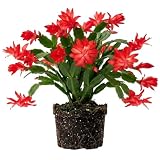
- Vibrant Blooms - Christmas Cactus plant featuring vibrant flowers that add colorful seasonal beauty to indoor spaces and plant collections.
- Live Succulent Plant: 1 live Christmas Cactus approximately 4-6 inches tall with green foliage and strong roots.
- Easy Care Indoor Houseplant: Thrives in bright indirect light with minimal maintenance, making it ideal for beginners and indoor plant lovers.
- Perfect Decorative Plant: Excellent for desks, shelves, offices, and holiday plant displays with its cascading growth habit.
- Perfect Decorative Plant: Excellent for desks, shelves, offices, and holiday plant displays with its cascading growth habit.
During the dark period, keep the plant away from lamps, overhead room lighting, television glow, porch lights, and streetlights. The darkness must be uninterrupted. If the room cannot remain dark, put the plant in a reliably dark room or cover it with an opaque enclosure that does not trap heat or restrict air circulation during the day.
Recommended Free Tools
3. While buds are forming
- Keep watering moderate and consistent; do not allow severe drought.
- Avoid overwatering and make sure the container drains freely.
- Do not repot, prune heavily, rotate dramatically, transport, or repeatedly relocate the plant.
- Keep it away from heaters, vents, cold drafts, and sudden temperature changes.
4. Once buds are visible
Return the plant to its normal bright, indirect-light location if the bud-setting location was unusually dark during the day. Keep temperatures stable and water consistently, always allowing excess water to drain. Buds can drop when a plant is moved abruptly, chilled, overheated, allowed to dry severely, or kept in damaged, saturated roots.
5. During flowering
Display the plant in bright indirect light. Maintain moderate, consistent moisture and protect it from cold windows, drafts, radiators, and hot air vents. Do not make major environmental changes merely to improve its appearance; stability is more valuable once flowers have opened.
Why flower buds fall off
Bud drop is often a response to a sudden change rather than a sign that the plant needs a special treatment. Common causes include:
- a sharp temperature change during transport or after moving the plant indoors;
- cold drafts or heat from a vent, radiator, or furnace;
- moving or rotating the plant after buds have formed;
- an abrupt change in light direction or intensity;
- artificial light interrupting the dark period before buds were initiated;
- severe drying during budding or flowering;
- overwatering and root damage;
- very dry indoor air; or
- an unusually heavy bud load, in which case a healthy plant may shed some buds naturally.
The best response is stabilization: bright indirect light, steady temperature, appropriate moisture, good drainage, and no unnecessary movement. A newly purchased flowering plant is especially vulnerable because it may have been exposed to cold during transport and then moved into a different light and temperature environment at home.
Do these 3 things before closing this tab:
1Fix the driver behind crashes, sound loss and screen glitches2Clear out junk files and repair common Windows errors3Scan for outdated or missing drivers - takes under a minutePruning and shaping
Pruning is optional, but it can make a large or uneven plant fuller. The best time is spring, after flowering. Remove one or more terminal segments at a joint using clean hands or a clean, sharp tool. Cutting or twisting back the tips encourages branching, and more branches generally produce more flowering tips because flowers form at stem ends.
Remove damaged, diseased, or excessively old stems whenever necessary, but avoid heavy pruning during bud formation or flowering. Healthy removed segments can be used for propagation.
Repotting: use the plant’s condition, not a rigid calendar
Thanksgiving cacti often flower well when somewhat pot-bound, so annual repotting is usually unnecessary. Repot in spring or after flowering—not while the plant is actively budding or blooming—when one or more of these conditions applies:
- roots fill the container or emerge from the drainage holes;
- the potting mix has broken down and no longer drains well;
- the soil remains wet for an unusually long time;
- the container has become unstable because of the plant’s trailing growth;
- growth has stalled despite suitable light and care; or
- there is evidence of root disease or severe salt buildup.
Choose a container only slightly larger—usually one size up—and always use a drainage hole. An oversized pot holds more unused wet mix around a relatively small root system, increasing the risk of root rot. A healthy plant in a suitable pot may only need fresh surface mix, while another may need repotting after two years. Guidance ranges from every year or two once roots fill the pot to roughly every three years when needed; this is a condition-based decision, not a contradiction requiring one universal interval.
What’s actually slowing this PC down?
Pick the symptom - the matching free tool is one click away.
How to propagate from stem cuttings
Stem-cutting propagation is straightforward and is best done in spring or early summer from a healthy plant.
- Take a healthy cutting two to five segments long.
- Detach it cleanly at a joint rather than cutting through the middle of a segment.
- Let the cut end dry for approximately one day. In a very humid environment it may need a little longer, but do not leave it until it becomes badly shriveled.
- Insert the bottom segment about ½–1 inch into a moist, airy rooting medium. Keep the cutting shallow; do not bury several segments.
- Place it in bright indirect light at approximately 65–75°F.
- Water sparingly. The medium should be lightly and evenly supplied with moisture, never continuously saturated.
- Expect rooting in roughly three to twelve weeks, depending on temperature, moisture, and the medium.
- Once roots are established, pot the cutting individually in a well-drained mix.
Rooting hormone is optional. Water propagation can work, but cuttings rooted directly in an airy medium generally avoid the transition from delicate water-grown roots to potting soil. Do not propagate from a plant with suspected systemic disease or severe rot; use only clean, healthy material.
Rank #4

- Vibrant Blooms - Christmas Cactus plant featuring vibrant flowers that add colorful seasonal beauty to indoor spaces and plant collections.
- Live Succulent Plant: 1 live Christmas Cactus approximately 4-6 inches tall with green foliage and strong roots.
- Easy Care Indoor Houseplant: Thrives in bright indirect light with minimal maintenance, making it ideal for beginners and indoor plant lovers.
- Perfect Decorative Plant: Excellent for desks, shelves, offices, and holiday plant displays with its cascading growth habit.
- Perfect Decorative Plant: Excellent for desks, shelves, offices, and holiday plant displays with its cascading growth habit.
Troubleshooting Thanksgiving cactus problems
| Symptom | Likely causes | First response |
|---|---|---|
| No flowers | Nights are too warm; darkness is interrupted by lamps or room light; the plant was recently moved; excessive fertilizer; unsuitable seasonal watering | Provide five to six weeks of cool nights and at least 12–13 hours of uninterrupted darkness; keep the plant healthy and stable |
| Buds fall | Temperature shock, drafts, heaters, moving the plant, abrupt light change, drought, root damage, dry air, or natural thinning | Stabilize light, temperature, moisture, and location; avoid repotting or rotating the plant |
| Wrinkled or dull segments | Underwatering, root rot, excessive heat, or direct sun | Check the mix first. If it is dry, water thoroughly; if it is wet, inspect the roots before adding water |
| Wilted while the soil is wet | Root rot or extensive root damage | Remove the plant from its pot and inspect the roots; remove compromised material and repot in fresh, sterile, well-drained mix |
| Pale or yellow segments | Excessive light, heat, or drought | Move to filtered light and correct the watering problem |
| Black, wet, slimy lesions near the soil line | Possible bacterial soft rot | Isolate the plant, avoid splashing water, and discard severely infected plants or material |
| Black circular sunken lesions | Possible fungal cladophyll rot | Isolate affected material; avoid wet foliage and splashback; discard severely affected parts |
| Small flying insects | Fungus gnats, usually associated with continuously wet mix | Allow the medium to dry more between waterings and repot if it remains wet and compacted |
| Brown, corky base | Often normal aging, but scale can resemble discoloration | Inspect closely for attached insects before deciding it is only age |
| Branches falling from a large plant | Excessive weight, weak growth, or root problems | Prune to reduce weight and inspect the roots if the plant is also wilting or unstable |
What to do about root rot
Do not treat a wilted plant in wet soil simply by watering less. University of Maryland Extension explains that root rot can leave an indoor plant wilted even when its soil is moist. Remove the plant from the container, wash or gently remove the old mix, and inspect the roots. Healthy roots should be firm; dark, mushy, foul-smelling, or missing roots indicate serious damage.
Remove compromised roots and stems with a clean tool, then repot salvageable material in a clean container with fresh, sterile, well-drained mix. Improve drainage and do not reuse contaminated, compacted soil. If little healthy tissue remains, take cuttings only from clearly healthy segments. Severely diseased plants may not be recoverable and should be discarded rather than spread to other plants.
Pests and diseases
Common pests include mealybugs, scale, spider mites, aphids, and fungus gnats. University of Minnesota Extension discusses common holiday-cactus pests and care problems. Inspect joints, undersides, and the base of the stems, especially before bringing an outdoor plant inside. Isolate an infested plant and use a treatment appropriate for the pest and labeled for houseplants, following the product instructions.
Excessively wet soil and poor air movement increase the risk of root rot, stem or crown rot, bacterial soft rot, gray mold, and fungal cladophyll rots. Water the potting mix rather than repeatedly wetting the foliage, provide drainage, and allow reasonable air circulation without exposing the plant to cold drafts.
A simple U.S. seasonal care calendar
| Season | What to do |
|---|---|
| Spring | After flowering and the rest period, return to bright indirect light, resume regular watering as growth begins, feed monthly, and prune, propagate, or repot if needed. |
| Summer | Maintain bright filtered light and regular watering. Move outdoors only to protected bright shade, acclimating gradually. Inspect for pests and protect from heavy rain and hot sun. |
| Early fall | Five to six weeks before the desired bloom period, provide cool nights around 55–65°F and at least 12–13 hours of uninterrupted darkness each night. Reduce or stop fertilizer. |
| Bud formation | Keep the plant in a stable location with consistent moisture. Avoid drafts, heat, repotting, pruning, transport, and major light changes. |
| Flowering | Use bright indirect light, moderate consistent moisture, and protection from heaters, cold windows, and sudden temperature changes. |
| After flowering | Allow a modest rest with less frequent watering, then resume active-growth care when new growth appears. |
Is Thanksgiving cactus safe for pets?
The ASPCA lists Christmas cactus, Schlumbergera bridgesii, as non-toxic to dogs, cats, and horses. Penn State Extension applies non-toxic holiday-plant guidance to the related Thanksgiving and Easter cacti as well. This is not a species-specific ASPCA listing for every Thanksgiving-cactus cultivar, so it is best understood as guidance for this closely related holiday-cactus group.
Non-toxic does not mean edible. Eating a large amount of any plant can cause stomach upset, and stems can present a choking hazard. Keep the plant away from pets that chew houseplants and contact a veterinarian if an animal becomes ill after eating it.
Sources and further reading
- Kew Plants of the World Online: Schlumbergera truncata
- University of Minnesota Extension: Holiday cacti
- Iowa State University Extension: All about holiday cacti
- Royal Horticultural Society: How to grow Christmas cactus
- University of Illinois Extension: Identifying and reblooming holiday cacti
- Penn State Extension: Holiday cactus care
- North Carolina State Extension: Schlumbergera truncata
Frequently Asked Questions
How often should I water a Thanksgiving cactus?
Check the potting mix instead of following a fixed weekly schedule. During active growth, water thoroughly when the upper portion has dried somewhat, then empty the saucer. Water less often during the post-bloom and pre-bud rest, but do not allow the entire root ball to become bone-dry.
Why is my Thanksgiving cactus not blooming?
The most common causes are warm nights and interrupted darkness. For five to six weeks before the desired bloom window, provide nights around 55–65°F and at least 12–13 hours of complete darkness every night. Keep lamps, porch lights, and other artificial light away from the plant during that period.
Should I repot a Thanksgiving cactus every year?
Usually not. Repot in spring or after flowering when roots fill the container, the mix breaks down, drainage worsens, or growth stalls. Use a pot only slightly larger and keep the plant somewhat pot-bound.
Can a Thanksgiving cactus grow outside?
Yes, during warm weather in bright shade or filtered light. In warm climates it can grow outdoors year-round in protected partial shade, commonly in USDA Zones 10–12. In colder areas, bring it indoors before frost and before nights consistently approach the low 50s°F.
The Bottom Line
Grow a Thanksgiving cactus as a well-drained tropical epiphyte: bright filtered light, an airy organic mix, thorough watering after partial drying, and stable temperatures. For flowers, count back five to six weeks from the desired display period and provide cool nights plus uninterrupted darkness. Once buds appear, stop experimenting—keep the plant’s light, temperature, moisture, and location steady.
Quick Recap
Product prices and availability are accurate as of the date/time indicated and are subject to change. Any price and availability information displayed on Amazon at the time of purchase will apply.




