Free tools Windows power users keep installed
One-click scans. No signup required.
Burning bush (Euonymus alatus) is easy to grow, but it is not an environmentally neutral landscape shrub. Across much of the eastern and Midwestern United States, winged euonymus spreads by bird-dispersed seed and can form dense thickets in woodland understories. Before buying, planting, propagating, transporting, or giving one away, check your state and local invasive-plant rules. For an existing, legally retained shrub, the basic care is straightforward: give it sun to partial shade, well-drained soil, deep watering during establishment, and dormant-season pruning. In many locations, however, removal and replacement with a noninvasive shrub is the better long-term decision.
This guide explains how to identify burning bush, care for an existing plant, manage pests, remove unwanted shrubs safely, and select better alternatives.
As an Amazon Associate I earn from qualifying purchases.
First: confirm that your plant is actually burning bush
“Burning bush” is a common name used for more than one plant. This article refers specifically to Euonymus alatus, also called winged euonymus. Confirm the scientific name on the plant label or compare the plant with the following characteristics. The North Carolina Extension plant profile provides additional identification information.
- A deciduous, multi-stemmed shrub with a rounded or mounded form.
- Opposite, simple, elliptical leaves with fine teeth along the edges.
- Green leaves in summer that often turn vivid red in autumn.
- Young stems with tan-to-brown corky ridges, commonly called “wings.”
- Small, inconspicuous greenish-yellow flowers in late spring.
- Reddish fruit capsules or fleshy orange-red seeds in fall.
Native eastern euonymus look-alikes generally do not have the conspicuous corky wings. If the plant has no wings, do not assume it is burning bush; identify it before deciding how to manage it.
#1 Best Overall

- CLEAN CUTS FOR LIVE GROWTH: Bypass blade design is ideal for pruning delicate flower stems and green growth, helping reduce crushing and plant damage while cutting stems and small branches up to 5/8” in diameter
- BLADES STAY SHARP: Precision-ground steel blades are engineered to stay sharp through heavy use, & all-steel construction provides lasting durability, delivering consistent cutting performance for regular garden maintenance & detailed pruning tasks
- SMART BLADE FEATURES: Blade coating helps reduce friction for smoother cuts, minimizes sap buildup & gumming, and enhances resistance to rust for longer-lasting performance in outdoor conditions; sap groove keeps the blades from sticking during use
- COMFORTABLE, CONTROLLED GRIP: Ergonomic, non‑slip handle enhances control and reduces hand fatigue during repetitive cuts; easy‑open safety lock secures the blade for safe transport and compact storage
- INCLUDES: (1) Fiskars Bypass Pruning Shears designed for everyday gardening and plant care and backed by a Lifetime Warranty. Product care tips: Wipe pruners clean after each use to prevent sap build-up and lightly oil blade for longer product life
Check the law before you buy, plant, or propagate
Euonymus alatus is native to northeastern Asia, Japan, and China—not North America. Its abundant fruit is eaten and dispersed by birds, allowing seedlings to appear well beyond the original planting. The shrub tolerates shade and can establish beneath forest canopies, where it competes with native vegetation. Minnesota’s Department of Natural Resources describes winged burning bush as a prolific seed producer capable of producing hundreds of seedlings beneath a parent plant.
Regulation varies by jurisdiction and can change. Before buying, planting, propagating, transporting, or giving away burning bush, check your state agriculture, natural-resources, or invasive-plant regulations. A cultivar exemption in one state does not automatically apply elsewhere.
- Minnesota: Winged burning bush is classified as a Restricted Noxious Weed, with import, sale, and transport prohibited except for specified exemptions. See the University of Minnesota Extension guidance and Minnesota DNR information.
- Pennsylvania: The state identifies burning bush as a noxious weed and says purchase, intentional planting, and propagation are illegal. See Penn State Extension.
- Maryland: Maryland lists Euonymus alatus as a prohibited invasive plant, with an effective date of January 15, 2026, and phase-out dates for potted and in-ground stock. Details are available from the Maryland Department of Agriculture.
- Missouri: The Missouri Department of Conservation reports that the legislature passed a 2025 sale ban covering burning bush and several other invasive species. See the Missouri Department of Conservation field guide.
Do not assume that “dwarf,” “low-seed,” or branded means noninvasive or legal. Even a seedless cultivar may be regulated, mislabeled, or unsuitable for a particular site.
Quick wins for a faster PC:
Scan for outdated or missing drivers - takes under a minuteDriver Scan →Repair Windows errors before they cause bigger problemsFix Now →Where an existing shrub grows best
If local rules allow you to retain the shrub, place it in full sun to partial shade. More sunlight generally produces stronger red fall color. The plant tolerates shade, but that same shade tolerance helps it establish in wooded areas.
Burning bush tolerates a broad range of soils, provided they drain reasonably well. Aim for average, fertile or moderately rich soil with consistent moisture while the plant is getting established. Avoid locations that remain waterlogged after rain. Poor drainage can cause weak growth and root problems.
Plan for the mature plant, not the size of the nursery container. Unpruned specimens are commonly described as approximately 15 to 20 feet tall and wide, although cultivated forms and regular pruning may keep them smaller. Landscape hedge references often describe plants maintained at roughly 6 to 15 feet, but a shrub that is repeatedly cut down to that size is not necessarily a naturally small shrub.
How to plant a legally purchased or retained shrub
Plant during a period when the soil can be worked and the shrub can receive reliable moisture afterward. Use these standard container-shrub practices, summarized by Iowa State University Extension:
Recommended Free Tools
Rank #2

- LONG-LASTING SHARPNESS: Japanese SK5 bypass blade with titanium coating is tested through 5,000 cuts to maintain a sharp edge and deliver clean, consistent cuts on live stems and branches
- BUILT FOR 5X DURABILITY: Heavy-duty 3-layer titanium-coated SK5 blade resists wear and corrosion, while anodized aluminum handles and high-hardness screws reinforce the pruner. Repeated cutting tests show up to 5X the durability of standard pruners
- POWERFUL 4X LEVER CUTTING: The optimized lever-action design multiplies cutting force up to 4X, making thicker branches easier to prune with less hand effort. Cuts branches up to 3/4" with smooth, controlled power for everyday garden pruning
- ARTHRITIS & SENIORS FRIENDLY: Ergonomic non-slip rubber handles cushion pressure and provide a secure, comfortable grip, helping reduce hand and wrist fatigue. A comfortable hand pruner for seniors, arthritis and longer pruning sessions
- ONE-HAND SAFETY LOCK: The easy-access safety lock opens and closes with one hand for faster trimming, then securely holds the blades closed for safer carrying and storage
- Dig wide, not deep. Make the hole two to three times wider than the root ball and no deeper than the root ball’s height.
- Set the correct depth. Place the shrub at the same depth at which it grew in its container. In poorly drained soil, the top of the root ball may need to sit slightly above the surrounding grade.
- Inspect the roots. Remove the container and check for circling or tightly matted roots. If necessary, shave or cut the outer mat so roots can grow outward.
- Backfill with native soil. Use the soil removed from the hole rather than automatically replacing it with compost, peat, or a heavily amended mix.
- Water thoroughly. Saturate the root ball and surrounding soil immediately after planting.
- Mulch correctly. Apply about 2 to 4 inches of wood-chip or shredded-bark mulch over the root zone. Keep mulch away from direct contact with the stems.
Mulch helps conserve moisture, moderate soil temperature, suppress weeds, and reduce injury from lawn equipment. Do not pile it against the trunk or stems.
A newly planted shrub should not receive severe shaping. During the first year, limit pruning to dead, broken, crossing, or clearly defective branches. Removing too much live growth reduces leaf area and slows establishment.
Watering: check the soil instead of following a rigid calendar
Newly planted shrubs
Water frequently immediately after planting, then gradually reduce the frequency as roots move into the surrounding soil. In dry weather, a thorough watering about every 7 to 10 days after the first several weeks may be sufficient, but this is only a starting point. Sandy soil, high temperatures, wind, rainfall, root-ball size, and plant size all change the schedule.
Check both the original root ball and the surrounding soil. A root ball can dry out even when nearby soil still appears moist, particularly during the first growing season.
Established shrubs
For an established plant, water when the upper 6 to 9 inches of the root zone are dry. Apply water deeply across the full root zone rather than sprinkling lightly every day. Frequent shallow irrigation encourages shallow roots and can increase drought stress. The University of Minnesota’s watering guidance explains this approach for established woody plants.
Fertilizer is usually not the first solution
Do not automatically fertilize at planting. If a shrub remains weak after two or three years—perhaps with sparse foliage, yellow-green leaves, or very short annual growth—investigate the site first. Compacted soil, poor drainage, drought, root damage, inadequate light, and pest problems can all resemble nutrient deficiency.
Use a soil test when appropriate. If fertilizer is genuinely needed, choose and apply it according to the current product label. More fertilizer is not a substitute for correcting drainage or watering problems, and excessive nitrogen can produce weak, overly lush growth.
Rank #3
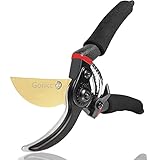
- Drop-forged construction delivers exceptional durability and sturdiness for long-term heavy garden use.
- Premium SK-5 steel blade with titanium coating and ultra-fine polishing ensures sharpness, rust resistance, and smooth cutting.
- Ergonomic non-slip aluminum handles wrapped with PVC offer lightweight strength, comfort, and reduced hand fatigue.
- Built-in sap groove effectively channels away sap to prevent sticking and keep blades clean during pruning.
- Capable of cutting branches up to 3/4 inch in diameter, ideal for live plants, stems, and light woody pruning tasks.
When and how to prune burning bush
Burning bush is grown mainly for foliage and fall color, not for showy flowers. The best time for major pruning is therefore late winter or early spring, while the shrub is dormant and before new growth begins. Wisconsin’s shrub-pruning chart lists Euonymus alatus for dormant pruning.
Do these 3 things before closing this tab:
1Scan for outdated or missing drivers - takes under a minute2Repair Windows errors before they cause bigger problems3Fix the driver behind crashes, sound loss and screen glitchesA practical pruning sequence
- Remove dead, damaged, diseased, crossing, or badly placed branches.
- Use thinning cuts—removing a branch at its point of origin—when maintaining a natural form.
- Reduce height and width gradually rather than repeatedly shearing the outside into a tight ball.
- For an overgrown multi-stemmed plant, remove some of the oldest stems at ground level to encourage renewal from the base.
- Dispose of fruiting or seed-bearing material responsibly. Do not place it where birds, runoff, or compost distribution could spread seed.
Selective thinning usually looks and performs better than repeated shearing for an informal landscape shrub. If you prune before fruit develops, you may reduce the amount of seed produced that season, but pruning does not eliminate the plant’s invasive risk and does not replace removal where the shrub is prohibited or spreading.
Choose the tool for the branch
Iowa State Extension’s pruning-equipment guide gives these approximate tool ranges:
- bypass pruning shears: clean cuts on stems up to about 3/4 inch.
- Garden loppers: branches approximately 3/4 to 1 1/2 inches thick.
- Folding pruning saw: larger branches that are too thick for loppers.
- Pole pruner: high branches that can be reached safely from the ground.
Do not climb an unstable ladder or use a chainsaw for ordinary shrub work unless you are trained and properly equipped. For large shrubs near buildings, utilities, fences, or roads, hiring a qualified professional is safer.
Pests and diseases: diagnose before treating
Potential problems include euonymus scale, spider mites, twig blight, powdery mildew, leaf spots, anthracnose, scab, and crown gall. Clemson Extension identifies euonymus scale as one of the most damaging insect pests across euonymus, while the N.C. Cooperative Extension profile specifically notes spider mites and twig blight.
The Tool Desk
Outbyte PC Repair FREERepair Windows errors before they cause bigger problemsFix Now →Outbyte Driver Updater FREEScan for outdated or missing drivers - takes under a minuteDriver Scan →| Symptom | Possible cause or next step |
|---|---|
| White or gray powder on leaves | Powdery mildew is possible. Improve air circulation and avoid creating prolonged leaf wetness. |
| Yellow stippling, leaf spots, defoliation, or dense covers on twigs and leaves | Inspect closely for euonymus scale or mites and compare symptoms with reliable extension resources. |
| Dieback of individual twigs or branches | Check for scale, blight, winter injury, drought, poor drainage, and pruning damage before choosing a treatment. |
Use integrated pest management: identify the pest or disease, reduce plant stress, improve drainage and air circulation, prune affected material when appropriate, and clean up fallen debris. Use only a pesticide labeled for the specific site and target pest, and follow the current label, state pesticide rules, and protective-equipment requirements. A pesticide rate that is appropriate in one jurisdiction or for one formulation may be wrong for another.
When removal is the better care decision
Removal is often the most responsible long-term care for burning bush, especially near woods, streams, natural areas, or properties where seedlings are appearing. The longer an established plant remains, the more fruit it can produce and the larger its seed bank can become.
Rank #4
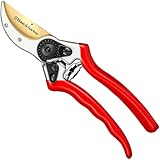
- Sharp, Clean Cuts Every Time – Engineered from Japanese grade, high-carbon steel, ClassicPRO bypass pruning shears for gardening stay sharp and make precise cuts that encourage healthy growth and won’t damage your plants
- No More Hand Fatigue and Wrist Strain – ClassicPRO gardening shears are designed with an ergonomic handle, non-slip grips, and shock-absorbing pads, making them lightweight and comfortable for smaller hands, seniors, and arthritis sufferers
- Rust and Corrosion Resistant – Tired of garden shears that rust after just a few uses? Our heavy duty pruning shears are constructed from anodized aluminum with titanium-coated blades to reduce friction and protect against rust and corrosion
- One Gardening Pruner, Many Uses - Preferred by professional landscapers and master gardeners, ClassicPRO clippers for gardening are adjustable general-purpose secateurs and branch cutters to trim trees, plants, and indoor flowers up to 1” thick
- Designed to Last Season After Season – Tired of cheap, low-quality hand pruners for gardening? Our heavy duty handheld garden clippers are designed for durability and longevity so you always have reliable shears
Small seedlings
Pull or dig small plants when the soil is moist. Try to remove the entire root system. Recheck the area because additional seedlings may emerge from the soil seed bank.
Established shrubs
- Reduce seed spread first. If possible, remove fruiting branches carefully before moving or cutting the plant. Keep berries and seed-bearing material contained.
- Extract small to medium plants. A shovel, hoe, root-wrenching tool, or shrub wrench can help remove more of the root system than cutting alone.
- Cut larger plants near ground level. Cutting alone may result in resprouting, so monitor the stump and surrounding soil.
- Handle resprouts or stumps legally and carefully. If chemical control is necessary, use only a product currently labeled for that use and follow the label exactly. Minnesota DNR recommends a properly labeled systemic herbicide for a freshly cut stump when chemical control is needed; Pennsylvania Extension discusses foliar, basal-bark, and cut-stump approaches.
- Revisit the site for several seasons. Seedlings and resprouts may continue to appear.
A root wrench for removing burning bush can be useful for established individual plants or larger seedlings, but tool choice does not replace checking local disposal and invasive-plant guidance. On a large infestation, steep slope, difficult-access site, or location near utilities or structures, consider a certified invasive-plant control contractor, applicator, or arborist rather than attempting the work alone.
Outdated Drivers Are Slowing You Down
One free scan finds every outdated or missing driver and matches the right update for your exact hardware.Free scan · exact hardware matchWindows Errors? Fix Them Before They Spread
Repair common Windows errors and clear accumulated junk for a smoother, more stable PC - no reinstall needed.Free scan · no reinstallClean soil and plant debris from tools, footwear, pets, and vehicles before moving between sites. Invasive plants and fragments can be transported in soil, and seed-bearing debris should not be casually dumped or added to a compost pile that will be spread elsewhere.
Independent reader supportYour contribution helps us test, update, and keep practical guides available for everyone.Better shrubs to plant instead
Choose replacements according to your region, soil, moisture, mature size, wildlife objectives, and desired fall color. A plant recommended in Minnesota may not be the best choice for the Southeast, the dry West, or a coastal site. Ask a local extension office, state native-plant society, or regional nursery to match the species to your ecoregion.
Potential alternatives identified by extension resources include:
- Eastern wahoo (Euonymus atropurpureus)
- Black or glossy chokeberry (Aronia melanocarpa)
- Red chokeberry (Aronia arbutifolia)
- Serviceberry (Amelanchier species)
- Arrowwood viburnum (Viburnum dentatum)
- Spicebush (Lindera benzoin)
- Witch hazel (Hamamelis virginiana)
- Ninebark (Physocarpus opulifolius), including suitable compact cultivars
- Native dogwoods, elderberry, winterberry, fothergilla, or hazelnut where adapted
These are not interchangeable on every property. Confirm mature dimensions, sun requirements, moisture tolerance, wildlife effects, and local invasive-plant status before planting. A regional supplier of native shrubs for fall color can be a useful starting point, but availability and shipping restrictions vary.
What about seedless or dwarf cultivars?
N.C. Cooperative Extension describes Fire Ball Seedless® ‘NCEA1’ as a sterile, seedless burning bush cultivar that reaches approximately 5 to 7 feet tall and wide under suitable conditions. It prefers full sun to partial shade and fertile, well-drained soil and does not produce seed-bearing drupes according to that profile.
That information does not mean every burning-bush cultivar is sterile, every “dwarf” form stays small without pruning, or every jurisdiction permits a seedless cultivar. Verify the exact cultivar identity and current state and local rules before purchasing or planting. A seedless form may reduce seed dispersal, but it does not automatically eliminate regulatory concerns or make the species ecologically appropriate for every setting.
Best Value

- DUAL CUTTING POWER: VERSATILE PRUNING COMBO --- With both Pruning Shears and Pruning Snip, this combo delivers unmatched versatility. Whether you're delicately trimming flowers and shrubs, tackling thicker tree branches, or tending to your vegetable and fruit garden, our combo pack excels in all areas. They're also perfect for landscaping projects and maintaining the health and appearance of indoor plants. With this pack, you have a versatile tool that simplifies your gardening tasks.
- ULTRA SHARP --- Much less effort to cut branches with our combo pack. Our pruning shears are crafted from premium Stainless Steel, and the pruning snip features a stainless steel blade with a titanium coating. Our garden scissors and garden clippers boast exceptional durability and sharpness. A perfect pruning shears for gardening and a must-have garden tool, hedge clippers pruners for gardening.
- RUST PROOF STAINLESS STEEL GARDENING SHEARS --- Our branch cutter tree pruner combo is built to last.
- SENIORS AND ARTHRITIS FRIENDLY --- Our pruners for gardening have comfortable handles that are easy to grip. With a non-slip texture for enhanced control, you can confidently prune in wet conditions. You can work longer without any hand fatigue.
- SAFETY LOCK PREVENTS ACCIDENTS --- Both of our pruning shears and pruning snips come with a built-in safety lock that securely holds the blades closed when not in use, preventing any accidental openings that could lead to injuries. This feature is designed for easy, one-handed activation, offering convenience and peace of mind whether you're storing the combo or carrying them in your pocket or toolkit. Trust in the safety and simplicity of our combo pack for all your gardening needs.
Seasonal care checklist
- Late winter: Inspect the structure and remove dead or crossing branches. Perform major pruning before new growth begins.
- Spring: Plant only where legal and appropriate. Water new shrubs consistently. Inspect for scale crawlers and early pest symptoms.
- Summer: Check moisture several inches down, maintain mulch, avoid shallow daily irrigation, and monitor any removal area for resprouts.
- Late summer through fall: Enjoy the fall color, but inspect for fruit, seedlings, and plants spreading beyond the original planting.
- Winter: Mark plants targeted for removal, clean tools, and plan a regionally appropriate replacement.
Frequently Asked Questions
Is burning bush invasive?
The plant commonly meant by burning bush, Euonymus alatus or winged euonymus, is invasive across much of the eastern and Midwestern United States. It produces abundant fruit, spreads by birds, tolerates shade, and can form dense thickets. The legal status varies by jurisdiction.
Can I keep an existing burning bush?
Possibly, depending on your state and local rules. Check current invasive-plant regulations before pruning, transporting, propagating, or giving away the plant. If it is legal to retain, prevent spread by monitoring for fruit and seedlings, especially near woods and natural areas.
When should burning bush be pruned?
Prune during dormancy, generally in late winter or early spring before new growth begins. Remove dead and damaged wood first, then use selective thinning and gradual reduction rather than repeatedly shearing the shrub into a tight ball.
Will cutting burning bush kill it?
Not necessarily. Cutting can leave a live root system that resprouts. Monitor the stump and new shoots, and use only legally labeled control products according to the current label if chemical treatment is necessary.
What is a good replacement for burning bush?
Options include chokeberry, serviceberry, arrowwood viburnum, spicebush, witch hazel, ninebark, eastern wahoo, native dogwoods, elderberry, winterberry, fothergilla, and hazelnut where adapted. The best choice depends on your ecoregion, soil, moisture, mature size, and wildlife goals.
The Bottom Line
Burning bush needs ordinary shrub care, but its invasive potential changes the responsible recommendation. Check local law first; do not propagate or give it away; remove seedlings promptly; and consider replacing an established plant—especially one near natural areas—with a locally appropriate native or noninvasive shrub.
Quick Recap
Product prices and availability are accurate as of the date/time indicated and are subject to change. Any price and availability information displayed on Amazon at the time of purchase will apply.




